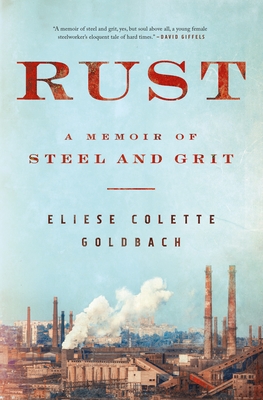
Eliese Goldbach pulls back the curtain to reveal the unseen struggles and contributions to society by steelworkers in Cleveland, Ohio, her hometown. Along the way, she delves into complex issues of mental health, politics, socioeconomic status, gender equality, and religion in her own life. It is, ultimately, a memoir about hope, but there was great suffering on Goldbach’s path to this realization.
When Goldbach was young, she viewed the stink of the steel mills as a type of pollution she needed to keep out of her body. But, when her plans to become a nun don’t materialize and she faces hurdles to completing the paperwork for her masters degree, Goldbach applies at the steel mill for the paycheck, accepting it as a step backwards in order to move forward into self sufficiency.
“In a Rust Belt town, that flame isn’t just a harbinger of weird smells and pollution. It isn’t an anachronism, and it doesn’t prove a lack of innovation. … The flame is very much a part of our history and our identity. It’s a steady reminder that some things can stand the test of time, even in a world where nothing is built to last.”
A large part of Goldbach’s failure to thrive is caused by her mental health struggles. It affects her ability to hold down a full time job, maintain her relationships, and makes her dread the future. Yes, she might be doing well now, she tells herself, but in another couple of weeks that might not be true any longer.
“Doctors would tell me that mixed-state bipolar disorder is one of the most dangerous forms of the disease. Depression brings suicidal thoughts, and mania adds impulsivity. When people with mixed-state bipolar disorder have the will for death, they are more likely to have the energy to follow through.”
Raised in a conservative and religious household, Goldbach is trained from an early age to see feminism as a dirty word. Through her own life experience, she discovers that some of her assumptions about feminism are untrue and begins to speak up for those who are unable or unwilling to speak for themselves.
“While there were other women who worked in the mill, we were definitely a minority. … There was a good deal of mansplaining, and there were offhanded comments that came straight out of the 1950s.”
Goldbach’s memoir shines in its examination and dissection of her personal beliefs and how those change through experience. It feeds into my own belief that only the person living a life has the true insight into its meaning and direction.
“I’m just disappointed in myself, I guess. I feel like I should have done more by now, and I’m worried that I’ll get stuck in the mill.”
Some readers may find Goldbach’s politics off-putting. But I think the difficult conversations she describes at the dinner table with her parents are going on at other dinner tables all across the country. An open dialogue and willingness to look at our differences can be painful, but that doesn’t mean we should never have those conversations.
Recommended for readers who enjoy memoirs and as a possible book club pick. Trigger warnings for mental health issues, especially those with bipolar disorder, and rape.
Thank you to NetGalley and the publisher for a free digital copy of this book. The brief quotations cited in this review may change or be omitted in the final print version.
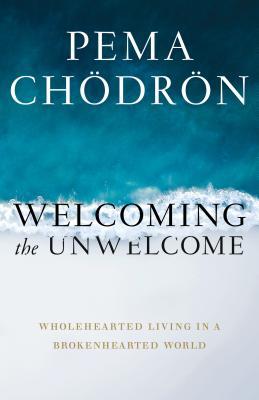
“We are at a time when old systems and ideas are being questioned and falling apart, and there is a great opportunity for something fresh to emerge. I have no idea what that will look like and no preconceptions about how things should turn out, but I do have a strong sense that the time we live in is a fertile ground for training in being open-minded and open-hearted.” pg 28
In this non-fiction title, Buddhist practitioner and teacher, Pema Chödrön, interprets the dharma and applies it to various challenging circumstances of modern life. From surviving polarization to living in the now, escaping comfort zones and acknowledging boredom, Chödrön challenges practitioners to question their deeply entrenched beliefs by applying new lenses of perception.
Change within, she says, and you will see changes in the world. If Pema was a qabalist or alchemist, she would say as above, so below. Apply your universal translation system of spiritual belief as appropriate.
I love Buddhist philosophy and practices, generally. I struggle greatly with the concept of life is suffering, which is a core idea that a voice within me (I call mine the Light Congress) patently disagrees with. More on that later, back to Pema’s book.
“Trungpa Rinpoche said that the way to arouse bodhichitta was to “begin with a broken heart.” Protecting ourselves from pain – our own and that of others – has never worked. Everybody wants to be free from their suffering, but the majority of us go about it in ways that only make things worse.” pg 4
Remembering this shared struggle to find relief from suffering is one of the many ways Chödrön breaks down the problematic mindset of us vs. them. Following this discussion, she gives plenty of actionable tips for remembering the sacred within oneself and everyone else.
One of the simple suggestions for maintaining awareness that stuck with me was, when you see someone suffering, say to yourself, “just like me.”
Stuck in traffic but don’t want to be? Everyone around you is too. They’re just like you.
Irritated or terrified by developments on the world stage? There are others who are just like you.
Have a cold and just want to get some uninterrupted sleep? Think of the thousands out there who are just like you.
You are not alone in your suffering nor your desire to be free from it. That’s me too!
“… if we gradually increase our capacity to be present with our pain and the sufferings of the world, we will surprise ourselves with our growing sense of courage. In our practice of cultivating a broken heart, we can incrementally build the strength and skill to handle more and more.” pg 6
Side note: I’m reminded of lyrics from the song Still which is performed by KAROL G and Bruno Mars.
“I’d still hope you were happy even though it may hurt ′Cause I’d still love you even with a broken heart”
What I like most about Chödrön’s books is that she isn’t afraid to talk about how she has stumbled with the various teachings in her own life. She takes a clear look at her foibles and, instead of hiding them where no one else can see them, she uses her failings to propel herself and others forward.
For example, Chödrön relates how, when she first became the director of an abbey in Nova Scotia, she thought the kitchen was a disaster. She put all of these rules in place to organize and clean the kitchen, yet it was never good enough. She confesses going down to the kitchen at night after everyone was asleep in order to organize the drawers without their knowledge. Yet even with all of those struggles, the kitchen remained as it was.
So, instead of fighting it further, she relaxed into the belief that the problem was not with the kitchen or anyone in it, but her own perception of the kitchen.
“I said to myself, “I don’t care if the whole place is a mess. I’m going to work on my propensity to label things in negative ways, such as ‘dirty’ and ‘disorganized.’ I’m going to pay more attention to how I project my own version of reality onto the world.” pg 74
And this self examination altered her view of reality.
“Instead of my whole being going into a knot of contraction, I felt relaxed and happy in there. It was a miracle.” pg 74
What sorts of things do you view as disorganized kitchens in your own life?
Let’s return to my problematic interactions with the concept that life is suffering. I’ll pretend to chat with Pema for a minute and let’s see if we can shift that viewpoint. (My advance apologies to Pema if the version of her presence in my active imagination says things she’d never say.)
Here’s how we play. Clear your mind. In the center of the open space, pretend you are seated in meditation next to Pema. Her voice enters your mind without even speaking the words and the same is true from you back to her.
If another voice enters the space, give them a name that feels appropriate to you. This is a conversation with spirit and unexpected things may happen. Prepare yourself for that possibility.
Can you see the area clearly? One more pretend- If you were a fly on the wall in this inner space, what would you hear?
I imagine it would go something like this…
The Great Game Mini-Quest: A Pretend Conversation with Pema Chödrön
Pema: I don’t care that the kitchen looks a mess and life is suffering. I do care about alleviating the suffering of others.
Heidi: I don’t care that I can’t remove all suffering from the world. I do care about alleviating the suffering of myself and those I love.
Pema: I’m going to work on my propensity to label things in negative ways and how I project my version of reality.
Heidi: I’m going to allow other viewpoints to skip through my experience like fairy thoughts on their way to somewhere else. My version of reality doesn’t have to be the same as someone else’s, even someone as enlightened as the Buddha or Pema Chödrön.
Pema: I’m going to offer myself unconditional love and understanding if I stumble in these efforts. I don’t care how long it takes.
Heidi: What is time to timeless beings? What is suffering? What is life?
(new voice enters the space) The Light Congress: Life is what you say it is. If I was seated next to Pema right now, what would she say?
Pema: May you be free from suffering. May those around you be free from suffering. May the spirit of the world itself be free from suffering.
Heidi: I wish the same. We don’t care how long it takes.
Pema: If I was seated next to the Light Congress right now, what would they say?
The Light Congress: Ditto to Heidi’s last comment. You didn’t tell me you studied Buddhist philosophy.
Heidi: Pema did the heavy lifting. I just read her book.
The Light Congress: (Turns to Pema) You didn’t tell me you spoke the language of Eternity.
Pema: Eternity speaks without words and moves without movement.
Heidi: Are we still communicating with Pema Chödrön the author?
Pema: Guess!
Heidi: I’m terrible at guessing games. Light Congress, can you take this one?
The Light Congress: Master Fuketsu?
Pema: (silence)
Heidi: I think she is Master Seiketsu now. Read her book Welcoming the Unwelcome, Light Congress, and you’ll see exactly what I mean.
The Light Congress: Want to head to the Great Library? If we look at her shelf, we’ll see all the books she has yet to write and perhaps learn some further wisdom that way.
Pema and Heidi: (spoken at the same time) We’re already there. (They look at each other and laugh.)
“Without speaking, without silence, how can you express the truth?”
Fuketsu observed:
“I always remember springtime in southern China. The birds sing among innumerable kinds of fragrant flowers.”
Mumon’s Comment:
Fuketsu used to have lightning Zen. Whenever he had the opportunity, he flashed it. But this time he failed to do so and only borrowed from an old Chinese poem. Never mind Fuketsu’s Zen. If you want to express the truth, throw out your words, throw out your silence, and tell me about your own Zen.
Without revealing his own penetration, He offered another’s words, not his to give. Had he chattered on and on, Even his listeners would have been embarassed.
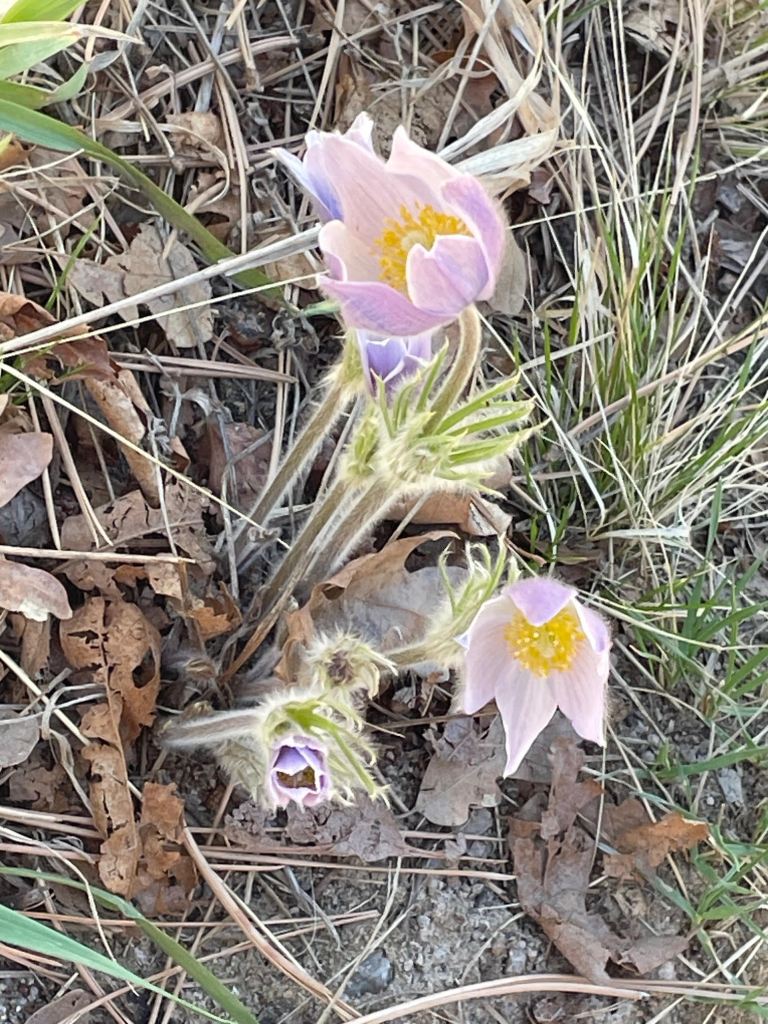
Colorado wild flowers. Photo taken by Heidi Wiechert.
The Great Game
Highly recommended for readers interested in Buddhist teachings or improving the world around them by change from within. I am including this title and Pema Chödrön’s When Things Fall Apart: Heart Advice for Difficult Times in the Resources section of my first book The Light Congress: A Messenger’s Journal.
Light Congress symbolism: a kitchen, a problematic viewpoint, a broken heart
From the front of the book: “As we know, forgiveness of oneself is the hardest of all the forgivenesses.” – Joan Baez
Bertie, the heroine of our tale, was the eldest girl born in a family of nine in rural Kentucky in the early 19th century. Because of her gender, her mother taught Bertie everything about keeping house and how to care for children, which Bertie ended up doing all the time to the detriment of everything else, including her education.
“We was living in the Appalachian hills in southeast Kentucky, but I didn’t know that then. It was just the place where we lived at. For all I knowed, it was the whole world.” pg 5
An early childhood tragedy cements in Bertie’s mind that she is unworthy of the trust and scant love her mother gives to her. She carries that burden in her subconscious mind throughout the tragedies that follow and it shapes everything in her life.
Elizabeth Hardinger has penned a beautiful historical fiction novel about family, secrets, struggles and the life-saving power of forgiveness, not just for yourself but for everyone around you. The characters in this book are complex and so flawed that sometimes I wanted to reach into the pages and hug them until they came to their senses.
That’s how you recognize an extraordinary author, they make you care.
“If you was a bawl-baby, you got shamed, you got teased, or people just ignored you like you’d embarrassed yourself, which I reckon bothered me the most of all. … So you learned to hide your feelings or wait till you was out behind the barn and nobody could hear you.” pg 8
The culture examined in All the Forgivenesses is rural, impoverished and male-dominated, mainly because of the time period. The reader is able to juxtapose Bertie’s tragic situation with her best friend Alta Bea, the daughter of a wealthy banker.
“For sure I hadn’t never met nobody like Alta Bea. I never knowed nobody that had that look in their eyes like she could see into you. It made a person tired and jangled, like somebody was shining an oil lamp in your eyes, but it also give you a feeling of glittering, fluttery things you couldn’t hardly not look at.” pg 52
The girls’ friendship is strained at times and built upon a foundation of mutual loneliness, though Bertie has little to no time in her day-to-day routine to just be a person. It’s fascinating to watch the two characters develop from children to adults and the character traits they drag along with them as well as the ones they leave behind.
The vernacular of All the Forgivenesses was distracting for a page or two, but it started to flow for me after that. I appreciated Hardinger’s skill in making Bertie’s rough-edges part of the story. She’s such a relatable character. You know she wants to live her own life, but with her family’s situation, she just can’t. And yet, for the most part, she loves them anyway.
“Read it, Bertie, you’ll like it,” she said. Hearing somebody use my name – and not to curse me out or ask me for something – I confess that made me glow a little bit.” pg 67
Highly recommended for readers who enjoy historical fiction or as a book club pick. My book club chose this and we had plenty to talk about – from gender roles to romance to families. Not everyone liked it as much as I did, but I absolutely loved the characters, Bertie being the top of my list.
And I do agree with the opening quotation of this book, “to forgive yourself can be the hardest of all the forgivenesses.” Funny that we, like Bertie, find it easier to extend that to others than to ourselves. I wonder what that ultimately says about us.
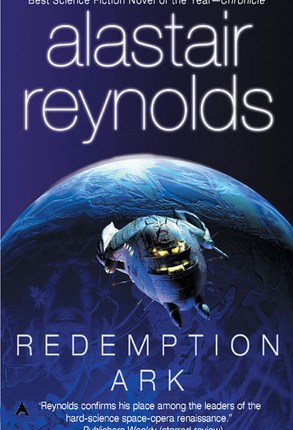
In Redemption Ark, we return to the universe of Revelation Space in the second book of Alastair Reynolds’ science fiction series. Some of the characters readers will recognize, others are new. As usual, we are treated to Reynolds’ prodigious talent when it comes to heaping helpings of the science part of science fiction.
Those are the best parts of this book: the futuristic space battles and the mysterious machinations of the Inhibitors, machines designed by an alien intelligence to wipe out civilizations that develop the technology to travel among the stars. For the reasoning behind this decision, you’ll have to read the book. 🙂
They had never encountered another extant machine-using intelligence, nothing to measure themselves against. Until now. And what this machine-using intelligence did, so it seemed, was stalk, infiltrate and slaughter, and then invade skulls. pg 7
Humanity has divided itself into distinctive groups during its expansion into space, one of the most notable of these being the Conjoiners, a technologically advanced society that has linked its digital implants in a sort of hive mind. This link created a sort of “enlightenment” and connected the Conjoiners together in ways that aren’t quantifiable by those outside of the group.
“Down at the very deepest level Skade detected a few partitioned private memories that he did not think she could read. For a thrilling instant she was tempted to reach in an edit the man’s own blockades, screening one or two tiny cherished memories from their owner. Skade resisted; it was enough to know that she could.” pg 30
However, not everyone wants to allow the neural Conjoiner implants for fear of the loss of autonomy or privacy (see above) and embrace a more Luddite view of technology. This limited use of technology was pushed further by the appearance of a “melding plague,” an alien infestation that invades technology in an organic manner and consumes it, creating something else.
As you can tell from my rambling, Reynolds has created a universe populated with fascinating cultures, technologies and relationships. My main quibble with this book, as it was with his last, is his seeming inability to write about emotions. The extraordinary breakthrough of the Conjoiners was intimately connected to emotion and sharing it in a way that was impossible prior to the neural implants- an evolution of mankind. Reynolds puts all that depth into one or two lines of one paragraph of the book, which was fascinating to me, but also infuriating.
“Once you’ve touched someone else’s mind, walked through their dreams, seen the world through their eyes, felt the world through their skin… well… there never seemed to be any real need to go back to the old way.” pg 528
He could have written a whole book about that one idea if he wanted to- I’d read it.
Another issue I had was the conclusion, which I won’t spoil for anyone here, but he writes it as almost an afterthought. For more than 500 pages, he built to this spectacular conclusion, which he then tossed away.
I was so mad.
On the other hand, he sets up the next book in the series beautifully, which must have pleased his publisher.
Highly recommended for science fiction readers. There are few who write the science better than Alastair Reynolds, but don’t expect too much in the way of emotional depth or exploration.
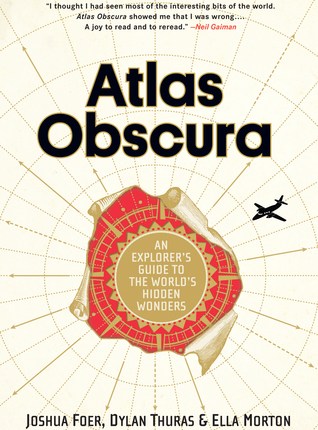
Atlas Obscura reminds readers that the world is a weird and wonderful place full of amazing things to see. It examines extraordinary places from across the globe and includes informational tidbits about each.
This book could be handy as a reference guide for choosing an exotic locale for a vacation or for someone who is seeking information about places of historical significance for a certain YouTube channel that covers forgotten history.
Or, if neither of those things are your jam, it would make a lovely coffee table book. I found curious information about places I’d never heard of on almost every page.
Here’s Atlas Obscura author Joshua Foer giving a TedTalk about ways to improve your memory:
Now when you visit all of these incredible places, you’ll remember enough to share a story about it. 🙂
Highly recommended for travelers- traditional and of the armchair variety.
You’re Not Listening is a fun and enlightening non-fiction read about, you guessed it, listening. Theoretically, we all have the capability of listening, but, as author Kate Murphy points out, we kind of suck at it.
“This is a book in praise of listening and a lament that as a culture we seem to be losing our listening mojo.” pg 3
From politics to business, scientific studies to families, Murphy illustrates pitfalls on the path of active listening and highlights the fact that rhetoric and conversational skills are taught all over the world. The other half of the equation, listening to the information that’s delivered, is not.
“Done well and with deliberation, listening can transform your understanding of the people and the world around you, which inevitably enriches and elevates your experience and existence. It is how you develop wisdom and form meaningful relationships.” pg 4
In the modern age of social media and the ability to establish instantaneous connections all around the world, you would think people would be feeling more interconnected than ever. Not so, says Murphy.
“People get lonely for lack of listening. Psychology and sociology researchers have begun warning of an epidemic of loneliness in the United States. Experts are calling it a public health crisis, as loneliness increases the risk of death as much as obesity, alcoholism, and heart disease combined.” pg 9
All of our technology bombards us with information while at the same time diverting our attention from the people in our physical lives. It is not just a matter of deciding who to listen to; it’s also a question of shrinking attention spans and one of the many challenges faced by a technologically advanced society. Meanwhile, we’re blasting out our own thoughts and feelings as quickly as they arise… so who has time for any of that?
“It takes awareness, focus, and experience to unearth and understand what is really being communicated. Good listeners are not born that way, they become that way.” pg 69
I love books that I learn from and that help me become the type of person whom I aspire to be. You’re Not Listening ticks both those boxes in a big way. I can’t recommend it enough for readers who enjoy non-fiction, learning, and the eternal quest of self improvement.
Thank you to the publisher for a free advance reader’s copy of this book.
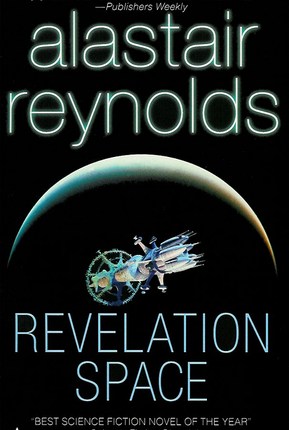
Through the interweaving stories of a scientist, soldier, and weapons expert, Alastair Reynolds explores classic science fiction themes in Revelation Space, a space opera and mystery.
“Despite being buried for nine hundred thousand years – at the very least – the chambers were almost intact, with the bones inside still assuming a rough anatomical relationship to one another. They were typical Amarantin skeletons.” pg 11, ebook
Nearly a million years previous, an entire species called Amarantin disappeared in a mysterious celestial-based disaster called, by those who study the geological record, “The Event”. Dan Sylveste, a scientist with unique machines for eyes, is trying to unearth the truth of what happened to them.
Khouri, a former soldier turned assassin for a semi-secret agency, goes on a routine assignment, only to have the experience turn into something entirely unexpected.
“Assassins, it turned out, had to be among the sanest, most analytic people on the planet. They had to know exactly when a kill would be legal – and when it would cross the sometimes blurred line into murder and send a company’s stocks crashing into the Mulch.” pg 45, ebook
Meanwhile, on an enormous space ship capable of traveling across the universe at nearly the speed of light, Volyova has a serious problem. Her captain has a strange disease that is assimilating his ailing body into the ship itself and the man she hired to run the ship’s guns has gone insane. Could these two disasters be connected somehow?
“It was not something to which she was ever going to become totally accustomed, Volyova knew, but in recent weeks visiting the Captain had begun to take on definite tones of normality. As if visiting a cryogenically cooled corpse infected with a retarded but potentially all-consuming plague was merely one of life’s unpleasant but necessary elements…” pg 35, ebook
Throughout the story, Reynolds asks the reader to imagine a humanity that has split itself into factions. Some groups travel among the stars, assimilating rare machines into their bodies, losing touch with what it means to be human as they spend years in frozen animation while the rest of the universe ages as usual.
Other groups are just as isolated on far-flung planets and develop their own cultures, ways of government, and quickly-shifting alliances.
Also, through the story of the extinct Amarantin, Reynolds examines what it would mean if humanity discovered aliens were real, but mysteriously absent from huge swathes of what is otherwise inhabitable space. Are we really as alone in the universe as we appear to be? And why is that so.
“Something had reached into his mind and spoken to him. But the message that was imparted to him was so brutally alien that Sylveste could not begin to put in human terms. He had stepped into Revelation Space.” pg 100, ebook
The broad themes of Revelation Space are fun questions to ponder, but Reynolds’ storytelling suffers in some of his more technical moments and during a truncated love story. A couple times during the beginning of the book, I had difficulty picturing scenes because I would get so bogged down in the details. But that became easier as the story progressed.
The love story though, was one of the worst I’ve read in science fiction literature. It made me feel like the woman was just a plot device for Reynolds to be able to explain some of the more complex plot twists. That’s fine if that’s what she was meant to be, but it was rather off-putting. I do enjoy a good love story and felt like, if you were going to make it so awkward, maybe it didn’t belong in there.
Otherwise, I enjoyed this read and intend to start the next soon. Highly recommended for readers who enjoy science fiction and stories that make you want to go stand outside and stare at the stars for awhile.
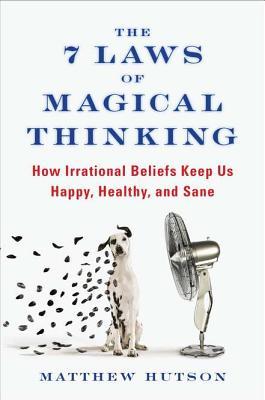
Matthew Hutson examines some of humankind’s irrational beliefs and shows, through stories and examples, how the beliefs are types of coping mechanisms and can be consciously utilized for a better life.
“These habits of the mind guide us through the world every day. In very basic ways they provide a sense of control, of purpose, of connection, and of meaning, and without them we couldn’t function.” pg 9
The beliefs Hutson discusses are “objects carry essences”, “symbols have power”, “actions have distant consequences”, “the mind knows no bounds”, “the soul lives on”, “the world is alive” and “everything happens for a reason”.
I couldn’t possibly touch on every idea that engaged me in this book, but I do want to mention my favorite chapter. I was particularly drawn to “the mind knows no bounds”.
“If anything is magic, consciousness is.” pg 108
Everything Hutson discusses in this book originates in the mind: how we perceive events, people, death, the whole enchilada. I think it is in the interpretation of life and the meanings we assign to things that seem to be the key to magical thinking.
“Believing that our thoughts have the power to drive our own behavior as well as the behavior of the outside world – that they’re not just feeble shadows cast against the inside of our heads – provides a sense of agency and makes us go out there and become active participants in life.” pg 123
That’s the sort of magical thinking I support – the interconnecting, empowering and mystical kind, that inserts meaning into the most trivial moments and illuminates your life, revealing a pattern of something greater. Then, spring boarding that knowledge into action, having another realization, and so on.
“While mystical states may not unite you with a universal intelligence, they can still tap you into your own potential for transformation. Which makes them mind-expanding after all.” pg 123
Though his writing can become dense at times, Hutson lightens things up with stories from his own life or his research. It feels like a non-fiction psychology book with a heaping dose of philosophy, religion, and memoir.
“The idea is to face morality as frankly as you can without freaking out. To accept a manageable share of anxiety and to channel it toward building a heaven here on Earth.” pg 162
Here’s author Matthew Hutson dancing with fire!
Good luck with that, fellow readers. I’ll be cheering for you, which, if you read this book and understand the power of magical thinking, may have more impact than you ever imagined.
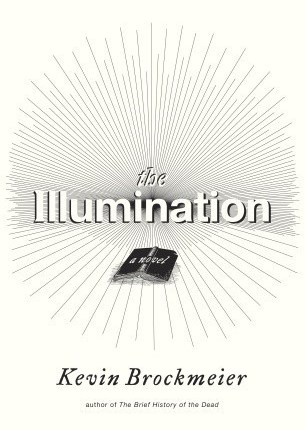
Humanity suddenly changes as emotional and physical pain begins to shine out of our bodies like light. How would a shift like that change culture? And what does it all mean?
Kevin Brockmeier examines these questions through six different lives that are tied together through a diary filled with love notes from a husband to his wife.
Rarely has a book stuck in my mind like The Illumination. Since putting it down, I’ve found myself thinking about it and asking myself what the author was saying.
“Through the haze of drugs, it seemed to her that the light was not falling over her wound or even infusing it from the inside but radiating through it from another world. She thought that she could live there and be happy.” pg 8, ebook
Throughout the centuries, mystics and others considered “holy” or infused with spirit have been depicted with light shining from their bodies and hands. The ineffable connection to God or gods is shown in the artistic shorthand of light, an illumination in the dark.
In the day-to-day business of living, many of us are too busy with our individual lives to stop a second and ask ourselves, what is the purpose of this experience? It feels so random for the most part. Terrible things happen to good people, good things happen to terrible people. It feels arbitrary and, worst of all, meaningless.
So many are in pain and we can’t possibly heal them all. We don’t acknowledge that. But what if it became so obvious that we couldn’t ignore it.
“The world had changed in the wake of the Illumination. No one could disguise his pain anymore.” pg 29, ebook
The Illumination illustrates another of humanity’s foibles – the tendency to demote the miraculous to the mundane once it becomes a common place experience. Babies are born every day. People die every day. Life in its beginnings, endings, and everything in the middle, is extraordinary but I don’t think we appreciate the enormousness of it unless something unexpected or earth-shattering happens in our own lives.
“He watched with interest as his body was chafed and torn, thinking, Look what’s here inside me. Who ever would have guessed? pg 164, ebook
Maybe, if we truly tried to let it all in, we would all stand around paralyzed by awe.
“It turned out that the world at the end of time was just like the world at the beginning: a single set of footsteps printing the grass, everything lit with its own newness, a brighter and much, much emptier place.” pg 48, ebook
In this world, the past is reexamined in the wake of the new light-filled reality. Historic photos are doctored to make the pain visible through light. Hospitals develop new protocols to address the change in reality. Communication and politeness take on new meaning as private pain becomes public knowledge.
“For a few months, church attendance spiked. Some of the seats at Fellowship Bible were taken by visitors, some by the Christmas-and-Easter set. It didn’t matter – each new face showed the guilt, fright, or confusion of someone confronted by a game whose rules had suddenly changed.” pg 104, ebook
The dystopian worlds of literature present authors’ various views on what the world would look like at the end of all things. Brockmeier’s world is so very much like ours except for one glaring difference. Perhaps that’s the point. The end of the world is much like today – light or no light, we’re all wandering around seeking meaning and bumping into each other and causing pain, intentional and unintentional.
The spiritual and religious beg for illumination, a shining light through the confusion, a removal of a metaphysical blindfold. But what would we do if those prayers were answered in a concrete way? Probably nothing once the initial shock wore off.
Recommended for readers who seek the answers to unanswerable questions. Some trigger warnings for cutting, self mutilation, and violence.