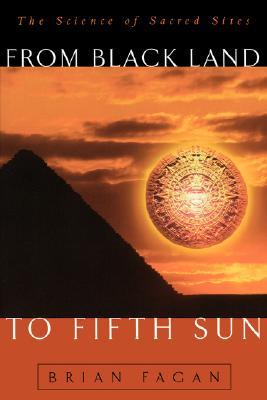
From Black Land To Fifth Sun: The Science Of Sacred Sites by Brian M. Fagan

From Black Land To Fifth Sun: The Science Of Sacred Sites by Brian M. Fagan

From Black Land to Fifth Sun is the textbook for an online course I’m taking from Oxford University about ritual and religion in prehistory.

The opening chapter to the book seems promising, offering readers a glimpse into the hidden worlds of what could be called the “archaeology of the mind.”

“The emerging ‘archaeology of mind’ is a marriage of cultural systems theory, settlement archaeology, environmental reconstruction, contextual archaeology, and the decipherment of written records.” pg 11

Photo by Samuel Wölfl on Pexels.com

Unfortunately, the text then becomes bogged down by the author’s lengthy descriptions of archaeological sites he visited during the course of his life and his interactions with some of the giants of the field, who, as he so helpfully notes, are dead now. One of my classmates described it as “perhaps the most boring travelogue ever.”

“I have not seen the Chauvet paintings: few outsiders have yet had the chance. Nor should they, for our primary concern must be to protect them from harm.” pg 50

Some of the most interesting parts of this were the author’s descriptions of rituals from modern peoples, such as the San. But there are perils galore to using any of this modern information to decipher rituals in prehistory. The culture and society is not the same. The hierarchies are not the same. The tools and materials available are not the same. The meanings assigned to the ritual movements may have changed if we even knew what those movements were, which in most cases we don’t. There may have been a charismatic figure at the center of the cult or religion, and who knows what they may have been like. I could go on and on.

“As they activated their potency, the medicine men trembled, then sweated, then bled from the nose, as the potency took hold of them – an eerie sight to behold. Many white hunters have seen dying eland, trembling with wide-open mouths, sweating profusely, with melted fat gushing like blood from their nostrils. Perhaps the San likened this phenomenon to ‘death’ in a medicine man’s trance.” pg 61

Photo by Athena on Pexels.com

The fact that I find this book so dull truly is a shame. This topic could come alive with a little updating. Perhaps if the text had a digital component, where you could digitally “walk” through the sites the author is describing as he describes it, it might hold the attention.

Also, From Black Land to Fifth Sun was published in 1998, twenty-two years ago for those keeping score. It purports to be on the cutting edge of archaeological research but I find that extremely dubious when I consider how far technology has developed since then. One need only look at the state of our handheld devices to know it couldn’t possibly be true.

In addition to the meandering yet somehow dry descriptions and outdated technology, somehow the author has managed to suck the life out of a topic I find extremely compelling. What did ritual and religion look like during prehistory? I don’t know, but I can imagine so many different scenarios. So many!

I feel like this field could use people who use their intuition and imaginations in addition to scientific techniques to bring the past to life- almost like a shamanistic version of Indiana Jones.

Photo by Navneet Shanu on Pexels.com

Instead, we have either scientists putting locks and fences around sites to maintain each dust molecule in context and then droning on for hours about when the human brain may have become capable of religious thought or arguing about whether religion developed as a societal control for hunter-gatherers or agricultural people. On the other hand, there’s the spaced-out new agers who want to camp among the ruins of Stonehenge or wherever and commune with whatever spirits they claim are living in the rock, divorced from any kind of scientific evidence whatsoever.

Can’t we have some sort of happy medium?

Only recommended for the readers who are taking the same course I am. Otherwise, seekers are advised to steer clear.

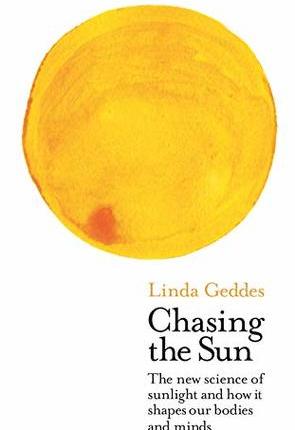
Chasing the Sun: The New Science of Sunlight and How it Shapes Our Bodies and Minds by Linda Geddes

Chasing the Sun: The New Science of Sunlight and How it Shapes Our Bodies and Minds by Linda Geddes

Chasing the Sun reminds readers of the importance of the sunlight in shaping some of the body’s processes, regulating mood, and the surprisingly deleterious effects that not enough sun, or not adhering to the body’s natural rhythms, can have.

I picked up this book because I’ve been having trouble sleeping and thought maybe this would have some helpful tips. It did, but I felt like most of this information I had heard before in some form or another. I suppose it is nice to have a reminder to get ample sunlight during my daily routine. I have experienced bouts of seasonal affective disorder in the past and know first hand how it can affect your mood.

Photo by Jill Wellington on Pexels.com

It is rather depressing how far removed modern society has made itself from nature. Linda Geddes points out this gap and how the ancients, and some members of our era, made better use of this natural resource.

I enjoyed the history lessons about the Romans and their solariums. They used “heliotherapy” to treat a variety of illnesses. I also enjoyed the studies about the potential effectiveness of “chronotherapy” for patients suffering from certain mental disorders as well as learning about efforts to increase their sunlight by towns that receive little light during the day. For example, there’s a town in Norway that put mirrors on top of the nearby mountains in order to direct more sunlight their way.

Photo by ArtHouse Studio on Pexels.com

As we know more about the importance of sunlight, I’m certain we’ll see more efforts to incorporate this information into our daily routines. And it affects things we may not even consider from school start times to a good night’s sleep.

Recommended for readers who want to learn more about how the sun affects our lives and some of the newer scientific research about the same.

Drawing Down the Moon: Witches, Druids, Goddess-Worshippers, and Other Pagans in America by Margot Adler

Drawing Down the Moon: Witches, Druids, Goddess-Worshippers, and Other Pagans in America by Margot Adler

Margot Adler talks to adherents in different traditions all across the United States, and a few in Europe, in order to banish some of the mystery and misconceptions surrounding neo-pagan groups.

“Since Pagans are a very diverse group, it is wrong to say all Pagans believe this or that, but here are some beliefs that many people in this book share: The world is holy. Nature is holy. The body is holy. Sexuality is holy. The imagination is holy. Divinity is immanent in nature; it is within you as well as without. Most spiritual paths ultimately lead people to the understanding of their own connection to the divine.” pg 11, ebook.

Photo by Gianluca Grisenti on Pexels.com

I didn’t know much of anything about pagan religions before I read this book, mainly because I am from a particularly conservative part of the country and there are very few groups of this type around. It’s hard to get to know people if there aren’t any to talk to.

In some circles, just the word “pagan” inspires fear because it’s not clear what this means or people might be threatened by how someone’s beliefs might be different from their own.

“Neo-Pagans look at religion differently; they often point out that the root of the word means “to relink” and “to connect,” and therefore refers to any philosophy that makes deep connections between human beings and the universe.” pg 24

Adler examines an extraordinary number of pagan groups, an almost bewildering amount. I liked that this book introduced me to so many different paths and ideologies, but at the same time, it began to get somewhat repetitive as she broke down all of the different groups.

Photo by Gheorghita Claudiu on Pexels.com

But as the friend who had recommended this book reminded me, Drawing Down the Moon was created in the years before the existence of the internet. It was intended not just to explain what these groups were, but also operated as a catalog of sorts, for readers who were looking for the right path for themselves.

Recommended for spiritual seekers who are looking for a tradition that fits or for anyone who is curious about the stunning variety of spiritual beliefs there are out there. I learned so much.

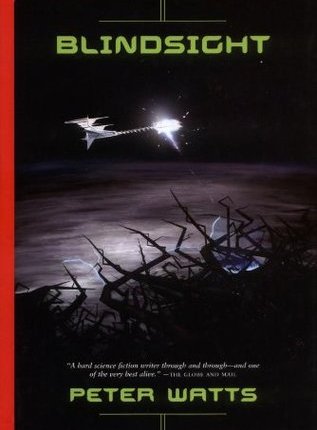
Blindsight (Firefall, #1) by Peter Watts

Blindsight (Firefall, #1) by Peter Watts

Blindsight is an incredibly imaginative science fiction novel that takes on the foibles of human consciousness and examines, in a serious way, what an alien-form of consciousness might look like.

Siri is a unique protagonist. Because of severe seizures when he was young, doctors performed dramatic brain surgery in order to save his life, essentially cutting his brain in half.

Photo by meo on Pexels.com

“The brain’s a very flexible piece of meat; it took some doing, but it adapted. I adapted.” pg 9, ebook.

This early surgery changed the way Siri’s brain worked and how it processed reality, making him the perfect translator for other humans whose brains and bodies have been so changed that baseline humans can no longer communicate with them.

And Siri’s special talents are desperately needed after aliens unleash surveillance technology in the atmosphere. Humanity called the strange lights in the sky, “fireflies.”

“How else would you explain 65,536 probes evenly dispersed along a lat-long grid that barely left any square meter of planetary surface unexposed? Obviously the Flies had taken our picture.” pg 24, ebook.

Photo by Felipe Helfstein on Pexels.com

Siri becomes part of an elite mission sent by Earth to discover where the “fireflies” originated from and who or what created them.

Blindsight isn’t a simple read. It proposes complex ideas that demand some attention to unravel and it makes the reader consider how real is her own perception of this thing we call “reality.”

It asks how technology may change not only how humankind takes in information, but how that information is interpreted and how that would separate people from each other. The characters Peter Watts has created for the alien-seeking mission are some of the most unique I’ve read because he takes those ideas to extreme conclusions.

“When the fate of the world hangs in the balance, you want to keep an eye on anyone whose career-defining moment involves consorting with the enemy.” pg 135, ebook.

But it feels very real. That is Watts’ strength – making the fantastical seem perfectly logical like vampires, real vampires.

Highly recommended for readers who enjoy “hard” science fiction.

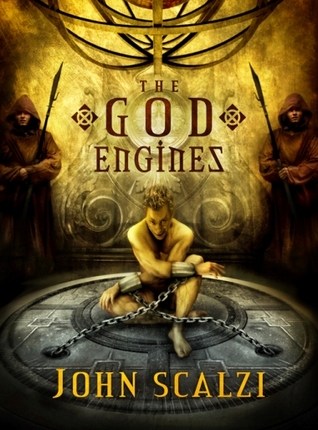
The God Engines by John Scalzi

The God Engines by John Scalzi

In the world of The God Engines, beings called gods power the ships that take humanity between the stars. How the world became this way is not for Captain Tephe to question, instead it is a matter of faith. As part of Tephe’s service and devotion to his own deity, he has to keep the being that powers his engine in check and subservient to his will.

That is not a simple task.

Photo by Pixabay on Pexels.com

“I do not know why this is. Why single made iron can kill a god. I know only that it can. I know the gods fear death more than do men. I can kill you with this, god.” pg 8, ebook

When Tephe is called to perform a secret mission of great importance for his deity, it throws his entire world view in jeopardy. He discovers his god, and all the others, may not be what they appeared to be.

“Words. They have power. To name a god is to give it power. To deny it such is to take it.” pg 16, ebook

I feel like this story was too short to fulfill its full potential. The general idea was very promising – what would a world where embodied gods were used as power sources look like? How would the society be structured? And how would a worshiper’s faith change or be challenged through day-to-day interactions with the gods?

Photo by Ben Yi on Pexels.com

The plot felt rushed as the characters raced from one place to another. I also wanted a bit more background about the universe of The God Engines, but the lack of it added somewhat to the mystery of the story.

“You are charged with silence,” proclaimed the third Bishop. “What is spoken to you here is not to be spoken again, on remit of your soul.” pg 31, ebook

I think the strength of this story is in how it addresses faith. Faith in the goodness of the unseen shapes lives and guides actions. It explains why some gods power ships and others rule empires. Because of faith, humanity has waged wars and conquered planets.

Perhaps someone should have made certain this faith wasn’t misplaced…

Recommended for readers who enjoy short science fiction novels with a liberal dash of horror.

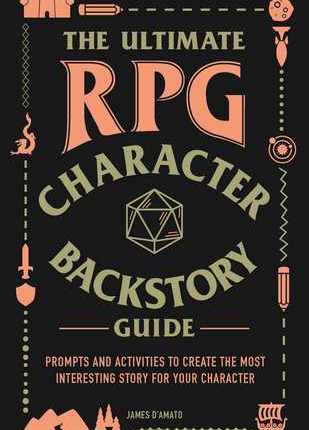
The Ultimate RPG Character Backstory Guide: Prompts and Activities to Create the Most Interesting Story for Your Character by James D’Amato

The Ultimate RPG Character Backstory Guide: Prompts and Activities to Create the Most Interesting Story for Your Character by James D’Amato

The Ultimate RPG Character Backstory Guide is an excellent resource for anyone who is looking to create or improve their role-playing character back stories.

James D’Amato utilizes his training in impromptu theater to craft questions that guide readers through story creation. Some of the prompts are funny, most are entertaining, and all touch on essential elements of a character.

Photo by Juliana Stein on Pexels.com

The book is divided into character levels, so there’s something for beginners to the more advanced gamer.

Role playing games are fun because of the interaction between players and their characters. By taking the time to create a detailed backstory, you’re giving the gift of hours of entertainment for both yourself and your gaming buddies.

Highly recommended.

Peanuts Treasury by Charles M. Schulz

Peanuts Treasury by Charles M. Schulz

Some works of fiction, after enchanting countless readers, become classics, a touchstone of culture for generations. I would submit “Peanuts”, created by Charles Schulz, as one of these classics.

The existential struggles of the boy named Charlie Brown, the adventures (real and imagined) of his beagle, Snoopy, and the rest of the Peanuts gang, seem timeless.

Charlie Brown wants to fly his kite, but it is always getting “eaten” by the “kite-eating tree.” He pitches for a baseball team that never wins. He tries to kick a football, but it is always removed at the last moment.

Photo by erdinu00e7 ersoy on Pexels.com

And yet, Charlie Brown soldiers on.

I first read Peanuts in dusty paperback books kept in the spare bedroom at my grandparents’ house. Through lazy Sunday afternoons or the occasional sleepover, I learned the names of all the Peanut characters and their defining traits.

My favorite was Schroeder, the virtuoso on his tiny piano. I even had a watch with piano keys on the plastic band and Schroeder on the watch face, pounding out his music as the second hands ticked by. I loved that watch so much – I wore through the plastic wristband, replaced it, and wore through it a second time.

Photo by Timo Piredda on Pexels.com

When I read Peanuts Treasury, it transported me back to a time when my biggest concern was finishing my homework before the end of the weekend and to a sense of comfort that family members who loved me were just in the next room. It was a nice escape from the current reality, where my biggest concerns seem so impossibly out-of-my-hands and loved ones are all in their separate spaces.

Recommended for readers who are looking to spend a few hours away from this world and in the life of a boy who never succeeds and never ever gives up.

The Hero With a Thousand Faces by Joseph Campbell

The Hero With a Thousand Faces by Joseph Campbell

“Throughout the inhabited world, in all times and under every circumstance, myths of man have flourished; and they have been the living inspiration of whatever else may have appeared out of the activities of the human body and mind.” pg 1

Joseph Campbell presents his, now classic, thesis of comparative mythology and psychology. By examining different myths from all around the world, he outlines the hero’s journey. The journey has many different steps and elements to it, but beneath it all, Campbell believes, through all the many stories, the journey is one.

Photo by Maria Pop on Pexels.com

“Furthermore, we have not even to risk the adventure alone; for the heroes of all time have gone before us; the labyrinth is thoroughly known; we have only to follow the thread of the hero-path.” pg 18

I think in different circumstances I may have enjoyed this book very much. The topic, comparative mythology, is one I find particularly fascinating. I also like to see how humankind incorporates the mythical not just in our stories, but in the way we set up our societies.

“… every failure to cope with a life situation must be laid, in the end, to a restriction of consciousness. Wars and temper tantrums are the makeshifts of ignorance; regrets are illuminations come too late.” pg 101

Photo by Pixabay on Pexels.com

But honestly, I had trouble focusing because of certain current events. Campbell presents the different myths in pieces organized by his heroic stages rather than in one flowing story. Between the trouble focusing and the bouncing around from myth to myth, this was a difficult read for me. Perhaps I’ll try this book again in the future, when my life doesn’t feel so off-kilter.

I think it has plenty of treasures to be discovered for spiritual seekers of every kind. It also demonstrates that though we look different and live very different lifestyles, at our soul level, there are many similarities to humanity. We find these similarities mirrored through our stories, our life stages, how we live and how we dream.

“Those who know, not only that the Everlasting lives in them but that what they, and all things, really are is the Everlasting, dwell in the groves of the wish-fulfilling trees, drink the brew of immortality, and listen everywhere to the unheard music of eternal concord. These are the immortals.” pg 142

Photo by Gabriel Peter on Pexels.com

I sincerely hope you all live and dream sweetly, immortals, wherever on the hero’s journey you may be: sheltering-in-place or braving the world, and that I will live and dream sweetly, too.

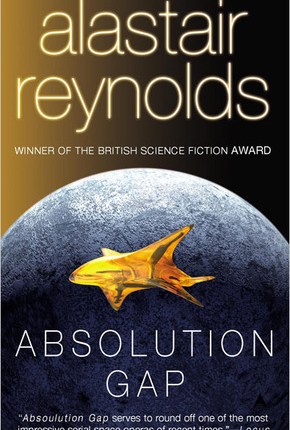
Absolution Gap (Revelation Space, #3) by Alastair Reynolds

Absolution Gap (Revelation Space, #3) by Alastair Reynolds

Alastair Reynolds ends his space opera trilogy with Absolution Gap. Many of the characters from the last book are desperately fighting the Inhibitors, but humankind seems to be losing the war. In a final hail Mary, the Conjoiners and a new member of their race seek a distant star system where a planet seems to disappear and the phenomena is worshiped by a group of fanatics led by a prophet with religious fervor literally in his bloodstream.

For a fraction of a second something inexplicable had occurred. A sensor anomaly. A simultaneous hiccup in every sensor that happened to be observing Haldora as the ship made its approach. A hiccup that made it appear as if the gas giant had simply vanished. Leaving, in its place, something equally inexplicable.” pg 54

Photo by Edvin Richardson on Pexels.com

Reynolds weaves two main story lines together to create an adequate, but perhaps not entirely satisfying, ending. The science in his books is impeccable. But, like in my previous reviews, I wanted a bit more from the characters.

“Are you all right, sir?” he had asked. Clavain had looked at him sharply. “I’m an old man,” he had replied. “You mustn’t expect the world of me.” pg 77

Readers have come to care about Clavain, Anoinette Bax, Scorpio, and the myriad others characters in this world. The endings given to them are, in my opinion, abrupt and almost given as an aside.

But some of Reynolds writing is simply beautiful and it makes up for a variety of quibbles I had with the story telling.

“It was quiet now, but coming nearer, and he knew that when it reached its awesome crescendo it would fill his soul with joy and terror. And though the bridge looked much the way it had before, he could see the beginnings of stained-glass glories in the black sky beyond it, squares and rectangles and lozenges of pastel light starting to shine through the darkness, like windows into something vaster and more glorious.” pg 100

Photo by Pixabay on Pexels.com

The broader themes are worth considering as well. What would happen to the human mind if the body becomes essentially immortal? Why does it seem like we’re so alone in the universe when there are so many inhabitable planets? What would advanced technological warfare look like? How would technology and its awesome capabilities change society, our modes of transport, and us?

“Brane theory suggested that the universe the senses spoke of was but one sliver of something vaster, one laminate layer in a stacked ply of adjacent realities. There was, Quaiche thought, something alluringly theological in that model, the idea of heavens above and hells below, with the mundane substrate of perceived reality squeezed between them. As above, so below.” pg 286

Photo by Miriam Espacio on Pexels.com

Recommended for science fiction readers who want to ponder those types of questions.