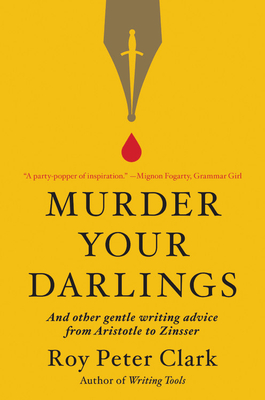
Murder Your Darlings is not just another book about writing. It shares the wisdom and creative insights of fifty or so authors, some famous, some not, and some who wrote their own books about the craft.
In his own unique manner, Roy Peter Clark distills the main lessons from each writer and presents them in curated chapters. The chapters are organized into six parts: language and craft, voice and style, confidence and identity, storytelling and character, rhetoric and audience, mission and purpose.
Aspiring or struggling writers can go directly to the issue she may be facing at the moment or read the whole thing to find tips and techniques that fit her emerging efforts best.
Though this may be most useful to writers who have a particular problem in mind, I believe any writer who wants to elevate their work could find something illuminating in these pages.
At the very least, Clark saves writers days of research time into locating appropriate writing resources. If you like the brief outline he gives of a writing guide, you could go invest the time to read the whole thing.
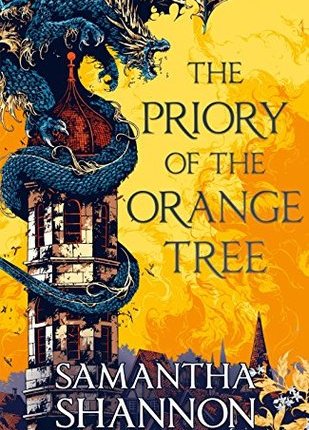
A cast of interesting and well-imagined characters stumble through poorly-written plot twists on their way to saving the world from “The Nameless One”.
“The House of Berethnet may protect us from the Nameless One, or it may not. There is no proof either way. … That is the problem with stories, child. The truth in them cannot be weighed.” pg 109
I started out enjoying The Priory of the Orange Tree. The way the story builds is engaging and moves along at a fast clip.
My main quibble with this fantasy book is Samantha Shannon takes more than 800 pages to create her world with its countries, religions, magic systems, but then resolved major plot points in two to three sentences or less in some cases.
We learn about items that have been missing for a millennia and I thought, oh this is going to be interesting to figure out. But then, two pages later, through a series of ludicrous coincidences, two of the main characters have one of the items in their hands.
In one of the major confrontations of the book, Shannon doesn’t even write dialogue and played it out through the eyes of a character who had no idea what was going on. I wouldn’t have been so put off by it if she hadn’t spent literally hundreds of pages getting us to that point. That particular villain may not have been the focus of the tale, but I think she at least deserved a final monologue.
When traveling from place to place, there aren’t tantalizing descriptions of the trip. Basically, the character gets in the conveyance and, boom, they’re at the destination. Shannon used more descriptive words when she talked about the food characters were eating than she did when her characters were moving from here-to-there.
The exception to this rule were her descriptions of “the Abyss”. The way she depicted the stars shining down from above and out of the depths was beautiful.
Complaints aside, there were plenty of things I liked about the book. I enjoyed the way Shannon took real life alchemical principles and wove them into something otherworldly for her story.
“What is below must be balanced by what is above, and in this is the precision of the universe. Fire ascends from the earth, light descends from the sky. Too much of one doth inflame the other, and in this is the extinction of the universe.” pg 150
I also liked the secret order whose name graces the front cover of the book. The different cultures Shannon created were a treat a learn about. I thought her characters were, for the most part, quite relatable.
“So you see, Ead,” the queen said, “I do not sleep because I’m not only afraid of the monsters at my door, but also of the monsters my own mind can conjure. The ones that live within.” pg 203
The characters were diverse and, as I mentioned, well-written. A couple times in the story, particularly in the portions about the Abyss, I felt Shannon’s writing was elevated to something like prose.
“Love and fear do strange things to our souls. The dreams they bring, those dreams that leave us drenched in salt water and grasping for breath as if we might die – those, we call unquiet dreams. And only the scent of a rose can avert them.” pg 416
I think this story could have been extraordinary if Shannon hadn’t been trying to fit so much into one volume. A trilogy with lingering descriptions of landscapes and nail-biting conclusions to the various story arcs would have been much more enjoyable.
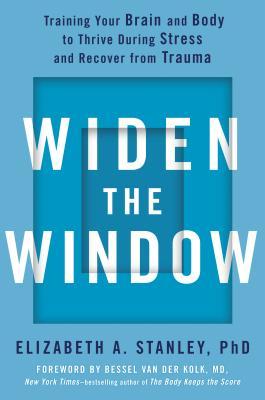
Managing stress and recovering from past traumas are some of the many challenges facing humanity in the modern era. Widen the Window addresses both those problems.
Elizabeth Stanley explains how individuals handle stress and trauma varies widely from person to person. It is first affected by your biology, then your unique childhood experiences making everyone’s responses different. What is incredibly stressful to one person may to a cakewalk to the next, and vise versa.
She describes the ability to manage responses to stress as a window. Through a variety of mindfulness techniques, healthy eating, maintaining a large social network, and getting plenty of rest, Stanley guides the reader through ways to “widen the window” or increase your ability to manage stress.
I am always on the lookout for ideas on how to appropriately manage stress. If I manage my stress responses when they’re small, it prevents something more serious from building up and coming out in other, perhaps more dysfunctional, ways.
I could see this book being useful to every reader who picks it up. Everybody has something they’re dealing with – from current work to family to friends issues or traumatic past experiences that push themselves into the present. We’re all in this together, even if your mind is telling you otherwise.
It is simple to pretend that people who perform shocking acts of violence are different than everyone else. It’s got to be something in their childhoods, we think, or maybe it’s a mental illness.
The most disturbing part of this book, and it admittedly has many, was that these women seemed so normal, just like you or me.
William Rosenau has combed through court files, newspaper articles and more to write Tonight We Bombed the U.S. Capitol, a non-fiction account of a radical leftist terrorist group. They planted multiple homemade bombs, robbed and killed people, all in the name of freeing the world from imperialism.
The majority of the group were highly educated, white women.
“They’d spent their entire adult lives embroiled in political struggles: protesting against the Vietnam War, fighting for black, Puerto Rican, and Native American liberation, and fighting against what they called U.S. ‘imperialism’ – that is, U.S. military aggression, political domination, and economic exploitation, particularly in the Third World.”
Rosenau paints a careful picture to reveal how, step-by-step, the people involved in the group felt more and more marginalized and victimized to the point where they felt any and all actions were justified.
“Their vision of what this heaven on earth would look like was hazy, but one thing was certain: creating it would require nothing less than violent revolution. This vagueness about ultimate objectives is typical among terrorists.”
There is so much information about a number of different people in this book that it can be overwhelming. But I think, ultimately, it is better to know what has gone on in the past because it affects the future in such a profound way.
“I discovered that during the 1970s and 1980s, the United States had waged an earlier ‘war on terror’ against violent domestic extremists, and it was during that period that the government created many of the counter-terrorism tools and approaches that continue to be used today.”
The privilege of living in a free society is that all manner of ideas can be discussed and embraced or dismissed depending upon their merits. I want equality, freedom from tyranny and opportunities for all people – no matter what you’re from, what you look like, or what your background is.
However, I won’t use violence to try and bring those ideals about. That seems to be the line in the sand for many. The people in this book didn’t have that line but they seemed to espouse higher ideals.
And what a tragedy that is. If only their brilliant minds had been directed towards methods of bringing about change that worked within society rather than against a nameless enemy, our country might have been better for all of them.
Thank you to NetGalley and the publisher for a free advance reader copy of this book. The brief quotations cited in this review may change or be omitted entirely from the final print version.
My parents taught me that the universe is enormous and we humans are tiny beings who get to live on an out-of-the-way planet for the blink of an eye. And they taught me that, as they once wrote, “for small creatures such as we, the vastness is bearable only through love.” pg 12, ebook.
Sasha Sagan, the daughter of celebrated scientist Carl Sagan, was raised to believe only what could be proven. Her father told her: “It’s dangerous to believe things just because you want them to be true.” pg 11, ebook.
But they also instilled a sense of wonder in Sasha about existence and humanity’s place in it. For Small Creatures Such as We is an examination of religious and secular celebrations and rituals from around the world. I learned a great deal about the similarities of humanity’s need to celebrate and recognize the seasons, rites of passage, and other universal milestones in life.
I wouldn’t describe myself as religious, rather I’m very spiritual. In my opinion, Sagan’s book could appeal to even those who may describe themselves as religious. She has a welcoming voice for every kind of reader.
“If you are devoutly religious, firstly, I’m delighted you’re reading this. Thank you. … This book is not intended to dissuade you, only to increase what there is to be joyful about.” pg 14
I think she succeeds in drawing a clear picture of what rituals mean to humanity. And that brought me so much hope for the future.
Some live lives of little meaning and less depth because there is no framework in place to support the creation of personal rituals outside of certain groups who may not share your vision of reality.
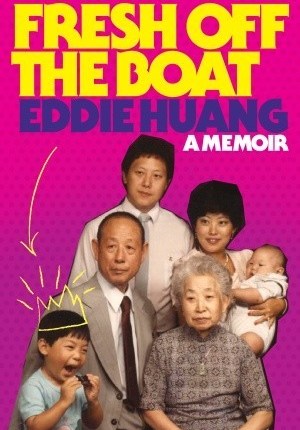
Fresh Off the Boat is the life story of Eddie Huang.
After learning about his various exploits, some of which were extremely dangerous, I was amazed that he’s still around to recount them.
I picked up this memoir because I’ve seen almost every episode of the network family comedy, “Fresh Off the Boat,” and wanted to read the source material behind it.
As sweet as the show is, I think it does Huang a disservice.
I guess because it’s on network television, writers have essentially edited Huang’s life story. In the television show, the character of Eddie loves rap music, basketball and eating, (like he did in real life) but it leaves out the more real portions of Huang’s history.
His classmates called him racial slurs on an almost daily basis. He was subjected to physical abuse from his parents. He got mixed up in drugs and selling name brand shoes. He was arrested for fighting.
The reason why his grandmother is in a wheelchair, which is depicted on the show though the reason is never given, is because her feet were bound as a child.
All of that realness is completely missing from the television show. But it is so important to creating the man Huang is today.
The differences between the book and the tv series aside, Huang has a fascinating voice. He’s, at turns, funny and real. He explains his more obscure slang references at the end of each chapter in footnotes.
“I think my mom is manic, but Chinese people don’t believe in psychologists. We just drink more tea when things go bad.” pg 12, ebook
The window Huang opens into his culture is an enlightening one. He’s the first generation of his family to be born in the United States, but he doesn’t ever really embrace being American. He exists in a realm in between because he is never truly accepted by his European peers.
“Since kindergarten my parents had been sending me to Christian schools, where the teachers would feed me soap and made me use my right hand even though I’m a lefty, because we supposedly got a better education at parochial schools even if we weren’t actually Christians.” pg 26, ebook
In an effort to get along better with his teachers, Huang even acts as if he embraces Christianity when in reality he was just trying to survive. I felt sad that he had to pretend to be something other than who he was to make his way in the world.
“They’ll never let someone with a face like you on television.” To this day, I wake up at times, look in the mirror, and just stare, obsessed with the idea that the person I am in my head is something entirely different than what everyone else sees. pg 41
I highly recommend this memoir for readers who want to learn about another person’s life experience. Huang has penned an engrossing memoir about someone who took some unexpected turns on the way to his destiny — creating a wildly popular eatery in New York City. I enjoyed every story and learned so much.
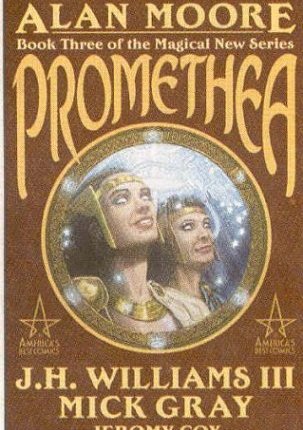
The saga of Promethea continues in Volume Three of the five book series.
Promethea, the version embodied by Sophie Bangs, has embarked on an adventure through the myriad worlds of the Tree of Life. She seeks another of the avatars of Promethea who recently died. Together, they hope to find the deceased woman’s husband and learn about the occult on the way.
Photo by Stacey Gabrielle Koenitz Rozells on Pexels.com
Meanwhile, back in the real world, Sophie has left someone unexpected in charge of keeping the baddies at bay while she’s away. Is Stace up to the task?
The artwork of the series continues to impress with its beauty and ingenuity. I especially enjoyed the mobius strip path of the world of Hod.
Alan Moore’s writing is at its best when he’s waxing on about the complexity of the universe and delivering punchy one-liners ending those conversations.
However, he takes the characters through so many different places so quickly that the adventures themselves end up feeling rather stilted. I think I may have enjoyed this entry more if he had spent a little more time exploring the worlds rather than simply explaining them.
I get that Promethea has places to be. But she could have savored the journey along the way.
Recommended for graphic novel readers who enjoy a mix of fantasy and occult in their stories. Thanks for reading!
Here are links to the other two reviews I’ve written for this series:
Though everyone will one day die, Michael Greger gives some tips to help you live as long and as healthily as possible.
I’m not going to debate the merits of different diets which seem to change as quickly as fads. I think everybody should try to incorporate healthy habits that are right for them as they are able.
How Not to Die is packed with ideas on that front.
I think the most interesting part of this book are the effects that various foods have on the body. But you don’t have to take Greger’s word for it, experiment and see what works for you.
Neve’s life is a mess. She recently broke up with her boyfriend, has no place to go and an unfortunate drinking habit. Perpetually hung over and disappointed in her job, friends, and family, Neve experiences a shocking event on a London bridge that changes her life forever.
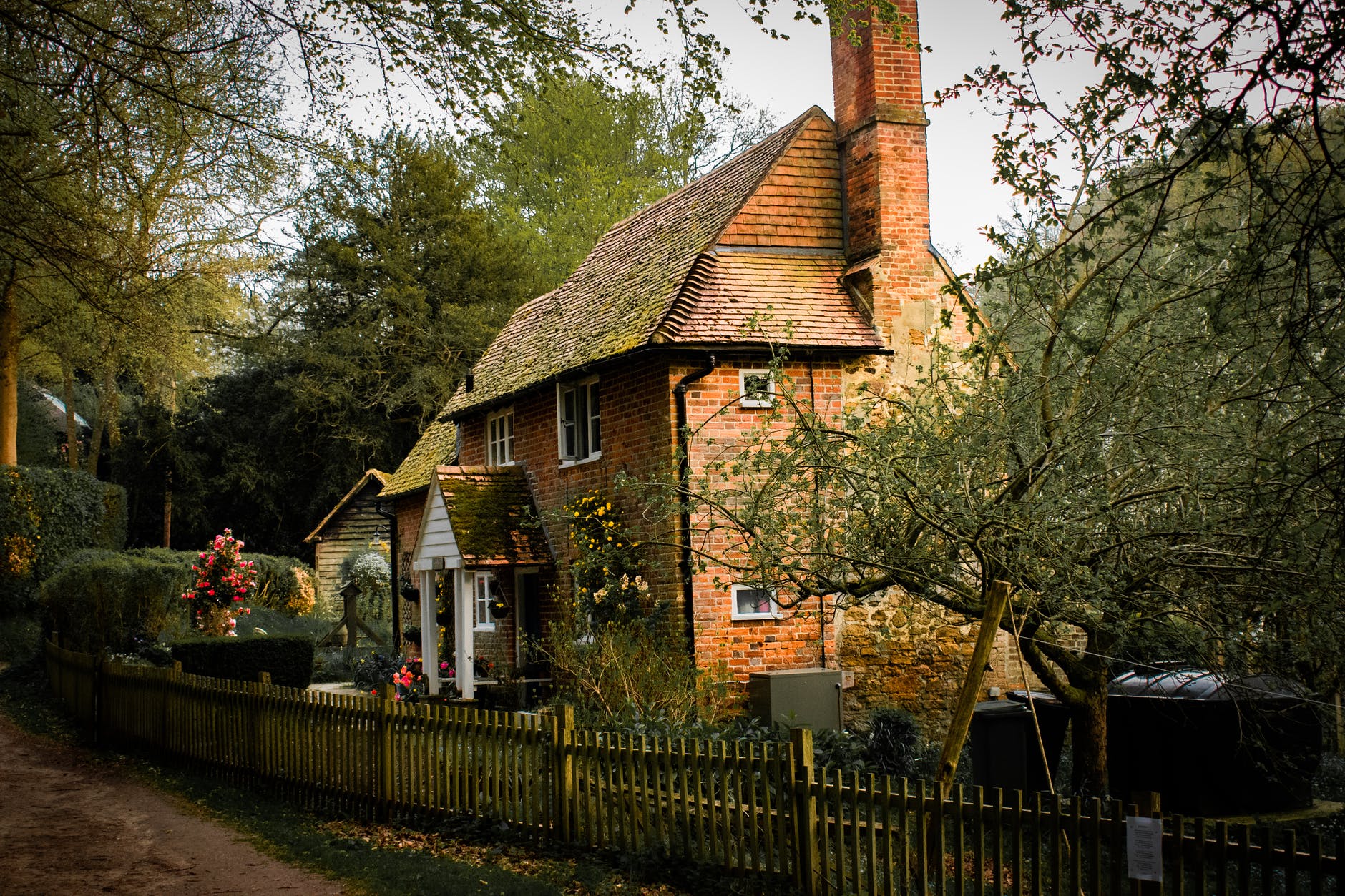
Now the proud owner of a cottage in the woods, Neve can hardly believe her good fortune. But when unexplained events begin to haunt her waking hours, she begins to question whether it was luck that led her to the bridge or something else entirely.
“This really is happening quite legally, Neve,” she says in a gentle voice. “You own Petty Whin Cottage and everything in it. It’s all yours now.” pg 48, ebook
Cass Green has crafted a suspenseful mystery with an unreliable narrator that holds your attention but doesn’t necessarily deliver on the thrills. But it is enjoyable enough for what it is.
I read In a Cottage In a Wood in just a few sittings with a mug of hot chocolate in my hand while a winter storm raged outside. I think the book is a good choice to pass a few hours and I could also see it being an interesting pick for book clubs.
Green is at her best when building a growing sense of isolation and Neve’s teeth-on-edge feelings at the cottage, all while utilizing every day events that could be completely innocuous. What’s so scary about power outages, a dead bird and a dog getting outside the fence? It’s in the timing and the incremental increase in emotional tension, which Green has down perfectly.
Neve is a relatable character even while making poor choices. I found myself cheering her on, hoping she finds whatever it is she’s looking for to bring some peace to her soul. But the unreliable narrator bit has been used a great deal lately, hasn’t it?