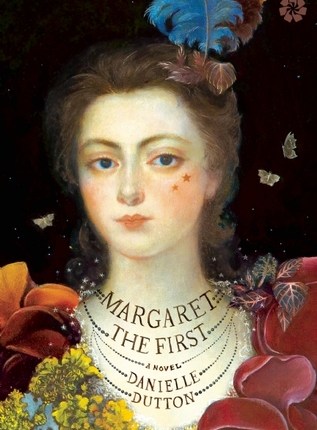
Margaret the First by Danielle Dutton

Margaret the First by Danielle Dutton

This book is life story of Margaret Cavendish, a duchess and one of the first popular female writers in England.
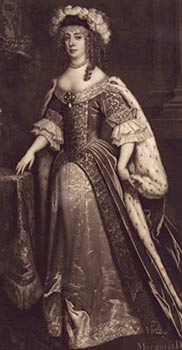
cavendish

Nice hat, right?  Digital image from nottingham.ac.uk

Margaret the First is written like a dream- the scenes come and go with little or no explanation in them and years pass in the blink or an eye or turning of the page.

Usually, I read historical fiction to immerse myself in the details of a time period, but this book doesn’t really cater to that. It’s a bubble in the wind or a glimpse from the windows of a fast moving car. It hints at depth more than delivers it.

Photo by Lucas F. on Pexels.com

But still, despite this strangeness, I was mainly captivated.

Margaret describing her mother: “As for our mother, she was beautiful beyond the ruins of time. None of her children would be crooked, of course, nor in any ways deformed. Neither were we dwarfish, or of a giantlike stature, but proportional, with brown hair, sound teeth, sweet breath, and tunable voices- not given to wharling in the throat, I mean, or speaking through the nose, unless we had a cold- yet we were none so prone to beauty as she, and I perhaps the least of them all.” pg 14, ebook. Beautiful.

Margaret describing the difference between her childhood education and her brother’s: “You must wear chicken-skin gloves on your hands all night,” my mother began… “When inside the house,” my mother went on, “you must not spend all your time writing little books.” Yet out the window, as she spoke, under a net of branches, my youngest brother, Charlie, arrived on the lawn with a hawk. … It is nobler to be a boy, I thought- and looked back with nostalgia, as if I just had been.” pg 18, ebook
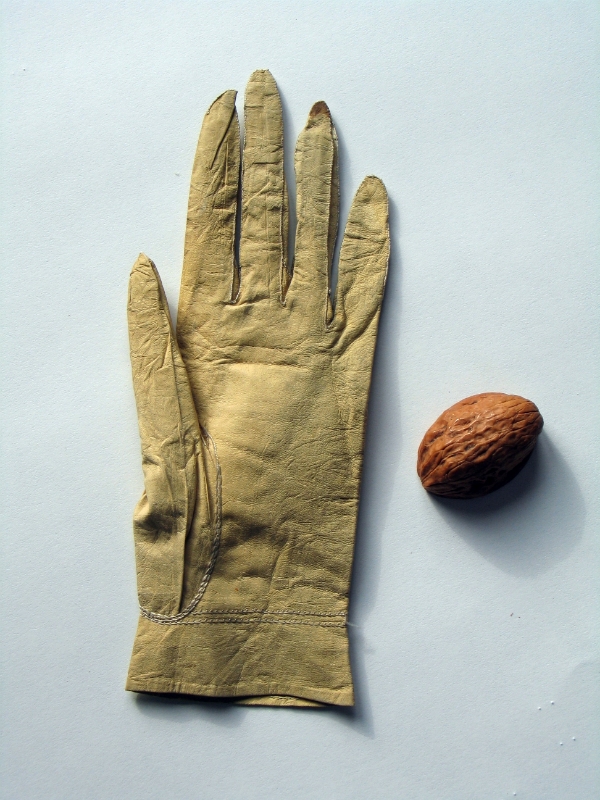
chicken-skin-gloves-0031

Actual chicken skin glove. Image from www.museumofleathercraft.org

The first time Margaret speaks out in a group of intellectuals: “A second man then sportingly suggested they debate the nature of woman. “You will find, sir,” I abruptly spoke, “women as difficult to be known and understood as the universe.” The room fell silent. I was surprised as any man.” pg 43, ebook.

This may be a work of fiction, but I feel like that’s something that Margaret would have actually said. Don’t you?
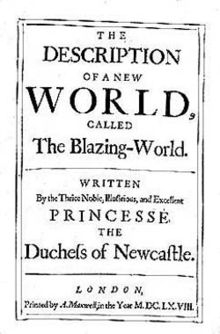
theblazingworld

Cover of one of Margaret’s books.  Photo from wikipedia.org.

The attitudes of that time period were astonishing: “Unlike Mr. Hobbes in his Leviathan, then under production in Paris, William thought that common man should be kept illiterate and happy, with sport and common prayer. “Too much reading,” he said, “has made the mob defiant.” I chewed my mutton and considered.” pg 56 (ebook)

Margaret undergoes a lot of unfortunate medical treatment in this book.

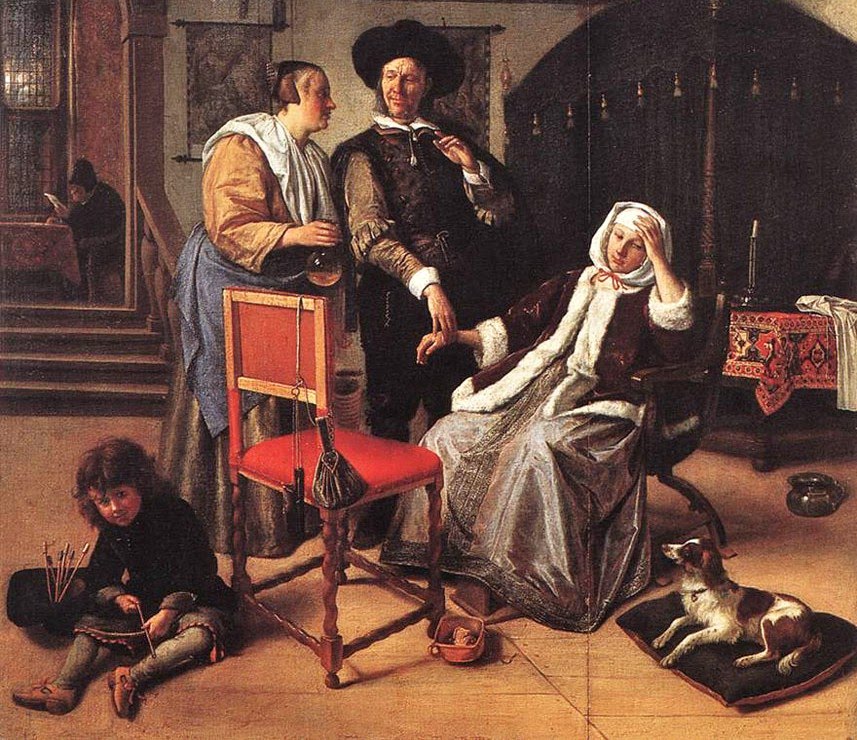
I thought that this passage was charming and really showed the time period rather than purely grotesque, bodily manipulations like some of the other doctor visits: “He (the doctor) tapped and patted, then scribbled in a book: how clear, how pale, how pink. I looked, he assured me, ten years younger than my age, in blossom, in perfect health, and prescribed only a new herb from China called tea. “The decoction of it drunk warm doth marvels,” he told Charles. “Very comforting, abates fumes.” To me he spoke nonsense, as he would to any child, suggesting candy or gossip, or candy with gossip, to lift my mood.” pg 64 (ebook)
thedoctorsvisit

Painting: The Doctor’s Visit by Jan Steen.

Digital image from b-womeninamericanhistory17.blogspot.com

The science of the 1600’s was so off from reality as to seem absurd now in retrospect.

Take this scene where Margaret and an intellectual friend are viewing a map of the North Pole:“Here,” he said, “lies the very pole of the pole of the Earth, where all the oceans’ waters circle round and fall, just as if you’d poured them down a funnel in your head, only to see them come back out the southern end. And in the middle of the middle sits a large black rock, the very pole of the pole of the pole of the Earth, wholly magnetic, possibly magic, and thirty-three miles across!” “Where is the ice?” she wanted to know.” pg 100, ebook.
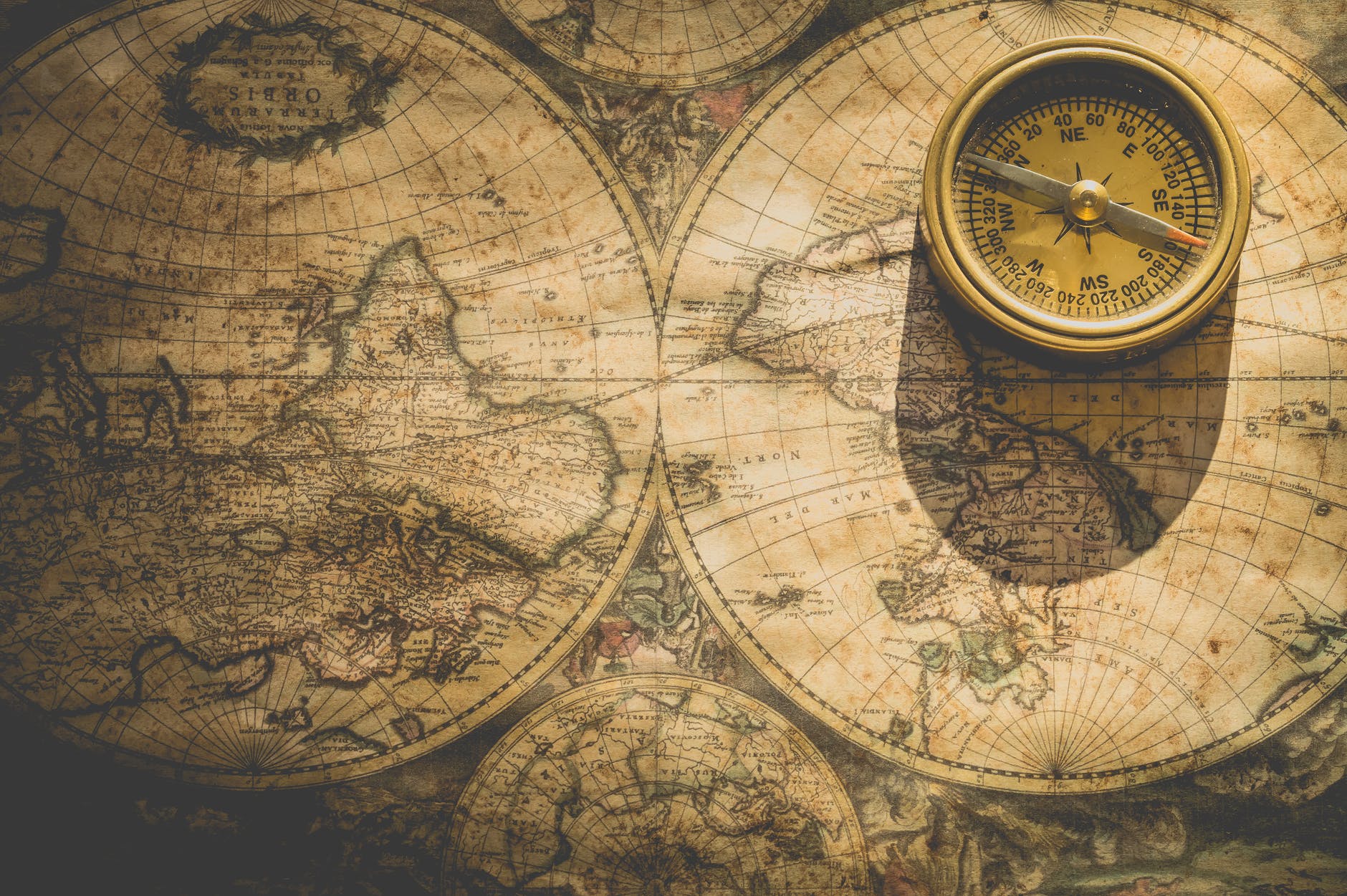
Photo by Ylanite Koppens on Pexels.com

In this passage, Margaret’s husband asks her what she wants in life and I thought that Dutton captured the (occasionally) unsettled attitude of every woman who has ever lived nearly perfectly:“But Margaret wanted the whole house to move three feet to the left. It was indescribable what she wanted. She was restless. She wanted to work. She wanted to be thirty people. She wanted to wear a cap of pearls and a coat of bright blue diamonds. To live as nature does, in many ages, in many brains.” pg 102, ebook. I’ve been there.

If the reader is looking for a historical fiction with more umph to it, she may want to consider The Dream Lover: A Novel of George Sand by Elizabeth Berg.

But, if she wants a frothy, fun, and fantastical journey into what might have been, look no further than Margaret the First.

Thanks for reading!

This review also appeared on O’Fallon Public Library’s blog.

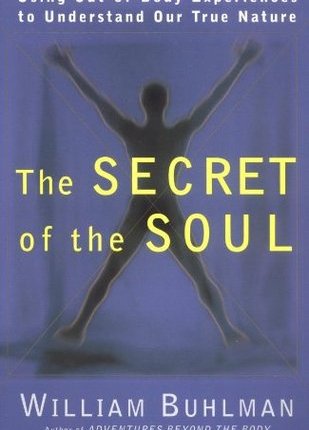
The Secret of the Soul: Using Out-of-Body Experiences to Understand Our True Nature by William Buhlman

The Secret of the Soul: Using Out-of-Body Experiences to Understand Our True Nature by William Buhlman

The Secret of the Soul is a great title for beginners who are looking to understand this, sometimes confusing, other times frightening, skill that we all seem to possess — the ability to exit our bodies in a kind of vision or trance.

Some call this the “out of body experience” or OBE.

Photo by Joshua Abner on Pexels.com

The first half of the book, Buhlman discusses OBEs, why they are important, and gives countless examples of actual OBEs that folks have had. The second part of the book gives concrete techniques and problem solving tips to assist readers in having their own OBEs.

One of my friends is a long distance runner who has had some OBEs during his ultra marathons. I thought of him in the section entitled “Combat and Trauma-Induced Experiences”: “It was while I was running in a marathon last year that I had a very strange experience. I was at about the eighteen-mile marker when I looked beside me and saw myself running. At first I thought it was someone who was my build and wearing the same shoes, but then I realized it was me!” pg 55

Buhlman has story after story like that.

Photo by anouar olh on Pexels.com

If you’ve never had an out of body experience of your own, the sheer variety and number of people who have fills you with confidence that you can.

I also liked Chapter 4, “Transformational Experiences”: For thousands of years spiritual masters have taught that the act of withdrawing from the senses is essential in order to consciously experience our spiritual self. pg 61

And the testimony from that chapter: “This is bigger then anything I can imagine; how can I tell people without sounding like a nutcase? This changes everything I ever thought I knew or thought was true.” pg 68

That’s the thing about powerful transformational experiences. Until someone has one him or herself, there’s not really anyway to explain it.

Chapter 6, “Extraterrestrial Contact and Abduction,” was the first time that I’ve read about aliens alongside traditional OBEs. Buhlman writes: “After reading more than two hundred such letters (from his OBE survey), I noticed a startling similarity: The letters describing extraterrestrial contacts and abductions were almost identical to the thousands of letters I have received describing out of body experiences. In fact, I often could not distinguish between letters.” pg 89

Photo by Francesco Ungaro on Pexels.com

In Chapter 7, A Brief History of Out-of-Body Experiences, the reader is given cultures from different time periods, all over the planet, that support and confirm the existence of out of body experiences.

These seem to suggest that OBEs are a “human” experience rather than a culturally specific one.

Take Emanuel Swedenborg’s words: “It has pleased the Lord to… open the interiors of my mind or spirit, whereby I have been permitted to be in the spiritual world with angels, and at the same time in the natural world with people, and this now (has happened for) twenty-seven years.” pg 113

I was surprised at how many of the historical figures presented here as having OBEs were scientists… I guess in my mind I’ve always drawn a line between the artsy/mystic types and the scientists. Line erased. 🙂

I’ll conclude with a few statements from the Appendix of the book, which was compiled from Buhlman’s extensive survey of people who had had OBE’s: “Self-initiated out-of-body exploration is a direct and powerful method to experience our true spiritual essence. It is an effective method to accelerate our personal growth and evolution. … This is achieved by personal spiritual experience and exploration beyond the physical limits.” Appendix pg 253.

Photo by Enrique Hoyos on Pexels.com

Couldn’t have said it better myself.

If you’re looking for more books on the topic of out-of-body experiences, check out Otherwhere by Kurt Leland, Journeys Out of the Body by Robert Monroe, or Multidimensional Man by Jurgen Ziewe.

Thank you for reading!

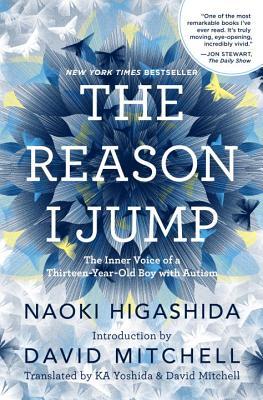
The Reason I Jump: The Inner Voice of a Thirteen-Year-Old Boy with Autism by Naoki Higashida

The Reason I Jump: The Inner Voice of a Thirteen-Year-Old Boy with Autism by Naoki Higashida

Description from Goodreads: “You’ve never read a book like The Reason I Jump. Written by Naoki Higashida, a very smart, very self-aware, and very charming thirteen-year-old boy with autism, it is a one-of-a-kind memoir that demonstrates how an autistic mind thinks, feels, perceives, and responds in ways few of us can imagine. Parents and family members who never thought they could get inside the head of their autistic loved one at last have a way to break through to the curious, subtle, and complex life within.”

The reviews on this one from my Goodreads friends are very mixed and I understand why. The Reason I Jump touches on a very emotional topic.

I’m not an expert on autism so I am completely unqualified to determine if Naoki wrote this book with or without help or the over arching truth of his experiences. However, as a reader, I thought that some of Naoki’s words were very beautiful.

Naoki talks about difficulties in communicating his feelings, the beauty of nature, the impossibility of controlling his emotions or repetitive actions- knowing that he’s not behaving “normally” but not able to do anything about it.

“Please don’t judge us from the outside only. I don’t know why we can’t talk properly. But it’s not that we won’t talk- it’s that we can’t talk and we’re suffering because of it.”pg 24, ebook.

It seems to me that everyone’s lens of perception is different and we can learn from each other if we share our own unique viewpoint. I certainly learned about Naoki’s inner world from this book.

Thank you for reading!

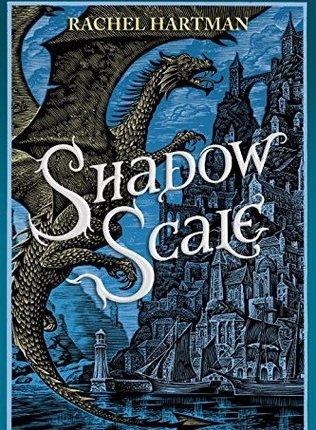
Shadow Scale by Rachel Hartman

Shadow Scale by Rachel Hartman

This is the second book in the Seraphina series. Seraphina is a half dragon/half human musician who, in the last book, was trying to hide her identity from those around her because, in this world where dragons are real, her existence was considered an abomination by religious authorities. How would a human and a dragon come together to make such a child, you ask? Dragons can take human form when they choose to, the trouble is that, they’re not very human-like in their actions and behavior, even when they do. Dragons consider emotions to be beneath logic, so, to put it in Star Trek terms, Hartman wrote them like Vulcans.

Seraphina, for a young adult novel, was rather complex. Not only was Seraphina dealing with her species identity, there’s also religious conflicts, internal/emotional conflicts, a meditation based “magic” system, a burgeoning war between the humans and dragons, factions on both sides who are opposed to the majority, dragon culture and hierarchy questions, tricky cross species friendships, the obligatory romance that every young adult book seems it MUST have and, in Shadow Scale, the added complication of Seraphina trying to find other half dragons like herself. It’s mind-boggling really when you write it all down and try to sort it out. I enjoyed trying to keep it all straight but I can see how Seraphina might not be a good fit for reluctant readers. There is a long list of characters at the end so that if you get confused, you can look each one up. If that kind of thing makes you crazy, you may want to pass on this one.

Seraphina has really come into her own in this story. Hartman certainly doesn’t skimp on the characterizations:“These scales, my visible emblem of shame… which I had hidden, suppressed, and even once tried to pry off with a knife- how was i now able to laugh about them with strangers? Something had changed in me. I was such a long way from where I had started.”pg 436, ebook.

My favorite parts of this book were anything to do with dragons! :“Dragons lay one egg at a time, and we grow slowly. Each death is significant, and so we settle our differences with litigation, or with an individual combat at most. It has never been our way to fight on this scale; if the war continues, our whole species loses.” pg 38, ebook.

Seraphina has a dream- to bring all the half-dragons like herself together to create a family, of sorts: “I am on a mission to find all our kind. Goredd requires our assistance with the dragon civil war, but once that’s over, I hope we might form a community of half-dragons, supporting and valuing each other.” Dame Okra rolled her eyes so hard I feared she’d give herself an aneurysm.” pg 112, ebook.

The intolerance taught by the religion in Seraphina’s world was terrifying, perhaps because it sounded so real: “I was no great hand at scripture- I avoided most of it- but I knew every line written about my kind, thanks to the pamphlet Orma had made me. “Half human, all malevolence” was one of Abaster’s best. Or: “If a woman hath lain with the beast, beat her with a mallet until she miscarries or dies. Let it be both, lest her horrifying issue live to claw its way out, or the woman live to conceive evil again.” pg 287, ebook. One of the main messages of Seraphina is tolerance for different cultures- that everyone has something positive to contribute in their own way.

As much as I gripe about the romance that always crops up in the young adult books, at least this one is well written:“However strenuously the world pulls us apart, however long the absence, we are not changed for being dashed upon the rocks. I knew you then, I know you now, I shall know you again when you come home.” pg 491, ebook. Awww, right?

This is a well written fantasy about dragons- fire breathing, scaled, roaring dragons! There’s nothing in here that parents should find objectionable for their teens to read and the messages that it teaches are worth while and should be repeated. Some read alikes: Daggerspell by Katharine Kerr (first book in a long, adult series, but, eventually, there’s dragons!) or The Last Dragonslayer by Jasper Fforde (appropriate for young adults).

Thanks for reading!

The Andy Cohen Diaries: A Deep Look at a Shallow Year by Andy Cohen

The Andy Cohen Diaries: A Deep Look at a Shallow Year by Andy Cohen

The Andy Cohen Diaries is the type of book that you have to be in the mood to read. It is basically like a book length gossip column, which can sometimes be exactly the kind of fluff that I want to read. Other times though… it is more annoying than amusing.

Andy writes it in a stream of consciousness style- event, event, feeling, event, aside, event, personal thoughts, inside joke, repeat. So, jump into this one if you want a bunch of gossip about the New York scene and Watch What Happens Live.

Photo by Expect Best on Pexels.com

I thought Andy’s description of his book was spot on:“Sometimes-like life itself-these chronicles are funny, sometimes dishy, and sometimes even a little sad. And sometimes they are really, really shallow. Because sometimes life is shallow. I understand that and have accepted it. I hope you will too.” pgs 7-8 ebook

Andy’s life is filled with drama, divas, and emotion laden moments both on and off the screen. I enjoyed watching him juggle it all. He offers this advice for handling the more challenging people in your life: “…I told her I was sorry if I offended her. Sometimes, the only option is to say you’re sorry, even if you have no idea what someone is talking about.” pg 11 ebook.

I’ve never watched any of the Real Housewives of (fill in the blank city). So, those gossip bits didn’t mean all that much to me.

However, the parts about Lady Gaga were a different story! : “Then the weirdest cake arrived from Lady Gaga, red velvet cheesecake with white chocolate on top with Lady Gaga Art Pop written on it… the note said “Love, Gaga” in teeny little capitals. It looked like-I don’t know what actually-robot writing?”pg 18 ebook

Photo by Abhinav Goswami on Pexels.com

I also learned in this book that Andy Cohen makes a cameo in Gaga’s surreal music video, G.U.Y. Who knew?

Andy is from St. Louis, the closest city to my small hometown. So, we had that in common.

Any time he was taking about the weird things that people from St. Louis do, I was nodding my head in sympathy: “Everybody in St. Louis, all they talk about is how great St. Louis is. The hostess lady in the suite asked me if I lived in LA and I said no, I live in New York, and she said to me very earnestly, “Why, may I ask, would you ever leave St. Louis?” pg 38 ebook. Yeah, they do that.

I could go on and on. The Andy Cohen Diaries is just so quotable. Some read alikes: Amish Confidential by “Lebanon” Levi Stoltzfus (tell-all about the Amish Cofidential show and the Amish community) or My Horizontal Life by Chelsea Handler (hilarious recounting of Chelsea’s various escapades).  Thanks for reading!

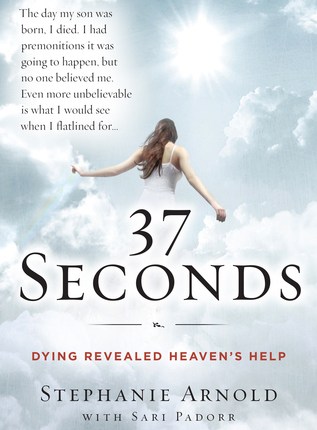
37 Seconds: Dying Revealed Heaven’s Help—A Mother’s Journey by Stephanie Arnold

37 Seconds: Dying Revealed Heaven’s Help—A Mother’s Journey by Stephanie Arnold

37 Seconds is a fascinating account of Stephanie Arnold’s near death experience. She had a premonition that she was going to die having her second child.

Photo by Pixabay on Pexels.com

Stephanie did die for 37 seconds and had an amazing spiritual experience.  Her religious upbringing is in Judaism which makes for a totally different lens of perception than other NDEs (near death experiences) that I have studied.

I like reading books about near death experiences and examinations of consciousness.  So far, I’ve read twenty one books by folks from different religions and parts of the world about their NDE and what they’ve brought back with them to their normal, every day lives.

I found it interesting that the focus of Stephanie’s consciousness during the event was on her deceased relatives and their support of the physical world rather than on a location on a higher level where people go to hang out around their G-d for the rest of eternity.

Photo by Pixabay on Pexels.com

Another portion of the account that made it different than others that I’ve read on the topic is that Stephanie accessed her memories of the time during her 37 second death through hypnosis.

Other NDE writers (Piper, Moorjani, Burpo, et al) came out of their NDEs with memories of what went down. Stephanie, because of the extreme trauma and the premonitions about her death that haunted her for months before the actual event, repressed her NDE.

Isn’t it fascinating?  The study of consciousness never ceases to surprise me. It seems that not only do our lenses of perception create what we see in other modes of existence, but we can choose whether to access those perceptions or not.

I also liked Stephanie’s repeated message through 37 Seconds of trusting your own intuitions and believing in that inner voice. I feel that in modern society, we’ve advanced in so many ways both scientifically and technologically, that we discount simpler modes of understanding and knowledge.

Why try learning about why your body is presenting symptoms of anxiety and stress when we can just medicate it away? Why believe in your dreams and intuitions when educated doctors and scans show that nothing is wrong?

Photo by alleksana on Pexels.com

If Stephanie had listened to the experts, she would be dead. She is a great role model for a return to trusting ourselves. Doctors, medicine, and therapy have their place but so do dreams, intuitions, and the inner voice.

If you enjoyed 37 Seconds, try Wisdom of Near-Death Experiences: How Understanding NDEs Can Help Us Live More Fully by Penny Satori or Journey of Souls: Case Studies of Life Between Lives by Michael Newton.

Thank you for reading!

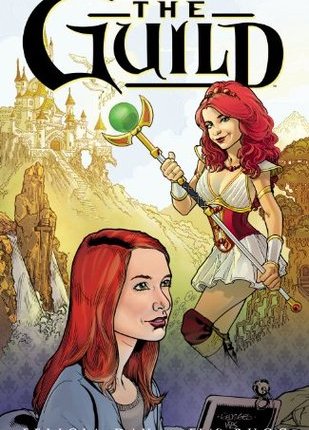
The Guild by Felicia Day

The Guild by Felicia Day

The Guild is a graphic novel prequel for the internet series of the same name.  I think it is a must-read for fans of Day’s show and gamers who haven’t seen the show may enjoy it too. Other readers may want to give this a pass as it deals almost exclusively with gaming or RL relationships through gaming.

As much as I enjoyed this book, I felt like Day missed a golden opportunity to present the show in a completely different way. Day could have written this as characters in “The Game” with only brief moments of RL intruding into it. It would have flipped the show on its head and, in graphic novel form, she wouldn’t have faced any production limitations. Can you imagine it? I absolutely could. Maybe that’s what she did in the next book? Here’s hoping.

The glimpses that we had of the backstories of the Guild’s characters was awesome and I couldn’t get enough of “The Game” itself. Pretty much any scene where they were in the digital world was amazing. I also loved how their avatars had their real life faces.

The “one camera confessional” scenes worked so well in show, but didn’t translate as fluidly in the book. I think the reason why it works in real life is the expressiveness of Day’s face as she talks her way through her problems. The panels in the book didn’t have that aliveness and sort of fell flat.

But, that small gripe aside, I really enjoyed this one and highly recommend it. Some other graphic novels that readers may enjoy: Nimona by Noelle Stevenson (fantasy world), Fray by Joss Whedon (fantasy world), or The Order of the Stick series by Rich Burlew (for board gamers and fans of DnD).

Thanks for reading!

You’re Never Weird on the Internet (Almost) by Felicia Day

You’re Never Weird on the Internet (Almost) by Felicia Day

“You’re Never Weird on the Internet (Almost)” is an excruciatingly honest memoir from Felicia Day about her quirky childhood, gaming addiction, cultural attitudes online, and life long struggle with anxiety and other mental health issues.

She reminded me a great deal of Jenny Lawson in her straight forward presentation of difficult topics and also in her exuberant storytelling style. And, in many other ways, she reminded me of myself.

Being a female gamer is hard. There, I’ve said it. Not only do your female friends not want to play video games with you, but your male friends never really accept you as a legitimate gamer. You’re kind of stuck in this twilight space of “this is what I love to do” but society doesn’t agree that it is appropriate for you to do.

Now, unlike the early days of MMORPGs, many more women play video games, and I’m sure that I’d make more female friends if I tried. But, back then in the fall of 2000, when I first got into EverQuest (one of the predecessors of WoW, the game that Felicia played), many more men played female avatars than actual women played. That’s just how it went.

Photo by picjumbo.com on Pexels.com

I loved that Felicia addressed this female gamer white elephant, so to speak. There are few people who really talk about it, but it’s something that I’ve been dealing with for a long time.

I loved her cheerful attitude, even when things got tough: “My story demonstrates that there’s no better time in history to have a dream and be able to reach an audience with your art. Or just be as weird as you want to be and not have to be ashamed.” pg 19 ebook. That’s a pretty powerful lesson and one which artists and dreamers everywhere should know.

Felicia admits that she has very few hands-on skills, something which I also have in common with her. In this passage, she’s joking about ordering coffee: “…I’m determined to enjoy the liquid indulgences of modern life. Might as well take advantage of it all before the zombie apocalypse. I have no practical skills; I’m fully aware that I’ll be one of the first ones “turned.” Instead of learning motorcycle repair or something else disaster-scenario useful, I’ll order the drink I want until I become a shambling corpse.” pg 17 ebook.

I’ve thought about my librarianship skills and book reviewing abilities in that same light. If something catastrophic happens, I’m kind of screwed.

I mean, yes, there have been favorable depictions of librarians after the apocalypse (Station Eleven comes to mind) but really, what good could I do for people struggling to survive or myself? While we’re on the topic of librarians, I also enjoyed that Felicia’s first “job” was working for her aunt, a librarian. She said about it: “No job since has left me feeling so well rewarded.” pg 67 ebook. Aww….

Photo by Pixabay on Pexels.com

Chapter Five: Quirky Addiction = Still an Addiction (How my obsessive personality steered me into a twelve-hour-a-day gaming addiction and an alt-life as a level 60 warlock named Codex) pg 85 ebook, was my favorite.

Gaming addiction is an actual thing. I’ve known multiple people who dropped out of college or lost their jobs because they couldn’t stop playing video games. I’ve also known people whose relationships started or ended because of it too. It seems silly for people who don’t have any interest in video games, but it can be as destructive an addiction and as real as anything else- drugs, sex, whatever.

Felicia nails the siren call of video games in this passage: “When we graduate from childhood into adulthood, we’re thrown into this confusing, Cthulhu-like miasma of life, filled with social and career problems, all with branching choices and no correct answers. Sometimes gaming feels like going back to that simple kid world. pg 93 ebook.

That’s it, really. Do the quest, get the reward, and repeat. Real life is never that simple or straight forward.

Though she felt like she wasted a lot of time, Felicia managed to break free of her addiction and channel her passion into the hugely successfully series: The Guild. I had never watched it, but after reading this book, I binge-watched every episode. She managed to take the culture, friendships, and craziness that is online gaming and turned it into a compulsively view-able series. I loved it.

If you haven’t had a chance to watch it yourself, I highly recommend it. One of the overarching points of this book, and the television show, is that not only can you overcome hurdles that held you back from the life of your dreams, but you can use the very thing that was the stumbling block to move onwards. Well done, Felicia, very well done.

One last little bit that I wanted to include in this review, because it rang so true for me, was Felicia’s thoughts about her struggles with mental illness. She says: “I couldn’t trust my own mind anymore, which was the scariest thing I’ve ever experienced. pg 170 ebook.

When your own internal filter, your brain, is compromised, you feel like you can’t trust yourself ever again. It’s as simple and as terrifying as that and, unless you go through it yourself, there’s not really any good way to explain what’s happened to you or why you’re so afraid.

If you’ve ever had any struggles with anxiety or mental health issues, you may really enjoy this memoir. Also, if you enjoy online gaming or want to understand one of your loved ones who does, you may like this book. Some read-alikes: Nerd Do Well by Simon Pegg, Fantasy Freaks and Gaming Geeks: An Epic Quest for Reality Among Role Players, Online Gamers, and Other Dwellers of Imaginary Realms by Ethan Gilsdorf, or Just a Geek: Unflinchingly honest tales of the search for life, love, and fulfillment beyond the Starship Enterprise by Wil Wheaton.

Thanks for reading!

Following Your Path by Alexandra Collins Dickerman

Following Your Path by Alexandra Collins Dickerman

Following Your Path is about using tarot cards and meditation in order to communicate with your psyche. I was particularly excited about this book because that’s the method that I use for my own meditations and writings. This book is a treasure trove of mythological symbolism and fairy tales. I enjoyed much of it. But, I felt as if Alexandra guides the reader almost too well.

She breaks down the cards into their various pieces and encourages reflection on each piece of the Tarot artwork in a sort of automatic writing process (write down the first thing that comes to mind when you look at “blank”).

I felt like she was depriving the reader of the richer experience of pathwalking into the cards themselves.

If I were to write a manual, perhaps someday, I would leave the meditations themselves as completely open ended with plenty of blank pages for writing. So, more like: “Here is the card. Walk through it as if it is a doorway. What do you see?”

It may be difficult to believe, but the mind fills the space with “something”. The endless writing prompts for the small details really aren’t needed. But, I could see this book being very useful for true beginners who are unsure of the way or don’t yet trust or know their own inner worlds.

Another small criticism, Alexandra has the reader starting their journey into the major Trumps (the minor cards aren’t even presented) and she starts her study with the Fool rather than the Universe. But, I suppose it doesn’t really matter the order in which you explore the cards. The fact that you’re doing it at all is what is important.

I loved this explanation of the psyche in the introduction by Jean Houston: “The psyche is not unlike an archaeological dig in which different civilizations, stories, and interpretations may be revealed at each level. Unlike the field archaeologist, however, we have living access to the cultures and knowings of the various strata within ourselves and therefore can learn on site how to tap our hidden dimensions for the benefit of our existential lives. It is also possible, with the help of those primordial patterns of meaning and relationship known as archetypes, to build sustaining bridges to, and networks among, these strata, thereby encouraging an ongoing communication and exchange of content- a kind of commerce of the psyche.” introduction, pg vii

There are quotations scattered throughout the text that I found very enlightening, such as: “Myth is the secret opening through which the inexhaustible energies of the cosmos pour into human cultural manifestation. Religions, philosophies, arts, the social forms of primitive and historic man, prime discoveries in science and technology, the very dreams that blister sleep, boil up from the basic, magic ring of myth.” -Joseph Campbell, pg 17 Makes you want to start meditating right now!

This book is extremely positive and affirming. I liked that in addition to the meditation prompts, Alexandra provides further exercises and questions to help heal and creatively examine the mind. She says: “It is only when we learn to evaluate ourselves in terms of our own inner values that we can exist in a positive emotional state, aware of the continual opportunities for growth and for feelings of satisfaction.” pg 138

She also provides hope for those who may be going through the darkness of depression or despair:“Often when we find ourselves in a state of stupor, hopelessness, pain, loneliness, depression, and even madness, we may be on the verge of great vision and inspiration. Our condition of desperation is often only a stopping place on the road to greater self-development. By looking inward, we can find a way past destruction, to salvation and to a new life.” pg 244 So, if you’re going through hell, keep going.

If you enjoyed this book, you may want to look at The Creative Tarot: A Modern Guide to an Inspired Life by Jessa Crispin. If you want numerous examples of tarot card pathwalkings, take a look at my book, The Light Congress: thelightcongress.com

Happy meditating and thanks for reading!