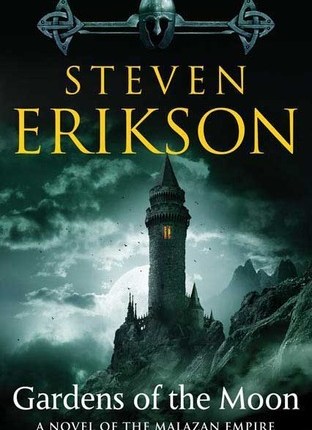
Gardens of the Moon by Steven Erikson

Gardens of the Moon by Steven Erikson

Second read-through August 2021: I have a few thoughts to add on my second read-through of Gardens of the Moon. Unlike my first foray into Malazan, I came out of this reading with a better appreciation of the female characters of the story.

Instead of being focused on what the characters were not, I looked at what the characters were. Powerful leaders, most of them, who imposed their will on the world around them through violence. It is an unexpected role for women, but still feels somewhat one dimensional. I wish some of the characters were more fleshed out, but I have the feeling that this development will happen before the end of the series.

Also, this go-round, I had a better grasp on the complexities of Gardens of the Moon and was prepared to be dropped into the middle of the action. Steven Erikson doesn’t hold the reader’s hand. He pushes her through the door into another world. Some readers hate/love this strategy. I fall mainly on the side of hate, but if it’s a good story, I’ll put up with it.

My favorite part is still the new tarot card deck that Erikson created.

Unlike last time, I’m going to keep pushing forward with this series. On to the next book!

Photo by ArtHouse Studio on Pexels.com

Review from first read-through June 2016: Gardens of the Moon is an extraordinarily complex fantasy. The over-arching story: the Malazan Empire (a militaristic conglomeration of nations) is invading everywhere and trashing cities as it goes. The Empress of Malazan, her High Fist Dujek (like a top general), Adjunct Lorn (a magic-hating fixer), Whiskeyjack and the Bridgeburners (like the A-team for Malazan, they go in and cause chaos before the main army arrives), Tattersail (a Malazan mage), Ganoes Paran (a soldier), and more are on the side of the Empire.

There’s about a dozen other main characters that I won’t list here for brevity’s sake.

One of the many heroes of this tale is Paran. The story begins with Paran as a child, gazing down from the walls of his city, towards destruction being wreaked by Malazan mages. He dreams of being a warrior and tells this dream to the aged soldier with him.

Their conversation: “Every decision you make can change the world. The best life is the one the gods don’t notice. You want to live free, boy, live quietly.” “I want to be a soldier. A hero.” “You’ll grow out of it.” pg 5
Photo by Mikhail Nilov on Pexels.com

And so the story begins. Paran gets his desire, of course, but so much more than he bargained for… kind of like the reader who picks up this book.

At first, I thought that the story was going to go like The Game of Thrones. We were going to have a bunch of different characters all fighting for the same thing. I was so wrong. The only similarities between the two tales are that 1. they’re fantasies, 2. they have a bunch of characters, and 3. there is a power struggle, but otherwise, they’re very different.

Gardens of the Moon contains direct interventions between gods and humanity as well as magical creatures from the past and other realms of existence.

As for the magic system, the magically-inclined in this story take their power from different dimensions called “warrens“. There are half a dozen different ones, with further warrens hinted at as the story progresses.
Photo by Filipe Delgado on Pexels.com

Taken as a whole- it is a many layered cake of fantasy awesomeness. I was overwhelmed by it all at times.

Perhaps because of the sheer scope of the story, the characterizations suffered. The author could only build so much detail into each person.

For example, Erikson tried to make Paran more than just a simple hero, but it didn’t always work: “When he thought of himself, of that young noble-born man with the overblown faith in honesty and integrity, the vision that came to him now was of something cold, hard, and dark. It hid in the deepest shadows of his mind, and it watched. No contemplation, no judgment, just icy, clinical observation.” pg 110

I was unimpressed with the role of the females in this story. With as many characters that we had, I thought we’d have at least one or two amazing, strong, female heroes. I know that fantasies are not known for their gender equality but in a world with magic, gods, and other surprising things, I would count a strong female character as one of the greatest miracles of all.

Erikson’s world building was so complete that he even created a new set of Tarot cards, just for his world. It’s one of my favorite parts of the story.
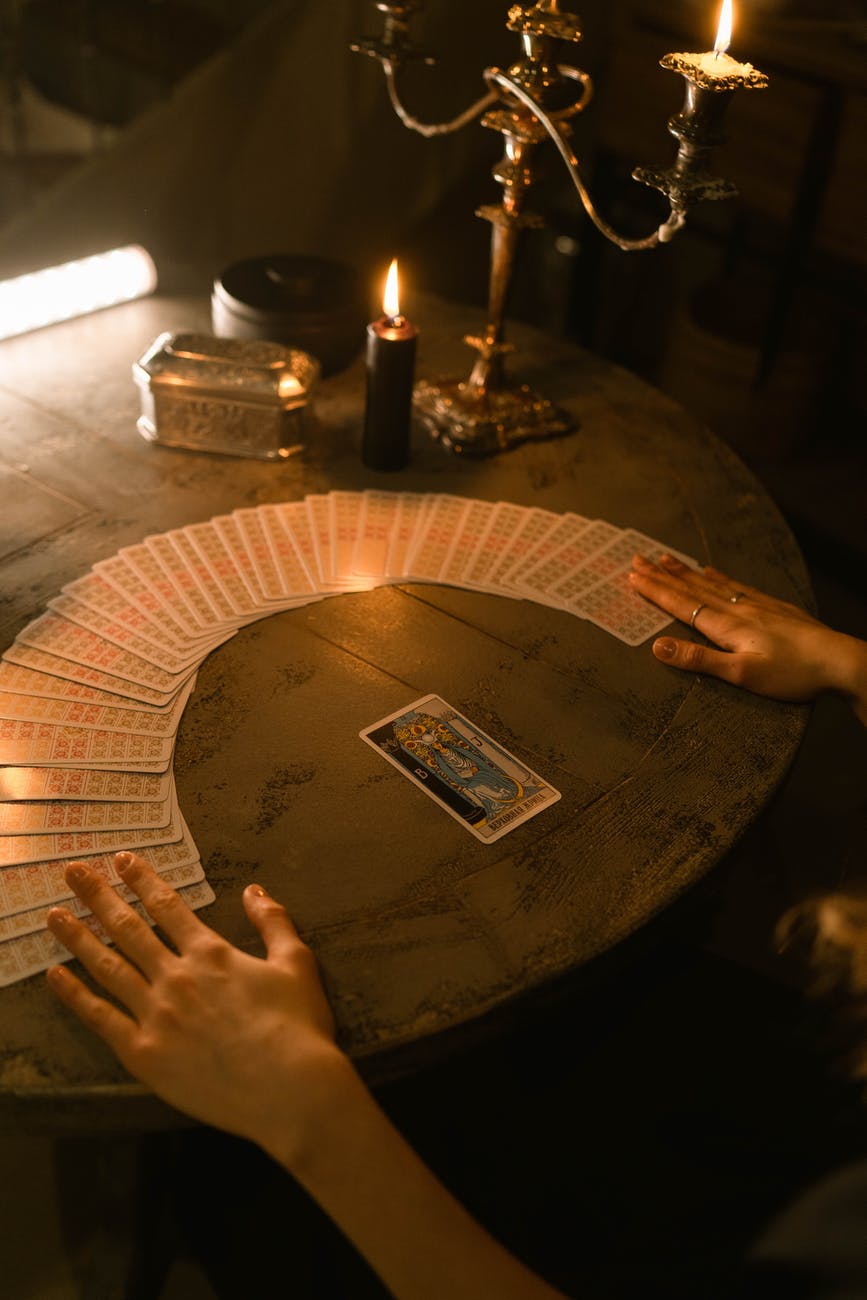
Photo by Anastasia Shuraeva on Pexels.com

Here’s a passage that I really liked: “Those whom the gods choose, ’tis said, they first separate from other mortals- by treachery, by stripping from you your spirit’s lifeblood. The gods will take all your loved ones, one by one, to their death. And, as you harden, as you become what they seek, the gods smile and nod. Each company you shun brings you closer to them. ‘Tis the shaping of a tool, son, the prod and pull, and the final succour they offer you is to end your loneliness- the very isolation they helped you create.” Never get noticed, boy. pg 510 Bleak, but beautiful.

Or this part, the explanation of the story’s title, which is so brief, if you blink, you’ll miss it: (On the moon) The Lord of the Deep waters living there is named Grallin. He tends vast, beautiful underwater gardens. Grallin will come down to us, one day, to our world. And he’ll gather his chosen and take them to his world. And we’ll live in those gardens, warmed by the deep fires, and our children will swim like dolphins, and we’ll be happy since there won’t be anymore wars, and no empires, and no swords and shields.” pg 531-532

That’s the dream of all of the characters in this story- to live in peace. But, because of the Malazan Empire, they can’t.

Recommended for true fans of fantasy. There’s so much to sink your teeth into that, unless you really love the genre, you’ll probably just put it aside for simpler fare.

Thanks for reading!

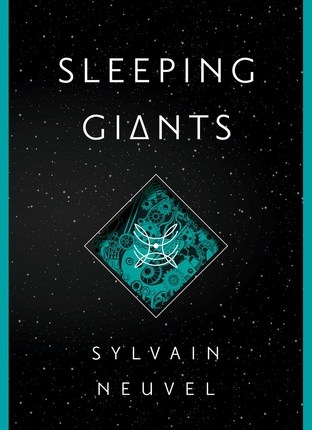
Sleeping Giants by Sylvain Neuvel

Sleeping Giants by Sylvain Neuvel

In Sleeping Giants, a large, metal object shaped like a gigantic hand is found in South Dakota. It glows with its own light and scientists have no idea what it is made of or what it can do. And so, the mystery and adventure begins.

Photo by Mayur Rawte on Pexels.com

I enjoyed the story a lot but not how it was written. Neuvel tells Sleeping Giants through a series of “case files” or question and answer sessions between the main characters and a mysterious, all-powerful figure who is manipulating the scenario from behind the scenes.

This method of storytelling seemed especially ridiculous during some of the action scenes, when Neuvel had the characters talking to each other on the phone, describing what was happening to them as it occurred.

But, otherwise, the Q & A setup gave readers a behind-the-scenes look at what was going on in the character’s minds and allowed for a lot of personality development.

I wish that Neuvel had switched back and forth between traditional storytelling and the “case file” thing, so that he could both tell the story and have the in-depth character portions. Maybe he could do something like that in the next book.

I was nervous that Sleeping Giants was going to be more science fiction than fantasy, but it wasn’t. There are only a few mind-boggling moments when the scientists are trying to figure out mathematics with a base of 8 rather than a base of 10.

Mostly, The Sleeping Giants asks the questions: what would happen to humanity if something very strange and not of our civilization was discovered on earth? What would that mean for world politics? And how, on an individual level, would everyone involved handle it?

Photo by Pixabay on Pexels.com

Kara Resnik, a pilot, was my favorite character in this story. She’s impulsive, passionate, and honest.

In this passage, she’s talking about the possibility of leaving the project before it’s completed: What would I do anyway? Go about my business as if nothing ever happened? I couldn’t even talk about it to anyone. This is gonna sound incredibly selfish, but I’d get bored to death unless someone started World War III or something.” pg 54

The moral dilemma for the scientists involved in the project is interesting.

In this passage, lead scientist Rose Franklin talks about the fact that the technology discovered could be used for good or ill, depending on who controls it and how that makes her complicit in their actions, because she’s the one figuring out how it works: “What I’ve been trying so hard to deny is that I’m loving every minute of it. … I’m a scientist, and this is what I breathe for. If I had learn to live with that, I might be able to sleep again.” pg 167

Photo by Pixabay on Pexels.com

If you enjoyed Sleeping Giants, you may want to pick up The Many Selves of Katherine North by Emma Geen (in which, advanced technology raises moral questions) or The Interminables by Paige Orwen (in a dystopian world, humanity tries to save itself from inter-dimensional creatures, but maybe some solutions aren’t worth the cost).

Big thanks to the Goodreads First Reads Program for a free copy of this book. And, thank you for reading!

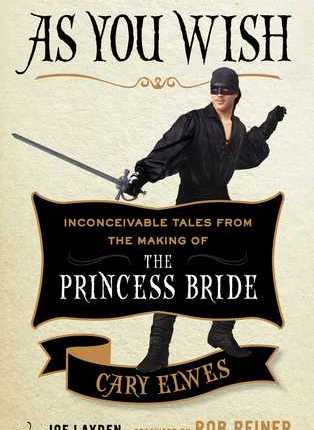
As You Wish: Inconceivable Tales from the Making of The Princess Bride by Cary Elwes

As You Wish: Inconceivable Tales from the Making of The Princess Bride by Cary Elwes

Before I start my review, I want to mention that As You Wish is the perfect audiobook for a road trip between St. Louis, Missouri and Kansas City, Kansas. I was traveling with my daughter and husband, and we were all entertained by Elwes’ memories of the making of the film.

It’s really not that easy to find a book that works for all three of us, but this was an absolute hit. I can’t recommend it enough and if you’re already a fan of the movie, I’m sure that you’ll love it even more.

Though it starts out a bit self-congratulatory in tone, throwing around words like “timeless”, “modern classic”, and “once-in-a-lifetime experience”, As You Wish is ultimately, like The Princess Bride, a very sweet and and enjoyable memoir about the events behind the making of the film.

At first, as I said, I was afraid that I was going to be bored to tears. Rob Reiner wrote and narrated the foreward and it is sugary sweet in its praise of the author, the movie, and everything to do with either. This high praise, some may argue, is well deserved, but I thought that it might have fit better in the flow of the tale as an afterword. First, the play then the applause, but, that’s just my opinion.

Some of the best parts of the memoir, not surprisingly, centered around Elwes’ interactions with his colorful co-stars. Andre the Giant figures largely into this tale, as he did in life, not only because of the enormous size of his body but also his heart.

The brightest among us always seem to burn too quickly.

Another of my favorite parts is the description of Elwes’ and Patinkin’s struggle to film the “greatest sword fight in modern times.” I had no idea of the amount of backbreaking work that went into the acquisition of the skills to run the scene. From day one of filming, Elwes and Patinkin were schooled by some of the best sword fighters in the movie business. Now that I know, I’m going to have to re-watch the film. I had always assumed that the fight was done by stuntmen. How wrong I was…

If you enjoy the film, The Princess Bride, you must listen to this audiobook. It is a real treat and you’ll appreciate some hidden gems revealed by Elwes’ narration. To borrow some descriptors from the book, it was a magical, “once-in-a-lifetime” moment when talent and story mixed together to create a “timeless, modern classic”. If you’re looking for some film related read-alikes (for movies other than the Princess Bride), try Nerd Do Well by Simon Pegg or A Funny Thing Happened on the Way to the Future…: Twists and Turns and Lessons Learned by Michael J. Fox.

Thanks for reading! -Heidi

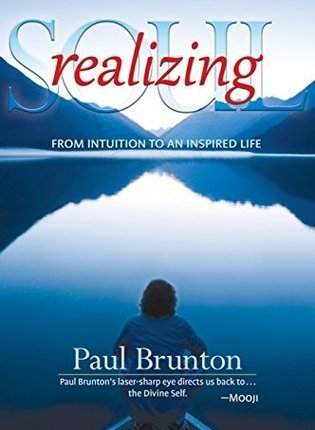
Realizing Soul — From Intuition to an Inspired Life by Paul Brunton

Realizing Soul — From Intuition to an Inspired Life by Paul Brunton

Paul Brunton was an English philosopher who dedicated his life to the spiritual journey.

Photo by Jonas Ferlin on Pexels.com

I had never read the teachings of Brunton before Realizing Soul and I found him to be very similar to Eckhart Tolle or, interestingly enough, Abraham Hicks.

He was like Eckhart Tolle in that he stressed the importance of the Now moment.

Brunton was like Abraham Hicks in that his description of the “Oversoul” could walk hand in hand with Hick’s “Vortex of Creation”. In fact, in my mind when I was reading this, I just substituted Oversoul for Vortex because I was more familiar with Hick’s thoughts on the matter than Brunton’s.

There is quite a lot of information in Realizing Soul, though it isn’t very long. In fact, I wish that some of the passages had been longer. This book was mainly a compilation of ideas from many of Brunton’s different writings.

I suppose that it gives the reader a great overview of the various works but I felt that it lacked some depth because of the shortened sections which were each generally only a couple of sentences long.

Photo by ArtHouse Studio on Pexels.com

Some parts I want to remember:
“…That which he has been seeking so ardently has been within himself all the time. For there at the core of his being, hidden away underneath all the weakness, passion, pettiness, fear, and ignorance, dwells light, love, peace, and truth. The windows of his heart open on eternity, only he has kept them closed! He is as near the sacred spirit of God as he ever shall be, but he must open his eyes to see it. Man’s divine estate is there deep within himself. But he must claim it.”pg 18

“The personal ego of man forms itself out of the impersonal life of the universe like a wave forming itself out of the ocean. It constricts, confines, restricts, and limits that infinite life to a small finite area. The wave does just the same to the water of the ocean. The ego shuts out so much of the power and intelligence contained in the universal being that it seems to belong to an entirely different and utterly inferior order of existence. The wave, too, since it forms itself only on the surface of the water gives no indication in its tiny stature of the tremendous depth and breadth and volume of water beneath it…” pg 27

“What can I do to break this barren, monotonous, dreary, and sterile spiritual desert of my existence? The answer is if you cannot meditate successfully go to nature, where she is quiet or beautiful; go to art where it is majestic, exalting; go to hear some great soul speak, whether in private talk or public address; go to literature, find a great inspired book written by someone who has had the glimpses (of the divine within life).” pg 78

Photo by Dina Nasyrova on Pexels.com

“Man as scientist has put under observation countless objects on earth, in sea and sky. He has thoroughly examined them. But man as man has put himself under a shallower observation. He has limited his scrutiny first to the body, second to what thinking can find. Yet a deeper level exists, where a deeper hidden self can be found.” pg 96

For the most part, I found Realizing Soul to be very beautiful and rich in meaning. There were some bits on karma and ego illusion that didn’t really resonate with me, but that doesn’t mean that it won’t speak to others.  If you want more of Brunton’s writings, they can be found online for free at this website: http://www.paulbruntondailynote.se/

If you enjoyed this book, you may want to listen to some of Eckhart Tolle’s lectures like Even the Sun will Die, Gateways to Now, or pick up the book, Stillness Speaks. Readers may also enjoy The Art of Living and Dying: Celebrating Life and Celebrating Death by Osho.

Thanks to the Goodreads First Reads program for a free copy of this book.  And, thank you for reading!

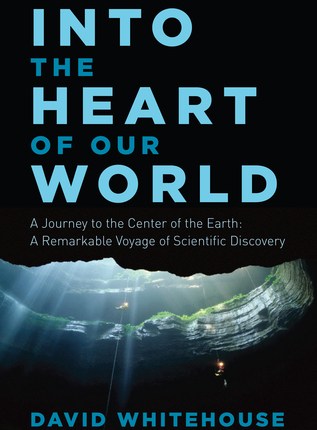
Into the Heart of Our World — A Journey to the Center of the Earth: A Remarkable Voyage of Scientific Discovery by David Whitehouse

Into the Heart of Our World — A Journey to the Center of the Earth: A Remarkable Voyage of Scientific Discovery by David Whitehouse

Into the Heart of Our World-A Journey to the Center of the Earth: A Remarkable Voyage of Scientific Discovery is a mind boggling, hypothetical journey into the world beneath our feet. Whitehouse, an astronomer, has bottled the wonder that he feels for the stars and channeled it into exploring the depths below. Though the science in this book went above my head at times, I enjoyed learning about Earth and its secrets. Into the Heart of Our World would make a great documentary.

Here are the parts that I loved the most:
Whitehouse was discussing the chemical composition and age of some of the oldest rocks on earth: “If the life of the Earth was represented by a day then mankind appeared just twenty seconds before midnight. These rocks have been waiting since about 1 a.m.” pg 52, advance reading copy

On a discussion of plumes beneath the Earth’s surface: “The big question is: can we see mass extinction events on the way up? Some scientists believe we can by looking for the plumes. Such a thing is seen in the south-west Pacific near the Fiji Tonga subduction zone. It’s 700 km deep, has a structure consistent with a massive temperature anomaly and may be rising. It could render the Earth uninhabitable for humans and it will reach the surface in an estimated 200 million years.(!!!!!?!????!!)” pg 146, advance reading copy, emphasis mine

About the core of the Earth: “”The core…is larger than the planet Mars and far more alien. It has one-sixth of the volume of the Earth yet one-third of its mass, and it is liquid, dense yet not thick. If you donned super-protective gloves you could run your hands through it like water. It is this liquid- molten iron, nickel, and a few other elements- that profoundly affects the nature of our planet and protects us from the harshness of the cosmos. In the mantle we suspect that there may be aspects of the subduction cycle that are important for life on the surface. But in the liquid core we have no such doubts. We are certain that life on our planet could not have survived without it, for out of its liquid motions emerges our great protector- the Earth’s magnetic field.” pg2 158-159, advance reading copy.  Who knew?

In a discussion of the magnetic field, some medieval beliefs about magnets:“In the thirteenth century Bartholomew the Englishman (c. 1203-72), author of the book On the Properties of Things, said that ‘This kind of stone restores husbands to wives and increases elegance and charm in speech. Moreover, along with honey, it cures dropsy, spleen, fox mange, and burns… when placed on the head of a chaste woman causes its poison to surround her but if she is an adulteress she will instantly remove herself from bed for fear of an apparition.” pg 167, advance reading copy. Behold the power of magnets.

One last bit of Into the Heart of Our World that was special to me on a personal level: “The oldest working seismograph, over a hundred years old but still fully operational, can be found at the university of Gottingen. It is the work of Emil Wiechert (1861-1928) who was the world’s second professor of geophysics.”pg 80-81, advance reading copy. My husband, a Geiger, is related to the man who created the Geiger counter. I’ve always felt that my family was a bit lacking when it came to scientific contributions. But now, I find out, there’s a geophysicist in the family! In your face, Geigers! :p

If you enjoyed Into the Heart of Our World, you may want to read What If by Randall Munroe or Rust: The Longest War by Jonathon Waldman.  A big thank you to Goodreads First Reads program for a free advance reading copy of this book.  And, thank you for reading!

The Light: A Modern-Day Journey for Peace by Judith Lambert

The Light: A Modern-Day Journey for Peace by Judith Lambert

In The Light, Judy, the author, chronicles her dreams and her search through various countries and cultures for their ultimate meaning. She calls this book, a memoir, with some pieces changed to protect the privacy of the people involved.

I found it to be an engaging look into the life of a spiritual seeker and a fascinating comparative study of all religions, their symbols, and common meanings.

Judy talks to a librarian named Bill about symbols: “I’ve been having some dreams with symbols that seem to be very powerful and consistent, and I’m wondering whether these symbols have a history or a larger meaning…” “Oh, yes, absolutely,” he broke in. “All symbols have a history and a commonality. There’s no question about that… Images are the means people must employ to understand ideas and feelings. Without them, we cannot reason… but, you see, we often don’t know where these symbols and images come from, do we? We forget their origin and the long history of their use, until we end by thinking that the symbol is the thing itself!”

I’ve heard it said that all symbols are mere pointers. It is like a man trying to draw our attention to the moon by pointing at it, but we mistake the moon for the finger doing the pointing.

Photo by Aron Visuals on Pexels.com

A beautiful description of the chaos at the river, Ganges: “Over the course of the day, blessed pilgrims gathered at Mother Ganga to wash away their sins. Motionless holy men sat absorbed in rumination, their faces turned toward the sun in celebration of the endless cycle of mornings like this. The striking of wet clothing against the steps was accompanied by the distant ringing of temple bells, whose pitch and resonance varied with the preciousness of the material from which they were made- bronze, brass, or iron. And over it all hung a fetid haze smelling of smoke and of- well, I didn’t want to think what else.”

I enjoyedThe Light because Lambert made me feel as if I was there beside her in her spiritual wanderings. I enjoyed the travel parts of this book very much.

The City of Light: “…The Gita,” now he looked out at the Ganges, “speaks of a radiant river of light. Westerners.. well, they often see a surface, and then they have no idea how to look beyond that surface.” He gestured as if to indicate the whole city. “This is the City of Light. Is this not what you were looking for? I do not mean any disrespect, madam,” he hurried on before I could react, “but if one cannot see the Light here, then one has not looked long enough.”

A description of inner illumination: “Nothing changed. Or everything did, for though monk, mandala, walls, cushions, and robes all seemed to remain the same, I felt at last- and only for an instant- the sense of peace that had eluded me since my dreams began.”

Photo by Pixabay on Pexels.com

The author changes immensely over the course of her journey: “I feel a reassuring contentment from all I’ve discovered and all that I’ve been privileged to learn. I am a Jew, a Christian, a Hindu, a Muslim, a Buddhist, everything else, and nothing, all at once. I am…whole… And I believe that all religions possess and have knowledge of the Light. By claiming the Light myself, I can also retain my own personal stories, my own place, and time, and history…” An empowering message and a timely one.

If you enjoyed The Light, you may want to pick up The Realization of Being by Eckhart Tolle (a lecture, any of his talks are along this subject line) or The Invisible Hand: Business, Success & Spirituality by David Green (a memoir about another spiritual seeker and how he found the “Light”).

Thank you to NetGalley and Ann Duran Productions for the opportunity to read and review a digital ARC of this book!  And, thank you for reading.

The New Science of the Paranormal: From the Research Lab to Real Life by Carl Llewellyn Weschcke & Joe H Slate, PhD.

The New Science of the Paranormal: From the Research Lab to Real Life by Carl Llewellyn Weschcke & Joe H Slate, PhD.

Carl Llewellyn Weschcke died last year- may he rest in peace. I eagerly looked forward to reading The New Science of the Paranormal, one of his last (I’m guessing) books that we will ever see from him.

The primary message in here is one of self empowerment and the potential for anyone to develop powers that could be considered “paranormal”. What an appropriate departing lesson from a man who ran a publishing firm dedicated to bringing the occult and mysterious to light.

Photo by Rafael Guajardo on Pexels.com

The New Science of the Paranormal isn’t an “easy” read in that it includes a lot of tables and metaphysical philosophizing about the new age and levels of spiritual evolution.

To me, the most engaging bits were the accounts of students and researchers trying to swing a pendulum with their minds or use dowsing rods to predict the gender of unborn babies.  The scientific experiments that were included are fascinating in their implications.

Also, many of the techniques like water gazing and hand prints in the sand are not ones that I had been exposed to. I’ll definitely be trying some of this out on my own.

“The objective study of paranormal power can dispel many of the myths and “stories” surrounding the topic, including the belief that very few individuals possess paranormal powers. Although certain individuals, often called “advanced beings” or “gifted psychics”, may appear to be extraordinarily empowered, everyone to some degree possesses paranormal potential. Not unlike intelligence, the distribution of paranormal potential within the general population seems to occur in a so-called “normal curve”…

Photo by Lucas Pezeta on Pexels.com

Empowerment: “We are more than we think we are, but we don’t know we are until we develop that level of awareness and related sense of perception. We must grow to become more than we are and all we can be.”

Water gazing, who knew? : “Validated in the lab setting and successfully applied beyond the lab, water gazing is among the most effective self-empowerment techniques known. Whether to increase creativity in writing and art, activate telepathic sending and receiving, facilitating clairvoyance, improve memory, promote successful goal attainment, or generate a state of mental, physical, and spiritual attunement, the powers of water gazing appear to be without limits.”

Photo by Anastasia Shuraeva on Pexels.com

The Crumpled Paper technique was also surprising in its incredible amount of potential uses. Actually, this whole book kind of blew my mind. Perhaps I was dreaming too small.

A bit reminiscent of Abraham Hicks: “…one simple self-administered procedure is: Pay Attention to Your ‘Feelings.’ By that, we don’t mean to get all emotional when ‘feeling’ an idea, concept, event, situation, person, etc., but rather to analyze: what your feelings are telling you, what is it you are sensing, what is the basis for your emotional reaction, etc. And then let yourself explore the ‘answers’ to those questions.”

Know thyself. A message as old as the Delphic oracles.

I’ll close with a quotation included in Chapter Twelve: “Not in the clamor of the crowded street, Not in the shouts and plaudits of the throng, But in ourselves are triumph and defeat.” Henry Wadsworth Longfellow, “The Poets” (1876)

Thank you to NetGalley and Llewellyn Publishing for a free digital ARC of this book!  And, thank you for reading!

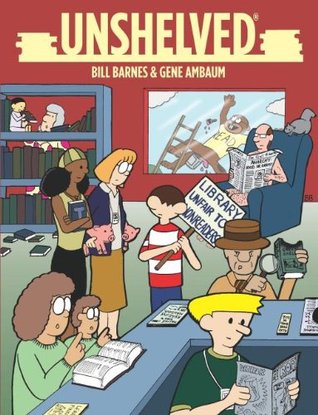
Unshelved Vol. 1 by Bill Barnes and Gene Ambaum

Unshelved Vol. 1 by Bill Barnes and Gene Ambaum

I enjoyed Unshelved, a comic about a public library, its librarians, and the ridiculousness that goes on when the library is open.  But, sometimes the cartoon hit too close to home. I’ve been treated and spoken to like Dewey at the information desk, tons of times. So, librarians beware. Some of these are almost too true to be funny. On the other hand, I like my job, so I’ve never responded like Dewey. It’s cathartic, reading his sarcastic responses to ridiculous questions and situations.

My library has this book classified as young adult and I feel that it is an appropriate categorization.  There’s nothing in here that I would find objectionable for a younger teen to read but some of the interpersonal problems may go over the head of a 12 year old.

Favorite character: Buddy the Book Beaver! Of course.

Favorite cartoons: The one where Merv writes a brochure to get more teens to come to the library pg 33 (My department is responsible for the young adult room, so I really appreciated the humor).

When the patron asks Dewey if he has any pens when he’s standing next to a pile of pens (Happens to me all the time). bottom of pg 41

And finally, when Dewey starts dispensing Eastern philosophy to the library patrons: “Search without searching. Look for nothing and find everything. Read the book but don’t look at the words.” top of pg 103. That’s probably me in about thirty years.

If you enjoyed Unshelved, you may want to pick up Rex Libris, Volume I: I, Librarian (Rex Libris, #1-5) by James Turner (another librarian themed comic) or The Black Belt Librarian: Real-World Safety & Security by Warren Graham (non-fiction book on how to deal with difficult patrons or security risks at the library).  Thank you for reading!

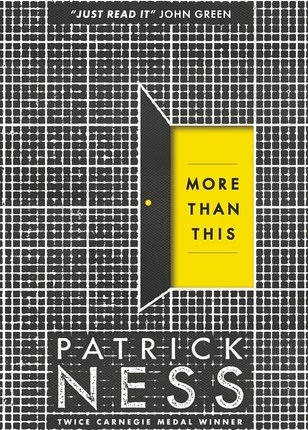
More Than This by Patrick Ness

More Than This by Patrick Ness

I picked up More Than This because I recently enjoyed A Monster Calls. This book, like Monster, is about a young man learning how to handle life’s major hurdles. That, though, is where their similarities end.  More than This opens with Seth drowning in the ocean and the story really begins when he opens his eyes after death…

Photo by Amber Janssens on Pexels.com

More Than This is darker than A Monster Calls in many ways. For readers who are concerned about the maturity level of themes in this book: there are some (short) scenes of physical abuse, non-graphic GLBT teen sex, teen suicide, brief moments of bullying, extremely brief nudity (both male and female), and a short masturbation bit. On the other hand, there’s a lot of empowering elements in here too. There’s a very strong, young, black female heroine, a plucky, brainy, Polish sidekick, and some really trippy depictions of reality itself. The GLBT relationship is healthy and non-abusive. The friendships that develop between the main characters are real and beautiful.

Depending on the young adult reading the book, I’d say 14+ might be a good age for this one.

I loved the ambiguity of Seth’s situation in the afterlife. No spoilers here, but that was my favorite part, the “what the heck is going on here” moments that Ness kept handing to me. Read it and you’ll see what I mean in mere pages.

Photo by Jonathan Andrew on Pexels.com

Patrick Ness is at his strongest when he’s writing his way around painful emotions, which there are piles of in this book. He’s at his lowest during the first part of More Than This because of the pacing. This starts out seriously slowly, but if you can make it through the first section, things pick up considerably afterwards.

Some of my favorite moments: “Is this a dream? he thinks, the words coming to him slowly, thickly, as if from a great distance. The last dream before death?” pg 13 ebook

“He looks out toward the darkened sitting room and wonders what he’s supposed to do here. Is there a goal? Something to solve? Or is he just supposed to stay here forever? Is that what hell is? Trapped forever, alone, in your worst memory? It makes a kind of sense.” pg 31 ebook

Seth’s relationship with his parents is pretty messed up, which is very sad, really: “His mother made a sign with her hands of sarcastic surrender, then stared firmly at the ceiling. His father turned to look at him, and Seth realized with a shock how rare it was for his father to look him straight in the eye. It was like having a statue suddenly ask you for directions. pg 97 ebook

Photo by Denise Duplinski on Pexels.com

My favorite character was Tomasz. He has wisdom far beyond his age:“Tomasz shrugs. “People ask for what they need in different ways. Sometimes by not even asking for it at all.” pg 149 ebook

The heroine: “People see stories everywhere,” Regine says. “That’s what my father used to say. We take random events and we put them together in a pattern so we can comfort ourselves with a story, no matter how much it obviously isn’t true.” She glances back at Seth. “We have to lie to ourselves to live. Otherwise, we’d go crazy.” pg 159 ebook. Very true.

One last passage, for my husband, who argues with people on the internet far too much and who came to mind here: “And that’s what the Internet age has done for us,” his mother says, sitting down. “Anything you don’t like is automatically disgusting and anyone who may like it themselves is an idiot. So much for a world full of different viewpoints, huh?” pg 319 ebook.

If you enjoyed More Than This, you may like A Monster Calls even more (I know I did) or try The Last One by Alexandra Oliva (a book written for adults, but a mature young adult would probably enjoy it too).  Thank you for reading!