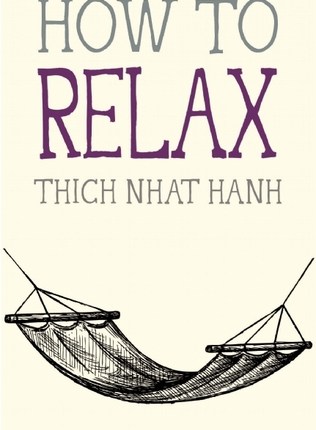
How to Relax by Thich Nhat Hanh

How to Relax by Thich Nhat Hanh

There are very few spiritual leaders who can communicate with the simplicity and succinctness of Thich Nhat Hanh.

As wise as the Dalai Lama is, I’ve only been able to really understand one of the books he’s written and I think that was because he had a co-author. It seems like he contemplates this stuff so much, you know, like it’s his job, that when he’s just trying to talk to a regular person about it, there’s a gap that can’t be crossed.

Photo by Mikhail Nilov on Pexels.com

That isn’t a problem in Thich’s Mindfulness Series.

Thich encourages the reader to find the quiet within. He says: “We already have calmness in us; we just need to know how to make it manifest.” pg 14, ebook.

How do we do this? Through focus, breathing, mindfulness, and relaxation.

One of Thich’s methods for connecting with inner peace that really resonated with me was that we should take “lazy days”: “A lazy day is a day for us to be without any scheduled activities. We just let the day unfold naturally, timelessly. … When we have unscheduled time, we tend to get bored, seek entertainment, or cast about for something to do. A lazy day is a chance to train ourselves not to be afraid of doing nothing. You might think that not doing anything is a waste of time. But that’s not true.” pg 32, ebook.

Not to brag, but I rather excel at “lazy days”.

Photo by Rachel Claire on Pexels.com

Anyone out there have a partner who snores? I do. Thich invites us to incorporate the snores into our relaxation practice.

“Sometimes you have to share a room with someone who snores. You may get irritated. But with mindfulness you can bring about compassion. You can lean on the sound of snoring in order to go to sleep. Listen and say that this brings you home to the here and now.” pg 42, ebook.

I think this could be a difficult exercise, but I’m willing to give it a try. 🙂

Ever tell yourself that relaxation/meditation is too hard? Thich addresses that concern too: “When you sit and watch television, you don’t make any effort. That’s why you can sit there for a long time. When you sit in meditation, if you struggle, you won’t be able to sit for very long. Please imitate the way you sit in your living room. Effortlessness is the key to success. pg 76 ebook.

If you can watch tv, you can meditate. It’s silly but it reminds me of that line from Dodgeball: “if you can dodge a wrench, you can dodge a ball”.

Highly recommended for anyone looking to introduce more relaxation into their lives and isn’t that everybody?

Some read alikes: Relax RX: A Self-Hypnosis Program for Health and Well-Being by Steven Gurgevich (very relaxing, all you have to do is listen), Guided Mindfulness Meditation by Jon Kabat-Zinn (simple and relaxing), or 10% Happier: How I Tamed the Voice in My Head, Reduced Stress Without Losing My Edge, and Found Self-Help That Actually Works by Dan Harris (a regular guy teaches himself to meditate- a light hearted memoir).

Thanks for reading!

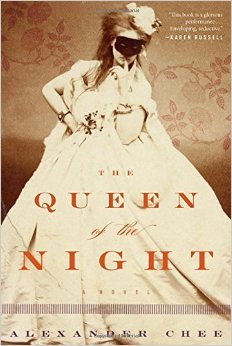
The Queen of the Night by Alexander Chee

The Queen of the Night by Alexander Chee

Lilliet Berne has secrets, many secrets hidden in her past and layered upon each other through time and circumstance. Now, she is a successful opera singer but, during a ball one night, a man brings a libretto to her attention that seems to be based on her life. Only a few people know the truth behind the secrets, which one would have made that truth public? Lilliet is going to find out and, along the way, the reader gets to experience the 18th century world from the American Midwest to the Paris Opera to Napoleon’s Imperial Court and beyond.

The Queen of the Night is a glittering, epic historical fiction, reminiscent of Margaret George’s style in that Chee weaves actual historical figures throughout his story. So, you’re learning as you’re entertaining yourself- two birds with one stone. I absolutely loved it.

Who is Lilliet? According to rumor: “I was innocent or I was the devil unleashed, I had nearly caused wars, I had kept them from happening. I was never in love, I had never loved, I was always in love. Each performance could be my last, each performance had been my last, the voice was true, the voice was a fraud. The voice, at least, was true.” pg 7, ebook.

Though true, the voice was not free from rumor either: “There’s a story told of my voice that says it was bought from a witch, the result of an occult surgery. … I never corrected this. … The real answer to where my voice came from is as ordinary as all of life. … I wanted to eat so I learned to sing.” pgs 65-66, ebook. But, as a public figure, Lilliet profited from being a spectacle on and off the stage. She encourages the stories because her notoriety brought her opera parts, connections, and money. Her true background, on the other hand, could ruin her.

The complexity of life in Paris: “Paris, which, when I looked close, was a vast 0péra-bouffe-féerie (opera with elements of comedy and magic in it)- and you did not know your role, I think, until it was too late, and the crowd was laughing at the joke you had uttered in all innocence.” pg 99, ebook. Chee explores many closed societies and the unwritten rules that are followed by them in The Queen of the Night. Among the many scenes examined are: the circus tent, the courtesan’s house, the opera, the French court, the Bohemian music culture, and the couture dressmaker. My favorite parts of this story were the glimpses into these forbidden or, in some cases, defunct cultures and learning the expected behaviors, way of dress, even the preferred perfumes. The fun is in the details.

The Queen of the Night is also a love story: “When love comes this way, the first dream of it feels like a prophecy that has come true. I had never known this feeling until now- he was my first. And so I let myself dream of him again and believe it could be the future.” pg 186, ebook. Swoon… “My theme here is love. Love and the gifts of love, love kept secret, love lost, love become hatred, war, a curse. Love become music. Love and those who died for love. Love- and, especially, first love. My first love, the one I could not keep and could never, will never, lose.” pg 215, ebook. Do you think he could have fit more “love” in there? 🙂

At one point, Lilliet says she feels like she has gotten “Fate’s attention”: “It is a peculiar thing to reach this conclusion, that a god has taken your life in hand. The sensation is not what people might imagine; it is not magic, nor is it a haunting, nor is it a miracle- there’s no storm of roses, no whistle that can put a raging ocean to sleep, no figure in the mirror besides your own.” pg 240, ebook. When I read that, I thought that Chee was going to break down the fourth wall. But, he didn’t. He kept the story flowing but I felt like he winked at me. “Where am I going to take Lilliet now?”, he seemed to say. I didn’t have any idea, but I was definitely along for the ride.

Recommended for readers who want a detailed, slightly (sometimes very) scandalous romp and mystery throughout the 18th century. If you’re into classical music, then it will be an even better fit. Some reads that you may want to explore after this one: The Dream Lover: A Novel of George Sand by Elizabeth Berg (same time period, same country), In the Company of the Courtesan by Sarah Dunant (different time period and country, some similar themes), The Night Circus by Erin Morgenstern (for the circus parts), and Before Versailles: A Novel of Louis XIV by Karleen Koen (different time period, French court).

Thanks for reading!

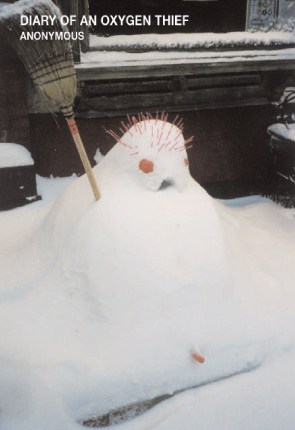
Diary of an Oxygen Thief by Anonymous

Diary of an Oxygen Thief by Anonymous

Did you like the emotionally disturbing/psychological train wreck that was Gone Girl? You may really enjoy this one. The Oxygen Thief may be the male equivalent to Amy Dunne.

Diary of an Oxygen Thief is written as an actual diary by, as you can see above, Anonymous. The story starts in London. He’s an alcoholic who discovers that he loves emotionally abusing women but, as the story progresses, he eventually meets his match.: “… I realized I had found my niche in life. … They say the sea is actually black and that it merely reflects the blue sky above. So it was with me. I allowed you to admire yourself in my eyes. I provided a service. I listened and listened and listened. You stored yourself in me. Nothing had ever felt so right to me. If I’m honest, even today I miss hurting. I’m not cured of it, but I don’t set out to systematically dismantle like I used to.” pgs 6-7 ebook

I don’t know that I’ve ever disliked a character in a book as much as I despised this ‘Anonymous’. That’s saying something: “Why would anyone set out to break the heart of someone he loved? Why would anyone intentionally cause that kind of pain? Why did people kill each other? Because they enjoyed it. Was it really that simple? To achieve a soul-shattering, it is better if the perpetrator has been through the same experience. Hurt people hurt people more skillfully.” pg 9 ebook. I didn’t know if I was going to be able to finish this book, given how much I hated the beginning, but, just like the numerous women in his diary, I was drawn into the Oxygen Thief’s lair and then (gasp) began to feel sorry for him.

Partially, it was because he manages to clean himself up in AA. But, the other part, is that he moved to the American Mid-West and experienced some serious culture shock, which I couldn’t help but find charming:“American lawns are loaded with social and political meaning. There is a law somewhere that says you have to maintain your lawn or the neighbors can force you to. I knew nothing of this and immediately reveled in the possibility of allowing my front and back gardens to return to nature. A polite knock on my front door changed all that.” pg 34, ebook. He calls lawns, “gardens”. I can’t…

Like a Shakespearean play, the Oxygen Thief’s eventual downfall is foreshadowed by a beautiful woman he meets in AA: “She’s evil,” said the blonde. She herself had apparently witnessed the awful effect this girl could have on guys. She looked at me for far too long. Like I wasn’t taking her seriously enough. I wasn’t.” pg 50 ebook

I also learned something about the physiology of love and heartbreak: “I read somewhere that when someone is in emotional shock, the area around the heart loses some of its protective fat and is therefore dangerously exposed. One well-aimed punch is not just painful; when the person who has been in shock starts to put the weight back on, the heart remains bruised, and this can lead to aortic fibrillation. It’s not life threatening, but it is uncomfortable. pg 85 ebook Who knew?

There aren’t any likeable characters in this book, but it is impossible to put down, so I had to give it at least three stars for its readability. I was absolutely shocked at the terrible ways in which the Oxygen Thief behaved and then was treated. No wonder people are cynical if there are people like this in the world. I tried to do a bit of research to discover who this “Anonymous” really was, but failed to come up with anything. Maybe, as time passes, his true identity will be revealed.

Recommended for the serious fans of psychological warfare tales or for those who have survived a very nasty relationship and want to compare their battle scars. The author of this book was recently paid for the film rights so we may see a movie made out of it. I don’t know if I could sit through it, but, if made the right way, it could be a very intense examination of the damage that people do to each other in the name of “love”. The obvious read alike is Gone Girl by Gillian Flynn but another book that reaches for the depressing depths of this one is: Black Moon by Kenneth Calhoun.

A couple people have asked if this book is appropriate for teen readers and as a librarian and a mother, I say no.  The themes are much too mature, sexually graphic, and emotionally disturbing.  16 or 17+ is my recommendation.

Thanks for reading!

Descender #1 by Jeff Lemire, Illustrated by Dustin Nguyen

Descender #1 by Jeff Lemire, Illustrated by Dustin Nguyen

descenderI’ve heard a lot of good buzz about Descender and I’m pleased to say that it lived up to all of it. It isn’t easy writing the first entries in a series without descending into character listing and lengthy explanations on setting.Descender manages to introduce itself completely without any of that boring stuff.
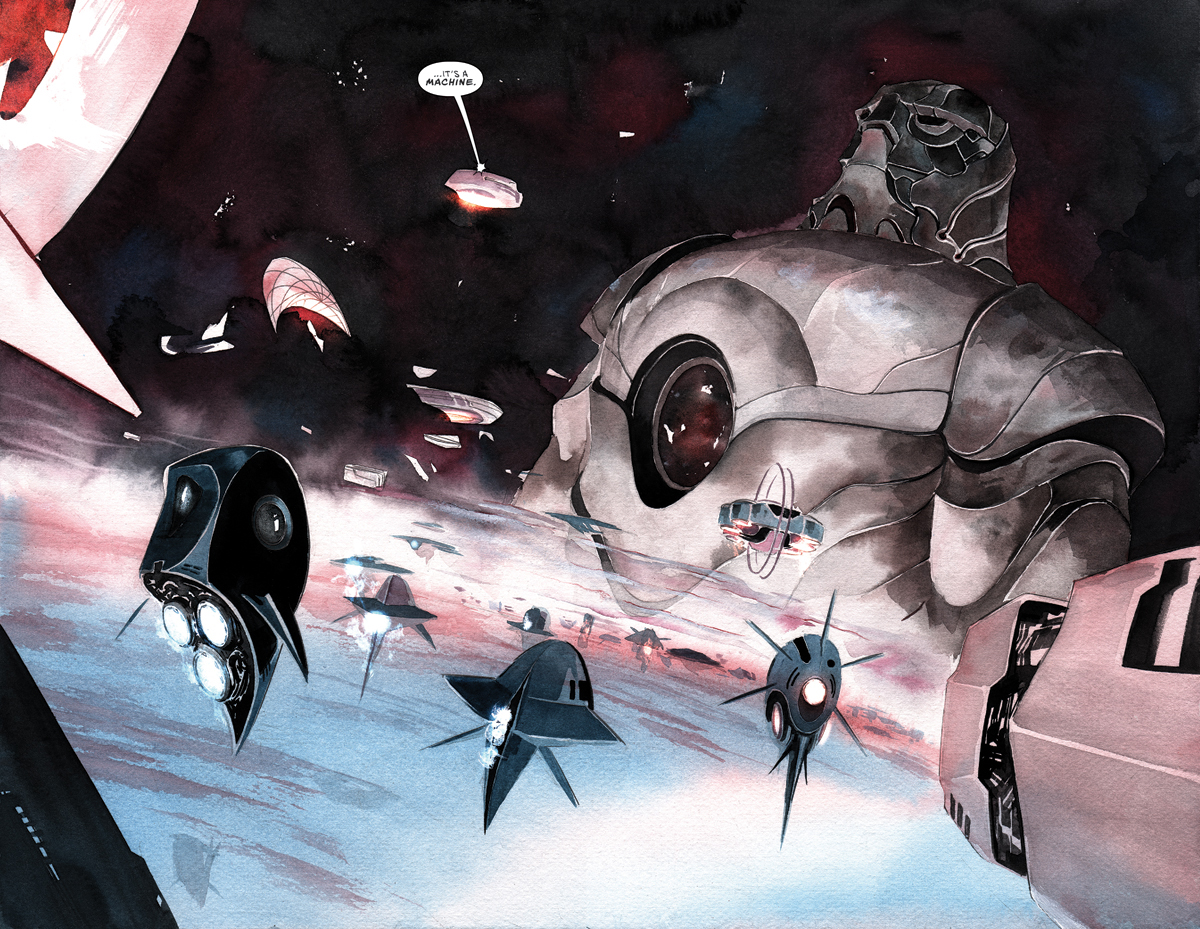

On a distant planet in a futuristic setting, an enormous robot lands on the government’s home world. Simultaneously, huge robots land on several other planets. These gigantic machines attack all at once without communication of any kind. Fast forward ten years. A child-like robot named Tim-21 awakens on a mining planet, but he is the only one there. The mining colony had an accident and he has been inactive for a very long time. Since then, all species have declared war on the robots because of the massive attack that occurred ten years previous. But, something about Tim’s operating system is special and now it is only a matter of time before he’s found by government scientists seeking answers or something worse… bounty hunters!

descender2

Photo from ew.com

Descender contains a lot of classic science fiction questions like: Can robots dream? Are they able to experience feelings? Do they have souls? And there is the mystery of where the giant killer robots came from and why they attacked. Actually, the beginning reminded me of Sleeping Giants bySylvain Neuvel but only for a moment… so if you didn’t enjoy that book, don’t let that turn you off of this graphic novel.
descender3

The artwork is rendered in (at least, it looks like to my very untrained eye) pencil and watercolors. It gives the panels a dreamy quality. I thought it was very pretty.
descender4

I highly recommend this graphic novel for fans of science fiction, ages 16+ because of some violence. Some read alikes: Saga, Volume 1 by Brian K. Vaughan (for adult audiences only) or Henni by Miss Lasko-Gross (ok for the teen set, similar themes but doesn’t take place in space).

Thanks for reading!

When Breath Becomes Air by Paul Kalanithi

When Breath Becomes Air by Paul Kalanithi
whenbreath

This is Paul Kalanithi’s life story. He relates how he got into neuroscience, his exhausting and life consuming training, his illness, and his eventual transition out of this world into the next.

At first, Paul didn’t even want to become a surgeon because his own father was one and he saw how hard it was to balance work and family: “When we did see him, late at night or on weekends, he was an amalgam of sweet affections and austere diktats, hugs and kisses mixed with stony pronouncements … He had reached some compromise in his mind that fatherhood could be distilled; short, concentrated (but sincere) bursts of high intensity could equal.. whatever it was that other fathers did. All I knew was, if that was the price of medicine, it was simply too high.” pgs 24-25, ebook.

But, even though he started out as an English major, Paul’s own interests led him towards the profession. He was passionate about medicine and making the best decisions for patients. He was interested in what makes life worth living and how the brain’s functions effect quality of life.

kalanithi.interior-ata-photo---suszi-lurie-mcfadden
Dr. Lucy Kalanithi and Dr. Paul Kalanithi with their daughter, Elizabeth Acadia.

This is what he had to say after a sobering visit to a home for people who had suffered severe brain injuries as children: “Only later would I realize that our trip had added a new dimension to my understanding of the fact that brains give rise to our ability to form relationships and make life meaningful. Sometimes, they break.” pg 34

It was really difficult for me, personally, to read the parts of this memoir that dealt with Paul learning how to make life and death decisions for ailing patients. He talks in depth about taking people off of life support because they didn’t want their bodies to be kept alive while their brains were gone. I was reminded of how my grandfather, though he never suffered any debilitating brain injury, was kept alive through endless medicines and machines to reduce the water around his heart. He eventually refused to eat and refused a feeding tube, so he slowly withered away.. this from a man who lived for eating and described the joys of consuming a fresh peach in summer as one of his favorite memories. It was heartbreaking.

In this passage, one of Paul’s professors is talking about the same type of situation with his own grandma: “But “what was most evident,” he continued, “was the slow drawing away from life… By the time Bubbeh stopped praying, she had stopped virtually everything else as well.” pg 41 ebook. Eating was my grandpa’s form of prayer. So, you may want to avoid this memoir if you have any fresh grief that you’re dealing with, as this book brings it all bubbling to the surface.

kalanithi3

Photo from timeshighereducation.com

Paul studies so hard to become a doctor to learn the secrets of life and death. But, he begins to realize, that as a doctor, he’ll constantly deal with these moments but never truly understand them: “I began to suspect that being so close to the fiery light of such moments only blinded me to their nature, like trying to learn astronomy by staring directly at the sun. I was not yet with patients in their pivotal moments, I was merely at those pivotal moments.” pg 56

Then, he has his own illness and realizes that, even though he’s seen death and suffering, he really knew nothing about it: “It occurred to me that my relationship with statistics changed as soon as I became one.” pg 82. The rest of the book is so very sad, but one thing is clear, Paul Kalanithi finally found the moment when breath becomes air, what he had been searching for his whole life.

Neurosurgeons write really fine memoirs. At least, that’s been the case for nearly every one I’ve come across.

Some read alikes, if you’re interested: A Thousand Naked Strangers: A Paramedic’s Wild Ride to the Edge and Back by Kevin Hazzard (not a neurosurgeon, but Kevin talks about the burnout that comes in the medical community), Medicine, Miracles, and Manifestations: A Doctor’s Journey Through the Worlds of Divine Intervention, Near-death Experiences, and Universal Energy by John L. Turner (neurosurgeon), Into the Magic Shop: A Neurosurgeon’s Quest to Discover the Mysteries of the Brain and the Secrets of the Heart by James R. Doty (neurosurgeon), or Proof of Heaven: A Neurosurgeon’s Journey into the Afterlife by Eben Alexander.

Thanks for reading!

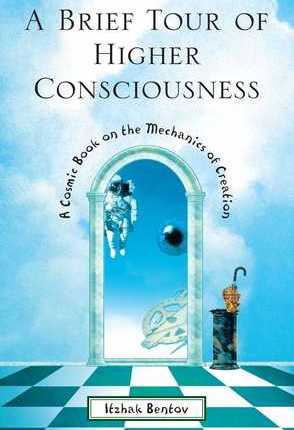
A Brief Tour of High Consciousness: A Cosmic Book on the Mechanics of Creation by Itzhak Bentov

A Brief Tour of High Consciousness: A Cosmic Book on the Mechanics of Creation by Itzhak Bentov

If you’ve been following this blog for awhile, you know now that I really enjoy “fringe” non-fiction that chronicles out of body experiences and remote reviewing.  This is another of those books.

If you’re not into those topics, my apologies in advance. 🙂

A lighthearted yet profound guide to the realms of higher consciousness and the ultimate nature of reality.

Goodreads
Photo by Pixabay on Pexels.com

My research into consciousness exploration continues with A Brief Tour of Higher Consciousness by Itzhak Bentov.

Having predominantly read books like this by artists (Jurgen Ziewe and Kurt Leland come to mind), it was refreshing to have a first person narrative by an engineer. Itzhak’s lens of perception is so different than my own- I loved it.

There is a part towards the end, What is a Hologram, and a chapter by another author, Essay on Cosmology by Edward Apgar, that I didn’t resonate with at all. But, perhaps for the most scientifically-minded, those parts will be your favorite.

hologram

Hologram image from nationaldefensemagazine.org

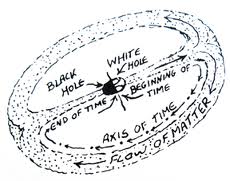
Itzhak has simplistic doodles scattered throughout the text which brings a “Randall Munroe” feel to the book- the use of simple pictures to illustrate complex and abstract ideas. This author definitely feels to me as if he was a bit ahead of his time in both his presentation and materials.

bentovdoodle

Bentov doodle from ritamarrpositivechange.wordpress.com

Itzhak’s explanation of “lens of consciousness”: “As consciousness evolves and information starts pouring in, the information is couched in a language best understandable to the person involved. For instance, a poet will be shown the nature of Creation in poetic images, an artist in visual symbols, and a mathematician in abstract equations; a nuts-and-bolts fellow like myself will have it shown to him as structure.” pg 5

I was reminded of Robert Monroe’s Journeys Out of the Body in which he puts emphasis on recording and comparing out-of-body experiences for consistency and real world applications to bring legitimacy to the practice.

I’ve heard that we’re all made of star dust and I really liked Itzhak’s description of it in this passage: “Stars collect into clusters or galaxies, and as they die, they explode and create cosmic dust, which again condenses into new stars and planets. Everything in the entire universe, including our bodies, is made of one cosmic substance. We contain atoms from the most distant galaxies and are thus connected to the whole universe.” pg 13

starsinthesky

Stars in the sky from wikipedia.org

Everything is vibration: “In short, consciousness in a vibratory state manifests itself as our familiar matter, from which the different forms that we see around us are made. The table, the flowers, the scent of the flowers, and our bodies are all made of rapidly vibrating consciousness.” pg 20 Wild!

A discussion of how to interact with devas (an ant deva to be precise, which is kind of silly, I realize), which Itzhak describes as “The name given to a being that is the rudimentary consciousness of any structure”: “To negotiate with her, the currency of exchange is love. Just send the ant deva a lot of love, which will stimulate her evolution. Even ant devas need love, in order eventually to know their Creator.” pg 33

Photo by Jimmy Chan on Pexels.com

In my meditations, I’ve frequently experienced what Itzhak describes in this next passage. It was nice to finally have a reason why: (While in a meditative state) “Wiggle your body. This causes a disturbance, a vibration, to spread … (This is similar to a fly falling into a spider web. The vibration of the web signals the spider and it shows up to investigate its dinner.) The deva .. appears immediately, looking worried and saying something like “What do you want?” or “Who are you?” pg 35

I’ll close with this excerpt of Itzhak’s philosophy: “There is nothing absolute and final. If everything were iron-clad, all the rules absolute and everything structured so no paradox or irony existed, you couldn’t move. One could say that man sneaks through the crack where paradox exists.” pg 78

If you enjoyed this book, you may want to take a look at Otherwhere by Kurt Leland or Multidimensional Man by Jurgen Ziewe. If you liked the doodles of complex concepts and want more of that, try Thing Explainer: Complicated Stuff in Simple Words by Randall Munroe.

Thanks for reading!

How to Use a Pendulum for Dowsing and Divination by Ronald L. Bonewitz

How to Use a Pendulum for Dowsing and Divination by Ronald L. Bonewitz
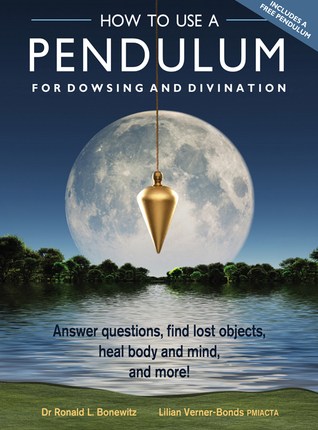
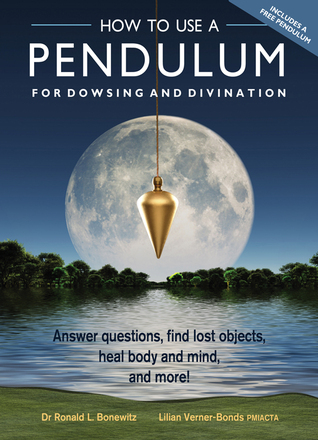
pendulum

I read a book a couple of years ago called Extraordinary Knowing: Science, Skepticism, and the Inexplicable Powers of the Human Mind by Elizabeth Lloyd Mayer. She opens the book with a chapter about how her daughter’s instrument was stolen and she called a professional dowser, though she didn’t believe in such things, to help her find it.

And guess what happens. 🙂

Pendulums work along the same kind of lines as dowsing and, after reading that, I thought maybe there is something to this.

You can watch Elizabeth Mayer talking about her experience on YouTube by clicking this sentence.

There used to be holistic shop (it has since closed) in my town that I liked to pop in for “fringe” books that libraries don’t purchase (but I love!) and, one day, the owner had a huge collection of pendulums for sale. I picked one up, not knowing anything about it beyond what I had read in that book, and it has sat on my meditation table for months, just looking mysterious and interesting.

Then, last week, I saw this book and was so excited to finally have some instructions!

pendulum-brass-gemstone

Photo from shamanschool.com

First of all, some background info: (Divination practices) most directly related to pendulum use fall under the general category of sortilege- the casting of lots. The word ‘sortilege’ comes from the Latin word sors, which means lots, and the title Sortilegus was given to the person who was the reader or the diviner via means of this process. Broadly, the practice involved (and still involves) holding an object or group of objects in the hand or hands while imbuing them with the question for which an answer is sought, then casting them through the air. It was believed that the answers were ‘in the air’, and that, as the lots moved through it, they became impregnated with the answer, causing them to fall in a certain pattern. The answer is then divined from the pattern made by the objects in their landing positions. The movements of the pendulum are derived from the same source.” pg 11

herkimon

Image from http://www.harmony000.org

What is divination anyway?: “Divination lifts up and beyond the normal. Divination is all a question of moving the self into a deeper consciousness, a totality of awareness, of discovering messages and information as we seek, passing between the mind of the great architect of the universe and the mind of man. Divination is a state; it is not a technique. But, you can use techniques to develop your ability to be in that state.” pg 15

I’ve always used meditation for that.

I thought that the authors took the use of pendulums a bit too far in this part where they advised bringing your pendulum with you wherever you go ‘just in case’: “Carrying your answers with you- Pendulum work is extremely useful in your everyday life, whether at home or abroad. For instance, at the local market or the supermarket, if you can’t decide which grocery to put in your basket, use your pendulum. You can also use it for yourself, for those times when you’re wondering ‘Is this product good for me?’ Maybe, maybe not. It’s helpful to be informed. Before purchasing anything, you can check.” pg 56. Intriguing idea, but I just can’t see myself doing that. Should I recommend THIS book to that patron or THAT book?

pendulumatlibrary

Image from consortiumlibrary.org

How the human body connects to the spirit like a pendulum: “Just as the pendulum connects into this (spirit) flow, so we, too, connect in physically. In past times, there was a consciousness of the fluid flow from the brain. Initially, it was equated with palmistry. Napoleon, for example, always had his palmist with him. He- among many others at that time- was convinced of the belief that the brain directed fluid (spirit) flow down through the top of the head, along the arm, and over the top of the wrist, hand and fingertips, and that it even created the lines on the palms of the newborn child. This was revered as a map of the child’s future. It has also been shown that a hand that is paralysed becomes void of any lines.” pg 68 I didn’t know any of that.

I was disappointed to discover that there are some minor binding errors in this book. It has half a dozen or so blank pages in the middle.

I’m not entirely convinced about this pendulum thing, but, for total novices like me, How to Use a Pendulum for Dowsing and Divination is a good place to start.

Thanks for reading!

Margaret the First by Danielle Dutton

Margaret the First by Danielle Dutton

This book is life story of Margaret Cavendish, a duchess and one of the first popular female writers in England.

cavendish

Nice hat, right?  Digital image from nottingham.ac.uk

Margaret the First is written like a dream- the scenes come and go with little or no explanation in them and years pass in the blink or an eye or turning of the page.

Usually, I read historical fiction to immerse myself in the details of a time period, but this book doesn’t really cater to that. It’s a bubble in the wind or a glimpse from the windows of a fast moving car. It hints at depth more than delivers it.

Photo by Lucas F. on Pexels.com

But still, despite this strangeness, I was mainly captivated.

Margaret describing her mother: “As for our mother, she was beautiful beyond the ruins of time. None of her children would be crooked, of course, nor in any ways deformed. Neither were we dwarfish, or of a giantlike stature, but proportional, with brown hair, sound teeth, sweet breath, and tunable voices- not given to wharling in the throat, I mean, or speaking through the nose, unless we had a cold- yet we were none so prone to beauty as she, and I perhaps the least of them all.” pg 14, ebook. Beautiful.

Margaret describing the difference between her childhood education and her brother’s: “You must wear chicken-skin gloves on your hands all night,” my mother began… “When inside the house,” my mother went on, “you must not spend all your time writing little books.” Yet out the window, as she spoke, under a net of branches, my youngest brother, Charlie, arrived on the lawn with a hawk. … It is nobler to be a boy, I thought- and looked back with nostalgia, as if I just had been.” pg 18, ebook

chicken-skin-gloves-0031

Actual chicken skin glove. Image from www.museumofleathercraft.org

The first time Margaret speaks out in a group of intellectuals: “A second man then sportingly suggested they debate the nature of woman. “You will find, sir,” I abruptly spoke, “women as difficult to be known and understood as the universe.” The room fell silent. I was surprised as any man.” pg 43, ebook.

This may be a work of fiction, but I feel like that’s something that Margaret would have actually said. Don’t you?

theblazingworld

Cover of one of Margaret’s books.  Photo from wikipedia.org.

The attitudes of that time period were astonishing: “Unlike Mr. Hobbes in his Leviathan, then under production in Paris, William thought that common man should be kept illiterate and happy, with sport and common prayer. “Too much reading,” he said, “has made the mob defiant.” I chewed my mutton and considered.” pg 56 (ebook)

Margaret undergoes a lot of unfortunate medical treatment in this book.

I thought that this passage was charming and really showed the time period rather than purely grotesque, bodily manipulations like some of the other doctor visits: “He (the doctor) tapped and patted, then scribbled in a book: how clear, how pale, how pink. I looked, he assured me, ten years younger than my age, in blossom, in perfect health, and prescribed only a new herb from China called tea. “The decoction of it drunk warm doth marvels,” he told Charles. “Very comforting, abates fumes.” To me he spoke nonsense, as he would to any child, suggesting candy or gossip, or candy with gossip, to lift my mood.” pg 64 (ebook)

thedoctorsvisit

Painting: The Doctor’s Visit by Jan Steen.

Digital image from b-womeninamericanhistory17.blogspot.com

The science of the 1600’s was so off from reality as to seem absurd now in retrospect.

Take this scene where Margaret and an intellectual friend are viewing a map of the North Pole:“Here,” he said, “lies the very pole of the pole of the Earth, where all the oceans’ waters circle round and fall, just as if you’d poured them down a funnel in your head, only to see them come back out the southern end. And in the middle of the middle sits a large black rock, the very pole of the pole of the pole of the Earth, wholly magnetic, possibly magic, and thirty-three miles across!” “Where is the ice?” she wanted to know.” pg 100, ebook.

Photo by Ylanite Koppens on Pexels.com

In this passage, Margaret’s husband asks her what she wants in life and I thought that Dutton captured the (occasionally) unsettled attitude of every woman who has ever lived nearly perfectly:“But Margaret wanted the whole house to move three feet to the left. It was indescribable what she wanted. She was restless. She wanted to work. She wanted to be thirty people. She wanted to wear a cap of pearls and a coat of bright blue diamonds. To live as nature does, in many ages, in many brains.” pg 102, ebook. I’ve been there.

If the reader is looking for a historical fiction with more umph to it, she may want to consider The Dream Lover: A Novel of George Sand by Elizabeth Berg.

But, if she wants a frothy, fun, and fantastical journey into what might have been, look no further than Margaret the First.

Thanks for reading!

This review also appeared on O’Fallon Public Library’s blog.

Finding Jake by Bryan Reardon

Finding Jake by Bryan Reardon

A heart-wrenching yet ultimately uplifting story of psychological suspense in which a parent is forced to confront what he does—and does not—know about his teenage son, in the vein of Reconstructing Amelia, Defending Jacob, and We Need to Talk about Kevin.

While his successful wife goes off to her law office each day, Simon Connolly takes care of their kids, Jake and Laney. Now that they are in high school, the angst-ridden father should feel more relaxed, but he doesn’t. He’s seen the statistics, read the headlines. And now, his darkest fear is coming true. There has been a shooting at school. -Goodreads

I wouldn’t have touched this title without the encouragement of the library book club. Books and Brew challenges me to read different books, which I like, but I don’t always enjoy the topics that are discussed.

At first, I did not like Finding Jake. I thought that Reardon was presenting the glaring differences between introverts and extroverts as traditional gender role difficulties. I didn’t think that Simon was avoiding playdates because he was a “guy” but because he was an introvert. But, I suppose, being a guy didn’t help him build any common ground with the stay-at-home moms, which Reardon discusses in depth.


Also, I never liked the way that Simon and Rachel treated each other. I think that all too often, marriages tank because of the careless way that couples stomp on each other’s emotions. Yes, it’s a legitimate topic to discuss, but I don’t like reading that kind of thing for fun. Because, it’s not really fun at all, is it?

I empathized with Simon’s feelings about staying home and taking care of Jake and, later, his daughter, Laney. I never planned on having a kid, so the assumption that I was going to stay home and care for her really blind sided me. It was never even discussed in any serious way just presented like- so this is your life now, full time caregiver. That part of the book was hard for me to get through, in addition to all of the obvious school shooting horror emotions, because it brought up a lot of old angst that I would have rather had stayed buried at the bottom of my subconscious: “I never realized how much I’d miss seeing the cast of characters that make up an office. I also did not realize how much I identified with my job, or how much my job identified me.” pg 15 Yeah, either did I.

Here’s part where I just wish Simon had admitted to himself that he was an introvert: “I, for one, could go days (maybe weeks) without talking to the neighbors. Not that I disliked them. There were days I could go without talking to anyone, a new trait that expressed itself since I’d left the office. Conversations at work, whether about the job or not, had been simple. In the suburbs, though, the same exchanges left me either confused or apologetic.” pg 19 Classic introvert. Business is one thing, but personal relationships are a whole other can of worms.

The mother in this story, Rachel, asks Simon to stay home and raise the children, but they never seem to make peace with that decision and it seriously bugged me: “The rest I (Simon) left unsaid. It presented itself like a hippo in my kitchen, though. She should have stayed home with the kids. I don’t think Rachel picked up on it, thankfully, or the rest of the conversation would have progressed very differently. pg 47 Tons of exchanges like that, peppered throughout the book. Not fun.

And why do teachers make parents sit on those child sized chairs at parent teacher conferences? I’ve always wondered: “Ms. Jenkins motioned toward a low, round table. One full-size chair rested on her side. An array of three miniaturized versions lined our side. … I tried to fit my rear on the tiny seat, teetering back and forth until I found a semblance of comfort. When I turned to Ms. Jenkins, I realized I had to look up at her. I instantly felt like a child, folding my hands in my lap and waiting to get in trouble.” pg 101 It’s ridiculous.

Simon was far too hard on himself for about the whole book: “The past hours lost all clarity. Inexcusably, I think about the movies. Those parents, caught up in some awful tragedy paralleling our own, act the heroes, persevere against all odds, track down the clues and find the answers, gun in hand, nursing a nonfatal wound to the shoulder. For me, it is nothing of the sort. Instead the tsunami of reality pushes me, all of us, along, forcing us down this path of inactivity, bureaucracy, and flashbulbs. It is a wave of staggering weight that holds us captive to the nothingness.” pg 113 He should have given himself some credit. Who among us could have done any differently in the same situation?

What I loved about Finding Jake is that it is so relatable. At almost any point in the story, I could put myself in Simon’s shoes: “Maybe life is just a series of banal moments punctuated by tragedy. … Rachel and Laney sat in the living room, both reading. Laney flipped through a People magazine while my wife read a brief on her iPad. A familiar yet diaphanous annoyance colored my vision of what could have been a nice family moment. Instead, I blamed my wife for being a workaholic and at the same time wondered why Laney wasn’t reading her assignment from school instead of a glossy periodical.” pg 221

In conclusion, Finding Jake wasn’t a walk in the park, but I’m glad I read it, because now I’ll have plenty to say tomorrow night at book club. And, I’m glad that we meet at a bar, because I’m going to want that drink in my hand to soften and fuzz the lines of the less palatable emotions that will inevitably arise while we talk about school shootings, raising kids, gender roles, and life.

Thanks for reading!