/ˌnänˈfikSH(ə)n/ noun. prose writing that is based on facts, real events, and real people, such as biography or history. “high on the bestseller lists of nonfiction”
I read a book a couple of years ago called Extraordinary Knowing: Science, Skepticism, and the Inexplicable Powers of the Human Mind by Elizabeth Lloyd Mayer. She opens the book with a chapter about how her daughter’s instrument was stolen and she called a professional dowser, though she didn’t believe in such things, to help her find it.
And guess what happens. 🙂
Pendulums work along the same kind of lines as dowsing and, after reading that, I thought maybe there is something to this.
There used to be holistic shop (it has since closed) in my town that I liked to pop in for “fringe” books that libraries don’t purchase (but I love!) and, one day, the owner had a huge collection of pendulums for sale. I picked one up, not knowing anything about it beyond what I had read in that book, and it has sat on my meditation table for months, just looking mysterious and interesting.
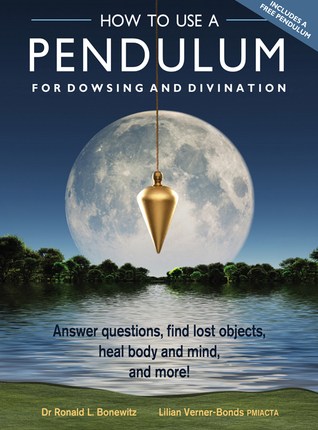
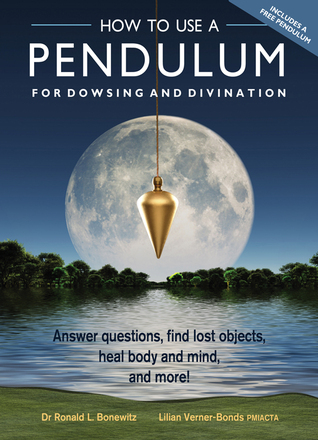
Then, last week, I saw this book and was so excited to finally have some concrete instructions!
Superstitions and second-hand stories are all very well and good, but it doesn’t help you when one goes about actually using a mystical item for its intended purpose.
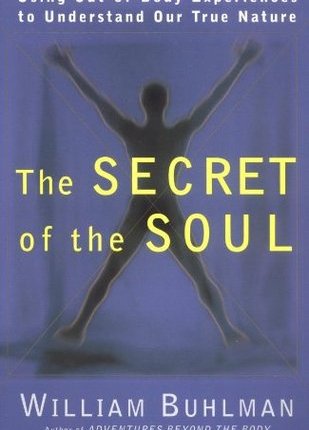
The Secret of the Soul is a great title for beginners who are looking to understand this, sometimes confusing, other times frightening, skill that we all seem to possess — the ability to exit our bodies in a kind of vision or trance.
Some call this the “out of body experience” or OBE.
The first half of the book, Buhlman discusses OBEs, why they are important, and gives countless examples of actual OBEs that folks have had. The second part of the book gives concrete techniques and problem solving tips to assist readers in having their own OBEs.
One of my friends is a long distance runner who has had some OBEs during his ultra marathons. I thought of him in the section entitled “Combat and Trauma-Induced Experiences”: “It was while I was running in a marathon last year that I had a very strange experience. I was at about the eighteen-mile marker when I looked beside me and saw myself running. At first I thought it was someone who was my build and wearing the same shoes, but then I realized it was me!” pg 55
If you’ve never had an out of body experience of your own, the sheer variety and number of people who have fills you with confidence that you can.
I also liked Chapter 4, “Transformational Experiences”: For thousands of years spiritual masters have taught that the act of withdrawing from the senses is essential in order to consciously experience our spiritual self. pg 61
And the testimony from that chapter: “This is bigger then anything I can imagine; how can I tell people without sounding like a nutcase? This changes everything I ever thought I knew or thought was true.” pg 68
That’s the thing about powerful transformational experiences. Until someone has one him or herself, there’s not really anyway to explain it.
Chapter 6, “Extraterrestrial Contact and Abduction,” was the first time that I’ve read about aliens alongside traditional OBEs. Buhlman writes: “After reading more than two hundred such letters (from his OBE survey), I noticed a startling similarity: The letters describing extraterrestrial contacts and abductions were almost identical to the thousands of letters I have received describing out of body experiences. In fact, I often could not distinguish between letters.” pg 89
In Chapter 7, A Brief History of Out-of-Body Experiences, the reader is given cultures from different time periods, all over the planet, that support and confirm the existence of out of body experiences.
These seem to suggest that OBEs are a “human” experience rather than a culturally specific one.
Take Emanuel Swedenborg’s words: “It has pleased the Lord to… open the interiors of my mind or spirit, whereby I have been permitted to be in the spiritual world with angels, and at the same time in the natural world with people, and this now (has happened for) twenty-seven years.” pg 113
I was surprised at how many of the historical figures presented here as having OBEs were scientists… I guess in my mind I’ve always drawn a line between the artsy/mystic types and the scientists. Line erased. 🙂
I’ll conclude with a few statements from the Appendix of the book, which was compiled from Buhlman’s extensive survey of people who had had OBE’s: “Self-initiated out-of-body exploration is a direct and powerful method to experience our true spiritual essence. It is an effective method to accelerate our personal growth and evolution. … This is achieved by personal spiritual experience and exploration beyond the physical limits.” Appendix pg 253.
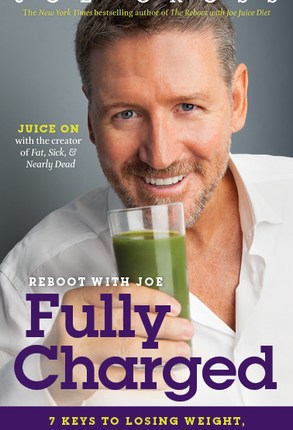
Fat, Sick, and Nearly Dead is one of the main reasons why I bought a juicer and have attempted to incorporate more plants into my diet. I’m not hardcore about it, but I try.
I didn’t know that Joe from that documentary is named Joe Cross and that he’s written multiple companion books for that film. This one, Reboot with Joe: Fully Charged, is excellent.
What I love about Joe is that he’s realistic. He doesn’t expect that he will eat perfectly for the rest of his life- he just wants to do the best that he can today then repeat the process tomorrow.
He pushes the big lifestyle changers: diet, exercise, and rest but not in an extreme, unobtainable manner. In addition to common sense ideas about health and diet, Joe has spent years building an online community to support those who are working on major life changes. http://www.rebootwithjoe.com/weight-loss/
When you read this book, you also read examples of people who have turned their lives around with juicing and exercise. It’s inspiring and could be life changing for many people.
I also like that Joe included some of his go-to juicing recipes towards the back of the book. I’ve tried quite a few different juices, but I haven’t found any that I particularly liked. It’s always nice to have some new options that have appealed to other people in the past.
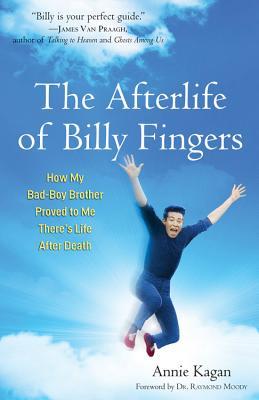
I think anyone who has lost a loved one wishes to talk to them again. Annie Kagan was granted that wish. She wasn’t a practicing channeler, so it came as a huge surprise to her when she heard her dead brother’s voice speaking to her from a spot above her head.
At the time that this happened, Annie was living a hermit’s life in New England only venturing out to kick ideas around at her writer’s group. So, that gave her the space and time to explore these communications rather than running to the doctor to have the voice medicated away.
At first, she was reluctant to share what she was hearing, afraid that Billy’s voice was her mind’s way of holding the grief away or that other people would think she was going insane, but the information imparted became more and more specific until she couldn’t explain it away.
Through the experience and sharing it, Annie came to believe without a doubt that the spirit continues on after death. She took comfort from it and hopes, with this book, to share that comfort with others who may be grieving or afraid of death itself.
The Afterlife of Billy Fingers isn’t going to appeal to everyone. If you don’t believe that communications from beyond the grave are possible, I’d suggest passing on this book. And, towards the end of Billy’s travels into the afterlife, things get really far out as he lets go of his previous self and becomes the universe, embodying the entirety of reality.
It reminded me of Be Here Now by Ram Dass, hippie to the extreme. But, that’s the type of spirituality I’m into, so I loved it.
The introduction by Raymond Moody describes Billy as a modern psychopomp, someone who guides the spirits of others through the afterlife: “The experiences Dr. Kagan relates are completely consistent with the kind of role walkers between the worlds played in antiquity. And that is no surprise to me. I think that such experiences are part of the collective psychological heritage of humankind- not artifacts of any one culture.” pg 11, ebook.
Billy was a drug addict and led a very hard life.
This is what he had to say about it: “How do I know my life wasn’t some punishment for my past transgressions? Well, because there’s no such thing. You’re not on earth to be punished. … That’s a human concept. Something man made up. Humans make up stuff and then they believe it”. pg 24, ebook.
A continuation along that line of thinking later in the book: “Beliefs are big on earth. People collect them. Some of these beliefs are helpful, but others just keep you running around trying to follow rules that others have laid down. They don’t have a lot of personal meaning. It’s a good idea to sort through your beliefs now and then and throw out the ones that don’t serve you.” pg 85, ebook
Annie dealt with a bunch of her own issues in this book, like the fact that by writing this book, people were going to think she was “flaky”. At one point in the narrative, she has a toothache and starts to believe that she’s being punished for revealing universal truths that should be kept secret.
She eventually gets past that attitude, but, when it comes to the unknown, I think fear can be a major hurdle: “After my toothache and the painful root canal and awful infection that followed, I was scared. … who was I to be the one to prove there’s life after death? Maybe some secrets shouldn’t be revealed. Maybe I was breaking a sacred taboo, dabbling in a cosmic Pandora’s box.” pg 41, ebook.
Another of the Be Here Now moments: “In your world, as the earth moves around the sun, there’s nothing but shadow for a good part of the time. The mystery of life on earth cannot exist without the shadow element. You cannot have the sea without storms, the earth without quakes, the wind without tornados. … And sometimes- sometimes darkness is okay too. Don’t overlook the riches contained in the darkness. Life’s very temporary, so don’t let time just pass. Let the moments fill you- the ones you judge to be good as well as bad.” pg 77, ebook. Solid advice.
Let’s end with one more bit of wisdom: “People spend lots of time on things that make them unhappy- too much focus on the sand in the oyster. To cultivate joy, pay attention to what you like.” pg 116
Recommended for spiritual seekers and people who enjoy reading about near death experiences/channeled wisdom.
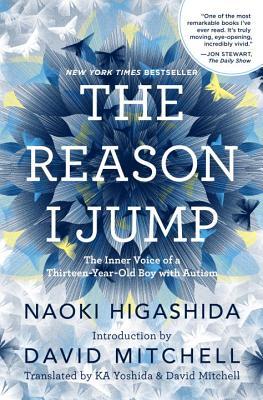
This is one of the first books I’ve ever read by someone with autism or who is neurodivergent.
Goodreads described it quite succinctly: “You’ve never read a book like The Reason I Jump. Written by Naoki Higashida, a very smart, very self-aware, and very charming thirteen-year-old boy with autism, it is a one-of-a-kind memoir that demonstrates how an autistic mind thinks, feels, perceives, and responds in ways few of us can imagine. Parents and family members who never thought they could get inside the head of their autistic loved one at last have a way to break through to the curious, subtle, and complex life within.”
The reviews on this one from my Goodreads friends are very mixed and I understand why. The Reason I Jump touches on a very emotional topic.
I’m not an expert on autism so I am completely unqualified to determine if Naoki wrote this book with or without help or the over arching truth of his experiences. However, as a reader, I thought that some of Naoki’s words were very beautiful.
Naoki talks about difficulties in communicating his feelings, the beauty of nature, the impossibility of controlling his emotions or repetitive actions- knowing that he’s not behaving “normally” but not able to do anything about it.
“Please don’t judge us from the outside only. I don’t know why we can’t talk properly. But it’s not that we won’t talk- it’s that we can’t talk and we’re suffering because of it.”pg 24, ebook.
It seems to me that everyone’s lens of perception is different and we can learn from each other if we share our own unique viewpoint. I certainly learned about Naoki’s inner world from this book.
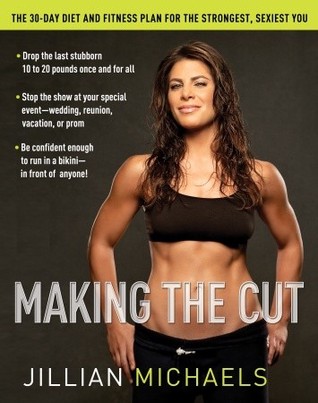
“Making the Cut” is a collection of recipes, workout tips, and insider training techniques from Jill Michaels, one of the trainers of the television program: The Biggest Loser. She’s hardcore and this book is a reflection of that.
Definitely not for everyone, myself included, I’d only recommend it to those who are already in very good shape. Let me make one thing clear, I’m not in “bad” shape, but I am not at the level required to complete these exercises.
So, I nearly killed myself trying to do Day 1 of the circuit training. I have a predictable cycle with fitness books. I read them, get all fired up about changing my diet and amping up my workouts, try it for awhile, then give up.
This one, at least, was so hard and I was hurting so bad that I gave it up right away rather than drawing it out to its inevitable conclusion. Her clean eating tips are solid and I’ve added a lot more fresh fruits and veg to my table, but, the workouts are just too hard.
I had my husband helping with the timer and figuring out what I was supposed to do at each step because her descriptions of the exercises are all gathered together in an index at the end. He was encouraging me to stop after the first two minutes, but I insisted on doing at least ten- silly me.
The weird frog push-ups were an impossibility from the start. I almost broke my nose when I tried to lower my face to the floor. I had to laugh, it was ridiculous.
My only saving grace was that I was using the equipment at my home rather than the gym. If I had humiliated myself like that in public, I might not have been able to give this book the “liked it” three stars.
There is a disclaimer written in the description of this book on Goodreads that states it is not for everyone, but it was awesome in my opinion. I am going to admit that I am incredibly biased.
However, I couldn’t convince my public library to buy them because, I was told, they are “too fringe”.
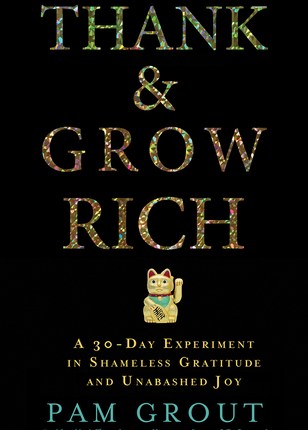
Perhaps this book, which focuses on adopting an attitude of gratitude to improve your life, will be mainstream enough to make the cut.
Pam addresses the metaphorical elephant contained in her title early in the book: “No offense to Napoleon Hill, the author of the self help classic on which my title riffs, but the real power is in not thinking. If you want to override your brain’s unfortunate habit of leafing through your past and creating a present hologram to match, forget thinking. And start thanking.” Loc 108, ebook.
I read Think and Grow Rich last year and I could see how other people have beef with the classic. Napoleon Hill focuses on money, making connections, and doing the internal work to shoot yourself into the stratosphere of life success.
There’s very little in there about feeling your way to the same place.
Pam takes a different approach: “I should get this out on the table right now. This book won’t do a thing for your 401(k) or help you secure the McMansion you pasted onto your vision board. It’s not about getting rich in the traditional sense. … There’s nothing wrong with financial capital, but let me be very clear. It’s incapable of bringing any measure of real happiness.” Locs 324-337 ebook.
She gets to the heart of why seekers chase anything- because we believe that it will bring happiness. Pam suggests getting happy and then the success will come.
And, how does she say that we should “get happy”? By being thankful for what we already have.
“Be astonished by useless things. It’s easy to be thankful for the obvious- healthy kids, public libraries, strong marriages. But in this game we’re going to take it a step further. We’re going to build our gratitude muscle by also appreciating the insignificant and impractical…” Loc 856 ebook.
I had to include that passage for the library mention. Yay libraries!
Pam backs up her claims with scientific studies such as: “According to Richard Wiseman, psychology professor at the University of Hertfordshire in England and creator of Luck School, people who think they’re lucky actually are. After eight years of studying hundreds of self-identified exceptionally lucky and exceptionally unlucky people, he concluded that getting good breaks has nothing to do with karma or kismet and everything to do with how we see ourselves.” Loc 991 ebook.
I would like to state for the record that I am one of the luckiest people that I know. 🙂
She also includes a bunch of information from happiness researchers: “When it comes to success, research shows that while IQ, education, and training play cameo roles, the starring role, the headliner on the success stage, is “Do you have a vision? Do you believe it’s possible?” Shawn Achor, author of The Happiness Advantage: The Seven Principles of Positive Psychology That Fuel Success and Performance at Work… claims that predicting success using any other factor (say, your IQ or number of degrees) is about as effective as flipping a coin. What is effective, Achor and Frederickson and other happiness researchers have proven, is creating a happy brain that anticipates accomplishment, that knows success is just a matter of time.” Loc 1876 ebook.
I know that I have a pretty open mind when it comes to these types of books, but my thought is, what’s the harm in it? If it works for you, great! You’ve just discovered a new tool to use for living the best life for you.
If it doesn’t work, no harm done. At the very least, you would know for yourself.
The opinions contained within this review are entirely my own. Thank you to NetGalley and Hay House for a free advance reader’s copy of this book for review purposes! And, thank you for reading.
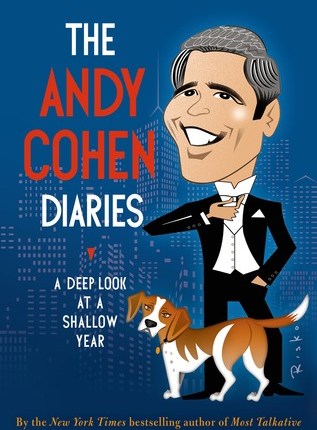
The Andy Cohen Diaries is the type of book that you have to be in the mood to read. It is basically like a book length gossip column, which can sometimes be exactly the kind of fluff that I want to read. Other times though… it is more annoying than amusing.
Andy writes it in a stream of consciousness style- event, event, feeling, event, aside, event, personal thoughts, inside joke, repeat. So, jump into this one if you want a bunch of gossip about the New York scene and Watch What Happens Live.
I thought Andy’s description of his book was spot on:“Sometimes-like life itself-these chronicles are funny, sometimes dishy, and sometimes even a little sad. And sometimes they are really, really shallow. Because sometimes life is shallow. I understand that and have accepted it. I hope you will too.” pgs 7-8 ebook
Andy’s life is filled with drama, divas, and emotion laden moments both on and off the screen. I enjoyed watching him juggle it all. He offers this advice for handling the more challenging people in your life: “…I told her I was sorry if I offended her. Sometimes, the only option is to say you’re sorry, even if you have no idea what someone is talking about.” pg 11 ebook.
I’ve never watched any of the Real Housewives of (fill in the blank city). So, those gossip bits didn’t mean all that much to me.
However, the parts about Lady Gaga were a different story! : “Then the weirdest cake arrived from Lady Gaga, red velvet cheesecake with white chocolate on top with Lady Gaga Art Pop written on it… the note said “Love, Gaga” in teeny little capitals. It looked like-I don’t know what actually-robot writing?”pg 18 ebook
Andy is from St. Louis, the closest city to my small hometown. So, we had that in common.
Any time he was taking about the weird things that people from St. Louis do, I was nodding my head in sympathy: “Everybody in St. Louis, all they talk about is how great St. Louis is. The hostess lady in the suite asked me if I lived in LA and I said no, I live in New York, and she said to me very earnestly, “Why, may I ask, would you ever leave St. Louis?” pg 38 ebook. Yeah, they do that.
I could go on and on. The Andy Cohen Diaries is just so quotable. Some read alikes: Amish Confidential by “Lebanon” Levi Stoltzfus (tell-all about the Amish Cofidential show and the Amish community) or My Horizontal Life by Chelsea Handler (hilarious recounting of Chelsea’s various escapades). Thanks for reading!
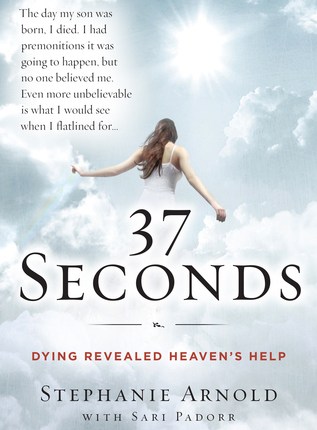
37 Seconds is a fascinating account of Stephanie Arnold’s near death experience. She had a premonition that she was going to die having her second child.
Stephanie did die for 37 seconds and had an amazing spiritual experience. Her religious upbringing is in Judaism which makes for a totally different lens of perception than other NDEs (near death experiences) that I have studied.
I like reading books about near death experiences and examinations of consciousness. So far, I’ve read twenty one books by folks from different religions and parts of the world about their NDE and what they’ve brought back with them to their normal, every day lives.
I found it interesting that the focus of Stephanie’s consciousness during the event was on her deceased relatives and their support of the physical world rather than on a location on a higher level where people go to hang out around their G-d for the rest of eternity.
Another portion of the account that made it different than others that I’ve read on the topic is that Stephanie accessed her memories of the time during her 37 second death through hypnosis.
Other NDE writers (Piper, Moorjani, Burpo, et al) came out of their NDEs with memories of what went down. Stephanie, because of the extreme trauma and the premonitions about her death that haunted her for months before the actual event, repressed her NDE.
Isn’t it fascinating? The study of consciousness never ceases to surprise me. It seems that not only do our lenses of perception create what we see in other modes of existence, but we can choose whether to access those perceptions or not.
I also liked Stephanie’s repeated message through 37 Seconds of trusting your own intuitions and believing in that inner voice. I feel that in modern society, we’ve advanced in so many ways both scientifically and technologically, that we discount simpler modes of understanding and knowledge.
Why try learning about why your body is presenting symptoms of anxiety and stress when we can just medicate it away? Why believe in your dreams and intuitions when educated doctors and scans show that nothing is wrong?
If Stephanie had listened to the experts, she would be dead. She is a great role model for a return to trusting ourselves. Doctors, medicine, and therapy have their place but so do dreams, intuitions, and the inner voice.
If you enjoyed 37 Seconds, try Wisdom of Near-Death Experiences: How Understanding NDEs Can Help Us Live More Fully by Penny Satori or Journey of Souls: Case Studies of Life Between Lives by Michael Newton.