Dark but powerful, The Road is a dystopian novel, a modern classic really, about a father and son who are navigating a destroyed world. They fight to stay alive but also to hold onto their humanity in a new existence where your neighbors are now your enemies, and there is no one who cares if you live or die.
In this nightmare realm, at least they have each other.

The story opens with the duo trying to get to the coast and south to warmer climates, but many obstacles lie in their way. In addition to imminent starvation because of the nuclear fallout, the father and son face external threats like cannibalistic tribes of savage men and women. (Similar to themes found in the Walking Dead, both books and television.)
But it’s not just a battle to save their bodies, the father must teach the son the proper way to live (like not eating other people) to save his spirit from the crushing darkness that has overtaken everything. It is a struggle to retain the internal spark that divides humanity from the animals.
This is a story about survival in a dystopian reality, but it is also about the sustaining and literally life preserving power of love. (Similar to the Room by Emma Donoghue.)
My one complaint about this book is that the author didn’t clearly label who was speaking during the dialogue. He just went down a line to illustrate change of speaker. I had a really tough time keeping track of who was saying what.
Take this passage, for example: “Can I ask you something? he said. Yes. Of course. Are we going to die? Sometime. Not now. And we’re still going south. Yes. So we’ll be warm. Yes. Okay. Okay what? Nothing. Just okay. Go to sleep. Okay.” pg 9 The whole book is like that, anytime anyone is talking.
Otherwise though, this is an amazing, heart-pounding, thrill ride of a book.
I loved the father’s advice to the son throughout the journey: “A corpse in the doorway dried to leather. Grimacing at the day. He pulled the boy closer. Just remember that the things you put into your head are there forever, he said. You might want to think about that. You forget some things, don’t you? Yes. You forget what you want to remember and you remember what you want to forget.” pg 10
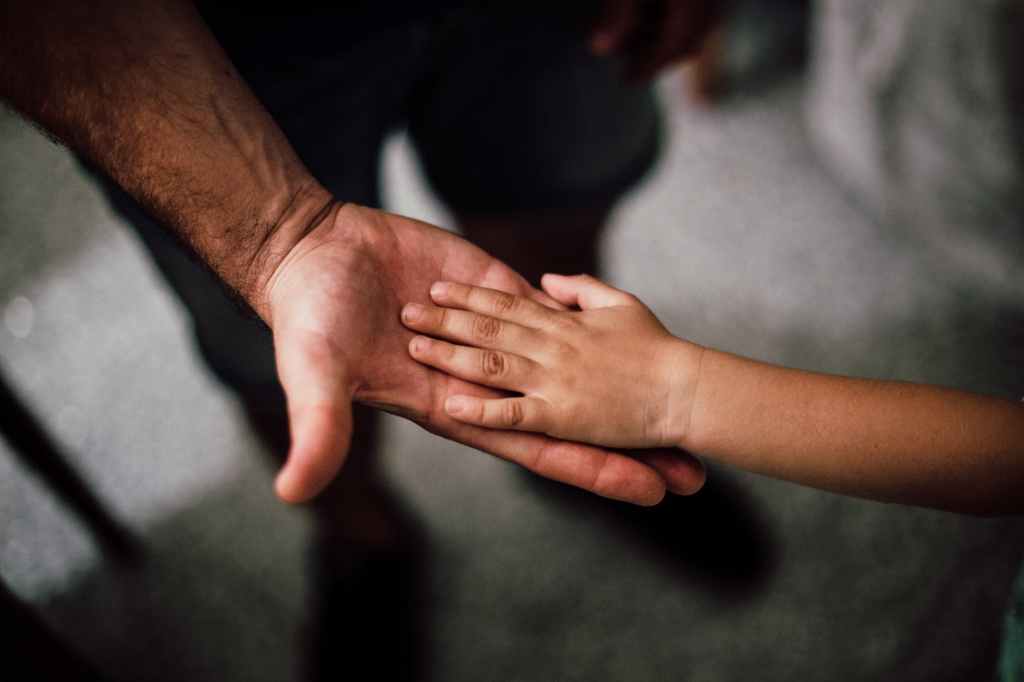
The father/son relationship described in here was fascinating to me. Generally, at least in my experience, the relationship between a mother and a child is the closer one in the family because of certain biological imperatives. McCarthy flips that whole paradigm on its head with this story. In here, it is the father who stands between the child and death. It is the father who finds meaning in a world gone mad through helping the child find food, stay clean, and stay protected from the elements.
“The boy sat tottering. The man watched him that he not topple into the flames. He kicked holes in the sand for the boy’s hips and shoulders where he would sleep and he sat holding him while he tousled his hair before the fire to dry it. All of this like some ancient anointing. So be it. Evoke the forms. Where you’ve nothing else construct ceremonies out of the air and breathe upon them.” pg 63.
I think one of the main lessons in here is that life holds the meaning that you assign to it. And, even if civilization falls apart, you can create your own mini-civilization through your actions and intentions.
“He’d had this feeling before, beyond the numbness and the dull despair. The world shrinking down about a raw core of parsible entities. The names of things slowly following those things into oblivion. Colors. The names of birds. Things to eat. Finally the names of things one believed to be true. More fragile than he would have thought. How much of it was gone already? The sacred idiom shorn of its referents and so of its reality. Drawing down like something trying to preserve heat. In time to wink out forever.” pg 75 Beautiful.
If civilization ever ends, look for me at the library. Probably will be reading this book. 🙂
I picked this classic up because of David Schaafsman’s excellent review which you can read here: https://www.goodreads.com/review/show…
Some read alikes: Station Eleven by Emily St. John Mandel, Railsea byChina Miéville, or The Last One by Alexandra Oliva. Thanks for reading!
- Steve Cox and Matthew Walker’s Shaun the Sheep: The Beast of Mossy Bottom, a review
- Christopher Nolan’s The Odyssey, a review
- Edward Berger’s The Ballad of a Small Player, a review
- Otherwhere: A Field Guide to Nonphysical Reality for the Out-Of-Body Traveler by Kurt Leland
- Psychic Dreamwalking: Explorations at the Edge of Self by Michelle Belanger


One thought on “The Road by Cormac McCarthy”