Room by Emma Donoghue, a review

Room by Emma Donoghue, a review

Room is the story of Jack, his mother, and the room that they never leave.

To Jack’s mother, it is a prison. To Jack, it’s just the world.

A person holding a small globe against a clear blue sky with mountains in the background.
Photo by Porapak Apichodilok on Pexels.com

“…it was a garden shed to begin with. Just a basic twelve-by-twelve, vinyl-coated steel. But he added a sound-proofed skylight, and lots of insulating foam inside the walls, plus a layer of sheet lead, because lead kills all sound. Oh, and a security door with a code. He boasts about what a neat job he made of it.” pg 85.

Jack and his mother have no contact with the outside world, except for ‘Old Nick’ who only comes at night, brings food and the occasional ‘Sunday treat.’

They are his prisoners.

“…we mustn’t try and hurt him again. When he came back the next night, he said, number one, nothing would ever make him tell me the code. And number two, if I ever tried a stunt like that again, he’d go away and I’d get hungrier and hungrier till I died.” pg 97.
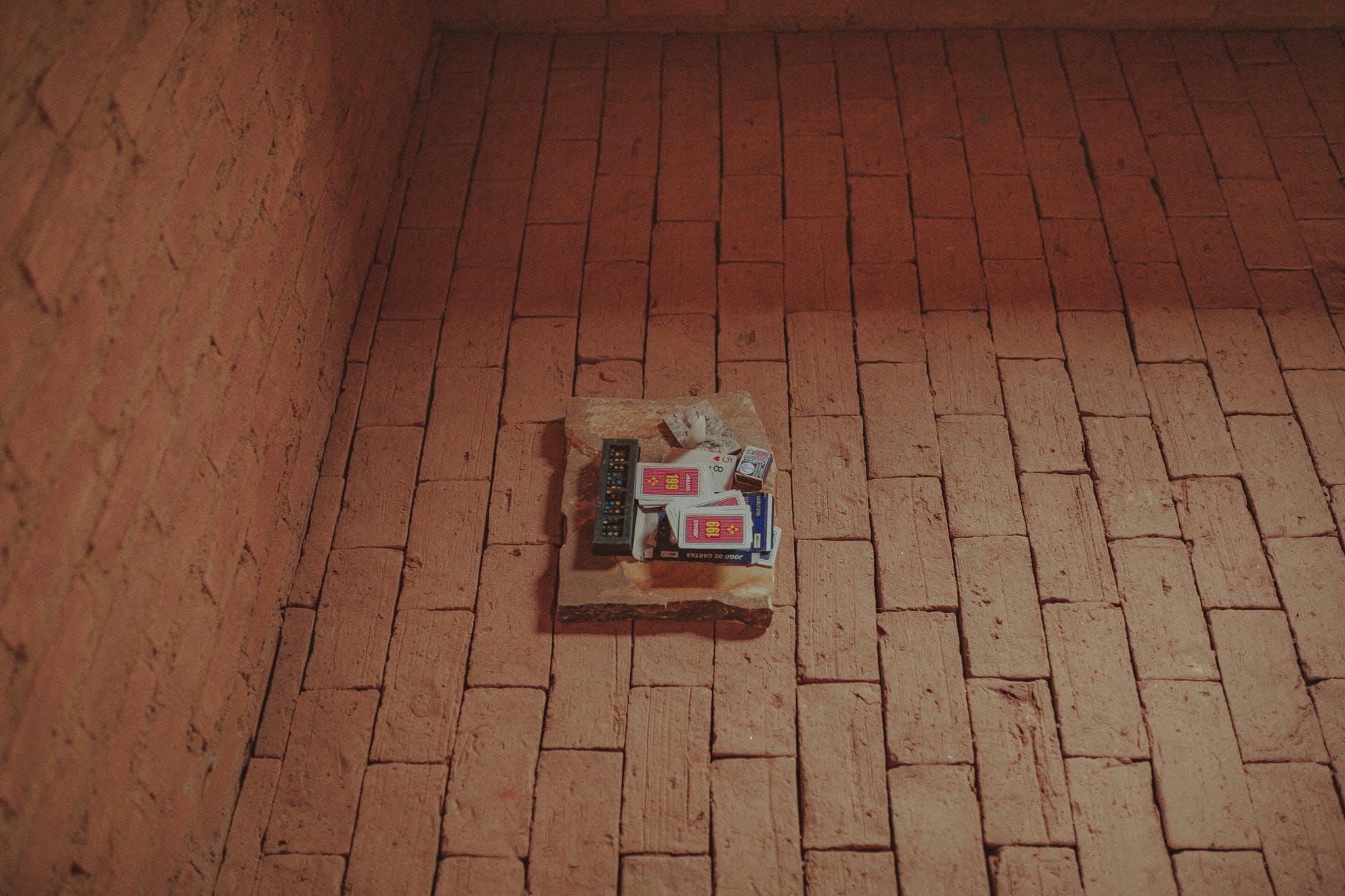
A collection of various items, including cards and small boxes, arranged on a stone slab in a room with red brick flooring.
Photo by Lucas Pezeta on Pexels.com

Though this book covers some seriously dark subject matter, it is told through the point-of-view and voice of a child.

At first, I didn’t like it, but then I realized- hearing the story from Jack made it bearable. I think if we had heard it from his mother’s point of view, it would have been too bleak.

Jack confuses television and reality because he’s never been outside ‘room’: “Women aren’t real like Ma is, and girls and boys not either. Men aren’t real except Old Nick, I’m not actually sure if he’s real for real. Maybe half? He brings groceries and Sunday treat and disappears the trash, but he’s not human like us. He only happens in the night, like bats. Maybe Door makes him up with a beep beep and the air changes. I think Ma doesn’t like to talk about him in case he gets realer.” pg 18.
A silhouette of a hand reaching for a door knob, with a key attached to the door.
Photo by George Becker on Pexels.com

The beauty of this story is in the resiliency of Jack and the love he and his mother have for each other. They keep each other going when life becomes unbearable.

There are also some surprising twists to the story too.

I loved it.

I took the time to watch the movie after I read the book and it is a great adaptation. Not, of course, as stellar as the book, but well worth the time.

A woman lovingly holds a young boy in her arms, both smiling joyfully. The backdrop features a blue sky with clouds and a scenic outdoor landscape.
https://www.imdb.com/title/tt3170832/

Highly recommended, but keep your tissue box close.

Update to book/film review on Sept. 23, 2026. Post originally published Jan. 9, 2018.

It feels a little unrelated, but I recently watched “Good Luck, Have Fun, Don’t Die”. Beware, there is a minor spoiler ahead and it is an excellent film, which might garner its own separate review on this blog in the future.

For the rest of my review, please go to https://www.patreon.com/TheLightCongress/posts/room-by-emma-171000893

Thanks for reading!

Heidi
Weathered black door at the end of a dark blue hallway
A way out of a shadowy house appears. Image generated with WordPress AI.

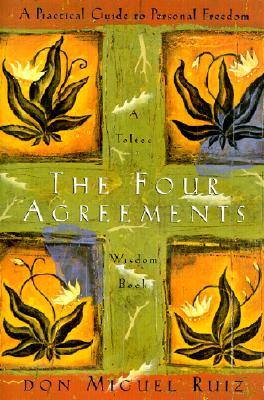
The Four Agreements: A Practical Guide to Personal Freedom by Don Miguel Ruiz, a review

The Four Agreements: A Practical Guide to Personal Freedom by Don Miguel Ruiz, a review
fouragreements

The Four Agreements by Don Miguel Ruiz is a simple and short presentation of some very deep wisdom. In a world filled with spiritual reading material, this one’s a goodie.

This book just made a lot of sense to me. I liked the practicality of the teachings in addition to their simplicity.

These lessons come from the shamanic culture of Central America. Here’s an example: “Toltec knowledge arises from the same essential unity of truth as all the sacred esoteric traditions found around the world. Though it is not a religion, it honors all the spiritual masters who have taught on the earth. While it does embrace spirit, it is most accurately described as a way of life, distinguished by the ready accessibility of happiness and love. introduction pg x.

Happiness and love! Sign up the author of The Light Congress, pronto.

The book goes on to talk about how everyone has unconscious beliefs that we pick up as children. We view and experience our world through these beliefs.

Most folks aren’t even aware that they have them and this causes a myriad of misunderstandings and problems: “We keep searching and searching, when everything is already within us. There is no truth to find. Wherever we turn our heads, all we see is the truth, but with the agreements and beliefs we have stored in our mind, we have no eyes for this truth. We don’t see the truth because we are blind. What blinds us are all those false beliefs we have in our mind.” pg 17.

Sounds bleak. So, how do you cut through the fog of these beliefs to see clearly? Ruiz suggests using The Four Agreements.

The first is: “be impeccable with your word… you begin to see all the changes that can happen in your life. Changes first in the way you deal with yourself, and later in the way you deal with other people, especially those you love the most.” pg 46.

For the rest of my review, please go to https://www.patreon.com/TheLightCongress/posts/four-agreements-171528539

Thanks for reading!

Heidi


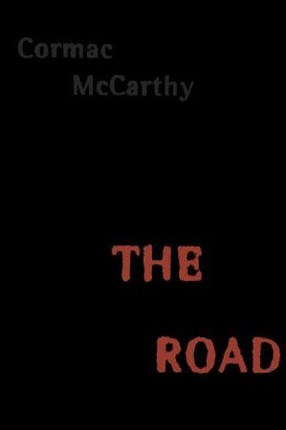
The Road by Cormac McCarthy

The Road by Cormac McCarthy

Dark but powerful, The Road is a dystopian novel, a modern classic really, about a father and son who are navigating a destroyed world. They fight to stay alive but also to hold onto their humanity in a new existence where your neighbors are now your enemies, and there is no one who cares if you live or die.

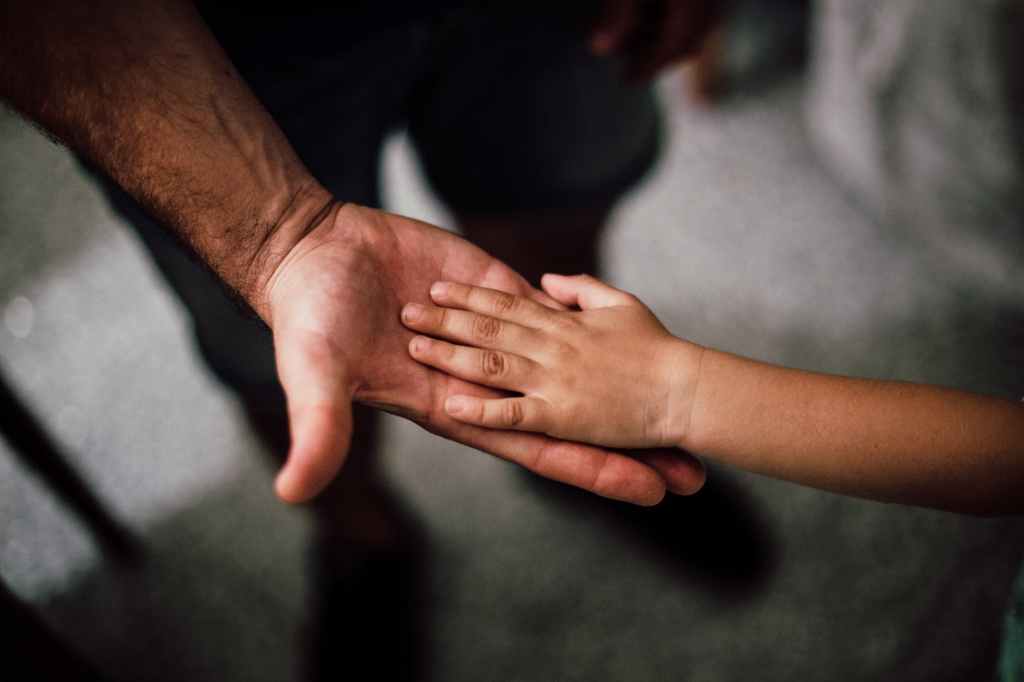
In this nightmare realm, at least they have each other.

Photo by Kaique Rocha on Pexels.com

The story opens with the duo trying to get to the coast and south to warmer climates, but many obstacles lie in their way. In addition to imminent starvation because of the nuclear fallout, the father and son face external threats like cannibalistic tribes of savage men and women. (Similar to themes found in the Walking Dead, both books and television.)

But it’s not just a battle to save their bodies, the father must teach the son the proper way to live (like not eating other people) to save his spirit from the crushing darkness that has overtaken everything. It is a struggle to retain the internal spark that divides humanity from the animals.

This is a story about survival in a dystopian reality, but it is also about the sustaining and literally life preserving power of love. (Similar to the Room by Emma Donoghue.)

Photo by Juan Pablo Serrano Arenas on Pexels.com

My one complaint about this book is that the author didn’t clearly label who was speaking during the dialogue. He just went down a line to illustrate change of speaker. I had a really tough time keeping track of who was saying what.

Take this passage, for example: “Can I ask you something? he said. Yes. Of course. Are we going to die? Sometime. Not now. And we’re still going south. Yes. So we’ll be warm. Yes. Okay. Okay what? Nothing. Just okay. Go to sleep. Okay.” pg 9 The whole book is like that, anytime anyone is talking.

Otherwise though, this is an amazing, heart-pounding, thrill ride of a book.

I loved the father’s advice to the son throughout the journey: “A corpse in the doorway dried to leather. Grimacing at the day. He pulled the boy closer. Just remember that the things you put into your head are there forever, he said. You might want to think about that. You forget some things, don’t you? Yes. You forget what you want to remember and you remember what you want to forget.” pg 10

The father/son relationship described in here was fascinating to me. Generally, at least in my experience, the relationship between a mother and a child is the closer one in the family because of certain biological imperatives. McCarthy flips that whole paradigm on its head with this story. In here, it is the father who stands between the child and death. It is the father who finds meaning in a world gone mad through helping the child find food, stay clean, and stay protected from the elements.

“The boy sat tottering. The man watched him that he not topple into the flames. He kicked holes in the sand for the boy’s hips and shoulders where he would sleep and he sat holding him while he tousled his hair before the fire to dry it. All of this like some ancient anointing. So be it. Evoke the forms. Where you’ve nothing else construct ceremonies out of the air and breathe upon them.” pg 63.

Photo by Miri on Pexels.com

I think one of the main lessons in here is that life holds the meaning that you assign to it. And, even if civilization falls apart, you can create your own mini-civilization through your actions and intentions.

“He’d had this feeling before, beyond the numbness and the dull despair. The world shrinking down about a raw core of parsible entities. The names of things slowly following those things into oblivion. Colors. The names of birds. Things to eat. Finally the names of things one believed to be true. More fragile than he would have thought. How much of it was gone already? The sacred idiom shorn of its referents and so of its reality. Drawing down like something trying to preserve heat. In time to wink out forever.” pg 75 Beautiful.

If civilization ever ends, look for me at the library. Probably will be reading this book. 🙂

I picked this classic up because of David Schaafsman’s excellent review which you can read here: https://www.goodreads.com/review/show…

Some read alikes: Station Eleven by Emily St. John Mandel, Railsea byChina Miéville, or The Last One by Alexandra Oliva.  Thanks for reading!

When Breath Becomes Air by Paul Kalanithi, a review

When Breath Becomes Air by Paul Kalanithi, a review
whenbreath

Spoilers ahead! Readers be warned.

When Breath Becomes Air is Paul Kalanithi’s life story. He relates how he got into neuroscience, his exhausting and life consuming training, his illness, and his eventual transition out of this world into the next.

At first, Paul didn’t even want to become a surgeon because his own father was one and he saw how hard it was to balance work and family: “When we did see him, late at night or on weekends, he was an amalgam of sweet affections and austere diktats, hugs and kisses mixed with stony pronouncements … He had reached some compromise in his mind that fatherhood could be distilled; short, concentrated (but sincere) bursts of high intensity could equal.. whatever it was that other fathers did. All I knew was, if that was the price of medicine, it was simply too high.” pgs 24-25, ebook.

Even though he started out as an English major, Paul’s own interests led him toward the medical profession anyway. Similarly, I started out as a music major in college but switched to political science my sophomore year.

Why? I knew, somehow, that governmental systems were where my academic interest lived and I haven’t regretted that decision for a moment. Isn’t it funny how life leads us down paths we may never have envisioned for ourselves?

Back to When Breath Becomes Air– I was glad that Paul made the decision to follow a different life path because it seemed to be the perfect fit for him. In this book, Paul’s stories reveal his passion about the field of medicine and commitment to making the best decisions for the patients in his care. He was interested in what makes life worth living and how the brain’s functions effect quality of life.

I was particularly interested in that last bit. Sometimes, and I’m not going to point any fingers here, doctors and professionals of all stripes get caught up in the power, prestige, and monetary rewards that come with a position, forgetting the reason why they started in their field in the first place- to help people.

For the rest of this review and Light Congress symbolism, see my Patreon page: https://www.patreon.com/TheLightCongress/posts/when-breath-air-171599447

Thanks for reading!

Heidi