Women Who Read Are Dangerous by Stefan Bollmann, Foreword by Karen Joy Fowler

Women Who Read Are Dangerous by Stefan Bollmann, Foreword by Karen Joy Fowler
womenwhoread

Part art appreciation and part homage to the female reader, Women Who Read Are Dangerous is probably the the most aptly titled book that I’ve ever read.

In addition to the beautiful images (my favorites pages 73 & 89), this book educates the reader about the politics, historical trends, and gender inequality tied to reading. Who knew that simply picking up a book could be such a subversive act?

Women Who Read are Dangerous sums up years of strange thinking about women and books with a dose of humor that I appreciated.

Take these historical opinions for example: “Women are too literal-minded for reading. Women are too sentimental, too empathetic, too distractable for reading. Women are passive, practically somnolent, consumers of popular culture, never realizing how, with the very books they choose, they participate in their own subordination.” pg 16

Photo by Los Muertos Crew on Pexels.com

Or this: “The lack of all physical movement while reading, combined with the forcible alternation of imagination and emotion,” said the teacher Karl G. Bauer in 1791, would lead to “slackness, mucous congestion, flatulence, and constipation of the inner organs, which, as is well known, particularly in the female sex, actually affects the sexual parts”- so anyone who read a great deal and whose powers of imagination were stimulated by reading would also be inclined to masturbation, as indeed we can already observe in Baudouin’s painting. But such moralizing could not hold up the triumphal march of reading, including- and specifically- female reading.” pg 23

Can’t hold us back, right readers? I’m actually feeling pretty well for all the reading that I do.

Photo by cottonbro on Pexels.com

Reading is power, I’ve always known that: “With the ability to read, however, there developed new patterns of private behavior that were to threaten the legitimacy of both the Church and secular authorities on a permanent basis. Women who learned to read at that time were considered dangerous. For the woman who reads acquires a space to which she and no one else has access, and together with this she develops an independent sense of self-esteem; furthermore, she creates her own view of the world that does not necessarily correspond with that conveyed by tradition, or with that of men.” pg 26

An introvert’s paradise, the keys to your freedom, the way to stick it to the “man”… as if I needed more reasons to read.

I also liked this description of reading: “Reading is an act of friendly isolation. When we are reading, we make ourselves unapproachable in a tactful way.” pg 34 I never really considered it that way before, but it is a method in which you remove yourself from the world for a time, even from those sitting in the same room.

Photo by Karolina Grabowska on Pexels.com

Seems obvious, when I consider it, but I had never taken the time to do so.

Finally, I learned about how “silent reading” is a recent trend. Did you know?: “An illiterate today is not only someone who cannot read (or write), but also anyone who cannot understand a text unless he or she reads it aloud. Yet there must have been a time when the opposite was the case- when reading aloud was the norm, as silent reading is today. … Until well into the Middle Ages and in some cases well into modern times, reading consisted of both thinking and speaking, and was above all an act that took place not in separation from the outside world, but at its center, within the social group and under its surveillance.” pg 25

Ugh. “Under its surveillance”?

That brings to mind the quotation, “Let others praise ancient times; I am glad I was born in these.” -Ovid.

Highly recommended for art enthusiasts and anyone who loves to read, Women Who Read are Dangerous is a lot of fun and a walk on the wild side… if one believes in such things.

If you’re looking for more non-fiction information about reading, try “Wild Things! Acts of Mischief in Children’s Literature” by Betsy Bird. It doesn’t have the beautiful artwork of this book, but it does contain a lot of information about the history and, sometimes scandalous, back story of children’s books and authors.

A big thank you to the Goodreads First Reads Program for a finished copy of this book for review purposes.  And, thank you for reading!

Following Your Path by Alexandra Collins Dickerman

Following Your Path by Alexandra Collins Dickerman

Following Your Path is about using tarot cards and meditation in order to communicate with your psyche. I was particularly excited about this book because that’s the method that I use for my own meditations and writings. This book is a treasure trove of mythological symbolism and fairy tales. I enjoyed much of it. But, I felt as if Alexandra guides the reader almost too well.

She breaks down the cards into their various pieces and encourages reflection on each piece of the Tarot artwork in a sort of automatic writing process (write down the first thing that comes to mind when you look at “blank”).

I felt like she was depriving the reader of the richer experience of pathwalking into the cards themselves.

If I were to write a manual, perhaps someday, I would leave the meditations themselves as completely open ended with plenty of blank pages for writing. So, more like: “Here is the card. Walk through it as if it is a doorway. What do you see?”

It may be difficult to believe, but the mind fills the space with “something”. The endless writing prompts for the small details really aren’t needed. But, I could see this book being very useful for true beginners who are unsure of the way or don’t yet trust or know their own inner worlds.

Another small criticism, Alexandra has the reader starting their journey into the major Trumps (the minor cards aren’t even presented) and she starts her study with the Fool rather than the Universe. But, I suppose it doesn’t really matter the order in which you explore the cards. The fact that you’re doing it at all is what is important.

I loved this explanation of the psyche in the introduction by Jean Houston: “The psyche is not unlike an archaeological dig in which different civilizations, stories, and interpretations may be revealed at each level. Unlike the field archaeologist, however, we have living access to the cultures and knowings of the various strata within ourselves and therefore can learn on site how to tap our hidden dimensions for the benefit of our existential lives. It is also possible, with the help of those primordial patterns of meaning and relationship known as archetypes, to build sustaining bridges to, and networks among, these strata, thereby encouraging an ongoing communication and exchange of content- a kind of commerce of the psyche.” introduction, pg vii

There are quotations scattered throughout the text that I found very enlightening, such as: “Myth is the secret opening through which the inexhaustible energies of the cosmos pour into human cultural manifestation. Religions, philosophies, arts, the social forms of primitive and historic man, prime discoveries in science and technology, the very dreams that blister sleep, boil up from the basic, magic ring of myth.” -Joseph Campbell, pg 17 Makes you want to start meditating right now!

This book is extremely positive and affirming. I liked that in addition to the meditation prompts, Alexandra provides further exercises and questions to help heal and creatively examine the mind. She says: “It is only when we learn to evaluate ourselves in terms of our own inner values that we can exist in a positive emotional state, aware of the continual opportunities for growth and for feelings of satisfaction.” pg 138

She also provides hope for those who may be going through the darkness of depression or despair:“Often when we find ourselves in a state of stupor, hopelessness, pain, loneliness, depression, and even madness, we may be on the verge of great vision and inspiration. Our condition of desperation is often only a stopping place on the road to greater self-development. By looking inward, we can find a way past destruction, to salvation and to a new life.” pg 244 So, if you’re going through hell, keep going.

If you enjoyed this book, you may want to look at The Creative Tarot: A Modern Guide to an Inspired Life by Jessa Crispin. If you want numerous examples of tarot card pathwalkings, take a look at my book, The Light Congress: thelightcongress.com

Happy meditating and thanks for reading!

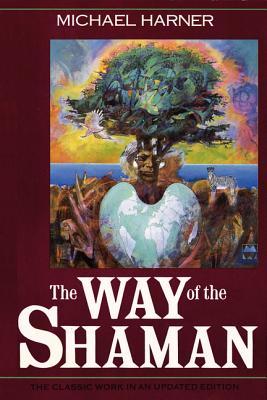
The Way of the Shaman by Michael Harner

The Way of the Shaman by Michael Harner

The Way of the Shaman says the practice of shamanism isn’t a cultural thing- it’s a “human” thing.

Michael Harner gives a brief biography of his own beginner experiences, then a very short history of shamanism, what it is, and how the experiences during the shamanic vision walks compare to ordinary reality.

He goes on to give a few practices for beginners to experience those states of consciousness for themselves as well as methods for contacting your “power animal” and some basic healing techniques.

I valued this book most for its discussions of shamanistic consciousness rather than the practices, but I could see both being of value for the proper audience.

Photo by Abet Llacer on Pexels.com

On shamanism across cultural boundaries: Shamanism represents the most widespread and ancient methodological system of mind-body healing known to humanity. Archaeological and ethnological evidence suggests that shamanic methods are at least twenty or thirty thousand years old… One of the remarkable things about shamanic assumptions and methods is that they are very similar in widely separated and remote parts of the planet, including such regions as aboriginal Australia, native North and South American, Siberia and central Asia, eastern and northernmost Europe, and southern Africa.”pg 40-41

One of Harner’s reasons for writing this book is to encourage everyone to deeper self knowledge: “…truly significant shamanic knowledge is experienced, and cannot be obtained from me or any other shaman. Shamanism is, after all, basically a strategy for personal learning and acting on that learning.” pg xxiv of introduction.

The world could use more self knowledge.

Photo by Mikhail Nilov on Pexels.com

How Harner has experienced the ineffable nature of shamanic consciousness: “His experiences are like dreams, but waking ones that feel real and in which he can control his actions and direct his adventures. While in the shaman state of consciousness, he is often amazed by the reality of that which is presented.” pgs 21-22

I find it interesting how various religious practices and occult teachings mix, blend, and borrow from each other. Or perhaps, at their base, they’re all just the same thing- various ways of experiencing the non-ordinary consciousness from which all humanity springs.

I read a book by practicing shaman, James Endredy, called The Flying Witches of Veracruz back in December of 2014 and it seemed to be a total pipe dream. It was filled with amazing creatures and impossible actions, like flying, shape shifting, and jumping higher than humanly possible.

Photo by Rakicevic Nenad on Pexels.com

James talked about the magical in the same breath that he talked about what he ate for breakfast.

Harner explains in this book why it reads like that: “The emphasis I make here on drawing a distinction between the experiences one has in (ordinary consciousness) and the (shaman consciousness)…is not a distinction that is usually noted in the conversations of shamans among themselves or even with Westerners. Thus, if you were to listen to a Jivaro shaman talk, you might hear in his everyday conversation accounts of experiences and deeds which could seem to you, as a Westerner, to be patently absurd or impossible…” pg 47-48.

That whole book makes so much more sense to me now.

In the afterword, Harner closes with thoughts about why shamanism works: “Albert Schweitzer reportedly once observed, “The witch doctor succeeds for the same reason all of the rest of us (doctors) succeed. Each patient carries his own doctor inside him. They come to us not knowing this truth. We are at our best when we give the doctor who resides within each patient a chance to go to work.”

Be a healer by reminding people that they have the power to heal themselves.

If you’re looking for more books like The Way of the Shaman, try The Flying Witches of Veracruz: A Shaman’s True Story of Indigenous Witchcraft, Devil’s Weed, and Trance Healing in Aztec Brujeria by James Endredy or Active Dreaming: Journeying Beyond Self-Limitation to a Life of Wild Freedom by Robert Moss.

Thanks for reading!

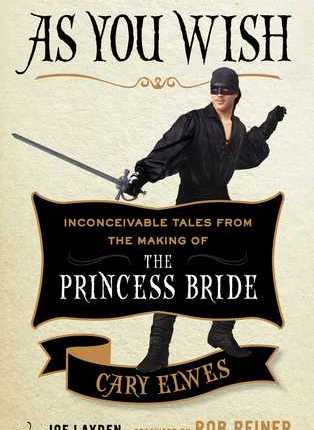
As You Wish: Inconceivable Tales from the Making of The Princess Bride by Cary Elwes

As You Wish: Inconceivable Tales from the Making of The Princess Bride by Cary Elwes

Before I start my review, I want to mention that As You Wish is the perfect audiobook for a road trip between St. Louis, Missouri and Kansas City, Kansas. I was traveling with my daughter and husband, and we were all entertained by Elwes’ memories of the making of the film.

It’s really not that easy to find a book that works for all three of us, but this was an absolute hit. I can’t recommend it enough and if you’re already a fan of the movie, I’m sure that you’ll love it even more.

Though it starts out a bit self-congratulatory in tone, throwing around words like “timeless”, “modern classic”, and “once-in-a-lifetime experience”, As You Wish is ultimately, like The Princess Bride, a very sweet and and enjoyable memoir about the events behind the making of the film.

At first, as I said, I was afraid that I was going to be bored to tears. Rob Reiner wrote and narrated the foreward and it is sugary sweet in its praise of the author, the movie, and everything to do with either. This high praise, some may argue, is well deserved, but I thought that it might have fit better in the flow of the tale as an afterword. First, the play then the applause, but, that’s just my opinion.

Some of the best parts of the memoir, not surprisingly, centered around Elwes’ interactions with his colorful co-stars. Andre the Giant figures largely into this tale, as he did in life, not only because of the enormous size of his body but also his heart.

The brightest among us always seem to burn too quickly.

Another of my favorite parts is the description of Elwes’ and Patinkin’s struggle to film the “greatest sword fight in modern times.” I had no idea of the amount of backbreaking work that went into the acquisition of the skills to run the scene. From day one of filming, Elwes and Patinkin were schooled by some of the best sword fighters in the movie business. Now that I know, I’m going to have to re-watch the film. I had always assumed that the fight was done by stuntmen. How wrong I was…

If you enjoy the film, The Princess Bride, you must listen to this audiobook. It is a real treat and you’ll appreciate some hidden gems revealed by Elwes’ narration. To borrow some descriptors from the book, it was a magical, “once-in-a-lifetime” moment when talent and story mixed together to create a “timeless, modern classic”. If you’re looking for some film related read-alikes (for movies other than the Princess Bride), try Nerd Do Well by Simon Pegg or A Funny Thing Happened on the Way to the Future…: Twists and Turns and Lessons Learned by Michael J. Fox.

Thanks for reading! -Heidi

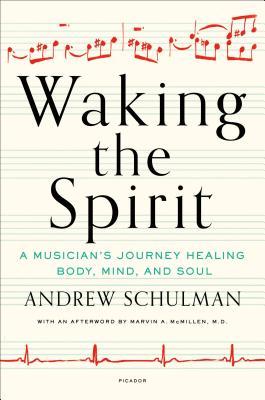
Waking the Spirit: A Musician’s Journey Healing Body, Mind, and Soul by Andrew Schulman

Waking the Spirit: A Musician’s Journey Healing Body, Mind, and Soul by Andrew Schulman
wakingspirit

Waking the Spirit is an educational and uplifting look at music therapy from a world class musician who, not only plays for a critical care unit at a hospital, but was also saved by music himself.

I’ve always known about the healing power of music for the spirit, but I didn’t realize that it had such marked effects on the body itself. When I’m having a bad day or just need to relax, I plop down in front of the piano and play the stress out.

What I did not know, and that Andrew discusses at length in this book, is that music has been used throughout history to treat sick people and the astonishingly positive effects that it has on the critically ill.

The idea behind music therapy in the ancient world is that everything is vibration.

If you play harmonious and balanced music, the human body will, in turn, put itself into harmony and alignment. Sickness was viewed as a simple imbalance: “Early records have been discovered from ancient Egyptian medicine, Babylonian medicine, Arurvedic (Indian subcontinent) medicine, and classical Chinese medicine that incorporated musical healing. The ancient Greeks valued the relationship between music and medicine in the god Apollo, whose gifts included both the musical and healing arts, and the first use of the term “musical medicine” began with Pythagoras, the fifth-century philosopher-mathematician. The Romans are said to have used musicians in their battlefield hospitals as a form of anesthesia.”

Before I read this book, I didn’t realize that music therapy was even a “thing” in hospitals.

It seems like, at least here in the U.S., and this is entirely my opinion, that medicine has moved ever so much farther away from holistic treatments. The preference is for high cost drugs and highly educated doctors to perform surgery… something concrete that people can hold in their hands and say, “Look! This is what I paid for. This thing right here.”

If something, like music therapy, works, but we can’t explain why it works, then people don’t value it as much. That’s where Waking the Spirit comes in.

Andrew provides tons of examples of beneficial music therapy treatments as well as studies to back up his real life experiences. I think this book could be helpful to doctors, nurses, or anyone who is looking to try something inexpensive to make the environment within their institution more appealing.

Take this experience: the patient was in pain and talking to herself (a side effect of the brain surgery she had just undergone). Then, Andrew shows up with his guitar: “At the sound of the first note she turned her head toward me, looking at my face and then at my right hand as it plucked the strings of the guitar. Gone was the scattered expression from her face as her eyes gained focus. She stopped talking, her mouth half-open in surprise, silent. Her face and shoulders relaxed, and she smiled. Not the plastered grin of before but a real smile of pleasure. She was here now, in this room, and not wherever she’d been for the past few hours. Something was connecting. We were just ten seconds into the music.” Powerful.

“Over the years, I’ve witnessed the most remarkable ways in which music can help the healing process, the ways it can calm a patient or lift their spirits, or reach them when they seem locked in a place that no one else can access. It can soothe a staff member’s exhaustion or anxiety and let them refocus on helping a patient, and it can provide a connection for a patient’s family, perhaps bring back old memories and open pleasant topics of conversation.”

Bringing beauty and dignity back to medicine with music.

In this passage, Schulman is talking to Dr. Richard Kogan, a professor of psychiatry, about how just the act of composing music has soothed individuals who are suffering from mental illness and then, their masterworks have gone on to help others: “While it’s important not to overromanticize mental illness- most depressed individuals are too paralyzed to write a symphony and most psychotic individuals are too disorganized to produce a work of art that is coherent- the suffering associated with mental illness can led to bursts of creative inspiration that are less likely to come from an individual that is emotionally content. For many of the greatest composers, music has been profoundly therapeutic.” In other words, artists who used their music to alleviate their own suffering composed some of the greatest music ever written, which in turn as the effect of ameliorating the suffering of others.” It’s a circle of healing.

You don’t have to be a musician to fully enjoy Waking the Spirit. I recommend it for anyone who’s interested in non-traditional treatments for pain and suffering. Thank you to NetGalley and Picador for a free digital ARC of this book.

Thanks for reading!

Realizing Soul — From Intuition to an Inspired Life by Paul Brunton

Realizing Soul — From Intuition to an Inspired Life by Paul Brunton

Paul Brunton was an English philosopher who dedicated his life to the spiritual journey.

Photo by Jonas Ferlin on Pexels.com

I had never read the teachings of Brunton before Realizing Soul and I found him to be very similar to Eckhart Tolle or, interestingly enough, Abraham Hicks.

He was like Eckhart Tolle in that he stressed the importance of the Now moment.

Brunton was like Abraham Hicks in that his description of the “Oversoul” could walk hand in hand with Hick’s “Vortex of Creation”. In fact, in my mind when I was reading this, I just substituted Oversoul for Vortex because I was more familiar with Hick’s thoughts on the matter than Brunton’s.

There is quite a lot of information in Realizing Soul, though it isn’t very long. In fact, I wish that some of the passages had been longer. This book was mainly a compilation of ideas from many of Brunton’s different writings.

I suppose that it gives the reader a great overview of the various works but I felt that it lacked some depth because of the shortened sections which were each generally only a couple of sentences long.

Photo by ArtHouse Studio on Pexels.com

Some parts I want to remember:
“…That which he has been seeking so ardently has been within himself all the time. For there at the core of his being, hidden away underneath all the weakness, passion, pettiness, fear, and ignorance, dwells light, love, peace, and truth. The windows of his heart open on eternity, only he has kept them closed! He is as near the sacred spirit of God as he ever shall be, but he must open his eyes to see it. Man’s divine estate is there deep within himself. But he must claim it.”pg 18

“The personal ego of man forms itself out of the impersonal life of the universe like a wave forming itself out of the ocean. It constricts, confines, restricts, and limits that infinite life to a small finite area. The wave does just the same to the water of the ocean. The ego shuts out so much of the power and intelligence contained in the universal being that it seems to belong to an entirely different and utterly inferior order of existence. The wave, too, since it forms itself only on the surface of the water gives no indication in its tiny stature of the tremendous depth and breadth and volume of water beneath it…” pg 27

“What can I do to break this barren, monotonous, dreary, and sterile spiritual desert of my existence? The answer is if you cannot meditate successfully go to nature, where she is quiet or beautiful; go to art where it is majestic, exalting; go to hear some great soul speak, whether in private talk or public address; go to literature, find a great inspired book written by someone who has had the glimpses (of the divine within life).” pg 78

Photo by Dina Nasyrova on Pexels.com

“Man as scientist has put under observation countless objects on earth, in sea and sky. He has thoroughly examined them. But man as man has put himself under a shallower observation. He has limited his scrutiny first to the body, second to what thinking can find. Yet a deeper level exists, where a deeper hidden self can be found.” pg 96

For the most part, I found Realizing Soul to be very beautiful and rich in meaning. There were some bits on karma and ego illusion that didn’t really resonate with me, but that doesn’t mean that it won’t speak to others.  If you want more of Brunton’s writings, they can be found online for free at this website: http://www.paulbruntondailynote.se/

If you enjoyed this book, you may want to listen to some of Eckhart Tolle’s lectures like Even the Sun will Die, Gateways to Now, or pick up the book, Stillness Speaks. Readers may also enjoy The Art of Living and Dying: Celebrating Life and Celebrating Death by Osho.

Thanks to the Goodreads First Reads program for a free copy of this book.  And, thank you for reading!

Into the Heart of Our World — A Journey to the Center of the Earth: A Remarkable Voyage of Scientific Discovery by David Whitehouse

Into the Heart of Our World — A Journey to the Center of the Earth: A Remarkable Voyage of Scientific Discovery by David Whitehouse

Into the Heart of Our World-A Journey to the Center of the Earth: A Remarkable Voyage of Scientific Discovery is a mind boggling, hypothetical journey into the world beneath our feet. Whitehouse, an astronomer, has bottled the wonder that he feels for the stars and channeled it into exploring the depths below. Though the science in this book went above my head at times, I enjoyed learning about Earth and its secrets. Into the Heart of Our World would make a great documentary.

Here are the parts that I loved the most:
Whitehouse was discussing the chemical composition and age of some of the oldest rocks on earth: “If the life of the Earth was represented by a day then mankind appeared just twenty seconds before midnight. These rocks have been waiting since about 1 a.m.” pg 52, advance reading copy

On a discussion of plumes beneath the Earth’s surface: “The big question is: can we see mass extinction events on the way up? Some scientists believe we can by looking for the plumes. Such a thing is seen in the south-west Pacific near the Fiji Tonga subduction zone. It’s 700 km deep, has a structure consistent with a massive temperature anomaly and may be rising. It could render the Earth uninhabitable for humans and it will reach the surface in an estimated 200 million years.(!!!!!?!????!!)” pg 146, advance reading copy, emphasis mine

About the core of the Earth: “”The core…is larger than the planet Mars and far more alien. It has one-sixth of the volume of the Earth yet one-third of its mass, and it is liquid, dense yet not thick. If you donned super-protective gloves you could run your hands through it like water. It is this liquid- molten iron, nickel, and a few other elements- that profoundly affects the nature of our planet and protects us from the harshness of the cosmos. In the mantle we suspect that there may be aspects of the subduction cycle that are important for life on the surface. But in the liquid core we have no such doubts. We are certain that life on our planet could not have survived without it, for out of its liquid motions emerges our great protector- the Earth’s magnetic field.” pg2 158-159, advance reading copy.  Who knew?

In a discussion of the magnetic field, some medieval beliefs about magnets:“In the thirteenth century Bartholomew the Englishman (c. 1203-72), author of the book On the Properties of Things, said that ‘This kind of stone restores husbands to wives and increases elegance and charm in speech. Moreover, along with honey, it cures dropsy, spleen, fox mange, and burns… when placed on the head of a chaste woman causes its poison to surround her but if she is an adulteress she will instantly remove herself from bed for fear of an apparition.” pg 167, advance reading copy. Behold the power of magnets.

One last bit of Into the Heart of Our World that was special to me on a personal level: “The oldest working seismograph, over a hundred years old but still fully operational, can be found at the university of Gottingen. It is the work of Emil Wiechert (1861-1928) who was the world’s second professor of geophysics.”pg 80-81, advance reading copy. My husband, a Geiger, is related to the man who created the Geiger counter. I’ve always felt that my family was a bit lacking when it came to scientific contributions. But now, I find out, there’s a geophysicist in the family! In your face, Geigers! :p

If you enjoyed Into the Heart of Our World, you may want to read What If by Randall Munroe or Rust: The Longest War by Jonathon Waldman.  A big thank you to Goodreads First Reads program for a free advance reading copy of this book.  And, thank you for reading!

Confessions of an Unlikely Runner by Dana Ayers

Confessions of an Unlikely Runner by Dana Ayers

Confessions of an Unlikely Runner filled me with hope. Hope that one day, I too with my sporadic training style and bookworm tendencies, could stumble my way through a race longer than a 10k at, if not respectable pace, then at least a step above sedate. Ayers is funny, candid, and self effacing in Confessions, her sports memoir.

She gives tips and tricks from her many years of race running as well as humorous stories to comfort and amuse struggling athletes. I liked her writing style immediately. It’s down to earth and genuine. This book is appropriate everyone but I think that the beginner to intermediate runners will enjoy her humor the most.

Ayers’ thoughts about running: “Running as helped me deal with coworkers and break-ups, has taught me what I’m capable of physically and emotionally, has introduced me to some fascinating people, and has taught me how to accept support. Of course, it’s also gotten me electrocuted…” pg 3

How she stumbled into marathon running: “I honestly don’t remember how I decided on a marathon as my weight-loss enabler. I searched through old emails and found one I’d written on November 15, 2009, to my friend Kami. The subject line just said, “Marathon,” and the email started with, “I may want to do one. Haha.” pg 17

On running at the back of the pack: “But being slow has its perks. Races are like mullets: business in the front, party in the back.” pg 28 Cracked me up.

On cross-training, here Ayers describes her first CrossFit class: “At some point during my last rep, my contact lens slipped off my eye. Even my eyeballs are working in this class. I had to walk back out past the MMA testosterone ring to get to the ladies’ room to fix it, and that’s when I realized I could no longer straighten my arms. I was walking like a T-Rex and couldn’t help it. I won’t be joining a CrossFit gym anytime soon.” pg 91

I’m seriously considering purchasing one of my sisters this book- it’s hilarious and uplifting. If you enjoyed Confessions of an Unlikely Runner, you may also like Down Size: 12 Truths for Turning Pants-Splitting Frustration into Pants-Fitting Success by Ted Spiker or Running Like a Girl by Alexandra Heminsly.  Thanks for reading!

The Introvert’s Way by Sophia Dembling

introvertThe Introvert’s Way: Living a Quiet Life in a Noisy World is a collection of Dembling’s blog posts about introversion. She talks about how introverts are different from extroverts, how we rub each other the wrong way, and how, with some understanding on both sides, we can all get along and thrive.  It’s engaging, but she writes as the royal “we” which I found distracting. No one has the authority to speak for introverts as a group. Right, introverts? *crickets*


I loved how she cleared up some rather major misunderstandings that I’ve been running into my entire adult life, like this one: “When we want to, not-shy introverts can nut up to the task of being charming and witty. We can meet new people. We can start conversations and keep them rolling, and even draw shy people out, since we’re good at not getting up in anyone’s face and we’re patient listeners… Introverts who are not shy are used to being told that they could not possibly be introverts. This can be irritating, but think of it as a teachable moment.” pg 16-17

Dembling gives some concrete ways in which introverts can improve their social skills: “If you’re misinterpreted more often than not, you might need to give some thought to what your quiet is telling people. When you are sitting quietly, try to parse what kind of quiet you’re feeling. “Leave me alone” quiet is different from “thinking hard” quiet, which is different from “enjoying watching the scene” quiet, which is different from “I’m totally overwhelmed, get me out of here” quiet. Once you have a sense of what you want to project, consider your body language. pg 37 My husband has expressed to me, many times, that he can’t read my “quiet”. This can be problematic because when I’m upset, I withdraw completely and, if he’s not paying attention, he misses the whole thing. Maybe I should make some signs…

“…with our deep listening habits and our hyperawareness and sensitivity, introverts are particularly susceptible to being sucked into the vortex of other people’s demands and expectations, which can cause us to keep going long after we are completely drained of energy.” pg 55 This is a legit problem. I’m from a large family of extroverts and I’ve learned that I have to draw very clear boundaries to preserve my space. There’s an assumption that if I’m home that I’m not doing anything “important” and I should be willing to go out and do whatever it is that they’re doing. Annoying. I know that they do it out of love and the desire to make me feel included, but sometimes, most times really, I just want to be left alone.

This, just this: “Nine out of ten introverts agree: the telephone is the tool of the devil.” pg 64 End of story. I can never think of anything to say while I’m on the phone, but after I hang up, I think of ten million things I could have said. It’s a vicious cycle of terror and then regret. I’m over it.

Dembling’s “Affirmations for Introverts” are excellent. Here’s my favorite: “I know what I need better than anyone else.” pg 179

It was encouraging to read about how some of my major personality quirks, which I have always viewed as flaws, are not really stumbling blocks at all. It’s just how I interact with the world. I’m very fortunate in that my friends and family have accepted me for who I am, for the most part, and not pushed me to be someone that I’m not. I just wish that I had been more aware of what makes me happy and not been so hard on myself for so many years because I wasn’t an extrovert. I wish I was good at parties, made small talk with ease, or lit up a room with my mere presence, but I don’t. And, at long last I realize: that’s ok.

If you’re looking for more books on this topic, try The Power of Personality: How Introverts and Extroverts Can Combine to Amazing Effect by Sylvia Loehken or The Life-Changing Magic of Not Giving a F*ck: How to Stop Spending Time You Don’t Have with People You Don’t Like Doing Things You Don’t Want to Do by Sarah Knight (not necessarily a book on personalities, but I found it useful as a technique to manage my energy).

Thanks for reading!