Ghostland: An American History in Haunted Places by Colin Dickey

Ghostland: An American History in Haunted Places by Colin Dickey
ghostland

Incredibly scary and a perfect read for the month of October, Colin Dickey examines ghosts, haunted buildings, and other urban legends throughout the United States. But, it’s not just about ghost stories, he also delves into the true histories of everything from cemeteries to asylums.

When I picked up Ghostland I thought: how creepy can the US be, it hasn’t been around all that long, comparatively speaking. And I found out: really, really creepy.

You don’t have to believe in ghosts to enjoy this book. Here’s what the author had to say in the intro: “Even if you don’t believe in the paranormal, ghost stories and legends of haunted places are a vital, dynamic means of confronting the past and those who have gone before us. Ultimately, this book is about the relationship between place and story: how the two depend on each other and how they bring each other alive.” loc 23, ebook.

I learned a lot of quirky, historical details about the United States. For example, did you know that Spiritualists were a huge part of the suffrage movement?: “Early suffrage meetings were heavily populated with mediums and trance speakers; in some places it was difficult to find suffragists who weren’t also Spiritualists. Spiritualism had given many of these women practice and confidence in speaking to groups with authority; by allowing others (the dead) to speak through them, American women began to speak for themselves in greater numbers. Spiritualism was only one of many factors and social movements that drove women’s suffrage, but it was a vital and important one.” loc 961-978, ebook.

One night, my ride home from work was late and I found myself alone in the library with all of the lights off and it was so spooky. I felt like I was being watched and jumped at every little creak in the stacks.

In this passage, Dickey explains why: “Few things are more unsettling than being somewhere emptied out, after everyone else has left. If you’ve ever worked a closing shift, or as a security guard, you know the way a place can change after the doors are locked and the lights are dimmed, when the lighting so carefully designed to spotlight the latest gadgets goes slack, when the mood lighting gets moodier. It’s as though you don’t belong there.” loc 1250, ebook

Photo by Lennart Wittstock on Pexels.com

The most disturbing moments, for me, were the true history portions of the narrative: “Early madhouses were often revealed to be nightmares of abuse and neglect. Reports of incontinent patients hosed down with icy water, naked women chained haphazardly to the walls, fleas and rats rampant, and other horrors gradually prompted a desire for something more sanitary and humane.”loc 2205, ebook. Eeeek. Is it any wonder that these places are haunted?

Dickey includes a poem by Goethe in his examination of the “ruins” of Detroit: “Goethe wrote in 1827: “America, you have it better Than our old continent, You have no ruined castles And no ancient basalt. Your inner life remains untroubled By useless memory And futile strife.” That was then. Now, almost two hundred years later, we’ve started to catch up to old Europe. We have plenty of ruined castles now, plenty of wasted strife to call our own.” loc 3217, ebook. I would have disagreed with that sentiment but then I readGhostland. Now, I know better.

Recommended for folks who are looking for a spooky, non-fiction read for Halloween or any other time that you’re looking for a good scare. Pick this one up with a hot drink and a warm blanket… you’re going to need it. Some read alikes: Hunt for the Skinwalker: Science Confronts the Unexplained at a Remote Ranch in Utah by Colm A. Kelleher (one of the scariest books I’ve ever read) or Mysteries and Monsters of the Sea by Fate Magazine (similar to Ghostland but nautically themed).

Thank you to Viking Publishing and NetGalley for a digital copy of this book for review purposes!  And, thank you for reading.

The Joy of Leaving Your Sh*t All Over the Place: The Art of Being Messy by Jennifer McCartney

The Joy of Leaving Your Sh*t All Over the Place: The Art of Being Messy by Jennifer McCartney

I laughed, but I’m not proud of myself. This satire for fans or non-fans of the book, The Life-Changing Magic of Tidying Up: The Japanese Art of Decluttering and Organizing by Marie Kondō, takes no prisoners in its scathing examination of the minimalist movement. As it clearly states in the intro, this is not a self help book. As a librarian, I’d add that it is under the Dewey Decimal classification 818s (humor) rather than the 130s (self help), so that claim would be true.

First, let’s make one thing clear, I’ve loved ‘de-cluttering’ various rooms in my house and finding those objects that ‘spark joy.’ But, I couldn’t help but laugh at the process of it through the lens Jennifer McCartney provides.

Here’s what she has to say about ‘life changing magic’: There’s nothing wrong with wanting to improve your station in life or making changes to things you’re unhappy with. I guess. But be wary of neat slogans and books that promise life-changing magic. The only real magic in the world is from unicorns and the high you get from poppers. pg 19

Photo by mark glancy on Pexels.com

I’ve never felt like a failure at the ‘tidying process’ but Jennifer’s book should appeal to those who do. Here’s her advice for how to ‘Be Free’: “Let go of caring, let go of guilt and feelings of failure. Breathe in good messy, breathe out boring tidy.” pg 28

In her book, Marie Kondo writes about thanking her small purse for its service at the end of every day. Jennifer has different ideas about the care and functionality of your handbag: “…you should always purchase the biggest purse you can carry. Here’s a good purse test: Can it fit a bottle of wine? No? Move on. Yes? Buy it.” pg 75

At times, Jennifer is downright dismissive of The Life-Changing Magic of Tidying Up: The Japanese Art of Decluttering and Organizing‘s teachings about every object having a “spirit” and she’s particularly vitriolic about the way Kondo rolls her socks. If that is going to bother you, you may want to skip this one.

Photo by Pixabay on Pexels.com

A humorous read alike: The Life-Changing Magic of Not Giving a F*ck: How to Stop Spending Time You Don’t Have with People You Don’t Like Doing Things You Don’t Want to Do by Sarah Knight. Warning: contains approximately a billion f-words.

Thanks for reading!

The Out of Body Experience: The History and Science of Astral Travel by Anthony Peake

The Out of Body Experience: The History and Science of Astral Travel by Anthony Peake

I found this to be a fascinating study into the various forms of out of body experiences and the science behind them. Unfortunately, the second half of the book that deals with quantum mechanics and multiple dimensions went over my head.

So, The Out of Body Experience may lend itself more towards engineers and mechanical-minded types rather than artists, but that’s ok. Engineers need interesting books to read too. 🙂

Photo by eberhard grossgasteiger on Pexels.com

Peake is very clear about the goals of this book: “In its pages I will review the evidence that such altered states of consciousness are subjectively real experiences; I will delve into the science by which consciousness can seemingly locate itself outside of the body and I will, finally, present my own hypotheses as to what may be happening when a person experiences such perceptions.” loc 98, ebook.

I felt like he accomplished all of that, but I was left with a sense of confusion/awe rather than clarity/awe. I had the same feeling when I tried to listen to a lecture by Amit Goswami. I knew enough to know that I had no idea what he was saying.

In this passage, he’s talking about shamanistic out of body experiences, something I do know a bit about: “Indeed, in my discussions with my shaman contacts, it became clear that what is encountered is a series of worlds full of archetypes pulled up from the deepest areas of the subconscious mind. However, what is of significance is that these beings seem to have motivations of their own, as if they have an existence independent of the shamanic traveller.” loc 261, ebook It is pretty trippy stuff.

Peake also tackled why remote viewers have trouble proving the validity of their experiences with verifiable facts in lab settings: “I am absolutely convinced that Ingo Swann believes he actually perceives information by remote viewing. In his books and articles he comes across as a genuine and honest individual, but the evidence seems to contradict this. … In my opinion he is remote reviewing, but not doing so in this dimension.” loc 1157, ebook.

Photo by Pixabay on Pexels.com

Frankly, I always wondered about that too — why can’t remote viewers see whatever they want whenever they want or why are they sometimes completely wrong? The US military spent a pile of money developing a protocol that only works some of the time, but, the fact that it works at all blows my mind.

Peake presents the hypothesis that lucid dreaming and out of body experiences are two sides of the same coin: “The hypnagogic and hypnopompic states are really the same phenomenon that places consciousness in that liminal region between sleep and wakefulness. The only difference is in the circumstances. The hypnogogic state is experienced on going to sleep and the hypnopompic state is experienced on waking up. We define an OBE when a subject is unaware of their soma.” loc 1541-1558, ebook.

So, in layman’s terms I think he’s saying: out of body experiences happen when you’re awake, lucid dreaming happens when you’re asleep, but otherwise it is the same type of non-ordinary consciousness.

One more interesting fact, just one though, because otherwise my brain might explode:“Now, the fascinating thing about (the) electromagnetic spectrum is that the human eye can only see a very small section, the part we call ‘visible light’… If the electromagnetic spectrum were a roll of movie film that stretched for 2,500 miles (this is the distance between London and Jerusalem), the visible spectrum would be the size of one film frame, about three inches. This is just how little we human beings see of the real universe that is out there and yet most of us believe that ‘seeing is believing’! If we could see radio waves we would see a sky full of galaxies, not stars.” loc 2024, ebook.

Can you imagine — a sky full of galaxies? I can.

Recommended for the seriously scientific minded.

If you’re more into the history of the phenomena rather than the science, just stop reading before the second half of the book.

Some of the reads mentioned in here that you may want to pick up: Journeys Out of the Body by Robert A. Monroe,Wisdom of Near-Death Experiences by Penny Sartori, or for some general remote reviewing information: The Seventh Sense: The Secrets of Remote Viewing as Told by a “Psychic Spy” for the U.S. Military by Lyn Buchanan.

Thank you to NetGalley and Watkins Publishing for a free digital copy of this book for review purposes!  And, thank you for reading.

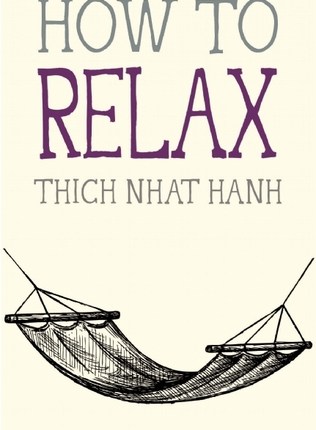
How to Relax by Thich Nhat Hanh

How to Relax by Thich Nhat Hanh

There are very few spiritual leaders who can communicate with the simplicity and succinctness of Thich Nhat Hanh.

As wise as the Dalai Lama is, I’ve only been able to really understand one of the books he’s written and I think that was because he had a co-author. It seems like he contemplates this stuff so much, you know, like it’s his job, that when he’s just trying to talk to a regular person about it, there’s a gap that can’t be crossed.

Photo by Mikhail Nilov on Pexels.com

That isn’t a problem in Thich’s Mindfulness Series.

Thich encourages the reader to find the quiet within. He says: “We already have calmness in us; we just need to know how to make it manifest.” pg 14, ebook.

How do we do this? Through focus, breathing, mindfulness, and relaxation.

One of Thich’s methods for connecting with inner peace that really resonated with me was that we should take “lazy days”: “A lazy day is a day for us to be without any scheduled activities. We just let the day unfold naturally, timelessly. … When we have unscheduled time, we tend to get bored, seek entertainment, or cast about for something to do. A lazy day is a chance to train ourselves not to be afraid of doing nothing. You might think that not doing anything is a waste of time. But that’s not true.” pg 32, ebook.

Not to brag, but I rather excel at “lazy days”.

Photo by Rachel Claire on Pexels.com

Anyone out there have a partner who snores? I do. Thich invites us to incorporate the snores into our relaxation practice.

“Sometimes you have to share a room with someone who snores. You may get irritated. But with mindfulness you can bring about compassion. You can lean on the sound of snoring in order to go to sleep. Listen and say that this brings you home to the here and now.” pg 42, ebook.

I think this could be a difficult exercise, but I’m willing to give it a try. 🙂

Ever tell yourself that relaxation/meditation is too hard? Thich addresses that concern too: “When you sit and watch television, you don’t make any effort. That’s why you can sit there for a long time. When you sit in meditation, if you struggle, you won’t be able to sit for very long. Please imitate the way you sit in your living room. Effortlessness is the key to success. pg 76 ebook.

If you can watch tv, you can meditate. It’s silly but it reminds me of that line from Dodgeball: “if you can dodge a wrench, you can dodge a ball”.

Highly recommended for anyone looking to introduce more relaxation into their lives and isn’t that everybody?

Some read alikes: Relax RX: A Self-Hypnosis Program for Health and Well-Being by Steven Gurgevich (very relaxing, all you have to do is listen), Guided Mindfulness Meditation by Jon Kabat-Zinn (simple and relaxing), or 10% Happier: How I Tamed the Voice in My Head, Reduced Stress Without Losing My Edge, and Found Self-Help That Actually Works by Dan Harris (a regular guy teaches himself to meditate- a light hearted memoir).

Thanks for reading!

When Breath Becomes Air by Paul Kalanithi

When Breath Becomes Air by Paul Kalanithi
whenbreath

This is Paul Kalanithi’s life story. He relates how he got into neuroscience, his exhausting and life consuming training, his illness, and his eventual transition out of this world into the next.

At first, Paul didn’t even want to become a surgeon because his own father was one and he saw how hard it was to balance work and family: “When we did see him, late at night or on weekends, he was an amalgam of sweet affections and austere diktats, hugs and kisses mixed with stony pronouncements … He had reached some compromise in his mind that fatherhood could be distilled; short, concentrated (but sincere) bursts of high intensity could equal.. whatever it was that other fathers did. All I knew was, if that was the price of medicine, it was simply too high.” pgs 24-25, ebook.

But, even though he started out as an English major, Paul’s own interests led him towards the profession. He was passionate about medicine and making the best decisions for patients. He was interested in what makes life worth living and how the brain’s functions effect quality of life.

kalanithi.interior-ata-photo---suszi-lurie-mcfadden
Dr. Lucy Kalanithi and Dr. Paul Kalanithi with their daughter, Elizabeth Acadia.

This is what he had to say after a sobering visit to a home for people who had suffered severe brain injuries as children: “Only later would I realize that our trip had added a new dimension to my understanding of the fact that brains give rise to our ability to form relationships and make life meaningful. Sometimes, they break.” pg 34

It was really difficult for me, personally, to read the parts of this memoir that dealt with Paul learning how to make life and death decisions for ailing patients. He talks in depth about taking people off of life support because they didn’t want their bodies to be kept alive while their brains were gone. I was reminded of how my grandfather, though he never suffered any debilitating brain injury, was kept alive through endless medicines and machines to reduce the water around his heart. He eventually refused to eat and refused a feeding tube, so he slowly withered away.. this from a man who lived for eating and described the joys of consuming a fresh peach in summer as one of his favorite memories. It was heartbreaking.

In this passage, one of Paul’s professors is talking about the same type of situation with his own grandma: “But “what was most evident,” he continued, “was the slow drawing away from life… By the time Bubbeh stopped praying, she had stopped virtually everything else as well.” pg 41 ebook. Eating was my grandpa’s form of prayer. So, you may want to avoid this memoir if you have any fresh grief that you’re dealing with, as this book brings it all bubbling to the surface.

kalanithi3

Photo from timeshighereducation.com

Paul studies so hard to become a doctor to learn the secrets of life and death. But, he begins to realize, that as a doctor, he’ll constantly deal with these moments but never truly understand them: “I began to suspect that being so close to the fiery light of such moments only blinded me to their nature, like trying to learn astronomy by staring directly at the sun. I was not yet with patients in their pivotal moments, I was merely at those pivotal moments.” pg 56

Then, he has his own illness and realizes that, even though he’s seen death and suffering, he really knew nothing about it: “It occurred to me that my relationship with statistics changed as soon as I became one.” pg 82. The rest of the book is so very sad, but one thing is clear, Paul Kalanithi finally found the moment when breath becomes air, what he had been searching for his whole life.

Neurosurgeons write really fine memoirs. At least, that’s been the case for nearly every one I’ve come across.

Some read alikes, if you’re interested: A Thousand Naked Strangers: A Paramedic’s Wild Ride to the Edge and Back by Kevin Hazzard (not a neurosurgeon, but Kevin talks about the burnout that comes in the medical community), Medicine, Miracles, and Manifestations: A Doctor’s Journey Through the Worlds of Divine Intervention, Near-death Experiences, and Universal Energy by John L. Turner (neurosurgeon), Into the Magic Shop: A Neurosurgeon’s Quest to Discover the Mysteries of the Brain and the Secrets of the Heart by James R. Doty (neurosurgeon), or Proof of Heaven: A Neurosurgeon’s Journey into the Afterlife by Eben Alexander.

Thanks for reading!

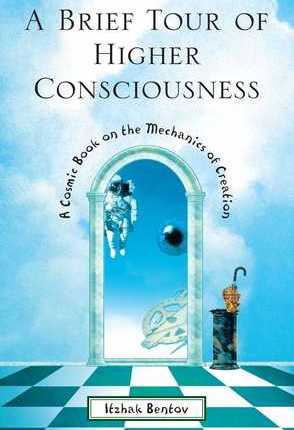
A Brief Tour of High Consciousness: A Cosmic Book on the Mechanics of Creation by Itzhak Bentov

A Brief Tour of High Consciousness: A Cosmic Book on the Mechanics of Creation by Itzhak Bentov

If you’ve been following this blog for awhile, you know now that I really enjoy “fringe” non-fiction that chronicles out of body experiences and remote reviewing.  This is another of those books.

If you’re not into those topics, my apologies in advance. 🙂

A lighthearted yet profound guide to the realms of higher consciousness and the ultimate nature of reality.

Goodreads
Photo by Pixabay on Pexels.com

My research into consciousness exploration continues with A Brief Tour of Higher Consciousness by Itzhak Bentov.

Having predominantly read books like this by artists (Jurgen Ziewe and Kurt Leland come to mind), it was refreshing to have a first person narrative by an engineer. Itzhak’s lens of perception is so different than my own- I loved it.

There is a part towards the end, What is a Hologram, and a chapter by another author, Essay on Cosmology by Edward Apgar, that I didn’t resonate with at all. But, perhaps for the most scientifically-minded, those parts will be your favorite.

hologram

Hologram image from nationaldefensemagazine.org

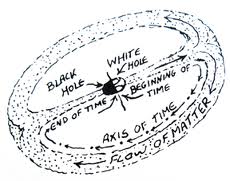
Itzhak has simplistic doodles scattered throughout the text which brings a “Randall Munroe” feel to the book- the use of simple pictures to illustrate complex and abstract ideas. This author definitely feels to me as if he was a bit ahead of his time in both his presentation and materials.

bentovdoodle

Bentov doodle from ritamarrpositivechange.wordpress.com

Itzhak’s explanation of “lens of consciousness”: “As consciousness evolves and information starts pouring in, the information is couched in a language best understandable to the person involved. For instance, a poet will be shown the nature of Creation in poetic images, an artist in visual symbols, and a mathematician in abstract equations; a nuts-and-bolts fellow like myself will have it shown to him as structure.” pg 5

I was reminded of Robert Monroe’s Journeys Out of the Body in which he puts emphasis on recording and comparing out-of-body experiences for consistency and real world applications to bring legitimacy to the practice.

I’ve heard that we’re all made of star dust and I really liked Itzhak’s description of it in this passage: “Stars collect into clusters or galaxies, and as they die, they explode and create cosmic dust, which again condenses into new stars and planets. Everything in the entire universe, including our bodies, is made of one cosmic substance. We contain atoms from the most distant galaxies and are thus connected to the whole universe.” pg 13

starsinthesky

Stars in the sky from wikipedia.org

Everything is vibration: “In short, consciousness in a vibratory state manifests itself as our familiar matter, from which the different forms that we see around us are made. The table, the flowers, the scent of the flowers, and our bodies are all made of rapidly vibrating consciousness.” pg 20 Wild!

A discussion of how to interact with devas (an ant deva to be precise, which is kind of silly, I realize), which Itzhak describes as “The name given to a being that is the rudimentary consciousness of any structure”: “To negotiate with her, the currency of exchange is love. Just send the ant deva a lot of love, which will stimulate her evolution. Even ant devas need love, in order eventually to know their Creator.” pg 33

Photo by Jimmy Chan on Pexels.com

In my meditations, I’ve frequently experienced what Itzhak describes in this next passage. It was nice to finally have a reason why: (While in a meditative state) “Wiggle your body. This causes a disturbance, a vibration, to spread … (This is similar to a fly falling into a spider web. The vibration of the web signals the spider and it shows up to investigate its dinner.) The deva .. appears immediately, looking worried and saying something like “What do you want?” or “Who are you?” pg 35

I’ll close with this excerpt of Itzhak’s philosophy: “There is nothing absolute and final. If everything were iron-clad, all the rules absolute and everything structured so no paradox or irony existed, you couldn’t move. One could say that man sneaks through the crack where paradox exists.” pg 78

If you enjoyed this book, you may want to take a look at Otherwhere by Kurt Leland or Multidimensional Man by Jurgen Ziewe. If you liked the doodles of complex concepts and want more of that, try Thing Explainer: Complicated Stuff in Simple Words by Randall Munroe.

Thanks for reading!

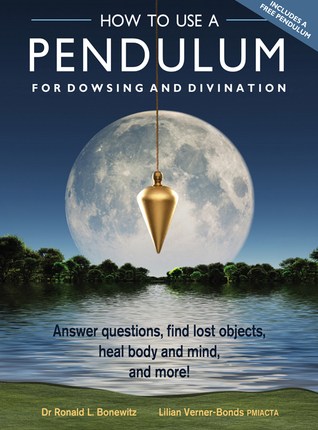
How to Use a Pendulum for Dowsing and Divination by Ronald L. Bonewitz

How to Use a Pendulum for Dowsing and Divination by Ronald L. Bonewitz
pendulum

I read a book a couple of years ago called Extraordinary Knowing: Science, Skepticism, and the Inexplicable Powers of the Human Mind by Elizabeth Lloyd Mayer. She opens the book with a chapter about how her daughter’s instrument was stolen and she called a professional dowser, though she didn’t believe in such things, to help her find it.

And guess what happens. 🙂

Pendulums work along the same kind of lines as dowsing and, after reading that, I thought maybe there is something to this.

You can watch Elizabeth Mayer talking about her experience on YouTube by clicking this sentence.

There used to be holistic shop (it has since closed) in my town that I liked to pop in for “fringe” books that libraries don’t purchase (but I love!) and, one day, the owner had a huge collection of pendulums for sale. I picked one up, not knowing anything about it beyond what I had read in that book, and it has sat on my meditation table for months, just looking mysterious and interesting.

Then, last week, I saw this book and was so excited to finally have some instructions!

pendulum-brass-gemstone

Photo from shamanschool.com

First of all, some background info: (Divination practices) most directly related to pendulum use fall under the general category of sortilege- the casting of lots. The word ‘sortilege’ comes from the Latin word sors, which means lots, and the title Sortilegus was given to the person who was the reader or the diviner via means of this process. Broadly, the practice involved (and still involves) holding an object or group of objects in the hand or hands while imbuing them with the question for which an answer is sought, then casting them through the air. It was believed that the answers were ‘in the air’, and that, as the lots moved through it, they became impregnated with the answer, causing them to fall in a certain pattern. The answer is then divined from the pattern made by the objects in their landing positions. The movements of the pendulum are derived from the same source.” pg 11

herkimon

Image from http://www.harmony000.org

What is divination anyway?: “Divination lifts up and beyond the normal. Divination is all a question of moving the self into a deeper consciousness, a totality of awareness, of discovering messages and information as we seek, passing between the mind of the great architect of the universe and the mind of man. Divination is a state; it is not a technique. But, you can use techniques to develop your ability to be in that state.” pg 15

I’ve always used meditation for that.

I thought that the authors took the use of pendulums a bit too far in this part where they advised bringing your pendulum with you wherever you go ‘just in case’: “Carrying your answers with you- Pendulum work is extremely useful in your everyday life, whether at home or abroad. For instance, at the local market or the supermarket, if you can’t decide which grocery to put in your basket, use your pendulum. You can also use it for yourself, for those times when you’re wondering ‘Is this product good for me?’ Maybe, maybe not. It’s helpful to be informed. Before purchasing anything, you can check.” pg 56. Intriguing idea, but I just can’t see myself doing that. Should I recommend THIS book to that patron or THAT book?

pendulumatlibrary

Image from consortiumlibrary.org

How the human body connects to the spirit like a pendulum: “Just as the pendulum connects into this (spirit) flow, so we, too, connect in physically. In past times, there was a consciousness of the fluid flow from the brain. Initially, it was equated with palmistry. Napoleon, for example, always had his palmist with him. He- among many others at that time- was convinced of the belief that the brain directed fluid (spirit) flow down through the top of the head, along the arm, and over the top of the wrist, hand and fingertips, and that it even created the lines on the palms of the newborn child. This was revered as a map of the child’s future. It has also been shown that a hand that is paralysed becomes void of any lines.” pg 68 I didn’t know any of that.

I was disappointed to discover that there are some minor binding errors in this book. It has half a dozen or so blank pages in the middle.

I’m not entirely convinced about this pendulum thing, but, for total novices like me, How to Use a Pendulum for Dowsing and Divination is a good place to start.

Thanks for reading!

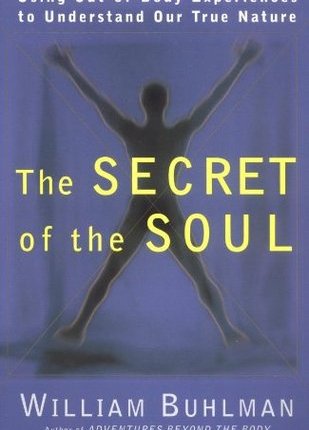
The Secret of the Soul: Using Out-of-Body Experiences to Understand Our True Nature by William Buhlman

The Secret of the Soul: Using Out-of-Body Experiences to Understand Our True Nature by William Buhlman

The Secret of the Soul is a great title for beginners who are looking to understand this, sometimes confusing, other times frightening, skill that we all seem to possess — the ability to exit our bodies in a kind of vision or trance.

Some call this the “out of body experience” or OBE.

Photo by Joshua Abner on Pexels.com

The first half of the book, Buhlman discusses OBEs, why they are important, and gives countless examples of actual OBEs that folks have had. The second part of the book gives concrete techniques and problem solving tips to assist readers in having their own OBEs.

One of my friends is a long distance runner who has had some OBEs during his ultra marathons. I thought of him in the section entitled “Combat and Trauma-Induced Experiences”: “It was while I was running in a marathon last year that I had a very strange experience. I was at about the eighteen-mile marker when I looked beside me and saw myself running. At first I thought it was someone who was my build and wearing the same shoes, but then I realized it was me!” pg 55

Buhlman has story after story like that.

Photo by anouar olh on Pexels.com

If you’ve never had an out of body experience of your own, the sheer variety and number of people who have fills you with confidence that you can.

I also liked Chapter 4, “Transformational Experiences”: For thousands of years spiritual masters have taught that the act of withdrawing from the senses is essential in order to consciously experience our spiritual self. pg 61

And the testimony from that chapter: “This is bigger then anything I can imagine; how can I tell people without sounding like a nutcase? This changes everything I ever thought I knew or thought was true.” pg 68

That’s the thing about powerful transformational experiences. Until someone has one him or herself, there’s not really anyway to explain it.

Chapter 6, “Extraterrestrial Contact and Abduction,” was the first time that I’ve read about aliens alongside traditional OBEs. Buhlman writes: “After reading more than two hundred such letters (from his OBE survey), I noticed a startling similarity: The letters describing extraterrestrial contacts and abductions were almost identical to the thousands of letters I have received describing out of body experiences. In fact, I often could not distinguish between letters.” pg 89

Photo by Francesco Ungaro on Pexels.com

In Chapter 7, A Brief History of Out-of-Body Experiences, the reader is given cultures from different time periods, all over the planet, that support and confirm the existence of out of body experiences.

These seem to suggest that OBEs are a “human” experience rather than a culturally specific one.

Take Emanuel Swedenborg’s words: “It has pleased the Lord to… open the interiors of my mind or spirit, whereby I have been permitted to be in the spiritual world with angels, and at the same time in the natural world with people, and this now (has happened for) twenty-seven years.” pg 113

I was surprised at how many of the historical figures presented here as having OBEs were scientists… I guess in my mind I’ve always drawn a line between the artsy/mystic types and the scientists. Line erased. 🙂

I’ll conclude with a few statements from the Appendix of the book, which was compiled from Buhlman’s extensive survey of people who had had OBE’s: “Self-initiated out-of-body exploration is a direct and powerful method to experience our true spiritual essence. It is an effective method to accelerate our personal growth and evolution. … This is achieved by personal spiritual experience and exploration beyond the physical limits.” Appendix pg 253.

Photo by Enrique Hoyos on Pexels.com

Couldn’t have said it better myself.

If you’re looking for more books on the topic of out-of-body experiences, check out Otherwhere by Kurt Leland, Journeys Out of the Body by Robert Monroe, or Multidimensional Man by Jurgen Ziewe.

Thank you for reading!

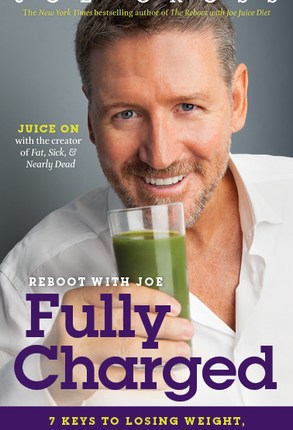
Reboot with Joe: Fully Charged: 7 Keys to Losing Weight, Staying Healthy and Thriving by Joe Cross

Reboot with Joe: Fully Charged: 7 Keys to Losing Weight, Staying Healthy and Thriving by Joe Cross

Fat, Sick, and Nearly Dead is one of the main reasons why I bought a juicer and have attempted to incorporate more plants into my diet. I’m not hardcore about it, but I try.

I didn’t know that Joe from that documentary is named Joe Cross and that he’s written multiple companion books for that film. This one, Reboot with Joe: Fully Charged, is excellent.

What I love about Joe is that he’s realistic. He doesn’t expect that he will eat perfectly for the rest of his life- he just wants to do the best that he can today then repeat the process tomorrow.

Photo by Wendy Wei on Pexels.com

He pushes the big lifestyle changers: diet, exercise, and rest but not in an extreme, unobtainable manner. In addition to common sense ideas about health and diet, Joe has spent years building an online community to support those who are working on major life changes. http://www.rebootwithjoe.com/weight-loss/

When you read this book, you also read examples of people who have turned their lives around with juicing and exercise. It’s inspiring and could be life changing for many people.

I also like that Joe included some of his go-to juicing recipes towards the back of the book. I’ve tried quite a few different juices, but I haven’t found any that I particularly liked. It’s always nice to have some new options that have appealed to other people in the past.

If you enjoyed Reboot with Joe: Fully Charged, I highly recommend his two documentaries: Fat, Sick, and Nearly Dead & Fat, Sick, and Nearly Dead 2. Also, I’d recommend the documentary Forks Over Knives which has a couple companion cookbooks out now.

A big thank you to the Goodreads First Reads program and NetGalley for free copies of this book.  And, thank you for reading!