Your Inner Critic Is a Big Jerk: And Other Truths About Being Creative by Danielle Krysa

Your Inner Critic Is a Big Jerk: And Other Truths About Being Creative by Danielle Krysa
yourinnercritic

A quirky little book about how to inspire your own creativity and how to use your inner negative voice to its best advantage. Martha Rich’s art elevates what is actually rather simple text, but, on a more positive note, it is a quick read for those who may be short on time.

I couldn’t help but draw similarities between this book and Unmistakable: Why Only Is Better Than Best, which I read last week. Your Inner Critic is a Big Jerk deals with the sensitive parts of the creative process and breaking through your fears about how your art will be received.

Unmistakable is more about why you need to create the art that only you can create and how a bunch of different artists have managed to do just that. But, if you’re looking to jump start your creativity this year, pick up both of these because they actually complement each other fairly well.

One of my take-aways from Your Inner Critic is that it is never too late to start doing what you do: “Far too often, people tell me, “I wish I hadn’t given up on art [or dancing, acting, writing, music], but it’s too late now.” What! Why? I don’t believe that for a second. Many amazingly talented people didn’t hit their stride until their thirties, forties, or later.” pg 20

And Krysa goes on to list such luminaries as van Gogh, Money, and Julia Child. Can you believe that!

Even if you didn’t go to school to learn whatever art you feel compelled to create, you are still an artist. I’ve been pricked by that negative inner whisper once or twice and it was cathartic to learn that I’m not alone in that struggle and to finally put it to rest: “If you want to learn something new, go learn something new. Set yourself up to get this new skill in whichever way suits you best. You are what you know, regardless of when and where you did the learning.” pg 45

Some further reading: Unmistakable: Why Only Is Better Than Best or Creativity: The Perfect Crime

Thanks for reading!

I’m Just a Person by Tig Notaro

I’m Just a Person by Tig Notaro
imjustaperson

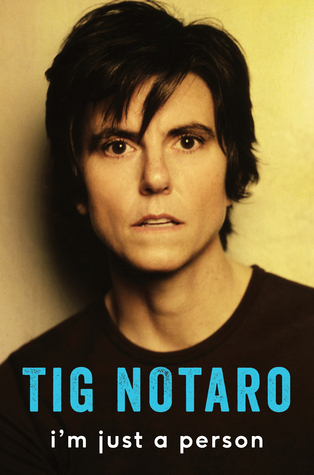
Tig Notaro is a survivor. Her dry humor shines through these pages as she tells her life story: multiple brushes with death, romantic relationships, and snapshots of her childhood, parents, and thought processes.

She shows us that she’s “just a person”, yes, but also how extraordinary an ordinary person can be when presented with nearly insurmountable difficulties like dropping out of school at an early age, having a biological father who was never present and a stepfather who was never available emotionally, a mother who was so immature that Tig practically raised herself, not to mention all of the health problems that came later.

I picked up this book because I was enamored of Tig’s stand-up routines. This book has their flavor but far more detail than her act- if you’ve enjoyed her comedy, you’ll probably like this too.

I loved reading about how Tig found her calling and her people: “I began to refer to the comedy scene as “the land of misfit toys.” It was comforting to be surrounded by people who didn’t fit into the confines of society, and it was the first time in my life that I wasn’t met with the boring conversation stopper: “Oh my God, you’re so weird.” pg 47

This part cracked me up- Tig’s discovered lumps in her breasts but she doesn’t think they’re anything to be concerned about. Her girlfriend disagreed: “Instead of making a doctor’s appointment, I spent the next couple months teasing Brooke by removing my shirt and saying, “Hey, wanna touch my cancer?” It was really fun to walk past her holding my chest and blurting out, “Ow! My cancer!” pg 109-110.

I thought that the chapter in which Tig talks about her biological father, Pat, was particularly well-written. She takes complex emotional pain and makes it into something beautiful: “He was obviously still in pain over the loss of my mother and the news of my health, but I knew that this grief could not kindle any real kind of familial bond between us. I guess I believed there was something inherently broken in Pat’s relationship with me and my brother. Maybe we had all missed some ambiguous window of time when we could have salvaged some hope for a real connection. I am certain, however, that we have the same feelings: I want everything to be okay for him and he wants everything to be okay for me.” pg 205

That is Tig’s strength- her ability to take the worst in life and wring not just humor but meaning out of it. Some similar reads: Sleepwalk With Me and Other Painfully True Stories, Shrinkage: Manhood, Marriage, and the Tumor That Tried to Kill Me, or A Girl Named Zippy.

Thanks for reading!

Interview with the Vampire by Anne Rice

Interview with the Vampire by Anne Rice

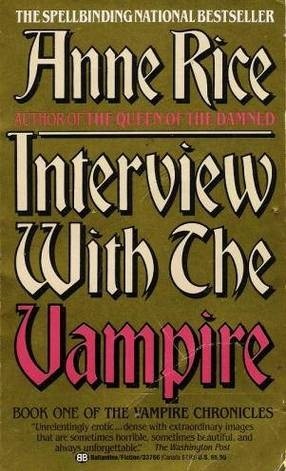
interviewwiththevampHalfway through reading this one, it occurred to me that I read Interview with a Vampire in high school, but it left so little impression that I promptly forgot about it until 16 or so years later when, as I was reading it again, I began to recall some of it as I went along. This is a cerebral treatment of the vampire genre, an examination of good vs evil, what immortality really means, the first of its kind in “vampire books” and an allegory of the soul itself. It is all of those things, but it’s not very fun to read. The pace drags along and, for being a horror novel, it’s not horrific, mainly dull.


Now, as back in high school, I wanted more information about what happened to Louis’s brother at the very start. Rice hints at paranormal interference on the stairs and in the brother’s religious vision, but the truth is never revealed. Maybe I have to dig through subsequent novels to find out what happened. That is the start of Louis’ troubles, the lynch pin of the whole book and Rice just glosses over it.

I also was unimpressed by Louis’s self professed “sensitivity” to life. It all combined to make him into an unending complainer. “People who cease to believe in God or goodness altogether still believe in the devil. I don’t know why. No, I do indeed know why. Evil is always possible. And goodness is eternally difficult.” pg 14, ebook. He monologues like that a lot as the book is set up as an interview, which I didn’t mind too much, but I could have done without for the last third. I mean, at that point, we know the kid with the tape recorder is there. I wanted to get lost in the story but we’re never really allowed to because we’re always flashing back and forth.

It’s difficult to enjoy a book when you don’t really like the main character.“I lived like a man who wanted to die but who had no courage to do it himself. I walked black streets and alleys alone; I passed out in cabarets. … And then I was attacked. It might have been anyone- and my invitation was open to sailors, thieves, maniacs, anyone. But it was a vampire.” pg 13, ebook. Interview with the Maniac just doesn’t have the same ring, does it. And yet, I might read it. 🙂

Rice’s vampires are emotionless, except for Louis who is seemingly exploding with sensitivity and angst: “By morning, I realized that I was his complete superior and I had been sadly cheated in having him for a teacher. … I felt cold towards him. I had no contempt in superiority. Only a hunger for new experience … Lestat was of no use.” pg 29, ebook. Or later with Claudia: “I even conceived a savage jealousy of the dollmaker to whom she’d confided her request for that tinkling diminutive lady, because that dollmaker had for a moment given her something which she held close to herself in my presence as if I were not there at all.” pg 176, ebook. On and on it goes. Lestat doesn’t understand him. Lestat’s a boor. Lestat this, Lestat that. Claudia’s out of control. Claudia too much like Lestat, Claudia’s too much like him…. Louis has eternity to explore the world and everything in it, and he chooses to hang out with the two people who makes him nuts. But, I hear you say, Lestat created him so he had control over him and he couldn’t leave Claudia because she was like an eternal child, wasn’t she?  As the story unfolds, we discover that separation was possible. Louis was simply too “sensitive” to do what was necessary.

Anyway, between the whining, the incomplete background information, and black/white view of good and evil, I did not enjoy Interview with the Vampire nearly as much as I had hoped I would. Perhaps I will revise my view if I read the rest of the series, but just thinking about digging into it makes me feel tired so I’m not sure that I’ll ever get that. Maybe I was ruined on this book by reading the Sookie Stackhouse novels, which I surprisingly loved (until the painfully awful final ones, skip those). Jump into Charlaine Harris’ novels for some vampire brain candy, save Anne Rice for the more serious, contemplative mood as it is considered a classic and beloved by many- just not me.

I plan to watch the film now and do a comparative review with the book. I watched it a long time ago too and can’t really recall it at all, but my Goodreads friends seem to think that it was better than the novel. We’ll see. 🙂 Thanks for reading!

Farewell, 2016!

Farewell, 2016!

helpdesk2What a year! Thank you to everyone on Goodreads (and WordPress!) for sharing their reads and giving me a safe space to write my thoughts. I look forward to seeing what everyone gets up in 2017!

Speaking of next year, I have some big news. After almost five years as a public librarian, I am starting a new job as a news assistant at a major local newspaper. It is an incredibly bittersweet move because I absolutely loved being a librarian, but I find myself ready for new challenges and, honestly, a full time position, which was not available at the library. I will continue to read and review as much as I am able, but you may not see me on here as much as 2016.

And that’s ok. I also may change my online name to Heidi the Hippie or I may just leave the librarian moniker because, in my heart, I will always be a librarian. Now, I’ll have a slightly different Help Desk and new duties, but, it will always be a part of who I am. That’s just how it is.

May your holidays and New Year be filled with awesome new books to read. Peace and love to you all!

Heidi’s Best of 2016 (not necessarily published in 2016, but read by me this year)
Overall favorite: Quiet: The Power of Introverts in a World That Can’t Stop Talking

Best Self Help: Every Breath You Take: How to Breathe Your Way to a Mindful Life

Funniest: How to Be Dull: Standing Out Next to Genius

Best Non-Fiction: Unmentionable: The Victorian Lady’s Guide to Sex, Marriage, and Manners or Born to Run: A Hidden Tribe, Superathletes, and the Greatest Race the World Has Never Seen

Non-Fiction I Thought I Wouldn’t Like but Did: Hillbilly Elegy: A Memoir of a Family and Culture in Crisis

Most Overrated: Me & Earl & the Dying Girl

Favorite Book Club Pick: The Sound of Gravel

Best Fantasy: The Golem and the Jinni or A Monster Calls

Most Disconcerting: Marie Antoinette’s Darkest Days: Prisoner No. 280 in the Conciergerie

Most Polarizing: Hillbilly Elegy: A Memoir of a Family and Culture in Crisis

Most Inspirational: Thank & Grow Rich: A 30-Day Experiment in Shameless Gratitude and Unabashed Joy

Best Graphic Novel: Descender, Volume 1: Tin Stars

Strong Female Role Model: Running with a Police Escort: Tales from the Back of the Pack

Will Blow Your Mind: Zen Dogs

Best Dieting: The Taco Cleanse: The Tortilla-Based Diet Proven to Change Your Life

Best To-Be-Made-Into-A-Movie: Red Rising

Best Memoir: The Princess Diarist or Voracious: A Hungry Reader Cooks Her Way through Great Books or You’re Never Weird on the Internet

Best Historical Fiction: The Queen of the Night

Young Adult: Tiger Lily

Horror: Alice or All Darling Children

Favorite from NetGalley: Happiness and Other Small Things of Absolute Importance

Thank you so much for reading my blog and I hope that you get the chance to enjoy some of my favorites from 2016!

Unmistakable: Why Only is Better than Best by Srinivas Rao

Unmistakable: Why Only is Better than Best by Srinivas Rao
unmistakable

A call-to-action for artists and business people of all types to create the work that only they can create which makes them irreplaceable and also Unmistakable.

“When you’re the only person who could have created a work of art, the competition and standard metrics by which things are measured become irrelevant because nothing can replace you. The factors that distinguish you are so personal that nobody can replicate them.” pg 2.

That makes sense to me. You’re essentially writing the book so no one can tell you how it’s supposed to go.

The theory of becoming Unmistakable is fairly simple but the journey to that place is not. There are no maps to this realm because it is different for everyone and the paths to that place vary as widely as the talents that people bring with them.

As Srinivas reminds us: “Unmistakable work is a process of self-discovery. We start our ride not knowing what it is that makes us unmistakable, and a thread reveals itself through the creation of a body of work. Dots connect, patterns emerge, and our unmistakable gift is revealed. Time is the critical ingredient required for this to take place, hence the role of longevity and commitment in the quest to become unmistakable.” pgs 56-57

So, you can’t give up. Create and fail and try again. That is as hard and as easy as it is.

“…creating unmistakable work might be one of the hardest things to do: you have to look into the depths of who you are, explore what matters to you, and infuse that into every element of your work until it can’t possibly be mistaken for something anybody could have done but you.” pg 68.

The messages contained within Unmistakable become repetitive after a few chapters, but Srinivas threads some of the stories and artists from his podcast to break up the material as well as his personal testimony.

Unmistakable encourages creation even in areas that you may have no prior experience: “Lack of formal instruction might keep us from attempting some sort of creative pursuit or starting anything in which we don’t have experience. … When we lack experience, we also have the advantage of lacking preconceived notions of what’s possible.” pg 113.

And, you don’t know what you’re capable of until you get started. So, what are we waiting for!

As Srinivas writes from an interview with Seth Godin: “The enemy of creativity is fear; that seems pretty clear. The enemy of fear is creativity; that doesn’t seem that obvious.” The antidote to our fear is to put our heads down, do our work, and make something each day.”pg 189.

Let’s all become Unmistakable.

Some further reading: Creativity: The Perfect Crime, Do the Work, and How to Fly a Horse: The Secret History of Creation, Invention, and Discovery.

Thanks for reading!

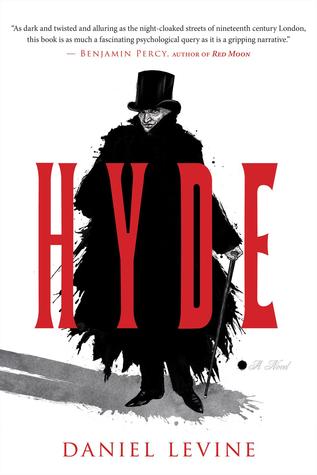
Hyde by Daniel Levine

Hyde by Daniel Levine

hyde**Please do not read this review if you intend to read this book and haven’t yet. I discuss a major plot twist and don’t want to spoil it for anyone.**

Hyde is the story of Jekyll and Hyde from the villain’s point of view and what a story it is. The visceral and sense obsessed descriptions are just what one would expect from a character that is made almost completely of someone’s baser nature, but if you have a weak stomach, you may want to steer clear of this disturbing tale.

The story is told in flashbacks from Hyde’s final days as he’s holed up in Dr. Jekyll’s lab: “I don’t want to die at all, but if there’s no escaping it, then at the very least I want to remember everything properly first, the way it truly happened. The truth is inside this head. I simply must extract it. In the end no one will know it but me, but that will be enough.” pg 10, ebook. I never considered it before, but how would it feel to be shut away inside someone’s mind in a type of half life, always looking out from someone’s eyes, then to be suddenly thrust into a body, given complete control, and then blamed for everything that inevitably goes wrong.

Levine’s darkly imaginative reasons why Jekyll would have “created” Hyde in the first place were chilling. I found myself pitying Hyde rather than fearing him: “It was a frustrating, blinding feeling, my ignorance. I wanted to know what my purpose was, what Jekyll needed me for.” pg 36, ebook. I always wondered that too. After the first failed experiment, Jekyll summons Hyde forth again and again with increasingly awful results. He could have just stopped after the first time and been like, “whoa, THAT was a bad idea” and chucked the rest of his solution into the river. Hyde examines the twisted motivations behind the repeated transformations.

It also looks into the infinite nature of the human psyche. The rest of this review is going to have a major spoiler in it, but I have to talk about it to truly discuss this story because this twist is what elevated Hyde in my mind from a horror story with cheap thrills to a spine tingling look into the darkness of the abyss that could exist in the soul.

How about the idea that Mr. Hyde could have a dark side of his own? That, within a damaged and fractured mind, there’s no end to the shadows that could emerge. The worst of the actions recorded in Jekyll and Hyde were not done consciously by either man, but by a monster that was created by the rage that Jekyll suppressed in his childhood. I thought that was genius. I only wish Mr. Seek had a bigger part in this tale! Because, beyond that huge twist, this story felt repetitive.
Recommended for readers who enjoy dark, violent re-tellings and can tolerate a slower paced read. Some similar, grisly tales: The Last Werewolf or Black Moon.

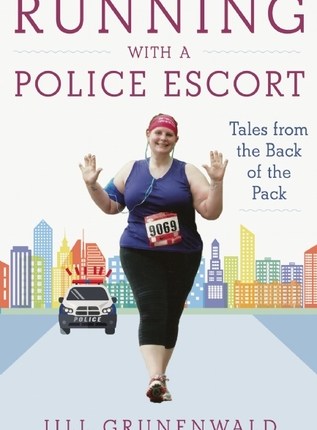
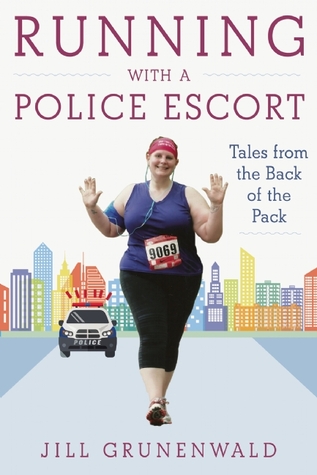
Running with a Police Escort: Tales from the Back of the Pack by Jill Grunenwald

Running with a Police Escort: Tales from the Back of the Pack by Jill Grunenwald
runningwithapoliceescort

A Cleveland librarian chronicles the emergence of her inner road warrior. Jill was very unhealthy- tipping the scales at nearly 300 pounds when an email from her younger sister convinced her that she needs to change her ways.

Self described “slow runner”, Jill often finds herself at the end of races with organizers closing the course behind her. Thus the title of her eventual podcast and this book: Running with a Police Escort.

Jill reminded me of my younger sister, another “slow runner” who took up running for health reasons.

I have a great deal of respect for people who have the courage to make major life changes- be that taking up a sport, counting calories, or giving up meat products.

It is so easy to let life determine who you are becoming instead of taking full responsibility for your choices. Jill’s point in this memoir is that it doesn’t matter how fast or slow you go, you win if you’re making even the smallest steps towards your goals.

In this passage, she’s closing down the race, like usual: “…I happened to see one of the policemen on the street gesture to get my attention and point to the car following me. I pulled out my earbuds and from the sidewalk he called out with a supportive smile, “You must be a very important person to have a police escort!” loc 72, ebook.

Jill relates her unathletic/uncoordinated childhood and I felt a lot of sympathy for her bookworm tendencies: “While (my classmates) ran wild, I’d find a quiet corner along the brick wall of the building and bury myself in a book. My favorites were the Scary Stories to Tell in the Dark series, the macabre illustrations haunting my dreams.” loc 162, ebook.

Photo by Ricardo Esquivel on Pexels.com

That probably would have been one of my favorites too, but my school library’s copy was always checked out. Not that I’m bitter or anything.

Jill reminds the reader that people don’t get to nearly 300 pounds without a reason why- an underlying pain that they’re insulating themselves from. For Jill, it seems that she was chronically lacking in self esteem and self love.

I loved reading about her getting her mojo back: Truthfully, I didn’t even know how much I weighed because the analog scale that I owned didn’t go up that high. … I don’t know if I can verbally express what it means to be so heavy that you literally outweigh your scale’s capabilities. Like, seriously. Just think about that for a second, okay? A scale has a pretty basic function… and I had gotten so big, I put my scale out of work.” loc 312, ebook.

Running with a Police Escort is a great book for those who are struggling with their weight or the decision to become more healthy.

Jill isn’t afraid to laugh at herself and there is quite a lot of wisdom in these pages: “…it’s these simple decisions that compound as we make them every single second of every single moment of every single day. It is not the Friday nights or Saturday evenings that determine who we are and where we go: it is the Thursday afternoons or Monday mornings that mentor and counsel our being into a full-fledged sense of self.” loc 818, ebook.

Beware, there’s a bunch of swearing too. If you don’t appreciate that, you may have to find another book.

I also found it to be repetitive after the first couple of races, but it’s clear that Jill is writing from the heart and has been changed by every single mile that she’s undertaken. Share this book with others who may need encouragement because Jill is a natural cheerleader for the novice runner or athlete of any type.

Some further reading: Confessions of an Unlikely Runner: A Guide to Racing and Obstacle Courses for the Averagely Fit and Halfway Dedicated, Running Like a Girl, and Down Size: 12 Truths for Turning Pants-Splitting Frustration into Pants-Fitting Success.

Thank you to NetGalley and Skyhorse Publishing for a free advance reading copy of this book!

Thanks for reading!

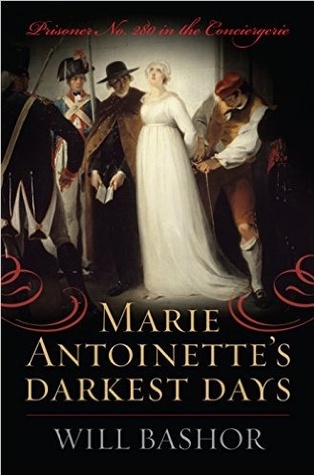
Marie Antoinette’s Darkest Days: Prisoner No. 280 in the Conciergerie by Will Bashor

Marie Antoinette’s Darkest Days: Prisoner No. 280 in the Conciergerie by Will Bashor
marieantoinette

I thought that after the King and Queen of France were taken by the Revolutionaries that what happened went like, “You were the monarchs but now we have a Republic. Off with your heads.” and boom, it was done.

How wrong I was.

Did you know, that both Louis XVI and Marie Antoinette were given very brief public “trials”? Did you know that Marie Antoinette languished in a prison for weeks after her husband was executed?

Did you know that the bodies of both former monarchs were dumped in unmarked graves?

Marie Antoinette’s Darkest Days taught me so much about this horrific period of French history.

At times, especially during the actual transcripts of the Queen’s trial, the story dragged, but for the most part, this was a fascinating study of the last days of a much maligned monarch.

“Generations of authors have reveled in reliving the queen’s reign amid the splendors of the court of Versailles and the Petit Trianon, but few have ever found the space (or perhaps the courage) in their voluminous biographies to narrate her final imprisonment in a fetid dungeon cell at the Conciergerie.” loc 198, ebook.

I am a huge fan of historical fiction and I had never heard a whisper about this. Many thanks to Bashor for filling that gap!

Photo by Pixabay on Pexels.com

The King promised his family to say goodbye before he was taken to the guillotine but he never went to them. Can you imagine the heartbreak?

“Say to the queen, my dear children, and my sister,” he continued, “that I had promised to see them this morning, but that I desired to spare them the agony of such a bitter separation twice over. How much it has cost me to depart without receiving their last embraces!” loc 862 ebook.

Cruelly, Marie Antoinette was also separated from her children and her sister-in-law and transported to a different prison. As a mother myself, Marie Antoinette’s heartbreak about having her children taken from her was the hardest part of the book for me to get through.

Even though her sham 48 hour trial didn’t prove definitively that she had done anything wrong, Marie Antoinette was sentenced to death.

Here is a passage that gives the gist of the thing: “Herman: You have never ceased for one moment wanting to destroy liberty. You wanted to reign at any price and retake the throne on the cadavers of patriots. Queen: Whether it was necessary to retake the throne or not, we only desired the happiness of France. If France was happy, we were always content.” loc 1901, ebook.

Photo by Niki Nagy on Pexels.com

Back and forth it went. Accusations of wrong doing, her denial, and then more accusations. I can’t believe that they killed her after that- it’s shocking what a mob mentality can justify.

But the public absolutely hated her. “It was also true that Marie Antoinette was “ill-treated” in the French press and elsewhere. An abundant number of provocative and obscene pamphlets were distributed throughout the capital, the provinces of France, and other European capitals. They argued not only that the queen corrupted the morals of her people but that her luxurious habits were the cause of their hunger. She was even said to powder her hair with the precious flour needed for the people’s bread.” loc 2046. Ugh.

The press has always been a powerful tool to sway public opinion, but what sad results when that power is used generate hate rather than inform and educate.

Marie Antoinette was hard core to the end. She refused to take her last rites from priests who had sworn an oath to the Revolutionaries. This is what she said to the priest who demanded to hear her confession before she was led to her execution:“You are guilty,” said the priest. “Ah, sometimes careless,” said the queen. “Never guilty.” loc 3005 ebook. I may have to use that one.

Recommended for anybody who wants to know more about the last days of Louis XVI and Marie Antoinette but also for those interested in what happens to a society when hatred and fear are allowed free reign. Some further reading: Abundance (excellent historical fiction about Marie Antoinette).

Thank you to NetGalley and Rowman & Littlefield Publishing for a free digital copy of this book!  And, thank you for reading.

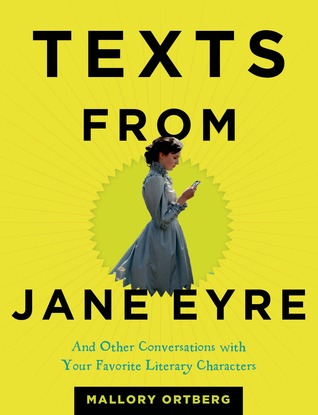
Texts from Jane Eyre by Mallory Ortberg

Texts from Jane Eyre by Mallory Ortberg
textfromjaneeyre

Though the premise was clever, Texts from Jane Eyre reads a lot like text message conversations in real life- shallow and repetitive after the first few lines.

Also, there wasn’t a synopsis included in these pages, so if you hadn’t read a classic or, if you’d read it so long ago that you’d forgotten most of it, you were out of luck.

The best of the lot was the Samuel Taylor Coleridge chapter that starts on pg 43 in which he’s on a ramble about the golden palace of Kubla Khan and then a delivery guy comes to the door and ruins his flow.

The worst was the Harry Potter chapter in which Ron and Hermione have a ‘conversation’ but Ron is written as a complete moron and she is confounded by his idiocy. Very mediocre and unworthy of either of those characters.

If you feel the need to read this one, check it out from the library. A related read if you enjoyed it: When Parents Text: So Much Said…So Little Understood.

Thanks for reading!