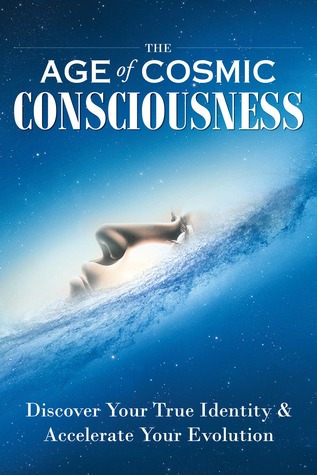
The Age of Cosmic Consciousness: Discover Your True Identity & Accelerate Your Evolution by Transform Publishing

The Age of Cosmic Consciousness: Discover Your True Identity & Accelerate Your Evolution by Transform Publishing
ageofcosmic

Time for the hippie librarian to get a little New Age-y!

The Age of Cosmic Consciousness is a bunch of different metaphysical concepts strung together sort of like Ram Dass’ Be Here Now but written on regular paper instead of- I don’t know what that stuff is- let’s say brown paper bags.

The first thing to know about this book is that it is written in a flow of consciousness style. I found it very difficult to get into, but then hypnotic once I got reading, and thus it became difficult to put dow

. I found it similar to Kelly Howell’s Secret of the Universal Mind Meditation in that one idea leads to the next idea in a very natural and linear fashion.

A lot of the concepts in here have been covered by The Secret and various other authors. There’s a good bit about the Law of Attraction, but there’s so much more than that.

What I loved about this book can be summed up in this quote: “Do not overly focus on the inaccessible gurus and unapproachable enlightened people. Recognize and accept that a higher consciousness can be attained by anyone who proactively pursues its realization.” pg 136 I truly believe that enlightenment is for everyone and possible for everyone. This book really puts that idea forward.

That being said, I don’t know that I was prepared for the “other beings of light consciousness” mentioned in this book or the section that purports to have information directly from them but not “channeled”. Or the other section about aliens tampering with human DNA in the dawn of time. My inner self doesn’t necessarily “resonate” with those ideas yet, but some readers out there may feel it and understand it.

Photo by Julia Volk on Pexels.com

In conclusion, The Age of Cosmic Consciousness is worth the read for anyone interested in improving themselves and the world through inner transformation. Remember to keep an open heart and mind because some of the ideas presented are fairly “evolved”. Some similar books are: Be Here Now and Gateway to the Heavens: How Simple Shapes Mould Reality and the Fabric of Your Being.

I received a free copy of this book through the Goodreads First Reads program. Thanks for reading!

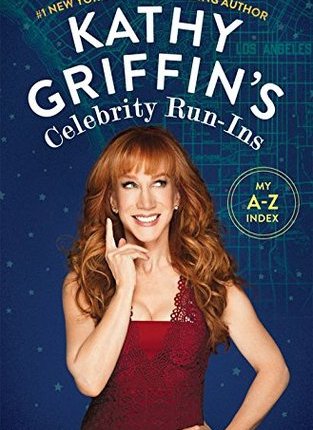
Kathy Griffin’s Celebrity Run-Ins: My A-Z Index by Kathy Griffin

Kathy Griffin’s Celebrity Run-Ins: My A-Z Index by Kathy Griffin

Here’s The Help Desk’s first ever video review!

I hope you enjoy it and here are the links to the books I mentioned at the end of the video.

The Andy Cohen Diaries

Tip It

Thanks for reading.

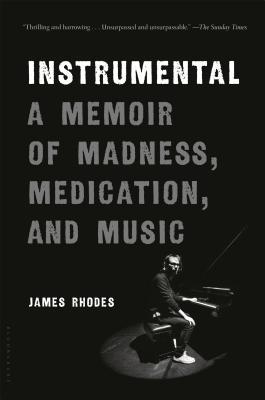
Instrumental: A Memoir of Madness, Medication, and Music by James Rhodes

Instrumental: A Memoir of Madness, Medication, and Music by James Rhodes
instrumental

This is a shocking memoir about the horrific sexual abuse that James suffered as a child and how music saved him. It is raw, ragged and real.

The author is frank about describing what happened, how his life fell apart, and how he was able to finally begin putting it back together.

Not a book for the faint of heart, Instrumental makes the reader wonder why we’re all here and what might the purpose of suffering serve in the grand scheme of things. I don’t pretend to know the answers to these questions, but James has given us a powerhouse of a book and a place to start.

I am also a classically trained pianist but you don’t have to be one to appreciate Instrumental: “… the unassailable fact is that music has, quite literally, saved my life and, I believe, the lives of countless others. It provides company when there is none, understanding where there is confusion, comfort where there is distress, and sheer, unpolluted energy where there is a hollow shell of brokenness and fatigue.” loc 51, ebook.

James gives a poignant warning to readers: “…this book is likely to trigger you hugely if you’ve experienced sexual abuse, self-harm, psychiatric institutionalisation, getting high or suicidal ideation.” loc 112. So, friends, be aware before you pick this one up.

James has a child with his first wife and he adores the boy, only asking him to do what makes him happy.

Though James thinks he’s a poor father, he’s offering the child more than some people are able to manage, even coming from a stable and emotionally healthy place: “I want him to know the secret of happiness. It is so simple that it seems to have eluded many people. The trick is to do whatever you want to do that makes you happy, as long as you’re not hurting those around you. Not to do what you think you should be doing. Nor what you think other people believe you should be doing. But simply to act in a way that brings you immense joy.” loc 986.

Photo by uncoveredlens on Pexels.com

How wise is that.

James introduces each chapter with a suggested classical music track to listen to as you read as well as some juicy tidbits about the musicians who wrote the pieces: “Beethoven… was clumsy, badly coordinated, couldn’t dance, cut himself while shaving. … Schubert, nicknamed ‘Little Mushroom’ on account of his being 5 foot nothing and violently ugly, was spectacularly unsuccessful with girls and, on one of the very rare occasions he did manage to score, he caught syphilis. … From Schumann (who died alone and miserable in a mental asylum) to Ravel (whose experiences driving trucks and ambulances in the First World War changed him forever), the great composers were basket-case geniuses…” locs 2040-2058, ebook.

He reminds us that these men we’ve set on a pedestal because of the art they produced were nothing but human with all of the failings that people have today. James makes classical music and musicians interesting to the average person. It’s a gift and one that the genre really needed to bring a new generation into the fold. This book really made me wish that I could see James Rhodes in concert. I think I would love it.

Recommended for the music enthusiast and survivors of childhood abuse, anxiety, addictions, and cutting. Some similar reads: I’m Just a Person, My Booky Wook, or Kasher in the Rye: The True Tale of a White Boy from Oakland Who Became a Drug Addict, Criminal, Mental Patient, and Then Turned 16.

Thank you to NetGalley and Bloomsbury USA for a free digital copy of this book. Thank you for reading.

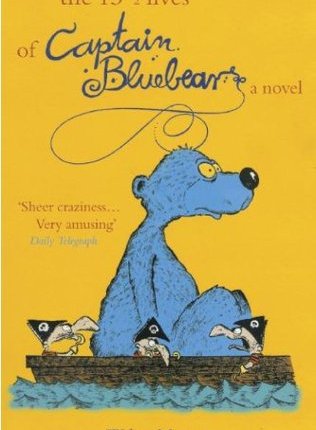
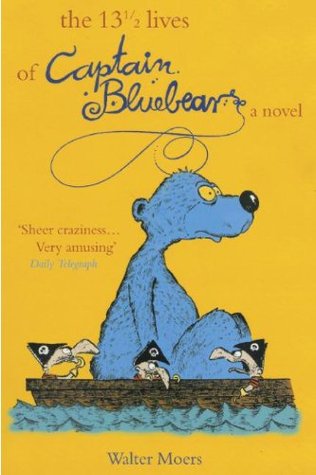
The 13½ Lives of Captain Bluebear (Zamonien #1) by Walter Moers

The 13½ Lives of Captain Bluebear (Zamonien #1) by Walter Moers

Captain Bluebear tells the story of his first 13-1/2 lives spent on the mysterious continent of Zamonia, where intelligence is an infectious disease, water flows uphill, and dangers lie in wait for him around every corner. -Summary from Goodreads.com

captainbluebearThis book was very strange. It reminded me of Charlie and the Great Glass Elevator by Roald Dahl. Moers writes page after page of strange creatures, worlds, and circumstances that are only connected because Bluebear passes through them. And, like in Dahl’s book, I felt like the author was always hinting about a greater truth behind the story, as if The 13 1/2 Lives of Captain Bluebear was more a gigantic allegory than a children’s book. I enjoyed the fantastic nature of it but I didn’t like the long lists of creatures that read more like crazy encyclopedic entries than an actual story with characters.
Some parts that I enjoyed and there were so many to choose from-
During the life with the Minipirates: “I must, however, admit to having been influenced by their richly embroidered tales and extravagant flights of fancy. They taught me that a good white lie is often considerably more exciting than the truth. Telling one is like dressing up reality in its Sunday best.” pg 19

During Bluebear’s time at the Nocturnal Academy: “One night, Knio and I had an argument about the nature of the universe. He had an appallingly crude conception of the physical world. “The earth is a bun floating in a bucket of water,” he asserted defiantly. “And what is the bucket standing on?” I demanded, trying to floor him. “The bucket stands on the back of the Great Cleaner who polishes the universe to all eternity,” Knio replied self-confidently. “This universe that she polishes so assiduously,” I said, “What in the world does that stand on?” “The universe doesn’t stand on anything, it lies,” Weeny put in. “The universe is as flat as a slice of sausage, you see.” pg 159

“From the Encyclopedia of Marvels, Life Forms and Other Phenomena of Zamonia and its Environs by Professor Abdullah Nightingale. Multidimensional Space: … Simply picture a train travelling through a black hole with a candle on its roof while you yourself, with a candle on your head, are standing on Mars and winding a clock precisely one yard in diameter, and while an owl, which also has a candle on its head and is travelling in the opposite direction to the train at the speed of light, is flying through a tunnel in the process of being swallowed by another black hole which likewise has a candle on its head (if you can imagine a black hole with a candle on its head, though for that you will require at least four brains).” pg 256

From his life in the Eternal Tornado: “One day (the Eternal tornado) swallowed an entire library, and since then a man named Gnothi C. Auton had been busy retrieving books from the sand, arranging them, cataloguing them, and lending them out.” pg 361 Wink, wink, my librarian friends, wink, nudge!

On being questioned by the Zamonium: “Next question, subject Grailsundian demonology: What are Nether Zamonian Diabolic Elves, and how many would fit on a pinhead?” pg 658 So clever.

If you enjoyed The 13 1/2 Lives of Captain Bluebear, you may also enjoy almost anything written by Terry Pratchett or The Hitchhiker’s Guide to the Galaxy by Douglas Adams. Thanks for reading!

Ghost Hunt: Chilling Tales of the Search for the Unknown by Jason Hawes and Grant Wilson

Ghost Hunt: Chilling Tales of the Search for the Unknown by Jason Hawes and Grant Wilson
ghosthunt

I didn’t realize that this book was for middle grade kids when I picked it up from the library, but I still enjoyed it. Yes, the chapters that are based on the Ghost Hunter’s explorations overly simplistic but they’re also incredibly creepy. However, this isn’t just a horror book: Jason and Grant use these pages to educate the public about what they believe ghosts are and to diffuse any fear that a kid would naturally feel when confronted with something that she doesn’t understand. The last part of the book is composed of Ghost Hunter protocols so that kids can run investigations of their own and the definitions of commonly used phrases used in the book to build reader’s vocabularies.

Take the ending of the investigation into Fort Mifflin: “It’s a great historical site. And the paranormal activity going on is what we call a residual hunting. These ghosts don’t mean you any harm. In fact, they probably don’t even know you’re here. They are just so attached to the place that they can’t leave. So they do the same things over and over.” pg 115.

Or during an investigation when a four year old sees her deceased grandma and her parents are flipping out: “Kids are very open,” Jason agreed. “Sometimes they see and hear more than adults.” “Because they don’t know they’re not supposed to,” Lyssa added. pg 193. And isn’t that a shame?

A fun resource for children interested in paranormal investigations, societies, or television shows. This could be a great read for a reluctant reader as well. Depending on the sensitivity of the child, Ghost Hunt should be just fine for second to sixth grade. There are some truly terrifying moments, but the overall message is about moving beyond your fears of the unknown towards new knowledge. I think that’s a message worth spreading no matter what your area of study may be.

Thanks for reading!

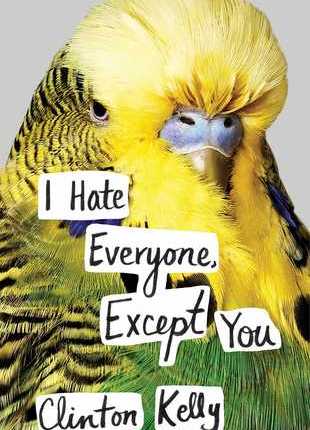
I Hate Everyone, Except You by Clinton Kelly

I Hate Everyone, Except You by Clinton Kelly

I Hate Everyone, Except You entered my life at the perfect time. I listened to a David Sedaris book last week and was unimpressed with some of his more edgy material. Clinton Kelly has the snark and sass of Sedaris, but, in my opinion, more heart and empathy.

Let’s just say, if Sedaris’ book was a hard drug, the Kelly book equivalent would be “a little fresca on a panty shield” loc 1784, ebook. Perhaps uncensored, he’s more honest and vulgar than what his fans usually see, but he’s real.

I really enjoyed this one, but don’t go into it expecting Kelly to parade himself around as the fashionista from What Not to Wear the whole time. It is definitely not that.

Photo by Artem Beliaikin on Pexels.com

Kelly’s dialogue (inner and outer) is hilarious. Take this moment, he’s psyched himself up and gone on an interview for an editorial position at a fashion mag and he’s asked to wait: “I’ll hang out here in the lobby,” I said. Yep, I’ll just sit in that plastic chair facing the door, watching my dreams rot like a bowl of fruit on time-lapse video. Thanks so much. Employees began to arrive, coffees in hand, and quite frankly, I had expected them to be better looking. … Sure, some of them were so skinny you could see through them, but they didn’t look happy about it. I had been expecting to work among anorexic women who radiated inner strength, not soul-crushing hunger. And what was with all the joyless denim? loc 375, ebook.

It makes me wonder what he would say if he saw my office crowd. Maybe I wouldn’t want to know.

Kelly isn’t religious but he seems to be spiritual in that he believes people should live authentically every moment for as long as they can.

Here’s what he has to say about it: “… the older I get…, the less Destiny and Fate-and their cousin, Faith, for that matter-concern me. For some, the opposite is true. Men and women on their deathbeds, old as the Appalachaians, wondering what it was “all about”. So foolish. I must admit, perhaps to the detriment of your esteem for me, that my sympathy for such wonderers is minimal. Imagine being given a life and not understanding until its ugly end that the point was to live it.” loc 494, ebook.

Photo by Artem Beliaikin on Pexels.com

I can see how that attitude could offend some people, so, here’s your warning. He’s not anti-religion necessarily. He’s pro- figuring out what works for you.

How he found his way onto “What Not to Wear” was New Age in the extreme and I’m so glad he recorded it here for us.

He didn’t like his current job and wasn’t sure what to do, so he talked to his friend: “She suggested that I ask the Universe for guidance. I wasn’t quite sure how to do that until I read a couple of books by Caroline Myss, in which she explained that if you ask the Universe for help, it will provide help.” loc 512.

Not to spoil the story, but guess what he did? I’ve read a bunch of New Age stuff and, honestly, Caroline Myss is hard core, sometimes angry even, and unapologetic about it. If I was asked to recommend a Law of Attraction author to a complete new comer to the topic, I’d pick Abraham Hicks, but whatever works.

Kelly found what he needed when he needed it and he didn’t even know it was missing- the very essence of New Age teachings.

My favorite part of the whole book: “When What Not to Wear ended a few years ago, many reporters asked me about my favorite and least favorite makeovers and the worst fashion faux pas I had ever witnessed. But not a single one asked me what I had learned about women over ten years of listening to their concerns about their bodies and their clothes. … Women want to feel beautiful. I’ve never met one who said she didn’t, and believe me, I’ve asked around.” loc 602, ebook.

Yes! And why would women want to feel beautiful? Because they would think they were worthy of love then. So, at the end of the day, what does every woman, man, child on earth want? Love.

Kelly talks about his failed and successful relationships in an honest manner, never denying that his own foibles could be why things tanked:“What probably kept us together was Rick’s ability to produce a level of rage in me so profound it actually inspired out-of-body experiences.” loc 2097, ebook. Funny, no?

Highly recommended for people who liked, but didn’t love David Sedaris or readers who enjoy humorous/tell-all memoirs. Some similar books: I’m Just a Person, The Andy Cohen Diaries: A Deep Look at a Shallow Year, or Life of the Party: Stories of a Perpetual Man-Child.

Thank you to NetGalley and Gallery books for a free digital advance reader’s copy of this book. And, thank you for reading.

Set Your Voice Free: How to Get the Singing or Speaking Voice You Want by Roger Love

Set Your Voice Free: How to Get the Singing or Speaking Voice You Want by Roger Love

Set Your Voice Free was page after page of life changing revelations to me. I picked this book up because I was trying to address a specific problem.

When I speak in front of groups, nerves take over and I subconsciously close my throat, cutting off my air, making my voice weak, and losing my message in my process. I didn’t know that was what I was doing until I read this book. I just thought that my voice changed, but I didn’t know how or why.

Roger has changed all that for me and I’m so excited to put his suggestions into practice.

Photo by Skitterphoto on Pexels.com

A world class speech and singing coach, Roger has helped many famous and every day people find their voices. “The most profound discovery I’ve made in the past fifteen years is this: If you know how to control the pitch, pace, tone, volume, and melody of your voice- the elements that form the core of this book- you can consciously use them to guide the emotions of your listeners and magnify the impact of every communication you have.” loc 85-109, ebook.

He goes on to list countless exercises and examples of just that. A consummate teacher, Roger includes almost every vocal problem imaginable in Set Your Voice Free as well as situations in which one would need to put her best voice forward.

Like visual impact, Roger tells us that audiences form their opinions about speakers and singers quickly, taking only one second of vocalizing to come to their conclusions. So, he says, you want to utilize that fleeting moment to make the best impression that you can.

It all starts with the breath: “The magic that I work with voices is built on a fundamental rhythm: the movements of the body as you inhale and exhale. Breathing smoothly and deeply works wonders for the body in general. … Once you learn to breathe as calmly and steadily as a child does, you are on your way to fabulous vocal reaches.” loc 808, ebook.

Photo by Pixabay on Pexels.com

Intellectually, I knew how breathing worked and, demonstrably, I’ve been breathing my whole life, but Roger gave me a complete education about what deep breathing FEELS and SOUNDS like. I can see how this book could be life changing for readers as it has been for me.

In addition to vocal exercises, Roger includes stage and bodily movement, mixing them with the voice to create the total package. “All stage movement can be reduced to a simple pattern, and when you know how to use it, you can simply and effectively maneuver in front of any audience anywhere.” loc 3270, ebook.

Performers and speakers all types will find information worth knowing in this book. “When you begin to put yourself and your ideas clearly and thoughtfully into the world, with all the energy you feel, people will notice. Their new attention and interest may make you feel self-conscious, but keep using the techniques you’ve learned. You’ll be a more active, influential player in your life, instead of being pushed to the sidelines.” loc 4406, ebook. Everyone wants that.

Very highly recommended for anyone who speaks, sings, or wants to more mindfully express their message. Set Your Voice Free will help anyone who reads it turn his or her voice into a finely tuned instrument of communication.

Perfect for beginners to well seasoned artists and speakers- it contains something for everyone. Some similar reads to help you put your best self forward: Platform: Get Noticed in a Noisy World, Talk Like TED: The 9 Public-Speaking Secrets of the World’s Top Minds, or The Art of Exceptional Living.

Thank you to NetGalley and Little, Brown and Company for a free advance reader’s copy of this book! And, thank you for reading!

Let’s Explore Diabetes with Owls by David Sedaris

Let’s Explore Diabetes with Owls by David Sedaris

David Sedaris is a unique American humorist. Sometimes I love his essays and other times I hate them, so ranking a collection of his work fairly is difficult.

I listened to the audiobook of Let’s Explore Diabetes with Owls on my daily commute and he’s a wonderful narrator.

Actually, having read a handful of his other books, I’d recommend listening to him read his essays. His timing and inflections are perfection. He’s one of the few humorists who has literally made me laugh out loud.

The high points of this collection are Understanding Understanding Owls, Laugh Kookaburra, and A Guy Walks into a Bar Car. They’re unbelievably funny and have a lot of heart.

The low points were: Health-Care Freedoms and Why I want my Country Back, If I Ruled the World, and Dog Days. It’s as if he ran out of material and tacked the worst of it on the end.

Dog Days was awful and reminded me of Squirrel Seeks Chipmunk: A Modest Bestiary which I couldn’t stand. Vulgar prose just isn’t my thing, I guess.

Recommended for adult readers who are looking for a laugh and don’t mind some profanity and general silliness. More humorous books that I’ve enjoyed: Are You There, Vodka? It’s Me, Chelsea, Dad Is Fat, and It’s All Relative: Two Families, Three Dogs, 34 Holidays, and 50 Boxes of Wine.

Creativity: The Perfect Crime by Philippe Petit

Creativity: The Perfect Crime by Philippe Petit

In Creativity, Philippe invites the reader into his mind and attempts to dissect his creative process. For this to make any sense, you sort of have to let go of reality as you know it and step into his pipe dream world for the duration of the read.

Sometimes I was able to do this and followed his twisting train of thought to some fascinating conclusions, but other times I couldn’t. So, if you pick this one up, prepare yourself. It’s not for everyone.

I marked a couple of his ideas that resonated with me:“If you are an artist, you want to create a giant wall around yourself and, inside that wall, to follow your honesty and your intuition. What the audience will see is a man or woman who is a prisoner of his or her passion, and that is the most inspiring performance in the world.” pg 16 “To be a prisoner of passion”- I’ve never heard an artist described that way before.

Photo by ShonEjai on Pexels.com

In pages 20 to 26, Philippe essentially describes his brainstorming process as a paper version of Pinterest (my comparison, not his). He takes all of these words and pictures and files them according to some associations that his mind makes, then reassembles the results into art… somehow.

Read these pages if you want to explore how difficult it is for a creative type to write down his process in a manner that makes sense to anyone other than him or herself. It’s interesting but baffling.

“Another theory of mine: turning in circles and getting lost is important! You find yourself when you get lost.” pg 28 I embrace that theory as well.

“Go to school if you want to learn. Go to life if you want to feel.” pg 85 Loved that.

“Use your creative paranoia to be on the lookout for negativity; observe with a positive spirit: “What a beautiful disaster!” uttered the French architect Le Corbusier when he visited Manhattan for the first time.” pg 100

Photo by Trev Adams on Pexels.com

“Even if you are not a performer, even if you don’t have an act, do not think that you have nothing to rehearse! The art of living makes a performing artist out of you.” pg 122 We are all creators, painting our lives in wide strokes around us, even those of us who can’t draw a stick figure or walk on a rope between skyscrapers.

“Look in the mirror of fear and focus beyond it. What appears in the background is your path, awaiting.” pg 149 Something to keep in mind when life’s anxieties and impossibilities assail you.

Creativity: The Perfect Crime is one of a kind but if you liked it, I’d recommend reading PostSecret: Extraordinary Confessions from Ordinary Lives by Frank Warren (hundreds of people around the country decorate plain postcards with a secret that they’ve never revealed to another person- it shows the heights and depths of creativity and artistic catharsis) or How to Fly a Horse: The Secret History of Creation, Invention, and Discovery by Kevin Ashton (a more logical than emotional book about the creative process, how it works, and how everybody can create).

thewalkfilm

Speaking of Philippe Petit, did anybody else watch The Walk with Joseph Gordon-Levitt which was about his famous tight rope walk between the Twin Towers? 

If you read this book first, it makes so much more sense.

Thanks for reading!