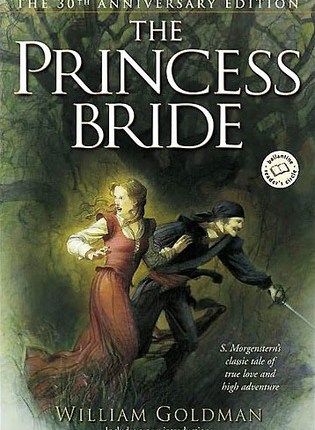
The Princess Bride by William Goldman

The Princess Bride by William Goldman

** spoiler alert ** Please be aware: major spoilers ahead if you have not read the book or watched the film. Consider yourself warned.

A new classic tale about a woman named Buttercup, the man she loves named Westley, a giant who loves to rhyme named Fezzik and Inigo, a Spanish swordsman out for revenge.

Of course, like many, I’ve seen the film The Princess Bride about a bajillion times, but I’d never read the book. It was time to rectify that error. Because the book is always better than the movie, right?

“I love you,” Buttercup said. “I know this must come as something of a surprise, since all I’ve ever done is scorn you and degrade you and taunt you, but I have loved you for several hours now, and every second, more.” pg 59, ebook.

Photo by Charles Pragnell on Pexels.com

But not this time, friends. I know, I was shocked too.

That’s not to say the book isn’t charming, because it is. There’s all of the characters you love and they deliver the classic lines from the film, plus you get the backstory and additional humorous injections from William Goldman. Goldman created a story within a story — he acts as if he’s simply editing a book by S. Morgenstern and has created an entire history around this idea.

He’s so convincing, in fact, that I immediately googled Goldman to make sure I hadn’t missed something.

My favorite part of the book was exploring Prince Humperdinck’s “Zoo of Death”, which we only get to see in passing in the movie.

“The fifth level was empty. The Prince constructed it in the hopes of someday finding something worthy, something as dangerous and fierce and powerful as he was. Unlikely. Still, he was an eternal optimist, so he kept the great cage of the fifth level always in readiness.” pg 68, ebook.

Photo by Daniel Torobekov on Pexels.com

Honestly, some of the scenes in the book go on a bit too long. The part where Westley challenges Prince Humperdinck “to the pain” instead of “to the death” comes off as creepy in the book, whereas, I felt, in the film it was kind of awesome. I’m not entirely certain what the difference is, except his speech is more to the point in the film.

“It means that I leave you to live in anguish, in humiliation, in freakish misery until you can stand it no more; so there you have it, pig, there you know, you miserable vomitous mass, and I say this now, and live or die, it’s up to you: Drop your sword!” pg 225

Those are all just quibbles compared to the ending, which was the most shocking point of all.

Ok, as we all know, in the movie, it ends with a kiss and they all live happily ever after.

In the book, not so! Here are the last lines in the “official story” not counting a few more comments by Goldman:

However, this was before Inigo’s wound reopened, and Westley relapsed again, and Fezzik took the wrong turn, and Buttercup’s horse threw a shoe. And the night behind them was filled with the crescendoing sound of pursuit… pg 228, ebook.

Photo by Min An on Pexels.com

That’s it. I nearly fell out of my chair when I read it. Here’s what our author said about it a few paragraphs later:

“I’m not trying to make this a downer, understand. I mean, I really do think that love is the best thing in the world, except for cough drops. But I also have to say, for the umpty-umpth time, that life isn’t fair. It’s just fairer than death, that’s all.”

It’s such an unsatisfying ending. I can see why they changed the film because I don’t think audiences would have stood for it, which probably says more about film-going audiences than readers, but still. Don’t readers deserve a happy ending too?

Thanks for reading!

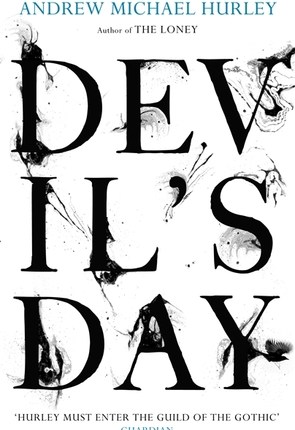
Devil’s Day by Andrew Michael Hurley

Devil’s Day by Andrew Michael Hurley

A slow-moving horror story that asks the reader to consider what may be the truth behind ancient customs and myths, and what secrets a small, isolated community may be hiding from the rest of the world.

“One late October day, just over a century ago, the farmers of the Endlands went to gather their sheep from the moors as they did every autumn. Only this year, while the shepherds were pulling a pair of wayward lambs from a peat bog, the Devil killed one of the ewes and tore off her fleece to hide himself among the flock.” pg 1

Photo by Snapwire on Pexels.com

The small gathering of farms, Underclough, is as much a character in this story as the actual characters.

“When the first buildings appeared, I could tell that Kat was disappointed. I think she’d expected to find Underclough nestled in the valley, not dark and cramped like something buried at the bottom of a bag.” pg 24

There’s a sense of inevitability about the whole thing. You’re not just born in this place. You live, work and die here, on the edge of the wilderness and the known world.

“Living on the farms was one endless round of maintenance. Nothing was ever finished. Nothing was ever settled. Nothing. Everyone here died in the midst of repairing something. Chores and damage were inherited.” pg 38

Photo by Karolina Grabowska on Pexels.com

John Pentecost knows from his childhood that there are forces in nature that cannot be explained. There are whispers in the woods and shadows beneath the trees that move with their own power. There’s a reason why the farmers have a “Devil’s Day” each year, to put the spirit to sleep while they gather their flocks in peace.

“As the Devil watched me, the same question ran through my mind as incessantly as the river. Did I like stories? Did I like stories? I answered yes.” pg 146

Andrew Michael Hurley uses the environment and setting to slowly create a feeling of dread, but then I felt like he never delivered on the story that he so painstakingly sets up. The pace is glacially slow.

Photo by Lucas Pezeta on Pexels.com

That being said, there are one or two scenes from Devil’s Day that haunted me when I read them. I just happened to be reading this the night a record-breaking windstorm blew through town. I heard eerie shrieks and groans coming from outside my windows throughout the evening.

I couldn’t help but wonder what I would say if the Devil asked me if I like stories…

Thanks for reading!

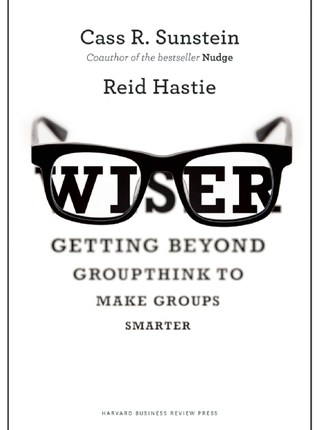
Wiser: Getting Beyond Groupthink to Make Groups Smarter by Cass R. Sunstein

Wiser: Getting Beyond Groupthink to Make Groups Smarter by Cass R. Sunstein

Authors Cass Sunstein and Reid Hastie examine many of the problems that beset groups and how to best address them for optimal group performance.

Written in a style that is more academic than approachable, Wiser uses the findings of multiple researchers to come to its conclusions. This book may be useful to managers who are desiring to set up a group at their own place of employment and want to start on the best foot.

“Do groups usually correct individual mistakes? Our simple answer is that they do not. … We also ask a second question: Can groups correct individual mistakes? Our simple answer is that they can. We aim to explain how.” pg 2

Photo by Canva Studio on Pexels.com

I picked this book up because, frankly, I wanted to know why anybody would utilize groups in a work setting. Every one that I have ever sat on has been either a disaster or inefficient. I was hoping Wiser would help me see the appeal that group-thinking seems to have for some.

And it did. But it also opened up my eyes to the myriad reasons why my experiences had been so bad. I had just assumed groups didn’t work. As it turns out, things are more complicated than that.

“The basic lesson is that people pay a lot of attention to what other group members say and do — and that they do not end up converging on the truth. In fact, they often ignore their own beliefs and say that they believe what other people believe.” pg 28

There can also be problems with authority figures in a group setting: “If the group contains one or more people who are known to be authorities or who otherwise command a lot of respect, then other group members are likely to silence themselves out of deference to the perceived or real authority.” pg 35.

I’ve seen that happen multiple times. The whole purpose of the group is thrown off. It has often frustrated me, leading me to think we may as well have saved our meeting time and had the boss issue a directive.

Photo by Andrea Piacquadio on Pexels.com

Groups also have to keep in mind the idea of “cascades” or ideas taking a hold early in the process and then taking over the rest of the group’s time: “For their part, many groups end up with a feeling of inevitability, thinking that they were bound to converge on what ultimately became their shared view. Beware of that feeling too, because it is often an illusion. The group’s conclusion might well be an accident of who spoke first…” pg 60

Groups can polarize themselves, driving their members to extremes they wouldn’t otherwise reach without members that think like them. To combat this, leaders should make sure groups are diverse.

In a perfect world, groups are equivalent to their best members, aggregate all of the information each individual brings to the table, utilizes experts properly and creates an almost mystical “synergy” where, as the authors say, “the whole is more than the sum of its parts.”

Photo by fauxels on Pexels.com

The trick is getting the group to work like that. As I said, I’ve never seen it. This book brings me hope that perhaps one day I will.

The failures of groups often have disastrous consequences — not just for group members, but for all those who are affected by those failures. The good news is that decades of empirical work, alongside recent innovations, offer a toolbox of practical safeguards, correctives, and enhancements. With a few identifiable steps, groups can get a lot wiser.” pg 214

Thanks for reading!

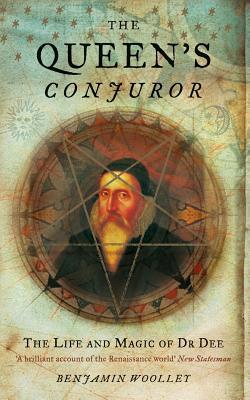
The Queen’s Conjuror: The Science and Magic of Dr. John Dee by Benjamin Woolley

The Queen’s Conjuror: The Science and Magic of Dr. John Dee by Benjamin Woolley

The Queen’s Conjuror is a biography of Dr. John Dee, a fascinating and much-maligned Renaissance man who was, among other things, Queen Elizabeth I’s personal astrologer.

“And for these and such like marvellous acts and feats, naturally, mathematically, and mechanically wrought and contrived: ought any honest student and modest Christian philosopher be counted and called a conjuror?” pg 15

He had interests in astrology, science, mathematics and the occult, which, to modern eyes, may seem strange. But Dee viewed the inner workings of nature and the universe as a type of magic and his studies of it, through the use of science, was another way that Dee worshiped God.

Photo by Tima Miroshnichenko on Pexels.com

“Queen Elizabeth, a symbol of Protestant sovereignty, told the French Ambassador Andre Hurault: ‘There is only one Jesus Christ… the rest is dispute over trifles.’ This, it seems, was Dee’s view as well.” pg 45

Part of Dee’s study of nature was an attempt to find a “universal language.” This universal language, Dee believed, was told to the Biblical Adam by God in the fabled Garden of Eden before the fall from grace. Dee hypothesized if a scientist could find this universal language, giving the secret name of beasts, plants and everything in creation, that it would unlock the secrets of the universe itself.

“In other words, Dee thought that the ‘astronomical’ symbols appeared to be the relics of a long lost universal language that transcended national and, by implication, religious barriers.” pg 75

Photo by cottonbro on Pexels.com

In addition to his legacy of mysticism and the Enochian alphabet, Dee is credited as the first man to formulate the idea of a ‘British Empire’ and he suggested that England develop its navy as a key to upholding that empire.

“The navy would become the ‘master key’ of English military strength, England would challenge the Spanish — to spectacular effect in its defeat of the Armada in 1588 — North America would be colonized, a British Empire would emerge, and the expeditions that Dee had in the last few years been helping to plan would lay its foundations.” pg 123

Another reason I admire Dee — he amassed one of the largest libraries in Europe. Unfortunately, his home was looted during a long sojourn on the Continent.

Photo by Ekrulila on Pexels.com

“In short, Dee’s house had been ransacked not by an ignorant peasant mob, but by pupils and associates. Their motives remain unclear. They may have seized the books to settle outstanding debts, or to discover the secrets they contained, or to hide them from others.” pg 278

Although he died in poverty and obscurity, he affected society then and today, and represented an era where science, religion, and mysticism were intimately entwined.

Highly recommended for readers who enjoy history, mysticism, and a curious combination of the two.

Here’s the History Guy episode I wrote about Dr. John Dee:

The History Guy remembers Dr. John Dee

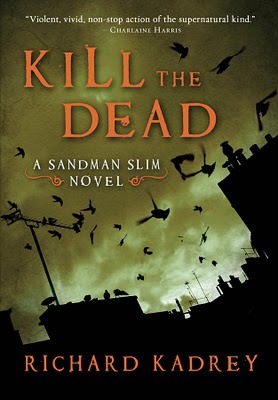
Kill the Dead (Sandman Slim, #2) by Richard Kadrey

Kill the Dead (Sandman Slim, #2) by Richard Kadrey

“Subtle hunting, acting like a grownup, I really miss Hell sometimes.” pg 4

First of all, don’t read the Goodreads description of Kill the Dead before you read it. It gives far too much away!

Here’s a Heidi-no-spoilers blurb that should serve you just as well: James Stark, the half-angel, half-human and one hundred percent pissed off anti-hero is back. Keeping an apartment in Los Angeles doesn’t pay for itself, so Stark is on the hook for contract work for a variety of agencies including Vigil (a super secret department of Homeland Security) and Lucifer, yes that Lucifer.

Photo by ROBERTO ZUNIGA on Pexels.com

Because of a small saving-the-world situation in the last book, Stark has become an underground local celebrity, which has its ups and downs. Part of the perks includes a upsurge in customers at the Bamboo House of Dolls, Stark’s favorite local dive.

“It’s good to have one thing that hasn’t changed much. We need a few anchors in our lives to keep us from floating away into the void. Like Mr. Muninn said the one time he came in. “Quid salvum est si Roma perit?” What is safe if Rome perishes?” pg 28

Trouble brews when people start to go missing in Los Angeles’ underground and some of the members of its leading magical families turn up dead. Looks like Stark is going to have to save the day again and he’s not happy about it.

“I didn’t save anyone. I just killed the bastards who needed killing. Get it? I don’t save good people. I murder bad ones.” pg 39

Photo by Julia Volk on Pexels.com

Why can’t the world just save itself? Hasn’t Stark suffered enough? But what’s a nephilim to do if not save the world while holding tightly to his fracturing sanity with both hands.

“You came back to get the people who hurt you and Alice and you did it. Great. Now you need to find the next thing to do with your life.” “Like learn the flute or maybe save the whales?” pg 57

Suffice to say, Stark finds a few new motivational factors in this book and we are treated to some fairly serious zombie action.

I enjoyed the second entry in the Sandman Slim series, but less than the first book. To start, I felt it was less focused. There’s a heck of a lot going on in Stark’s life and he doesn’t stop to ponder things. He’s always on the go. It makes for a book that you can’t put down, because if you do, you’ll forget who is doing what.

We see less of some of my favorite side characters, which was another bummer. Stark is so intense. He needs more comic relief than just his literal talking head roomie who is perpetually drunk and watching garbage on his computer.

Photo by Photography Maghradze PH on Pexels.com

“I know whose side I’m on. Mine.” pg 236

And there’s the darkness factor. Again, this is urban fantasy with a heavy dose of pessimism. No one is coming to save our intrepid hero. There may be angels in heaven but they couldn’t care less about what goes down on earth. At least Lucifer can be bothered to visit and throw some cash around to his favorites. How depressing is that.

That being said, of course I’m going to pick up the next volume. This is a revenge story primarily, but it is also a love story. I feel like, somewhere in the cosmos, Stark is going to find his Alice and they’re going to get the time together that he was denied. Won’t he be pleasantly surprised…

Thanks for reading!

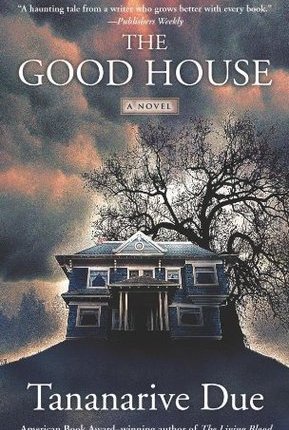
The Good House by Tananarive Due

The Good House by Tananarive Due

The Good House is a horror story spanning generations of the Toussaint family and their home. The family has a history of healing and mysterious vodun practices, or maybe they’re just extremely lucky. Take, for example, a mud slide that destroyed every home in their part of town, except theirs.

“The mud’s recent wrath had left their two-story house untouched, but sprays of buckshot fired at the house during cowardly moments, usually at night, had pocked and splintered the old door. The mere sight of the damaged door had always made her angry, and Marie Toussaint no longer trusted herself when she was angry.” pg 10, ebook.

Photo by Maria Orlova on Pexels.com

Sacajawea, the town where the Toussaints live, is small. Everyone knows each other and have long memories.

“Aside from the handful of vacationers who frequented the town’s two popular B&Bs, most people in Sacajawea had lived here for generations, earning hourly wages in the mills in Longview or taking down trees in the woods. And even if Sacajawea had been a more sometimey place, the rules would have been different for Angela, or anyone else who was kin to Marie Toussaint.” pgs 25-26, ebook.

Why is the Toussaint home called “the Good House”?

“…this house was built in 1907 by the town pharmacist, Elijah Goode. He chose this place because he said the land felt ‘blessed beyond all description,’ or in any case that’s what he wrote to his brother in Boston.” pg 30

After a tragic Fourth of July party, Angela Toussaint, the granddaughter of Marie Toussaint, thinks her family home may be mislabeled.

Photo by Tamas Marton on Pexels.com

What I enjoyed most about The Good House is the author Tananarive Due wrote an epic horror story around a family with characters I cared about. This wasn’t just a thrill-a-minute short story. Getting to know the residents of Sacajawea and the Toussaint family was a treat. Then, when things started to get scary, I was completely hooked.

This is a horror story for readers who enjoy a slow reveal and an extremely satisfying conclusion. Highly recommended.

Thanks for reading!

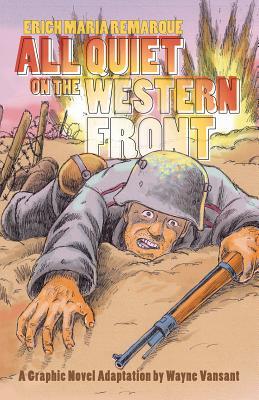
All Quiet on the Western Front by Wayne Vansant (adapter), Erich Maria Remarque

All Quiet on the Western Front  by Wayne Vansant (adapter), Erich Maria Remarque

This is a graphic novel remake of the classic All Quiet on the Western Front and it packs as much punch as the original.

Paul Bäumer and his classmates are encouraged to join the German army in WWI by an enthusiastic professor. What they find is not the heroic battlefields of the classical texts they’ve studied, but one nightmare after another.

“We plunge again into the horror, powerless, madly savage, and raging; we will kill, for they are still our mortal enemies, their rifles and bombs are aimed against us, and if we don’t destroy them they will destroy us.” pg 68

Photo by Kirsten Bu00fchne on Pexels.com

As his friends slowly die and he takes an uncomfortable leave home, Paul comes to realize that there will be no end to this war for him.

“He fell in October 1918, on a day that was so quiet and still on the whole front, that the army report confined itself to the single sentence: All quiet on the western front.” pg 170

This book is an interpretation of war that was banned and burned in Erich Maria Remarque’s home country of Germany. To go to war, it seems that the world has to sanitize it and completely demonize the other side, otherwise, we would never do it.

All Quiet on the Western Front refuses to look away from the humanity on both sides of the conflict. It is tough to read, and kicks you in the feels. But, in my mind, that’s what makes it so great.

Photo by Jan Tancar on Pexels.com

Though it is fictional, it is the story of a generation of young men who were shipped off to war and never came home again. And, if by some miracle they did, they’re forever haunted by the sound of a train car because it reminded them of the sound of falling bombs. When they picked up a book that they used to love, it didn’t ignite their souls in the same way, because they’d seen the worst that life can offer. War kills more than the ones who end up dead on the battlefield.

This graphic novel version of All Quiet on the Western Front should appeal to reluctant readers. Though it is about a very serious and triggering topic, the artwork is done tastefully. I read the original All Quiet on the Western Front as a seventh grader, age 13. I think this book would be appropriate for children of that age and up.

I received a free advance reader copy of this book from the publisher. This quotations I cited in this review may vary in the final printed version.

Thanks for reading.

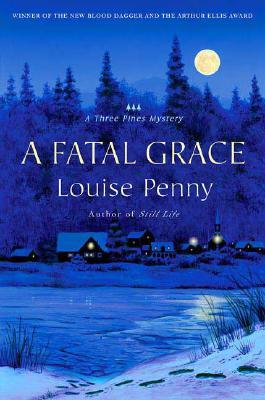
A Fatal Grace (Chief Inspector Armand Gamache, #2) by Louise Penny

A Fatal Grace (Chief Inspector Armand Gamache, #2) by Louise Penny

Chief Inspector Armand Gamache solves more murders while surrounded by the sparkling personalities that compose the small town of Three Pines in Canada. 

Nobody likes the victim of the murder, which makes the job harder for Gamache. As a reader, I was cheering for Gamache to solve the crime, but not because of the unlikeable CC de Poiters. She was as different a character from the victim of the first book, Jane, as you could possibly be.

I wonder if Louise Penny’s editors said, ‘Give us another cozy murder, but different.’ Well, she delivered.

Photo by eberhard grossgasteiger on Pexels.com

“Anything CC didn’t like didn’t exist. That included her husband and daughter. It included any unpleasantness, any criticism, any harsh words not her own, any emotions. CC lived, Saul knew, in her own world, where she was perfect, where she could hide her feelings and hide her failings. He wondered how long before that world would explode.” pg 11, ebook

Meanwhile, a storm is brewing at Gamache’s headquarters because of fall out from the mysterious Arnot case (which the reader first read about in the last book and finally gets to learn about in this one).

“Only fools underestimated (Gamache), but Brault knew the service was full of fools. Fools with power, fools with guns. The Arnot case had proved that beyond a doubt. And had almost destroyed the large, thoughtful man in front of him.” pg 57, ebook

We are also treated to more background on some of my favorite characters from the last book, Clara and Myrna, plus poetry from the irascible Ruth.

Well, all children are sad
but some get over it.
Count your blessings. Better than that,
buy a hat. Buy a coat or pet.
Take up dancing to forget.
 pg 39, ebook.

Photo by Zen Chung on Pexels.com

I like that Penny is developing these characters. They’re not just stuck in a time or place, unmoving and stiff. For example, Clara and Peter, her husband, are still fighting, but about different subjects now than from the last book. How very realistic for a married couple.

“When my death us do part
Then shall forgiven and forgiving meet again,
Or will it be, as always was, too late?”
 pg 61, ebook.

And it’s simply a treat to follow Gamache around and listen to his inner voice. He’s sensitive and kind, smart and intuitive. He also likes good food and drink. It makes him so relatable. He’s one of those characters that I’d like to meet for a drink sometime, if he were real. Or I’d want him in my book club.

“Gamache’s job was to collect the evidence, but also to collect the emotions. And the only way he knew to do that was to get the know the people. To watch and listen. To pay attention. And the best way to do that was in a deceptively casual manner in a deceptively casual setting. Like the bistro.” pg 142, ebook.

Photo by Atahan Demir on Pexels.com

The only part of this book that I found a bit off-key was a moment between Gamache and one of the town’s oldest residents, Em. They talk about moments from their past when something inexplicable caused them to behave in a certain way. That conversation comes back to haunt Gamache later in the book, and it almost has an air of magical realism to it.

There’s nothing wrong with magical realism, but I felt like Three Pines and its residents had enough every day magic without resorting to the truly far out there. I’d be curious as to what other readers thought of that moment — I won’t say any more because I don’t want to spoil it. You’ll know what I’m talking about when you get there.

Highly recommended for readers with a hankering for cozy mysteries. Thanks for reading!

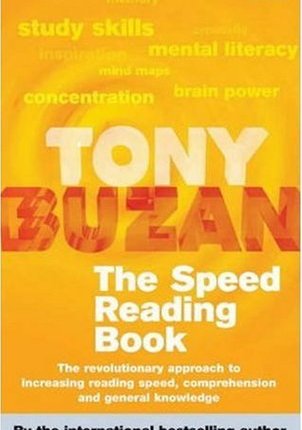
The Speed Reading Book by Tony Buzan

The Speed Reading Book by Tony Buzan

I did not speed read Tony Buzan’s The Speed Reading Book because I found it to be rather a slog. There is useful information in here about the physical capabilities of your eyes and brain, methods for training your eyes how to move, the benefits of improving your vocabulary, how to recognize patterns in the way paragraphs are structured, and the basics of logic.

However, it’s interspersed with information that I felt was better presented in Use Your Head.

“Quite apart from important improvements in the technique of learning how to read fast which are set forth in this book, what I wish to emphasize in my system is that understanding and remembering factual material is not nearly as important as knowing how to relate new material to what you already know. This is the all-important ‘integrative factor’, or if you will, learning how to learn.” pgs 12-13

Photo by fotografierende on Pexels.com

He re-hashes the proper way to make a mind-map and the importance of previewing all reading material, even mystery novels, which I felt was silly. I can’t speak for the whole world, but I read mysteries to be entertained, not create a template into which I fit important details as I go along.

“The purpose of the preview is to develop a structure into which the mind can more easily fit the smaller details of that structure. … Previewing should be applied whatever kind of material you are going to read, which it be letters, reports, novels or articles.” pg 115

Though he did backpedal on his “preview everything” stance somewhat in a chapter about reading poetry: “When reading literature and poetry, bring to bear all your knowledge and judgment, and if you feel that it is the kind of writing you wish to treasure forever, forget about speed reading through it and reserve it for those occasions when time is not so pressing.” pgs 167-168

Thank you, I will.

Photo by Mark Cruzat on Pexels.com

Perhaps part of my problem with this book is that it revealed to me just how slowly I read and assimilate non-fiction, because Buzan offers the reader information about the absolute limitlessness of human capability.

“Theoretically, the human visual system can photograph an entire page of print in one-twentieth of a second, and thus a standard length book in between six and twenty-five seconds, and the entire Encyclopaedia Britannica in less than an hour. Advanced skinning and scanning skills take you on the first step of that incredible and inevitable journey.” pg 70

Let’s say I have much room for improvement.

The book also showed its age somewhat during a chapter on the importance of organizing how you take in information from newspapers: “Newspapers are so much a part of our everyday life that we seldom stop to think that they are a very recent development.” pg 148

But are they still? I’m not so sure.

Photo by Masha Raymers on Pexels.com

The book ends on a high note and, of course, I plan to continue practicing and improving my skills: “Your continuing success in all fields of speed reading depends on your personal decision to continue the course you have begun, and on the capacity of your brain to read, assimilate, comprehend, recall, communicate and create, abilities which we know approach the infinite. Your success is therefore guaranteed.” pg 177

But if you’re only going to read one book by Tony Buzan, I recommend Use Your Head.