Life’s Too Short to Fold Fitted Sheets by Lisa Quinn

Life’s Too Short to Fold Fitted Sheets by Lisa Quinn

“Hello, my name is Lisa Quinn, and I am a recovering Martha Stewart junkie.” pg 7, ebook

Do you have a job, children, spouse, house, or none of those things and just want everything to look perfect all the time? Want to be the consummate host or hostess without working and stressing throughout the event? Are you wondering how they get it to look so perfect in the magazines?

Lisa Quinn, the author of this book, confesses to wanting it all. But she came to the realization that it is an impossible goal and she was losing her mind in the chase. This humorous self-help book is about embracing reality and understanding that it’s ok, really, to not be perfect.

Photo by cottonbro on Pexels.com

“It’s my assertion that the real key to happiness is getting rid of your inner control freak, redefining what’s real and important in your life, and then lowering your standards for everything else.”

I think that’s solid advice. I, like many, used to demand more of myself than I could give in my housework, from my family, from everybody really. It made me a little bit crazy for a time. But then, I realized, it wasn’t worth it. The effort, the cost — both in time and emotions — and everything else, led to these moments that were forgettable once they were done.

I realized I would much rather dwell in the imperfect moment than forever be chasing the unattainable gem of a perfect moment. Because it never really comes, does it.

This book embraces the idea that no one is perfect. And it’s a lot kinder to realize that your life doesn’t have to look perfect to be incredibly enjoyable.

Photo by medium photoclub on Pexels.com

Quinn gives easy-to-follow tips on how to decorate, host parties, clean, cook and more. My favorite tip being to spray a good smelling cleaner near the door of your home before an event. You may not have hit every surface in the house but it will smell like you have. Genius really.

“House Keeping Myths Debunked… Myth #1: You must fold your fitted sheets. The real definition of insanity is folding a fitted sheet the same way over and over again and expecting it to result in anything other than a migraine and a huge turban. Quit stressing about it. Just wad it up the best you can, and shove it in the closet.pg 39, ebook

She keeps it real with the mega-popular topic of decluttering, pointing out that the easiest way to control the mess is to think about everything you bring into your home.

“Resist the temptation to buy little knickknacks, pillows, throws, and paintings just because you like them. That is not reason enough. Each item you bring into your home should be special. It should have a purpose and a specific place in your home.” pg 64, ebook

Photo by Rachel Claire on Pexels.com

I also enjoyed her variations of recipes that can be done with a deli-cooked chicken. Talk about easy…

“Listen, if I’m able to convince just one other mom out there to take herself a little less seriously a little more often, then I’ve succeeded at what I set out to do.” pg 108, ebook

This book isn’t just for moms. It’s for everyone who needs to cut themselves some slack and just shove those dumb sheets in the closet. I won’t tell.

Thanks for reading!

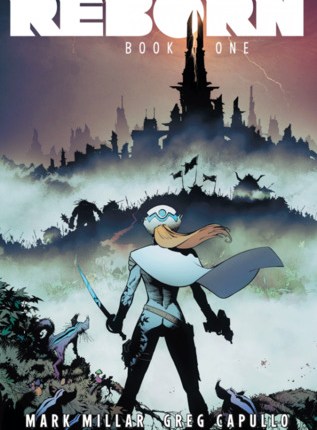
Reborn: Book One by Mark Millar

Reborn: Book One by Mark Millar

Beautiful artwork highlights a so-so story about a woman who dies, only to be reborn into a fantasy-themed world where a perpetual war of good versus evil rages on.

I think the basic idea of this graphic novel is fascinating. What happens to us after we die? We have faith, religion and all sorts of near-death experiences to fall back on, but who can say with any certainty.

From an interview in the back of the book with Greg Capullo, one of the creators: “What I loved about the story is that it deals with all of our fears about what happens when we die, but amidst the fear and the sorrow, we have this spectacular adventure that takes place in a fantastic and exciting world — a world I got to invent.”

Photo by Susanne Jutzeler on Pexels.com

Some of my quibbles with this story include that the good versus evil theme makes all of the characters seem so simplistic. You can predict almost exactly what they’re going to do before they do it — no gray areas. Also, everything is based around Bonnie, one character, and she becomes the savior archetype for the entire tale.

But, on the other hand, if you take this book, as a whole, for a metaphor of what happens after death, it works. Like so many near-death experiences, it all boils down to one view point, that of the newly departed. If you consider it like that, of course the story would be based around one person. She is seeing the next world entirely from her point of view, everything is interpreted through that lens.

It’s a curious phenomena, those who have had NDE’s, generally describe imagery and a storyline that makes sense to them culturally and fits within their framework of faith. Bonnie didn’t want to die, but when she does, she sees a world so similar to where she just came from, except it contains people who have died before she did.

Bonnie’s relationships with the people she knew before her death determine so many of the other character’s roles in the story. She has a curious relationship with the “faerie queen” which I found interesting.

Photo by Ferdinand Studio on Pexels.com

I can’t decide if I’m reading more into this story than is actually there, or if it was actually touching on some of the larger themes I mentioned. As I said, I got bogged down in the predictable characters.

At least the artwork is pretty…

I’m interested to see where Netflix goes with this, as I read in Variety that they’re developing it into a film starring Sandra Bullock.

Thanks for reading!

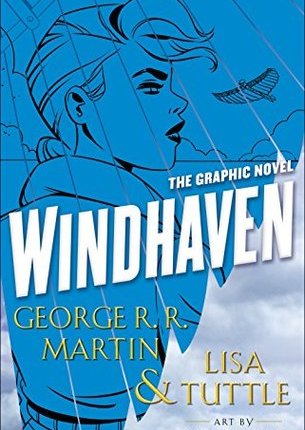
Windhaven: the Graphic Novel by George R.R. Martin, Lisa Tuttle

Windhaven: the Graphic Novel by George R.R. Martin, Lisa Tuttle

Windhaven is a world of small islands, connected by messengers who fly with intricate metal wings. The culture of the “flyers” is a closed one, with wings handed from messenger to his or her first born child.

Maris is not the child of a flyer, but that’s not going to keep her from joining their world.

“You don’t bother me. Maybe when you grow up, you can help the flyers like my friends here. Would you like that?” “No.” ” No? What then.” “I want to fly.”

Photo by eberhard grossgasteiger on Pexels.com

And when she does, things will never be the same.

This graphic novel was based off of Windhaven, the first book in a fantasy series by George R.R. Martin and Lisa Tuttle. Readers get a “Game of Thrones”-ish feeling from this book in the political machinations between the flyers and those they call the “land bound.” But it lacks the intricacy and extraordinary cast of characters that is “Game of Thrones”.

Having never read anything by Tuttle, I’m not sure how she and Martin blended their visions.

“Don’t waste your time on foolish dreams! I won’t have my daughter be a woodwings!”

Photo by Wendy Wei on Pexels.com

The artwork by Elsa Charretier is pretty and I enjoyed how she aged Maris throughout the book.

The scenes of the flyers themselves, especially a few of the chase scenes, must have been difficult to draw. Charretier had to make the characters look like they were in motion for it work. I think she did well, but the wings look kind of chunky in some of the pages, rather than the slick, technological wonders I pictured in my mind.

As for the story itself, I was surprised by the actions of some of the characters, but for the most part, it all seemed inevitable. Maybe that’s what the authors were going for — Maris’ fate was more destiny than choice.

Thanks for reading!

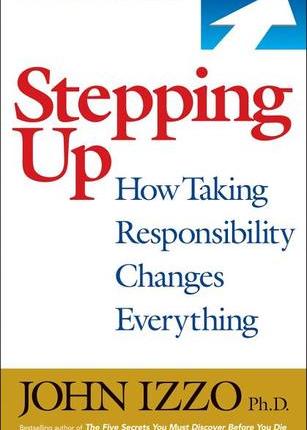
Stepping Up: How Taking Responsibility Changes Everything by John Izzo

Stepping Up: How Taking Responsibility Changes Everything by John Izzo

“You know people who accept responsibility — aren’t they great to be around?” vii, from the forward.

The focus of this book is a worthy one. The author, John Izzo, provides many real life examples of people stepping up and doing the right thing and how it has helped their lives and businesses.

Photo by Matthias Zomer on Pexels.com

Unfortunately, it just reads like one cliché after another and I had a difficult time connecting with it.

Stepping up is seeing a need and deciding YOU are the right person to do something about it.” pg x.

I do agree that all of our power lies in ourselves. Blame doesn’t fix problems. Waiting for someone else to do it doesn’t do the trick either.

“The consequence of having a seismic shift towards victim thinking means more of us feel that the future is not in our hands but in the hands of forces outside ourselves. And since internal locus of control is positively correlated with happiness, success and initiative while external locus of control is related to anxiety and depression, it’s pretty clear that most organizations and society as a whole would be better off if more of us believed we could change things.” pg 21

Photo by Aleksandar Pasaric on Pexels.com

What it comes down to is understanding that at the end of the day, the only person you can entirely control is yourself.

“Beginning where you are and doing what you can with your unique set of skills is critical.” pg 80

What are some of the methods Izzo suggests for “stepping up”? He counsels focusing on what matters, challenging your internal assumptions and find one thing, anything, that you can do immediately to address how you may have contributed to the problem.

“Think about this for a moment: everything that has EVER been accomplished began with someone taking a single step.” pg 71

It’s common sense stuff. Which is fine, but not exactly what I was expecting from this one. I suppose I’ll take responsibility for my internal assumptions about what I would learn from Stepping Up. It’s not YOU, book, it’s me.

“But here is the truth. There is a 100 percent guarantee that nothing will change if you don’t step up.” pg 33

Photo by Andrea Piacquadio on Pexels.com

What is my solution to this problem? On to the next book, my friends.

“Once you step up, somehow that act of taking initiative drives you to find the resources you need inside and outside yourself.” pg 119

To the library! 🙂

Thanks for reading!

Shades of Magic Vol. 1: The Steel Prince by V.E. Schwab

Shades of Magic Vol. 1: The Steel Prince by V.E. Schwab

V.E. Schwab has penned a graphic novel about Maxim Maresh, one of the ancillary characters from The Shades of Magic series.

I was very excited to read this. The tidbits Schwab dropped about Maxim in the trilogy were enticing. We learned he had a storied past. He fought notable outlaw figures. Somehow he developed an extraordinary control of his powers, which others had not been able to mimic.

Under his reign, a certain magician opened the doors between the worlds to act as emissaries and messengers. But also, exposed the worlds to the greatest danger that they had ever faced.

Photo by Aidan Roof on Pexels.com

“Before he was the King of Arnes, Maxim Maresh was a young, head strong prince with a penchant for metal magic and a lot to learn about the world beyond Red London. Banished by his own father to Verose, a city on the dangerous Blood Coast, Maxim was plunged into a world of danger and adventure.” Foreward, by V.E. Schwab.

So, who was this man? This graphic novel series sheds some light on an enigmatic figure.

“Why would you see those doors pried open again?” “Because sooner or later, all spells fail. And one day the doors to those worlds will open whether we wish it or not.”

What did I think of it? It was the first in a series. It’s hard to give all of the contextual information of a new story without it turning into an info dump or neglecting to develop the characters.

Schwab does a good job of avoiding these pitfalls, but I wanted more depth and development.

We do get to see something of “bone magic,” one of the more terrifying of the magics from Schwab’s stories. Bone magic, unlike the elemental basis of the other magics, allows the user to literally control the actions of those around them.

Photo by Pixabay on Pexels.com

Bone magicians can make you throw yourself onto their enemies or your friends. Hold still while you’re tortured. Stick a knife in your own eye.

Bone magic, the removal of free will, is the idea that has continued to haunt me from the Shades of Magic series and Schwab uses it to good effect in this story.

That being said, Maxim, at first, acts like a brat and doesn’t understand the complexities of real life, running headlong into the “royalty removed from the world” trope. This focus of his character doesn’t lend itself to likability. Perhaps that will change as the series goes along. Also, we get to see so very little of his extraordinarily abilities and more of his mediocrity.

However, the artwork is stunning. I hope to read and enjoy the next volume. But I can’t say I was knocked off my feet by this installment.

Recommended, of course, for fans of the Shades of Magic series.

Thanks for reading!

Cadillac, Knight Errant of the Wilderness by Agnes C. Laut

Cadillac, Knight Errant of the Wilderness by Agnes C. Laut

A highly detailed, but dated, biography of Antoine de la Mothe Cadillac, the founder of Detroit.

“Antoine had so many Spanish characteristics, the laughing irony, the quenchless ardor, the chivalry; he was so much the fierce fighter, the devout Catholic yet independent of priestly control, that we suspect he must have had Spanish blood of the Pyrenees from his mother’s side of the house.” pg 45

Photo by Chris Smith on Pexels.com

You would not believe how difficult it was to find information about this man. So many sources I examined contradicted each other or cast him as a villain or hero to the point where the actual history was obscured behind opinion.

Agnes Laut falls more into the hero-worship category, but I found her citations of historical documents to be more of use than most of the online articles I could find, which didn’t cite any.

That being said, like every other human in history, Cadillac was a complicated figure and I don’t think Laut does readers any favors by painting him as an unassailable hero. He would engage in illegal trade because everyone else was doing it. He believed Europeans were superior to the Native American population.

He was a man of his times and yet, he was the visionary and founder of Detroit and, for a time, the governor of the Louisiana Territory. He did great things and not-so-great things.

“The stockades of the new fort at Detroit enclosed sixty square yards. The post lay about forty steps back from the water-front. Such was the germ of a city that in little more than two centuries was to number with its suburbs nearly a million and a half in population. pg 140

Photo by Anon on Pexels.com

Goodness of the man aside, I had much to learn about Cadillac.

“Cadillac would never tolerate a man in his company not dressed spick and span as a naval man in spotless white. He, himself, set the example in costume faultless from hat to high boots.” pg 63

The history of Cadillac also shows a curious side of the court of Louis XIV of France, otherwise known as the Sun King. The politics of the court caused Cadillac to be imprisoned for a time, but the king kept releasing him and giving him more authority. He was thrown in the Bastille for six months and then given the Order of St. Louis.

“(Louis XIV) would grant favors only with the condescending generosity and pomp of a Grand Monarch; so the Court was duly assembled to witness the presentation of the commission at a morning audience. Cadillac had to kiss His Majesty’s hand and back away as from the presence of a god.” pg 121

Photo by Pixabay on Pexels.com

As an outsider looking in, it’s confusing how quickly a man’s stars can change. But at the same time, the shifting sands of court favor and intrigue emerge in the ups and downs of Cadillac’s life as well. All in all, it makes for a fascinating history.

“Let his (Cadillac’s) name stand and take its place as time goes on.” pg 286

Recommended for history readers with some reservations. Keep in mind this was published in 1931.

Thanks for reading!

Here’s the History Guy episode I wrote about Antoine de la Mothe Cadillac:

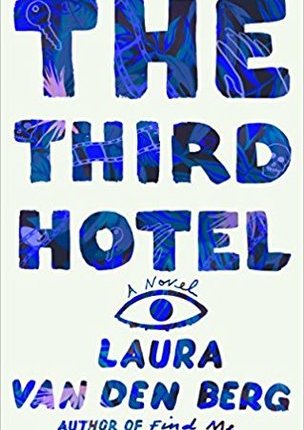
The Third Hotel by Laura van den Berg

The Third Hotel by Laura van den Berg

A strange and confusing ride through a world seen through the eyes of a grieving widow. A short time prior to attending a film festival in Cuba, Clare’s husband Richard was killed. Now, she sees him on the streets of Cuba.

“Clare had never before seen her husband operate a motorbike, but he navigated it like he had been riding one all his life, like he had been riding one in Havana all his life, like he had not been struck by a car and killed in the United States of America some five weeks ago.” pg 13

Photo by Valeriia Miller on Pexels.com

What is going on? The reader isn’t sure what’s real and what’s only in the mind of Clare. Laura van den Berg raises mammoth questions and leaves the interpretation to the reader.

My book club picked a heck of a read for March. Reactions to this book ranged from the disgusted to the mystified to the fascinated. I’d put myself somewhere in between.

I like having complex symbolism to pick apart and magical realism to consider in a story. I like having an open-ended mystery. I don’t need to have all the answers.

But I do like to have more hints at the possible interpretations than van den Berg gives us.

“She might have said, I am not who you think I am. She might have said, I am experiencing a dislocation of reality.” pg 3

Photo by cottonbro on Pexels.com

Or she might have said, I have no idea what’s going on in this story. A character in the novel itself explains this confusion (in the guise of talking about horror films), suggesting it’s purposefully created by the author, and says it is designed to create a sensation of “eels under the skin.” This book definitely had that type of impact on me.

“Besides, he added, raising a finger, the foundation of horror is a dislocation of reality, a dislocation designed to reveal the reality that has been there all along, and such dislocations happen all the time.” pg 9

As I said, it’s weird, but there’s something genius about it too. Van den Berg’s words are beautiful, but they don’t always make sense. I turned the last page and was infuriated at how confused I was.

“She wondered what the eye would see and what she would see in what the eye saw. She imagined the suspension transforming into a warm flood of inevitability as the gate swung open and she stepped into whatever new dislocation of reality lay ahead.” pg 32

Photo by Tobias Bju00f8rkli on Pexels.com

In conclusion, it’s a hard book to read, but perfect for groups who are looking to spur a literary discussion. There’s so much to unpack.

Is she in an alternate reality or having a psychotic break? Or is she just grieving the whole time? What does her life now have to do with her childhood? What is the secret Clare shares with her father? Is there hidden meaning in her trip to the southern part of the island?

That’s just what pops into my head when considering the title of this book. Recommended for readers who don’t mind being totally confused and left with eels under their skin.

Thanks for reading!

The Gospel of Loki (Loki #1) by Joanne M. Harris

The Gospel of Loki (Loki #1) by Joanne M. Harris

Joanne M. Harris treats readers to episodes from Norse mythology from Loki’s point of view.

“No doubt about it, I told myself. These bastards really don’t like me.” pg 27

Born from literal Chaos and tricked into joining Odin’s forces of Order, Loki is perpetually a child of both worlds. From his first moments out of the world of Chaos, Loki is disliked by the other gods. That leads to some initial unpleasantness and he vows, no matter how long it takes, to get his revenge.

Photo by Gioele Fazzeri on Pexels.com

“Till then, I bided my time, and smiled as sweetly as my scarred lips would allow, until the day I would take my revenge and bring the gods down, one by one.” pg 67

And it is a long game. Through schemes, tricks and straight up cons, Loki weaves disorder throughout the worlds.

There’s the memorable time he convinces Thor to dress up as a bride in order to sneak into the home of their enemies: “I’ll be your handmaid, Thor,” I said. “Don’t worry, I won’t steal your thunder. You’ll make a gorgeous bride.” Thor growled. pg 118

As he becomes famous for his trickery, it becomes more difficult for Loki to pull off his tricks. He’s pushed into marriage by Odin, but it doesn’t fit who he is. It isn’t in his nature to settle.

“I began to see that celebrity wasn’t all hot girls and free beer. It’s also the curse of expectation — and the bitterness of falling short.”pg 141

Photo by Little Visuals on Pexels.com

We all know where the story is headed, but it’s a train wreck you can’t quite look away from.

My quibbles with this book included a disjointed feel to the overall story. Loki and company run from one disaster to the next. I realize that the source material is probably the reason for this, but it just doesn’t coalesce into something more than its parts.

Odin’s gods, the gods of Order, come off as rather one note. It’s interesting how Odin was able to see potential in Loki, enough so that he calls him from Chaos to begin with, but the other immortals share none of his vision.

Other than a few notable exceptions, they never extend an olive branch or give Loki the smallest chance to prove himself. In my mind, it’s easy to see why he wants them to fall. Who wouldn’t wish that on the people who are mistreating you?

Photo by Nick Bondarev on Pexels.com

I’ve read a few of Joanne Harris’ other books, and I remember they contained delightful twists in them, so that the plot wasn’t so straight forward. She’s somehow stuck in telling conventional mythology in this book.

If only she could have used this book to tell aspects of the story we haven’t heard before, or even imagined, using the voice of one of the most interesting of the gods to do so. That would have been something I may have enjoyed even more.

Recommended for readers who adore Loki. There’s plenty of him in here, and that’s it.

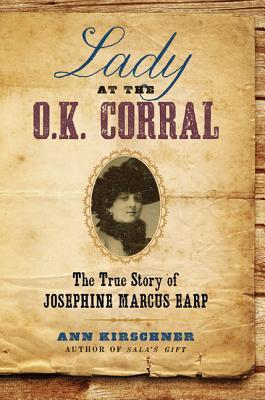
Lady at the O.K. Corral: The True Story of Josephine Marcus Earp by Ann Kirschner

Lady at the O.K. Corral: The True Story of Josephine Marcus Earp by Ann Kirschner

Josephine Marcus Earp made it difficult for biographers to accurately portray her life. Later, she would tell her history how she wished it had been or cover up the parts she didn’t want people to remember. It makes it hard for historians to paint an accurate picture of who this complicated woman actually was.

But I think Ann Kirschner, in this biography, does as good of a job as anyone could be expected to considering how convoluted the history is surrounding Josephine.

“The gunfight at the O.K. Corral was a love story, fought over Josephine Marcus, a woman of beauty and spunk barely out of her teens, escaping the restrictions of birth and seeking adventure, independence, and romance.” pg 3

Photo by Laura Stanley on Pexels.com

It’s a shame really. We know so much about Wyatt Earp and his friends. But the women around them have been almost swept into obscurity.

“A sizable group of authenticated photographs testified to Wyatt Earp’s undeniable good looks at any age, while there was not a single undisputed photograph of young Josephine, only ones in which she looked more like Sophie Tucker than Penelope Cruz.” pg 5

The fragments that are left reveal a woman who was brave and craved adventure. She seemed to have loved deeply and enjoyed gambling. Through extraordinary highs and lows, multiple states, and even the unbelievable gold rush of Nome, Alaska, Josephine lived life to the fullest.

“There was far too much excitement in the air for one to remain long a child,” Josephine recalled.” pg 22

Photo by NaMaKuKi on Pexels.com

Josephine’s Jewish family seemed rather conservative when compared to her wandering existence. She had siblings who married and raised families, like ordinary folk. One imagines that holiday gatherings were rather interesting.

“The most common occupation for a woman in Tombstone was prostitute or performer. Or both: many of the more attractive prostitutes also performed at the theaters and dance halls in town.” pg 47

The end of Josephine’s life was devastating compared to the decades of adventure that proceeded it. Penniless and perhaps suffering from dementia, one of the writers she worked with trying to create a definitive history of her life wouldn’t answer the door when she came calling. Instead, he’d record the abuse she wrote on notes that she slid under the door.

Her aggressiveness frightened him, and he began to keep track of her visits with handwritten notations on the back of calendar pages, with quotes from her: “I’ll get back at you — good and hard.” … Once she stuck her arm through the screen door to reach the doorknob.” pgs 217-218

Photo by Pixabay on Pexels.com

How could that happen? A woman who had once captivated two of the most legendary men in the West reduced to delivering threats when an acquaintance wouldn’t let her in the door. Lady at the O.K. Corral helps the reader understand some of the complicated twists and turns in the life of Josephine Marcus Earp, but I’m not sure that historians will ever be able to completely untangle the mixed-up threads of this woman’s life.

“As Wyatt’s biographer Stuart Lake put it: ‘In back of all the fighting, the killing and even Wyatt’s duty as a peace officer, the impelling force of his destiny was the nature and acquisition and association in the case of Johnny Behan’s girl. That relationship is the key to the whole yarn of Tombstone.’ pg 49

I wish there were more historical records to remember this extraordinary woman. It’s just sad.

Also, it makes me consider the type of documentation and oral record I’m leaving behind. How history will remember me? Will I be someone with a legacy to remember or just another shadow clinging to the arm of a more successful man? Stay tuned.

Thanks for reading!

Here’s the History Guy episode I wrote about Josephine Sarah Marcus Earp: