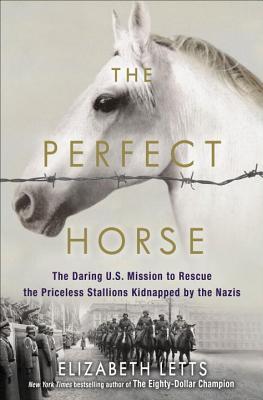
The Perfect Horse: the Daring U.S. Mission to Rescue the Priceless Stallions Kidnapped by the Nazis by Elizabeth Letts

The Perfect Horse: the Daring U.S. Mission to Rescue the Priceless Stallions Kidnapped by the Nazis by Elizabeth Letts

Author Elizabeth Letts‘ non-fiction book is about Operation Cowboy, the American protection of the Spanish Riding School and the plight of the Lipizzaner horses during World War II.

As priceless as any of the masterpieces that hung in Vienna’s museum, from their snow-white coats to their large aristocratic heads and deep brown eyes, the horses were unlike any others in the world.” prologue xvii

There was a precedent for saving irreplaceable works of art during the war, but Colonel Hank Reed‘s effort to save horses was something different. Reed, the most decorated American cavalry officer during WWII, recognized that there was something special about the horses at the Nazi stud farm at Hostau.

Photo by Helena Lopes on Pexels.com

Gustave Rau, the Nazi’s master of horse, was attempting to apply eugenics to his horse breeding program to create “the best warhorse”. He focused on gathering Lipizzaners from all over Europe.

Rau, in his next official report to Berlin, would declare, “There are no high-legged Lipizzaner, there are no flat-ribbed Lipizzaner, there are no bad-tempered Lipizzaner…” Clearly, he was impressed with what he had witnessed in Vienna. pg 87

But it wasn’t just about the breeding program, the Germans needed horses to feed the engines of war.

“The Germans were churning through horses at an astonishing rate — the army demanded six thousand fresh ones per month to replace those killed or lost to disease.” pg 37

I didn’t realize horses had such a large role in WWII. I assumed machines had taken over most of the vital functions horses used to perform like transportation and moving men into battle. I was wrong.

The Perfect Horse doesn’t cover the technical aspects of WWII or talk about the American defense of Hostau. It focuses on the horses though Letts does provide some context and information about the backgrounds of the men involved on both sides of the conflict.
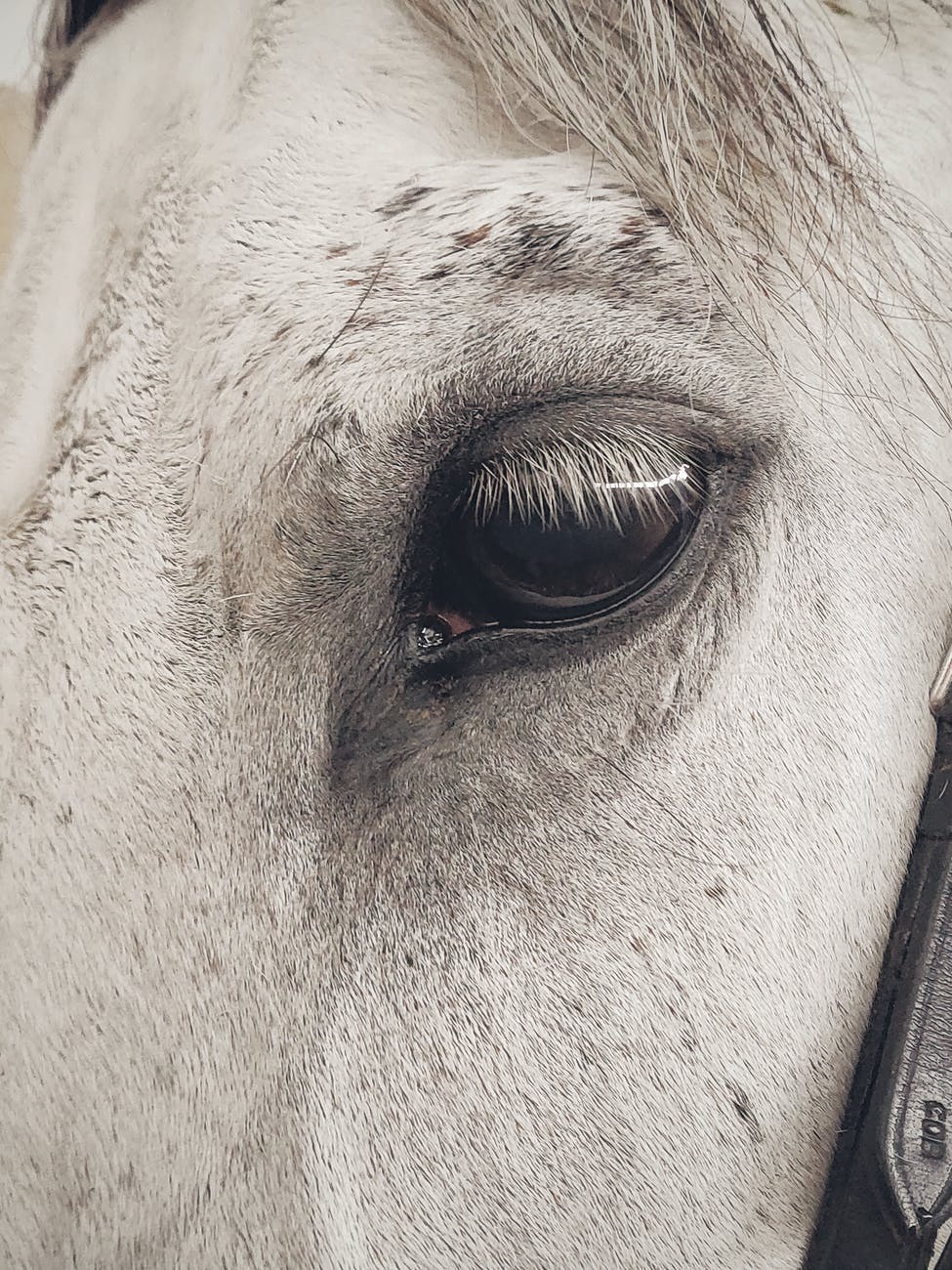
Photo by Dids on Pexels.com

“Politics, prejudice, avarice, and intolerance had riven a brutal divide between the countries of these men; the grace of these horses had already started to knit them back together. The former enemies parted as friends.” pg 149

She follows the horses from their eventual relocation from the war front to the United States and what happened next.

The Perfect Horse is a difficult book to read in that it contains a lot of information and not as much “story,” but for readers interested in history, it may be a good fit.

Thanks for reading!

Here’s the History Guy episode I wrote about Operation Cowboy:

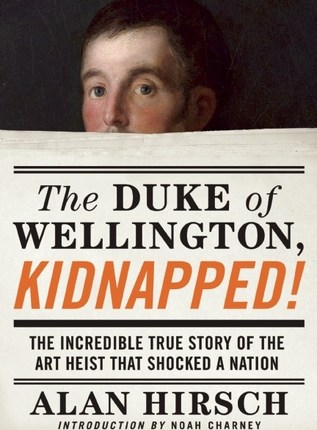
The Duke of Wellington, Kidnapped!: The Incredible True Story of the Art Heist That Shocked a Nation by Alan Hirsch

The Duke of Wellington, Kidnapped!: The Incredible True Story of the Art Heist That Shocked a Nation by Alan Hirsch

“The only successful theft from London’s National Gallery took place on August 21, 1961, when a brazen thief stole Goya’s Portrait of the Duke of Wellington.” Introduction

Alan Hirsch discusses an extraordinary art heist that took place in the 1960s, how it affected criminal law thereafter and even made an appearance in a James Bond movie. The thief sent authorities a series of ransom notes, demanding money for the return of the painting. This went on for years.

Photo by Pixabay on Pexels.com

“All the publicity led to a spike in visitors (from the usual August average of five thousand daily to more than seven thousand in the weeks following the theft), and reportedly even more people came to see the empty space where The Duke had hung than had come to see the painting itself.” pg 19

This potentially fascinating story becomes bogged down during the chapters discussing the trial and minutiae of the law. But, Hirsch is thorough, I’ll give him that.

“Where necessary, lawyers argued in the alternative: “My client did not take the painting, and if he did take it he intended to return it.”pg 125

I loved the information about the thief himself, which the world may not have seen before this book. Hirsch was given the man’s unpublished memoirs to add details to his side of the story.

“I understand you have information to give to police respecting the theft of the Goya portrait from the National Gallery in London.” “You don’t have to look any further, I am the man who took it,” the man calmly replied.” pg 107

Photo by Steve Johnson on Pexels.com

I also enjoyed the information about the ransom notes sent after the heist. That part of this book read almost like a movie. Who does that!

“In handwritten block letters, it began: “Query not that I have the Goya,” and it sought to prove the point by identifying marks and labels on the back of the canvas.” pg 52

Admittedly, I know very little about art history and had never heard of this event before reading The Duke of Wellington, Kidnapped!. But I think this would be a great read for anyone interested in history, especially art history. It may appeal even more if you’re interested in the development of criminal law in Great Britain.

Thanks for reading!

Here’s the History Guy episode I wrote about the theft of the Wellington portrait:

You’re Married to Her? by Ira Wood

You’re Married to Her? by Ira Wood

A surprising and amusing collection of essays by Ira Wood about his childhood, early relationships and, eventual marriage, to author Marge Piercy.

“Readers seeking insight into the creativity of a prolific American artist had best look at my wife’s own memoir, for these are my stories, those of the very lucky young man she chose not merely to put up with but to love, and for slim rewards except being fiercely loved in return.” pg 10, ebook.

Photo by Emma Bauso on Pexels.com

These are not tame remembrances. Wood is cheerfully self-deprecating as he relates heavy drug use, promiscuous sexual behavior, and smashing disappointments as both an author and a publisher. He remembers the cut-throat politics during his time on the board of a small New England town. He talks gardening, sex at other people’s houses, and how he ruined one of his girlfriend’s big nights out.

Each essay, as outrageous as it may be, ties itself up in a surprisingly tender conclusion. Usually.

“The motivation that would always drive me in the face of overwhelming odds, the internal fire that no amount of personal failure, or success, would put out; as powerful as the force of life itself, my father’s everlasting gift to me: the burning envy of other people’s lives.” pg 26, ebook.

I loved Wood’s humor. I loved his insights. Really, I was pleasantly surprised by this book. I found it in my library’s digital lending library and the cover drew my eye.

Photo by Rachel Claire on Pexels.com

He reads a lot like David Sedaris but with more sex. I mean, he talks about sex more than the Sedaris books that I have read so far. Small disclaimer: I haven’t read them all.

“One night I left Boston so blindly drunk that I arrived in Wellfleet with a sandwich in my lap that I had neglected to eat and could not remember buying.” pg 38

Highly recommended for readers who like humorous non-fiction and aren’t put off by some scandalous situations.

Thanks for reading!

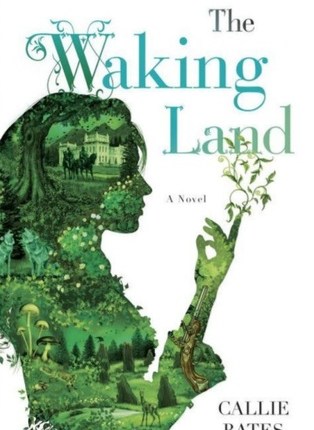
The Waking Land by Callie Bates

The Waking Land by Callie Bates

A fantasy novel about a young woman who was raised away from her home who is destined to become something greater than anyone ever imagined she could be.

There were shades of Irish mythology in this story with magic surrounding standing stones and a midnight ritual about “marrying the land”.

Overall, I just felt like I had read this book before in some form or another. It stuck to so many forms — heroine who doesn’t know her own strength, falls in love with a man who may help her or betray her, trusts everyone she shouldn’t and doesn’t trust everyone she should.

Photo by WARREN BLAKE on Pexels.com

There were so few unexpected moments. Even the big stuff is heavily foreshadowed. Take this passage:

“I can do nothing. I am a botanist, not a sorcerer. Botanists have a place in this world — a respectable place. As the emperor of Paladis likes to remind us, sorcerers are worse than nothing — their impious actions are a mockery of the gods, and their historical conviction that they could rule kingdoms presented a threat to civilization itself, a danger that had to be exterminated.” pg 22

Ok, now guess what is going to happen in this book… you’re probably right. And that blurb is from the first chapter.

I’m on to the next book… and thanks for reading!

Use Your Head by Tony Buzan

Use Your Head by Tony Buzan

In “Use Your Head,” Tony Buzan teaches the reader strategies to utilize the infinite powers of your mind.

“I call it the ‘operations manual’ for your brain. It is designed to help you nurture your ‘super-biocomputer’ and unleash the natural and extraordinary range of mental skills that you possess.pg xii

Photo by Maria Orlova on Pexels.com

I’ve read a lot of non-fiction books about what the potentials of the mind and positive thinking are. This book gives more than just information about what could be, it shares tools for expanding your creative skills and organizing what goes in and comes out of our mind.

“No man yet exists or has existed who has even approached using his full brain. We accept no limitations on the power of the brain — it is limitless.” pg 24

Buzan shares the keys for maximizing your memory — imagination and association. By combining images with simple rhymes, he’s created a surprisingly easy way to remember lists and, potentially, large sections of information.

Photo by Pixabay on Pexels.com

I was intrigued by his method of organizing information and study materials with the use of “mind maps.” Basically, you start with a topic and draw branches coming out from this main theme, that relate to the information in some way. Continue to branch out, using colors and shapes to stimulate your brain while drawing conscious connections between the ideas on the paper.

It’s a fun little creative exercise, but also it helps you see associations you may not have considered before.

Personally, I do mounds of research on an almost daily basis and it helps to have a tool to organize the facts I come across. The mind map may be the most helpful tool in this book.

There’s a lot of self help advice in these pages too. It’s mainly common sense, but I found almost all of it useful as reminders of what is possible. For example, Buzan suggests considering your perspective before starting any program of study or problem solving.

Photo by Andrea Piacquadio on Pexels.com

“On average, people assume that there are theoretically infinite insoluble problems and only a relatively minor number of solutions. The fact is, every problem has a solution and there are no insoluble problems for a human brain that is properly trained, activated and aware of its creative functions.” pg 82

After a bit of research on the author, it seems Buzan is quite popular in Great Britain and has been for some time. Perhaps it’s time for the U.S. to jump on this train too.

Thanks for reading!

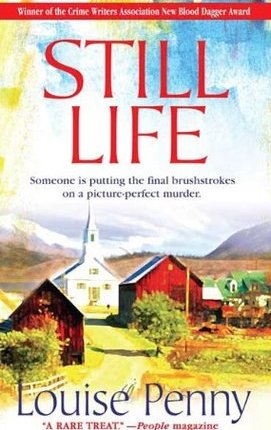
Still Life (Chief Inspector Armand Gamache, #1) by Louise Penny

Still Life (Chief Inspector Armand Gamache, #1) by Louise Penny

Still Life is a satisfying start to a cozy mystery series. It has a diverse and quirky cast of characters and it kept me guessing as to what was coming next.

“Miss Jane Neal met her maker in the early morning mist of Thanksgiving Sunday. It was pretty much a surprise all around.”pg 6, ebook

The small town of Three Pines, Canada, is the kind of place where people don’t lock their doors. Or, it used to be that way.

Now, one of their kindest citizens is dead and a killer walks among them.

Photo by Magda Ehlers on Pexels.com

“Her name’s Jane Neal. Aged seventy-six. Never been married. We got this information from Mr. Hadley who says she was the same age as his mother who died a month ago.” pg 29, ebook

Chief Inspector Armand Gamache is one of the top of his field. He knows how to listen and he’s a keen observer — of people, of scenes, of everything. He’s a dazzling main character.

“Ruth Zardo, my job is to find out who killed your friend. And I will do that. I will do it in the manner I see fit. I will not be bullied and I will not be treated with disrespect. pg 41

As for the townsfolk, you’ll enjoy meeting each and every one. We have the owners of the local restaurant and bed & breakfast, local artists, real estate sales people, a book shop owner, an award winning poet and more. The dialogue between all of them is a delight to read. You may find yourself laughing out loud… I did.

Photo by Daniel Joseph Petty on Pexels.com

Also, I’d recommend starting the last chapters of this book either during the day or early in the evening. I thought I’d just read a few pages before bed and found myself finishing the book two hours later. (And far past my bedtime.)

Highly recommended for readers who love mysteries. This is a gem.

For readers interested in page to screen adaptions, this book has been made into a film. It is also slated to become a series for Amazon.

Thanks for reading!

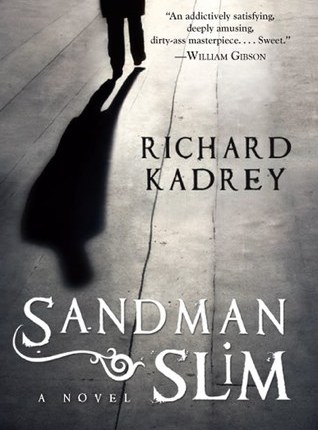
Sandman Slim (Sandman Slim, #1) by Richard Kadrey

Sandman Slim (Sandman Slim, #1) by Richard Kadrey

Sandman Slim is a dark, urban fantasy read about a magician who was given to demons by people he considered his friends. Now, James Stark’s back for revenge.

Because, what does he have to lose. He’s already been to hell.

“.. I’m lucky that way. Always have been. Otherwise, I might have crawled back into this world and ended up a charcoal briquette in my first five minutes home. And wouldn’t those black-hearted bastards down under have laughed when I ended right back in Hell after slipping so sweetly out the back door? pgs 1-2

Photo by Dexter Fernandes on Pexels.com

James is not just claiming revenge for himself. While he was with the demons, someone killed the love of his life. That someone is going to have to pay.

I’ve been gone eleven years. I was nineteen when I went Downtown. I’m practically an old man now. pgs 11-12

Meanwhile on earth, someone or something has been causing more chaos and destruction than usual. Los Angeles, though never particularly a “city of angels”, seems to be something much worse now. But why should James care — he’s not going to be around long enough to figure out what’s going on anyway.

I really enjoyed Sandman Slim. James Stark is brooding, angry and you can’t help but hope for him to succeed.

Revenge is never what you think it’s going to be. There’s no pleasure or glory, and when you’re done your grief remains. pg 54

Photo by Rahul on Pexels.com

The world Richard Kadrey has created has levels and different forms of spirituality and magic. Angels, demons and monsters walk the streets, in plain view but hidden from those who don’t know what they’re looking at.

There’s an alchemist named Vidocq who accidentally made himself immortal. A mysterious doctor who helps those in the magical community but doesn’t charge for his services. And readers are also introduced to Allegra, a beautiful young woman who runs a video shop and wants to learn more about magic.

“Where was God when I was stuck in Hell?” I ask her. …. “Maybe God thought you were where you belonged. pg 228

Photo by Julia Volk on Pexels.com

Recommended for readers who don’t mind their urban fantasy reads filled with some profanity and angry heroes.

Thanks for reading!

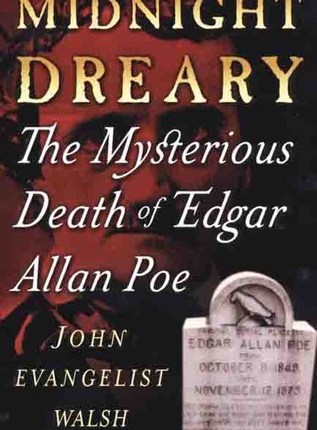
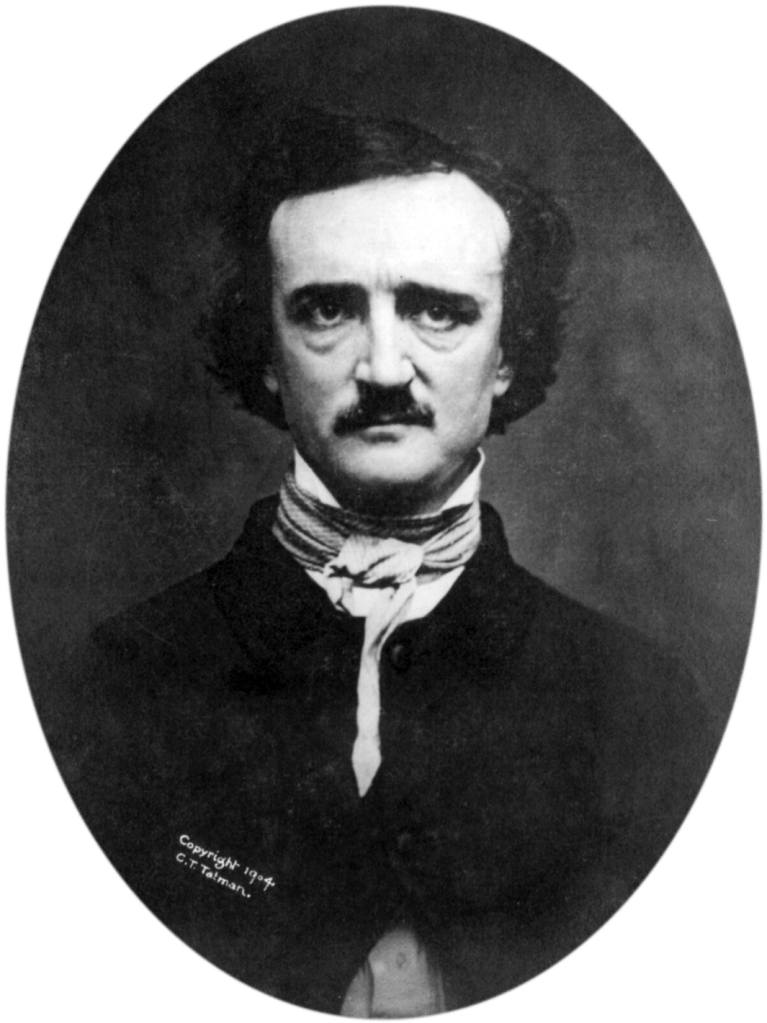
Midnight Dreary: The Mysterious Death of Edgar Allan Poe by John Evangelist Walsh

Midnight Dreary: The Mysterious Death of Edgar Allan Poe by John Evangelist Walsh

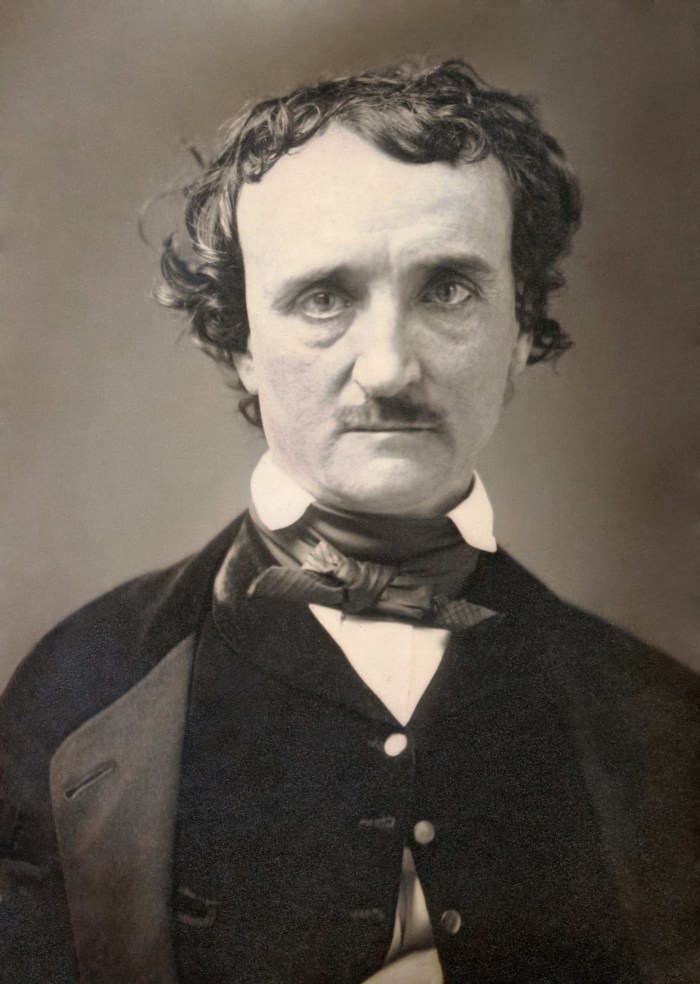
John Evangelist Walsh examines the last months of the life of Edgar Allan Poe and puts forth the hypothesis that he did not die of alcohol withdrawal, but something more sinister.

Poe, one of the most celebrated American authors, had a rough life. He was orphaned and adopted at an early age. He spent his life in poverty, scraping enough money from writing and editing jobs to keep himself fed, only to die mysteriously at age 40.

“We regret to learn that Edgar Allan Poe Esq. the distinguished American poet, scholar and critic died yesterday morning after an illness of four or five days. This announcement, coming so sudden and unexpected, will cause poignant regret among all who admire genius and have sympathy for the frailties so often attending it.”pg 34

Photo by Poppy Thomas Hill on Pexels.com

Walsh packs this book with details about Poe’s life and heartbreaks — that can be verified by historical documentation. After Poe’s untimely death, an author, perhaps more than one, who had been vilified by in Poe’s literary reviews, wrote angry and unflattering obituaries and biographies. It was an effort to black Poe’s name after his death which ultimately failed.

However, this “name blackening campaign” makes it difficult to separate fact from fiction.

Walter Colton, who was one of those who was kind to Poe after his death wrote: “I knew something of Poe. Something of the unfathomed gulfs of darkness out of which the lightning of his genius sent its scorching flashes.” pg 28

Perhaps that’s the lesson to take from Poe’s life, besides his astonishing literary achievements. Genius often seems to walk hand in hand with madness or emotional upheaval. I wonder why this is. Maybe, to touch the heights and depths required to write beautiful poetry, you have to go there? I don’t know.

“As always with this type of alcoholism, the unsettling fact was its combined certainty and unpredictability. After long periods of perfect sobriety, he seemed almost bound to fall again, and those who cared about him had to live with that relentless expectation.”introduction, pg xiv

Walsh’s hypothesis about the manner of Poe’s death was not convincing to me, but it gave me another angle to consider.

I had heard Poe may have died from “cooping” which was a practice where a man was kidnapped by a political party, kept drunk and imprisoned until election day, when he would let him free to vote as they directed. This idea holds water because he was found inebriated and ill outside a polling place and in clothing that didn’t seem to belong to him. I had also heard he was a victim of alcohol withdrawal.

Dear Sir, There is a gentleman, rather the worse for wear, at Ryan’s Fourth ward polls, who goes under the cognomen of Edgar A. Poe, and who appears in great distress, and he says he is acquainted with you, and I assure you, he is in need of immediately assistance.” pg 46

Walsh believes some relatives of one of the women Poe was involved with may have led to his untimely end.

Whatever happened, I can’t help but feel sad for the rest of us. Imagine what he could have accomplished with another 40 years on this earth.

It was many and many a year ago, 
In a kingdom by the sea, 
That a maiden there lived whom you may know 
By the name of Annabel Lee; 
And this maiden she lived with no other thought 
Than to love and be loved by me.

Recommended for fans of Edgar Allan Poe or readers who enjoy true crime.

Thanks for reading!

Here’s The History Guy episode I wrote about Edgar Allan Poe:

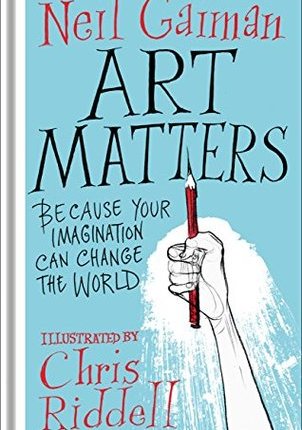
Art Matters: Because Your Imagination Can Change the World by Neil Gaiman, Illustrated by Chris Riddell

Art Matters: Because Your Imagination Can Change the World by Neil Gaiman, Illustrated by Chris Riddell

Neil Gaiman and Chris Riddell have created a manifesto for readers, librarians and content creators. This little book celebrates everything having to do with reading, freedom of information and ideas, and how to start creating the life of your dreams, even if you don’t know where to start.

It was compiled from Gaiman’s prolific back catalog of speeches, poems and various other writings about creativity.

“The world always seems brighter when you’ve just made something that wasn’t there before.”

Photo by Matt Hardy on Pexels.com

I feel like this should be required reading — especially the parts about how to respond to intellectual disagreements. I think Gaiman penned these words after the bombing at Charlie Hebdo, and they still ring true.

“I believe I have the right to think and say the wrong things. I believe your remedy for that should be to argue with me or to ignore me. And that I should have the same remedy for the wrong things that I believe you think.”

And, of course, I was partial to all of the praise directed towards librarians and libraries, having been a librarian once myself. Sometimes people ask me if I ever think libraries will be closed because “they’re just a building with books” or “they’re a waste of taxpayer money”.

This is how I wished I had replied: “Libraries are about freedom. Freedom to read, freedom of ideas, freedom of communication. They are about education, about entertainment, about making safe spaces and about access to information.” How could that ever possibly go out of style?

Photo by Zichuan Han on Pexels.com

Gaiman also gives attention to the bookworms of the world. We make it a better place through our reading and daydreaming and daydreaming about reading. Also, our epic library patronage is a good thing.

“We have an obligation to read for pleasure. If others see us reading, we show that reading is a good thing. We have an obligation to support libraries, to protest the closure of libraries. If you do not value libraries you are silencing the voices of the past and you are damaging the future.”

Gaiman shares a bit about how he became the universally beloved author he is today. Step one, you’ve just got to get started.

“If you have an idea of what you want to make, what you were put here to do, then just go and do that and that’s much harder than it sounds and, sometimes in the end, so much easier than you might imagine.”

He confesses that he lied on early resumes to get his foot in the door. But, after his later success, he went back and worked at all of the places he had claimed before. That way, he didn’t see himself as lying but as “chronologically challenged.” I loved that he took the time to make things right.

Gaiman also has some interesting views about no-start dreamers. He says the saddest thing to him are friends that say they’re too committed to follow their dreams. There’s bills to pay, mortgages and families to support and they can’t take the dive to do whatever it is they’ve always dreamed of doing.

Photo by Karolina Grabowska on Pexels.com

He said he dodged that particular roadblock by skipping a well-paying job or two early in his career, so that he didn’t get too comfortable doing something other than writing. I thought that was an interesting strategy. Creating is about having the courage to just do it, no matter what and not stopping until you’re doing it.

“Somebody on the internet thinks what you do is stupid or evil or it’s all been done before? Make good art.”

The good news is there are more platforms than ever before to get your creations in front of the people who will care about them.

“The gatekeepers are leaving their gates. You can be as creative as you need to be to get your work seen. YouTube and the web (and whatever comes after YouTube and the web) can give you more people watching than television ever did. The old rules are crumbling and nobody knows what the new rules are. So make up your own rules.”

My own life right now points to the truth of that. I left a guaranteed paycheck and employer provided health care to write for my husband’s YouTube channel. We’re not only succeeding but we’re having a lot of fun doing it.

Thank you, Gaiman and Riddell for this beautiful book. I hope it encourages creators everywhere to take the leap.

Thanks for reading!