Powers of Two: Finding the Essence of Innovation in Creative Pairs by Joshua Wolf Shenk

Powers of Two: Finding the Essence of Innovation in Creative Pairs by Joshua Wolf Shenk

Joshua Wolf Shenk examines creatives pairs throughout history in an effort to see why and how they work, and also why they end.

“The dyad is also the most fluid and flexible of relationships. Two people can basically make their own society on the go. When even one more person is added to the mix, the situation becomes more stable, but this stability may stifle creativity, as roles and power positions harden.” Introduction, pg xxii

Photo by Gratisography on Pexels.com

Shenk believes pairs move through six stages: Meeting, confluence, dialetics, distance, the infinite game and interruption. The stages show the development of the relationship, assumption of roles and eventual fall out of creative pairings.

“This book is written in the faith, underscored by experience, that more is possible — more intimacy, more creativity, more knowledge about this primary truth: that we make our best work, and live our best lives, by charging into the vast space between ourselves and others.” Introduction, pg xxv

I picked up this book because I’m involved in a creative partnership with my spouse (The History Guy, YouTube channel) and I was curious to see how other pairings have worked in the past. It was interesting to see how similarly we function when compared to other creative partners. I mean, everyone is different, but there are patterns that can be observed if you look closely.

“The irony is that, while our eyes naturally follow the star, a pair’s center of gravity is often with the one we see less.” pg 66

Photo by Victoria Borodinova on Pexels.com

Shenk’s chapters were interesting not only in their obscure history about some of the most famous partners in history, but also their implications for people who are looking to share their creative endeavors, and lives, with others.

“High-functioning couples commonly say that one key to a good relationship is giving each other plenty of space. But a big reason there are so many dysfunctional couples, romantic and creative, is that it’s hard for a lot of us to know what that really means or what it would look like in our lives.” pg 128

What works, what doesn’t work, and why?

“Creativity has become a broad, vague term, a kind of stand-in for universal good, even a synonym for happiness (or, as innovation, for profits). But making new, beautiful, useful things is as much about discord as it is about union.” pg 21

Photo by Tim Samuel on Pexels.com

The path isn’t always smooth, but good partners shore each other up. They may be strong where the other is weak. They challenge each other to be better than they ever would have been by themselves.

“Highly creative people have high standards and distinct sensibilities; they see the world in an unusual way (or they wouldn’t be able to make something new out of the materials of that world). Their partners must be a match — and the discovery of a shared sensibility is itself often an impetus to share work.” pg 31

I learned a lot about the Beatles, scientists, dancers, artists, screen writers, authors and more in Powers of Two. This is a book about creativity, yes, but it also looks at relationships themselves. It takes apart power dynamics, personal satisfaction and creative instincts. It is more of a rumination on creative pairs than a scientific thesis.

Recommended for readers who enjoy quirky non-fiction books. You’ll probably learn something new if you pick this one up. I did.

Thanks for reading!

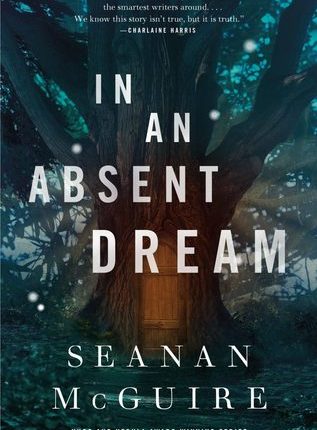
In an Absent Dream (Wayward Children, #4) by Seanan McGuire

In an Absent Dream (Wayward Children, #4) by Seanan McGuire

In this enjoyable entry in the Wayward Children series by Seanan McGuire, we learn the other-worldly wanderings of the person who calls herself Lundy and why she is the way she is.

Like the other children from this series, the world, in this case the Goblin Market, chose the child for specific reasons.

“Katherine’s remarkability took the form of a quiet self-assuredness, a conviction that as long as she followed the rules, she could find her way through any maze, pass cleanly through any storm.” pg 18

Photo by carboxaldehyde on Pexels.com

The most enjoyable aspect of this story is Lundy’s unrepentant bibliophilia. I think anyone who loves to read can empathize with much of her character.

“Mysteries in books were the best kind. The real world was absolutely full of boring mysteries, questions that never got answered and lost things that never got found. That wasn’t allowed, in books. In books, mysteries were always interesting and exciting, packed with daring and danger, and in the end, the good guys found the clues and the bad guys got their comeuppance.”pgs 27-28

But it is Lundy’s penchant for always trying to find a loophole in reality, which serves her well in reading and the Goblin Market, that eventually creates a problem.

“If she thought of this as a fairy tale that she had somehow stumbled into, she could handle it. She knew the rules of fairy tales. Most importantly of all, she knew that fairy tales ended with “happily ever after” and everything being just fine.” pg 48

Photo by Guilherme Rossi on Pexels.com

Like McGuire’s other entries in this series, nothing is simple in this tale and there are decisions far more complex than a child can easily make. That’s part of the brilliance of it. These worlds that the children stumble into are dangerous and sometimes innocent people get hurt.

“What’s the Goblin Market?” “It is a place where dreamers go when they don’t fit in with the dreams their homes think worth dreaming.” pgs 56-57

Highly recommended for readers who like their fairy tales told with just enough reality to make it feel real. The Wayward Children series is a treat.

My other reviews in the series:

Every Heart a Doorway

Down Among the Sticks and Bones

Beneath the Sugar Sky

Thanks for reading!

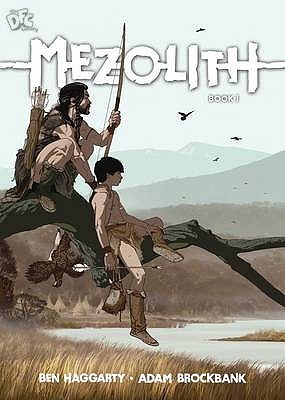
Mezolith by Ben Haggarty, Adam Brockbank

Mezolith by Ben Haggarty, Adam Brockbank

A beautifully illustrated coming-of-age tale about a boy who lives with his stone age tribe. Reality and mythology are mixed in his life to create something else, something that feels true though it couldn’t possibly be.

“Poika, at the heart of the world there is a cave and in that cave there are countless urgas, all sleeping… all dreaming… and when one dreams that a brother has been destroyed he wakes. Crawls into the world. Finds some humans and cries pitifully near them… until someone comes to care for him…”

Photo by Rozemarijn van Kampen on Pexels.com

How do you imagine that Stone Age peoples explained phenomena that scientists today have only begun to unravel? Where does love come from? What brings a fever or trouble? They explained these things by telling stories.

There’s the story of a man who fell in love with a woman who was actually a swan, so he travels to the end of the world to convince her father, the Swan King, to let her live with him.

There’s a demon who conceals itself as a baby and then in the night, if you take it into your tribe, it wakes and consumes everything in its path.

There’s a woman who should have died, but survived, and now has an uncanny relationship with crows and can see through their eyes… and more.

Photo by Pixabay on Pexels.com

It’s magical and strange, and Adam Brockbank has illustrated Ben Haggarty’s stories beautifully. It is easy to see why this was a Times pick for Best Graphic Novel.

Despite this excellence, only one library in my enormous, interconnected library system owned this book. I was surprised. It has appeal for both young adults and the young-at-heart. The violence in it isn’t overly graphic. The themes are appropriate and intriguing for reluctant readers.

If any librarians read this review, please consider buying a copy of Mezolith for your shelves. I think your patrons would enjoy it. I certainly did.

Thanks for reading!

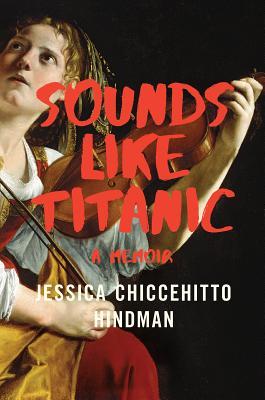
Sounds Like Titanic by Jessica Chiccehitto Hindman

Sounds Like Titanic by Jessica Chiccehitto Hindman

Jessica Chiccehitto Hindman is a violinist and Eastern Studies major who is struggling to pay her way through Columbia gets a job that seems to be more than she ever hoped for. She is going to be playing professionally for audiences across the U.S. It turns out to be fake — the music is played through speakers, never live.

“While this is a memoir about being a fake, this is not a fake memoir. This is a memoir in earnest, written by a person striving to get at the truth of things that happened in her past.” From the introduction.

Photo by Pixabay on Pexels.com

Jessica Hindman grew up in Appalachia among some of the most impoverished residents in the country. It’s interesting though, the gripping poverty seemed normal to her until she considered it later, through more mature eyes. Children are so flexible. Almost anything can be made to seem “normal”.

“And as you listen to the other kids talk about their life goals, you realize something else: You are someone whose upbringing was upper class enough to make you believe you could make music for a living, but lower class enough to provide no knowledge of how to do it.” pg 10

After some serious struggles through puberty with her body and self image, Jessica ends up following her boyfriend to Columbia University, where they almost immediately break up. But her troubles to pay the astronomical tuition bills are just beginning.

“The Composer,” the man behind the music and the tours Jessica eventually goes on, seems to know very little about music himself.

Photo by Nathan Martins on Pexels.com

“And then, The Composer asks me a question that — had it come from any other musician, let alone a Billboard-topping classical composer who has performed with the New York Philharmonic — I would have taken as a joke. … “I like this music,” he says of the opening to Beethoven’s Fifth Symphony. “What is it?” pg 20

Despite any concerns she may have, Jessica perseveres in the job anyway, because her tuition requirements leave her little choice. It nearly ruins her mind and body before she finds a way out of her predicament. Along the way, you can’t help but hope for her to succeed.

“After several more customers mention ‘Titanic,’ you begin to realize that most of The Composer’s compositions sound very ‘Titanic-esque’. And you notice that the more the songs sound like ‘Titanic,’ the more customers want to buy them.” pg 47

I enjoyed this memoir so much not just because of Jessica’s life, which is fascinating, but also because we have so many things in common. I am the same age she is, lived through the events of 9/11 in a collegiate setting (as she did), started out as a music major but changed to something else, and the similarities go on. I’ve also experienced crushing anxiety with the same physical symptoms she describes. It was eerie, really.

“A million times more than any other emotion or experience, fear has the strength and ability to mangle her into something different from what she truly is, something phony and fake and cowardly. And now, surprised and twisted and disoriented and broken as she is by fear’s sudden arrival, she realizes that she needs to fight it, fight for her life.” pg 223

Photo by Pixabay on Pexels.com

But you don’t need to be anything like Jessica to appreciate what it means to be made to feel like an impostor in your own life. To know that you can be doing better, but you’re just inching along. To dream big but live small.

Recommended for readers who enjoy memoirs about a life filled with difficulties, but also hope. If you have a background in music, you may like this book even more, but it’s not required to understand it.

Thanks for reading!

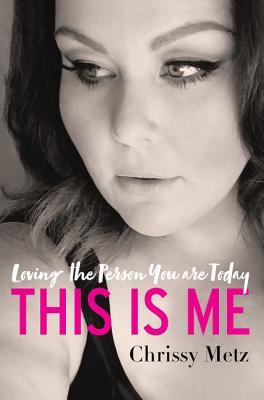
This Is Me: Loving the Person You Are Today by Chrissy Metz

This Is Me: Loving the Person You Are Today by Chrissy Metz

Chrissy Metz relates her abusive and underprivileged childhood and how hard work and perseverance made her into the inspirational figure and television superstar she is today.

“Honeybees are meaningful to me because technically they’re not supposed to be able to fly. We know they do, but in the 1930s French scientists ‘proved’ they couldn’t. Their reasoning was that it was aerodynamically impossible because honeybees’ wings are too small to support the weight of their bodies. … I get that. I’m not supposed to be able to fly either.” pg 6, ebook

Photo by Pixabay on Pexels.com

Chrissy’s parents divorced when she was young and her mother worked multiple jobs to support her children. They lived in a trailer park for a time in Florida.

“I know now that when families are in crisis, kids blame themselves, and kids also take on adult burdens. Which is why it is important that I say something else: Arredondo Farms is still there and I won’t say a single bad thing about it. People look down on people who grow up in trailer parks.” pg 25

Things became a bit easier when her mother married Chrissy’s stepfather (she calls him ‘Trigger’), but then he began systematically abusing Chrissy.

“I don’t remember why Trigger hit me the first time. I know he thought I’d had it coming for a while. I bet I was too loud putting away the dishes. Or I didn’t put his Coca-Cola in the fridge and he wanted a cold Coke. That would usually do it.” pg 28, ebook

Photo by Karolina Grabowska on Pexels.com

Somehow, she survives to not only succeed in the business of her dreams, but to thrive. It wasn’t easy. She honestly documents her struggles, both mentally and physically. She continues to have relationship troubles. But Chrissy never lets it dim her optimism that things can get better and that she can improve, no matter where she finds herself.

Throughout the memoir, she gives tips and life advice that she calls “Bee Mindful” lessons — referring back to her metaphor of how the honeybee can fly even though it seems aerodynamically impossible.

“So many people, including myself, talk at each other but don’t listen. To ourselves or to other people. Believe in actively listening to yourself. Take time to have a conversation with yourself every now and again. … So often we’re on autopilot and we slip into addictive behaviors to avoid listening to ourselves. We eat, or drink, or, yes, check our phones — anything to avoid hearing what we truly need to say.” pg 57, ebook

Photo by Ono Kosuki on Pexels.com

The astonishing part of this memoir, to me, is simply how often Chrissy is judged and found wanting because of her appearance. How long are we, as a society, going to accept the objectification of women’s bodies and believe that it’s ok? I thought we addressed that issue in the last century, but, from the way this beautiful and strong woman has been treated her entire life, it is obvious that we haven’t gotten very far.

I found Chrissy Metz to be inspiring before I read her memoir. Now, I feel like she’s a literal hero for anyone who simply wants to live life as they are and not accept anyone else’s standards for what beautiful, strong and successful is. And she manages to be kind and humble while doing it.

Highly recommended for any readers who like inspiring memoirs — this one gets all the stars.

Thanks for reading!

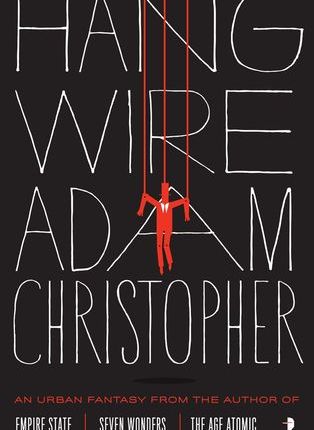
Hang Wire by Adam Christopher

Hang Wire by Adam Christopher

Hang Wire is an urban fantasy novel with a half dozen characters, some immortal, some every-day people, who come together to face a threat of a magnitude that humanity has never known.

In between flash backs to the villain setting up his ghastly scheme, readers get to follow the trail of a killer in San Francisco who garrotes his victims with thick cable and then hangs them by their necks in a grisly display. 

“When the second surge threw him up to the surface, and the third pulled him down, he knew something was wrong. When he surfaced again he could hear it, a moaning, like a deep wind howling through a canyon a million miles away.” pg 10

Photo by Alex Azabache on Pexels.com

It’s actually a rather complex plot between the flashbacks and the modern day with nearly constant back and forth skips in time, almost like waves in an ocean.

“You are the master of every situation.” pg 45

Which leads to my main complaint about this book. Similar to other urban fantasies I’ve had the privilege of reading in the past, it felt like the plot either needed to be simplified or fully fleshed out. By zipping over so much in so few pages, I felt like we only got part of the story.

“Of course it had happened before. Several times. San Francisco, like an unfortunate number of other cities across the United States, knew what it was like to have a serial killer in their midst.” pg 47

Photo by Pedro Figueras on Pexels.com

I guess the lesson I took from Hang Wire is that less is more when it comes to storytelling. And Hawaiian gods of death are incredibly cool.

Recommended for readers who don’t mind multiple flashbacks in their urban fantasy.

Thanks for reading!

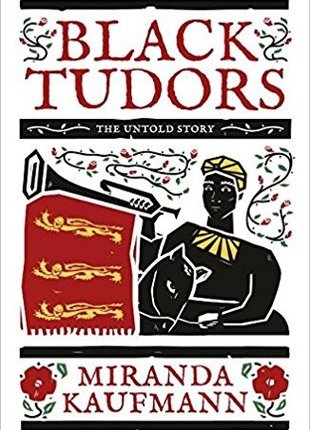
Black Tudors: The Untold Story by Miranda Kaufmann

Black Tudors: The Untold Story by Miranda Kaufmann

Scholar and historian Miranda Kaufmann has written vignettes of half a dozen or so Africans who lived and worked in England during the Tudor Era.

The trouble with this collection is that so little information exists, Kaufmann has to parcel it out among other more well-known history. I still found it interesting, but for readers looking for Black History only, it feels rather disappointing.

The answers are complex, but the questions that most commonly spring to mind about the Black Tudors are simple: why and how did they come to England? How were they treated? What were their lives like?” pg 3

Photo by Chris Carter on Pexels.com

The answers, in addition to complex, are brief. But this book did clear up some misconceptions I held about the time period.

For example: “Tudors were far more likely to judge a new acquaintance by his or her religion and social class than by where they were born or the colour of their skin, though these categories did on occasion intersect.” pg 4

Many of the records Kaufmann produces were held by the church — baptisms, marriages and so forth.

As an American, it is a different perspective to learn about a country’s history that was affected so little by slavery. People could move in and out of England with their slaves, but these unfortunate persons could also be freed or claim their freedom.

Henry VII set a precedent when he freed an African man named Pero Alvarez who was from Portugal, a country with slavery at that time. And it was backed up by the courts.

Photo by Mike on Pexels.com

In author William Harrison’s “Description of England”, he wrote: “As for slaves and bondmen, we have none; nay such is the privilege of our country by the especial grace of God and bounty of our princes, that if any come hither from other realms, so soon as they set food on land they become as free in condition as their masters, whereby all note of servile bondage is utterly removed from them.” pg 16

I wish America had been more like that.

Readers get to learn about musicians, African princes, ship wreck divers, explorers and more in this book. Recommended for fans of history and non-fiction.

Thanks for reading!

Here’s the History Guy episode that I wrote after reading some of the historical happenings in this book:

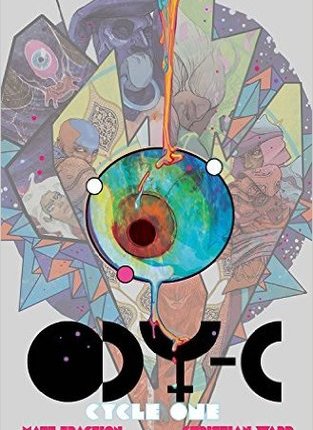
ODY-C: Cycle One by Matt Fraction

ODY-C: Cycle One by Matt Fraction

ODY-C is an incredibly strange, but beautiful graphic novel that takes the classic story line of Homer’s The Odyssey and flips it on its head.

“Here where so many great women died. Three ships leave Troiian space. Three adventures now start. Three great heroes begin their last odyssey.”

Photo by Edvin Richardson on Pexels.com

The book begins with the warriors returning home from an epic war in space. Instead of Helen of Troy, the war was fought over one of the only males in the galaxy, a latex-covered man named “He.”

Like in the old tale, the goddesses, children of Titans, overthrew their father, Kronos. In a twist in this world, they decided that all children grow up to throw down their parents and kill several generations of their own children. In order to ultimately control humanity, Zeus, a curvaceous, powerful woman, in an extraordinary display of power, destroys every male in existence. Eventually leading to the events I just described…

“Sing in us, Muse of Odyssia, witchjack and wanderer. Homeward bound. Warless at last.

Honestly, this book is hard to explain. I think “acid trip” might do it justice. The colors are vivid and the characters can be nightmarish, vulgar or gorgeous. The universe within this book is a science fiction-themed romp with monsters, goddesses, and all sorts of unbelievable settings — a world of bones wherein the child of a goddess forever seeks its prey, a type of space station fueled by a star in which a rare male child of a goddess endlessly mates with women and then kills them when they inevitably give birth to another female… and more.

“Down in the ruinous piles of viscera once her command and her crew, Odyssia recalibrates. Watching the Cyclops of Kylos make feast of the ODY-C’s girls, they know for the first time since Troiia did fall just what fear really feels like inside.”

Photo by Cosmopolitano Model on Pexels.com

It helps to be familiar with classic mythology because the authors don’t take the time to explain how the two are related. Or, I suppose, you could just jump into it blind. I felt like I enjoyed it more knowing both sets of stories.

I was fortunate that the library’s copy of this book included creator interviews in the back to give more context to this incredible work they’ve created.

“Between bearded-lady gods, gender-flipped heroines, gender-uncertain sebex and the odd character who keeps the same gender as their source, the ODY-C is less a gender-bent Odyssey than it is an Odyssey-flavored gender pretzel. Rather, ODY-C is an early next step into what comes after the gender flip: the unfurling of the gender spectrum both to comment on and to dismiss outright what we understand as gender roles and norms in classic literature.”

There is certainly a lot to unpack in here. And it is such a good story.

“The act of telling a story — especially of telling one well — turns your audience’s brain into a photocopy of your own, overriding any other stimuli that the listener is experiencing independently. When a story is so good you feel like you were actually there in the middle of it, it’s because, at least as far as your brain is concerned, you actually were.”

Photo by Engin Akyurt on Pexels.com

In addition to the Greek and Roman mythology, there’s shades of Scheherazade in the unfolding of the fate of He. Readers are also treated to a new twist on the foundation of Rome myth. At least, I think that’s what it is. With the level of creativity in here, it’s honestly hard to tell.

Recommended for readers who are looking for a graphic novel that is completely different from anything you’ve ever seen before. This is that book.

Thanks for reading!

The Testament of Loki (Loki, #2) by Joanne M. Harris

The Testament of Loki (Loki, #2) by Joanne M. Harris

“Once more the Wolf at Hel’s gate greets Asgard’s heroes, one by one. Battle rages, Worlds collide. Stars fall. Once more, Death has won.” pg 5

Ragnarok has come and gone. It didn’t end well for any of the gods, goddesses or, everyone’s favorite Chaos demon, Loki. He begins this story in the same place we left him in the last one — a dungeon in the world of Chaos, wishing and dreaming for light.

Photo by Athena on Pexels.com

What happens next is surprising and told in only the way that Joanne Harris can do it.

“Stories can do so many things. Build empires, topple kings. They can even raise the dead. I should know; they raised me.” pg 10

This wholly unique tale is more along the lines of what I had expected from The Gospel of Loki, but didn’t get. In the previous book, Harris rewrites Norse mythology in much the same way as it has always been told. I get it, she was giving us context. But, it wasn’t very much fun to read… just rehashing old stories.

In this entry, we see Loki in a whole new light with modern characters and his typical problems. It makes for a more cohesive and, in my opinion, entertaining story.

“You know, ‘crazy’ is such a negative word. I prefer ‘disordered.’ Order’s so dull. Chaos is where the party is.” pg 25

Photo by Anni Roenkae on Pexels.com

What has an immortal trickster god learned over his long lifetime? In The Gospel of Loki, he learned the only person he could trust in the world is himself. He learned what it was to be hated for what you were, rather than any actions that one may take. (Though, perhaps, he didn’t always behave in a way to endear himself to others. Not that Loki would ever admit that, of course.)

He learned that prophecies are tricky things and can be bent to be of use to those who deliver them.

“The Prophecy promised us new runes, new gods, a new beginning. And I mean to find those new runes with whatever resources this World can provide.” pg 68

Is it too late for Loki to learn new tricks?

It’s been awhile since I read Harris’ other fantasy series Runemarks, but from what little I can remember of it, I think this book leads perfectly into that one. Which is a curious thing, because Runemarks was published years before this.

Oh, that Joanne Harris. She’s so sneaky. I wonder if she planned that or was embracing a bit of chaos in her writing career. If there’s anything I’ve learned from this book and the last one, it’s that a little chaos can be a good thing.

Thanks for reading!