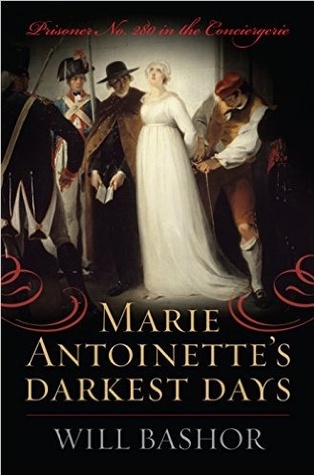
Marie Antoinette’s Darkest Days: Prisoner No. 280 in the Conciergerie by Will Bashor

Marie Antoinette’s Darkest Days: Prisoner No. 280 in the Conciergerie by Will Bashor
marieantoinette

I thought that after the King and Queen of France were taken by the Revolutionaries that what happened went like, “You were the monarchs but now we have a Republic. Off with your heads.” and boom, it was done.

How wrong I was.

Did you know, that both Louis XVI and Marie Antoinette were given very brief public “trials”? Did you know that Marie Antoinette languished in a prison for weeks after her husband was executed?

Did you know that the bodies of both former monarchs were dumped in unmarked graves?

Marie Antoinette’s Darkest Days taught me so much about this horrific period of French history.

At times, especially during the actual transcripts of the Queen’s trial, the story dragged, but for the most part, this was a fascinating study of the last days of a much maligned monarch.

“Generations of authors have reveled in reliving the queen’s reign amid the splendors of the court of Versailles and the Petit Trianon, but few have ever found the space (or perhaps the courage) in their voluminous biographies to narrate her final imprisonment in a fetid dungeon cell at the Conciergerie.” loc 198, ebook.

I am a huge fan of historical fiction and I had never heard a whisper about this. Many thanks to Bashor for filling that gap!

Photo by Pixabay on Pexels.com

The King promised his family to say goodbye before he was taken to the guillotine but he never went to them. Can you imagine the heartbreak?

“Say to the queen, my dear children, and my sister,” he continued, “that I had promised to see them this morning, but that I desired to spare them the agony of such a bitter separation twice over. How much it has cost me to depart without receiving their last embraces!” loc 862 ebook.

Cruelly, Marie Antoinette was also separated from her children and her sister-in-law and transported to a different prison. As a mother myself, Marie Antoinette’s heartbreak about having her children taken from her was the hardest part of the book for me to get through.

Even though her sham 48 hour trial didn’t prove definitively that she had done anything wrong, Marie Antoinette was sentenced to death.

Here is a passage that gives the gist of the thing: “Herman: You have never ceased for one moment wanting to destroy liberty. You wanted to reign at any price and retake the throne on the cadavers of patriots. Queen: Whether it was necessary to retake the throne or not, we only desired the happiness of France. If France was happy, we were always content.” loc 1901, ebook.

Photo by Niki Nagy on Pexels.com

Back and forth it went. Accusations of wrong doing, her denial, and then more accusations. I can’t believe that they killed her after that- it’s shocking what a mob mentality can justify.

But the public absolutely hated her. “It was also true that Marie Antoinette was “ill-treated” in the French press and elsewhere. An abundant number of provocative and obscene pamphlets were distributed throughout the capital, the provinces of France, and other European capitals. They argued not only that the queen corrupted the morals of her people but that her luxurious habits were the cause of their hunger. She was even said to powder her hair with the precious flour needed for the people’s bread.” loc 2046. Ugh.

The press has always been a powerful tool to sway public opinion, but what sad results when that power is used generate hate rather than inform and educate.

Marie Antoinette was hard core to the end. She refused to take her last rites from priests who had sworn an oath to the Revolutionaries. This is what she said to the priest who demanded to hear her confession before she was led to her execution:“You are guilty,” said the priest. “Ah, sometimes careless,” said the queen. “Never guilty.” loc 3005 ebook. I may have to use that one.

Recommended for anybody who wants to know more about the last days of Louis XVI and Marie Antoinette but also for those interested in what happens to a society when hatred and fear are allowed free reign. Some further reading: Abundance (excellent historical fiction about Marie Antoinette).

Thank you to NetGalley and Rowman & Littlefield Publishing for a free digital copy of this book!  And, thank you for reading.

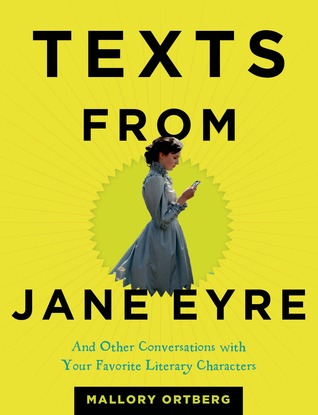
Texts from Jane Eyre by Mallory Ortberg

Texts from Jane Eyre by Mallory Ortberg
textfromjaneeyre

Though the premise was clever, Texts from Jane Eyre reads a lot like text message conversations in real life- shallow and repetitive after the first few lines.

Also, there wasn’t a synopsis included in these pages, so if you hadn’t read a classic or, if you’d read it so long ago that you’d forgotten most of it, you were out of luck.

The best of the lot was the Samuel Taylor Coleridge chapter that starts on pg 43 in which he’s on a ramble about the golden palace of Kubla Khan and then a delivery guy comes to the door and ruins his flow.

The worst was the Harry Potter chapter in which Ron and Hermione have a ‘conversation’ but Ron is written as a complete moron and she is confounded by his idiocy. Very mediocre and unworthy of either of those characters.

If you feel the need to read this one, check it out from the library. A related read if you enjoyed it: When Parents Text: So Much Said…So Little Understood.

Thanks for reading!

Get Your Sh*t Together: How to Stop Worrying About What You Should Do So You Can Finish What You Need to Do and Start Doing What You Want to Do (A No F*cks Given Guide) by Sarah Knight

getyoursht

Knight is an acquired taste, but I generally enjoyed Get Your Sh*t Together. Her self help books are full of useful tips, profanity, and irreverent humor so don’t pick this title up if you’re easily offended.

If you know someone who seriously needs to get their you-know-what together, this could be the title you’ve been waiting for!

Knight keeps it real from the first page: “(This book) is more of a let-me-help-you-help-yourself-help book, with “me” here to “help” when your “self” gets in the way. Let’s face it- if you could help yourself, you’d have done it by now, right? Also, unlike many traditional self-help authors, I am going to use the word sh*t 332 times (including several sh*tmanteaus of my own invention), so please do not go on Amazon saying you were expecting sunshine and kittens and got sh*tstorms and sh*ttens.” loc 31, ebook. And so on, and so forth.

I’ve also enjoyed The Life-Changing Magic of Not Giving a F*ck: How to Stop Spending Time You Don’t Have with People You Don’t Like Doing Things You Don’t Want to Do and I felt as if Knight shared more of herself in this offering than that one.

We learn that she had/has anxiety attacks and had to pull her life together because it was falling apart. Not many self help authors display their humanity and imperfections like that and I really appreciated her honesty.

Photo by Suzy Hazelwood on Pexels.com

Plus, readers get to reap the benefits of her hard won wisdom and we know it works because she got her stuff together enough to write the book.

I really like Knight’s various life philosophies, which she sprinkles throughout.

Here’s one of my favorites: “In my book- and in the Game of Life- you’re competing exclusively against yourself. Not other players, not even the computer. … Winning is getting what you want out of your time on planet Earth, whatever that entails. It could be the house, job, car, partner, or hairstyle of your dreams.” loc 502, ebook.

Be the best you that you can be and forget about the rest. Good advice.

Knight also gives a ‘nod’ to Marie Kondo’s internationally best selling title and Knight’s thoughts about it may appeal to more readers than the original material: “At this point, we’re living in a post-tidying society. … People get their tidying groove on for a few months, or even just a few weeks, and then… kinda lose the thread. … Why is that? Well, I submit that if they had their sh*t together in the first place, the tidying bug would have stuck.” loc 2547, ebook. Sound familiar to anyone?

Among the many life issues that Knight tackles, her thoughts on perfectionism struck particularly close to home for me: “When you accept that failure is an option, you move it from the realm of anxiety-inducing anticipation into a reality that you’ll deal with when (and more importantly, IF) that ever happens. Your energy is better spent on accomplishing goals in the here and now than on worrying about failure in the abstract.” loc 3049, ebook.

Recommended for people who need self help but don’t like reading self help, probably 18+ because of the language.

Sarah Knight will give you some life changing tips and along the way, you may learn some unique new uses for the word: sh*t. Some further reading: The Life-Changing Magic of Not Giving a F*ck: How to Stop Spending Time You Don’t Have with People You Don’t Like Doing Things You Don’t Want to Do, The Joy of Leaving Your Sh*t All Over the Place: The Art of Being Messy, and How to Be Dull: Standing Out Next to Genius.

Thank you to NetGalley and Little, Brown and Company for a free ARC of this book! And, thank you for reading.

Zen Dogs by Alexandra Cearns

Zen Dogs by Alexandra Cearns
zendogscover

This unique book is a series of pictures of dogs in a ‘zen’ state. Even though I’m more of a cat than a dog person (gasp, I know!), I found it completely charming.

See more of the photos here: http://www.boredpanda.com/relaxed-pet…

zendogs1

Fun, aren’t they?

zendogs2

As I enjoyed the pictures, I found myself becoming more relaxed. Cearns reminds us in the introduction: “Like the dogs in these photos and the canine companion on your couch, we all need to stop, take a break, relax, and unwind- to breathe it all in and be fully present in each and every experience.” Preach.

The best part of the collection is comparing the ‘zen’ photos to the regular photos of each pooch. I couldn’t believe the difference that eyes opened vs eyes closed made. Check this book out and see for yourself! Recommended for everyone with two legs or four.

Thanks for reading!
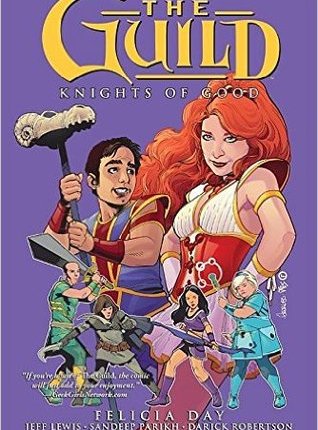
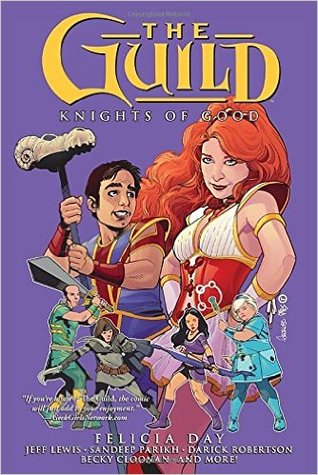
The Guild: Knights of Good (Guild v. 2) by Felicia Day

The Guild: Knights of Good (Guild v. 2) by Felicia Day
knightsofgood

A continuation of the first Guild comic. Please watch the show before you enjoy these comics!

If you don’t know what The Guild is about, let me give you a quick recap: Cyd likes to play videogames, specifically MMORPG’s. She spends much of her time avoiding reality and playing a character named Codex.

Codex is a member of an online guild, which is a group of other real life people who are also playing the computer game.

Together, they forge friendships and explore real life issues, online and off. It’s a heart-felt series and perfect for any fans of MMORPG’s or loved ones of computer players who want to understand their partners more.

On to the context of the comic itself: the first chapter/issue with Vork’s backstory and the story behind Bladezz’s infamous sausage photo were engaging but the rest was so-so.

I felt like all of the other characters were basically re-hashing what happens on the show rather than giving the reader any huge surprises. On the plus side, there are some more panels showing the characters in-game, which is more than we were ever given on screen.

If you’re going to read any of the Guild comic books, I recommend reading The Guild (the first one) and skipping this. Unless you’re a major fan of the show and you have to read every little piece of literature that is out there on it, by all means, borrow this from the nearest library.

Thanks for reading!

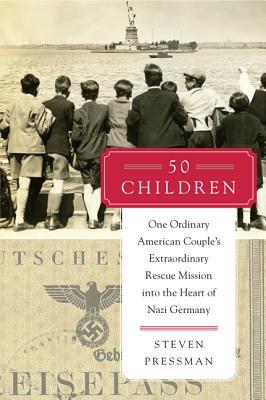
50 Children: One Ordinary American Couple’s Extraordinary Rescue Mission into the Heart of Nazi Germany by Steven Pressman

50 Children: One Ordinary American Couple’s Extraordinary Rescue Mission into the Heart of Nazi Germany by Steven Pressman
50children

Extraordinary and true story about how Gil and Eleanor Kraus saved fifty Jewish children from the Nazi Holocaust.

I watched the HBO documentary after I read this and, though similar and emotionally powerful, I enjoyed the book more because it provides a detailed history for each child (that Pressman was able to locate).

My only complaint about the book is that, though the story is gripping, it moves very slowly. My book club had a fascinating and educational discussion about 50 Children and, all said, I am very glad that it was the final club pick of 2016.

Did you know about this episode from US history?: “The fifty boys and girls whose lives were saved by Gil and Eleanor Kraus comprised the largest single known group of children, traveling without their parents, who were legally admitted into the United States during the Holocaust.” pg 9, ebook.

I didn’t realize that in the late 1930’s, that Jewish people were allowed, and even violently encouraged, to leave the Third Reich. The trouble was that, like other large displaced populations more recently, no country on earth was prepared to let that many people in or provide the social services required.

Fortunately, Gil Kraus was a well-connected lawyer who was willing and able to work within existing immigration and labor laws to find a way to bring the children into the US.

Photo by Mortandos on Pexels.com

I knew that the situation was awful for Jewish people in Europe before and during World War II, but, until I read this book, I didn’t realize the complete hopelessness that was experienced even before concentration camps became the ‘final solution’: “Within the first ten days of the Anschluss, the Viennese police reported nearly one hundred suicides throughout the city, virtually all of them Jews. By the end of April, the number of suicides had jumped to at least two thousand. Among the victims was Henny Wenkart’s pediatrician, who took his life by jumping out a window.” pg 42, ebook.

The American diplomats in Austria and Berlin had a front row seat to the horrors that the Jewish population were experiencing, but their hands were tied by national policy and immigration caps.

George Messersmith and Raymond Geist helped the Krauses as much as they could, within the law: “The Jews in Germany are being condemned to death. Their sentence will be slowly carried out, but probably too fast for the world to save them,” Geist (US foreign service officer in the Third Reich) wrote in a private letter to Messersmith (State Department secretary, stationed in Washington D.C.) in December 1938, less than a month after Kristallnacht.” pg 61, ebook.

Why was the American publication so anti-immigration?: “The United States still bore the scars of the Great Depression, and restricting immigration was seen as a way to protect jobs for Americans, who for years had been plagued with staggering unemployment rates. But challenging economic considerations were not the only factors at play in the immigration debate. The American public simply was not moved by the dire situation in Europe.” pg 68, ebook.

Photo by Pixabay on Pexels.com

And, antisemitism was far more prevalent than it is today. All of these things made it difficult if not impossible for the Jewish people who were trying to escape the Nazis.

Even after the Krauses were able to get the children to the United States, they faced harsh criticism from other Jewish charity groups for their actions. I was absolutely blown away by that.

You’d think that people would have banded together and said, “Look what’s possible!”, but instead, they fractured and accused the Krauses of breaking immigration laws. “Was it envy that prompted others to criticize what had clearly been a stunningly unique and successful rescue? Whatever their motivation, some of these same people now wondered if they might simply duplicate Gil’s strategy. pg 201, ebook.

But, since this was the largest group to get out, clearly the others didn’t succeed.

At book club, we talked about how the 1939 situation is similar to what the world is facing today with the Syrian refugee crisis and, though we all thought that immigration policy needs to be re-examined, that the real tragedy is that the world still hasn’t found a way to respond to the wars and conflicts that cause such displacement in the first place.

Is humanity ever going to figure out a way to either co-exist peacefully or provide sanctuary for those displaced by the fighting? I don’t know, but it’s a question that we should think about.

Recommended for anyone interested in the Holocaust, immigration, or testimonies from World War II- as uplifting as it is unsettling, 50 Childrenis a timeless lesson for everyone about the evils that happen when those able to help choose not to or look away.

Thanks for reading!

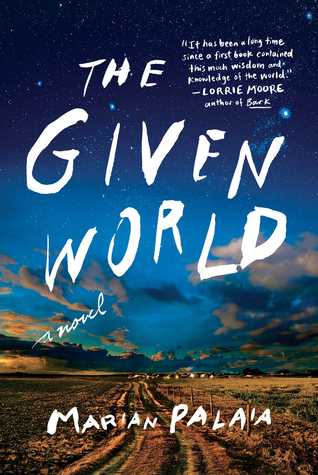
The Given World by Marian Palaia

The Given World by Marian Palaia

thegivenworldThe Given World gave me a headache. Why is it that when “serious” fiction “examines” life that it only focuses on the bad stuff?

Riley is a young girl in Montana who worships her brother. He’s drafted and shipped off to war in Vietnam. It breaks her heart and she systematically begin to ruin her life, because she can’t get past it. She eventually leaves home, gets lost in worlds of drugs, domestic violence, and alcoholics on the California coast. Everyone she meets is as dysfunctional as she is or on their way to dysfunction. Personal opinion here: if society was only composed of people like that, it would have fallen apart a long time ago.

Riley is a character that I tried to like but just couldn’t. She always made the worst decisions and if there was a way to improve her situation, she didn’t choose it. It was like she had blinders on to the possible goodness in life and jumped enthusiastically into the darkness. She turns her back on her family, blames everyone else in life for her problems, and consistently isolates herself from anyone who could possibly lend comfort or stability. In this passage, she’s talking about her father: “The way they smoke, so casually oblivious, reminds me of my father- on the porch, maybe, or out in the yard at night, looking up at the sky, for weather, but it’s not as if he could miss the stars. I hear my name in his voice: “Riley…” Never loud or angry, just gentle reminders: try to grow up with some degree of intentionality and grace; try to believe the world is more benevolent than not. I wonder if he knows I did hear him.” pg 10, ebook. Riley, I don’t think you did.

I did grow to feel sorry for Riley. She didn’t ask for her family to be ripped apart by war. I guess, after experiencing that sort of emotional turmoil at an early age, that it might be almost impossible to put your life on track to begin with. “She reminded him of a deer who knew you weren’t out to shoot it. Like she’d let you get just so close, and then bolt to the edge of the clearing; the forest nearly impenetrable behind her where she knew you couldn’t easily follow.pg 40, ebook. But, I just couldn’t get over the fact that she didn’t use her intimate knowledge of pain to help other people.

Riley’s mother was a hot mess too, but she managed to raise two children fairly successfully. I was surprised that Riley didn’t use her as a role model, even for a moment. In this passage, Riley’s mother writes her a letter, trying to connect with her wayward child: “And lost as you already are these days, or as I think you must be, you still probably understand, maybe better than most, that kids don’t necessarily hold you steady. Even if they do, somehow, hold you in place.” pg 97, ebook.

Rather than continue on in this vein, I will end this review with acknowledging that The Given World was not for me. But, if you enjoy reading coming of age stories with multiple flawed characters and plenty of bad decisions, you may want to pick this one up. Some trigger warnings for sensitive readers: domestic abuse, racially motivated violence, and drug use.

Thanks for reading!

All Darling Children by Katrina Monroe

All Darling Children by Katrina Monroe

All Darling Children asks the question: what if something corrupted the ‘boy-who-never-grew-up’?

Peter Pan is one of my favorite fairy tales and it has featured in quite a few beautiful re-tellings. (Tiger Lily is one.)

All Darling Children is a masterful, twisted take on a literary classic. I loved this for its horror filled examination of the spiritual cost of eternal youth and the strong female lead.

Photo by luizclas on Pexels.com

From her first moments in Neverland, Madge, the grandaughter of Wendy, can tell that something isn’t right: “Neverland. It seemed a hodgepodge of landscape ripped from a dream. Or maybe a nightmare. On one side, lush forest grew dense with heat and energy. Flowers bloomed in a rainbow of colors. They shuddered as Madge gazed at them, and then, as Pan looked in their direction, shriveled to pale, dry nothings.” loc 525, ebook.

This is not Disney’s version of Neverland.

Peter and his Lost Boys are dangerous in this world. Immature and wild, they try to force the traditional gender role of ‘mother’ on Madge (because they don’t know how to handle girls otherwise) and she resists: “Outsiders aren’t supposed to know how to find the tree house until they’ve been initiated.” “Initiated?” Madge’s stomach fell. “What’s that mean?” “It means you’re in the club, not that you’d ever get in, being a girl and all.” loc 692.

I never questioned the ‘Father’/’Mother’ roles of Peter and Wendy from the original book but, if the authority of the position was abused… it gets so creepy very quickly.

Madge’s story is told in-between entries from Wendy’s old diary. Here’s one of the passages: “I’ve learned much about (Peter), and while he is erratic and inconsistent in most ways, in one he is steadfast. Predictable. Peter must always be forced to try harder. If one gives in, he loses interest. I will never give in.”loc 921.

The back and forth from the story that the reader thinks she knows that is presented in Wendy’s diary, to the new story that Monroe is weaving with Madge, is awesome. There are enough similar elements drawn in from the original that the whole thing feels chillingly familiar- a mirror version of the classic.

Photo by luizclas on Pexels.com

Peter’s bragging about his exploits is presented as charming in Barrie’s version- Monroe takes a far more modern view: “Who wants to hear the story of how I cut off Captain Hook’s hand?” The boys whooped and smacked the table. Madge paled. He’d cut off someone’s hand? What was worse, he was bragging about it? Psycho.” loc 973

If you like twisted fairy tale re-tellings, you may love All Darling Children. I did. Another one that you’ve got to pick up if you liked this is Alice by Christina Henry. It’s an incredible, dark re-imagining of Alice in Wonderland and it’s also amazing.

Thank you to NetGalley and Red Adept Publishing for a free, digital ARC.

Also thank you to my Goodreads friend, Rosemarie Short, for writing a fantastic review that convinced me that I just had to read All Darling Children. You can see her review here: https://www.goodreads.com/review/show…

And, thank you for reading!

Read This Before Our Next Meeting by Al Pittampalli

Read This Before Our Next Meeting by Al Pittampalli
readthis

Endless meetings have you down? Pittampalli has a solution to your woes. He claims that modern meetings should only be held to solve specific problems and the only people who should be required to attend are those who could take direct action to solve that problem.

I think that the idea is a solid one.

It does take some internal mindset changes by the folks who call meetings. The first step, like with any problem, is to admit that you even have a problem.

“Over time, we’ve become nonchalant about bad meetings. If an operating room were as sloppily run as our meetings, patients would die.” pg 7.

Overly dramatic, perhaps, but true. And also keep in mind: “Change is never met with open arms. Great decisions involve risk and risk scares people; it’s natural for great ideas to get attacked or, worse, ignored. I can think of no single great innovation that has ever happened without the presence of opposition.” pg 15

So, there may be an uphill battle over this, but, Pattampalli thinks, it is worth it.

The end goal: “Meetings need to be less like the endless commercial breaks during a football game and more like pit stops in the Daytona 500.” pg 20.

So, they’re necessary, but they should run quickly because: “Meetings are too expensive and disruptive to justify using them for the most common types of communication, such as making announcements, clarifying issues, or even gathering intelligence. Like war, meetings are a last resort.” pg 23

Photo by Christina Morillo on Pexels.com

This strict definition of a meeting means that there is going to be some major preparatory work since communication isn’t going to be a part of the show. The person calling the meeting has to distribute information about the issue so that those who are attending can contribute.

“Every meeting should require pre-meeting work. Any information for getting attendees up to speed should be given out beforehand. If the attendee doesn’t have time to read and prepare, she doesn’t have time to attend.” pg 37.

But, this preparation pays off when, after the meeting, the business should have created a concrete ‘action plan’ that includes: “What actions are we committing to? Who is responsible for each action? When will those actions be completed?” pg 39. Thus addressing the problem that the meeting was called to solve and serving its function.

Most of the meetings that I’ve attended in my life have been rambling, unfocused affairs that were called to fill the monthly meeting quota that was arbitrarily chosen by management- a touch-base, if you will.

Pittampalli is adamant that this is a waste of time. I never really saw it that way because I didn’t have any expectations that meetings were supposed to accomplish anything at all. We’d meet, then get on about our business. This book has shown me that I should expect more.

Recommended for anybody who wants to learn more about the benefits of “modern meetings”. This short book has everything that you need to start changing the world, one meeting at a time.

Thanks for reading!