Simple Rules: How to Thrive in a Complex World by Donald Sull and Kathleen M. Eisenhardt

Simple Rules: How to Thrive in a Complex World by Donald Sull and Kathleen M. Eisenhardt
simplerules

I enjoyed the examples that the authors cite for simple rules helping to solve complex problems, but the manner in which to create your own ‘simple rules’ wasn’t really that simple.

I thought that in a book with the title, Simple Rules, that they’d give me a checklist of how to do it: Step 1, 2, 3, you know. The simple rules for how to make simple rules.

But, that wasn’t the case.

Since each problem, situation, business, and life is different, the authors essentially told the readers to use their discernment in the creation of the rules. Pick a ‘bottleneck’ and solve it. I found the suggestion too vague to be very helpful.

Despite these complaints, I did find a gem or two:

“Decisions that require coordination across different departments or teams are another good place to look for bottlenecks.” pg 135

“Better rules are better, and even apparently irrelevant rules can be reasonably effective if they happen to encourage helpful behavior.” pgs 172-173

If you enjoyed Simple Rules, I’d suggest The Checklist Manifesto by Atul Gawande (ways to simplify your work processes) or Yes, And: How Improvisation Reverses “No, But” Thinking and Improves Creativity and Collaboration—Lessons from The Second City by Kelly Leonard (for more simple rules on collaborations).

Thanks for reading.

Ask: The Counterintuitive Online Formula to Discover Exactly What Your Customers Want to Buy…Create a Mass of Raving Fans…and Take Any Business to the Next Level by Ryan Levesque

Ask: The Counterintuitive Online Formula to Discover Exactly What Your Customers Want to Buy…Create a Mass of Raving Fans…and Take Any Business to the Next Level by Ryan Levesque
ask

Quite the title, isn’t it?

I picked this up a few months ago because I was looking for some pointers on creating online surveys for the public library. It has some excellent ideas, but they’re buried beneath the coils of a very aggressive marketing formula.

Levesque coaches businesses to send twelve follow up emails to customers, whether they purchase the product or not. Can you imagine?

It’s no wonder that people don’t like giving their emails out, if that is the manner in which they will be used. I have to give it to Levesque- the man certainly doesn’t take no for an answer.

He describes the unique circumstances that gave him this fierce business drive and, unlike other reviewers on this book, I actually liked the autobiographical portion of Ask.

It made me view Levesque as a regular guy before he presented his over-the-top marketing strategies. I mean, perhaps if you were running your own business and needed absolutely every customer who strayed to your webpage, Ask would be invaluable to you. As it is, if the library were to employ this system, I think it would just seriously piss everybody off.

So, anyway, the some gems I pulled out of the mess:
“…people essentially are only good at answering two basic types of questions when they don’t know what they want: what it is they don’t want and what they’ve done in the past.” pg 10

Bring clarity to your business through stat analysis: “We discovered that by paying attention to the right information (provided by the market), you could not only identify what sub-segments exist in your market, but you can also identify which ones are worth focusing on.” pg 53

Put the important questions first: “Generally speaking, you should expect to see a degradation in response the deeper you get into your survey. So, for this reason, it’s essential to prioritize the importance of your questions beyond the initial questions in your survey.” pg 87

When evaluating survey responses: “The reason why response length is vitally important is because it’s an indication of hyper-responsiveness, which is a leading indicator of how likely someone is to purchase a paid solution for the problem or challenge about which we’re asking.” pg 92

Why to use an “open-ended Single Most Important Question”: “To determine what buckets naturally emerge in your market. To identify what people’s hot buttons are. To identify what their objections are. To identify what their biggest challenges are. To use in concert with their demographic information. pg 97

So anyway, to get all of these tidbits in context, pick up Ask and dig through it. But please, if I ever, for whatever reason, give you my email, do not send me 12 follow up emails. Please. And thanks for reading.

I Hate Everyone, Except You by Clinton Kelly

I Hate Everyone, Except You by Clinton Kelly

I Hate Everyone, Except You entered my life at the perfect time. I listened to a David Sedaris book last week and was unimpressed with some of his more edgy material. Clinton Kelly has the snark and sass of Sedaris, but, in my opinion, more heart and empathy.

Let’s just say, if Sedaris’ book was a hard drug, the Kelly book equivalent would be “a little fresca on a panty shield” loc 1784, ebook. Perhaps uncensored, he’s more honest and vulgar than what his fans usually see, but he’s real.

I really enjoyed this one, but don’t go into it expecting Kelly to parade himself around as the fashionista from What Not to Wear the whole time. It is definitely not that.

Photo by Artem Beliaikin on Pexels.com

Kelly’s dialogue (inner and outer) is hilarious. Take this moment, he’s psyched himself up and gone on an interview for an editorial position at a fashion mag and he’s asked to wait: “I’ll hang out here in the lobby,” I said. Yep, I’ll just sit in that plastic chair facing the door, watching my dreams rot like a bowl of fruit on time-lapse video. Thanks so much. Employees began to arrive, coffees in hand, and quite frankly, I had expected them to be better looking. … Sure, some of them were so skinny you could see through them, but they didn’t look happy about it. I had been expecting to work among anorexic women who radiated inner strength, not soul-crushing hunger. And what was with all the joyless denim? loc 375, ebook.

It makes me wonder what he would say if he saw my office crowd. Maybe I wouldn’t want to know.

Kelly isn’t religious but he seems to be spiritual in that he believes people should live authentically every moment for as long as they can.

Here’s what he has to say about it: “… the older I get…, the less Destiny and Fate-and their cousin, Faith, for that matter-concern me. For some, the opposite is true. Men and women on their deathbeds, old as the Appalachaians, wondering what it was “all about”. So foolish. I must admit, perhaps to the detriment of your esteem for me, that my sympathy for such wonderers is minimal. Imagine being given a life and not understanding until its ugly end that the point was to live it.” loc 494, ebook.

Photo by Artem Beliaikin on Pexels.com

I can see how that attitude could offend some people, so, here’s your warning. He’s not anti-religion necessarily. He’s pro- figuring out what works for you.

How he found his way onto “What Not to Wear” was New Age in the extreme and I’m so glad he recorded it here for us.

He didn’t like his current job and wasn’t sure what to do, so he talked to his friend: “She suggested that I ask the Universe for guidance. I wasn’t quite sure how to do that until I read a couple of books by Caroline Myss, in which she explained that if you ask the Universe for help, it will provide help.” loc 512.

Not to spoil the story, but guess what he did? I’ve read a bunch of New Age stuff and, honestly, Caroline Myss is hard core, sometimes angry even, and unapologetic about it. If I was asked to recommend a Law of Attraction author to a complete new comer to the topic, I’d pick Abraham Hicks, but whatever works.

Kelly found what he needed when he needed it and he didn’t even know it was missing- the very essence of New Age teachings.

My favorite part of the whole book: “When What Not to Wear ended a few years ago, many reporters asked me about my favorite and least favorite makeovers and the worst fashion faux pas I had ever witnessed. But not a single one asked me what I had learned about women over ten years of listening to their concerns about their bodies and their clothes. … Women want to feel beautiful. I’ve never met one who said she didn’t, and believe me, I’ve asked around.” loc 602, ebook.

Yes! And why would women want to feel beautiful? Because they would think they were worthy of love then. So, at the end of the day, what does every woman, man, child on earth want? Love.

Kelly talks about his failed and successful relationships in an honest manner, never denying that his own foibles could be why things tanked:“What probably kept us together was Rick’s ability to produce a level of rage in me so profound it actually inspired out-of-body experiences.” loc 2097, ebook. Funny, no?

Highly recommended for people who liked, but didn’t love David Sedaris or readers who enjoy humorous/tell-all memoirs. Some similar books: I’m Just a Person, The Andy Cohen Diaries: A Deep Look at a Shallow Year, or Life of the Party: Stories of a Perpetual Man-Child.

Thank you to NetGalley and Gallery books for a free digital advance reader’s copy of this book. And, thank you for reading.

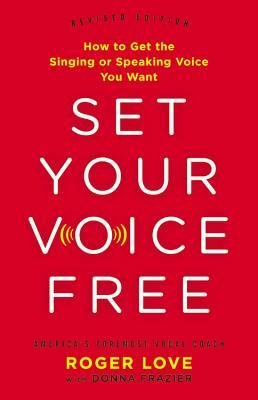
Set Your Voice Free: How to Get the Singing or Speaking Voice You Want by Roger Love

Set Your Voice Free: How to Get the Singing or Speaking Voice You Want by Roger Love

Set Your Voice Free was page after page of life changing revelations to me. I picked this book up because I was trying to address a specific problem.

When I speak in front of groups, nerves take over and I subconsciously close my throat, cutting off my air, making my voice weak, and losing my message in my process. I didn’t know that was what I was doing until I read this book. I just thought that my voice changed, but I didn’t know how or why.

Roger has changed all that for me and I’m so excited to put his suggestions into practice.

Photo by Skitterphoto on Pexels.com

A world class speech and singing coach, Roger has helped many famous and every day people find their voices. “The most profound discovery I’ve made in the past fifteen years is this: If you know how to control the pitch, pace, tone, volume, and melody of your voice- the elements that form the core of this book- you can consciously use them to guide the emotions of your listeners and magnify the impact of every communication you have.” loc 85-109, ebook.

He goes on to list countless exercises and examples of just that. A consummate teacher, Roger includes almost every vocal problem imaginable in Set Your Voice Free as well as situations in which one would need to put her best voice forward.

Like visual impact, Roger tells us that audiences form their opinions about speakers and singers quickly, taking only one second of vocalizing to come to their conclusions. So, he says, you want to utilize that fleeting moment to make the best impression that you can.

It all starts with the breath: “The magic that I work with voices is built on a fundamental rhythm: the movements of the body as you inhale and exhale. Breathing smoothly and deeply works wonders for the body in general. … Once you learn to breathe as calmly and steadily as a child does, you are on your way to fabulous vocal reaches.” loc 808, ebook.

Photo by Pixabay on Pexels.com

Intellectually, I knew how breathing worked and, demonstrably, I’ve been breathing my whole life, but Roger gave me a complete education about what deep breathing FEELS and SOUNDS like. I can see how this book could be life changing for readers as it has been for me.

In addition to vocal exercises, Roger includes stage and bodily movement, mixing them with the voice to create the total package. “All stage movement can be reduced to a simple pattern, and when you know how to use it, you can simply and effectively maneuver in front of any audience anywhere.” loc 3270, ebook.

Performers and speakers all types will find information worth knowing in this book. “When you begin to put yourself and your ideas clearly and thoughtfully into the world, with all the energy you feel, people will notice. Their new attention and interest may make you feel self-conscious, but keep using the techniques you’ve learned. You’ll be a more active, influential player in your life, instead of being pushed to the sidelines.” loc 4406, ebook. Everyone wants that.

Very highly recommended for anyone who speaks, sings, or wants to more mindfully express their message. Set Your Voice Free will help anyone who reads it turn his or her voice into a finely tuned instrument of communication.

Perfect for beginners to well seasoned artists and speakers- it contains something for everyone. Some similar reads to help you put your best self forward: Platform: Get Noticed in a Noisy World, Talk Like TED: The 9 Public-Speaking Secrets of the World’s Top Minds, or The Art of Exceptional Living.

Thank you to NetGalley and Little, Brown and Company for a free advance reader’s copy of this book! And, thank you for reading!

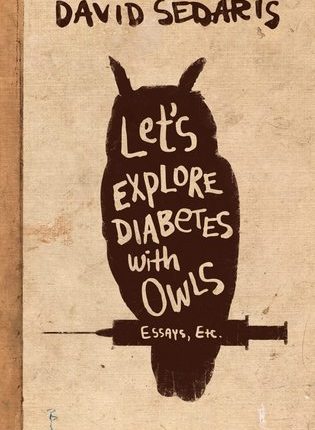
Let’s Explore Diabetes with Owls by David Sedaris

Let’s Explore Diabetes with Owls by David Sedaris

David Sedaris is a unique American humorist. Sometimes I love his essays and other times I hate them, so ranking a collection of his work fairly is difficult.

I listened to the audiobook of Let’s Explore Diabetes with Owls on my daily commute and he’s a wonderful narrator.

Actually, having read a handful of his other books, I’d recommend listening to him read his essays. His timing and inflections are perfection. He’s one of the few humorists who has literally made me laugh out loud.

The high points of this collection are Understanding Understanding Owls, Laugh Kookaburra, and A Guy Walks into a Bar Car. They’re unbelievably funny and have a lot of heart.

The low points were: Health-Care Freedoms and Why I want my Country Back, If I Ruled the World, and Dog Days. It’s as if he ran out of material and tacked the worst of it on the end.

Dog Days was awful and reminded me of Squirrel Seeks Chipmunk: A Modest Bestiary which I couldn’t stand. Vulgar prose just isn’t my thing, I guess.

Recommended for adult readers who are looking for a laugh and don’t mind some profanity and general silliness. More humorous books that I’ve enjoyed: Are You There, Vodka? It’s Me, Chelsea, Dad Is Fat, and It’s All Relative: Two Families, Three Dogs, 34 Holidays, and 50 Boxes of Wine.

Creativity: The Perfect Crime by Philippe Petit

Creativity: The Perfect Crime by Philippe Petit

In Creativity, Philippe invites the reader into his mind and attempts to dissect his creative process. For this to make any sense, you sort of have to let go of reality as you know it and step into his pipe dream world for the duration of the read.

Sometimes I was able to do this and followed his twisting train of thought to some fascinating conclusions, but other times I couldn’t. So, if you pick this one up, prepare yourself. It’s not for everyone.

I marked a couple of his ideas that resonated with me:“If you are an artist, you want to create a giant wall around yourself and, inside that wall, to follow your honesty and your intuition. What the audience will see is a man or woman who is a prisoner of his or her passion, and that is the most inspiring performance in the world.” pg 16 “To be a prisoner of passion”- I’ve never heard an artist described that way before.

Photo by ShonEjai on Pexels.com

In pages 20 to 26, Philippe essentially describes his brainstorming process as a paper version of Pinterest (my comparison, not his). He takes all of these words and pictures and files them according to some associations that his mind makes, then reassembles the results into art… somehow.

Read these pages if you want to explore how difficult it is for a creative type to write down his process in a manner that makes sense to anyone other than him or herself. It’s interesting but baffling.

“Another theory of mine: turning in circles and getting lost is important! You find yourself when you get lost.” pg 28 I embrace that theory as well.

“Go to school if you want to learn. Go to life if you want to feel.” pg 85 Loved that.

“Use your creative paranoia to be on the lookout for negativity; observe with a positive spirit: “What a beautiful disaster!” uttered the French architect Le Corbusier when he visited Manhattan for the first time.” pg 100

Photo by Trev Adams on Pexels.com

“Even if you are not a performer, even if you don’t have an act, do not think that you have nothing to rehearse! The art of living makes a performing artist out of you.” pg 122 We are all creators, painting our lives in wide strokes around us, even those of us who can’t draw a stick figure or walk on a rope between skyscrapers.

“Look in the mirror of fear and focus beyond it. What appears in the background is your path, awaiting.” pg 149 Something to keep in mind when life’s anxieties and impossibilities assail you.

Creativity: The Perfect Crime is one of a kind but if you liked it, I’d recommend reading PostSecret: Extraordinary Confessions from Ordinary Lives by Frank Warren (hundreds of people around the country decorate plain postcards with a secret that they’ve never revealed to another person- it shows the heights and depths of creativity and artistic catharsis) or How to Fly a Horse: The Secret History of Creation, Invention, and Discovery by Kevin Ashton (a more logical than emotional book about the creative process, how it works, and how everybody can create).

thewalkfilm

Speaking of Philippe Petit, did anybody else watch The Walk with Joseph Gordon-Levitt which was about his famous tight rope walk between the Twin Towers? 

If you read this book first, it makes so much more sense.

Thanks for reading!

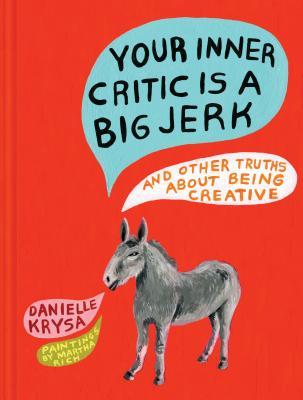
Your Inner Critic Is a Big Jerk: And Other Truths About Being Creative by Danielle Krysa

Your Inner Critic Is a Big Jerk: And Other Truths About Being Creative by Danielle Krysa
yourinnercritic

A quirky little book about how to inspire your own creativity and how to use your inner negative voice to its best advantage. Martha Rich’s art elevates what is actually rather simple text, but, on a more positive note, it is a quick read for those who may be short on time.

I couldn’t help but draw similarities between this book and Unmistakable: Why Only Is Better Than Best, which I read last week. Your Inner Critic is a Big Jerk deals with the sensitive parts of the creative process and breaking through your fears about how your art will be received.

Unmistakable is more about why you need to create the art that only you can create and how a bunch of different artists have managed to do just that. But, if you’re looking to jump start your creativity this year, pick up both of these because they actually complement each other fairly well.

One of my take-aways from Your Inner Critic is that it is never too late to start doing what you do: “Far too often, people tell me, “I wish I hadn’t given up on art [or dancing, acting, writing, music], but it’s too late now.” What! Why? I don’t believe that for a second. Many amazingly talented people didn’t hit their stride until their thirties, forties, or later.” pg 20

And Krysa goes on to list such luminaries as van Gogh, Money, and Julia Child. Can you believe that!

Even if you didn’t go to school to learn whatever art you feel compelled to create, you are still an artist. I’ve been pricked by that negative inner whisper once or twice and it was cathartic to learn that I’m not alone in that struggle and to finally put it to rest: “If you want to learn something new, go learn something new. Set yourself up to get this new skill in whichever way suits you best. You are what you know, regardless of when and where you did the learning.” pg 45

Some further reading: Unmistakable: Why Only Is Better Than Best or Creativity: The Perfect Crime

Thanks for reading!

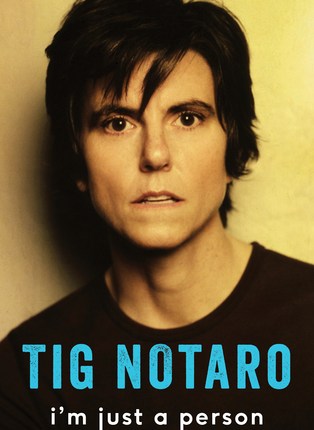
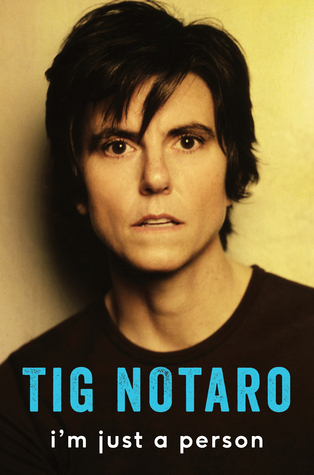
I’m Just a Person by Tig Notaro

I’m Just a Person by Tig Notaro
imjustaperson

Tig Notaro is a survivor. Her dry humor shines through these pages as she tells her life story: multiple brushes with death, romantic relationships, and snapshots of her childhood, parents, and thought processes.

She shows us that she’s “just a person”, yes, but also how extraordinary an ordinary person can be when presented with nearly insurmountable difficulties like dropping out of school at an early age, having a biological father who was never present and a stepfather who was never available emotionally, a mother who was so immature that Tig practically raised herself, not to mention all of the health problems that came later.

I picked up this book because I was enamored of Tig’s stand-up routines. This book has their flavor but far more detail than her act- if you’ve enjoyed her comedy, you’ll probably like this too.

I loved reading about how Tig found her calling and her people: “I began to refer to the comedy scene as “the land of misfit toys.” It was comforting to be surrounded by people who didn’t fit into the confines of society, and it was the first time in my life that I wasn’t met with the boring conversation stopper: “Oh my God, you’re so weird.” pg 47

This part cracked me up- Tig’s discovered lumps in her breasts but she doesn’t think they’re anything to be concerned about. Her girlfriend disagreed: “Instead of making a doctor’s appointment, I spent the next couple months teasing Brooke by removing my shirt and saying, “Hey, wanna touch my cancer?” It was really fun to walk past her holding my chest and blurting out, “Ow! My cancer!” pg 109-110.

I thought that the chapter in which Tig talks about her biological father, Pat, was particularly well-written. She takes complex emotional pain and makes it into something beautiful: “He was obviously still in pain over the loss of my mother and the news of my health, but I knew that this grief could not kindle any real kind of familial bond between us. I guess I believed there was something inherently broken in Pat’s relationship with me and my brother. Maybe we had all missed some ambiguous window of time when we could have salvaged some hope for a real connection. I am certain, however, that we have the same feelings: I want everything to be okay for him and he wants everything to be okay for me.” pg 205

That is Tig’s strength- her ability to take the worst in life and wring not just humor but meaning out of it. Some similar reads: Sleepwalk With Me and Other Painfully True Stories, Shrinkage: Manhood, Marriage, and the Tumor That Tried to Kill Me, or A Girl Named Zippy.

Thanks for reading!

Unmistakable: Why Only is Better than Best by Srinivas Rao

Unmistakable: Why Only is Better than Best by Srinivas Rao
unmistakable

A call-to-action for artists and business people of all types to create the work that only they can create which makes them irreplaceable and also Unmistakable.

“When you’re the only person who could have created a work of art, the competition and standard metrics by which things are measured become irrelevant because nothing can replace you. The factors that distinguish you are so personal that nobody can replicate them.” pg 2.

That makes sense to me. You’re essentially writing the book so no one can tell you how it’s supposed to go.

The theory of becoming Unmistakable is fairly simple but the journey to that place is not. There are no maps to this realm because it is different for everyone and the paths to that place vary as widely as the talents that people bring with them.

As Srinivas reminds us: “Unmistakable work is a process of self-discovery. We start our ride not knowing what it is that makes us unmistakable, and a thread reveals itself through the creation of a body of work. Dots connect, patterns emerge, and our unmistakable gift is revealed. Time is the critical ingredient required for this to take place, hence the role of longevity and commitment in the quest to become unmistakable.” pgs 56-57

So, you can’t give up. Create and fail and try again. That is as hard and as easy as it is.

“…creating unmistakable work might be one of the hardest things to do: you have to look into the depths of who you are, explore what matters to you, and infuse that into every element of your work until it can’t possibly be mistaken for something anybody could have done but you.” pg 68.

The messages contained within Unmistakable become repetitive after a few chapters, but Srinivas threads some of the stories and artists from his podcast to break up the material as well as his personal testimony.

Unmistakable encourages creation even in areas that you may have no prior experience: “Lack of formal instruction might keep us from attempting some sort of creative pursuit or starting anything in which we don’t have experience. … When we lack experience, we also have the advantage of lacking preconceived notions of what’s possible.” pg 113.

And, you don’t know what you’re capable of until you get started. So, what are we waiting for!

As Srinivas writes from an interview with Seth Godin: “The enemy of creativity is fear; that seems pretty clear. The enemy of fear is creativity; that doesn’t seem that obvious.” The antidote to our fear is to put our heads down, do our work, and make something each day.”pg 189.

Let’s all become Unmistakable.

Some further reading: Creativity: The Perfect Crime, Do the Work, and How to Fly a Horse: The Secret History of Creation, Invention, and Discovery.

Thanks for reading!