The Lost City of Z is a well-researched tale by journalist David Grann about Percy Fawcett, the intrepid explorer who disappeared in the Amazon jungle on his search for the city he called ‘Z’.
The part in this book that I appreciated the most was Fawcett’s struggle to learn about and appreciate the cultures of the people he discovered in the Amazon, while at the same time, juggling his own biases against any culture other than his own.
In some ways, he was a product of his time, but the fact that Fawcett at least tried to understand different cultures made him different than other explorers of his age.
It’s only a small part in a larger tale full of adventure, exploration and discovery.
He has trouble relating exactly how his guru changed his life. He also has trouble expressing his life changing spiritual insights.
This could perhaps be because of all the LSD he experimented with, but no judgement here.
I think Dass could have added another couple hundred pages to the first part and still probably not fully described his experience.
The next section of the book is block text printed on, what seems to be, brown paper bags. Monty Python-esque photos are drawn in, and sometimes behind, the text.
If you have a question about how an enlightened person lives, it’s probably included in there.
Dass elucidates how he believes you should eat, sleep, breathe, interact with others, think, meditate, raise a family, form a commune and so on.
I didn’t like it because it felt too brain-washy, cult-ish.
Dass attempts to put the reader’s mind at ease to all of the strictures. He mentions that one needn’t be concerned about family or social responsibilities because, once you reach the ultimate level, you’ll realize that none of those things are real anyway.
Looking back on my review, it seems as if I don’t like Ram Dass, but I do.
I don’t buy into the idea that life has to be lived a certain way to get certain results.
And, perhaps because I haven’t personally had the experience yet, I don’t get the whole guru relationship thing. I know it’s my western background speaking, but there you have it.
Recommended for spiritual seekers, but don’t forget to trust your own inner guidance.
Michelle McNamara was obsessed with the subject of this book. She believed that by using modern technology, a rapist and killer could finally be brought to justice.
She created maps and chased leads. She ran a true crime blog and this was one of her topics.
It haunted her. Then, tragically, Michelle died before this masterwork could be completed.
Her fellow researchers put I’ll Be Gone in the Dark together from her notes. It is a chilling but thorough portrait of the perpetrator of a series of unsolved crimes.
It also includes some autobiographical chapters to explain Michelle’s obsession with the man she named, “The Golden State Killer,” but also why she loves writing.
She writes about why she couldn’t stop researching and examines her complicated relationship with her mother: “No one would have taken more joy from this book than my mother. And I probably wouldn’t have felt the freedom to write it until she was gone.” pg 41
It is an amazing book. And, I believe, it has enough details that, if someone who reads this book knew that guy, he will be brought to justice at last.
He pointed a knife at her and issued a chilling warning: “Make one move and you’ll be silent forever and I’ll be gone in the dark.” pg 61
Gillian Flynn writes a stellar introduction: “I’ve always thought the least appreciated aspect of a great true crime writer is humanity. Michelle McNamara had an uncanny ability to get into the minds of not just killers but the cops who hunted them, the victims they destroyed, and trail of grieving relatives left behind.”Introduction.
This killer, whoever he is, is terrifying not only for the carnage he left, but the meticulous way he planned and carried out the murders.
He was organized and unhinged, as compared to other murderers whose passion and disorganization are their downfall: “It’s a tiny minority of criminals, maybe 5 percent, who present the bigger challenge- the ones whose crimes reveal pre-planning and unremorseful rage.” pg 14
I read this book in one sitting. It is that compelling.
But I paid for it during the night. Each creak, any small sound in the house and my heart would leap into my throat.
“He’s here,” my over-active imagination declared. “This is the end.”
It made it all too easy to understand the terror the murderer inflicted on his victims and the community he plagued. Multiple states away and decades removed from the crimes and I was petrified as well.
Recommended for brave readers, fans of true crime and anyone who wants to help solve an unsolved mystery.
Thanks for reading!
UPDATE: About a month after I wrote this book review, a man was arrested under suspicion of being the ‘Golden State Killer’.
Lost in Translation is a slim volume of doodles with accompanying definitions of untranslatable words from many languages around the globe. It’s a treat.
There are words for feelings that I’m certain everyone has experienced… we just lacked the language to describe it appropriately.
This book showed me how universal emotions and perceptions can be and the difficulty of capturing the indescribable in words.
I liked the words that described fleeting moments of beauty in nature the most. All of the following are from Lost in Translation but the pages are un-numbered so you’ll just have to trust me that they’re in there:
Komorebi: (Japanese noun) The sunlight that filters through the leaves of the trees.
Waldeninsamkeit: (German noun) The feeling of being alone in the woods, an easy solitude and a connectedness to nature.
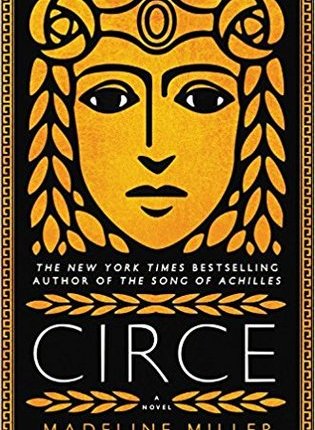
Circe is an epic fantasy that reads like a historical fiction novel, based on the Greek mythology of the witch of Aiaia, the daugher of a Titan- Circe.
I minored in the classics at university and one of my favorite classes was mythology. I love taking apart stories that mirror humanity’s foibles and try to explain the origin of some of life’s harder truths.
In the war between the Titans and the Olympians, a creation story that could be interpreted to mean the ascension of modern culture over more ancient superstitions, the Olympians triumph. But the Titans are not wiped off the face of the earth.
“Beneath the smooth, familiar face of things is another that waits to tear the world in two.” loc 272, ebook.
Some of the Titans’ powerful and mysterious children play central roles in the great mythological stories. Circe is one of those.
“They called me nymph, assuming I would be like my mother and aunts and cousins. Least of the lesser goddesses, our powers were so modest they could scarcely ensure our eternities. We spoke to fish and nurtured flowers, coaxed drops from the clouds or salt from the waves.” loc 102, ebook.
She began her life in the halls of Helios, a Titanic deity who was a god of the sun, much like Apollo.
“At my father’s feet, the whole world was made of gold. The light came from everywhere at once, his yellow skin, his lambent eyes, the bronze flashing of his hair. His flesh was as hot as a brazier, and I pressed as close as he would let me, like a lizard to noonday rocks.” loc 158, ebook.
Compared to her great father and gorgeous, manipulative mother, Circe was nothing- one of the many faceless children of the greater gods, whose future was destined to be a wife and then mother to more godlings.
Circe’s future is not as simple as all that.
She, and her brothers and sister, have a unique power that no other gods possess. They have the ability to harness the plants and power of the earth, to create potions and salves with miraculous effects. They call it: pharmakeia.
Modern readers can recognize the roots of the word “pharmacy” in the name.
“Pharmakeia, such arts are called, for they deal in pharmaka, those herbs with the power to work changes upon the world, both those sprung from the blood of gods, as well as those which grow common upon the earth.” loc 909.
It is a power no one understands and, because of its mysteriousness, it makes even the gods afraid.
There is more to Circe’s story than pharmakeia. She also interacts with Hermes, Daedalus and Odysseus. She creates a god and a monster. She shakes the foundation of the oceans.
Highly recommended for those who enjoy mythology or historical fiction. It will transport you to a world where gods and goddesses walk the earth and humanity can do nothing but tremble in their shadows.
Thank you to NetGalley and Little, Brown and Company for an advance, digital copy of this book.
This is a biography of Derek Boogaard, a hockey player who died at age 28 of alcohol and prescription drug poisoning.
I didn’t know very much about hockey before I read this but fortunately John Branch discusses the history of the hockey for readers like me. He also examines the reasons why violence began and then persisted in the sport.
Branch explains the unofficial position called ‘enforcer’ on the hockey team that, essentially, intimidates or pummels the opponents into submission.
I knew that hockey was violent from anecdotal stories but I didn’t realize how the various minor leagues supported the development of the enforcer role. Men are specifically scouted for their abilities in this area.
Derek wasn’t born an enforcer. In Canada, hockey is like football in some small towns in America- everybody plays beginning at quite a young age.
His enormous size drew attention but he wasn’t particularly skilled at the game. Coaches put him into the enforcer role and he was able to fulfill their demands.
Throughout his life, Derek suffered from pain caused by his job and began to take prescription drugs to find some relief. Predictably, he became addicted.
Branch carefully dissects the reasons why Derek abused drugs and it is very sad. His family obviously cared about him, but they either did not realize the extent of the problem or because of the distance that they lived away from Derek, they didn’t have the ability to do anything about it.
An additional layer of complexity is added to the story with Branch’s explanation of concussions in professional sports and how, in the late 1990’s and early 2000’s, medical experts were just becoming aware of the extent of the problem.
After his death, Derek’s family donates his brain to the medical community and what they discover was truly shocking.
I liked Branch’s analysis of the social, economic, and personal reasons why Derek lived the way he did. He painted a picture that was both approachable but also extraordinary.
Approachable in that Derek was a boy from a small town in Canada who liked quiet family evenings and country music. Extraordinary in that Derek was a professional athlete with a million dollar paycheck and needed to experience life to its fullest.
I also liked reading portions of a childhood diary written by Derek that included his grammar mistakes and misspellings. The inclusion of this material lent a very personal feel to the book.
From Derek’s childhood to his last struggling days, Branch gives meticulous dates, times, and names.
I didn’t like the seemingly endless descriptions of Derek’s bloody fights on the ice. During his career, it seemed like he fought constantly and the biography feels monotonous throughout that portion. He went to a game, got in a fight, and repeat.
For that reason, the graphic details, I would recommend Boy on Ice to, primarily, fans of the game. If you have season tickets for your hockey team and relish the atmosphere, you may really enjoy this biography.
Personally, I found the descriptions of violence too disturbing to be enjoyable. However, Branch raises legitimate questions about the place of the enforcer in hockey, how it causes permanent damage to the men who take up that role, and how it changed and then ended the life of Derek Boogaard far too soon.
I received a free copy of this book through Goodreads First Reads. Thanks for reading!
The Lady Who Plucked Red Flowers Beneath the Queen’s Windowis a fantasy short story about how much one’s world view is shaped by culture, the time period in which one lives, and love.
The main character, Naeva, is a powerful magician. She serves the queen of a matriarchal society to the best of her capability.
Naeva’s love for the queen is used to trap her soul, so she can be summoned from beyond the grave to serve forever.
“The Queen needs you, Naeva. Don’t you love her?” Love: the word caught me like a thread on a bramble. Oh, yes. I loved the queen. My will weakened, and I tumbled out of my body. Cold crystal drew me in like a great mouth, inhaling.
This binding is problematic, because the queen doesn’t live forever.
I was captivated by this story. It surprised me because short stories aren’t usually my thing.
During a bout of insomnia one night, I read The Lady Who Plucked Red Flowers in one sitting.
There are subtleties in the story about feminine and masculine power, but also mankind’s penchant for judging current culture as superior to all others that have ever or will ever exist.
“It was becoming increasingly clear that this woman viewed me as a relic. Indignation simmered; I was not an urn, half-buried in the desert. Yet, in a way, I was.”
Naeva suffers not only because she’s trapped and cannot die, but also because her matriarchal culture is left behind in the depths of time.
“I had never before been aware of the time that I spent under the earth, but as the years between summons stretched, I began to feel vague sensations: swatches of grey and white along with muted, indefinable pain.”
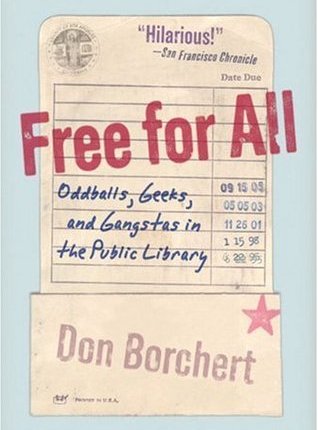
Free for All is an accurate depiction of life as a librarian in a public library.
Sometimes, the job is funny. Other times, it’s incredibly sad. If you’ve never worked in a library system, this book will reveal some of the secrets of a librarian’s day-to-day life.
Before I worked at a public library, I thought it was a quiet, organized mecca for students and bookworms. Now, that I’ve spent some time on the librarian-side of the desk, I know better. My idea of a library was far too simple.
It is a study hall, archive, playroom, home for the homeless, kitchen, bank, movie theater, video game store, newspaper kiosk and so much more. I guess the appropriate question is: what doesn’t a library do?
And a public librarian is so much more than just a librarian. She is a counselor, a computer wizard, a curator of excellent and free entertainment.
She talks to the lonely, uplifts the lost and helps the public navigate the dangerous waters of the internet.
If I ever cease writing for a living, look for me at the library. Odds are, I’ll end up back there.
Perhaps some of the policies at Don Borchert’s library have changed, but at the time that he wrote this book, they charged 50 cents to put a hold in for a patron. This policy shocked me, as my library always offered that service for free.
Borchert cheerfully documents the difficulties with summer reading people vs the school year regulars. It’s a real problem.
Both are excellent and realistic non-fiction books about the trials, tribulations, and, sometimes, life-enhancing satisfaction of working at the library.
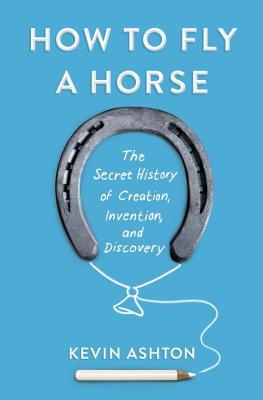
How to Fly a Horse takes many of the myths that I believed about creativity or the creative process and methodically takes them apart. Any perceived blocks are revealed for the fallacies that they are.
It is one of those great non-fiction books that educates the reader while simultaneously encouraging her to improve herself.
From the creation of a South Park episode to Coca-Cola, Kevin Ashton covers all sorts of ways the average person can, does, and should contribute to mankind through her own, innate creativity.
My biggest take-aways from this are Ashton’s descriptions and appropriateness of creativity (or lack of) within organizations. He writes about humanity’s need for the new while simultaneously pushing against it.
Here’s a quote about organizations that could be applied to any work place: “Organizations are made of rituals- millions of small, moments-long transactions between individuals within groups- and it is these rituals that determine how much an organization creates.” pg 225
Be aware of these rituals and harness them to be more creative.
And, on humanity’s propensity to reject innovation, Ashton explains this is not unusual but is actually the normal response to expect when introducing new ideas into your work environment.
I liked that he encouraged creation while also illuminating the many pitfalls, both internal and external, that one may encounter along the creative path.