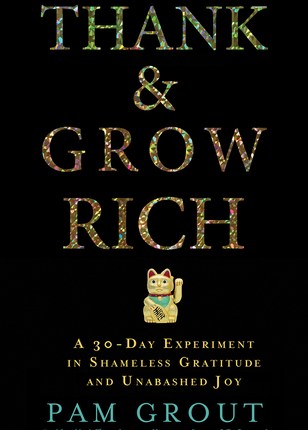
Thank & Grow Rich: A 30-Day Experiment in Shameless Gratitude and Unabashed Joy by Pam Grout

Thank & Grow Rich: A 30-Day Experiment in Shameless Gratitude and Unabashed Joy by Pam Grout

There is a disclaimer written in the description of this book on Goodreads that states it is not for everyone, but it was awesome in my opinion. I am going to admit that I am incredibly biased.
Photo by cottonbro on Pexels.com

I absolutely adored Pam’s other books on New Age thought and had some unbelievable experiences with the experiments recommended in them: E-Squared: Nine Do-It-Yourself Energy Experiments That Prove Your Thoughts Create Your Reality and E-Cubed: Nine More Energy Experiments That Prove Manifesting Magic and Miracles Is Your Full-Time Gig.

However, I couldn’t convince my public library to buy them because, I was told, they are “too fringe”.

Perhaps this book, which focuses on adopting an attitude of gratitude to improve your life, will be mainstream enough to make the cut.

Pam addresses the metaphorical elephant contained in her title early in the book: “No offense to Napoleon Hill, the author of the self help classic on which my title riffs, but the real power is in not thinking. If you want to override your brain’s unfortunate habit of leafing through your past and creating a present hologram to match, forget thinking. And start thanking.” Loc 108, ebook.

I read Think and Grow Rich last year and I could see how other people have beef with the classic. Napoleon Hill focuses on money, making connections, and doing the internal work to shoot yourself into the stratosphere of life success.

There’s very little in there about feeling your way to the same place.

Photo by fauxels on Pexels.com

Pam takes a different approach: “I should get this out on the table right now. This book won’t do a thing for your 401(k) or help you secure the McMansion you pasted onto your vision board. It’s not about getting rich in the traditional sense. … There’s nothing wrong with financial capital, but let me be very clear. It’s incapable of bringing any measure of real happiness.” Locs 324-337 ebook.

She gets to the heart of why seekers chase anything- because we believe that it will bring happiness. Pam suggests getting happy and then the success will come.

And, how does she say that we should “get happy”? By being thankful for what we already have.

“Be astonished by useless things. It’s easy to be thankful for the obvious- healthy kids, public libraries, strong marriages. But in this game we’re going to take it a step further. We’re going to build our gratitude muscle by also appreciating the insignificant and impractical…” Loc 856 ebook.

I had to include that passage for the library mention. Yay libraries!

Photo by Janko Ferlic on Pexels.com

Pam backs up her claims with scientific studies such as: “According to Richard Wiseman, psychology professor at the University of Hertfordshire in England and creator of Luck School, people who think they’re lucky actually are. After eight years of studying hundreds of self-identified exceptionally lucky and exceptionally unlucky people, he concluded that getting good breaks has nothing to do with karma or kismet and everything to do with how we see ourselves.” Loc 991 ebook.

I would like to state for the record that I am one of the luckiest people that I know. 🙂

She also includes a bunch of information from happiness researchers: “When it comes to success, research shows that while IQ, education, and training play cameo roles, the starring role, the headliner on the success stage, is “Do you have a vision? Do you believe it’s possible?” Shawn Achor, author of The Happiness Advantage: The Seven Principles of Positive Psychology That Fuel Success and Performance at Work… claims that predicting success using any other factor (say, your IQ or number of degrees) is about as effective as flipping a coin. What is effective, Achor and Frederickson and other happiness researchers have proven, is creating a happy brain that anticipates accomplishment, that knows success is just a matter of time.” Loc 1876 ebook.

I know that I have a pretty open mind when it comes to these types of books, but my thought is, what’s the harm in it? If it works for you, great! You’ve just discovered a new tool to use for living the best life for you.

If it doesn’t work, no harm done. At the very least, you would know for yourself.

Photo by Belle Co on Pexels.com

I recommend this book for readers of the Abraham Hicks materials because there are quite a few similarities in the philosophies contained within.

Some additional read-alikes for seekers like me who can’t get enough information about the law of attraction: The Power of the Heart: Finding Your True Purpose in Life, Happiness: A Guide to Developing Life’s Most Important Skill, or Dr. Quantum Presents: Meet the Real Creator–You!.

The opinions contained within this review are entirely my own. Thank you to NetGalley and Hay House for a free advance reader’s copy of this book for review purposes!  And, thank you for reading.

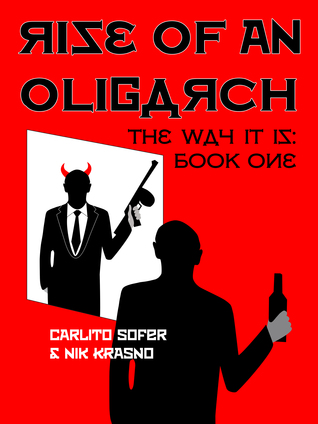
Rise of an Oligarch by Carlito Sofer and Nik Krasno

Rise of an Oligarch by Carlito Sofer and Nik Krasno

I only knew what an “oligarch” is because of my political science degree. For folks who do not know, here’s the definition:

oligarch
noun ol·i·garch \ˈä-lə-ˌgärk, ˈō-\
: a person who belongs to a small group of people who govern or control a country, business, etc.
Source: Merriam-Webster’s Learner’s Dictionary

I remember learning about the different types of government in college and one of the students in class asked, “Where might one find an example of an oligarch?” The professor replied, “Eastern Europe, pretty much.” So, now you know.

Rise of an Oligarch is basically The Godfather set in Europe with a Jewish protagonist. The book starts with an assassination attempt on Mikhail Vorotavich, the boss of his crime syndicate, I mean, business group. The story is told in a series of flashbacks to Mikhail’s childhood and then the current investigation by his associates into the situation with the shooter. Mikhail grew up poor with no connections Through various illegal schemes and associations, he clawed his way to the top. Along the way, he makes a ton of enemies, any one of which could be responsible for the bullet in his skull.

I loved the childhood flashbacks. It reminded me of the film,The Godfather Part II which was my favorite of that trilogy: “I learned that the best way to fight violence was with violence. Eye for an eye beats turning the other cheek every time. Bullies bully easy targets, not those who fight back. Never again was I impressed by physical superiority after that.” pg 18, ebook

Mikhail’s childhood and knowledge of what it is to have nothing drives him to become one of the richest men in the world: “Poverty became our reality. No more ice cream, cinema or toys. My mother’s answer to anything I asked was, “We don’t have money for that, Mishenka,” as she tried to suppress her tears. The colour of my childhood turned grey- the grey buildings, the grey filthy snow after the first day it falls, and the grey, sullen face of my mother.” pgs 24-25 ebook

He also develops his philosophy for life: “I learned many lessons during my high-school days: the value of friendship, never snitching on your friends, the state is the enemy and manipulating it is a virtue not a sin, and if something is prohibited it means you just need to pay to make it allowed. But most importantly, and never forget it, the key to survival is to fly below the radar, unnoticed. Once noticed, you’re doomed.” pg 36 ebook

As much as I enjoyed the scheming and unique ways in which Mikhail bent the law, I gave Rise of an Oligarch only three stars because of the occasional (not constant) vulgarity which wasn’t necessary, because it became repetitive when the story focused on Mikhail’s actions rather than the relationships with his partners (which were discussed briefly but honestly felt tacked on to me rather than incorporated into the story), and because there wasn’t a single, strong female protagonist in the whole thing. There were opportunities for a female character (Mikhail’s mother, his wife, Masha) but the authors chose not to develop them.

Mikhail sees himself as the “best” of the bad men: “Many oligarchs hated the state. Their families lived in Monaco or Sardinia, their children were educated in London and their wealth was stashed in Switzerland. Ukraine was used only as a place where you make money and squeeze it of its last drop of juice… Was this line of thought a kind of self-loathing? Definitely. I hoped I was a bit different though.” pg 260 ebook. Which struck me as the kind of mental gymnastics that everyone goes through- we never see ourselves as the problem. Maybe that’s the problem?

If you enjoyed Rise of an Oligarch, you may want to pick up Bull Mountain by Brian Panowich or Amish Confidential by “Lebanon” Levi Stoltzfus. A big thank you to the authors of this book for a free digital copy for review purposes. The opinions expressed in this review are entirely my own.

Thank you for reading!

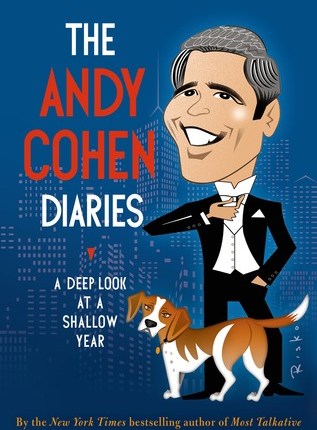
The Andy Cohen Diaries: A Deep Look at a Shallow Year by Andy Cohen

The Andy Cohen Diaries: A Deep Look at a Shallow Year by Andy Cohen

The Andy Cohen Diaries is the type of book that you have to be in the mood to read. It is basically like a book length gossip column, which can sometimes be exactly the kind of fluff that I want to read. Other times though… it is more annoying than amusing.

Andy writes it in a stream of consciousness style- event, event, feeling, event, aside, event, personal thoughts, inside joke, repeat. So, jump into this one if you want a bunch of gossip about the New York scene and Watch What Happens Live.

Photo by Expect Best on Pexels.com

I thought Andy’s description of his book was spot on:“Sometimes-like life itself-these chronicles are funny, sometimes dishy, and sometimes even a little sad. And sometimes they are really, really shallow. Because sometimes life is shallow. I understand that and have accepted it. I hope you will too.” pgs 7-8 ebook

Andy’s life is filled with drama, divas, and emotion laden moments both on and off the screen. I enjoyed watching him juggle it all. He offers this advice for handling the more challenging people in your life: “…I told her I was sorry if I offended her. Sometimes, the only option is to say you’re sorry, even if you have no idea what someone is talking about.” pg 11 ebook.

I’ve never watched any of the Real Housewives of (fill in the blank city). So, those gossip bits didn’t mean all that much to me.

However, the parts about Lady Gaga were a different story! : “Then the weirdest cake arrived from Lady Gaga, red velvet cheesecake with white chocolate on top with Lady Gaga Art Pop written on it… the note said “Love, Gaga” in teeny little capitals. It looked like-I don’t know what actually-robot writing?”pg 18 ebook

Photo by Abhinav Goswami on Pexels.com

I also learned in this book that Andy Cohen makes a cameo in Gaga’s surreal music video, G.U.Y. Who knew?

Andy is from St. Louis, the closest city to my small hometown. So, we had that in common.

Any time he was taking about the weird things that people from St. Louis do, I was nodding my head in sympathy: “Everybody in St. Louis, all they talk about is how great St. Louis is. The hostess lady in the suite asked me if I lived in LA and I said no, I live in New York, and she said to me very earnestly, “Why, may I ask, would you ever leave St. Louis?” pg 38 ebook. Yeah, they do that.

I could go on and on. The Andy Cohen Diaries is just so quotable. Some read alikes: Amish Confidential by “Lebanon” Levi Stoltzfus (tell-all about the Amish Cofidential show and the Amish community) or My Horizontal Life by Chelsea Handler (hilarious recounting of Chelsea’s various escapades).  Thanks for reading!

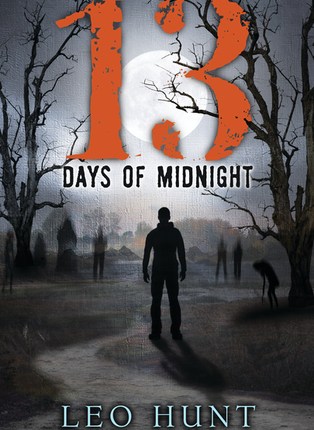
13 Days of Midnight by Leo Hunt

13 Days of Midnight by Leo Hunt

13 Days of Midnight is an enjoyable thrill ride through the world of Luke Manchett, a boy who is about to become a necromancer even though he didn’t know magic exists. His father dies suddenly and leaves him a “Host” which is a group of souls bound to serve and assist him.

The world of the new necromancer is fraught with peril and the souls that his father trapped do not respect him nor do they have his best wishes at heart.  Will Luke survive long enough to discover his own power?

Photo by luizclas on Pexels.com

13 Days of Midnight is classified as a young adult novel and it has enough teen angst and non-graphic violence for that to be true, but I enjoyed it on its own merits, which is something that not all young adult books have going for them.

My favorite part of Hunt’s book is that the reader gets to discover the world and its magical rules along with Luke. You don’t know what the spirits are capable of or what the necromancer’s spell book is going to reveal- it’s exciting! I kept coming back to the story because I just had to know what was going to happen next.

The only issue that I had with 13 Days of Midnight was the premise that Luke’s father didn’t teach his son the magical methods that he knew to protect Luke from what went down after his father’s death. The story cleared up that question for me towards the very end, but I spent most of the book not buying into it. There’s something primal in the parent/child bond that would never allow such a thing to happen. At least, there is for me.

Photo by Juan Pablo Serrano Arenas on Pexels.com

If you enjoyed this book, I’d recommend Shutter by Courtney Alameda (YA horror) or The Engelsfors Trilogy by Mats Strandberg (group of teens discover that they have magical powers and have to save the world).

Thank you to the Goodreads First Reads program for sending me a free copy of this book for review purposes.  And, thank you for reading!

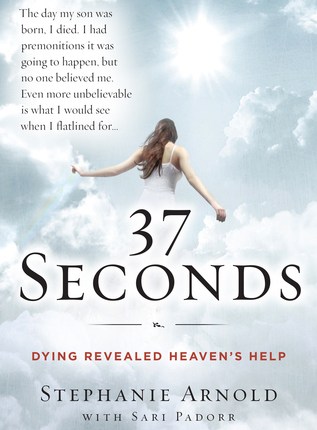
37 Seconds: Dying Revealed Heaven’s Help—A Mother’s Journey by Stephanie Arnold

37 Seconds: Dying Revealed Heaven’s Help—A Mother’s Journey by Stephanie Arnold

37 Seconds is a fascinating account of Stephanie Arnold’s near death experience. She had a premonition that she was going to die having her second child.

Photo by Pixabay on Pexels.com

Stephanie did die for 37 seconds and had an amazing spiritual experience.  Her religious upbringing is in Judaism which makes for a totally different lens of perception than other NDEs (near death experiences) that I have studied.

I like reading books about near death experiences and examinations of consciousness.  So far, I’ve read twenty one books by folks from different religions and parts of the world about their NDE and what they’ve brought back with them to their normal, every day lives.

I found it interesting that the focus of Stephanie’s consciousness during the event was on her deceased relatives and their support of the physical world rather than on a location on a higher level where people go to hang out around their G-d for the rest of eternity.

Photo by Pixabay on Pexels.com

Another portion of the account that made it different than others that I’ve read on the topic is that Stephanie accessed her memories of the time during her 37 second death through hypnosis.

Other NDE writers (Piper, Moorjani, Burpo, et al) came out of their NDEs with memories of what went down. Stephanie, because of the extreme trauma and the premonitions about her death that haunted her for months before the actual event, repressed her NDE.

Isn’t it fascinating?  The study of consciousness never ceases to surprise me. It seems that not only do our lenses of perception create what we see in other modes of existence, but we can choose whether to access those perceptions or not.

I also liked Stephanie’s repeated message through 37 Seconds of trusting your own intuitions and believing in that inner voice. I feel that in modern society, we’ve advanced in so many ways both scientifically and technologically, that we discount simpler modes of understanding and knowledge.

Why try learning about why your body is presenting symptoms of anxiety and stress when we can just medicate it away? Why believe in your dreams and intuitions when educated doctors and scans show that nothing is wrong?

Photo by alleksana on Pexels.com

If Stephanie had listened to the experts, she would be dead. She is a great role model for a return to trusting ourselves. Doctors, medicine, and therapy have their place but so do dreams, intuitions, and the inner voice.

If you enjoyed 37 Seconds, try Wisdom of Near-Death Experiences: How Understanding NDEs Can Help Us Live More Fully by Penny Satori or Journey of Souls: Case Studies of Life Between Lives by Michael Newton.

Thank you for reading!

The Golem and the Jinni by Helene Wecker

The Golem and the Jinni by Helene Wecker

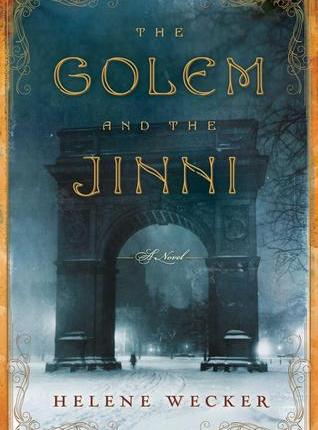
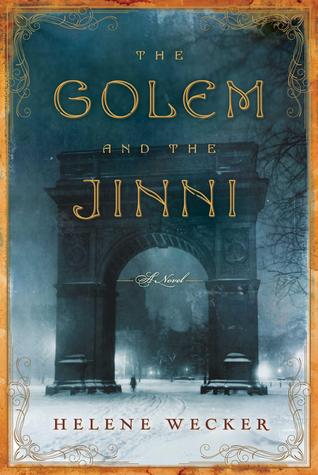
golemandjinniThis is the story of a golem and a jinni, how they discover who they are, their strengths, their weaknesses, and how, even though they’re composed of completely different elements, they may just be the best friend for each other in a human world where they will never truly belong.
As I was reading The Golem and the Jinni, enjoying their adventures and waiting to see how they would discover their origins, I didn’t consider for a moment the idea that the tale could be a metaphor for something else.

When I read the Q&A with the author at the end of the book, I was really kicking myself. Of course, it made total sense as a metaphor for cultural differences. And, when I thought about it that way, I liked the story even more.

On the other hand, this tale can be completely enjoyed and interpreted as a historical fiction/fairytale and, if you’re not in the mood to think any deeper than that, it doesn’t matter, because it’s still awesome. So, it’s a win/win book for the deep thinkers and the no-thinkers.

The Golem and the Jinni is not a fast read. Wecker really builds the characters and gives the back story for everybody who comes across the page.

At first I was like, “Do we really need to know the ice cream guy’s life story?” and I was getting frustrated with the pacing of it. But, as her characters came together and their lives began to intertwine, I began to appreciate the true artistry of the novel.

It is like an orchestral fugue in which the instruments play their themes one by one at the beginning, which is beautiful, but when the tones combine, it lifts the piece to a whole other place. That is The Golem and the Jinni. Give it the time and space to build the characters and you will be blown away by the ending. At least, I was.

Wecker has a talent for creating multi-layered characters. Though the golem is only a few hours old, the author manages to instill in her a childlike curiosity mixed with the timelessness of a magical creature.

In this passage, the golem is seeing the Statue of Liberty for the first time: “The deck was crowded with people, and at first the Golem didn’t see what they were waving at. But then, there she was: a gray-green woman standing in the middle of the water, holding a tablet and bearing aloft a torch. Her gaze was unblinking, and she stood so still: was it another golem? … And those on deck were waving and shouting at her with jubilation, crying even as they smiled. This, too, the Golem thought, was a constructed woman. Whatever she meant to the others, she was loved and respected for it. For the first time… the Golem felt something like hope. pg 17 ebook.

She also describes scenes just beautifully. In this passage, the Jinni sees New York harbor: “The Jinni leaned against the railing, transfixed by the view. He was a creature of the desert, and never in his life had he come so close to this much water. It lapped at the stone below his feet, reaching now higher, now lower. Muted colors floated on its surface, and afternoon sunlight reflecting in the ever-changing dips of the waves. Still it was hard to believe that this was not some expert illusion, intended to befuddle him. At any moment he expected the city and water to dissolve, to be replaced by the familiar steppes and plateaus of the Syrian Desert, his home for close to two hundred years.” pg 23 ebook

I loved the little, let’s call them “wisdom nuggets,” that Wecker sprinkled throughout the story. Like: “A man might desire something for a moment, while a larger part of him rejects it. You’ll need to learn to judge people by their actions, not their thoughts.” pg 40 ebook. Or: “Men need no reason to cause mischief, only an excuse!” pg 172 ebook.

I also connected with this passage where the Jinni is thinking about the power of names: “To him the new name suggested that the changes he’d undergone were so drastic, so pervasive, that he was no longer the same being at all. He tried not to dwell on such dark thoughts, and instead concentrated on speaking politely, and maintaining his story- but every so often, as he listened to the chatter of yet more visitors, he spoke his true name to himself in the back of his mind, and took comfort in the sound.” pg 68 ebook.

I recommend The Golem and the Jinni for folks who enjoy historical fiction blended with fantasy, folks who love deep characters, and for anyone who loves to read beautiful prose. This book has all of that.

Thanks for reading!

The History Major by Michael Phillip Cash

The History Major by Michael Phillip Cash

Something strange happened last night, but Amanda can’t remember what it was. She’s terribly hung over and she knows that she fought with her boyfriend, but that doesn’t explain why her roommate isn’t the person she remembers or why she can’t see out the window. Why does she feel like something is watching her and why does the university campus not look like it did yesterday? And, so starts The History Major.

Discovering what is going on is part of the fun of this short story, so I’d suggest stopping here if you have any intention of reading this yourself. Thank you to NetGalley for a free copy of this short story for review purposes.  ***Please do not read beyond this point to avoid spoilers!!  Warning… Warning!!***

For those that either have read it or are not going to read it… let’s discuss!

So, I feel as if this story, like life some would say, is all about consciousness. How aware are you of your internal worlds? Does our history define us or do we decide what has meaning? Is there such thing as the collective unconscious? And, the biggest question of all, what happens to consciousness after death?

The author begins with Amanda feeling paranoid and it sets the stage for the whole thing: “Her skin prickled again; she felt the sensation of being watched. Amanda turned around and walked backward, looking across the vast estate for the intrusive eyes. The wind ruffled the leaves. Amanda paused, searching for the discordant thing that pulled at her, but there was nothing out of place. She searched but couldn’t find the cause of her uneasiness.” loc 206, ebook. There’s a general feeling of creepiness that never goes away. I didn’t really like that part of The History Major but readers of horror might really love it. Self discovery and self knowledge shouldn’t be scary. The various dream books that I’ve read say that the way to end nightmares is to stop running and face the monster. I feel like Amanda spends far too much time running, but then, I suppose, it wouldn’t make a very good story if she didn’t, would it? Amanda discovers monster, faces monster, and is ok after all.

Amanda is a sympathetic character. I think we’ve all been there: the day after having one too many and waking up to an “uh oh” feeling. She, fairly bravely, faces the first day of college even though she knows something is not right. She even takes her messed up schedule to the secretaries and tries to get them to change her classes. But, I didn’t like how reliant she is on her boyfriend. Given her childhood history (warning, if you are triggered by childhood molestation do not read this book), I can see how she turned out that way, but I wanted her to take the reigns of her life and go for it- not fret about if walking down the sidewalk with another man will make her boyfriend jealous.

I also did not like Death being personified as a monster or the fate of Nick. I don’t believe that Death is evil or comes at us with choking hands. I prefer to view it as a doorway to another reality. As for the “hell” vision for Nick, I think that hell is a state of mind and something that we create on earth, but, this is just my opinion.

“People are trapped in history, and history is trapped in them.” Loc 611, ebook. I thought that The History Major did a good job of using historical figures to help Amanda remember her present circumstances, but I thought that the “history” itself was given too much credit. For example, Amanda could have been watching the tv and been triggered into remembering her past by what came on the screen. Or, she could have taken an art class and been triggered by the works of art in the classroom… there are many topics that could have led to her epiphany.

So, that was my beef with this book: the frightening aspect of searching the subconscious mind, the co-dependent heroine, the nasty personification of Death and the hellish afterlife, and the reliance on historical figures who, when you consider it more closely, have very little to do with what actually happened to Amanda. But, even saying all those things, I read this short story in one sitting and was really interested to see where the author was taking it. Pick up The History Major if you’re interested in a short, metaphysical read. If you’re looking for more in-depth books about any of the history that appears in this story try: Blood & Beauty: the Borgias by Sarah Dunant or Joan of Arc: a History by Helen Castor.

Thanks for reading!

The Guild by Felicia Day

The Guild by Felicia Day

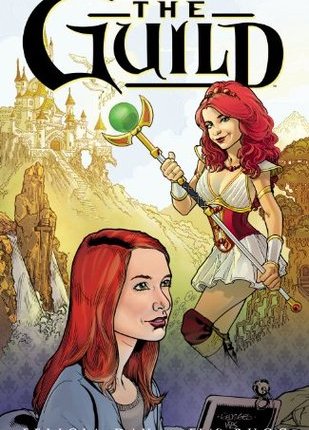
The Guild is a graphic novel prequel for the internet series of the same name.  I think it is a must-read for fans of Day’s show and gamers who haven’t seen the show may enjoy it too. Other readers may want to give this a pass as it deals almost exclusively with gaming or RL relationships through gaming.

As much as I enjoyed this book, I felt like Day missed a golden opportunity to present the show in a completely different way. Day could have written this as characters in “The Game” with only brief moments of RL intruding into it. It would have flipped the show on its head and, in graphic novel form, she wouldn’t have faced any production limitations. Can you imagine it? I absolutely could. Maybe that’s what she did in the next book? Here’s hoping.

The glimpses that we had of the backstories of the Guild’s characters was awesome and I couldn’t get enough of “The Game” itself. Pretty much any scene where they were in the digital world was amazing. I also loved how their avatars had their real life faces.

The “one camera confessional” scenes worked so well in show, but didn’t translate as fluidly in the book. I think the reason why it works in real life is the expressiveness of Day’s face as she talks her way through her problems. The panels in the book didn’t have that aliveness and sort of fell flat.

But, that small gripe aside, I really enjoyed this one and highly recommend it. Some other graphic novels that readers may enjoy: Nimona by Noelle Stevenson (fantasy world), Fray by Joss Whedon (fantasy world), or The Order of the Stick series by Rich Burlew (for board gamers and fans of DnD).

Thanks for reading!

Forest of Memory by Mary Robinette Kowal

Forest of Memory by Mary Robinette Kowal

Katya lives in a futuristic world where everyone and everything is linked to the web. Her AI speaks in her ear and fills her vision telling her about the people around her, their histories, past business deals, and anything that could be of interest to her in her job as an “Authenticities” (basically antiques) dealer. One day, on her way back from a purchase, she sees a man shoot a deer (very illegal) and realizes that her connection to the web has crashed, leaving her marooned in the real world with a potential maniac. What’s he doing and is she going to survive?

I see where Kowal was trying to take this novella, but it didn’t really work for me. She wrote as her narrator, trying to recount a story without the use of computers, which, in this world is particularly difficult as everyone in the future uses computers to remember anything, and shows her discomfort at her disconnected state by inserting misspellings and typos. But, she didn’t do this consistently… it was just random enough for me to forget that she was using this device and say to myself, “Typo!” and then remember that it was supposed to be there. So, it turned into this annoying distraction.

I was most interested in Katya’s job as an Authenticities dealer, but, when Kowal moved the story off the grid, that essentially removed that element. In this passage, Katya’s analyzing a typewriter: “It looked to be from the mid-twentieth century, though without picking it up or using my loupe, I couldn’t confirm that. The fine dust caked into the grooves around the base seemed real enough, though. Most people who print fakes know enough to add dust to make it seem older, but they usually put it on too thickly and without regard for the use patterns of everyday objects.” pg 7, ebook. The parts that I loved the most read like a futuristic Antiques Road Show, which would have been awesome if the story had continued along that vein.

The novella reached for depths that it never really explored, but this passage caught my attention: “It feels like he wanted me there to bear witness, but maybe it was just an opportunity that presented itself because I stopped. If I hadn’t, if I had biked on through, would I have known that this was a cusp point in my life? Probably not. It makes you wonder, doesn’t it, how many other cusp points you sail through in life without any awareness.” pg 11 ebook. I do wonder about that. Life seems to be a series of stumblings and fortunate events but is it really as random as it seems? If you take one road, instead of another, does it even matter? Aware or not, life unfolds… I don’t know. What do you think?

What ruined this short read for me was that I didn’t get the ending at all. I essentially had to go back and read it all again, but then I still had a moment of “Huh?” Katya describes my over-arching feelings well: “There were so few things that made sense about the whole experience; I’m not sure why I expected events to suddenly appear orderly and rational now.” pg 25, ebook

I do not recommend Forest of Memory unless you’re looking for a puzzling sci fi read that raises the question of reliance on AI at the expense of everything else. And, if you find deeper meaning in it than I did, please do explain it to me. Thanks for reading!