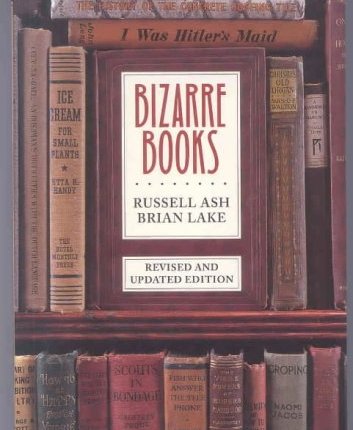
Though it relies too heavily on puns and doubles ententes, Bizarre Books is a humorous look at titles, subjects and author names in published materials. It is a must-read for any book lover or professional who deals with the printed word on a daily basis. *cough* Librarians. *cough*
“All the books recorded are real titles, with real authors. All of them were published with the serious intention of informing, not amusing. In this, they have signally failed.” introduction, pg 7.
I don’t think that ALL of them were meant to be informative. Take this entry from one of my favorite genres, science fiction: Planet of the Knob Heads. Stanton A. Coblentz. Science Fiction, Atlas Publishing, 1939. “Jack and Marjorie are brought to the distant world of their captors. In far Andromeda, they struggle against “favors” of the knob-heads – but hope fades as they face the High Knobule!” pg 40. Almost irresistible, isn’t it?
If science fiction isn’t your thing, how about this (I’m guessing) thriller: What Farrar Saw. James Hanley. Nicholson & Watson, 1946. “No story by Mr. Hanley is without its moral implications; here we have a glimpse of nightmare horror and chaos in a monstrous machine ridden world. It starts simply enough as chaos does. A young couple set off for a holiday in Scotland.” pg 44. Sounds at least as promising as The Girl on the Train, wouldn’t you say?
Those were some of the fictional books that caught my eye. On to the non-fiction. If it was on a shelf in front of me, I’d pick up Carnivorous Butterflies by Austin Hobart Clark, pg 62.
In the most ineffective category, the prize goes to: Atomic Bombing: How to Protect Yourself. Watson Davis, et al. New York: William H. Wise & Co. 1950. One of its suggestions was: “Curl up in a ball as you hit the ground.” pg 166.
By far, my most favorite selection is: The New Guide of the Conversation in Portuguese and English in Two Parts. Pedro Carolino.
Familiar phrases: Let us go on ours feet. At what o’clock is to get up? At which is this hat. Have him some children? pg 54. And so on. The authors dedicated another three pages to this gem alone.
Highly recommended from this bookworm. It made me laugh a lot and that is not easy to do.
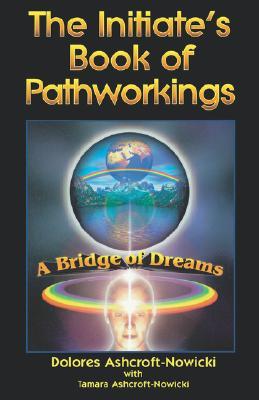
Dolores Ashcroft-Nowicki shares meditations which she calls pathworkings as a method of self actualization.
I understand that directed pathworkings are an actual technique that has been used by mystery schools for centuries to explore consciousness. I just don’t see its usefulness beyond a sort of tourist trip through what “may” be in your mind rather than what “is”.
Let’s compare it to riding a bike. Directed pathworkings are like watching a video of someone riding a bike. Passive pathworkings are like hopping on that bike and riding it all over your neighborhood. You get the visceral experience of being there.
If you’ve never ridden a bike before, watching the video might be safer, but it certainly isn’t more fun.
If we look at the Initiate’s Book of Pathworking as a journal of an adept’s inner work, it feels rather rehearsed and stilted as opposed to the out of body work that was chronicled in Multidimensional Man by Jurgen Ziewe.
If we consider the different approaches between Ashcroft-Nowicki and Ziewe, it also makes more sense that these pathworkings have a clear beginning, middle, and end as opposed to Ziewe’s offerings which are more like real life: random and, at times, nonsensical.
Because (I’m assuming) an adept from The Servants of Light School created these pathworkings through actual experiences on the inner planes, it has the curious side effect of unfolding like a structured lesson plan.
In Nick Ferrell’s book, Magical Pathworking, he discusses the importance of writing pathworkings like a story with a beginning, middle, and end for its consciousness shaping potential, but he never talks about how naturally occurring pathworkings or passive pathworkings, present themselves in that manner, organically. At least, that has been my experience.
I suspect that mystery schools experienced some pathworkings through their consciousness research, recorded the patterns that occur, and then sought to imitate that inner perfection by scripting pathworkings like the ones found in this book.
There is value to be found in this book as it provides a nice introduction to pathworking in general: “What is a pathworking? It is similar to a virtual reality trip. Pathworkings are perfectly natural and can occur spontaneously in the form of daydreams. Used as a structured series of visualizations, they hold many possibilities for the student.” Introduction, pg x
I found some of this book silly like the Healing Spring (Women only) pathworking on page 61. Women only? We’re dealing with consciousness here which is neither male or female, but pure being. If a guy wants to run the Healing Spring pathworking, I’m not going to be the one to say no.
Some of the poetry in the pathworkings is very beautiful and felt authentic, which again made me wonder who wrote these for the SOL. W.E. Butler? Dion Fortune? So curious:
“Forest Lord, with twelve-tined crown, Now we come to bed thee down. Rest content when sleeping deep, Leave the Summer Queen to weep.
Rest thee well till comes the Spring When harebells in the wood do ring; Then rouse thee up the maid to wed And seek the joy of the greenwood bed.
Hunter, blessed be thy sleep; Choose a maid thy bed to keep. Dreams of silver, dreams of gold Will guard against the winter’s cold.” pg 190
To give you a comparison, here is a chant from some pixies in a passive pathworking that I experienced a couple of months ago:
“Awake the trees, awake the night, awake the shining moon. Feed the plants, free the life that dwells within the bloom. To keep the forest growing tall, the pixie people sing, We bring the song and dance the call to wake the Forest King.
Awake the night, awake the moon, awake the powers old, We’re the ones that call upon the Spirit of the fold. Dance the dance, sing the songs, make the forest wake, In our stead, these plants have fed the thirst that never slakes.
Feels very similar, yes? That’s the fascinating thing about consciousness research to me. It feels so familiar but, at the same time, infinitely unknown.
It’s just my opinion but, I think, in addition to space, our own minds are the next frontier of human exploration.
“These “serial” workings will grow with you as you explore them, and can bring about many strange events, both in your astral life and in your physical existence. They are more potent than they seem, so take them slowly.” pg 214. One a week has worked pretty well for me. I feel like I’m learning and growing but not being overwhelmed by the changes.
A dated portion of this book that I found rather amusing, especially since the recent kerfluffle over the year 2012: “As the year 2000 comes ever closer, speculation as to the future of the world gets wilder. Exactly the same kind of hysteria hit the known world in the year 1000… The year 2000 will usher in a time of adventure, opportunity, and yes, a lot of changes. But we will survive. Things may be very different a hundred years from now, but we have survived big changes before and will do so again.” pg 231 Amen.
“One of the things an initiate learns is that every man and woman is essentially a “multi-versal” being. That is, we exist simultaneously in many dimensions and parallel universes. We have a consciousness in each one, a life in each one, a purpose and destiny in each one. But each is minutely different. With every passing moment in time, we change our future in each universe by constantly making decisions that affect the course of that future.” pg 240. I don’t know that I agree with everything in that passage, but isn’t it a beautiful view of reality? Layers within layers of truth, all interacting and changing each other, eternally.
If you liked the guided pathworkings in this book, you may want to read: Magical Pathworking: Techniques of Active Imagination by Nick Farrell, Pathworking and the Tree of Life: A Qabala Guide to Empowerment & Initiation by Ted Andrews, or the second half of A Garden of Pomegranates: Skrying on the Tree of Life by Israel Regardie. If you want examples of (mostly) passive, out of body experiences, read: Multidimensional Man by Jurgen Ziewe or Psychic Warrior: The True Story of America’s Foremost Psychic Spy and the Cover-Up of the CIA’s Top-Secret Stargate Program by David Morehouse.
This book is a powerful testament to Mother Teresa’s humanity, humbleness and faith. I do not share all of her views, but I found it impossible not to be swayed by her unwavering belief in the unseen.
“Not given to much talking, Mother Teresa spoke only when necessary. Thus her words, never labored nor many, were convincing.” pg vii, introduction.
“I have the feeling that we are in such a hurry that we do not even have time to look at one another and smile.” pg 23. I believe that too.
What does a smile cost? Nothing.
“Sometimes people can hunger for more than bread. It is possible that our children, our husband, our wife, do not hunger for bread, do not need clothes, do not lack a house. But are we equally sure that none of them feels alone, abandoned, neglected, needing some affection? That, too, is poverty.” pg 27.
I was most moved by Mother Teresa’s thoughts about poverty in the first-world. We do suffer from a plague of unkindness, loneliness and greed. I believe that the soul needs more than food to thrive.
“Peace and war begin at home. If we truly want peace in the world, let us begin by loving one another in our own families. If we want to spread joy, we need for every family to have joy.” pg 47. Yes.
Finally: “As far as I am concerned, the greatest suffering is to feel alone, unwanted, unloved. The greatest suffering is also having no one, forgetting what an intimate, truly human relationship is, not knowing what it means to be loved, not having a family or friends.” pg 91.
Wisdom from a woman who worked with some of the poorest people on the planet.
A beautiful collection of quotations from a beautiful soul- recommended for everyone but especially those in need of loving words and some peace.
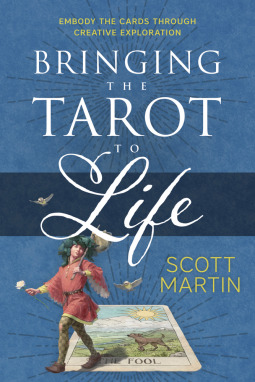
Bringing the Tarot to Life is a unique tarot manual that invites the reader to use her own imagination in assimilating and interpreting the cards. I’ve never read anything quite like it.
Scott Martin was an actor and theater teacher for many years. “It struck me that just as an actor delves into his character, so a student of the tarot can explore the archetypes that are represented in the seventy-eight cards in the tarot. He can develop his intuitive abilities by participating in the written and performance exercises an actor uses to hone his talent and to create his role in a play.” loc 112-128, ebook.
He based the first two sections of the book on that idea and created a series of theater-inspired games and exploratory exercises to be played in groups or alone.
The last portion of the book consists of Martin’s interpretations of the cards. I found that section to be the least interesting, but there could be descriptions in those pages that others may not have heard. So, don’t let me deter you.
There was also some trivia included for tarot enthusiasts. Something that I didn’t know was that before Paul Foster Case helped to form The Golden Dawn, he was in theater.
Paul Foster Case became interested in tarot in 1900 when someone asked him where he thought playing cards came from. … Prior to that, he was actively involved in the theater. He was the musical director on a showboat and later worked in musical theater and vaudeville.” loc 128, ebook. But old man river, he just keeps rolling along…
I agreed with Martin’s thoughts on improving your intuition: “How does one develop his intuition? One obvious answer is to expose the mind to more creative and imaginative ways to thinking and looking at the world. Creativity and intuition are inextricably linked.” loc 164. Indeed.
My favorite of the exercises presented in this book is “I Am What I Do” loc 231, ebook. It encourages readers to assign jobs to the different cards.
“Many people in life, as well as characters in plays, define themselves to a great extent in terms of what they do. … the possibilities are virtually limitless: The Ten of Pentacles- a family counselor. The Five of Swords- a crooked hedge fund manager. The Knight of Cups- a poet.” loc 231.
I thought that was hilarious. And, I was looking at the cards in ways that I never had before. Talk about ‘Bringing the Tarot to Life’!
Recommended for beginners or advanced practitioners of tarot cards. Every reader will most likely find an exercise or two to their liking because of the huge variety Martin offers.
Thank you to NetGalley and Llewellyn publishing for a free digital advance reader’s copy of this book. Reminder: the brief quotations that I cited in this review may change slightly in the final published version.
Nerd Do Well is Simon Pegg’s life story interspersed with the tale of a fictional alter ego, Pegg, a James Bond figure with a robotic sidekick. His coming of age stories and fictional bits are hilarious but once Pegg gets into his movie making period, the book loses it’s momentum.
I preferred the nostalgia of the first time he saw Star Wars to the actuality of meeting his hero, George Lucas and finding him stand-offish. There’s something heart breaking about seeing childhood hero worship crumble in the face of cold hard reality.
Pegg’s education in film appreciation and critique make for truly fascinating observations about pop culture films. I took his thoughts about how the Anakin/Frankenstein scene in the third Star Wars movie could have been made into a memorable and fitting theatrical moment instead of the joke that it was (pg 328-329) to my husband, who is the most ardent Star Wars fan that I know. Husband said in response, “His way would have made it much better.” You’ll have to trust me when I say that that’s very high praise.
Another of my favorite parts in Nerd Do Well was Pegg’s explanation for American readers about why the pub occupies a prominent place at the center of British social life. I’d never really understood what the attraction was until he painted the scene.
I mean, in my hometown, we have all sorts of dive-bars lining main street where, any night of the week, I could roll in there and meet up with the prematurely aged classmates of mine who will never get out of that place. But, who wants to do that. The bar is the epitome of failure rather than community.
With his homemade quizzes, neighborhood regulars, and music, Pegg’s pub seems to be somewhere warm and inviting where I would actually enjoy hanging out. It makes much more sense to me now why Shaun of the Dead was based around a pub and also why most DnD campaigns begin in taverns.
When my husband and I were first dating, we lived in different parts of the country. This was one of the books he sent when he found out that I loved poetry. He bought himself a copy too and we read it together- separately. Then we talked about it on the phone later. This was in the days before Skype or Facetime. It seems so quaint now.
“I desire you
more than food
or drink”
“My body
my senses
my mind
hunger for your taste”
“I can sense your presence in my heart although you belong to all the world”
“I wait with silent passion for one gesture one glance from you” pg 34
If you ever meet someone romantically interesting who tells you they like poetry, buy them a book of Rumi. You won’t regret it- at least, my husband says he doesn’t. 🙂
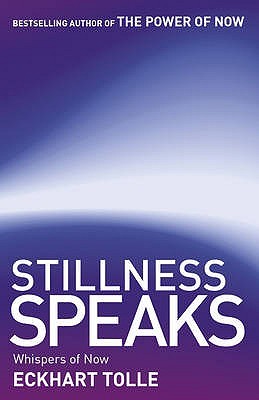
Shorter and simpler than his other books, Stillness Speaks is the essence of Eckhart Tolle. If you’re interested in his teaching, but don’t feel up to some of his more far-out ideas, this would be a good place to start.
Waking up to who you really are: “When you recognize that there is a voice in your head that pretends to be you and never stops speaking, you are awakening out of your unconscious identification with the stream of thinking. When you notice that voice, you realize that who you are is not the voice- the thinker- but the one who is aware of it. Knowing yourself as the awareness behind the voice is freedom.” pg 29.
If you feel like things are out of your control, Eckhart Tolle hands the reins of power back to you: “Your thoughts make you unhappy. Your interpretations, the stories you tell yourself make you unhappy. “The thoughts I am thinking right now are making me unhappy.” This realization breaks your unconscious identification with those thoughts.” pg 120.
This book is filled with mind-blowing moments. Take this one (I underlined it in my copy): “Death is not the opposite of life. Life has no opposite. The opposite of death is birth. Life is eternal.” pg 103. Eckhart Tolle mic drop.
I’ve always loved his thoughts about the relationship between nature and man: “Nature can bring you to stillness. That is its gift to you. When you perceive and join with nature in the field of stillness, that field becomes permeated with your awareness. That is your gift to nature. Through you nature becomes aware of itself. Nature has been waiting for you, as it were, for millions of years.” pgs 85-86. So, go hug a tree today. 🙂
This book is an experience which is hard to describe. Read it and let me know what you think.
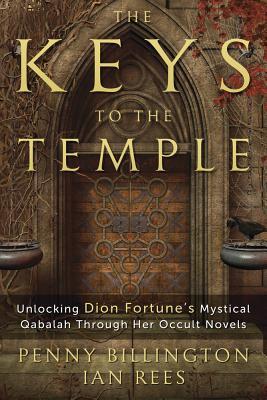
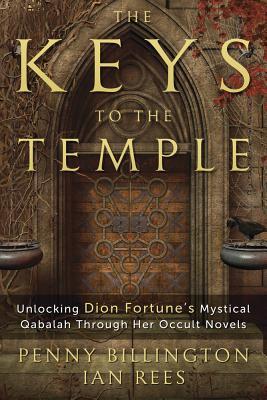
I’d recommend The Keys to the Temple for mid-level to advanced students of the Qabalah. As simple as the authors have made it, they still assume that you know the worlds, paths and general theory. If you haven’t studied The Mystical Qabalah, this won’t make any sense at all.
If you have the background and the interest, The Keys to the Temple may be of great interest to you. This book contains one of the clearest explanations of the path of the spiritual journey that I have ever read.
Let’s start from the top. What is the Qabalah? “The Qabalah is a spiritual system that has been practiced secretly in Europe since at least the 12th century though it draws on deep roots within Judeo Christian tradition. loc 3117.
I have read criticisms of the books, that they’re too cerebral or dry theory. “However when most people encounter the book they are confronted by a dense-seeming text with long lists of apparently unrelated facts: the idea that this is linked with the vivid imagery and dynamism of the novels can be difficult to understand.” loc 172. I agree that it is “dense” but since it was my introduction to the stuff, I didn’t know any better.
Dion Fortune went a step further and wrote fictional novels to put Qabalistic theory into the real world. The Keys to the Temple takes these books apart by plot, character, theory and then gives practical exercises for personal meditation on the works.
That last part, the practical exercises, is the most important in my mind. It’s like learning to ride a bike. You can read books about it and watch other people riding bikes or talk about riding bikes. But, it’s not until you ride yourself that you get the experience and thrill of it.
With this book, the authors have handed you a bike and shown you the door of the garage. It’s just up to you to ride out there. “Anyone can read this book, but only those who do the work will gain anything from it. The secret of magic is that it is experiential.” loc 2374.
Fortune was also deep into Jungian psychology. “She came to significant conclusions when contrasting psychological and magical approaches in prompting change. Fortune was a forward thinker, and the first to acknowledge that ideas and theories could develop for the better. Her stories seem almost to anticipate the direction psychology would travel, into area that might now be described as spiritual psychology.” loc 3117. And this was in the early part of the 19th century. She truly was a woman ahead of her time.
I’m excited about this book and its potential. The Western Mystery tradition never gets its own shelf in the book stores. The new textbooks, what few there are, are mixed in with the New Age/New Thought works. But, that’s not quite right. It’s truly a category all of its own.
I think the time has come for these practices to be re-introduced to the world. The Keys to the Temple is a step in the right direction.
Thank you to NetGalley and Llewellyn Publications for a free digital copy of this book.
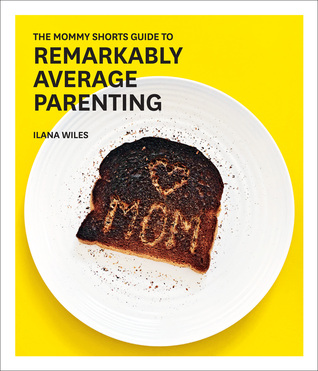
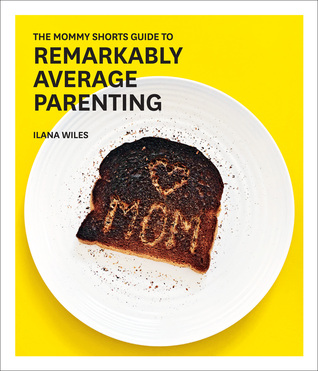
The Mommy Shorts Guide to Remarkably Average Parenting is one of the best books about parenthood I’ve ever read. It is an honesty, funny and poignant look at the un-glamorous side of parenting. I loved the pictures. I loved the stories. I wish that this book had been around when I had my baby. Between this read and How Not to Hate Your Husband After Kids, mothers-to-be have all their bases covered.
Ilana warns mothers about the perils of choosing rare names: “… if you want to name your child something odd, I support you. I like odd names. I think odd names make the world a more interesting place. But you should be prepared to hear some criticism when you are at your most vulnerable.” pg 19. I didn’t even pick something that weird for my child (Willow) but I still faced criticism. When I told my grandpa the name I picked for his first female great-grandkid, he told me that it was the stupidest thing he’d ever heard. And there I was, heavily pregnant. Yeah, I cried. Wish someone had warned me.
I empathized with the idea that parents have no clue what they’re doing and we’re all secretly terrified that we’re going to screw up our kids in some irreparable way. Over a decade later and I still feel that: “In hindsight, the newborn phase wouldn’t be that hard if new parents weren’t so worried about messing up in such a way that it would ruin their newborn’s life forever.” pg 33.
The page entitled, My two-year-old’s rules for eating a banana pg 76, had me in stitches. Kids are so weird about food. My daughter is currently on a mac-n-cheese, ramen and ice cream kick. This time last year, all she would eat was homemade pancakes and grilled cheese with the crusts cut off. I’m sure that in another year, we’ll be somewhere else. And it’s not just about the “what”, there’s also the “how.” If you cut the crusts off the grilled cheese, but then don’t cut it diagonally, then no dice. You may as well throw it out because my kid won’t eat it. It’s absurd, but true. Poor Ilana suffers through the same thing but with bananas.
The other funniest mini-chapter is: “Totally Butchered Words: Even if you do stop cursing and shield your kids’ ears from swearwords outside the home, your kids will probably still end up saying a few unfortunate things anyway. This is because toddlers might be trying to say one thing, but then it comes out sounding like another word entirely.” pg 116. I can’t even quote what she prints on the next pages because it is too filthy but, in my opinion, it is absolutely hilarious.
Ilana’s parenting philosophy is fantastic: “It’s not a matter of high or low expectations- it’s a matter of no expectations. Discover who your kid is as you go. Your kids will not be who you expect, but the things that amaze us most in life are never the things we expect.” pg 215 Mine amazes me all the time.
Highly recommended to own or give as a gift, The Mommy Shorts Guide to Remarkably Average Parenting is a cut-above average.