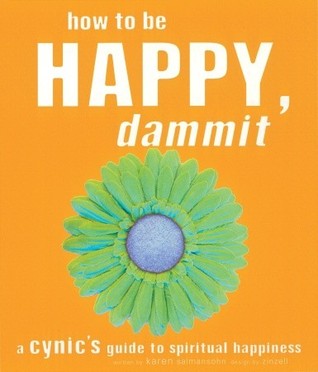
How to Be Happy, Dammit: A Cynic’s Guide to Spiritual Happiness by Karen Salmansohn

How to Be Happy, Dammit: A Cynic’s Guide to Spiritual Happiness by Karen Salmansohn

How to Be Happy, Dammit is a succinct, brightly colored treatise on enlightenment. Coming in around 230 pages with only a few words per page, this is a book that can be read over the course of a lunch hour or *ahem* during other short breaks in your life on a porcelain throne.

Photo by Andre Furtado on Pexels.com

It doesn’t use an abundance of coarse language (see title), but it does utilize a few words to get the point across.

The book is broken down into short life lessons that feed into the next. “Life Lesson 1: Pain exists. Life can hurt. Like a lot. Even when you’re good, you can get whacked. Without apology. Without explanation.” pgs 14-15.

That’s the life lesson about being born. Can’t really argue with that.

My child was born wailing before she was even entirely out. I was wailing too, for different reasons of course, but life can hurt. No doubt.

I found meaning in “Life Lesson 6: Never go shopping for kiwis in a shoe store. Some people just don’t have what you need. So why waste time, banging on their doors, ringing their bells, demanding service?” pgs 38-39.

Photo by PhotoMIX Company on Pexels.com

I think I’m still learning that one.

“Life Lesson 19: This is a world of duality: of good and bad, yin and yang, decaffeinated and caffeinated. So you must always be prepared!” pg 112. Decaffeinated? Poor souls…

In the chapter on self-programming, we get this wisdom: Life Lesson 27: The world is your mirror.” pg 174.

Photo by Mauru00edcio Mascaro on Pexels.com

I don’t think folks realize that either.

Recommended for people who are interested in spirituality, but don’t necessarily have a lot of time or patience for more touchy-feely books. How to Be Happy, Dammit delivers on its title. Now let’s all go be happy. Dammit. 🙂

Thanks for reading!

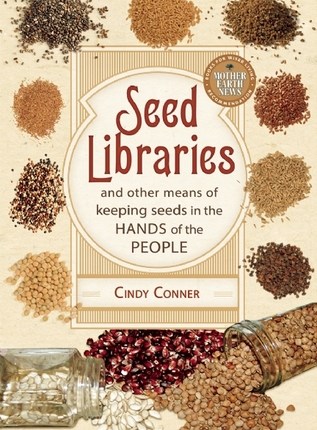
Seed Libraries: And Other Means of Keeping Seeds in the Hands of the People by Cindy Conner

Seed Libraries: And Other Means of Keeping Seeds in the Hands of the People by Cindy Conner
seed libraries

Seed Libraries gives readers the tools and know-how to set up their own seed distributing communities. The community could be through a public library, informal seed swap, or other location.

Cindy goes into enough detail about the specifics so that first timers or inexperienced gardeners can get an overview of what will be required, but not so much information so that the reader feels overwhelmed.

Even though I knew a bit about seed because I have an uncle who has owned his own seed company since the early 80’s, I found this book useful and informative.

Through his experience, I learned how seed producing mega-companies introduced hybrids into the supply that will only grow one season. This hurt the smaller, local seed companies (like my uncle’s) that processed seed for the farmers who grew it and then used it to plant the next crop.

He was forced to expand his company away from seed processing, which was once a major part of his enterprise, in order to stay in business.

Photo by Viktor Smith on Pexels.com

The farmers, who only purchased seed every couple of years and grew out their own plants to save money, were forced to buy seed every year. It was a huge shift in how planting and seeds were handled.

It also changed who controlled the food supply.

If there is a way that I can help get seed back into the hands of local people, I’m all for it.

The afterword to this book discusses a legal challenge presented by the state of Pennsylvania to a public library that wanted to start a seed library there. I was wondering what Illinois has to say about seed libraries.

Maybe I should look into it.

I’m very excited about the possibilities that Seed Libraries and Other Means of Keeping Seeds in the Hands of the People has sown in my mind. If you’re interested in starting one of these in your town, this text is definitely required reading.

I received a free copy of this book through Goodreads First Reads. FTC guidelines: check!

Thanks for reading.

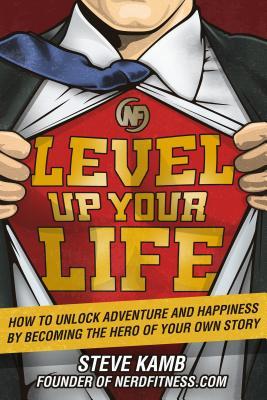
Level Up Your Life: How to Unlock Adventure and Happiness by Becoming the Hero of Your Own Story by Steve Kamb

Level Up Your Life: How to Unlock Adventure and Happiness by Becoming the Hero of Your Own Story by Steve Kamb
levelup

Steve Kamb, the creator of nerdfitness.com, offers behavioral games and community support to assist readers in becoming their best self. It’s the self help genre meets gamification.

Steve was addicted to video games, miserable at his job and disappointed with life. “I still love those games and movies and enjoy the entertainment they provide. They’re a part of who I am as a person. The problem was that they had become a way to avoid the unhappiness in my real life while also allowing me to continue doing nothing about it.” pg xi

The game that had him hopelessly hooked was EverQuest. “What had begun as a fun way to blow off some steam after school or work quickly became an addiction.” pg 5.

So, Steve took what he loved best about the game- the levels, the endless quests, the secrets- and created an online community in which the members support each other to become the best whatever-it-is you want to be through just those things.

Photo by RODNAE Productions on Pexels.com

Essentially, Steve takes the hero’s journey, as described by Joseph Campbell, and crafts a way to implement that into your life through your own preferences. “Life is meant to be lived on your own terms.” pg 23

I picked this up because I recently read a behavioral game book and I wanted to see what the theory would look like in action. Steve has done a solid job making his game completely customizable.

He provides examples between the chapters of people who have used his game to “level up” their lives. The results are impressive.

“The truth is that most people fear change. They, themselves, might want to change but don’t want to put forth the effort and energy to make it happen.”pg 57.

With Level Up Your Life, Steve gives readers the tools to make their lives into a game of their choosing. Recommended for gamers and the young at heart.

Thanks for reading!

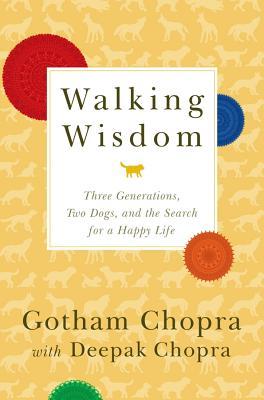
Walking Wisdom: Three Generations, Two Dogs, and the Search for a Happy Life by Gotham Chopra

Walking Wisdom: Three Generations, Two Dogs, and the Search for a Happy Life by Gotham Chopra

Gotham Chopra, the son of Deepak Chopra, shares what he has learned through the ownership of his crazy dog, Cleo, and becoming a father for the first time. He also deepens his relationship with his own father when his mother has to spend an extended time away in India.

It’s a hodgepodge of a book with the themes differing from chapter to chapter. I generally enjoyed it but felt like it was a bit scattered.

Photo by Spoortesh Honey on Pexels.com

I remembered Gotham from all of the Channel One news I watched during junior high and high school. I thought it was a waste of time (even then, I would have rather been reading), but I remembered him.

A few years ago, I watched the documentary he made about when his father joined a monastery- he mentions this at the end of Walking Wisdom. I was intrigued by the dynamic between them in the documentary.

Gotham seemed to focus on his father’s foibles, like his addiction to his phone and his frequent trips to Starbucks. I thought those parts were unfair, but the window into his strange, spiritual/rock star world was one I couldn’t forget.

Photo by Maksim Goncharenok on Pexels.com

My favorite parts of this book were similar to that documentary. I loved learning about Gotham and Deepak’s close friendship with Michael Jackson. The best part was when Gotham brought his pup, Cleo, to meet the mega-star. It’s very surreal.

I also liked learning about how Deepak’s family handles his active mind and constant spiritual seeking. Gotham describes being his father’s “guinea pig” for different experiments from meditation to yoga to spoon-bending.

Gotham’s non-traditional upbringing gave him a quirky lens through which he views the world. It also has made him a master meditator.

Recommended for dog lovers and those curious about what goes on behind the scenes of Deepak Chopra’s life. If you can’t stand books that skip from one topic to another, you may want to choose a different read.

Thanks for reading!

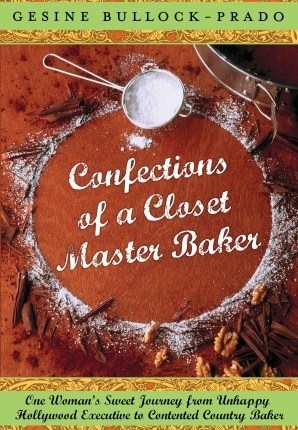
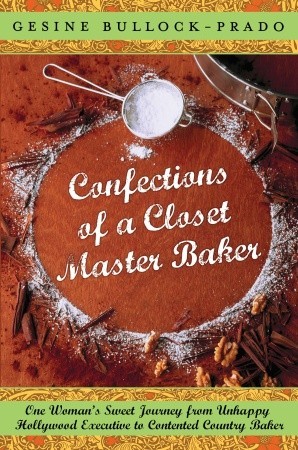
Confections of a Closet Master Baker: One Woman’s Sweet Journey from Unhappy Hollywood Executive to Contented Country Baker by Gesine Bullock-Prado

Confections of a Closet Master Baker: One Woman’s Sweet Journey from Unhappy Hollywood Executive to Contented Country Baker by Gesine Bullock-Prado
confections

Confections of a Closet Master Baker can be an abrasive, no-holds-barred memoir about the dark and impersonal underbelly of Hollywood, at times. At others, it is a poignant reminiscence and heartfelt cookbook by a woman who still mourns her mother.

I wouldn’t call it “hilarious.” This memoir is sarcastic and unapologetic about it.

“As a matter of fact, I have only two truisms that I apply to humanity. Never trust anyone who drives an Astro van. And never trust anyone who doesn’t drink beer or coffee unless they have a doctor’s note.” pg 17, ebook.

All the same, I felt privileged to be allowed a glimpse into the highly-introverted life of a woman who described herself as so socially adverse that she believes she’s “pathologically shy with severe misanthropic tendencies.” pg 24, ebook.

I saw the title of this ebook and checked it out of the online library without noticing the name of the author. She kept mentioning, “my famous sister” and “Sandy.” I thought, did Sandy Duncan have a sister? and then felt like an idiot when I enlarged the cover and saw the hyphenated last name. Duh, Heidi.

“Each year, I wrestled with the knowledge that no matter how well I did my job, no one looked at me as anything but “her sister” with nothing to offer but a fancy job title born of nepotism and access to a movie star.” pg 100, ebook.

Photo by Lisa Fotios on Pexels.com

Gesine carries some serious angst about her Hollywood experience. She needed a life change, so she moved to Vermont and opened a bakery.

“No road rage, no cell phones, no fake tits or tans, no prestige handbags, no billboards, no stoplights, no braking, no traffic, no nothing. Welcome to Vermont. Just heaven.” pg 13, ebook.

Serious bakers may find a lot to love as Gesine includes many of her customer favorite recipes after each chapter.

Personally, I loved learning about what it’s like to have an A-list sibling. Gesine’s story about baking Sandra’s wedding cake was my favorite.

Photo by Brent Keane on Pexels.com

She also includes personal details about her childhood and relationship with her mother. “I saw the devil at age three and he gave me chocolate. It changed my life forever.” pg 5, ebook.

A large part of the complicated relationship Gesine had with her mother was about food. Her mother was a German opera singer and a strict vegan. She adhered to a restrictive diet and ate foods that Gesine thought were disgusting.

Sadly, she died of colon cancer. Gesine is still devastated by that. Her mother did everything she could to exercise and eat right, and it didn’t seem to matter.

Gesine seemed to swing the other direction and celebrate sugar, butter and all manner of naughty baked goods. Part of that is because she was raised on such a strict diet as a child. The other part is, baking is what she loves to do and how she shows love to others.

Confections of a Closet Master Baker is not for the faint of heart. Don’t read it if you’re easily offended because she doesn’t hold back. I think Gesine would approve of this sentiment: if you can’t stand the heat, then get out of the kitchen.

Thanks for reading!

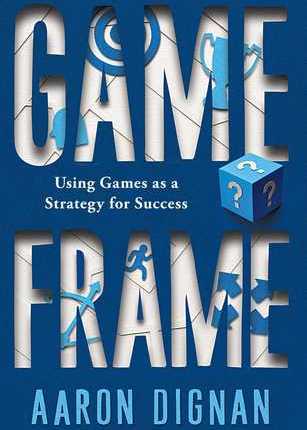
Game Frame: Using Games as a Strategy for Success by Aaron Dignan

Game Frame: Using Games as a Strategy for Success by Aaron Dignan

In Game Frame, Aaron Dignan outlines what games are, their components and how to create behavioral games to change your own and others behavior.

He clearly states his goals for the book in the introduction: “The truth is, we are born knowing how to play, and how to invent games where none exist. I’m convinced that there is a role for games and play in reshaping the world around us.” introduction, xiii.

Photo by lilartsy on Pexels.com

Dignan goes on to do just that. His detailed breakdown of the components of games and why we think they’re fun was particularly good.

I also agreed with his assertion that “play is a state of mind”: “…when a chef cooks something new, it feels like play. When I cook something new, it feels like work. Both of us are making a meal, but we’re not experiencing the same thing. Play is a state of mind.” pg 26.

Photo by Malidate Van on Pexels.com

My quibble with this book is that he didn’t convince me that games are the best way to change behavior. In Level 5 (Chapter 5), Dignan describes a speech given by Professor Jesse Schell at the D.I.C.E. conference in 2010 that scared the crap out of me.

Essentially, Professor Schell outlines how businesses and the government could use behavioral games to create a dystopian world in which our every action is analyzed and nudged towards consumerism.

“You’ll get up in the morning to brush your teeth and the toothbrush can sense that you’re brushing your teeth. So hey, good job for you, 10 points for brushing your teeth. And it can measure how long, and you’re supposed to brush your teeth for 3 minutes. You did! Good job! … And who cares? The toothpaste company. The toothbrush company. The more you brush, the more toothpaste you use. They have a vested financial interest.” pg 58

Photo by Karolina Grabowska on Pexels.com

After that chapter, I couldn’t shake the feeling that Dignan is inviting us to open a Pandora’s box.

“My challenge to you is simple: I believe that a million behavioral games could change everything, but they must be imagined and realized soon.” pg 169.

Hypothetically, say I design a game with the best intentions, but then, at some point, it’s taken over by the government and forced on people. Suddenly, it stops becoming a game and ruins the world.

Who wants to take the risk to potentially be the person who destroys society because of an ill-conceived behavioral game? Not me.

Recommended only for the truly brave gamers.

Thanks for reading!

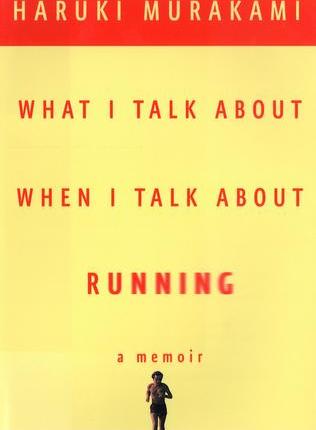
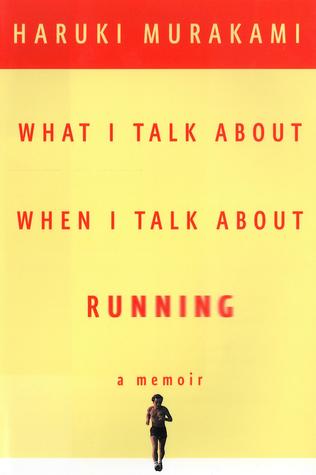
What I Talk About When I Talk About Running by Haruki Murakami, Philip Gabriel (Translator)

What I Talk About When I Talk About Running by Haruki Murakami, Philip Gabriel (Translator)
whatitalkabout

In What I Talk About When I Talk About Running, Haruki Murakami doesn’t try to convince others that we should all become long distance runners/triathletes like him. He does talk about why he took up running, how it has helped him with his creativity and why he will continue to run as long as he feels the need to do so.

I’ve never read a book by Murakami, other than this one. But, the interesting way in which he views the world makes me think that I’d probably enjoy his stuff.

I listened to this, rather short, audiobook on my daily commute. Murakami shares a lot of intimate details about his life that fans of his writing may really enjoy.

Before he took up running, Murakami said he was overweight and smoked around 60 cigarettes a day. 60 per day!

He wasn’t just looking for a way to become fit. He wanted a exercise where he was left alone with his thoughts and challenged to focus for long periods of time.

Murakami says that, when he writes a novel, it is a matter of focus and endurance. He finds it difficult to “drill down through the rock of the mind to hit veins of creativity.” (Quoting from memory, please forgive the inaccuracies.)

Photo by Pixabay on Pexels.com

The focus that runners use to finish a long race is similar, he believes, to the focus needed to write page after page until the end of a novel. I think that type of mental ability is something that could be used in any creative endeavor, not just writing. For Murakami, writing is how he makes his art.

I liked that, even though Murakami loves running and extols its virtues, he says that he never tells other people that they should take it up. He thinks that our life paths reveal themselves to us in a unique way that only we know.

He runs because he loves it. If you love it too, run. If you don’t, do what you love- walk, skip, jump, swim, whatever.

I can get behind that philosophy. Do what makes you happy because that happiness is a clue to what you were born to do.

Recommended for writers, runners, Murakami’s fans and anyone who enjoys memoirs. What I Talk About When I Talk About Running made me wish that I loved running more. Because I don’t.

Thanks for reading!

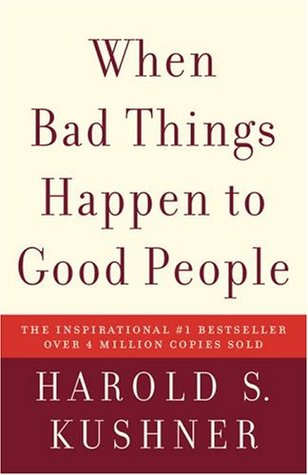
When Bad Things Happen to Good People by Harold S. Kushner

When Bad Things Happen to Good People by Harold S. Kushner
badthingshappen

When Bad Things Happen to Good People is Rabbi Harold Kushner’s examination of life, why things happen and the role of God in all of it.

Kushner wrote the book because his son was born with progeria, a disease where his body aged much faster than it should, and he died young. It shook Kushner to his core. “Tragedies like this were supposed to happen to selfish, dishonest people whom I, as a rabbi, would then try to comfort by assuring them of God’s forgiving love. How could it be happening to me, to my son, if what I believed about the world was true?” pg 3.

Kushner methodically picks apart traditional explanations for why tragedy strikes. When he’s through, none of them hold water.

“I would find it easier to believe that I experience tragedy and suffering in order to ‘repair’ that which is faulty in my personality if there were some clear connection between the fault and the punishment. A parent who disciplines a child for doing something wrong, but never tells him what he is being punished for, is hardly a model of responsible parenthood. Yet, those who explain suffering as God’s way of teaching us to change are at a loss to specify just what it is about us we are supposed to change.” pg 23.

Photo by Pixabay on Pexels.com

It’s no secret that earlier this year, I changed jobs – from a reference librarian to a writer in a newsroom. I picked up this book because I was going through a spiritual crisis of sorts.

It’s not that I’m overly-religious, but I am spiritual. I believe in things we can’t see or explain. I believe in the goodness of people and the universe.

In my job, every day, I read and hear about terrible things that happen for no reason at all. Sometimes, I write about families who lost a child to a rare disease or I read a story about someone dying in a car or motorcycle accident, and I think, “Why do things like this happen?”

I just didn’t see how a universe that was inherently good, as I believed, could have things like this happen, all the time, every day.

Photo by Snapwire on Pexels.com

Kushner says, don’t look for God or goodness in the bad things, look for the good in the response or what comes after. “For me, the earthquake is not an ‘act of God.’ The act of God is the courage of people to rebuild their lives after the earthquake and the rush of others to help them in whatever way they can.”pg 60

In the final analysis, the question why bad things happen to good people translates itself into some very different questions, no longer asking why something happened, but asking how we will respond, what we intend to do now that it has happened.” pg 147

That was a philosophy that I needed.

I now try to look for the good in the response to tragedy and, wouldn’t you know, I find it. Every day, there’s someone who’s kind or generous or brave. The goodness was always there. I just had to change where and how I was looking for it.

Thanks for reading!

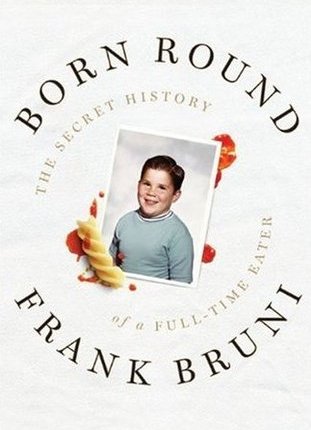
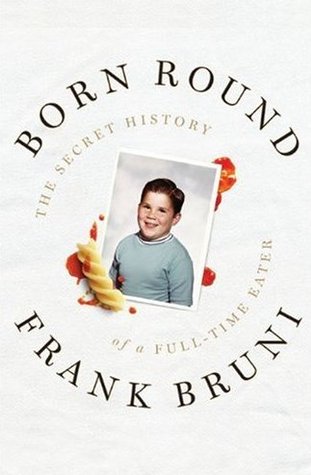
Born Round: The Secret History of a Full-time Eater by Frank Bruni

Born Round: The Secret History of a Full-time Eater by Frank Bruni
frankbruni

Born Round by Frank Bruni is satisfying memoir about a life-long struggle with food, a loving family and a journalist’s journey to find the beat he was born to eat… I mean, write.

I enjoyed all of Frank Bruni’s wandering memories. Like him, I grew up in a family where most of our gatherings center around food, eating, drinking and holidays. They still do.

Unlike Frank, I never tried “Mexican speed” or bulimia to try to manage my weight. Learning about some of the behaviors he used to maintain a weight he found acceptable was scary.

I can’t help but think that if we didn’t expect so much of each other, what a happier world this would be. Idolizing impossible body standards in the mass media does no one any favors.

When Frank goes on to become the food critic for the New York Times, I loved hearing about the subterfuges he used to hide his identity. I didn’t even know he was a food critic when I picked this book out of the digital audiobook pile.

Photo by Pixabay on Pexels.com

But, of course, that is what the boy, who loved to eat, became. Isn’t it funny how our life’s paths find us?

There are some extraordinarily vulnerable moments in Born Round. Frank is honest and doesn’t sugarcoat some of his tougher times, especially with his mother.

This memoir could potentially be a trigger for someone who suffers from an eating disorder, but, it is mainly a story about overcoming all that and adopting healthier behaviors.

Recommended for people who enjoy honest and open memoirs about families, food and how one man became the food critic he was literally born to be.

Thanks for reading!