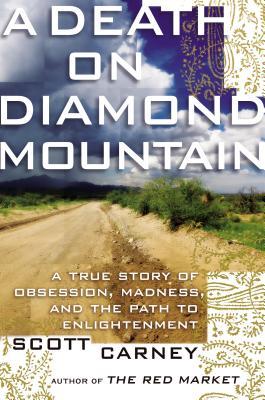
A Death on Diamond Mountain: A True Story of Obsession, Madness, and the Path to Enlightenment by Scott Carney

A Death on Diamond Mountain: A True Story of Obsession, Madness, and the Path to Enlightenment by Scott Carney
diamond mountain

In A Death on Diamond Mountain, Scott Carney has crafted an excellent examination of an untimely death, cult-like Buddhist practices, madness along the spiritual journey, and the dangers of extreme religious practices like multi-year, silent meditation retreats and fasting.

He also provides not only extensive backgrounds for all of the main actors in this tragedy, but also a dissection of the birth of Eastern philosophy in the West, including many different religions and belief systems.

This is the first non-fiction book that I’ve ever read that discusses potential negative effects of meditation.
Photo by Pixabay on Pexels.com

In this eye-opening analysis, Carney talks about potential research bias in meditation studies. He mentions researchers habitually attributing consistently positive results to meditation and reporting any negative results as pre-existing conditions in the practitioners rather than a side effect of the practice itself.

I think that this is an indication that moderation in all things, including meditation, may be the best way forward. I was unaware of the potential, catastrophic consequences of abusing traditional spiritual methods.

The sad thing is that the tragedy detailed in this book could have been prevented.

The death of Ian Thornson reads like a soap opera.
Photo by Shiva Smyth on Pexels.com

Carney has written these dysfunctional yet charismatic people with such skill that their personalities almost leap off the page.

I pitied Ian’s mother while reading about her struggles to extract her son from what she felt sure was a cult. Then, when his spiritual search eventually killed him, I can’t imagine the pain that she went through.

I’m certain that any mother would be proud for her child to exhibit the sort of spiritual drive that Ian had, however, the extremes that he took it too were obviously unhealthy. Again, it appears that moderation is the key to success.

Readers who enjoy non-fictional survival stories like Into the Wild may enjoy A Death on Diamond Mountain.

This book could also appeal to readers who enjoy learning about Buddhist philosophy or meditation methods. It is a shining example of how not to proceed on the spiritual path.

Thanks for reading! I received a free copy of this book through Goodreads First Reads.

The Opposite of Loneliness: Essays and Stories by Marina Keegan

The Opposite of Loneliness: Essays and Stories by Marina Keegan

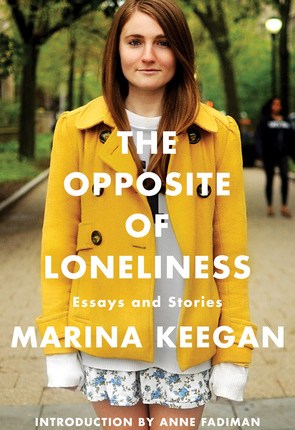
The Opposite of Loneliness is an excellent collection of fiction and non-fiction essays by Marina Keegan, a Yale student who died in a car wreck a couple days after she graduated from college.

Photo by Pixabay on Pexels.com

My favorite essay out of the bunch is “Against the Grain” pg 157 where she discusses her Celiac disease and the negative effect that that had on her mother.

She expresses frustration with how ridiculously protective her mother became when they were finally able to figure out what was wrong. She talks about being embarrassed at holidays as her mom cooked separate pies just for her or at field trips when her mother brought along special snacks.

But then, she reveals how she saw an internet article about how having Celiac disease could negatively effect the fetus when the sufferer becomes pregnant… and it’s a light bulb moment for Marina. She suddenly understands that feeling, how she would do anything to protect that other person, her baby, and suddenly her mom’s behavior doesn’t seem all that crazy after all.

Photo by Pixabay on Pexels.com

Of course, the absolutely heartbreaking moment for the reader is realizing that this particular dream will never come to fruition for Marina, but the fact that she even had that “ah-ha” moment is so powerful.

Marina’s writing highlights the sometimes indescribable feelings of daily life in such a powerful way.

For example: “My dog let out a small howl, twigs cracked in the woods, and something about the stillness or my state of mind reminded me of the world’s remarkable capacity to carry on in every place at once.”pg 34 I always had that feeling towards the end of the semester during college.

You’d work at this frantic pace, not giving a thought about your family or friends at home, then somehow in the lull between the final and actually going home, it would occur to me to wonder how my sisters had been for the last ten weeks or what my high school buddies had been up to.

I’d also forgotten that the world “carr(ies) on in every place at once.” Loved that sentiment.

Photo by Andrea Piacquadio on Pexels.com

“I worry sometimes that humans are afraid of helping humans.”pg 153 I worry about that too.

In that essay, Marina is talking about helping to save whales that were beached near her home. She talks about the time, effort, and money that is spent without consideration for the fact that only so many of the whales will actually be saved.

Then, when these whale rescuers go home, they do so without a backward glance towards the homeless on the streets, who are just as “beached” as the whales that they’ve been caring for all day.

“You feel like so many people are doing it and talking about it all the time like it’s interesting, so you start to wonder if maybe it really is.” pg 190.

Photo by Tomas Anunziata on Pexels.com

Marine was writing about how 25 percent of Yale graduates go immediately into banking or consulting positions that have absolutely nothing to do with their long term goals, but provide a quick paycheck in the short term.

Will they ever realize their dreams? If they make enough money, will they even care?

Life is about more than a paycheck. Marine Keegan knew that and her life had barely begun.

If you enjoyed The Opposite of Loneliness, I’d suggest Cool, Calm & Contentious, an excellent and serious collection of essays about life, or Zombie Spaceship Wasteland, a comedic collection of essays about life that are surprisingly insightful.

Thanks for reading!

It Was Me All Along by Andie Mitchell

It Was Me All Along by Andie Mitchell
itwasme

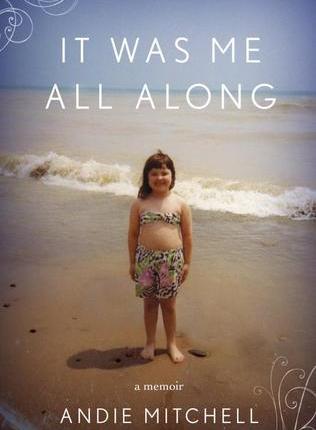
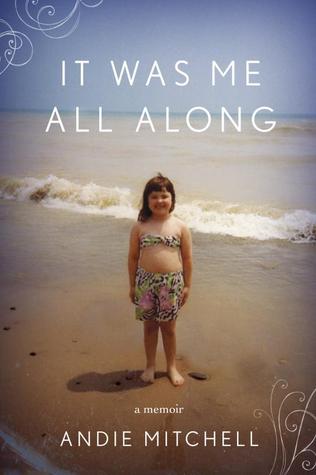
Andie Mitchell used food to entertain and provide comfort for herself during a childhood with an artistic but alcoholic father and absent (because she was working three or four jobs) mother. This is her journey through the rocky early years and realization that if she didn’t lose the weight, she was going to suffering serious health problems for the rest of her life.

“What begins as hating the cake for all its multiple layers of luscious temptation spirals quickly into hating myself and all my fat cells. I let myself down. I lament not having more control. pg 15, ebook.

Andie’s overeating starts during her childhood. Her mother went to work on the weekends and her father drank all night and slept most of the morning, leaving Andie to her own devices, which were mainly sugared cereal and cartoons.

Photo by Tijana Drndarski on Pexels.com

I’d pull the box down and go about fetching a bow, a soup spoon, and the whole-milk carton from the fridge. I’d fill the bowl- cereal bobbing in milk to the rim- and make my way to the parlor. There I’d turn on the television and begin what would be hours of watching my favorite cartoons. One cereal bowl would empty without my noticing, and I’d replace it.” pg 27-28, ebook.

So, the loneliness was one of the reasons why she ate. The other was her father was emotionally abusive. She witnessed terrible scenes of him screaming at her mother and brother (Anthony). Andie internalized it and ate away her feelings.

If (my mother) fought back, (my father) roared louder. Or he’d throw something she loved across the room. But those were not the times my chubby body trembled. Those weren’t the times when my spirit split like the walls of our house. No, it was only when Anthony entered the room, when I heard his small voice try desperately to make itself bigger and less boyish, that the pit of my stomach twisted so violently, I couldn’t tell if I was hungry or about to be sick.” pg 36, ebook.

Photo by Engin Akyurt on Pexels.com

Andie’s mother loves her unconditionally, even when the doctor tells Andie that she needs to lose weight or things are going to get really bad for her. But, when Andie goes away to college, and her mother sees her again for the first time, she can’t hide her surprise at how large her daughter has become. And it is really painful for Andie.

“Until that day, that moment when I felt like a stranger in her eyes, she had been my sole source of comfort. She was the one who loved me unconditionally, who saw me as beautiful regardless. In the past when she noticed my weight, her worry seemed entirely empathetic, a way of loving me in my struggle. Now, it seemed grave.” pg 99, ebook.

Anyone who has struggled with their weight will find something to empathize with in Andie’s book. She wants to be fit, but she doesn’t know how to either eat or exercise in moderation.

Her journey may teach, encourage and cheer others on their way to a smaller size. Andie has been there and knows the daily struggles.

Thanks for reading!

Passport to Magonia: On UFOs, Folklore, and Parallel Worlds by Jacques F. Vallée

Passport to Magonia: On UFOs, Folklore, and Parallel Worlds by Jacques F. Vallée

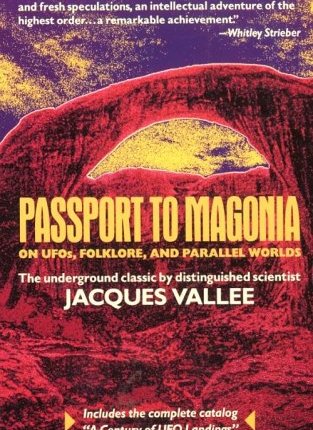
Jacques F. Vallee was one of the first scientists to closely study UFO phenomenon. He goes beyond a simple examination and compares it to the fairy religions and mythologies from the past. Passport to Magonia is one of his most well-known works.

Vallee also mentions, in the new preface that he wrote for the book in the early ’90s, of the difficulties that he had compiling the thousands of eyewitness accounts that are included in Passport to Magonia. I suppose with the easy connections to the internet that are available now, that I hadn’t considered how laborious it would be to gather all of that information together in the time before computers.

Photo by Cliford Mervil on Pexels.com

At the very least, Passport to Magonia can be admired for its thoroughness in the section: “A Century of UFO Landings.” It is approximately 150 pages of account after account of UFO encounters. The amount of information, types of witnesses and manner of UFO phenomena is truly mind-boggling.

Some of the standout examples for me are: Juan Diego’s tilma and the sky anchor that was left behind in 1211 a.d. at a church in Cloera, Ireland. And, Aleister Crowley’s run in with two gnomes or aliens.

Vallee cites the book, Magick Without Tears, for the Crowley experience. It makes me so curious- I may just have to look into it.

So many of these accounts are beyond belief, which makes for great reading, but which Vallee reminds the reader, cannot be taken at face value.

He reminds us of our inability to understand the accounts even as he seeks to understand them. Futility, thy name is Passport to Magonia?

Photo by Felix Mittermeier on Pexels.com

Readers who enjoy UFO literature will probably enjoy this classic book. Vallee doesn’t provide the answers, but he has crafted a framework for UFO exploration beyond the usual acceptance or denial of a puzzling and reoccurring phenomena.

Thanks for reading!

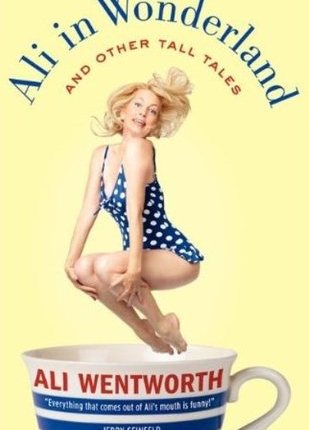
Ali in Wonderland: And Other Tall Tales by Ali Wentworth

Ali in Wonderland: And Other Tall Tales  by Ali Wentworth
aliinwonderland

Ali in Wonderland is Ali Wentworth‘s collection of stories from her childhood in Washington D.C. with her mother and stepfather all the way to her marriage and becoming a mother herself.

Ali is at her best when she’s remembering teenage hi-jinks. Some of her memories with her sister and boarding school pals are hysterical.

Other stories are terrifying. Ali recounts walking to her car one night and being accosted by a gang. Or there was the time she hitched a ride with a man who was apparently very drunk.

But, once Ali moves from her childhood into adulthood, this memoir loses some of its luster.

The chapters about meeting her husband for the first time, barfing continuously during pregnancy and why her children are special don’t have the same draw as the rest of the tales.

Maybe she started to run out of ideas? I don’t know. But the last few chapters felt tacked on to me.

Only recommended for big fans of Ali Wentworth. Side note: the author reads the audiobook herself.

Thanks for reading!

#GIRLBOSS by Sophia Amoruso

#GIRLBOSS by Sophia Amoruso

#GIRLBOSS is Sophia Amoruso’s story about her wild childhood, unlikely and extraordinarily successful business venture and her treatise on how to be yourself and bring what is unique to you to your professional life.

I googled Sophia after I finished this book and was dismayed to discover she has declared bankruptcy.

It seems she still has a successful motivational speaker program going on, but, for whatever reason, her business hasn’t worked out.

I suspect, she will land on her feet and start again. That is a large part of the philosophy contained in #GIRLBOSS.

Photo by Sam Lion from Pexels

“In about eight years, I went from a broke, anarchist ‘freegan’ dead set on smashing the system to a millionaire businesswoman who today is as at home in the boardroom as she is in the dressing room. I never intended to be a role model, but there are parts of my story, and the lessons I’ve learned from it, that I want to share.” pg 23, ebook.

Sophia believes in being yourself. Let your freak flag fly. Embrace your weirdness- because that is what ultimately makes you great.

“#GIRLBOSS is a feminist book, and Nasty Gal is a feminist brand in the sense that I encourage you, as a girl, to be who you are and do what you want. Being a Girlboss is as much about being the boss of your career as it is of your home.” pg 29, ebook.

Photo by Skylar Kang from Pexels

Between Sophia’s business tips and memoir, she includes quotations. Such as: “It was the straying that found the path direct – Austin Osman Spare.” pg 56

In her case, that was absolutely true. Sophia wanted a job where she didn’t have to work and could get paid for doing, essentially, nothing.

She found that job and surfed the internet most of the time. In doing so, she studied online communities like MySpace and eBay and concluded that she could network and sell items with the best of them.

And she did.

Photo by cottonbro from Pexels

Sophia is a believer in creating your own reality: “… there’s also the everyday kind of magic that we make for ourselves. And that’s really not magic at all. It’s just recognizing the fact that we control our thoughts and our thoughts control our lives. This is an extremely simple, totally straightforward concept, but for a lot of people, it’s so alien that it might as well be magic.” ebook, pg 109.

Sophia, like Obi Wan Kenobi, does not believe in luck. She believes in hard work, action and selective focus.

“Focus on the positive things in your life and you’ll be shocked at how many more positive things start happening. But before you start to think you just got lucky, remember that it’s magic, and you made it yourself.” ebook, pg 115.

Come bankruptcies and whatever else, I believe Sophia Amoruso will be just fine. Don’t you? 🙂

And have you watched the #GIRLBOSS series on Netflix? I did and it didn’t appeal to me as much as this book did. Not recommended.

Thanks for reading!

Remodelista: The Organized Home by Julie Carlson

Remodelista: The Organized Home by Julie Carlson
remodelista

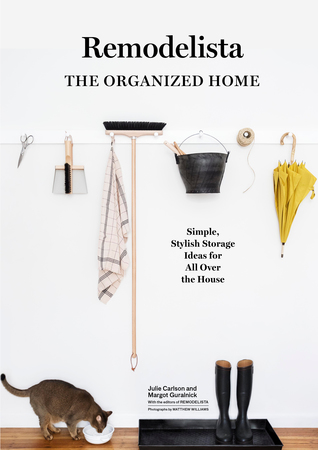
Remodelista is another de-cluttering book. This one encourages readers to utilize storage containers made out of natural materials, to hang items in unexpected places and to make your space functional and beautiful.

Maybe I’ve reached my limit on these types of books. For example, I loved The Life Changing Magic of Tidying Up, but that was one of the first books of this kind that I read.

I know not everyone responds well to Marie Kondo’s philosophy of considering the spirit of your stuff, but that clicked with me, for whatever reason. Must be a hippie thing.

I thought this one was a bit ridiculous. It just wouldn’t work for me in my real life with my crazy pets, busy family and serious amounts of stuff.

My main problem with this one is illustrated quite clearly on the cover. We’ve got two brooms, a towel, an umbrella, some string and a large bucket hung right over a cat drinking from a water bowl.

I can think of a hundred reasons why that wouldn’t work for me, but let’s start with three:

First of all, the kitties would think I was trying to kill them- hanging menacing items over the watering hole. And, let’s be honest, with my poor hanging-things-up skill, it just might.

Photo by Pixabay on Pexels.com

Second, putting string high up but visible is inviting a kitty disaster. They would hunt the heck out of that string, probably using the umbrella as a climbing wall to get to it, destroying my artfully arranged buckets and mops in the process.

Third, where would I put the rest of my family’s entryway stuff? We’ve got a lot more than that in just umbrellas, not even counting the brooms, swiffer mops, you-name-it.

The result: easy-to-maintain spaces that are both orderly and artful, personal and purposeful. Because, ultimately, the goal isn’t a flawless, impossible-to-maintain showcase. The aim is an unencumbered life in a house that makes you happy.” pg 9.

All of the rooms and cabinets in this book had like three things in them. It’s just not realistic.

Photo by Anastasia Shuraeva on Pexels.com

That being said, I did like the “Daily Rituals” on pg 18. The authors included “seven simple habits” to adopt every day to make your life easier. They include activities like making your bed and opening the mail.

I can handle that.

I also liked the ‘Herb and Spice Drawer’ suggestion on page 70. My spices are a jumble of bottles and sizes and it’s nearly impossible to find anything quickly.

Photo by monicore on Pexels.com

The authors suggest storing herbs and spices in: “Uniform glass jars- we like small paint jars from the art supply store.”Then, label the tops. It’s a simple solution but one that never occurred to me.

Only recommended for people who have calm cats and very few items. Other than the suggestions mentioned, I can’t see myself using very many of the tips from Remodelista.

Thanks for reading!

The Only Girl in the World: A Memoir by Maude Julien

The Only Girl in the World: A Memoir by Maude Julien
onlygirl

The Only Girl in the World is an extraordinary memoir about madness, control and the survival of horrific childhood abuse.

Maude Julien’s father Louis chose his future wife and mother of his child, Jeannine, when she was only six and he was 34. He became Jeannine’s guardian by promising her family that he would provide her with a quality education.

Then: “Twenty-two years after he took possession of Jeannine, Louis Didier decided the time had come for her to bring his daughter into the world… Louis Didier liquidated his assets, bought a house near Cassel, between Lille and Dunkirk, and withdrew to live there… to devote himself entirely to carrying out the project he had devised back in 1936: to make his child a superhuman being. That child was me.” loc 73, ebook.

Unfortunately, to “make his child a superhuman” involved leaving her alone in a dark, rat-infested basement, sleeping in a room without heat, eating stale bread, practicing music for 12 or more hours a day and being entirely separated from any other children her age.

That’s where Maude got the title of this memoir: The Only Girl in the World

I have not read a childhood account this disturbing since A Child Called It by Dave Pelzer.

Maude’s father was unhinged. “My father is convinced that the mind can achieve anything. Absolutely anything: it can overcome every danger and conquer every obstacle. But to do this requires long, rigorous training away from the impurities of this dirty world.” loc 247, ebook.

Photo by Marcelo Jaboo on Pexels.com

He asks Maude to do things he cannot do like perform somersaults or swim in freezing water. He shows no affection to either his child or his wife.

Louis makes the females of the house wait on him as if he is an invalid. He makes his child hold a chamber pot each morning while he empties his bladder.

He’s a controlling monster.

Louis has strange beliefs about water and soap removing the body’s immunities so he insists that Maude only bathes once a week or less. And, when she is finally given the opportunity to bathe, she must use his dirty bathwater to “take strength from him.”

Photo by Sora Shimazaki on Pexels.com

And she can’t count on protection from her mother, who was groomed by Louis to do anything he asks of her. Jeannine actually blames Maude for Louis taking them to live in the middle of nowhere. It is very sad.

Maude’s only friends are her pets, whom her father abuses as much as he hurts Maude. “Can an animal teach a person about happiness? In the depth of my despair, I am fortunate to have this incredible source of joy.” loc 685, ebook.

Even worse, Maude is abused by the few adults Louis allows in their lives. (Trigger warnings for those who were sexually or physically abused as children.)

Though incredibly disturbing, The Only Girl in the World is ultimately a story of survival against all odds. The human spirit is incredibly resilient as Maude’s tale illustrates.

Photo by Pixabay on Pexels.com

Perhaps she is more superhuman than even she realizes. Highly recommended.

Thank you to NetGalley for a free digital copy of this book.

Thank you for reading!

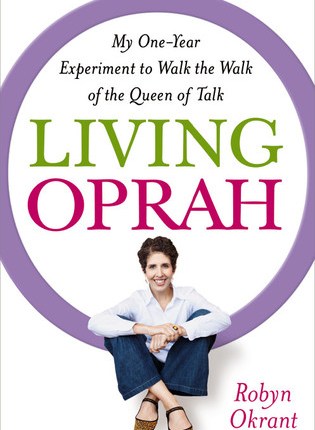
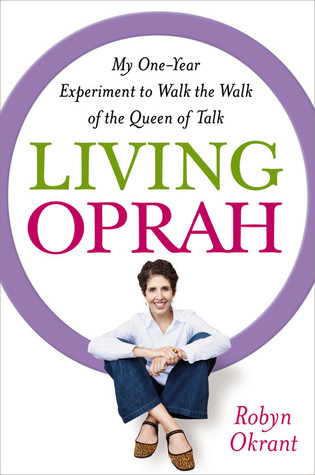
Living Oprah: My One-Year Experiment to Live as TV’s Most Influential Guru Advises by Robyn Okrant

Living Oprah: My One-Year Experiment to Live as TV’s Most Influential Guru Advises by Robyn Okrant
livingoprah

Living Oprah is Robyn Okrant’s account of how she spent one year conscientiously following the advice Oprah dishes out to millions of women across America.

If Oprah said to read a book or watch a film, Robyn did it. If she advised de-cluttering, new make-up tips or relationship work, Robyn was on-board.

For the most part, I enjoyed this quirky book, but I also found it to be slightly repetitive- similar to what Robyn found following Oprah to be after a few months.

She starts out with high hopes: “Could Oprah’s guidance truly lead a woman to her ‘best life,’ or would it fail miserable? Is it even possible to follow someone else’s advice to discover one’s authentic self?” pg 4.

We all discover the answer to be no. But, Robyn gives it a good run because: “It’s vitally important for women to question the sources of influence and persuasion in our lives. We are inundated with get rich/get thin/get married suggestions every time we turn on the TV or walk by the magazine rack. And sadly, we tend to judge ourselves against seemingly impossible standards.” pg 11.

I liked her thought process throughout the year. I also thought her reasoning for doing the experiment was excellent: “One of the reasons I was drawn to Oprah as a subject for this project was my continual search for new ways to manage my pain, keep my self-esteem from faltering, and ease the stress and fear associated with scoliosis.” pg 36. In some ways, Robyn was sort of Oprah’s target audience.

Photo by Jean van der Meulen on Pexels.com

My favorite part of this book was when Robyn was trying to follow Oprah’s advice to read Eckert Tolle’s A New Earth and live by its precepts, while still engaging in the consumerism and self improvement programs Oprah touts on her program each week.

“It’s also uncomfortable to enjoy a celebrity lovefest on Oprah after I’ve spent an hour competing my reading assignment for A New Earth. Oprah’s Book Club selection focuses on separating ourselves from our ego and learning to connect with people on an authentic level rather than a superficial one. I don’t see how a segment on the show glamorizing Mariah Carey’s lingerie closet supports the work Oprah’s asked us to do.” pg 72.

Robyn comes to the conclusion that if Oprah’s viewers followed all of Oprah’s advice, they quickly wouldn’t need her anymore to live their best lives. Part of Oprah’s draw is that she has viewers convinced there’s always something more to be improved upon, tweaked, de-cluttered or examined.

It is a never-ending process of evolution. That is why Oprah’s built her empire and also why women don’t stop watching.

And sometimes it’s the promise of ‘infotainment’ that keeps viewers coming back: “Oprah frequently reminds her guests and audience that her tell-all shows are not pulp entertainment, they are for our education. I do take her warning to heart but think that if this is something we must constantly be reminded about, maybe a different format is in order.” pg 57-58

I’ve never been a huge watcher of Oprah (or any tv for that matter), but I still enjoyed this book for it’s honest examination of hero worship, popular culture and the self improvement industry. I think Oprah viewers may enjoy this book even more.

Thanks for reading!