The Chinatown War: Chinese Los Angeles and the Massacre of 1871 by Scott Zesch

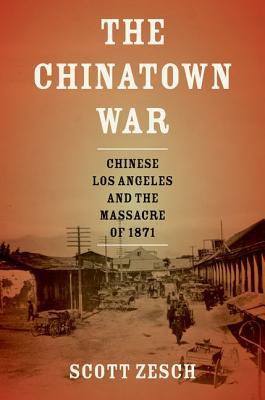
The Chinatown War: Chinese Los Angeles and the Massacre of 1871 by Scott Zesch

The Chinatown War is an outstanding examination of a little remembered event in Los Angeles history. One terrible night in 1871, racial tension boiled over in what was later labeled “the Chinese Massacre” and what the people of Los Angeles at the time called “Black Tuesday” or “the night of horrors”.

Scholars can’t even agree on how many people were murdered that night in October 1871. Scott Zesch, the author of The Chinatown War, believes it was around 18.

“Most Angelenos do not even know what happened that night, for the city’s fathers decided to put the incident behind them shortly after it occurred, and the victims were not people of consequence. They were ordinary immigrants whose American dream ended in a nightmare.” prologue

Photo by Roberto Nickson on Pexels.com

Public opinion was driven by resentment and distrust of Chinese immigrants. While often portrayed as a working class complaint over jobs, the hatred towards the Chinese was a thinly veiled racism against a people who were hated largely because their ways and culture were different.

“Contrary to popular belief, the earliest Chinese immigrants to America did not come to build the transcontinental railroad in the 1860s. Instead, it was the California Gold Rush of 1849 that brought the first large wave of Chinese to the West Coast.” pg 6

I learned so much from this book.

For example, Chinese immigrants in Los Angeles were often members of social groups called huiguan – commonly called “companies” in the newspapers of the time, although that translation is not exactly correct. Huiguan were social groups formed to help Chinese immigrants in their new lives in America. Members would sign up for the huiguan based on the location they immigrated from in China.

Also, though it is now one of the most populous cities in the U.S., in 1871 Los Angeles only had a population of around 6,000 people. Unfortunately, this massacre is one of the events that brought Los Angeles to the attention of the rest of the world.

“One of the city’s early historians, Charles Dwight Willard, characterized Los Angeles as ‘undoubtedly the toughest town of the entire nation’ during the 1850s and 1860s. He claimed that it had a larger percentage of miscreants than any other American city and, for its size, also had the highest number of fights, murders, and robberies.” pg 23

Photo by Pixabay on Pexels.com

Policing this rough and tumble western town wasn’t easy. This was compounded by the fact that the police department was too small.

Los Angeles’s early police department was too small, and was staffed by men too inexperienced or indifferent to their responsibilities, to be very effective in keeping order.” pg 53

The riot itself is difficult to read about, even now that nearly 150 years have passed since that night. Innocent people were dragged from their homes, brutalized and murdered.

“One eyewitness reported that the ‘stark, staring corpses hung ghastly in the moonlight,’ while ‘others, mutilated, torn and crushed, lay in our streets.'” pg 150

Not all of the citizens of Los Angeles participated in the massacre. Some tried to shame the mob into stopping or hid the terrified Chinese in their own homes to protect them.

“Baldwin quickly realized that the crowd’s sentiment was very much against him. As he said later, ‘I might as well have spoken to a cyclone.'” pg 145

Photo by Megan Markham on Pexels.com

A man named William H. Gray concealed several people in his home. In the years following the massacre, he received anonymous gifts in thanks for his actions that night.

Zesch examines the whole incident from the beginning to the trials following and how it affected (or didn’t) Los Angeles afterwards. His research and scholarship really is astonishing. He gives context and history not only of the city but also of the Chinese immigrant community at that time.

Highly recommended for anyone who wants to learn about an event in Los Angeles history that should never be forgotten.

Thanks for reading!

Here’s the History Guy episode I wrote about this event:

The Herbal Goddess Guide: Create Radiant Well-Being Every Day with Herb-Inspired Teas, Potions, Salves, Food, Yoga, and More by Amy Jirsa

The Herbal Goddess Guide: Create Radiant Well-Being Every Day with Herb-Inspired Teas, Potions, Salves, Food, Yoga, and More by Amy Jirsa

The Herbal Goddess Guide is a beautiful little reference book in which 12 different herbs are examined for physical, mental and spiritual healing purposes.

Amy Jirsa provides recipes, yoga poses, crafts and more to utilize the healing power of the plants in various ways.

Photo by Tim Douglas on Pexels.com

This book may not be for everyone as it has a very new age feel. Jirsa discusses magical traditions, honoring a plant’s spirit and more.

However, if you’re into tapping your inner goddess, this may be the perfect book for you.

If you read it and you enjoy it, you may want to purchase The Herbal Goddess Guide for your personal collection because Jirsa suggests “getting to know” each plant for a month and there is a chapter devoted to each.

It could take you awhile to thoroughly digest the information in these pages. (And to try everything!)

My favorite chapter, probably because it is my favorite herb, is lavender. Did you know it is a member of the mint family?

Photo by Palo Cech on Pexels.com

While lavender is known for being relaxing, it can, in some cases, be stimulating, so be sure to check in with your mind, your mood, and your energy level after each recipe.” pg 131.

Some of the yoga poses Jirsa outlines are rather advanced, but she offers modifications for each. If your flexibility isn’t up to snuff, no worries.

Highly recommended for the open-minded reader and non-traditional healers.

For similar, new age/self help books I’ve reviewed, check out:

How to Be Happy, Dammit: A Cynic’s Guide to Spiritual Happiness by Karen Salmansohn

The Four Agreements: A Practical Guide to Personal Freedom by Miguel Ruiz

Trance Dancing with the Jinn by Yasmin Henkesh

And thanks for reading!

Weird Illinois by Troy Taylor, Mark Sceurman, Mark Moran

Weird Illinois by Troy Taylor, Mark Sceurman, Mark Moran

Weird Illinois is a mix of stories, speculation and ghost lore from my home state, Illinois. And it is really weird.

The chapters cover topics from local legends and lore to bizarre beasts and roadside oddities. But I’m not sure how true it is.

The road-side attractions seem to be the “most real” part of this book, but the legends and ghost stories could be simply myths or urban legends.

Photo by Simon Berger on Pexels.com

It makes me want to put together an investigation, or several, to go find out what is true or not. That is part of the charm of this book.

My favorite chapter was about the “bizarre beasts” of Illinois which is a collection of animal oddity or cryptozoological stories from the area. I really want to see the “Albino Squirrels of Olney” mentioned on page 95.

I was creeped out by the stories of the “Murphysboro Mud Monster” on page 84. That’s not very far from here!

Photo by Athena on Pexels.com

I think this book could be useful for travelers who are looking for entertainment that is off-the-beaten path in Illinois or trivia fans.

Make sure to read it with a discerning mind, as I said, I’m not certain how much of this is “non-fiction.” I can say: it’s good fun.

Thanks for reading!

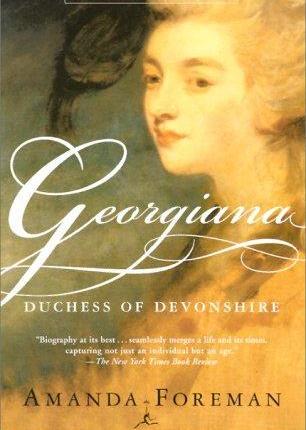
Georgiana: Duchess of Devonshire by Amanda Foreman

Georgiana: Duchess of Devonshire by Amanda Foreman

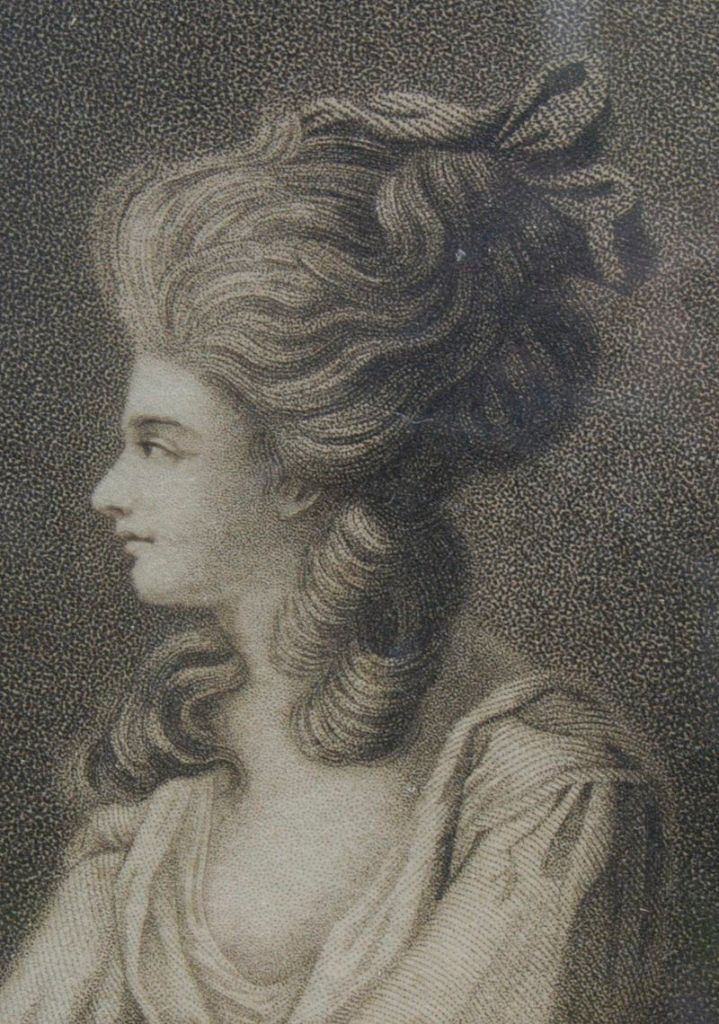
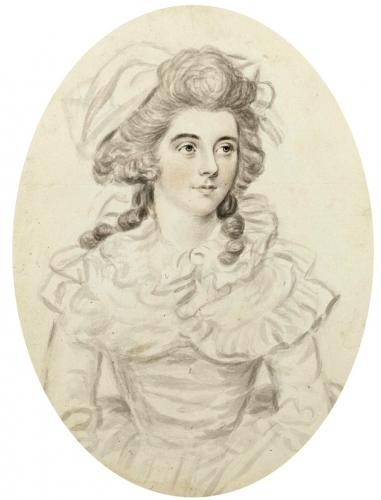
Georgiana, the Duchess of Devonshire, was a complicated lady. She was politically active, a progressive thinker, had an atrocious gambling habit that kept her perpetually in debt and suffered from an unfortunate, sometimes unhappy, marriage.

Did I mention she lived in the late 1700 and early 1800s?

“There was enough popular participation to make politics as big a national obsession as sport, if not bigger. The emergence of national newspapers turned politicians into celebrities.” pg 18 ebook.

And one of the brightest stars among them, was the Duchess of Devonshire.

“This was the age of oligarch politics, when the great landowning families enjoyed unchallenged pre-eminence in government. While the Lords sat in the chamber known as the Upper House, or the House of Lords, their younger brothers, sons, and nephews filled up most of the Lower House, known as the House of Commons.” pgs 22-23.

It wasn’t a particularly great age for democracy or for modern thought.

“Georgiana’s methods were too modern for eighteenth-century society. She was never allowed to canvass openly in London again, nor did other aristocratic women imitate her example. It would be another hundred years before women once more ventured boldly into street politics as Georgiana had not been afraid to do in 1784.”pgs 178-179, ebook

1784!

“She felt that she had the same qualities as a man; it was simply her sex, not her capability, which barred her from taking part in politics.” pg 346.

Imagine that. 🙂

The leaders of the Whig party, Georgiana’s political friends, were brilliant but flawed.

Eighteenth-century England was full of wits, connoisseurs, orators, historians, drinkers, gamblers, rakes, and pranksters, but only (Charles James) Fox embodied all these things.” pg 75, ebook.

I confess, though this book has extraordinary detail and research about Georgiana’s political activities, I found her personal life far more fascinating.

Her marriage may have been doomed from the start: “The Duke did not know how to be romantic; never having experienced tenderness himself he was incapable of showing it to Georgiana. He did not mean to hurt her, but there was a nine-year age difference between them and a gulf of misunderstanding and misplaced expectations.” pg 49, ebook.

There was another woman, who may or may not have been both Georgiana and the Duke of Devonshire’s lover. There were multiple handsome men who entered and exited Georgiana’s life.

She even had an illegitimate child with one of them.

A fascinating biography of an extraordinary lady – highly recommended.

The Lost City of Z: A Tale of Deadly Obsession in the Amazon by David Grann

The Lost City of Z: A Tale of Deadly Obsession in the Amazon by David Grann

The Lost City of Z is a well-researched tale by journalist David Grann about Percy Fawcett, the intrepid explorer who disappeared in the Amazon jungle on his search for the city he called ‘Z’.

The part in this book that I appreciated the most was Fawcett’s struggle to learn about and appreciate the cultures of the people he discovered in the Amazon, while at the same time, juggling his own biases against any culture other than his own.

Photo by Elias Tigiser on Pexels.com

In some ways, he was a product of his time, but the fact that Fawcett at least tried to understand different cultures made him different than other explorers of his age.

It’s only a small part in a larger tale full of adventure, exploration and discovery.

Photo by Quang Nguyen Vinh on Pexels.com

The tid-bits about the jungle, I first learned about in The River of Doubt by Candice Millard.

The narrative in River of Doubt was more focused than this novel, but Millard was talking about one trip, not multiple trips or explorers.

There’s a lot of weird stuff that goes on in the jungle. Read either of these books to find out all about it.

Recommended for fans of non-fiction. If you’re looking for a more straight-forward adventure tale than this wandering title, choose River of Doubt.

For readers who like book-to-screen movie adaptations, The Lost City of Z was made into a film in 2016.

Thanks for reading!

Be Here Now by Ram Dass

Be Here Now by Ram Dass

A classic exploration of spirituality and consciousness by the former Harvard professor turned drug-fueled, then clean, spiritual seeker, Ram Dass.

What a strange book.

The first part is Ram Dass‘s life story.

Photo by Alesia Kozik on Pexels.com

He has trouble relating exactly how his guru changed his life. He also has trouble expressing his life changing spiritual insights.

This could perhaps be because of all the LSD he experimented with, but no judgement here.

I think Dass could have added another couple hundred pages to the first part and still probably not fully described his experience.

The next section of the book is block text printed on, what seems to be, brown paper bags. Monty Python-esque photos are drawn in, and sometimes behind, the text.

Photo by Giftpundits.com on Pexels.com

It reads like a stream-of-consciousness, path to enlightenment, how-to lecture.

Some of it is worthwhile, but I can’t sugarcoat it: It’s pretty far out there.

My description doesn’t really do it justice. Perhaps Be Here Now is one of those books that needs to be “experienced” rather than read.

The last section was a “cook book” on how to live an enlightened lifestyle.

Photo by Mikhail Nilov on Pexels.com

If you have a question about how an enlightened person lives, it’s probably included in there.

Dass elucidates how he believes you should eat, sleep, breathe, interact with others, think, meditate, raise a family, form a commune and so on.

I didn’t like it because it felt too brain-washy, cult-ish.

Dass attempts to put the reader’s mind at ease to all of the strictures. He mentions that one needn’t be concerned about family or social responsibilities because, once you reach the ultimate level, you’ll realize that none of those things are real anyway.

Looking back on my review, it seems as if I don’t like Ram Dass, but I do.

I rather enjoyed his Polishing the Mirror: How to Live from Your Spiritual Heart and a documentary that I saw about him once called Fierce Grace.

I too have had life experiences that have led me to the belief that human kind is here to “be high” and not just to “get high.”

Photo by Tim Gouw on Pexels.com

I don’t buy into the idea that life has to be lived a certain way to get certain results.

And, perhaps because I haven’t personally had the experience yet, I don’t get the whole guru relationship thing. I know it’s my western background speaking, but there you have it.

Recommended for spiritual seekers, but don’t forget to trust your own inner guidance.

Thanks for reading!

I’ll Be Gone in the Dark: One Woman’s Obsessive Search for the Golden State Killer by Michelle McNamara

I’ll Be Gone in the Dark: One Woman’s Obsessive Search for the Golden State Killer by Michelle McNamara

Michelle McNamara was obsessed with the subject of this book. She believed that by using modern technology, a rapist and killer could finally be brought to justice.

She created maps and chased leads. She ran a true crime blog and this was one of her topics.

It haunted her. Then, tragically, Michelle died before this masterwork could be completed.

Her fellow researchers put I’ll Be Gone in the Dark together from her notes. It is a chilling but thorough portrait of the perpetrator of a series of unsolved crimes.

Photo by Donald Tong on Pexels.com

It also includes some autobiographical chapters to explain Michelle’s obsession with the man she named, “The Golden State Killer,” but also why she loves writing.

She writes about why she couldn’t stop researching and examines her complicated relationship with her mother: “No one would have taken more joy from this book than my mother. And I probably wouldn’t have felt the freedom to write it until she was gone.” pg 41

It is an amazing book. And, I believe, it has enough details that, if someone who reads this book knew that guy, he will be brought to justice at last.

He pointed a knife at her and issued a chilling warning: “Make one move and you’ll be silent forever and I’ll be gone in the dark.” pg 61

Gillian Flynn writes a stellar introduction: “I’ve always thought the least appreciated aspect of a great true crime writer is humanity. Michelle McNamara had an uncanny ability to get into the minds of not just killers but the cops who hunted them, the victims they destroyed, and trail of grieving relatives left behind.”Introduction.

Photo by kat wilcox on Pexels.com

This killer, whoever he is, is terrifying not only for the carnage he left, but the meticulous way he planned and carried out the murders.

He was organized and unhinged, as compared to other murderers whose passion and disorganization are their downfall: “It’s a tiny minority of criminals, maybe 5 percent, who present the bigger challenge- the ones whose crimes reveal pre-planning and unremorseful rage.” pg 14

I read this book in one sitting. It is that compelling.

But I paid for it during the night. Each creak, any small sound in the house and my heart would leap into my throat.

“He’s here,” my over-active imagination declared. “This is the end.”

Photo by KoolShooters on Pexels.com

It made it all too easy to understand the terror the murderer inflicted on his victims and the community he plagued. Multiple states away and decades removed from the crimes and I was petrified as well.

Recommended for brave readers, fans of true crime and anyone who wants to help solve an unsolved mystery.

Thanks for reading!

UPDATE: About a month after I wrote this book review, a man was arrested under suspicion of being the ‘Golden State Killer’.

Lost in Translation: An Illustrated Compendium of Untranslatable Words from Around the World by Ella Frances Sanders

Lost in Translation: An Illustrated Compendium of Untranslatable Words from Around the World by Ella Frances Sanders

Lost in Translation is a slim volume of doodles with accompanying definitions of untranslatable words from many languages around the globe. It’s a treat.

There are words for feelings that I’m certain everyone has experienced… we just lacked the language to describe it appropriately.

This book showed me how universal emotions and perceptions can be and the difficulty of capturing the indescribable in words.

Photo by KoolShooters on Pexels.com

But we’ve certainly given it a good try.

I liked the words that described fleeting moments of beauty in nature the most. All of the following are from Lost in Translation but the pages are un-numbered so you’ll just have to trust me that they’re in there:

Komorebi: (Japanese noun) The sunlight that filters through the leaves of the trees.

Waldeninsamkeit: (German noun) The feeling of being alone in the woods, an easy solitude and a connectedness to nature.

Photo by Ian Beckley on Pexels.com

Mangata: (Swedish noun) The road-like reflection of the moon in the water.

And, finally, a word that perfectly describes one of my vices:

Tsundoku: (Japanese noun) Leaving a book unread after buying it, typically piled up together with other unread books.

Photo by fotografierende on Pexels.com

I didn’t realize that was actually a thing.

Ah, the joys of reading and cluttering up my house with tsundoku. 🙂

Thanks for reading!

Boy on Ice: The Life and Death of Derek Boogaard by John Branch

Boy on Ice: The Life and Death of Derek Boogaard by John Branch

This is a biography of Derek Boogaard, a hockey player who died at age 28 of alcohol and prescription drug poisoning.

I didn’t know very much about hockey before I read this but fortunately John Branch discusses the history of the hockey for readers like me. He also examines the reasons why violence began and then persisted in the sport.

Branch explains the unofficial position called ‘enforcer’ on the hockey team that, essentially, intimidates or pummels the opponents into submission.

Photo by Markus Spiske on Pexels.com

I knew that hockey was violent from anecdotal stories but I didn’t realize how the various minor leagues supported the development of the enforcer role. Men are specifically scouted for their abilities in this area.

Derek wasn’t born an enforcer. In Canada, hockey is like football in some small towns in America- everybody plays beginning at quite a young age.

His enormous size drew attention but he wasn’t particularly skilled at the game. Coaches put him into the enforcer role and he was able to fulfill their demands.

Throughout his life, Derek suffered from pain caused by his job and began to take prescription drugs to find some relief. Predictably, he became addicted.

Photo by C Technical on Pexels.com

Branch carefully dissects the reasons why Derek abused drugs and it is very sad. His family obviously cared about him, but they either did not realize the extent of the problem or because of the distance that they lived away from Derek, they didn’t have the ability to do anything about it.

An additional layer of complexity is added to the story with Branch’s explanation of concussions in professional sports and how, in the late 1990’s and early 2000’s, medical experts were just becoming aware of the extent of the problem.

After his death, Derek’s family donates his brain to the medical community and what they discover was truly shocking.

I liked Branch’s analysis of the social, economic, and personal reasons why Derek lived the way he did. He painted a picture that was both approachable but also extraordinary.

Approachable in that Derek was a boy from a small town in Canada who liked quiet family evenings and country music. Extraordinary in that Derek was a professional athlete with a million dollar paycheck and needed to experience life to its fullest.

Photo by Brayden Law on Pexels.com

I also liked reading portions of a childhood diary written by Derek that included his grammar mistakes and misspellings. The inclusion of this material lent a very personal feel to the book.

From Derek’s childhood to his last struggling days, Branch gives meticulous dates, times, and names.

I didn’t like the seemingly endless descriptions of Derek’s bloody fights on the ice. During his career, it seemed like he fought constantly and the biography feels monotonous throughout that portion. He went to a game, got in a fight, and repeat.

For that reason, the graphic details, I would recommend Boy on Ice to, primarily, fans of the game. If you have season tickets for your hockey team and relish the atmosphere, you may really enjoy this biography.

Photo by Markus Spiske on Pexels.com

Personally, I found the descriptions of violence too disturbing to be enjoyable. However, Branch raises legitimate questions about the place of the enforcer in hockey, how it causes permanent damage to the men who take up that role, and how it changed and then ended the life of Derek Boogaard far too soon.

I received a free copy of this book through Goodreads First Reads. Thanks for reading!