The Art of Exceptional Living by Jim Rohn

The Art of Exceptional Living by Jim Rohn

Nearly every house valued over $200,000 has a library in it. Now why do you think that is?

Jim Rohn, motivational speaker and business genius, was a kinder, gentler Tony Robbins. Originally from Iowa, he uses common sense and a storytelling style in an effort to encourage listeners to improve their lives. This audiobook presentation is a mix of live presentations and studio-recorded bits. Personally, I think he was better in front of a live audience, but there was plenty to take away from in both sections.

Photo by Ihsan Aditya on Pexels.com

Here’s some of what he shares in this audiobook:

Read, learn, journal. Write down what works and what doesn’t. Write down your goals and then take a minute to look at the passing days, weeks and months and see what you’ve accomplished.

Eat healthy and take that walk around the block. If you don’t, you may seriously regret it, maybe not today or tomorrow but in the years to come, you’ll wish you took a minute to invest in yourself.

Work hard at your job and you’ll make a living. Work hard on yourself and you’ll make a fortune!

Photo by Taryn Elliott on Pexels.com

Rohn insists that anyone can be exceptional. He says success in business (and life) comes from small positive steps taken consistently over time. That type of approach really works for most any goal or dream you may have.

Read contracts all the way through, every time. It seems like a simple thing, but it can take you down some dark roads if you don’t read the fine print. He learned that the hard way.

Don’t stop reading and be a lifetime learner. Stay curious. Stay involved.

And take pictures. Part of your legacy to the next generation can be the pictures and documentation you’ve made of your life.

Photo by Kaique Rocha on Pexels.com

I can’t tell you how many times I’ve listened to this audiobook. It’s one of my go-to programs when life has me down. Jim Rohn believed you can accomplish anything that you set your mind to do. He makes listeners believe that too. Highly recommended for anyone who wants to learn “the art of exceptional living.”

Thanks for reading!

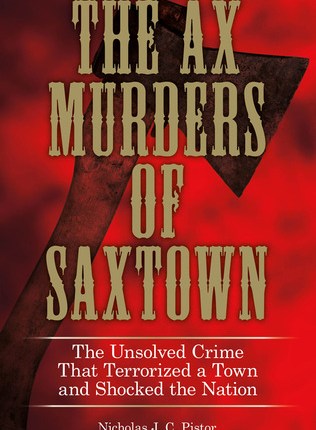
The Ax Murders of Saxtown by Nicholas Pistor

The Ax Murders of Saxtown by Nicholas Pistor

Full title: The Ax Murders of Saxtown: The Unsolved Crime That Terrorized a Town and Shocked the Nation

Imagine you’re a farmer in 1874. You live out in the middle of nowhere. There are no cars, electric lights… each night brings a blanket of silence to the world. Then, one fateful night, there’s a knock on the door. You answer it… and it’s an axe-swinging maniac!

Photo by Pixabay on Pexels.com

Sound like a cheesy horror film? For one farming family in Southern Illinois, that nightmarish scenario actually happened. A family of five, including two children, one a baby in her mother’s arms, were slaughtered in their home. It was called the most shocking crime since the murder of Abraham Lincoln and garnered national attention.

Nicholas Pistor examines original sources to share the story of the ax murders of Saxtown.

The grounds of the Stelzriede farm glowed with the orange light of oil lamps and handheld torches. A few hours had passed since the Stelzriede bodies had been discovered. The tough Saxtown farmers arrived one by one, and then in groups. … Many showed up on the property with their families. They were too afraid to leave them home alone. pg 44, ebook.

I would have been the same way. There had been extensive rains around the time of the murders and the roads in and out of town were nearly impassable. The residents of Saxtown believed the killer could still be among them. Eek.

Saxtown was a farming community where people primarily spoke German. Everybody knew everybody else and their business. The closest city, sheriff and bank were located in Belleville, almost nine miles north of Saxtown. At the time, they believed the motive for the killings was money. The Stelzriedes were known to loan out cash and it was thought that they kept a stash in their home.

Photo by Pixabay on Pexels.com

They also left a fairly large inheritance behind.

Pistor goes into how authorities conducted investigations during the late 1800’s. It made me wonder that they ever managed to solve anything. There were no forensics or sophisticated evidence gathering protocols.

Public awareness was important in solving crimes. An eyewitness could crack the case open before it began. Detective work relied heavily on what other people saw, a distinct challenge in the remote and lonely woods of Saxtown, where farms were spaced by miles and miles. pg 44, ebook

The saddest part of this non-fiction tale is, in my mind, how terribly this crime affected Saxtown. For decades, residents accused each other of the murders. There were lawsuits and whispers of restless ghosts on the Stelzriede property…

Photo by Skitterphoto on Pexels.com

If you’re looking for a true crime read, this is an interesting pick, plus you get to learn about a few other shocking crimes that took place in Southern Illinois and history.

And if someone knocks on my door tonight, I don’t think I’m going to answer it.

Thanks for reading!

Here’s an episode I wrote for The History Guy about the murders:

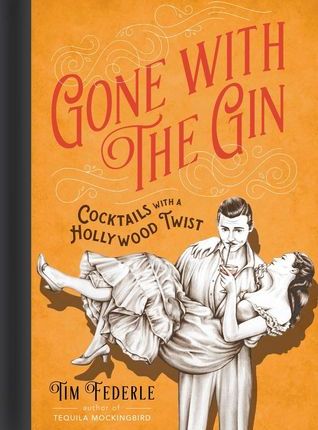
Gone with the Gin: Cocktails with a Hollywood Twist by Tim Federle

Gone with the Gin: Cocktails with a Hollywood Twist by Tim Federle

“Gone with the Gin” is an effervescent drink guide that pairs cleverly named potables with classic films. It’s a winner!

Last year (or was it the year before), I named Tequila Mockingbird: Cocktails with a Literary Twist, also by Tim Federle, as one of my favorite reads in my annual book review. It’s similar to Gone with the Gin, except that Tequila Mockingbird uses classic literary works instead of film.

Federle has a way with puns and summarizing complex plots in three sentences or less without devolving into the unbearably cheesy. My favorites from Gone with the Gininclude the “Ben-Hurricane” and “The Empire likes Jack”.

Photo by Anthony Shkraba on Pexels.com

And, like Tequila Mockingbird, I think I’m going to have to purchase a copy of this book to keep at the house. Like the majority of my reading material, I borrowed it from the library. But it’s going to be a sad day when I have to give it back…

Lest you think that Federle is a one-note author, please take a moment to consider another of his books: Life Is Like a Musical: How to Live, Love, and Lead Like a Star. It gives some hard-won lessons from Federle’s days dancing and singing his way across the stage. I enjoyed it too.

I think it’s fair to say that I highly recommend most anything Federle has written, so far. Keep ’em coming, Tim!

And thanks for reading!

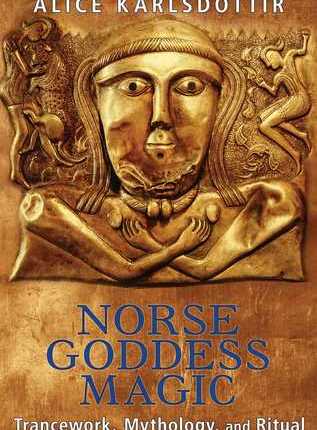
Norse Goddess Magic: Trancework, Mythology, and Ritual by Alice Karlsdóttir

Norse Goddess Magic: Trancework, Mythology, and Ritual by Alice Karlsdóttir

This is a new age, non-fiction book about trance work, which can loosely be described as deep meditation. I practice a type of meditation called “pathwalking” which is basically just another word for the same kind of practice. This book is about someone who focuses on the Norse religion exclusively.

I read Norse Goddess Magic not for the details about the Norse pantheon (which admittedly I know very little about, so it was very interesting and educational) but mainly for the author’s experience in trance work. To my disappointment, she spends pages and pages explaining what going into trance is, how she does it, and then only a few paragraphs in each chapter detailing an actual trance.

Photo by Lucian Potlog on Pexels.com

I wanted the book to be mainly trance work. That is what made it unique and original- her personal sojourns into “another world” and what she brought back. The rehashing of all of the old mythologies were, as I said, interesting, but if I wanted to read them, I could have picked up any book about Norse mythology.

I also felt like Alice spent a lot of time explaining why trance work is a valid method of information gathering and defending her opinion on why she believes that. I agreed with her completely so I just read through the pages thinking- preaching to choir, get to the trances! So, that was a frustration.

A part of the book that I disagreed with was Alice’s assertion that it is “difficult” to go into trance. In my experience, if you believe something is difficult to do be that hypnosis, meditation, whatever- you’re putting stumbling blocks on your path that don’t need to be there. Going into trance is as simple as watching your breath flow in and out. If you breathe, you can go into trance. I felt like she did a disservice to beginners with that particular teaching.

Photo by Daisa TJ on Pexels.com

I felt like Alice’s trances were so closely focused on one goddess or aspect of the goddess, that she didn’t really get all that she could out of her trance work or interactions in the other worlds. She read all of this information to prime her subconscious mind and then… it felt like not much happened.

To be fair, she did see the person she was looking for, describe their physical characteristics, express the emotion that they evoked in her, and then, maybe, have a brief interlude with them. In my personal trance work, there’s more interaction in the world itself but that could be the difference of our focus.

Alice said from the start that she wanted to know more about these different goddesses and form a working relationship with them whereas I’m just curious to see what’s out there. I’ve run into Roman gods and goddesses, Native American figures, Tibetian locations, some Egyptian and Hindu gods… but again, I’m not focused on one or another of the world religions. With an open mind, it’s incredible the types of things that you see.

Photo by carol wd on Pexels.com

So, I don’t believe in priming your mind with symbols before you do your work. Pick where you’re going or who you want to see, and just go. Personally, I use the symbols on the Tree of Life or tarot cards. Believe that you can do it. Figure out what works for you. And do it.

Then write it down so that I can read it. 🙂 Because I will.

Thanks for reading!

Earthwalks for Body and Spirit: Exercises to Restore Our Sacred Bond with the Earth by James Endredy

Earthwalks for Body and Spirit: Exercises to Restore Our Sacred Bond with the Earth by James Endredy

Earthwalks for Body and Spirit is a handbook of sorts for a shamanistic experience of nature. James Endredy, through various exercises for both the solo and group walker, crafts a system through which the reader can get in touch with nature and, he believes, heal the world through this relationship.

Photo by Charlotte May on Pexels.com

It’s an interesting idea.

I’ve always enjoyed the outdoors for its healing aspect. I’m more of a sun bather than an avid walker but I think that the general principle is the same. If you’re in a funk, go outside for awhile. It clears the clouds from your mind so to speak.

Actually, this is one of the first books I’ve ever read that goes into actual shaman practices. It’s worth the read just for that, really.

I read in What the Most Successful People Do Before Breakfast by Laura Vanderkam that most adults from middle class, dual income families spend less than 15 minutes per week outside in their yards. Stats like that make me a little sad for all of us. Time to go read outside! 🙂

Photo by Allan Mas on Pexels.com

If you enjoyed Earthwalks for Body and Spirit, I’d recommend The Four Agreements: A Practical Guide to Personal Freedom by Miguel Ruiz, This Trip Will Change Your Life by Jennifer Monahan, or The Way of the Shaman by Michael Harner.

And, as always, thanks for reading!

Hanging the Sheriff: A Biography of Henry Plummer by R.E. Mather, F.E. Boswell

Hanging the Sheriff: A Biography of Henry Plummer by R.E. Mather, F.E. Boswell

Hanging the Sheriff takes another look at the life of Henry Plummer. Conventional history labels Plummer as the leader of a notorious outlaw gang in the territory that would eventually become Montana. This book suggests that Plummer’s life story was written by the vigilantes who killed him and they had every reason to make him seem worse than perhaps he actually was.

It was kind of funny — the authors assumed everyone reading their book would know exactly who Plummer was. I had no clue: The image of Plummer as the one man responsible for all crime committed in the mining districts east of the Rockies is so firmly ingrained it is nearly impossible for even the most impartial of readers to drop old suspicions and view him with an open mind.” pg 7

Photo by Suliman Sallehi on Pexels.com

Like I said, blank slate here. And the story they revealed was fascinating.

Plummer was born in Maine and migrated West not just for the Gold Rush but also because of his lung disease. He was a successful business owner and prospector. He was a notorious gunslinger, able to fire five bullets in three seconds. He got in trouble with the law, but was elected marshall and sheriff in two different towns. He killed at least half a dozen people.

“Plummer jumped up. ‘I’m tired of this,’ he said, drawing his pistol and firing at the ceiling. A second shot struck Cleveland, who fell to his knees, pleading, ‘You won’t shoot me when I’m down?’ ‘No,’ Plummer said, ‘Get up.’ pg 25

In his defense, the American frontier was wild and untamed with very few courts or lawmen. Everyone had to police themselves: “As Granville Stuart explained, ‘There was no safety for life or property only as far as each individual could, with his trusty rifle, protect his own.'” pg 26

Photo by Alex Andrews on Pexels.com

I would have enjoyed this book more if it had been arranged in a linear fashion (it wasn’t) and if they had included some of the other viewpoints about Plummer. They go on and on about Plummer’s bad reputation but give little explanation, for those who haven’t heard of it, exactly what that reputation was.

“She said that she loved Mr. Plummer,” Thompson wrote, “that she knew that he loved her, that she had the upmost faith in him, that the terrible stories of him were told by men not worthy of belief; that she could never be happy unless she married him.” pg 41 What stories!

This book made me wonder about all of the “history” of the Wild West. Who were the heroes and who were the villains? Things weren’t black and white… and, as the authors pointed out, history was written by the men who survived. Was that the truth of what really happened? I guess we’ll never know.

Thanks for reading!

Here’s the History Guy episode I wrote about Henry Plummer:

Scandals of Classic Hollywood by Anne Helen Petersen

Scandals of Classic Hollywood by Anne Helen Petersen

Full title: Scandals of Classic Hollywood: Sex, Deviance, and Drama from the Golden Age of American Cinema

Scandals of Classic Hollywood is about movie star scandals, obviously, but also shows the development of Hollywood and how public and private forces place tremendous pressure on the stars of film. I think it’s extraordinary than anyone in the business can be normal at all considering what they go through.

The scandals discussed in this book are more than just smut. They’re history lessons…” introduction

Photo by Edgar Colomba on Pexels.com

The most fascinating piece of this book is the role of fixers and reputation creators. It makes you wonder what’s real and what’s simply fairy tale in celebrity magazines now. In what other profession do we act like we know a person simply because they were doing their job?

“During this period, stars weren’t born; they were made. Scouts would bring in ‘raw’ star material, culled from the vaudeville circuit, the theater, or the soda fountain counter. The potential star would be given a name, a sanitized (and sometimes dramatized) backstory, a makeover, and a contract.” introduction

The other side of Hollywood that this book gives you an inside look at is the creation of film ratings and the history of censorship.

“To save their monopolies, then, they had to figure out a way to appease the calls for censorship, but to do so without actually appointing a government censor. Thus the studios came together and created an organization — the Motion Picture Producers and Distributors of America — and elected to censor themselves.” pgs 22-23

Photo by Pietro Jeng on Pexels.com

Each chapter focused on a different person or couple and it seemed like most of the chapters ended in tragedy. Judy Garland, Lombard and Gable, and Fatty Arbuckle are a few who come to mind, but there are a dozen others.

“Whenever a Hollywood star dies young, it’s a tragedy. Whenever a Hollywood star dies young while serving her country, leaving behind her much-beloved husband, with whom she had been very publicly and blissfully happy, the tragedy amplifies into something else entirely.” pg 132

Before TMZ, fans got their gossip through magazines or newspaper columnists, perhaps not with the immediacy that exists now, but there was still tremendous pressure to behave or appear to behave a certain way. The pressure totally messed up some stars.

Like Judy Garland: “Today she remains one of Hollywood’s most enduring stars and the most compelling reminder of what our affection for the idols on the screen, and the machinery that feeds it, does to both body and mind. Her life suggested hope and despair in equal measures, begging you to love her and damning you for doing so.” pg 178

Photo by Matt Hardy on Pexels.com

I also loved learning about the eccentricities and bizarre behaviors a few of the stars were known to display. I mean, I always knew Marlon Brando was kind of weird, but this book took it to a whole new level for me…

“He loved to play congas and marimbas, and specialized in playing the recorder with his nose; he owned a pet raccoon; and he was known to make an entire meal out of peanut butter. (When asked why he didn’t fall for Desire costar Jessica Tandy, his answer: ‘She doesn’t like peanut butter.’)” pg 223

Recommended for fans of classic film or those who want to learn more about Hollywood and its stars. Scandals of Classic Hollywood entertains while it educates.

Thanks for reading!

Päntsdrunk (Kalsarikänni): The Finnish Path to Relaxation (Drinking at Home, Alone, in Your Underwear) by Miska Rantanen

Päntsdrunk (Kalsarikänni): The Finnish Path to Relaxation (Drinking at Home, Alone, in Your Underwear) by Miska Rantanen

Päntsdrunk, a satirical self help read, seemed fairly straight-forward to me. To keep your cool, occasionally you should take a page out of the Finnish playbook and put on your most comfy underwear, grab your favorite alcoholic beverage and chill out. But then Miska Rantanen had to write something to fill up the rest of the pages. There was quite a lot of filler material.

Päntsdrunk doesn’t demand over-the-top arrangements. Affordability and democracy are its hallmarks. It’s quick acting and suitable for all who have reached the age of majority.” pg 16

Photo by Mitchell Henderson on Pexels.com

Rantanen talks about how Finland developed this coping mechanism from a couple of different factors: freezing weather, long distances between cities and towns, and very little sunlight near the winter solstice.

“The Finnish term kalsarikanni is a simple compound word: kalsari (underwear) + kanni (state of inebriation). This pithy idiom crystallizes the essential: at its simplest, pantsdrunk means imbibing alcohol in one’s underwear at home without any intention of going out. The term’s ingenuity lies in everything it doesn’t imply.” pg 21

But pantsdrunk practitioners don’t have to stay in or solitary. You can drink as a couple, with friends, with a couple of friends. As the night wears on, you can go from pantsdrunk to plus pants at the club or bar, if the mood lends itself that way. The trick is to go with the flow of the evening and enter a state of total relaxation.

“As a philosophy, pantsdrunk is not in conflict with lagom and hygge. Au contraire. They all spring from the same Nordic origins and share the same ultimate goals: optimal peace of mind, joie de vivre, comfort, equilibrium, and recuperation as embodied in a snug coziness.” pg 22

Pantsdrunk is not about getting blasted as fast as possible. It’s a slow slide into mellow.

Photo by Mitchell Henderson on Pexels.com

“At its most minimal, pantsdrunk is a device for balancing life and work. It can, however, be expanded into a lifestyle and worldview. The beauty of pantsdrunk lies in its possibilities.” pg 27

I’m not sure about some of the statistics Rantanen cites in his book, but he claims Finland is one of the stablest, safest, most educated countries in the world. And he credits the practice of pantsdrunk with part of this fantastic result.

Heidi, you may say, what could your problem be with pantsdrunk? Anyone who has dealt with an alcoholic can easily point out the potential roadblocks to happiness with this. Also, there’s addiction issues to consider. None of which can be dealt with if you’re indulging in this behavior by yourself and aren’t aware there’s a problem.

Rantanen does say that if pantsdrunk becomes a conscious choice every day to deal with stresses, that a reshuffling of your life may be in order. He also suggests counting bottles or cans to keep tabs on how much you’re consuming. Or gauging how well you’ve managed to balance drunk and relaxed by your hangover the next day.

Photo by Chris F on Pexels.com

I’m not entirely convinced this is possible. Rantanen also talks about how pantsdrunk has gotten a bad rap with some films depicting people drinking in their underwear alone as sad and pathetic rather than empowered and relaxed.

One of the most uplifting performances (of pantsdrunk) can be seen during the credits of Bridget Jones Diary (Maguire 2001), when Bridget Jones (Renee Zellweger) belts out the quintessential pajama playback solo while sloshed on red wine. pg 76.

But wasn’t that one of her lowest points?

Recommended for brave readers over 21 who mostly have their lives together, but need to allow themselves to chill out now and then.

For other satirical self-help reads, please see the following reviews:

Get Your Sh*t Together by Sarah Knight

Check out Sarah Knight’s latest self help: You Do You

How to Be Dull by Basil Morley, Esq.

And thanks for reading!

The Cooper’s Wife Is Missing: The Trials of Bridget Cleary by Joan Hoff, Marian Yeates

The Cooper’s Wife Is Missing: The Trials of Bridget Cleary by Joan Hoff, Marian Yeates

“Are you a witch, are you a fairy, are you the wife of Michael Cleary?”

In March 1895, after walking the fabled “fairy fort” of Kylnagranagh Hill in Tipperary County Ireland, Michael Cleary’s wife, Bridget Boland Cleary, returned home ill with a fever and headache. Michael Cleary thought she was exhibiting signs of fairy abduction. And he was determined to get her back.

What happened next highlighted the clash of paganism and Catholicism, and the ushering out of old superstitions to make way for the modern era. After days of abuse, he eventually burned Bridget until she died because he believed she had been replaced by a fairy.

Photo by Steven Hylands on Pexels.com

“… they continued to feed her herbs and to shake, slap, and swing her while she ‘screamed horrible’ and they shouted: ‘Away with you. Come back, Bridget Boland, in the name of God.'” pg 191

The Cooper’s Wife is Missing gives nearly complete context of Ireland in this era and the political and social pressures during the time period.

The crime was shocking in its brutality but also the stated motive. The press had a field day. It was 1895, the world was on the brink was technological, social and political change. And yet, they wrote, these rural Irish peasants still believed in fairies or practiced witchcraft. (Depending on which publication you chose to read.)

And it wasn’t just perpetrated by Michael Cleary. Bridget’s own family and neighbors participated in the “fairy trial” that led to her death. Nine people were found guilty at varying levels of culpability for the crime.

“As the police led him away, he shouted, ‘I am innocent.’ Cleary maintained it was not his wife he burned but a fairy.” pg 361

Photo by Gantas Vaiu010diulu0117nas on Pexels.com

The Cooper’s Wife is Missing jumps back and forth, giving the reader the history of Ireland, fairy lore and what historians believe happened to Bridget Cleary. That was my only complaint with this read, some of the story repeats itself, especially during the testimony at the trials.

But, overall, highly recommended for fans of true crime and history. This book has both of those in spades.

Thanks for reading!

Here’s the History Guy episode I wrote about Bridget Cleary: