Christopher Nolan’s The Odyssey, a review

Christopher Nolan’s The Odyssey, a review

Much has been said over the past couple of months about the new film, The Odyssey, by master movie maker Christopher Nolan.

From the sets, costumes, and acting, extending even to the physiques of those involved in the film, no stone has been left unturned in the universal search for meaning from this ancient work of art, which was reimagined and introduced to the modern audience.

Even the translation and author (Emily Wilson) whom Nolan utilized to develop his script has been brought into the fray, with criticism lobbed at both Nolan’s unique vision for his masterpiece as well as the focus of his interpretation.

For, at its root, that is what everyone from Elon Musk and on is talking about, Nolan’s individual creation, how it fits into the universal narrative of story, and how their (the commentators) individual viewpoints differ from Nolan’s own.

I’d like to contribute my particular viewpoint of the film, which I’ve seen three times at this point (as of September 6, 2026). I will not highlight differences in Nolan’s interpretation versus my own for I think we’ve had that type of thing ad naseum.

Instead, I will apply symbols from the film to my work, the Light Congress, which is a narrative story about the soul’s journey, just as much as the Odyssey is the same. Perhaps, with a comparative analysis of a few similar symbols in both works, we can come to a new understanding of the spirit worlds, similarities between the paths of self knowledge from ancient times to today, and a new appreciation of the genius of Nolan, beyond a simplistic criticism of how he shot a scene or his use of modern language in a historical drama.

One more note, before we move on, my favorite element of Nolan’s film was the music. I watched a ‘making of’ documentary of the Odyssey on Disney+ and learned that Nolan hired musicians who utilized ancient instruments to make the haunting soundtrack for the film.

As the notes rose from the flute player’s mouth and fingers, it was like the sound drew me into the screen and I walked with the Greek hero as he faced the monsters, forces of nature, and his own countrymen in his epic journey home again. Thus is the magic of music, a universal language and bridge to the divine, and why it was my favorite element of the film.

Now, for a few similar symbols from my work and Nolan’s own, and what that might mean about the universal phenemonen which could be called the Hero’s Journey. As we say in the Light Congress, game on!

For the rest of my review, please go to https://www.patreon.com/TheLightCongress/posts/christopher-168807998

Thanks for reading,

Heidi

Sailing ship on a moonlit sea with glowing swirling waves
A sailing ship follows luminous, curling currents across a moonlit sea beneath dramatic clouds. Image created with WordPress AI.

Edward Berger’s The Ballad of a Small Player, a review

Edward Berger’s The Ballad of a Small Player, a review

I recently had the opportunity to watch Colin Farrell’s latest film, The Ballad of a Small Player, and I liked it far more than any of the other reviewers that I could find online when the movie was done. I shall attempt to explain why here.

Also, fair warning, this discussion will have major spoilers for the film. Please do not proceed if you haven’t seen it yet.

Again, major spoilers ahead. Due diligence done.

First, for just a little bit of context if you haven’t seen it, the film is set in Macau, an exotic locale that I have never visited but the crowded and brightly lit casinos were quite familiar as I have been to Las Vegas. The bright lights and lavish interiors of the rooms are beautiful, and they are meant to be so in order to lure high rollers through their doors in order to take their money at the casinos.

Beauty and lavishness aside, I really don’t understand the draw of a place where day blends into night and back again while you gamble away the very thing that keeps a roof over your head and food in your mouth. But, I’m fortunate in that gambling isn’t one of my preferred vices.

We meet the protagonist of the film, Lord Doyle played by Farrell, as he’s waking up in one of these casinos. The room is a mess which suggests he’s been gambling for quite some time. It also leads the viewer to think, despite the evidence of high living, that Lord Doyle has not been successful. If he was, wouldn’t have he allowed the cleaning folks in to straighten the room or at least change the sheets?

The next few scenes continue this failed gambler storyline with the bell boy at the front of the hotel encouraging Lord Doyle to visit another casino because they “may” be willing to extend the unfortunate gambler a line of credit which the current casino is declining to do. Lord Doyle is also given a short deadline to pay off a very major bill and threatened with legal action if he does not comply. It all adds to a growing feeling of pressure and dread which lasted throughout the film.

In the every day world, this pressure to earn, then spend, and earn again, is a vicious cycle. Humanity has become quite adept at providing reasons to spend every cent earned on every day essentials from over-priced housing and food to the luxuries that are required status symbols, the necessary requirements to move up the invisible ladder of the upper eschelons of society into the imaginery rarified air above everybody else.

It’s depressing, isn’t it? To be honest, I had a hard time watching the introduction to this film. I feel enough of that pressure to earn, spend, and conform in my daily life and didn’t really feel the need to explore that discomfort in my free time. But, the minor disruption to one’s inner peace is worth it for what comes next in this metaphorical and highly symbolic film.

For the rest of my review, please go to https://www.patreon.com/TheLightCongress/posts/edward-bergers-170394309

Thanks for reading,

Heidi


Room by Emma Donoghue, a review

Room by Emma Donoghue, a review

Room is the story of Jack, his mother, and the room that they never leave.

To Jack’s mother, it is a prison. To Jack, it’s just the world.

A person holding a small globe against a clear blue sky with mountains in the background.
Photo by Porapak Apichodilok on Pexels.com

“…it was a garden shed to begin with. Just a basic twelve-by-twelve, vinyl-coated steel. But he added a sound-proofed skylight, and lots of insulating foam inside the walls, plus a layer of sheet lead, because lead kills all sound. Oh, and a security door with a code. He boasts about what a neat job he made of it.” pg 85.

Jack and his mother have no contact with the outside world, except for ‘Old Nick’ who only comes at night, brings food and the occasional ‘Sunday treat.’

They are his prisoners.

“…we mustn’t try and hurt him again. When he came back the next night, he said, number one, nothing would ever make him tell me the code. And number two, if I ever tried a stunt like that again, he’d go away and I’d get hungrier and hungrier till I died.” pg 97.

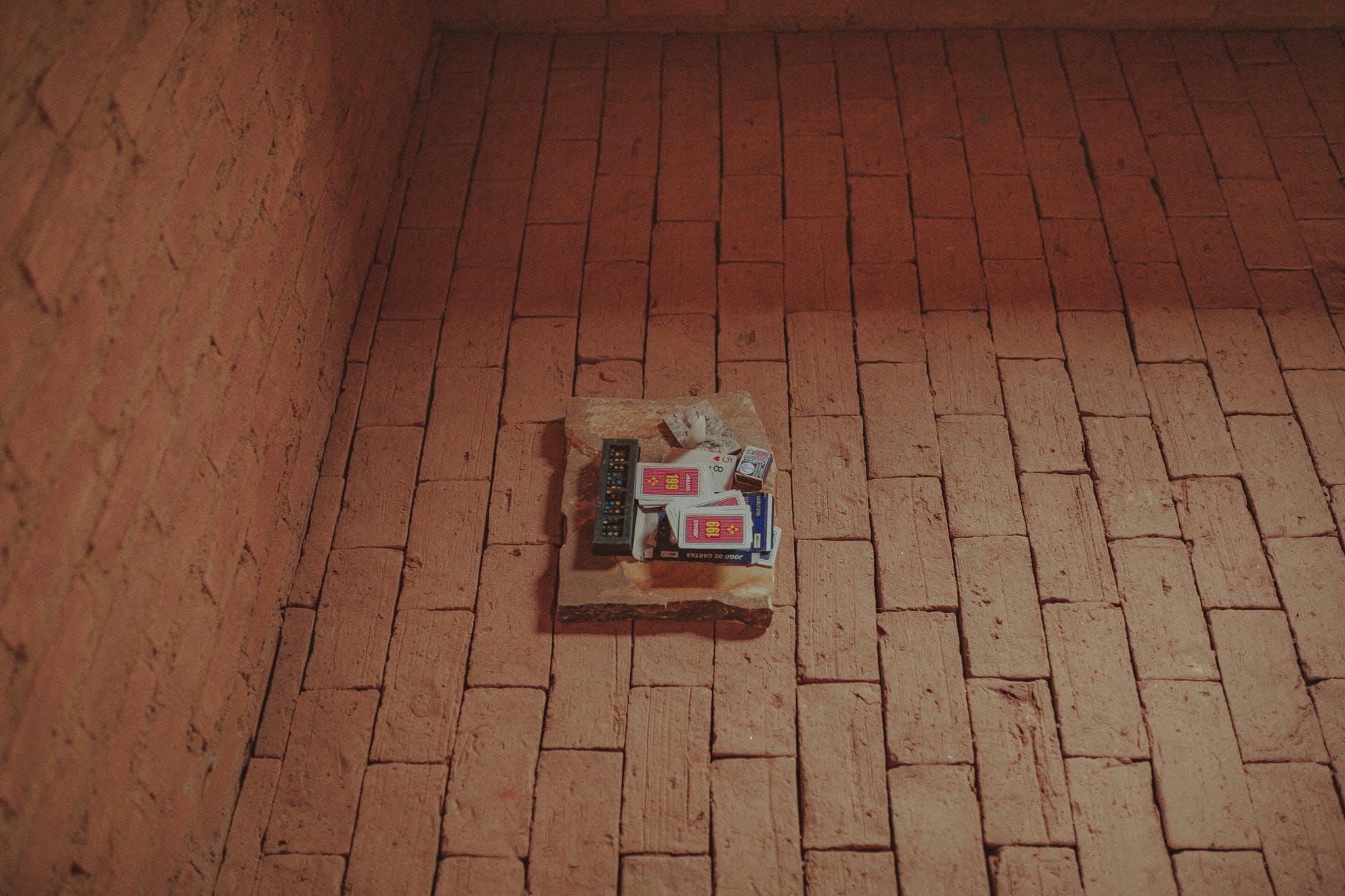
A collection of various items, including cards and small boxes, arranged on a stone slab in a room with red brick flooring.
Photo by Lucas Pezeta on Pexels.com

Though this book covers some seriously dark subject matter, it is told through the point-of-view and voice of a child.

At first, I didn’t like it, but then I realized- hearing the story from Jack made it bearable. I think if we had heard it from his mother’s point of view, it would have been too bleak.

Jack confuses television and reality because he’s never been outside ‘room’: “Women aren’t real like Ma is, and girls and boys not either. Men aren’t real except Old Nick, I’m not actually sure if he’s real for real. Maybe half? He brings groceries and Sunday treat and disappears the trash, but he’s not human like us. He only happens in the night, like bats. Maybe Door makes him up with a beep beep and the air changes. I think Ma doesn’t like to talk about him in case he gets realer.” pg 18.

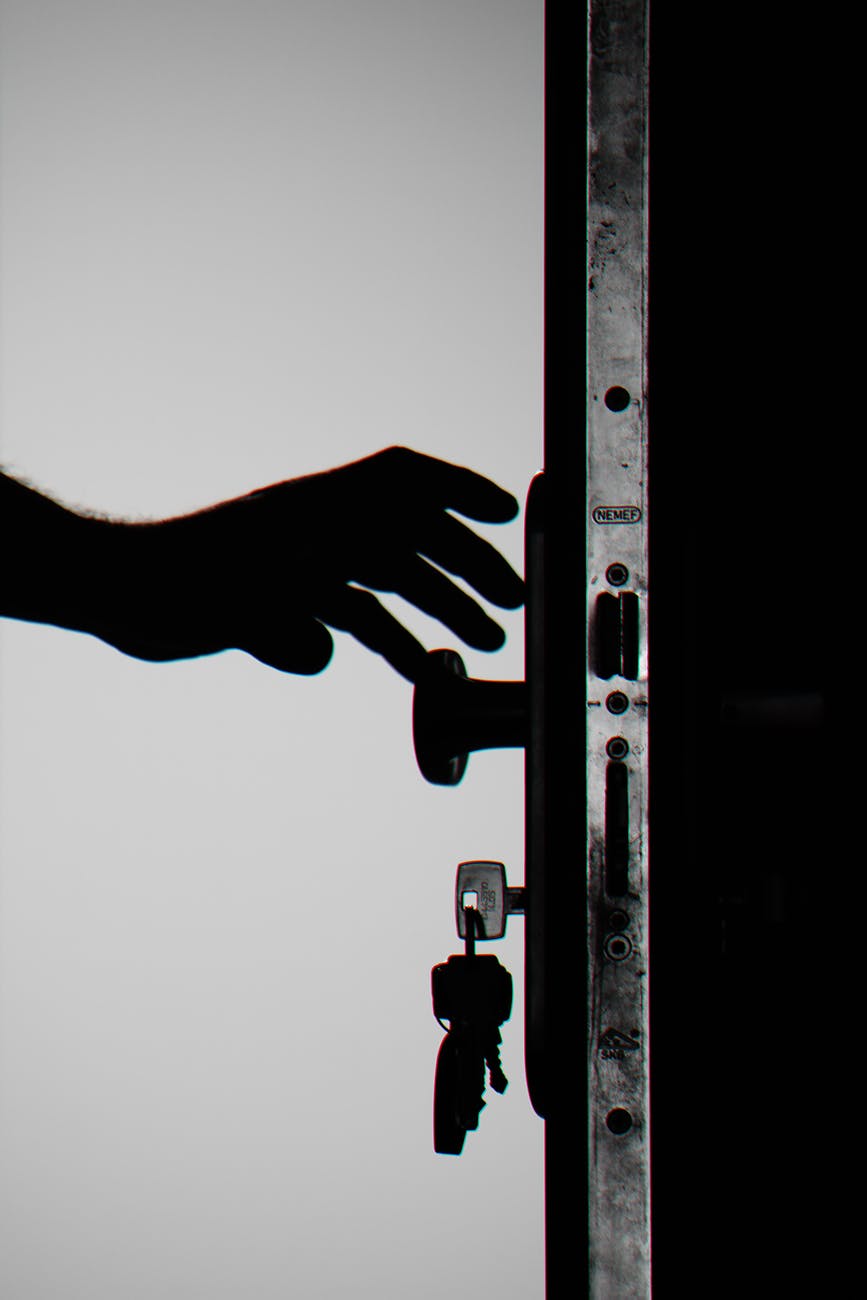
A silhouette of a hand reaching for a door knob, with a key attached to the door.
Photo by George Becker on Pexels.com

The beauty of this story is in the resiliency of Jack and the love he and his mother have for each other. They keep each other going when life becomes unbearable.

There are also some surprising twists to the story too.

I loved it.

I took the time to watch the movie after I read the book and it is a great adaptation. Not, of course, as stellar as the book, but well worth the time.

A woman lovingly holds a young boy in her arms, both smiling joyfully. The backdrop features a blue sky with clouds and a scenic outdoor landscape.
https://www.imdb.com/title/tt3170832/

Highly recommended, but keep your tissue box close.

Update to book/film review on Sept. 23, 2026. Post originally published Jan. 9, 2018.

It feels a little unrelated, but I recently watched “Good Luck, Have Fun, Don’t Die”. Beware, there is a minor spoiler ahead and it is an excellent film, which might garner its own separate review on this blog in the future.

For the rest of my review, please go to https://www.patreon.com/TheLightCongress/posts/room-by-emma-171000893

Thanks for reading!

Heidi

Weathered black door at the end of a dark blue hallway
A way out of a shadowy house appears. Image generated with WordPress AI.