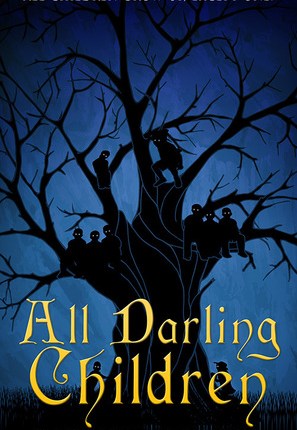
All Darling Children by Katrina Monroe

All Darling Children by Katrina Monroe

All Darling Children asks the question: what if something corrupted the ‘boy-who-never-grew-up’?

Peter Pan is one of my favorite fairy tales and it has featured in quite a few beautiful re-tellings. (Tiger Lily is one.)

All Darling Children is a masterful, twisted take on a literary classic. I loved this for its horror filled examination of the spiritual cost of eternal youth and the strong female lead.
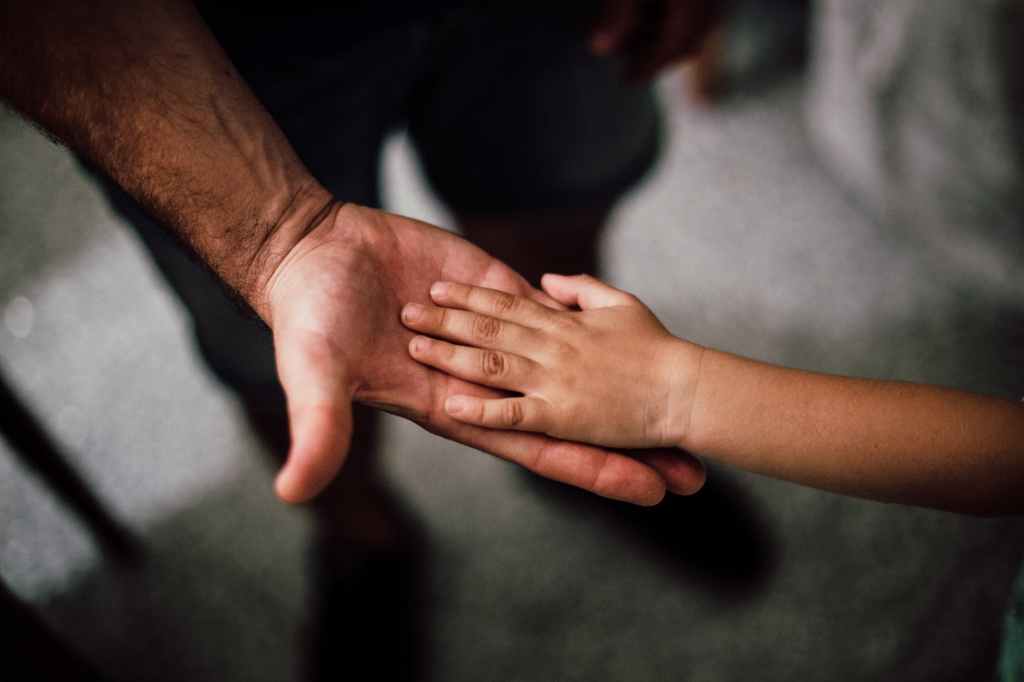
Photo by luizclas on Pexels.com

From her first moments in Neverland, Madge, the grandaughter of Wendy, can tell that something isn’t right: “Neverland. It seemed a hodgepodge of landscape ripped from a dream. Or maybe a nightmare. On one side, lush forest grew dense with heat and energy. Flowers bloomed in a rainbow of colors. They shuddered as Madge gazed at them, and then, as Pan looked in their direction, shriveled to pale, dry nothings.” loc 525, ebook.

This is not Disney’s version of Neverland.

Peter and his Lost Boys are dangerous in this world. Immature and wild, they try to force the traditional gender role of ‘mother’ on Madge (because they don’t know how to handle girls otherwise) and she resists: “Outsiders aren’t supposed to know how to find the tree house until they’ve been initiated.” “Initiated?” Madge’s stomach fell. “What’s that mean?” “It means you’re in the club, not that you’d ever get in, being a girl and all.” loc 692.

I never questioned the ‘Father’/’Mother’ roles of Peter and Wendy from the original book but, if the authority of the position was abused… it gets so creepy very quickly.

Madge’s story is told in-between entries from Wendy’s old diary. Here’s one of the passages: “I’ve learned much about (Peter), and while he is erratic and inconsistent in most ways, in one he is steadfast. Predictable. Peter must always be forced to try harder. If one gives in, he loses interest. I will never give in.”loc 921.

The back and forth from the story that the reader thinks she knows that is presented in Wendy’s diary, to the new story that Monroe is weaving with Madge, is awesome. There are enough similar elements drawn in from the original that the whole thing feels chillingly familiar- a mirror version of the classic.

Photo by luizclas on Pexels.com

Peter’s bragging about his exploits is presented as charming in Barrie’s version- Monroe takes a far more modern view: “Who wants to hear the story of how I cut off Captain Hook’s hand?” The boys whooped and smacked the table. Madge paled. He’d cut off someone’s hand? What was worse, he was bragging about it? Psycho.” loc 973

If you like twisted fairy tale re-tellings, you may love All Darling Children. I did. Another one that you’ve got to pick up if you liked this is Alice by Christina Henry. It’s an incredible, dark re-imagining of Alice in Wonderland and it’s also amazing.

Thank you to NetGalley and Red Adept Publishing for a free, digital ARC.

Also thank you to my Goodreads friend, Rosemarie Short, for writing a fantastic review that convinced me that I just had to read All Darling Children. You can see her review here: https://www.goodreads.com/review/show…

And, thank you for reading!

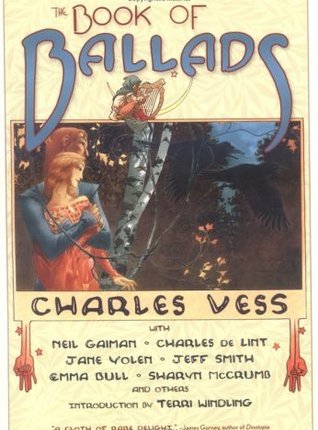
The Book of Ballads by Charles Vess, Introduction by Terri Windling

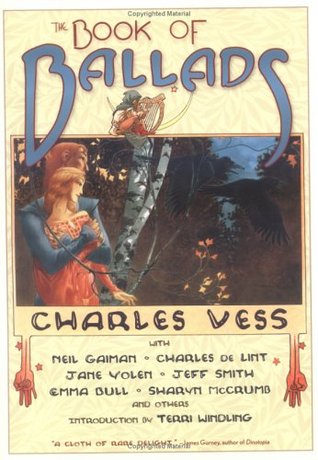
The Book of Ballads by Charles Vess, Introduction by Terri Windling
bookofballads

In this graphic novel, Charles Vess illustrates many traditional folk ballads that have been rewritten by some fairly popular fantasy artists like Neil Gaiman or Emma Bull.

I didn’t realize how many traditional ballads have negative interactions with strangers as their primary topic.

According to these stories, any stranger is either a fairy or the devil. If it is a male, he’ll either kill you or impregnate you and then come later to take your kid back to whatever magical land he came from.

If it is a female, she’ll either imprison you, change you into a snake, rape you, or take you away to fairyland.

An alternate title for this book could be: Strangers are Bad- Don’t Talk to Strangers or Let Them In Your House or Have Sex with Them Unless You Want to Die.

But all joking aside, there are very few ballads that end either happily or well. It is unsettling reading them altogether, like delving into a book of short horror stories.

From the introduction by Terri Windling: “Ballads, which are stories in narrative verse, are related to folktales, romances, and sagas, with which they sometimes share themes, plots, and characters (such as Robin Hood). No one knows how old the oldest are. It’s believed that they are ancient indeed…” pg 10

Which disturbs me even more when I consider that these stories were written for a reason. Can you imagine raising a kid in the dawn of time? ‘Don’t go talk to that stranger over there ’cause he might eat you. We don’t know about that exact dude, but seriously… it has happened. Remember how you used to have a sister?’

vess2

Take the ballad of Tam-Lin for instance: “O I forbid you, maidens a’, That wear gowd on your hair, To come or gae by Carterhaugh, For young Tam-Lin is there. There’s nane that gaes by Carterhaugh But they leave him a wad, Either their rings, or green mantles, Or else their maidenhead.” pg 92

In other words, don’t go over there or he’ll take your stuff or rape you.

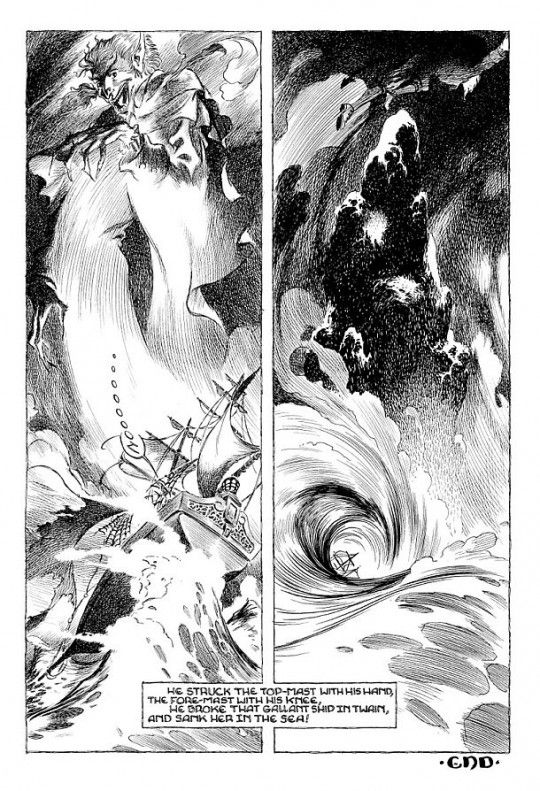
Despite the depressing nature of the stories, the artwork is very pretty and it’s all in black and white which makes the stories even starker. My favorite of the bunch is The Great Selchie of Sule Skerry which was re-written by Jane Yolen.

In it, a young maiden falls in love with a man from the sea. Guess how it ends?

Some read alike graphic novels: A Flight of Angels by Rebecca Guay, The Last Dragon by Jane Yolen, or The Sleeper and the Spindle by Neil Gaiman.

Thanks for reading!

The Road by Cormac McCarthy

The Road by Cormac McCarthy

Dark but powerful, The Road is about a father and son who are travelling through a destroyed world.

Photo by Kaique Rocha on Pexels.com

They’re trying to get to the coast and south to warmer climates, but many obstacles lie in their way. In addition to starvation because of the nuclear fallout, the duo face external threats like cannibalistic tribes of savage men and women.

But it’s not just a battle to save their bodies, the father must teach the son the proper way to live (like not eating other people) to save his spirit from the crushing darkness that has overtaken everything. It is a struggle to retain the internal spark that divides humanity from the animals.

This is a book about survival in a dystopian reality, but it is also about the sustaining and literally life preserving power of love.

Photo by Juan Pablo Serrano Arenas on Pexels.com

My one complaint about this book is that the author didn’t clearly label who was speaking during the dialogue. He just went down a line to illustrate change of speaker. I had a really tough time keeping track of who was saying what.

Take this passage, for example: “Can I ask you something? he said. Yes. Of course. Are we going to die? Sometime. Not now. And we’re still going south. Yes. So we’ll be warm. Yes. Okay. Okay what? Nothing. Just okay. Go to sleep. Okay.” pg 9 The whole book is like that, anytime anyone is talking.

Otherwise though, this is an amazing, heart-pounding, thrill ride of a book.

I loved the father’s advice to the son throughout the journey: “A corpse in the doorway dried to leather. Grimacing at the day. He pulled the boy closer. Just remember that the things you put into your head are there forever, he said. You might want to think about that. You forget some things, don’t you? Yes. You forget what you want to remember and you remember what you want to forget.” pg 10

The father/son relationship described in here was fascinating to me. Generally, at least in my experience, the relationship between a mother and a child is the closer one in the family because of certain biological imperatives. McCarthy flips that whole paradigm on its head with this story. In here, it is the father who stands between the child and death. It is the father who finds meaning in a world gone mad through helping the child find food, stay clean, and stay protected from the elements.

“The boy sat tottering. The man watched him that he not topple into the flames. He kicked holes in the sand for the boy’s hips and shoulders where he would sleep and he sat holding him while he tousled his hair before the fire to dry it. All of this like some ancient anointing. So be it. Evoke the forms. Where you’ve nothing else construct ceremonies out of the air and breathe upon them.” pg 63.

Photo by Miri on Pexels.com

I think one of the main lessons in here is that life holds the meaning that you assign to it. And, even if civilization falls apart, you can create your own mini-civilization through your actions and intentions.

“He’d had this feeling before, beyond the numbness and the dull despair. The world shrinking down about a raw core of parsible entities. The names of things slowly following those things into oblivion. Colors. The names of birds. Things to eat. Finally the names of things one believed to be true. More fragile than he would have thought. How much of it was gone already? The sacred idiom shorn of its referents and so of its reality. Drawing down like something trying to preserve heat. In time to wink out forever.” pg 75 Beautiful.

If civilization ever ends, look for me at the library. Probably will be reading this book. 🙂

I picked this classic up because of David Schaafsman’s excellent review which you can read here: https://www.goodreads.com/review/show…

Some read alikes: Station Eleven by Emily St. John Mandel, Railsea byChina Miéville, or The Last One by Alexandra Oliva.  Thanks for reading!

Shutter by Courtney Alameda

Shutter by Courtney Alameda

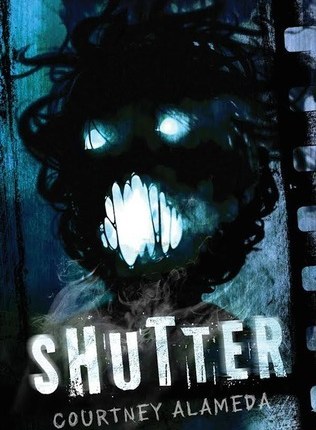
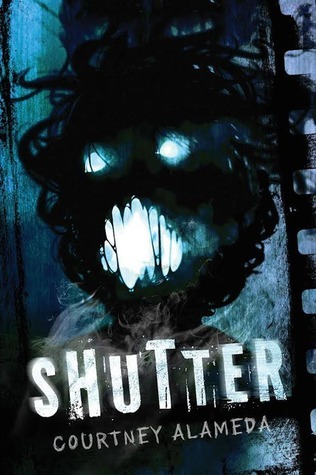
shutterMicheline Helsing is the last of the line of Van Helsings, of monster slaying fame. In this version of the tale, Micheline slays ghosts and otherworldly beings by capturing their visages on film, thereby taking away their power and banishing back to the realms where they belong.
One night, Micheline and her team has a mission go awry and now, because of a curse, they are going to die. Unless, they can find the ghost that caused the sickness, rid the world of it, and save themselves. The clock is ticking…

Shutter was a Brom Stoker award nominee for Best First Novel. That’s what drew me to this creepy tale.

Horror isn’t my usual genre and the scary parts of this tale really scared the heck out of me. If horror is your thing, this one might not be scary enough. Reading is such a personal experience, you know? It’s hard to predict.

Alameda was at her best during the truly terrifying moments, which, in my opinion, were the undead creatures and anything scenario involving a mirror. Everybody has mirrors in their homes. What if, hypothetically, these were portals into other worlds and *things* could come crawling out of them into this one- eeeeeek!

I didn’t enjoy the so-so character building, teen angst or abusive relationship with the father. That could be a potential trigger too.

Micheline is the type of teen heroine that I met in the Divergent trilogy and wasn’t impressed with then: not trusting anyone in authority with her problems even though they could potentially help her, throwing herself into life threatening situations without proper planning and, therefore, putting her friends in danger too, and pining for the lantern-jawed guy with the ridiculously pumped up fighting skills.

If it wasn’t for the insanely entertaining parts with the ghosts, mirrors, strong friendships with her team and tragic back story, this would be a two-star book instead of a four. But, I believe that its positive attributes outweighed the negatives. Again, reading is such a personal trip. You may disagree. And that’s ok.

For a debut book, Shutter is really very good. I read the last couple chapters of this in a rush because I was terrified for the well-being of the main characters.

If you love young adult horror tales, you should give this one a read. Some read-alikes: Jackaby or 13 Days of Midnight. Shutter is scarier than either of those, but they have similar themes.

Thanks for reading!

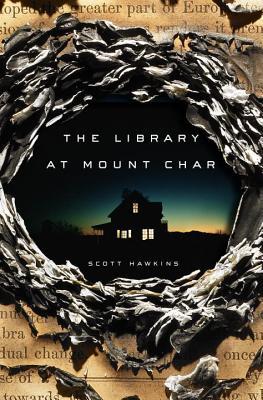
The Library at Mount Char by Scott Hawkins

The Library at Mount Char by Scott Hawkins

Review on Reread, August 2025: It has been ten years since I first read The Library at Mount Char (my original review may be read below this one). I think the book has held up incredibly well in the decade since its publication. Well done, Mr. Hawkins.

Rather than rehashing the plot, I’d like to take a moment to address a theme that I didn’t touch on my last review. If the spirit (or soul, if you will) of a person is truly immortal and said person, through magic or a technology so advanced that it appears as magic, does not die but instead lives on and on for 50 to 60 thousand years, what effect, if any, would this unnatural longevity of the body have on the spirit? What if the spirit retains all memories of this elongated life? How would that change their behavior in their every day interactions with other, non-immortal, beings?

My partner and I have discussed the potential devastating consequences of such a thing when considering the longevity of elves in Tolkien’s classic work The Lord of the Rings or the twisted upper class in the series Altered Carbon. The way I see it, the elves would probably start to lose the plot around year 150 or so and then it would be all downhill from there. Why? Imagine, if you will, the hurts, slights and every day micro-traumas that can cause such damage in a normal lifespan being extended over thousands or tens of thousands of years. How could someone possibly deal with such a thing and not lose their minds? My contention is that they can’t.

Yes, we are talking about magical beings with, I’m assuming, some sort of safety valve to the normal wear of time on the spirit. But what if there was no safety valve? What if, as time marched on and on for these beings, they became more and more removed from their elvishness (or in The Library of Mount Char and Altered Carbon, their humanity) and instead became aloof, immortal beings who would stop at nothing and have all of the resources in the universe to achieve their aims.

One might observe them abusing the beings around them because they no longer have the ability or desire to empathize with other flawed beings who are still existing in time. Or maybe they forget their reasons for wanting to change their world around them in the first place and become overly fixated on their own viewpoint to the detriment of all others.

Or maybe, just maybe, they can’t let go of what happened in the past and they make their current reality into a reoccurring nightmare of past traumas, perpetuating the cycle subconsciously into not only their future but everyone else’s too.

My point is, I believe physical death happens for a reason, perhaps a reason that we do not yet understand, but maybe it has something to do with the rehabilitation of the spirit that occupies the body more than the limitations of physical reality. As humanity develops more and more sophisticated methods for extending our lives (one thinks on a certain conversation two world leaders had recently about organ transplants), I think we should consider the potential spiritual cost of these strategies not only for those who are unable to afford such things but also for those who partake in them. What sorts of emotional baggage or past traumas are being dragged kicking and screaming into the future?

The Library at Mount Char could be read as a warning for the fantasy of the immortality of the body. At what point in a life that spans eternity does a person change from a person into something else? Does immortal life make one a god or simply a mortal who has outlived their own time?

I don’t know the answers to these questions. I invite you to give this book a read and let me know what you think. It really is worth the read and I highly recommend it.

Thanks for reading.

Original Review, May 2015: The Library at Mount Char is an urban fantasy/horror novel about Carolyn and her adopted “family” who are studying the seemingly endless knowledge of an immortal being that they call “Father”. The lessons that they learn are terrifying but powerful. After years of fear and torture at the hands of the Father and some of her siblings, Carolyn wants to break free from her living nightmare. She knows that she can’t trust anyone, but she also doesn’t know all of her Father’s secrets. How exactly does one escape from a god?

I think that this book is fantastic. The characters are more than human and divinely flawed, all of them. The plot proceeds at a breakneck pace, going from thrilling to apocalyptic so quickly that I couldn’t put this book down. Yes, I lost some sleep reading The Library at Mount Char. If you pick this up, I bet that you will too.

Sensitive readers, beware.  There is sexual violence/rape, physical abuse, mental abuse, and animal abuse in this book.  If any of those topics cause troubles for you, you may want to choose a different read.

The distinctive mix of godlike powers and very human, emotional, knee jerk reactions contained in this story reminded me of some of the darker Greek and Roman mythological story elements like the serial rapists (Zeus and about every other major god figure) and the unjust punishments of the innocents (Medusa, Actaeon, Laocoon, etc etc). Those mythologies were written to explain the unexplainable workings of nature, weather, time, and humanity itself. I think, if one makes The Library at Mount Char into a metaphor for reality, that in a modern way, it fills the same role as those more ancient stories. It gives a rhyme and reason to the mystery that is life. Pretty deep for a debut fantasy novel, yes?

Some of the twists I saw coming, but others, some of the big ones, I didn’t. It kind of reminded me of an M. Night Shyamalan film, except instead of one gasp worthy moment, there were maybe six of them. After each one, I’d sort of put the book down for a second and start to rethink the story from the new vantage point that the author had just provided. It’s really an amazing work for a first novel. Maybe Hawkins will give the world a series?? Please. I’d read it.

Thank you to the Goodreads First Reads program for an advance reader copy of this book.  And, thank you for reading!

The Abominable: a Novel by Dan Simmons

The Abominable: a Novel by Dan Simmons

The Abominable by Dan Simmons is a historical fiction novel about mountain climbing and a mystery that is set, for the most part, during the early years of World War II.

The story reads like less of an adventure novel and more like an homage to the sport of mountaineering.

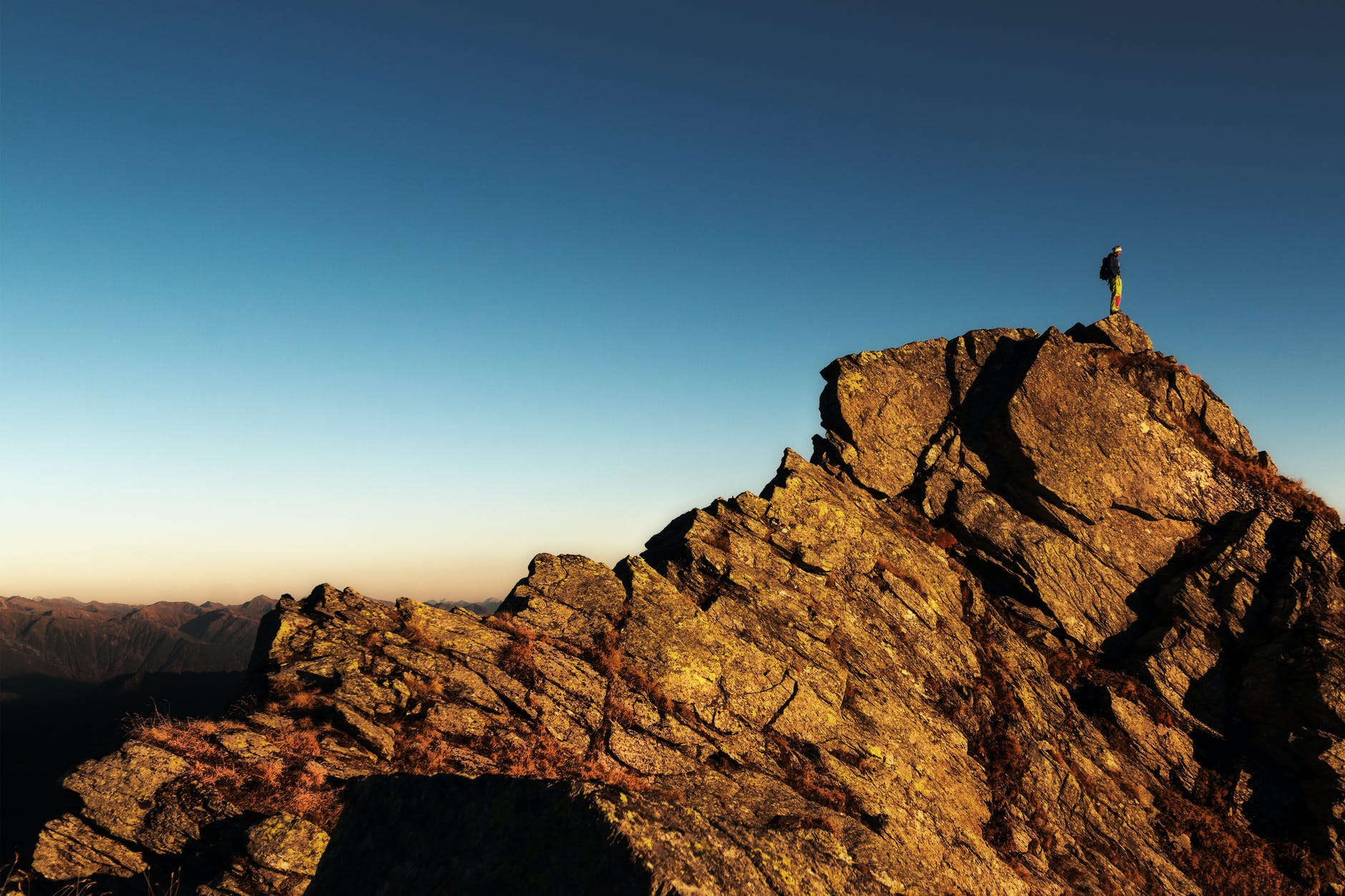
Photo by Pixabay on Pexels.com

Dan Simmons takes his time building the tension of the tale with back stories and detours until I nearly lost interest in the whole thing. But, to be fair, I have never been a serious mountain climber, having injured myself the first and only time I tried it.

I do enjoy long hikes in beautiful spaces. I don’t like risking my life or the lives of my companions in the process. So, not my thing, but maybe it’s somebody else’s.

Photo by Sagui Andrea on Pexels.com

If hiking is your jam, the long and technical descriptions of climbing techniques, knots, and methods in The Abominable might be just the read you’ve been looking for.

Here’s a pretty passage about viewing the night sky, high up in the mountains: “When you look at the stars near the horizon…especially when it’s really cold.. they tend to jitter around. Jumping left, then right… all while they jiggle up and down at the same time. I think it has something to do with masses of super-cold air lying over the land or frozen sea acting like a lens that’s being moved…” pg 18

One of the many passages that literally made my hands sweat in fear for the characters: “It’s tricky playing out the rope to Jean-Claude as I crab-shuffle to the left. Most of it is in my rucksack, which keeps trying to pull me back and off the face with just the weight of the extra rope and a few other small things in it, but some I’ve had to loop over my right shoulder to keep playing out to J.C. …

I’ve made it a little more than halfway to the pipe ledge when I slip…” pg 111

There are hundreds of pages with writing like that. I found it stressful, but again, I’m not a mountain climber.

Photo by eberhard grossgasteiger on Pexels.com

There’s a lot of wry humor in this read too: “…why are they so eager to get this blessing from the monastery’s holy man, Dzatrul Rinpoche? If everything’s predestined for them anyway, what difference will the abbot’s blessing make?” Pasang smiles his small smile. “Do not ask me, Mr. Perry, to make sense of the internal contradictions that are common in all religions.” pg 341

More love for mountain climbing: “Machig Labdron once wrote, Unless all reality is made worse, one cannot attain liberation… So wander in grisly places and mountain retreats… do not get distracted by doctrines and books… just get real experiences… in the horrid and desolate.” “In other words,” I say, “face your demons.” “Exactly,” says Reggie. “Make a gift of your body to the demons of the mountains and wilderness. It’s the best way to destroy the last vestiges of one’s vanity and pride.” pg 346

This book in two lines: “We were metaphorical inches from hypothermia-which has a wider range of terrible symptoms than merely going to sleep and freezing to death, not the least of which would be intemperate belligerence and a need to rip our clothes off as we froze-and literal inches from a 9,000-foot drop to our south side and a 10,000-foot drop a few more feet away to the north side. But for the moment, we were very happy.” pg 554

Photo by Aleksandr Slobodianyk on Pexels.com

And some people call that fun.

So, beyond being terrified during the climbing portions and bored by the never ending, rambling style of story-telling, I wanted much more of the fantastical in this tale, for example: the abominable snowman!

I’m not going to say anymore about yetis because I don’t want to spoil the surprising twists and turns of this tale for those who do choose to pick it up. Prepare yourself for one hell of a climb though- because it’s a long and meandering one.

Thanks for reading!