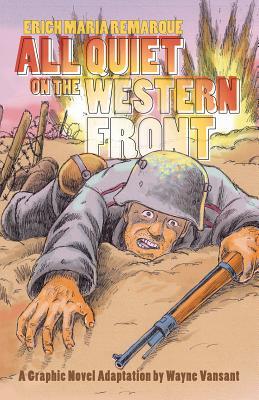
All Quiet on the Western Front by Wayne Vansant (adapter), Erich Maria Remarque

All Quiet on the Western Front  by Wayne Vansant (adapter), Erich Maria Remarque

This is a graphic novel remake of the classic All Quiet on the Western Front and it packs as much punch as the original.

Paul Bäumer and his classmates are encouraged to join the German army in WWI by an enthusiastic professor. What they find is not the heroic battlefields of the classical texts they’ve studied, but one nightmare after another.

“We plunge again into the horror, powerless, madly savage, and raging; we will kill, for they are still our mortal enemies, their rifles and bombs are aimed against us, and if we don’t destroy them they will destroy us.” pg 68
Photo by Kirsten Bu00fchne on Pexels.com

As his friends slowly die and he takes an uncomfortable leave home, Paul comes to realize that there will be no end to this war for him.

“He fell in October 1918, on a day that was so quiet and still on the whole front, that the army report confined itself to the single sentence: All quiet on the western front.” pg 170

This book is an interpretation of war that was banned and burned in Erich Maria Remarque’s home country of Germany. To go to war, it seems that the world has to sanitize it and completely demonize the other side, otherwise, we would never do it.

All Quiet on the Western Front refuses to look away from the humanity on both sides of the conflict. It is tough to read, and kicks you in the feels. But, in my mind, that’s what makes it so great.
Photo by Jan Tancar on Pexels.com

Though it is fictional, it is the story of a generation of young men who were shipped off to war and never came home again. And, if by some miracle they did, they’re forever haunted by the sound of a train car because it reminded them of the sound of falling bombs. When they picked up a book that they used to love, it didn’t ignite their souls in the same way, because they’d seen the worst that life can offer. War kills more than the ones who end up dead on the battlefield.

This graphic novel version of All Quiet on the Western Front should appeal to reluctant readers. Though it is about a very serious and triggering topic, the artwork is done tastefully. I read the original All Quiet on the Western Front as a seventh grader, age 13. I think this book would be appropriate for children of that age and up.

I received a free advance reader copy of this book from the publisher. This quotations I cited in this review may vary in the final printed version.

Thanks for reading.

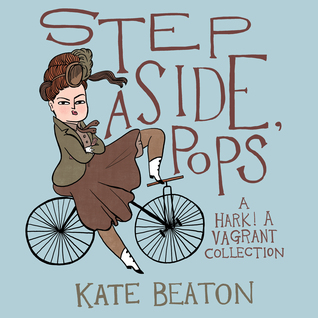
Step Aside, Pops (Hark! A Vagrant, #2) by Kate Beaton

Step Aside, Pops (Hark! A Vagrant, #2) by Kate Beaton

An incredibly clever collection of comics with topics ranging from history to literature to pop culture and everything in between.

You don’t have to know a thing about Kate Beaton’s Hark! A Vagrant to enjoy this book. (I didn’t.) And it is so much fun.

Like any great observational comedian, Kate takes idiosyncrasies or exaggerates details to create comic gold.

For instance, here’s the dialogue from a comic about the Black Prince and some of his early exploits: “How are you feeling about being a hero of the battle of Crecy?” “Bro I am stoked.” “This is quite a momentous event so far in the war…” “Those French guys were like ‘Whoaaaaaa’.” “I keep forgetting you are sixteen.” “And my army was like eat it. Ka chow!!” pg 114

Photo by Julia Volk on Pexels.com

There’s another one I liked about the Greek god Zeus going on a first date that doesn’t make much sense without the pictures so you’ll just have to check it out for yourself on page 123. Basically, it’s a play on all of the mythological stories about Zeus revealing himself to mortals as a swan, shower of gold or something else and still getting the girl. Kate has a point. I mean, how does that even work… showing up as a shower of gold. It’s ridiculous and almost begging for a comic to make fun of it. Like this one. 🙂

In addition to the observational humor, Kate takes characters from old posters, newspaper clippings or magazine photos and gives them a back story. Some of her creations are just hysterical.

Photo by brotiN biswaS on Pexels.com

The spare and pencil-drawn style strongly reminded me of Nimona, which I also enjoyed. I highly recommend this collection for readers who enjoy comics or satire.

Thanks for reading!

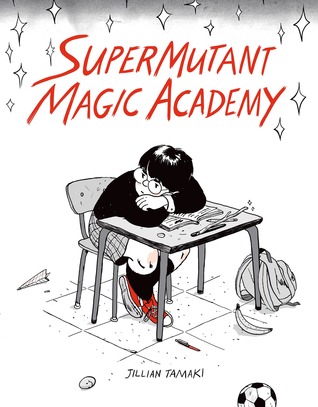
SuperMutant Magic Academy by Jillian Tamaki

SuperMutant Magic Academy by Jillian Tamaki

At the SuperMutant Magic Academy, strange things happen and everyone looks different, but teenage angst and questions about reality remain the same. There is unrequited love, hormones run amok and popularity problems. There is a young man who can’t seem to die, no matter how he tries to end his life. There’s an artist who puts herself into shocking situations to underline the pointlessness of reality.

There’s a young woman with the head of a lizard who just wants to find a boyfriend and a beautiful girl with ears like a fox who occasionally has to change into a fox and hunt prey. There’s drugs and alcohol and a host of other issues, while the poor teachers are simply trying to educate the group.

Photo by fauxels on Pexels.com

I didn’t connect well with this graphic novel and question its appropriateness for the younger end of the young adult scale. Older or more mature teens should be ok. There’s moments that make light of self harm without, what I think, is the appropriate context. There’s some sexual content that may be incredibly confusing and inappropriate for 11 and 12 year olds.

When I borrowed this from the library, I was under the impression that I could share this book with my child. After reading it, I realized I was wrong. That may have affected my opinions of SuperMutant Magic Academy. If I had just read it for enjoyment’s sake, maybe I would have thought more of its content.

Or maybe not. Jillian Tamaki gives herself, usually, just six panels to create a narrative and it isn’t enough. The jarring moments of reality left me with more questions than answers. I wanted more of a story and never really got that.

Photo by Thiago Matos on Pexels.com

It made me think maybe I was missing out on something. If this is based off of a web comic, maybe I would have enjoyed it more if I had read it in its original medium.

Thanks for reading!

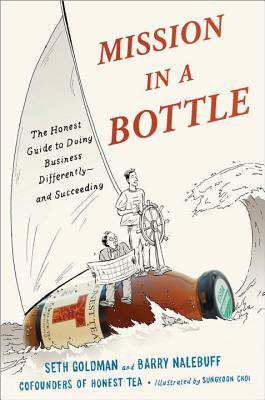
Mission in a Bottle: The Honest Guide to Doing Business Differently – And Succeeding by Seth Goldman, Barry J. Nalebuff

Mission in a Bottle: The Honest Guide to Doing Business Differently – And Succeeding by Seth Goldman,  Barry J. Nalebuff

Barry Nalebuff and Seth Goldman, who are the cofounders of Honest Tea, tell how they created their bottled tea business and grew it into something more.

Photo by Cup of Couple on Pexels.com

I understand what they were trying to accomplish with telling their business story in a graphic novel format but it didn’t work for me.

Graphic novels are great platforms to tell stories with a lot of action, colorful figures, and fantastic backgrounds. The story of founding a business, any business, seems to take place mostly in rooms with a bunch of people in business attire. The creation of a mission statement is mainly words on a page with little to show, action-wise. That doesn’t make it less important, but simply less exciting than a superhero comic.

Even the tense moments of Mission in a Bottle, like the time when a guy thought he found a piece of a male body part in one of the brands that they were renting their bottling facility out to, just didn’t translate in a meaningful way to a cartoon format.

Photo by Pixabay on Pexels.com

Overall, I enjoyed the business story and found it inspiring. I wish Goldman and Nalebuff had written it as a traditional book rather than a graphic novel.

Thanks for reading!

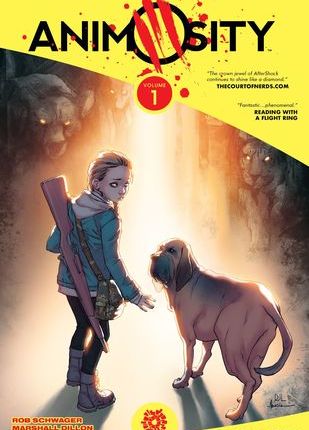
Animosity, Vol. 1: The Wake by Marguerite Bennett

Animosity, Vol. 1: The Wake by Marguerite Bennett

One day, animals obtained self awareness and the ability to speak. The world will never be the same.

They started thinking. They started talking. They started taking revenge.

There’s something profoundly disturbing when reading about animals embodying the worst of the human emotions. They’re angry, afraid, vengeful. Part of what draws humanity to the animals is that they’re not like that. They live in the moment. They operate from instinct. And the love they give is uncomplicated… the hate too.

Photo by Dominika Roseclay on Pexels.com

In Animosity, this paradigm is flipped on its head. Now animals can plan. They’re organized. They can make assumptions and mistakes.

When the animals changed, some pressing issues arose beyond the obvious problem of everybody hurting each other in the first panic and fear-filled moments following the change. How will the world feed itself? How will reproduction be controlled? Humanity had trouble providing for all even when not dealing with the quintillions of other lives on the planet.

And the love one dog has for his human can perhaps have some darkness in it that she doesn’t expect. There’s still loyalty. He’ll fight to protect her. But there’s some question to how much he’ll protect the rest of her family…

Photo by 42 North on Pexels.com

Animosity is a surprisingly deep graphic novel that makes the reader question the role of animals in our lives and how the world could be a very different place if everyone, literally all life, acted like humanity. And how that might be an awful development.

Here’s my review of another book that is set in the dystopian world of AnimosityAnimosity: Evolution, Vol. 1: Lex Animata by Marguerite Bennett

And thanks for reading!

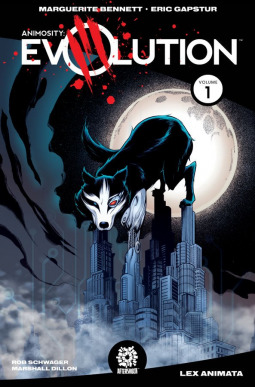
Animosity: Evolution, Vol. 1: Lex Animata by Marguerite Bennett

Animosity: Evolution, Vol. 1: Lex Animata by Marguerite Bennett

Animosity: Evolution imagines a world in which animals have become sentient and all of the chaos that followed. It’s a fascinating science fiction graphic novel in which leaders among the animals have to come to grips with an additional multi-billion mouths to feed, homes to find, and society to organize.

Compounding the complexity, the animals are now just like people with individual personalities. Some are brave, others corrupt, others run vice dens with black market milk or other forbidden specialties. There’s problems with population control and predators continue to desire prey.

Photo by YURI MANEI on Pexels.com

A laconic wolf named Wintermute is leading the charge for the former city of San Francisco. None of the decisions she is required to make on a daily basis are simple and she’s almost universally hated, except by a few who know her well.

Meanwhile, out in the ocean, the dolphins have organized into their own blood-thirsty society. Beyond the city limits on the land, there are animals (and people) who don’t want to join a new world order in San Francisco.

I really enjoyed Animosity: Volume 1. It is a multi-layered story in a world that has a lot of potential. The characters, both animal and human, are fascinating. The relationships that they are attempting to develop are brand new and without precedent. There’s shifting power structures and social services have been completely up-ended.

Photo by Daniel Torobekov on Pexels.com

I wonder what’s going to happen next…

Many thanks to one of my local public librarians for the excellent recommendation. You rock, Ryan.

Thanks for reading!

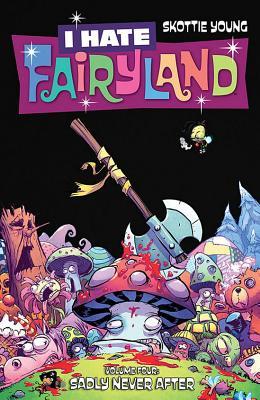
I Hate Fairyland, Vol. 4: Sadly Never After by Skottie Young

I Hate Fairyland, Vol. 4: Sadly Never After by Skottie Young

Sometime in July, when I wasn’t paying attention, Skottie Young announced this installment of the I Hate Fairyland series would be the final one. Imagine my surprise when I got to the last page of what was obviously the end of one of my favorite comic series. It was bittersweet.

Young brings the series to a close with Gertie trying one more time to get home. The last book ended on a cliffhanger with a surprise twist. He addresses that directly in the first pages of this installment.

“Yeah, that’s why I’m completely unimpressed. Feels like a cheap stunt to end a story with a ‘clever’ cliffhanger, if you ask me.”

Photo by Egor Kamelev on Pexels.com

Characters from the previous books all make an appearance, plus a few new ones. All-in-all, I enjoyed it.

The genius of this series is the idea that fairyland is one, built for children, and two, should have an expiration date. Gertrude, a foul-mouthed homicidal maniac in the form of a perpetually small child, is what would happen if someone was forced to endure endless disappointments in a futile effort to go home again. And was given a pointy-edged sword with little to no consequences for her actions.

All quests have ends though they may not be in the form the person going on the quest expected. I was pleased to see that Young didn’t drag out this series beyond its own expiration date. Because he could have. Honestly, the beautiful world he created could have gone on and on if he had chosen (or had the time) to do so. But he embraced one of the lessons in the story and ended it in a timely and, I felt, dignified manner.

Photo by PhotoMIX Company on Pexels.com

Recommended for adults who are looking for a different coming-of-age story in graphic novel format. Not appropriate for the younger set.

Here is my review for a previous entry in the series:

I Hate Fairyland, Vol. 3: Good Girl (I Hate Fairyland #3) by Skottie Young

Thanks for reading!

The Autumnlands, Vol. 2: Woodland Creatures (The Autumnlands #2) by Kurt Busiek

The Autumnlands, Vol. 2: Woodland Creatures (The Autumnlands #2) by Kurt Busiek

The curious fantasy/science fiction graphic novel series The Autumnlands continues in volume two: Woodland Creatures.

In the last book, the chosen one, “Learoyd”, a violent and profanity-laden human from the future or, perhaps, the distant past, was summoned by a group of magic-wielding, sentient animals to save their world from the disappearance of magic.

But the effort of summoning Learoyd was so great, that it caused one of their sky-roving cities to crash to the earth. On the earth, there were tribes of violent and power-hungry creatures waiting for their chance to plunder the riches of the sky.

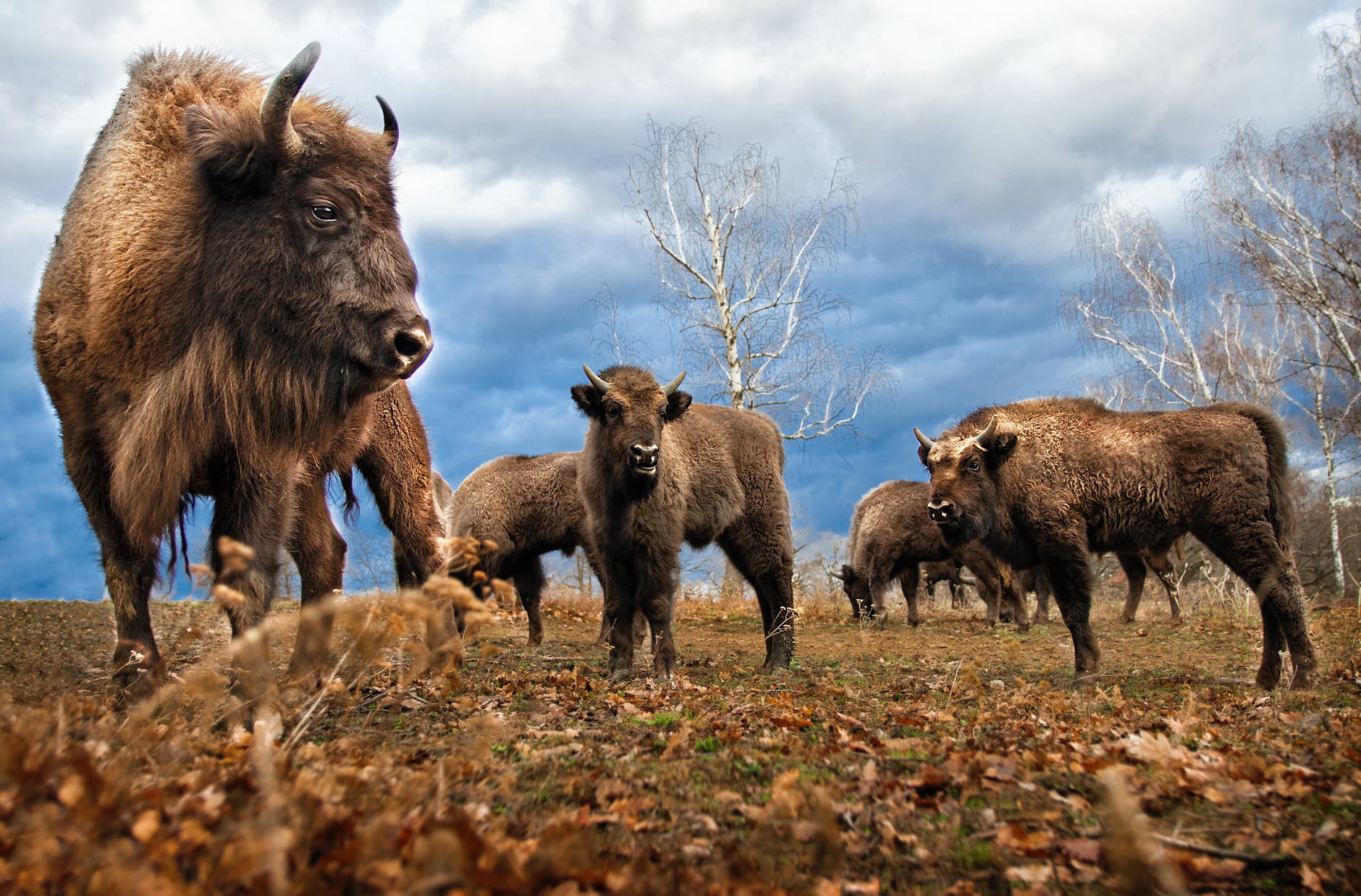
That entry ended with an epic explosion and fight with a bison tribe.

Photo by Juraj Valkovic on Pexels.com

In this book, Learoyd and Dusty, a magic-wielding pit bull who recently lost his father, venture into the wilds of earth to discover who is poisoning the animals and continue searching for a way to bring back the magic that continues to disappear from the world.

Dusty, though young, is no dummy and Learoyd isn’t quite what the animals were hoping he would be.

The great champion of legend- the hero we’d thought him to be- would have sallied forth just because it was the right thing to do. But this champion… I was learning that legends were a poor guide. He had reasons for all he did. His own reasons. Whether I understood or not…”

This graphic novel is surprising in its treatment of the themes of power, magic and betrayal. I like how the animals tell the story about how everything that happens one way, but the reality of what happens seems to be something else.

It is an interesting examination of the power of storytelling and the construction of legends. What is truth? How much is magic simply technology that isn’t understood yet?

Photo by Alexandra Holbea on Pexels.com

“This f-ing world. I thought it was a dream, at first. It comes off goofy, all badgers and warthogs in fancy robes and sh*t. Like a kids’ story. But there’s just as much sh*t here as there is anywhere, isn’t there?”

I didn’t particularly like how much Learoyd uses profanity, but it certainly gives him character.

This series is for adults. It contains adult themes, nudity, profanity and violence. And yet, I think it is worth the reading.

It asks big questions. It uses fantasy to explore strange worlds and the human condition. Recommended.

Thanks for reading!

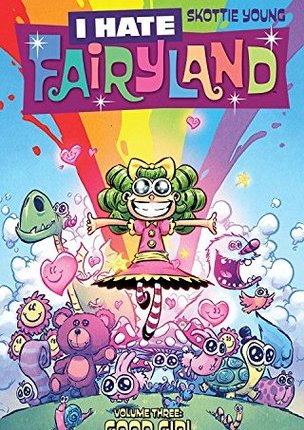
I Hate Fairyland, Vol. 3: Good Girl (I Hate Fairyland #3) by Skottie Young

I Hate Fairyland, Vol. 3: Good Girl (I Hate Fairyland #3) by Skottie Young

Skottie Young‘s gorgeously-drawn and cleverly-written comic series I Hate Fairyland continues in Volume 3: Good Girl.

Gertie is still desperately trying to get home and kill as many cute and fuzzy things as possible while she does so.

But first, she wants to meet her favorite marauding hero, Gwag, a hard-core barbarian at Dungeon Festexpocon!

Photo by Brett Sayles on Pexels.com

“This line is ridiculous. Why in the world would anyone want to spend all their time, energy, and money to attend Dungeon Festexpocon just to wait in lines the whole time?” “Says the girl about to stand in that line.”

Gert is so relatable. She’s the unfiltered impulses that run through your mind. Difference is, we quash those ideas and she lives them.

“Lesson one: the lifeblood of any good quest is alcohol!” True.

After some hijinks, Gert does some soul searching and decides she has to change her ways… again. You’d think that premise would get old after awhile, but Young manages to keep it fresh and his readers guessing.

Photo by Clam Lo on Pexels.com

As I mentioned earlier, the art continues to be a delight. No one does adorable, gore-covered critters and fantasy scenes quite like Young.

Added bonus, everybody’s favorite long-suffering guide through Fairyland, Larry, gets his own backstory in this book.

“Sorry, I must have dozed off. What were you talking about?” “I was talking about how terrible your life would be if you never met me.” “Yeah, you’re probably right.”

Highly recommended for graphic novel fans. Reminder, this series is for adults only. Don’t be fooled by the pastels. It can be crass, violent, gross, or a mix of all three of those things. It also has plenty of heart.

Thanks for reading!