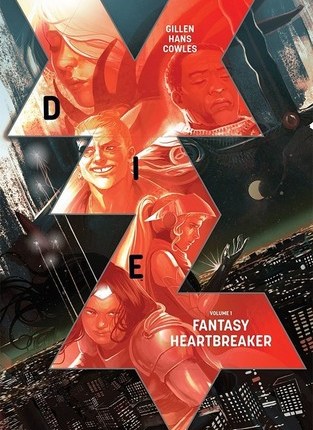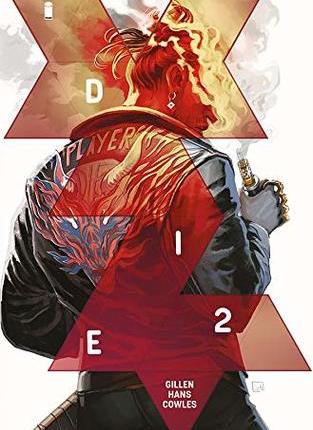
Die #2: Split the Party by Kieron Gillen, Stephanie Hans (Artist)

Die #2: Split the Party by Kieron Gillen, Stephanie Hans (Artist)

Now that the main characters from Die, Vol. 1: Fantasy Heartbreaker are back in the fantasy gaming world of Die, they are struggling to make their way back to the real world.

Part of that struggle involves delving into the past and decisions made by their teenage selves. There are lost loves, old enemies and even a few descendants to contend with- not to mention old hurts that they’ve carried for years between members of their own party.

Which is a particular problem for our intrepid heroes. They all have to agree that they want to leave “Die” in order to do just that. And they don’t all want to leave anymore.
Like most sequels, at least in my experience, the follow up to the first issue wasn’t as strong. Now that readers are in the character development section of the story, action moves a little slower and it reads less like a fantasy adventure and more like a drama.

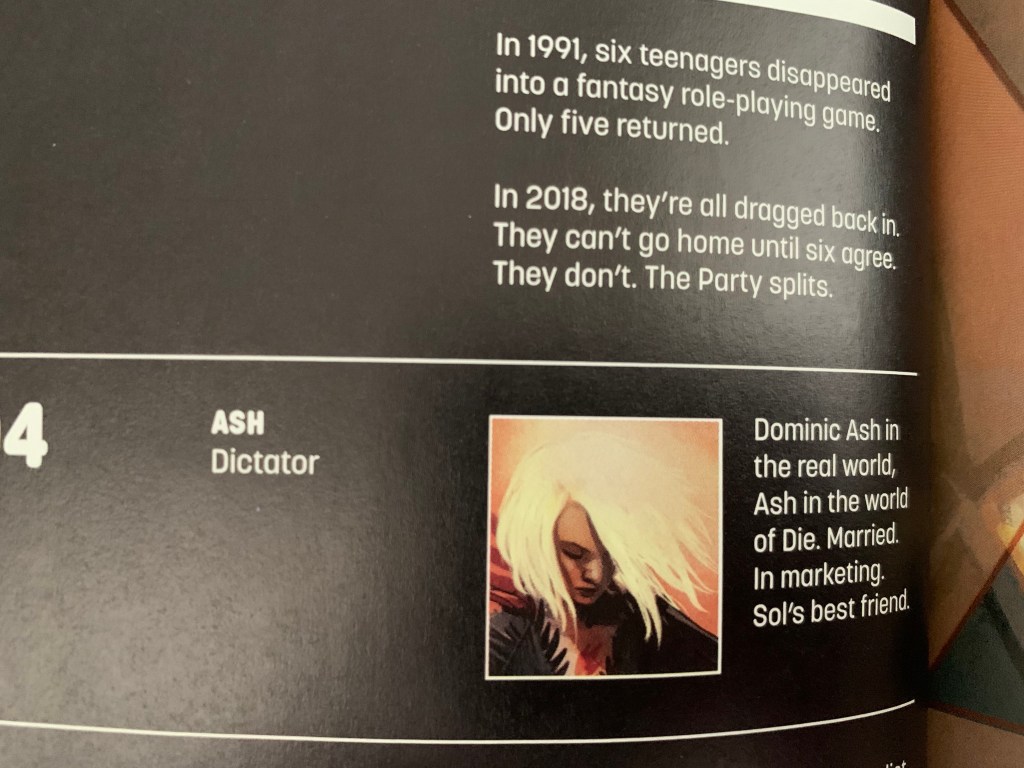
I think the character with the most potential for growth is Ash, the Dictator, who is a man in the real world, but a woman in the world of Die, and controls people’s emotions with her voice. But all of the movers and shakers in this drama have some growing to do.
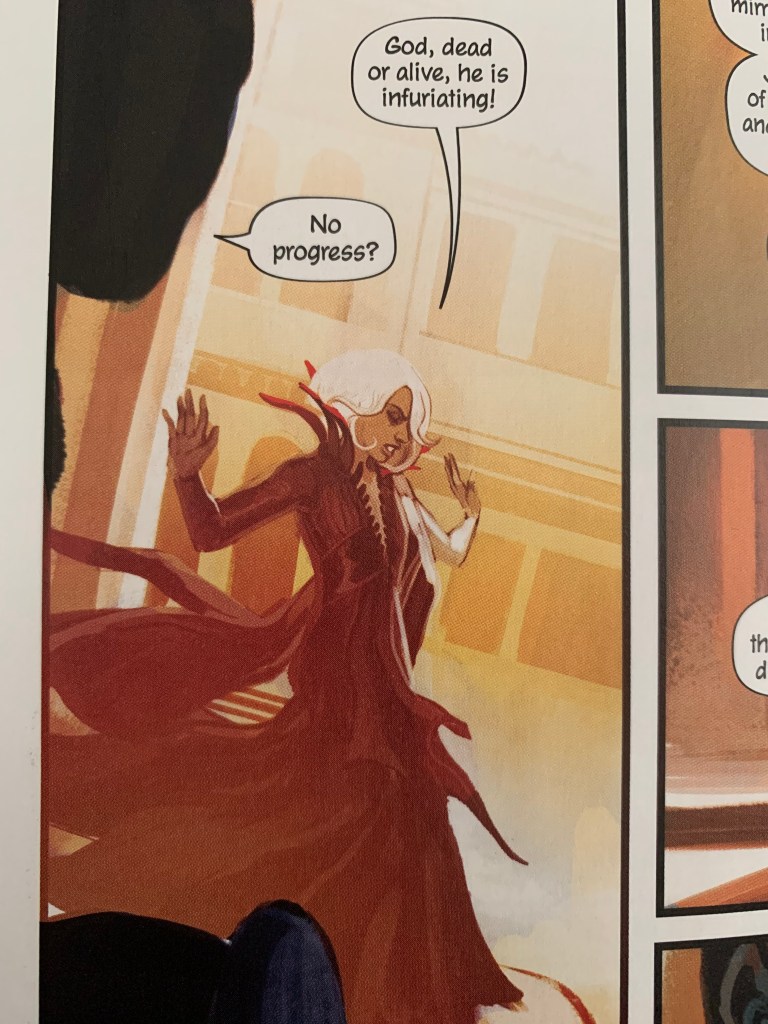
Ash from “Die #2”

There’s Ash’s sister Angela who plays a cyberpunk named Neo. In order to power her electronics, she uses ‘fair gold’, something which readers get to learn a little more backstory about in this issue.

My favorite character is Matt, the Grief Knight, whose power is fueled by his depression and despair. Of everyone in this story, I’m rooting for him to get home the most because of the unshakable love and devotion he has for his family.

He’s also, I think, the most relatable of the group. Who among us hasn’t felt the sting of the pain and sadness that life occasionally dishes up and wishes for a way to harness that power for the greater good?
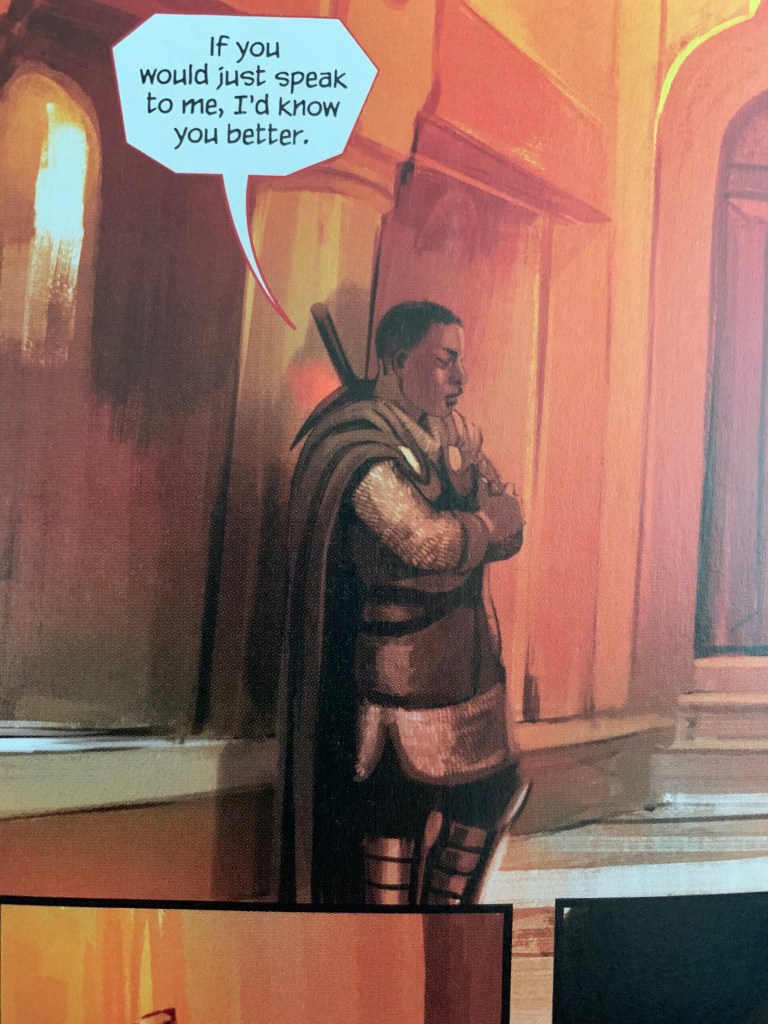
Matt, The Grief Knight

In this issue, readers get to learn about the origins of Matt’s magical sword, the outer representation of that inner voice that whispers to him about his failings and secret anxieties.

We also brush on the mysteries of Sol’s resurrection, Chuck’s astounding conflict avoidance and the awesome extent, as well as limitations, of Isabelle’s godbinding powers.
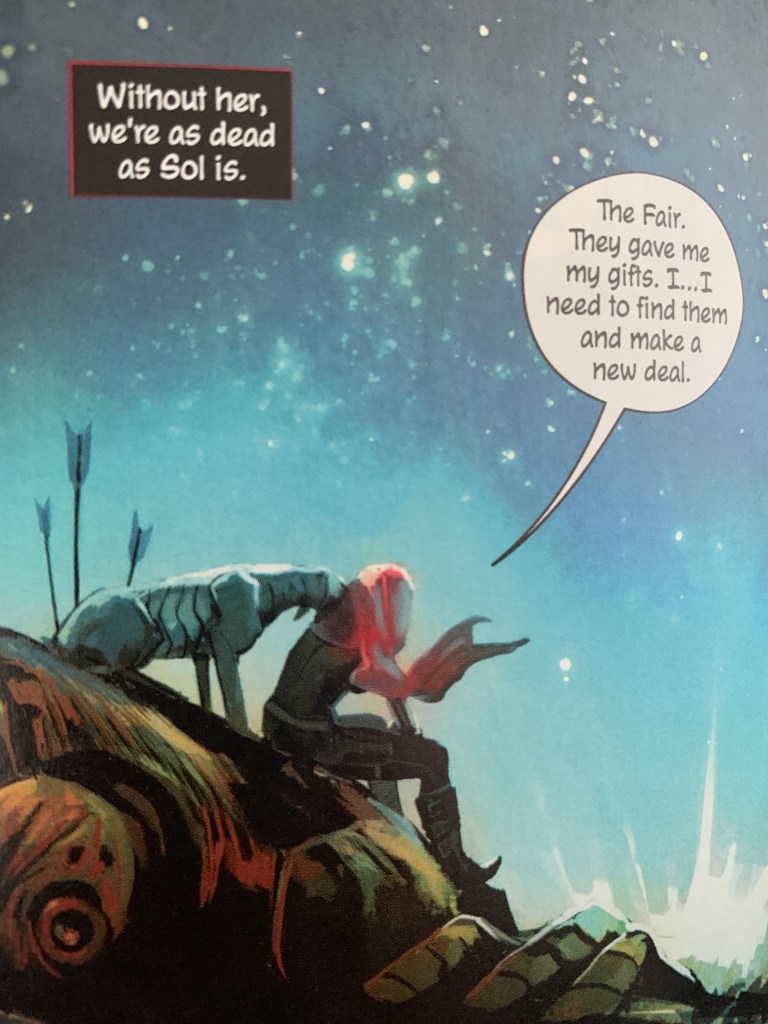
Neo the Cyberpunk from “Die #2”

I’m interested to see where the story goes next. Highly recommended for readers who enjoy fantasy and horror-tinged graphic novels.

Thanks for reading!

Die, Vol. 1: Fantasy Heartbreaker by Kieron Gillen, Stephanie Hans

Die, Vol. 1: Fantasy Heartbreaker by Kieron Gillen, Stephanie Hans

In Die, six teens enter a fantasy role-playing game, disappearing from the mundane world for two years. When they reappear, they are missing one of their members and carrying scars, both physical and emotional, from their ordeal.

Fast forward twenty five years, and a blood stained die shows up on someone’s birthday, mirroring the date when they last entered the game. The group has to face the fantasy world that has given them nightmares for decades in order to put the past to rest. But some things are easier said than done.

Readers of this series seem heavily divided on its quality. I thought it was brilliant.

Photo by Armando Are on Pexels.com

This isn’t because of the fantasy elements which, as many have noted, rely heavily on tropes and the established world building of touchstone series like The Lord of the Rings and The Chronicles of Narnia.

What I loved was the character development and its relatability for aging gamers.

The author shares a series of essays in the back of the graphic novel about the development of the story and characters as well as their associations with classic rpgs. He nails the reasons why I loved the book so much:

“… the simple idea of six forty-something adults contrasting their teenage fantasies with the realities of where their lives ended up. It’s a pure midlife crisis scream of a book. And the bit that got me? The idea that maybe part of me did disappear into a fantasy world at the age of sixteen and never came out.”

In the hero’s journey, we venture forth into trials and return changed but bearing gifts from the experiences we went through. That format- there and back again- seems so clear cut and simple in many of the “through the looking glass” fantasy stories.

Photo by Thiago Matos on Pexels.com

It is not so simple in this one.

In Fantasy Heartbreaker, the journey isn’t finished when the characters return to where they started and they aren’t bearing gifts, but a curse. It is only through the natural passage of time and the development of the adolescent into the adult, that the heroes in this story can finish their journey or, unbeknownst to them, begin an entirely new one.

This delayed emotional development speaks to any manner of gamers, both video or tabletop, who may find themselves, for a variety of reasons, gaming with a dysfunctional group of people over and over again each week. Perhaps this is because there are only a few people in their lives who love to game as much as they do.

For whatever reason, from the outside, such intense and conflict-prone relationships can seem confusing at best or borderline abusive at worst. But from inside the group itself, the bonds created through the traversing of realms of the imagination and overcoming obstacles as a team are real and important.

Photo by Plato Terentev on Pexels.com

The members of the group form a family of sorts- one that they chose rather than one they were born with. It can be beautiful but bewildering. Something that one has to experience to truly understand.

Sort of like visiting a different world, and never really coming home again.

In addition to the peek into gamer culture, the artwork in Fantasy Heartbreaker is gorgeous, one of the most beautiful I’ve ever seen in a comic.

Highly recommended for readers, and gamers, who like fantasy graphic novels.

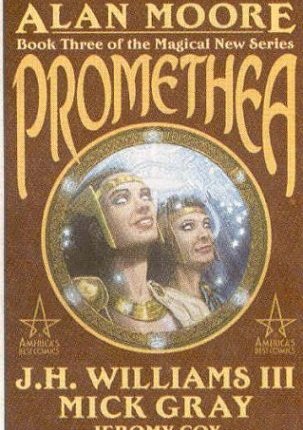
Promethea, Vol. 3 by Alan Moore

Promethea, Vol. 3 by Alan Moore

The saga of Promethea continues in Volume Three of the five book series.

Promethea, the version embodied by Sophie Bangs, has embarked on an adventure through the myriad worlds of the Tree of Life. She seeks another of the avatars of Promethea who recently died. Together, they hope to find the deceased woman’s husband and learn about the occult on the way.

Photo by Stacey Gabrielle Koenitz Rozells on Pexels.com

Meanwhile, back in the real world, Sophie has left someone unexpected in charge of keeping the baddies at bay while she’s away. Is Stace up to the task?

The artwork of the series continues to impress with its beauty and ingenuity. I especially enjoyed the mobius strip path of the world of Hod.

Alan Moore’s writing is at its best when he’s waxing on about the complexity of the universe and delivering punchy one-liners ending those conversations.

Photo by Pixabay on Pexels.com

However, he takes the characters through so many different places so quickly that the adventures themselves end up feeling rather stilted. I think I may have enjoyed this entry more if he had spent a little more time exploring the worlds rather than simply explaining them.

I get that Promethea has places to be. But she could have savored the journey along the way.

Recommended for graphic novel readers who enjoy a mix of fantasy and occult in their stories. Thanks for reading!

Here are links to the other two reviews I’ve written for this series:

Book One

Book Two

Promethea, Vol. 2 by Alan Moore

Promethea, Vol. 2 by Alan Moore

Promethea, Volume 2 was an incredibly disappointing follow-up to a promising comic series.

The reader continues to follow the efforts of Sophie, a student who has learned to channel the spirit of a being of enlightenment named Promethea, while battling demons and other nebulous, bad guys.

Photo by Francesco Ungaro on Pexels.com

We have yet to learn more about the villains of the story, except in brief asides, or Sophie’s allies, some sort of technological heroes.

This entry is bogged down with a lengthy metaphysical poem about the progression of tarot cards and an unexpected tantric sex primer.

Photo by Alina Vilchenko on Pexels.com

My quibbles with the tarot card piece is it is far too simplistic but also too long. Each card can be interpreted a number of different ways, and not just applied to principles of civilization. It is also a metaphor for the soul’s journey, which Alan Moore touches on, but, I feel, never truly explains.

Also, by presenting the whole thing through rhyme, I couldn’t help but draw comparisons to Dr. Seuss. I get what Moore was going for, but it didn’t work for me.

Meanwhile, I couldn’t help but wonder if the lead character in this story was a guy if we would have been subjected to the tantric stuff at all.

Photo by Roy Reyna on Pexels.com

I believe the earthly can be spiritual and the spiritual can be earthly. I think “kundalini rising” is just the lightning flash of inspiration in reverse. But a male hero being pressured into trading his body for secret knowledge? I don’t see it happening.

I liked the first entry of Promethea. I thought it was ground-breaking in the way it depicted a strong female character on a spiritual journey.

This second book simply isn’t of the same quality. Perhaps the series will redeem itself in the next entry. One can only hope.

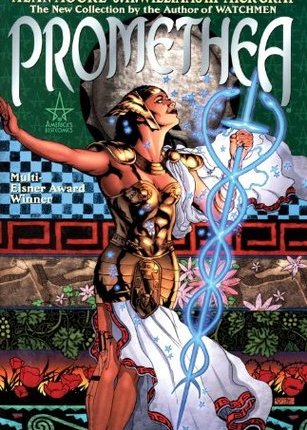
Promethea, Vol. 1 by Alan Moore

Promethea, Vol. 1 by Alan Moore

Promethea is a brilliant fantasy graphic novel by the legendary Alan Moore. It follows a woman who is researching a story for her thesis, only to discover that the story actually lives in the imagination and can explode into the real world in surprising and mystical ways.

“Tell me, child, what is your name?” “Promethea.”

Photo by Hert Niks on Pexels.com

It is a clever, gender-bent retelling of Prometheus. But, it presents the exploration and knowledge of the mystical worlds of the qabalah as Prometheus’ gift to the world, instead of the usual literal interpretation of the gift of fire to light the night.

It seems to be Promethea’s destiny to bring fire and knowledge back to the imagination of humanity in order to change the world forever for the better.

“I am Promethea, the rumored one, the mythic bough that reason strains to bend. I am that voice left, once the book is done… I am the dream that waking does not end.”

Photo by Suvan Chowdhury on Pexels.com

To free her conditioned mind from the limitations of this reality, the woman, now bearing the incarnation of Promethea, needs to learn from her previous incarnations. If she doesn’t quickly grasp the secrets of the four sacred weapons, the cup, sword, pentacle and wand, Promethea’s ancient enemies will rip her to pieces.

“Humans are amphibious, Sophie. That means they live in two worlds at once: matter and mind. Yet many people only notice the solid world they have been conditioned to think of as more real while all about them diamond glaciers creak and star-volcanoes thunder.”

This graphic novel is pretty far out there. I really liked the mythic and occult themes, and strong female characters.

Photo by Erik Mclean on Pexels.com

There’s some near nudity, but nothing too ridiculous. One of the incarnations of Promethea was brought into being by an author who used words and his imagination to shape his mistress into something more. Because of this sexual-themed awakening, she only wears a sheet, but it covers all the wobbly bits. Barely.

Highly recommended for adult readers who like fantasy graphic novels. There are few authors who write such themes better than Alan Moore.

Thanks for reading!

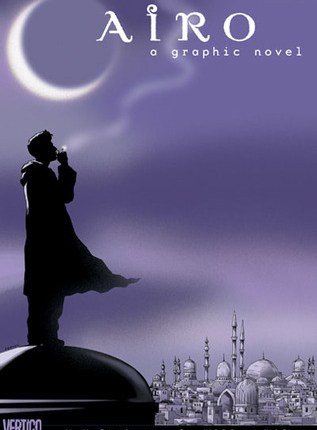
Cairo by G. Willow Wilson

Cairo by G. Willow Wilson

Cairo is an urban fantasy graphic novel set against the backdrop of the desert city of the same name. It has magical creatures, confused young men, drug dealers, magicians, Israeli soldiers and more.

Everyone in this story is looking for something. If it’s not a magical hookah, it is a search for love, truth, their higher self or more power. I suppose the entire story could be used as a reminder that “wherever you go, there you are”.

Photo by Alex Azabache on Pexels.com

“I wanted to do something. Get away from self-obsessed first world crap. I felt like the monoculture was suffocating me. I didn’t want to get stuck where I was. You know that feeling?” “I know it. But I do not think you’ll find what you are looking for in Cairo.” “Why’s that?” “Because a lot of us are stuck here.”

I was drawn to this graphic novel because of the teasers that promised mythology mixed with fantasy. It does contain that, but everything felt so rushed. Readers didn’t get the context of any of it. We’re just thrust into a world that doesn’t make much sense and spend much of the story grasping at straws of understanding.

In a way, it is much like real life. However, I prefer my graphic novels to be more of an exercise in escapism than a mirror for real life.

Give me layered worlds, complex story lines, nuanced characters and deep-seated meaning. I felt Cairo reaching for those things, but not quite getting there.

Photo by Deep Kumar on Pexels.com

We do have quite a number of main characters, which, by its nature, makes the story more complex. But, in this case, I felt that more was not better because all of the characters felt so one-note.

The exception to this classification was Shams, the jinn. We get glimpses into his millennias-long life, relationships to other storied characters, guardianship of a sacred object and spiritual leanings. Even then, I wanted more.

“Welcome to your new home, oh jinn. We’ll talk again when you are more reasonable. Take all the time you need.”

The illustrations are done in black and white, and feel rather gritty. I imagine the whole thing could have taken on a completely different character with a couple good punches of color.

Photo by Olha Ruskykh on Pexels.com

My favorite part was when one of the main characters reaches for a hero’s sword in a test of faith. G. Willow Wilson, the author, uses a poem by Hafiz to put words in the hero’s mouth as he strives to touch another reality and lay claim to the magical blade.

“The place where I am right now… was circled on a map for me.”

Though the translation Wilson used varies from the version I am familiar with, which reads: “This place where you are now, God circled on a map for you.”

Still, it is a beautiful sentiment. Rather like the intention, if not execution, of this graphic novel.

Thanks for reading.

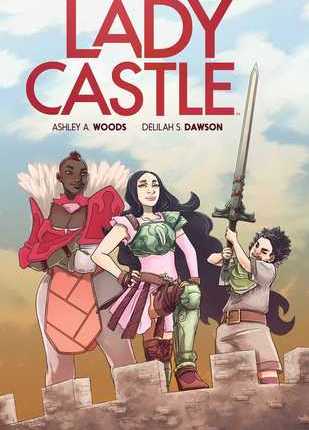
Ladycastle by Delilah S. Dawson

Ladycastle by Delilah S. Dawson

Aeve, a princess of Mancastle, is locked in a tower by her father, King Mancastle, for her refusal to chose a husband. Aeve’s younger sister, Gwyneff, is free to roam the castle, until she turns twelve and is subjected to the same fate as Aeve.

But Gwyneff doesn’t understand her sister’s choice and blames her for their father’s time-consuming efforts to find a new husband for Aeve and his absence.

“Aeve ruins everything. If she’d married, father wouldn’t go out hunting new princes. He’d be here. All the men would.”

Photo by Jeffrey Czum on Pexels.com

When King Mancastle and his men venture out to find a more suitable groom, and meet a foe they cannot overcome. One of the men returns to report to the women left behind — a curse has been laid on the castle and monsters will “be drawn as to a beacon”.

“For not only was King Mancastle cursed, but so was his domain. This castle shall be a beacon to terrifying monsters until the wizard’s curse is lifted.”

The blacksmith’s wife, Merinor, takes up the Lady of the Lake’s sword and becomes king. She and the women begin preparations to defend themselves from the approaching monsters. And thus our tale begins…

The artwork in Ladycastle is beautifully drawn with bright colors. I enjoyed the premise of the story. But Ladycastle doesn’t quite fulfill its promise in this volume.

Photo by Felix Mittermeier on Pexels.com

In the beginning of each section, the ladies’ inner monologue reads like a Disney or classic Broadway song, purposefully so. It’s distracting and derivative. I get that this work was attempting to point out the inherent bias of the other works, but I feel it takes away from the originality of this one.

The dark ages were brutal on women. I get it. Each lady in Ladycastle has a backstory of abuse or neglect from the man who ran her life, except for Gwyneff who hadn’t yet attained an age to be given away by her father for political purposes.

I liked how this comic flips that gender-issue on its head, the women rule the roost now. But the delivery of the lesson is heavy-handed, especially in the first two sections of the book.

Photo by Engin Akyurt on Pexels.com

As other readers have noted, there is a stab at diversity in this book, but no inclusion of LGBTQ characters. I can’t see any reason for this over-sight.

Recommended for readers who enjoy graphic novels, but with the reservations listed above. I felt like this topic was handled more deftly in the graphic novel for children, Princeless, Vol. 1: Save Yourself.

Thanks for reading!

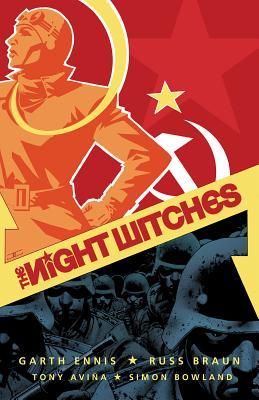
The Night Witches by Garth Ennis

The Night Witches by Garth Ennis

Though the main characters in The Night Witches are a work of fiction, Garth Ennis based them on real-life women, the female-Russian aviators who flew for their country during WWII. Their older airplane engines were too loud and alerted the Germans before their aerial night attacks, so the aviators developed a technique of cutting the engines and gliding over their targets before dropping their bombs.

“You know what it’s like when a P.O.-2 comes along, if you’re on the ground you can hear it for miles, that pop-pop-popping the engine makes… Two more missions like that and we’ll all be done with, unless we can magically stop them from hearing us coming.”

Photo by Pixabay on Pexels.com

Their method of attack was unique and terrifyingly effective at robbing the invading troops of sleep and peace of mind. The Germans called these pilots, because they were women and attacked at night, “Nacht Hexen” or the “Night Witches”.

This graphic novel is filled with violent warfare, rape, loss, heartache and other dangers the women faced during their service, including male counterparts who didn’t want their help. But Russians were so hard-pressed in their fight against the Nazis, that they had no choice.

“I think the notion of women aircrew is a joke; I think women combat fliers are a worse joke; I think women assigned to this base alongside my fighter squadron are the worst joke of all.”

It is a sad but true chapter of history. The Russians lost more troops than any other country in the conflict, a staggering twenty seven million dead.

Photo by Gladson Xavier on Pexels.com

They didn’t have time to properly train or equip the people they were throwing at the Germans. It was a bloodbath. But the women flew and fought all the same. They were the most decorated female combat unit of WWII and their service is worth being remembered.

Recommended for adult readers who enjoy military history and aviation. 

Thank you to the publisher for a free copy of this book for review purposes.

If you’re interested in more non-fiction information about the Night Witches, check out The History Guy’s video “The Night Witches and World War II”:

The History Guy remembers the service and courage of the Night Witches.

And thanks for reading!

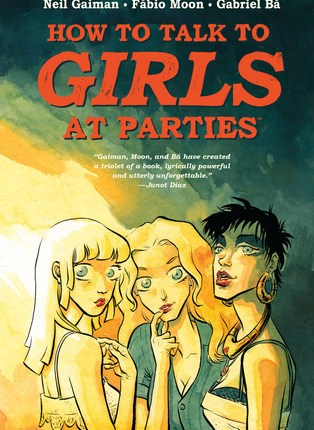
How to Talk to Girls at Parties by Neil Gaiman

How to Talk to Girls at Parties by Neil Gaiman

When two young men go to a party, the young women there are so much more than what they expected.

This short story by Neil Gaiman, adopted in a graphic novel format, perfectly captures (in a science fiction-tinged bubble) the bewilderment that goes along with communication and young adulthood.

Sometimes, when you’re trying to chat up members of the opposite sex, it’s as if you’re talking to someone alien from yourself or even just the idea of a person. Gaiman takes this concept and, in typical Gaiman-fashion, runs with it.

Photo by Francesco Ungaro on Pexels.com

He is even able to touch upon the darker side of young, romantic flings. The popular young man in the story gets all the female attention he could want, but at what cost to both him and the young women he leaves behind?

The other young man, referenced in the title because he is hesitant to “talk to girls at parties”, is the one who the narrative follows. His adventure into the worlds of the mind is certainly as wild as his friend’s experience.

This is a quick read, only 10 or 15 minutes, but I found it stuck with me. I was wondering at the layers of meaning in it.

The artwork is beautiful but strange. The women’s eyes are drawn slightly too large for normalcy. It set me on edge and made most of the story unsettling, which I suppose is also the point of the thing.

Photo by Cole Keister on Pexels.com

The story made me think about how much of our relationships take place because we’re brave enough to face that unsettling feeling. And by experiencing “the other”, we come back home a new person than who we were when we left. Maybe not a better person, but different.

Recommended for teens or adults who enjoy science fiction. I think anybody who has faced down their own fears to talk to someone they find enchanting will find something to ponder in this graphic novel.

Thanks for reading!