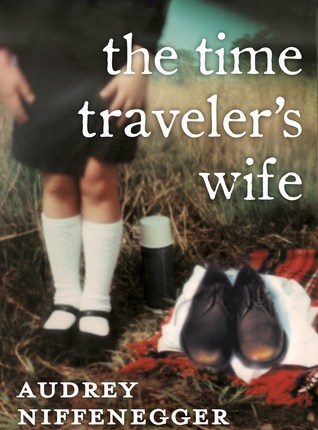
This was the description from Goodreads:
“Audrey Niffenegger’s dazzling debut is the story of Clare, a beautiful, strong-minded art student, and Henry, an adventuresome librarian, who have known each other since Clare was six and Henry was thirty-six, and were married when Clare was twenty-three and Henry thirty-one. Impossible but true, because Henry is one of the first people diagnosed with Chrono-Displacement Disorder: his genetic clock randomly resets and he finds himself misplaced in time, pulled to moments of emotional gravity from his life, past and future.”
Goodreads

Unpopular opinion time: I found the story to be quite different from that and have to say a big no thank you to The Time Traveler’s Wife.
To the legions of fans of this book, I’d like to know what you enjoyed about it. What did I miss? I see that it’s won a pile of awards and I just don’t get it.
I thought I was in for a sweet romance but all I got was a time traveler who cheated at the lottery, beat people up for clothes, and engaged in sexual hijinks with time traveling versions of himself.
I was completely creeped out by the fact that Henry is Clare’s best friend from the time that she was 6. She was groomed from that young age to be his wife, no matter that it wasn’t consummated until later. How awful is that.
When she is essentially date raped, she doesn’t go to the police, Clare goes to Henry who engages in some vigilante justice. It was horrible what happened to her, but she should have reported it to the authorities.
The yuck factor from a bunch of places absolutely ruined the book for me not to mention that fact that Clare never really had a childhood or life at all without Henry in it. That’s not romantic, it’s sad.
Anyway, my apologies if you loved it. Like I said, I am willing to consider other opinions on this book, I just really can’t recommend it.
Thanks for reading.
- Steve Cox and Matthew Walker’s Shaun the Sheep: The Beast of Mossy Bottom, a review
- Christopher Nolan’s The Odyssey, a review
- Edward Berger’s The Ballad of a Small Player, a review
- Otherwhere: A Field Guide to Nonphysical Reality for the Out-Of-Body Traveler by Kurt Leland
- Psychic Dreamwalking: Explorations at the Edge of Self by Michelle Belanger
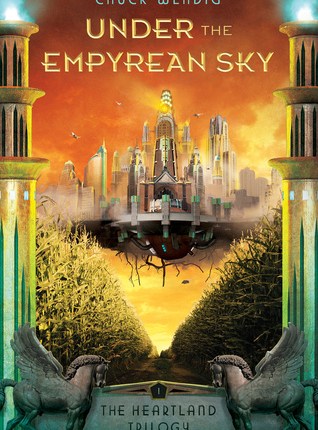
 Under the Empyrean Sky is the story of Cael and his friends, Rigo and Lane. They live in the Heartland, an agrarian world of genetically modified corn where no other crops thrive because of the aggressiveness of the new crop. There is little to no opportunity for education or work because the Empyreans, a separate section of their society that cruises overhead on their giant, flying machines, controls every aspect of their life from the food that they eat to who they can marry. Cael is the head of a scavenger crew who, in the course of their work day, stumbles across a forbidden garden and their lives change course forever.
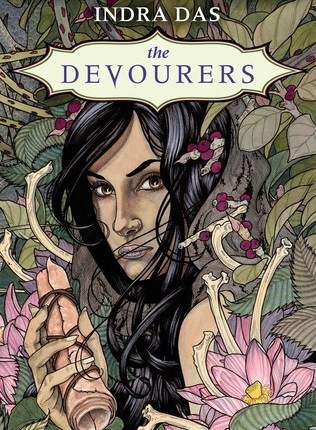
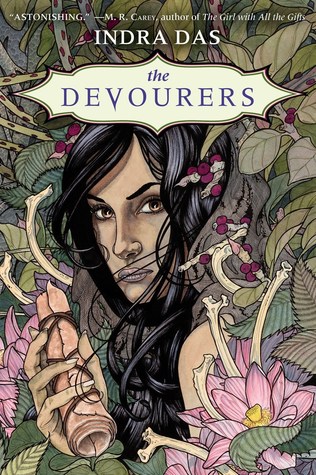 A wholly original shape-shifter tale that also delves into identity, gender roles, and love. Alok is a college professor who is approached one night by a person who claims to be more than a man. Alok doesn’t believe the stranger until an unbelievable vision, caused by the man’s hypnotic words, appears in Alok’s mind. Suddenly, the stranger’s claims that he’s a werewolf don’t seem so far fetched. The stranger, who won’t reveal his name, has a job for Alok, the transcription of an ancient narrative that was written by a shape-shifter, a creature of magic and blood that consumes humans like prey. Through his work on the story, Alok comes to know the stranger and a world that is beyond anything he ever dreamed.
 Warning: minor spoilers ahead! Read with caution.

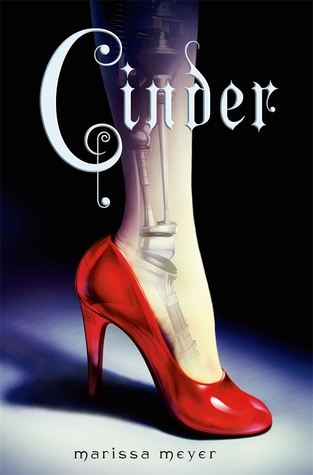 Typical young adult fantasy in that the ‘big twist’ was obvious from the start, but this story still has some charm. Cinder is a cyborg mechanic who wants to go to the ball, but she doesn’t have the time or money to do so. She lives in a world where cyborgs are despised, but tolerated. Humankind is suffering from a plague, one which strikes without warning and leaves the affected dead within days. There’s a draft for cyborgs to be tested upon in order to find a cure for this disease but Cinder is lucky in that her number hasn’t been drawn yet.
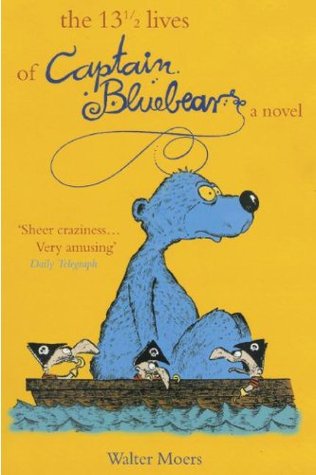 This book was very strange. It reminded me of Charlie and the Great Glass Elevator by Roald Dahl. Moers writes page after page of strange creatures, worlds, and circumstances that are only connected because Bluebear passes through them. And, like in Dahl’s book, I felt like the author was always hinting about a greater truth behind the story, as if The 13 1/2 Lives of Captain Bluebear was more a gigantic allegory than a children’s book. I enjoyed the fantastic nature of it but I didn’t like the long lists of creatures that read more like crazy encyclopedic entries than an actual story with characters.
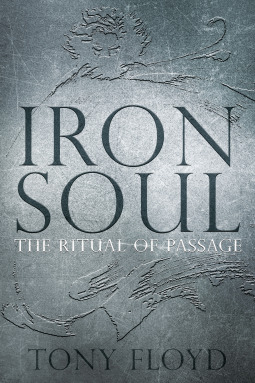 An ambitious book with complex world building, I nearly gave up on Iron Soul because I felt like it was too much for one story. But, I stuck with it and really enjoyed the ending. Here’s just a taste of this book: there’s multiple worlds in which the dead spend their after lives that all have their own sets of immortal (sort of) warriors each with their own unique magic system, the struggles of the dead stuck on Earth, the plight of the dead who don’t know that they’re dead, the living who have no faith and no where to go after they die, the spaces between the worlds that are filled with monsters, a sophisticated system of hierarchy and trade among souls, a process of augmentation of powers among the dead, souls trapped in dolls, animal spirits and soul bonding…
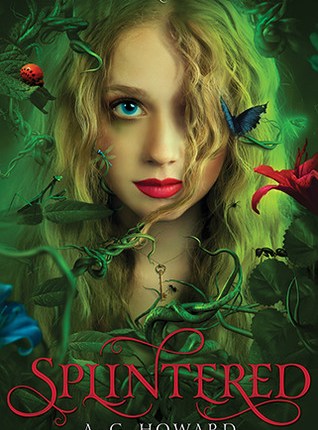
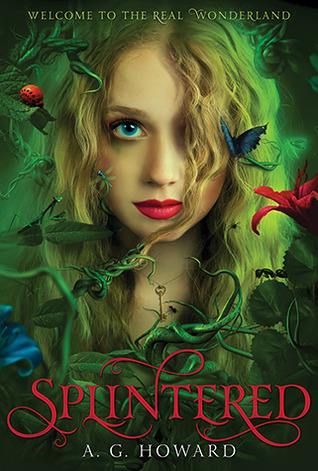 Alyssa is a descendant of Alice Liddell- the Alice who inspired Carroll to write his tale of white rabbits and fantastical creatures. But, Alyssa has a family secret: the women of her bloodline go insane when they come of age.