
Grendel is the ill-fated monster from the ancient story, Beowulf. This is his tale.
There are very few details shared about Grendel in Beowulf. I thought that this story would be an opportunity for the reader to get to know him.
Unfortunately, we spend most of the time in Grendel’s mind, circling endlessly around the ideas of time, brutality, nature and the meaninglessness of existence.
I wanted to know more about Grendel’s mother, but there was very little about her.
John Gardner wrote her as some kind of void-filled slug monster: “Behind my back, at the world’s end, my pale slightly glowing fat mother sleeps on, old, sick at heart, in our dingy underground room. Life-bloated, baffled, long-suffering hag. Guilty, she imagines, of some unremembered, perhaps ancestral crime. (She must have some human in her.) Not that she thinks. Not that she dissects and ponders the dusty mechanical bits of her miserable life’s curse.” pg 10, ebook.
Not like Grendel does, endlessly.

“I understood that the world was nothing: a mechanical chaos of casual, brute enmity on which we stupidly impose our hopes and fears. I understood that, finally and absolutely, I alone exist.” pg 17, ebook.
I think that was the biggest reason I didn’t enjoy this read. I believe every moment in life is, or can be, filled with purpose, meaning and happiness. Grendel falls on the exact opposite end of the scale.
In that way, Grendel is one of the biggest downers you could ever read. He believes that life means nothing. He acts and kills from this empty center.
Out of this morass, the one part I kind of enjoyed was Grendel’s conversation with a dragon in its hoard.
The dragon lives for millennia and sees the world from a view so wide that it is almost outside of time. Again, there’s a nihilist bent to his view, but the dragon brought a weird bit of humor to an otherwise bleak story.

“Don’t look so bored,” he (the dragon) said. He scowled, black as midnight. “Think how I must feel,” he said.” pg 43, ebook.
Yeah, think how I must feel. All I wanted was the story of Beowulf from a unique perspective and what I received was a vague feeling of depression about the meaninglessness of it all.
Thanks for reading.
- The Ballad of a Small Player: a Metaphysical Movie Review
- Otherwhere: A Field Guide to Nonphysical Reality for the Out-Of-Body Traveler by Kurt Leland
- Psychic Dreamwalking: Explorations at the Edge of Self by Michelle Belanger
- Archetypes on the Tree of Life: The Tarot as Pathwork by Madonna Compton
- The Goddess and the Shaman: The Art & Science of Magical Healing by J.A. Kent
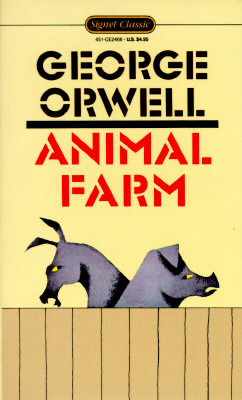
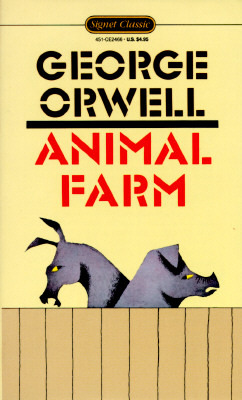 Continuing my series on ‘books I should have read in school, but didn’t,’ I tackled Animal Farm, a short story that is not just a political metaphor, but also a fable about what can happen to even good-intentioned revolutionaries as, after a successful rebellion, they slide slowly but inexorably back towards everything that they fought against in the first place.
 In a not too distant future, owning books is against the law. Firemen burn property instead of protect it and everyone is dialed in to their televisions, subsisting on a steady stream of sensational media stories and vapid entertainment to numb their quickly congealing brains. The nation is always at war, but you would never guess it from the populace’s empty conversations and emptier dreams. Guy Montag longs for something different, but what exactly, he can’t even say, until he meets a girl who wanders outside for fun and sees faces in the moon. He becomes convinced that what society has labeled as wrong and anti-social is more real than anything he’s experienced in a long time. However, these are dangerous thoughts. And, being a fireman, Guy knows, more than anyone, the price that is demanded of people who dare to think, read, and entertain original thoughts.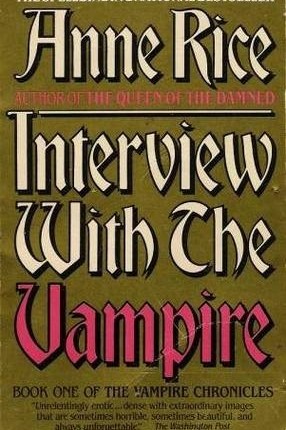
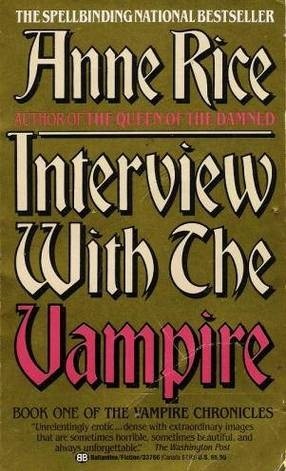 Halfway through reading this one, it occurred to me that I read Interview with a Vampire in high school, but it left so little impression that I promptly forgot about it until 16 or so years later when, as I was reading it again, I began to recall some of it as I went along. This is a cerebral treatment of the vampire genre, an examination of good vs evil, what immortality really means, the first of its kind in “vampire books” and an allegory of the soul itself. It is all of those things, but it’s not very fun to read. The pace drags along and, for being a horror novel, it’s not horrific, mainly dull.






 The Help Desk Book Blog