“Ox,” he said, “the writing of your memoirs is doing wonders for your calligraphy, but I must question the content. Why do you choose the rare cases in which matters run melodramatically amok?” I heroically refrained from saying, “They always do.”
The Story of Stone, Barry Hughart
Master Li and Number Ten Ox are at it again.
There’s an unexplained murder, puzzling fragment of a poorly-finished forgery, and nature herself is leaving clues behind with whole swathes of plants dying in a strange pattern.
“I wasn’t sure that any autopsy could be delightful, but I didn’t care. The old fire had returned to Master Li’s eyes, and I felt like a warhorse who was being called back into battle.”
In the course of solving the mystery, Li and Ox encounter ghosts, hidden torture chambers, and make a journey down to the depths of hell. It is one of the finest homages to Dante’s Inferno that I’ve ever had the pleasure to read.
“Ox, what do you smell in the air?” he asked. “Wet earth, pine needles, pork fat, donkey manure, and perfume from Mother Ho’s House of Joy,” I said. “Wrong. You smell destiny,” Master Li said happily.
And, as usual, readers get to enjoy the sometimes hilarious, and always entertaining, interplay between a brilliant scholar and his surprisingly strong sidekick.
Recommended for readers who enjoy a blend of fantasy, mystery and historical fiction.
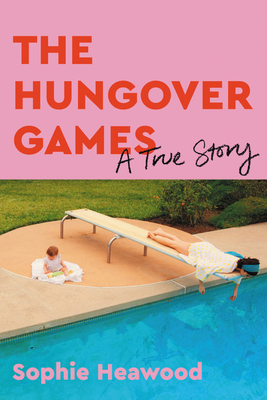
The Hungover Games is an amusing and poignant glimpse into the world of a woman who didn’t mean to become a mother, but who found her life’s path when she got there.
“It had all happened by accident. I hadn’t meant to have a baby at all. I hadn’t meant not to have a baby either, by which I mean I always thought I’d have children one day.”
Sophie Heawood
Sophie Heawood was barely scraping by, living from paycheck to paycheck as a journalist in Hollywood. After a misadventure in Mexico, which had nothing to do with her reproductive health, she discovers in a round-about way that if she ever does decide to have children, it may be impossible without fertility treatments.
“In my life, it was as if I was the captain of a magnificent ship but was somehow, always, at this moment, just this one perpetual moment, in a dinghy buffeted about in the ship’s wake, always about to catch up with myself. Up ahead on the magnificent ship, I was organised and sober and slim and shiny-haired, all of which was always coming soon, like a trailer in the multiplex that ran in my head twenty-four hours a day.”
And then, after a one-night stand with the man she had been one-night-standing with for years, Heawood becomes pregnant. What happens next, her journey into parenthood but also the adjustment of dreams she held her entire life, is a fantastic story.
I think part of what I enjoyed so much about this book is the nature of Heawood’s job. In the short time I spent as a reporter, I loved talking to people, learning what they had to teach me about life, and seeing who they really were behind whatever public persona they were projecting.
Heawood had the opportunity to interview Hollywood A-listers and she gives you an inside view of what that was like. Goldie Hawn, Jodie Foster, and Amy Adams are a few of the names who pop up in the memoir.
In addition to the peek behind the curtain into the mystical world of Hollywood fame, Heawood doesn’t shy away from faithfully recording the sometimes harsh reality of becoming a parent.
“My introduction to being a mother involves being told off by other women, again and again. Told that I am not doing it right, that there are rules. … When I do get home, it only takes me a couple of weeks to recover from the surgery, but it takes me about a year to recover from the few days in the hospital when I was supposed to be recovering, and to regain the caring instincts to protect this tiny creature, the ones that were crushed before they had even dared to begin.”
She faces difficulties not just with the newness of being a parent, but from her path as a single mother. Heawood has trouble finding housing as a single mother and going to prenatal classes alone. In this life transition that can be difficult at the best of times, she faces it on her own.
But her attitude is not woe-is-me. Heawood keeps the positive and empowered spin up throughout most of her challenges and, when she can’t manage it, she still appreciates the gift she has been given through her relationship with her daughter.
I enjoyed this memoir very much and read it in about two sittings. Recommended for readers who enjoy humorous memoirs about parenthood, Hollywood, dating, night-clubbing and the inevitable spiritual evolution that comes from finding the place in life that you were always meant to be.
Thank you to NetGalley and the publisher for a free advance reader copy of this book. The brief quotations cited in this review may change or be omitted in the final print version.
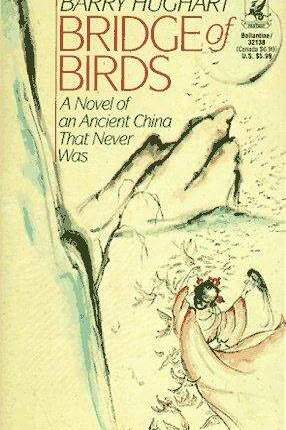
Bridge of Birds is a charming, award-winning fantasy novel that follows the investigative efforts of Master Li as he strives to safe the mysteriously stricken children from the village where Number Ten Ox lives.
“Jade plate, Six, Eight. Fire that burns hot, Night that is not. Fire that burns cold, First Silver, then gold.” pg 22, ebook
A beautiful blend of myth and fantasy, the reader is ferried from one exotic locale to the next at the side of the two heroes, one ancient and one young with surprising strength.
We navigate dangerous mazes to hidden treasure hoards, satisfy the grieving souls of haunted ghosts, and marvel at the lightning intellect of Master Li, the scholarly genius with “a slight flaw in his character”.
“My surname is Li and my personal name is Kao, and there is a slight flaw in my character,” he said matter-of-factly. “You got a problem?” pg 32, ebook
There is very little downtime in Bridge of Birds. And just when you think things couldn’t possibly get worse for Master Li and Number Ten Ox, somehow they do.
Despite its breakneck pacing, I found many beautiful moments to marvel over in this story. It is a fairy tale with both substance and heart. Easy to see why it received the 1985 World Fantasy Award for Best Novel and 1986 Mythopoeic Award for Best Fantasy.
I think that’s even more impressive when you consider this was Barry Hughart’s debut novel.
“Reverend Sir, in your studies of myth and folklore, have you ever encountered a ghostly handmaiden who pleads that birds must fly?” pg 154, ebook
Highly recommended for readers who like fantasy and historical fiction novels with a dash of mystery and for their heroes to have slight flaws in their character – such a propensity to drink too much wine or the willingness to swindle others but for very good reasons.
In The Lies of Locke Lamora, readers are introduced to Locke, an orphan in a fantastical city with magical glass relics the size of entire city blocks. The glass is all that was left behind by the people who founded the city. Its inhabitants now do not understand how it was constructed, but that doesn’t keep them from utilizing the spires of magic glass or appreciating its otherworldly beauty.
Within this strange city that is similar to our world’s Venice, yet so different, Locke Lamora is taken in by various characters in the realm’s criminal underworld. The boy shows promise for a life of theft and confidence games… if he can reign in his propensity for accidentally getting people killed.
“At the height of a long wet summer of the seventy-seventh year of Sendovani, the Thiefmaker of Camorr paid a sudden and unannounced visit to the Eyeless Priest at the Temple of Perelandro, desperately hoping to sell him the Lamora boy.”
There are layers to this tale. There’s intrigue and backstabbing among the criminal underworld or those who call themselves, “the right people”. There’s a gang of criminal masterminds, the Gentleman Bastards, who prey on the city’s upper class citizens, but who pass themselves off as simple sneak thieves to the rest of the gangs.
And while Locke’s gang, the Gentleman Bastards, are running one of the biggest cons of their life, the chapters of that storyline are interspersed with the personal histories of the gang’s members. Part of that history includes the Gentleman Bastards’ training as priests of the various orders in the city, of which there are many.
So, to recap: there’s complex religion, city hierarchy, criminal hierarchy, levels of con games, and then the real story begins when Locke’s plan, as usual, begins to go sideways.
“I ache in places I didn’t previously realize I owned,” said Locke, gingerly applying adhesive paste to his chin with his fingers. “But it can’t be helped.”
I first read The Lies of Locke Lamora eight years ago in March 2012. I recently re-read it in May 2020. To my surprise, I enjoyed it somewhat less the second time around.
I still like the characters, the story and the setting, all of which were beautifully written. My complaint was the pacing. Just as the author gets rolling on the main story line, he draws us back into the past. I didn’t seem to mind it the first time I read the book, but I definitely noticed it in the second reading.
But don’t let a small thing like pacing dissuade you from reading The Lies of Locke Lamora. It is an awfully entertaining fantasy read. And if I remember correctly, the next two books in the series are fun as well.
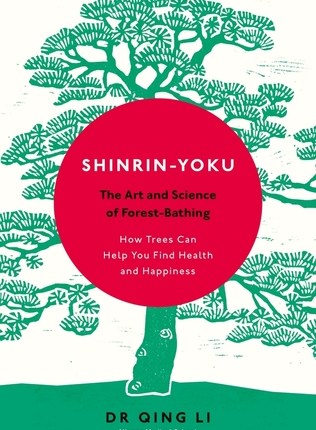
“Shinrin-yoku means bathing in the forest atmosphere, or taking in the forest through our senses. This is not exercise, or hiking, or jogging. It is simply being in nature, connecting with it through our sense of sight, hearing, taste, smell and touch.” pg 12
Nature lovers or those aspiring to be nature lovers will find much to enjoy in Shinrin-Yoku: The Art and Science of Forest Bathing.
Qing Li reminds readers that the human race is a part of this world even if we have walled ourselves up in cities and covered the ground in concrete. Through various scientific studies, he proves again and again that by taking a time out and forest bathing people can sleep more deeply, experience less stress and think more clearly.
“We may not travel very far on our forest walk but, in connecting us with nature, shinrin-yoku takes us all the way home to our true selves.” pg 15
Not convinced? He provides evidence that patients at hospitals heal faster if the view outside their window includes a tree rather than a wall. People who exercise outside report the exertion they need to complete the workout is less and they enjoy the time more than those who churn out the miles on a treadmill.
“The average sleep time of participants after a two-hour forest walk increased by 15 percent, or fifty-four minutes. Participants were significantly less anxious after a two-hour walk in the forest.”
Forest bathers have reported higher levels of creativity, writers find relief from the dreaded block, and the sense of connection caused by the practice has been known to increase feelings of gratitude.
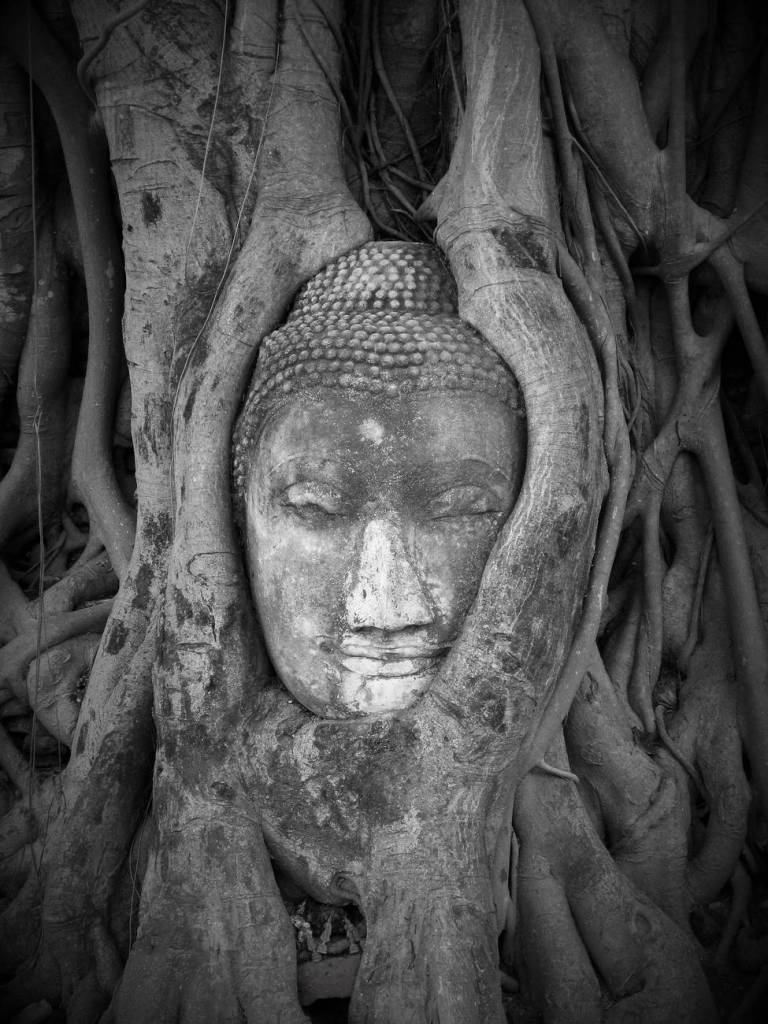
“The researchers concluded that there ‘is a real, measurable cognitive advantage to be realized if we spend time truly immersed in a natural setting’, and found that spending time in nature can boost problem-solving ability and creativity by 50 per cent. Is it any wonder that Buddha found enlightenment sitting under a tree?” pg 106
Is there anything that forest bathing doesn’t help? How about your health or physical age?
“A group of Canadian, American and Australian researchers studying tree density and health in Toronto found that… having eleven more trees on a block lowered cardio-metabolic illnesses, like high blood pressure, diabetes and obesity, comparable to the effects on well-being conferred by being given a $20,000 a year pay rise or being 1.4 years younger.” pg 116
In addition to the information about forest bathing, this book contains beautiful photos of forests every couple of pages. Qing Li gives readers the instructions so, if they desired, they could hold their own traditional tea ceremony in the woods. He includes anecdotal information about aromatherapy, tips on how to bring the forest into your home, advice on how to incorporate beneficial natural sounds into your daily life and more.
I enjoyed this book very much. Highly recommended.
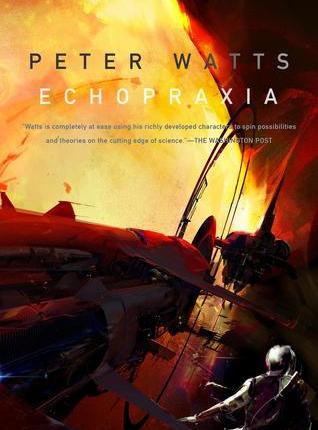
Peter Watts returns readers to the dystopian world of Firefall with Echopraxia, the second novel in the series.
Meet Daniel Bruks, an outcast biologist with a secret. He’s struggling to continue with his scientific studies in a world that has ceased to make sense after the alien contact in Firefall.
“The Theseus mission would be well past Pluto by now. If it had found anything, Bruks hadn’t heard about it. For his part, he was sick of waiting. He was sick of life on hold, waiting for monsters or saviors to make an appearance. … He wished the world would just hurry up and end.” pg 15
His life quickly changes when he finds himself herded into an esoteric and technologically advanced cult’s desert compound while they’re under attack from weaponized zombies. (It makes more sense when you read it, I promise.) What follows is an exploration into the realms of religion, technology and faith.
“One day you’re minding your own business on your camping trip…” “Field research.” “… the next you’re in the crossfire of a Tran war, the day after that you wake up on a spaceship with a bull’s-eye painted on its hull.” “I do wonder what I’m doing here. Every thirty seconds or so.” pg 81
The same microscopic lens Watts used to take apart consciousness in the last book, he applies to a totally different topic, religion, in this one and it doesn’t quite work.
He doesn’t take any time to introduce readers to some of the more far-out concepts from the last book. If I had dived into Echopraxia without reading Firefall, I would have been totally lost. And as it was, I certainly was confused by the end.
Where the last book was a space and science adventure, this one is a journey, both metaphorical and physical. The threats along the way are somewhat as scary, but the characters aren’t as well-fleshed out.
Maybe I was spoiled in the last book because I really enjoyed Siri, the narrator’s, character. Daniel Bruks is more difficult to love.
But it’s not just the characters. The science of the last book was more connected to the story line. In this book, it almost felt like a tacked-on after thought.
And as hard as I tried to put the pieces together, the ending never quite made sense. I put some serious thought into it too. It’s one thing to leave an ending somewhat ambiguous so the readers can hash it out, it’s another to give almost no clues at all.
That’s not to say Watts isn’t brilliant, because he is. However, if you have the choice between reading Firefall or Echopraxia, I would suggest the former rather than the latter.
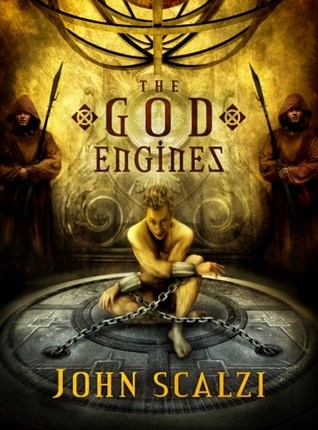
In the world of The God Engines, beings called gods power the ships that take humanity between the stars. How the world became this way is not for Captain Tephe to question, instead it is a matter of faith. As part of Tephe’s service and devotion to his own deity, he has to keep the being that powers his engine in check and subservient to his will.
“I do not know why this is. Why single made iron can kill a god. I know only that it can. I know the gods fear death more than do men. I can kill you with this, god.” pg 8, ebook
When Tephe is called to perform a secret mission of great importance for his deity, it throws his entire world view in jeopardy. He discovers his god, and all the others, may not be what they appeared to be.
“Words. They have power. To name a god is to give it power. To deny it such is to take it.” pg 16, ebook
I feel like this story was too short to fulfill its full potential. The general idea was very promising – what would a world where embodied gods were used as power sources look like? How would the society be structured? And how would a worshiper’s faith change or be challenged through day-to-day interactions with the gods?
The plot felt rushed as the characters raced from one place to another. I also wanted a bit more background about the universe of The God Engines, but the lack of it added somewhat to the mystery of the story.
“You are charged with silence,” proclaimed the third Bishop. “What is spoken to you here is not to be spoken again, on remit of your soul.” pg 31, ebook
I think the strength of this story is in how it addresses faith. Faith in the goodness of the unseen shapes lives and guides actions. It explains why some gods power ships and others rule empires. Because of faith, humanity has waged wars and conquered planets.
Perhaps someone should have made certain this faith wasn’t misplaced…
Recommended for readers who enjoy short science fiction novels with a liberal dash of horror.
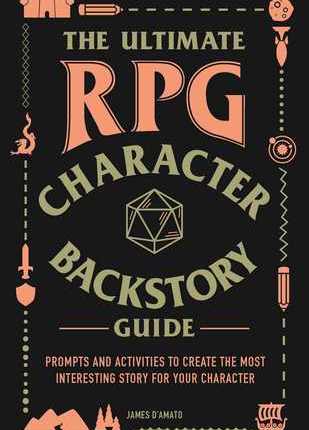
The Ultimate RPG Character Backstory Guide is an excellent resource for anyone who is looking to create or improve their role-playing character back stories.
James D’Amato utilizes his training in impromptu theater to craft questions that guide readers through story creation. Some of the prompts are funny, most are entertaining, and all touch on essential elements of a character.
The book is divided into character levels, so there’s something for beginners to the more advanced gamer.
Role playing games are fun because of the interaction between players and their characters. By taking the time to create a detailed backstory, you’re giving the gift of hours of entertainment for both yourself and your gaming buddies.
Some works of fiction, after enchanting countless readers, become classics, a touchstone of culture for generations. I would submit “Peanuts”, created by Charles Schulz, as one of these classics.
The existential struggles of the boy named Charlie Brown, the adventures (real and imagined) of his beagle, Snoopy, and the rest of the Peanuts gang, seem timeless.
Charlie Brown wants to fly his kite, but it is always getting “eaten” by the “kite-eating tree.” He pitches for a baseball team that never wins. He tries to kick a football, but it is always removed at the last moment.
I first read Peanuts in dusty paperback books kept in the spare bedroom at my grandparents’ house. Through lazy Sunday afternoons or the occasional sleepover, I learned the names of all the Peanut characters and their defining traits.
My favorite was Schroeder, the virtuoso on his tiny piano. I even had a watch with piano keys on the plastic band and Schroeder on the watch face, pounding out his music as the second hands ticked by. I loved that watch so much – I wore through the plastic wristband, replaced it, and wore through it a second time.
When I read Peanuts Treasury, it transported me back to a time when my biggest concern was finishing my homework before the end of the weekend and to a sense of comfort that family members who loved me were just in the next room. It was a nice escape from the current reality, where my biggest concerns seem so impossibly out-of-my-hands and loved ones are all in their separate spaces.
Recommended for readers who are looking to spend a few hours away from this world and in the life of a boy who never succeeds and never ever gives up.