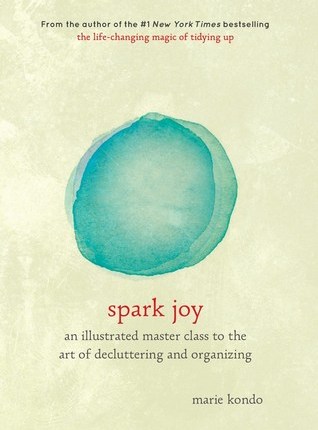
Spark Joy: an illustrated master class on the art of organizing and tidying up by Marie Kondo

Spark Joy: an illustrated master class on the art of organizing and tidying up by Marie Kondo

Spark Joy is author Marie Kondō’s follow up to her internationally best-selling title, The Life-Changing Magic of Tidying Up: The Japanese Art of Decluttering and Organizing.

Kondo’s not for everyone — some of her ideas are very different like treating your possessions as if they have spirits of their own and sorting items by smell — but I like her.

I think it’s because she is obviously very passionate about what she teaches. Her excitement seems to seek from the pages of her book.

This companion novel is an excellent book by itself, but, in my opinion, you won’t be able to fully appreciate it unless you’ve read Kondō’s first title. She doesn’t as completely explain her tidying methods in this book as she took the time to in the last. But there was still so much to enjoy here.

She encourages individuals to embrace what they love, even if society doesn’t love it too, like in this section called Save Your Cosplay for Indoors“…a surprisingly high percentage of my clients have costume-like clothes. To name just a few, I have encountered a Chinese dress, a maid’s outfit, and a belly-dancing costume. … If it brings you joy, but you can’t see yourself wearing it outside, there’s no reason you shouldn’t wear it inside.” pg 25-26

Kondo has a pretty philosophy of living: “I’m convinced that things that have been loved and cherished acquire elegance and character. When we surround ourselves only with things that spark joy and shower them with love, we can transform our home into a space filled with precious artifacts, our very own art museum.” pg 47

One of my favorite parts of both books is Kondo’s theory about socks. It makes me smile: “The socks you wear at home are particularly important because they are the contact point between you and your house, so choose ones that will make the time you spend there even more enjoyable. Balling your socks and stockings, or tying them into knots, is cruel. Please put an end to this practice today.” pg 98 🙂

As much as I enjoy Kondo’s quirkiness, I don’t embrace all of her theories.

For example, I’m still trying to talk myself out of the mountains of books that I have around the house. I have this dream that one day, I’ll have an enormous library with shelves so high that I’ll need a ladder with rollers to climb up and reach the books at the top.

Here’s what Kondo has to say about tidying up the books: “When you’re left with only those books that you love, you’ll discover that the quality of information you receive changes noticeably. The room you make by discarding books seems to create space for an equivalent volume of new information. You’ll soon see that the information you need comes just when you need it, and when it does, you’ll find that you respond to it immediately in a new pattern of behavior that wasn’t possible when you were hoarding books and neglecting the information they contained.”pg 126

Sigh.

Here’s a helpful tip for sorting piles of stuffed animals: “Energy resides in the eyes, which is why it’s best to cover them when discarding something. Once their eyes are hidden, stuffed toys and dolls look much more like objects, and that makes it far easier to part with them. The simplest solution is to place a cloth or piece of paper over their faces.” pg 164-165

Consider some of the most used items in your life for the royal treatment: “…my criterion for deciding which items require royal treatment… is this: the item’s proximity to your body. Items such as forks or undergarments, which come in direct contact with delicate parts of our bodies, should be treated as a rank above the rest whenever possible.” pg 183

Good to know.

And finally: “Tidying is a special event. If you give storage your best effort, experimenting with different ideas and enjoying the whole process, you’ll find that it goes very smoothly. Treat it like a game. Each idea you try will bring immediate results, and you can readjust anytime you like.” pg 206

If only I had that sort of passion for tidying…

Marie Kondo is inspiring but I don’t know if I will ever achieve the emotional highs that she seems to find from it. The best part of this book is: she makes me willing to try.

Other tidying (or anti-tidying) books I’ve reviewed can be read here:

Remodelista: The Organized Home by Julie Carlson

The Joy of Leaving Your Sh*t All Over the Place by Jennifer McCartney

Thanks for reading!

Primates of Park Avenue: a memoir by Wednesday Martin

Primates of Park Avenue: a memoir by Wednesday Martin

Primates of Park Avenue is a glimpse into the life of the privileged mothers of the Upper East Side of Manhattan. It’s weird, otherworldly, and off-putting, at first, but then as Wednesday struggled more and more to fit in and, ultimately, thrive, I found myself cheering for her. I can see how this book isn’t for everyone though. If you don’t like reality television or the details of petty power plays between ridiculously rich socialites, you may want to read another memoir.

As a mother myself, I was thanking my lucky stars as I turned every page that I didn’t happen to end up in New York City. I wouldn’t want that type of pressure on me: to look a certain way, act a certain way, or make my family act a certain way. I can’t imagine that it would ever make me happy and I’m surprised that Wednesday managed as well as she did and emerge, for the most part, unscathed.

The author’s reason for writing: “This book is the stranger-than-fiction story of what I discovered when i made an academic experiment of studying Manhattan motherhood as I lived it. It is the story of a world within a world, a description I do not use lightly.” pg 18, ebook

The “world in a bubble” that is Manhattan: “…many of us live unconstrained by our environment in unprecedented ways. But nowhere, I considered as I walked from here to there every day, foraging for crisp Frette sheets and shiny All-Clad pots and pans and the perfect sconces, are we as radically and comprehensively released as on the Upper East Side of Manhattan. It was the land of gigantic, lusciously red strawberries at Dean & Deluca and snug, tidy Barbour jackets and precious, pristine pastries in exquisite little pastry shops on spotless, sedate side streets. Everything was so honeyed and moneyed and immaculate that it made me dizzy sometimes.” pgs 77-78, ebook

Wednesday forgets to register her child for nursery school and has to scramble and beg to even get applications to the Upper East Side Schools because, if she doesn’t, she isn’t living up to the expectations of her peers: “Thus began my disorienting slide from bystander to total buy-in: with fear. I had been seized by the culturally specific and culturally universal anxiety of not being a good enough mommy, of being a mommy who does less than enough for her children.” pg 90, ebook.

The thing is, in my experience, all mothers deal with that fear. Most of us are just fortunate enough to be in a place that doesn’t put a social magnifying glass on it.

My favorite part- Wednesday decides to get a Hermes Birkin bag to stop women from “charging” (crowding) her on the Manhattan sidewalks: “Like a totem object, I believed, it might protect me from them, these ladies who were everywhere in my adopted habitat and who said so much without a word, using only their eyes and their faces and, always, their handbags. Perhaps, I thought, a nice purse like the ones they had might trick them, mesmerize them into believing that they oughtn’t challenge me to sidewalk duels and all the rest.” pg 132, ebook. Never underestimate the power of a really nice bag…

The most disturbing part, for me, was the reliance of all of these women on their husbands: “…with resources under their control, with wives who are dependent on them caring for their even more dependent offspring, privileged men of the Upper East Side can do as they please. Men may speak the language of partnership in the absence of true economic parity in a marriage, and they may act like true partners. But this arrangement is fragile and contingent and women are still dependent, in this instance, on their men- a husband may simply ignore his commitment at any time.” pg 241, ebook

That really bothered me.

Wednesday ties up the memoir with a heartbreaking chapter from her own life. I won’t spoil it for readers, other than to say, that I found it very difficult to get through. Primates of Park Avenue seems like a frothy and frivolous bit of writing about women who already have so much privilege that their lives didn’t need the examination, but then I realized, that universal problems like gender inequality and becoming a part of the group transcend culture, time, and place.

If you’re looking for more books on these sorts of social questions, you may want to read Lean In: Women, Work, and the Will to Lead by Sheryl Sandberg or Spinster: Making a Life of One’s Own by Kate Bolick.

Thanks for reading!

Active Dreaming: Journeying Beyond Self-Limitation to a Life of Wild Freedom by Robert Moss

Active Dreaming: Journeying Beyond Self-Limitation to a Life of Wild Freedom by Robert Moss

Active Dreaming is more than just another book about lucid dreaming or dream interpretation. Moss takes the Aboriginal practices of his native Australia and develops a living practice wherein one treats the world, whether waking or sleeping, like an lucid dream.

Moss invites the readers to fully live their lives and to “wake up” through drumming circles, sharing and interpretation of dreams, choosing your names and how you define yourself, practicing mindful creativity, noticing synchronicities, journaling, storytelling, creative visualization (and more).

Photo by Sabel Blanco on Pexels.com

Some of the concepts in this book were a bit far out there- things like shared dreams or visions in which, theoretically, you invite another person into your dreamspace to help you address whatever is going on for you or instructions on how to start Dream Groups.

Active Dreaming is a call to action, but in so many directions that it is difficult to really know where to start. I think I’m going to cherry pick a few of Moss’s techniques and see how I do.

Robert Moss’s definition of Active Dreaming: “This approach includes paying attention to night dreams, but it is not only, or even essentially, about what happens at night. It is a method for conscious living. When you become an active dreamer, you’ll notice that the world speaks to you in a different way.” pg xii introduction

Photo by GEORGE DESIPRIS on Pexels.com

Here are some of the benefits of practicing Active Dreaming: “The journey opens gateways for soul recovery and the release of life blockages. It introduces and strengthens connections with the animal guardians and brings their vitality, tracking skills, and healing energies richly alive in the body. It encourages spontaneous art and creativity and offers rich personal mythology, which is healing in itself. Properly conducted, the journey raises a tremendous amount of life force and channels the movement of that energy into harmonious, unrestricted flow.” pg 98

And finally, a passage that really resonated with me: “You must know your story and tell your story and have your story received. … Learn to do that, and you can survive the worst nightmares of history and bring heart and healing to others…” pg 134

Tell your story. I can do that.

Photo by cottonbro on Pexels.com

This review has really only touched the tip of the iceberg that is Active Dreaming. Read this book if you want to adjust the lens with which you perceive reality or if you just want to read a book that is completely different from anything else that you’ve ever read.

Robert Moss is not for everyone, but, if you can set aside any preconceived notions about what this book should be, I think that you’ll find at least some chapters that will speak to you.

If you’re looking for more spiritual books like this, look no further than another of Moss’s titles: The Boy Who Died and Came Back: Adventures of a Dream Archaeologist in the Multiverse

Thanks for reading!

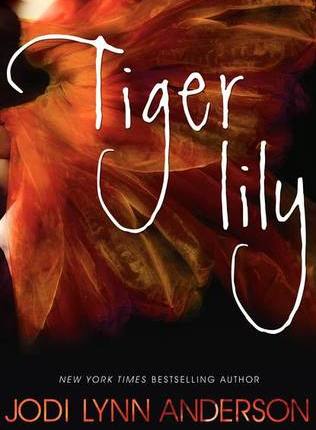
Tiger Lily by Jodi Lynn Anderson

Tiger Lily by Jodi Lynn Anderson

tigerlilyThis book is an absolutely magical re-telling of the story of Tiger Lily from Peter Pan. The narrator is the fairy, Tinker Bell.

I’ve always had a soft place in my heart for J. M.Barrie’s masterwork. Who among us hasn’t wanted to go to a place where you could remain young forever and never grow up?

Jodi Lynn Anderson writes that “never aging” magic of Neverland quite well: “Englanders had come to Neverland before. … The Englanders had the aging disease. As time went on they turned gray, and shrank, and, inexplicably, they died. It wasn’t that Neverlanders didn’t know anything about death, but not as a slow giving in, and certainly not an inevitability.” pg 13 (ebook)

Tiger Lily’s tribe may age, but how old they appear is contingent on something other than time. It’s curious and magical.

The lost boys come alive in this book with a wildness and unpredictability that I loved: “There was a joyfulness and- at the same time- a fragility about each of them. They were sloppy and uncared for and wildly alert and full of energy.” pg 61, ebook.

Despite their untamed natures, they are still children: “Straw beds had been separated haphazardly into different areas of the burrow, as if the boys hadn’t counted on wanting to live separately when they’d first built it, and only recently pushed themselves as far apart from each other as possible. Still, on one of the beds there was a worn home-sewn toy in the shape of a rabbit, and lying on a pillow, as if it had just been played with, a model of a ship.” pg 61, ebook.

Peter is the boy who has emotions but doesn’t understand them- perpetually young yet always on the verge of growing up.

He’s fiercely admired by his lost boys and, eventually, Tiger Lily: “Peter picked at his hangnail again. “Actually, I never get sad. It’s a waste of time, don’t you think?” Tiger Lily didn’t answer. She was impressed by the idea of deciding not to be sad. His words made him seem very strong. Impervious.” pg 67, ebook

Peter is still Peter in this tale. As far as girls go, he can be charming but also rude and aloof: “I think we could be good friends,” he said, falling into step with her. “It’s perfect because I wouldn’t fall in love with you, like I do with the mermaids. Girls always seem so exotic. But it would be okay with you, because you’re more like… you know. Not like a girl.” pg 77, ebook.

Tinker Bell was a sympathetic character in this book, rather than the spoiled, jealous creature that she is portrayed as in Peter Pan“A faerie heart is different from a human heart. Human hearts are elastic. They have room for all sorts of passions, and they can break and heal and love again and again. Faerie hearts are evolutionarily less sophisticated…. Our hearts are too small to love more than one person in a lifetime. … I tried to talk sense into my hard little heart. But it had landed on Peter, a creature two hundred times my size and barely aware of me, and there was no prying it loose.” pg 77-78, ebook.

Hook is extra creepy and villainous: “Neverland had called to him out of legends. A green place. A wild place. And most of all, a place where he’d never grow old. Most people in London hadn’t believed it existed, but some still insisted it did, and Hook had cast his lot with them. To get to the island, he’d begged, stolen, and eventually murdered.” pg 89-90, ebook.

And so is Mr. Smee. But, I’ll let Anderson tell you his story. She does a wonderful job of it.

The relationship between Tiger Lily, Peter, and Wendy makes a lot more sense in this story. It is less about any potential failings by the girls. The main source of conflict seems to be Peter’s emotional immaturity: “As you may have guessed already, Peter had a soul that was always telling itself lies. When he was frightened, his soul told itself, “I’m not frightened.” And when something mattered that he couldn’t control, Peter’s soul told itself, “It doesn’t matter.” pg 169, ebook.

The ending of this book was totally satisfying as well for all of the characters, even little Tinker Bell. I can’t say enough good things about it.

It’s easy to see why fairy tell retellings are so popular with books like Tiger Lily out there, waiting to be discovered.

Thanks for reading!

A Monster Calls by Patrick Ness

A Monster Calls by Patrick Ness

A Monsters Calls is a fantastic coming of age story. Conor’s mother is very sick. Since her illness, Conor has been treated differently at school and works hard at home, trying to keep everything running smoothly while she’s resting. He’s had a nightmare too- one that wakes him screaming almost every night. But then, one night, he dreams a different dream in which a monster formed from a yew tree comes to his home…

This book gave me goosebumps, it’s so good! I especially liked the monster’s tales.

Here’s the first time Conor meets the monster: “… here was a monster, clear as the clearest night, towering thirty or forty feet above him, breathing heavily in the night air. “It’s only a dream,” he said again. ‘But what is a dream, Conor O’Malley?’ the monster said, bending down so its face was close to Conor’s. ‘Who is to say that it is not everything ELSE that is the dream?'” pg 38 (ebook) Who’s to say?

“‘Here is what will happen, Conor O’Malley,’ the monster continued, ‘I will come to you again on further nights.’ Conor felt his stomach clench, like he was preparing for a blow. ‘And I will tell you three stories. Three tales from when I walked before.’ Conor blinked. Then blinked again. “You’re going to tell me STORIES?” ‘Indeed,’ the monster said. “Well-” Conor looked around in disbelief. “How is THAT a nightmare?” ‘Stories are the wildest things of all,’ the monster rumbled. ‘Stories chase and bite and hunt.'” pg 40-41 (ebook) Love, love, love! “Stories are the wildest things of all.” Yeah, they are.

I love the relationship that develops between Conor and the monster: “He (Conor) heard a strange rumbling, different from before, and it took him a minute to realize the monster was laughing. ‘You think I tell you stories to teach you lessons?’ the monster said. ‘You think I have come walking out of time and earth itself to teach you a lesson in niceness?’ It laughed louder and louder again, until the ground was shaking and it felt like the sky itself might tumble down.” pg 70 (ebook)

One more small passage that I had to include, not because it’s particularly important to the story but because it’s so very true: “Conor stared out the window… “How long are you here for?” he asked. He’d been afraid to ask before now. His father let out a long breath, the kind of breath that said bad news was coming. “Just a few days, I’m afraid.” Conor turned to him. “That’s all?” “Americans don’t get much holiday.” pg 103 (ebook) Mic drop!

This is a young adult book, but if you’re looking for more excellent fairy tales (like the monster’s stories) you may want to pick up In the Night Garden (The Orphan’s Tales, #1) by Catherynne Valente or, for another amazing coming of age story with fairy tale elements, try The Ocean at the End of the Lane by Neil Gaiman.

Thanks for reading!

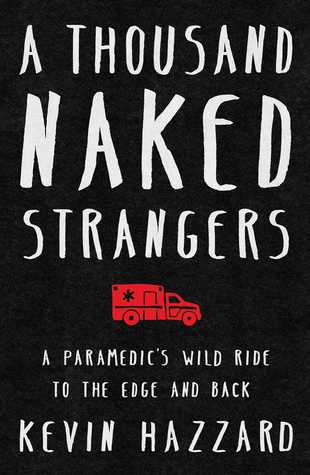
A Thousand Naked Strangers: a paramedic’s wild ride to the edge and back by Kevin Hazzard

A Thousand Naked Strangers: a paramedic’s wild ride to the edge and back by Kevin Hazzard
kevinhazzard

This is Kevin Hazzard’s memoir- he was a journalist, until 9-11, and then, he decided that he needed to work a job that gave more back to society.  So, he decided to become an EMT and, eventually, a paramedic.  This is the sometimes insane, sometimes touching, and, many times, yucky record of his ten years in that profession.

It is shocking, but I learned a lot about the physical and emotional toll the job takes on these professionals.

Frankly, I’m surprised that anyone is able to do this job. I know that I couldn’t.

A Thousand Naked Strangers invites the reader to examine their own mortality or, if not examine it, just remember it like a literary memento mori.

I, like most other people, want to pretend that I’m going to live forever when I know I’m not. A Thousand Naked Strangersdoesn’t allow room for that.

Hazzard’s stories can be ridiculous, gruesome, or uplifting. This book has a little bit of everything.

Why Kevin decides to become an EMT: (his first day of class) “…Alan (the instructor) tells us, right out of the gate, if we’re not sure we can handle this, now is the time to leave. A couple of people laugh as though the mere suggestion is ridiculous, but I’m not one of them. I didn’t grow up wanting to be an EMT, nor do I know if I’ll like it. What I do know is I want to get hip-deep in things that matter.” pg 19 ebook.

He certainly manages to do that.

Learning the ropes: “It’s all so new, so foreign, so much like that period of childhood- first or second grade, maybe- when you’re old enough to know you’re alive and one day will die, yet young enough to still believe that a thin vein of magic runs just beneath the surface.” pgs 26-27 ebook.

I still feel like that, most of the time.

Why Kevin stays: “Every word the radio breathes into the stale air of the station sets me on fire. EMS is the greatest show I’ve ever seen, except it’s not a show, it’s all real. No, it’s more than that- it’s reality distilled and boiled down to its essence.” pg 59 ebook

At times, I had trouble connecting with this memoir. He almost felt too excited to be out there… inviting disaster because he was going to be the one to pick up the pieces. I’ve never felt like that.

Why it’s so hard to read A Thousand Naked Strangers“In a job where it’s possible to scoop up a stranger’s brain, it’s important to have levity. But after a while, I lose the ability to judge which stories to tell my friends and which go beyond the limits of good taste.” pg 90 ebook. That’s it- in a nutshell.

Finally, how Kevin’s job is sort of like everyone else’s: “Like a recurring dream, every working day holds the same frustrations, and the working days never change, they just stretch out for all eternity. For months I’ve wondered how it will end. Maybe I’ll reach my limit and quit.” pg 206 ebook

I think, anyone who works a job for any amount of time, feels like this at some point or another. Kevin’s job was simply more intense and invited that type of introspection more quickly.

My book club picked this memoir as its monthly read. I’m not certain I would have ever chosen to read it otherwise. But, I’m glad I did.

Thanks for reading!

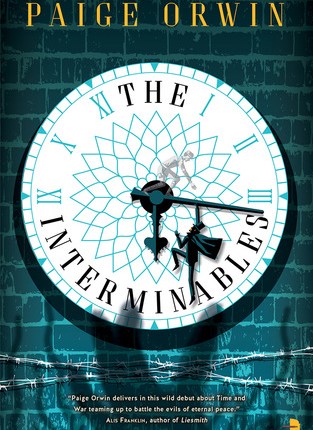
The Interminables by Paige Orwen

The Interminables by Paige Orwen

Interminable adjective. 1. Incapable of being terminated; unending  2. Monotonously or annoying protracted or continued; unceasing; incessant  3.  Having no limits.  (dictionary.com Unabridged.  Retrieved May 22, 2016 from dictionary.com website http://www.dictionary.com/browse/interminable)

The Interminables takes place in a world where magic is real and so are nightmares.  Prior to the events in this tale, an immortal being attacked all the cities on Earth and essentially destroyed civilization as we know it.  She was killed but for an extreme, unspecified magical cost.  Now, the scars left by this insane immortal dot the world and leak magic like radiation, producing strange items and twisted, dangerous creatures.  The Hour Thief, Edmund, and his best friend, an archtypical ghost of World War I named Istvan, struggle to bring order and heal those injured by the remains of this struggle.  Behind the scenes, an even greater evil begins to stir…

The Interminables is a type of science fiction/fantasy that I love.  It doesn’t dwell too much on the how’s of the situation, but jumps head first to the what’s, who’s, and why’s of the story.  And, this is an incredibly ambitious world in the sense that not only are the characters dealing with untamed and uncontrollable magic, but also the dimensions of alternate worlds have collided and merged with our own.  So, there are beings and powers in this place that are far beyond anything that exists in the real world.  It’s an exciting premise and the reader can almost feel the storytelling potential exploding from the very first page.

The Hour Thief is not only immortal, capable of teleportation, and able to move with super human speed through time- he’s also a librarian! : “…the Hour Thief was finally returning to real field duty, after fourteen months missing and then years of sticking to nothing more than librarian work and his usual mysterious excursions by night.”  My favorite kind of super hero.

Who is the Hour Thief? :  “He was, for all intents and purposes, a conman who dealt in stolen moments.  The hours that slipped away when no one was watching.  Lives, plain and simple.  He’d been thirty-five for seventy years and he could say that only because none of the time he’d lived since 1954 was originally his.”

I loved how Orwin described two beings, who are essentially immortal, dealing with technology. : “Edmund… fished the device responsible out of his other jacket pocket.  It was roughly the same size and shape as a pack of cards and combined the services of a clock, a calculator, a telephone, a radio, a camera, a film projector, a phonograph, a library, a dedicated staff of field researchers, an electric facsimile of the Delphic oracle, and a flashlight, but it was easier to call it a telephone.” When put that way, our devices really do seem to be magical.

Istvan, sends a text message, and it comes out more like a telegraph: “Istvan fiddled with the phone a moment longer… “I’ve sent a message to the Magister, I think, but I’m not certain it went through.”… Edmund glanced at it.  Recovered, it said, on our way presently stop.”

My favorite moment in the whole book, an interchange between Edmund and Istvan :  Edmund set the ritual knife down.  “Are we always this interesting?”  Istvan knelt and retrieved his own blade, wiping it on the hem of his uniform before handing it to him.  He was a doctor.  It would be all right.  “Oh yes.”

In the acknowledgments, Orwin says, “The original project grew out of a desire to preserve some of the characters developed by myself and my friends in the MMORPG City of Heroes…”  I also played that game!  The ability to customize and create your hero was so much fun, but the game itself became repetitive very quickly.  Orwin did such a great job taking a one dimensional idea and giving it a time piece, wings, and a limitless world to explore.  The Interminables is a lot of fun and not interminable to read, at all.

If you’re looking for read alikes, I’d recommend Triumff: Her Majesty’s Hero by Dan Abnett, The League of Extraordinary Gentlemen by Alan Moore (graphic novel), or Miss Peregrine’s Home for Peculiar Children by Ransom Riggs (young adult title).

Expected publication date: July 5, 2016.  A big thank you to NetGalley & Angry Robot Publishing for the opportunity to read and review a digital copy of this book.  And, thank you, for reading!

Archivist Wasp by Nicole Kornher-Stace

Archivist Wasp by Nicole Kornher-Stace

Overall, I enjoyed Kornher-Stace’s tale about a girl with claw marks on her face who traps and studies ghosts because she’s a priestess of a goddess who lives in the stars. I felt like Archivist Wasp was a combination of The Last Apprentice/Wardstone Chronicles by Joseph Delaney and What Dreams May Come by Richard Matheson. There’s also some dystopian and survival elements to it. There’s a few moments of rough language in here and some quick, brutal violence, but nothing worse than what a young adult would read in The Hunger Games.

Kornher-Stace throws the reader into an alien world with zero explanation or background info and it’s a lot of fun to pick out the story from the details. Take this passage describing a ritualistic painting in Wasp’s home:“The bones of the painting were nails, hammered straight into the wall to pick out the stars of Catchkeep’s constellation. And around them She had been outlined in thick black paint, all teeth and legs, Her back curved like a rainbow, caught in mid-leap over a shadowy abyss. … Catchkeep Herself was black and red. Stepping close to Her you could make out the outlines of handprints, darker where they overlapped. Wasp’s first day as Archivist, they’d rushed her here before the blood of the fallen Archivist could dry on her palms, and to the painting she had added the shape of her hand, which was the shape of her predecessor’s death.” pgs 14-15 ebook. Dark, eerie, awesome.

Wasp feels trapped in her role as priestess and lacks the confidence in herself to do anything else. Her personal development and stepping into her power is one of the main arcs of this story: “…beneath all her talk, she knew that what she was about to try would fail, as everything else she tried had failed, and then her life would go on as it had always done, pacing out the length of its leash, smashing into empty air at either end like a bird against a window. Take the knife out of the doorframe. Sweep the dust from the little house. Restock its jars with the useless dead.” pg 67 ebook. She’s a very strong, and believable, female main character. Think Buffy the Vampire Slayer… but with ghosts.

Kornher-Stace’s description of the afterlife was just like what is portrayed in What Dreams May Come or Otherwhere by Kurt Leland, the deceased shape their surroundings with the energy from their thoughts and emotions. In the ghost’s world, Wasp sees demon-like dogs that attack her again and again: “Still don’t believe the hunt is real?” Wasp shouted. She was having trouble modulating her voice. Her teeth were chattering too hard. She had never been so tired. “We bring our own monsters with us,” said the ghost. “It looks like these are yours.” pg 123 ebook. Goosebumps!

I liked the author’s description of what a ghost is: “You’re a ghost. You need answers. You need closure. You need them like the living need air to breathe. You think it’s just you, but from what I’ve seen, most of us die without getting either. And maybe that’s all a ghost is, in the end. Regret, grown legs, gone walking.” pg 155, ebook.

My favorite parts of the book are Kornher-Stace’s varied descriptions of the worlds through which Wasp travels with the ghosts. They are beautiful, desolate, bizarre, and, sometimes, scary:“They tromped through the snowfield for ages. They passed things that, to Wasp’s eye, might have been waypoints. A wind-shredded orange plastic tent. A cave hung with icicles that were mottled gray with ash. A distant huddle of dark birds circling and alighting on an unseen mass. A tiny pond, perfectly round, frozen into a mirror upon which no snow settled. The metal skeleton of something that had fallen from the sky and smashed there, its nose plowed deep into the earth. They walked on.” pg 172, ebook.

If you enjoyed Archivist Wasp and are looking for young adult read-alikes, you may want to try Fray by Joss Whedon (a graphic novel) or Revenge of the Witch (The Last Apprentice/Wardstone Chronicles, #1) by Joseph Delaney. If you’re looking for an adult read-alike, try The Library at Mount Char by Scott Hawking.

Thanks for reading!

When Crocs Fly by Stephan Pastis

When Crocs Fly by Stephan Pastis

My search for reading material that my daughter will enjoy continues.  I happened to stumble across When Crocs Fly by Stephan Pastis in the ‘Read Now’ section of NetGalley and gave it a read through.

When Crocs Fly combines the sarcastic put downs and delivery of Garfield with the physical humor of Looney Toons. The jokes are mainly puns, misunderstandings, or a combination of both. The longest scenes are only two pages, so Pastis never really writes a story- it is more a collection of vignettes, which could be perfect for readers with shorter attention spans.

But, if your child is reading this, make sure that they have strong language skills. Whenever the crocs speak, their voice is written phonetically, which could be problematic for beginner readers. I think it’s the equivalent of trying to read cursive handwriting… just different enough to cause a problem.

Some beloved characters from other comics make very brief cameos in this. I won’t say which ones because that would ruin the fun!

Though I didn’t have any laugh out loud moments in this one, my favorite page was ‘The Trophy from the Ping Pong League’ (pg 85) where it’s labeled as ‘Best Participation by Someone in our League who can Breathe and has Participated.’ When Crocs Fly has clever ways of skewering reality, but I’m afraid that the more subtle jokes will go over the kiddie’s heads and I don’t think that adults would really enjoy this one. It’s clearly aiming for a younger set.

I’d recommend it for ages 10+, personally, but it really depends on the maturity level of the child reading it. Big thanks to Netgalley for the free digital copy and thank you for reading!