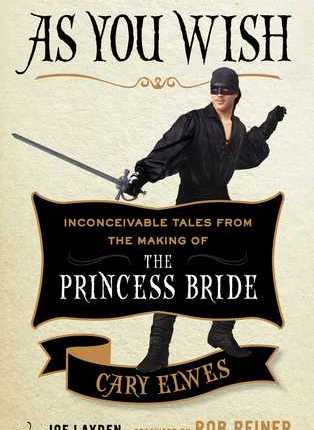
As You Wish: Inconceivable Tales from the Making of The Princess Bride by Cary Elwes

As You Wish: Inconceivable Tales from the Making of The Princess Bride by Cary Elwes

Before I start my review, I want to mention that As You Wish is the perfect audiobook for a road trip between St. Louis, Missouri and Kansas City, Kansas. I was traveling with my daughter and husband, and we were all entertained by Elwes’ memories of the making of the film.

It’s really not that easy to find a book that works for all three of us, but this was an absolute hit. I can’t recommend it enough and if you’re already a fan of the movie, I’m sure that you’ll love it even more.

Though it starts out a bit self-congratulatory in tone, throwing around words like “timeless”, “modern classic”, and “once-in-a-lifetime experience”, As You Wish is ultimately, like The Princess Bride, a very sweet and and enjoyable memoir about the events behind the making of the film.

At first, as I said, I was afraid that I was going to be bored to tears. Rob Reiner wrote and narrated the foreward and it is sugary sweet in its praise of the author, the movie, and everything to do with either. This high praise, some may argue, is well deserved, but I thought that it might have fit better in the flow of the tale as an afterword. First, the play then the applause, but, that’s just my opinion.

Some of the best parts of the memoir, not surprisingly, centered around Elwes’ interactions with his colorful co-stars. Andre the Giant figures largely into this tale, as he did in life, not only because of the enormous size of his body but also his heart.

The brightest among us always seem to burn too quickly.

Another of my favorite parts is the description of Elwes’ and Patinkin’s struggle to film the “greatest sword fight in modern times.” I had no idea of the amount of backbreaking work that went into the acquisition of the skills to run the scene. From day one of filming, Elwes and Patinkin were schooled by some of the best sword fighters in the movie business. Now that I know, I’m going to have to re-watch the film. I had always assumed that the fight was done by stuntmen. How wrong I was…

If you enjoy the film, The Princess Bride, you must listen to this audiobook. It is a real treat and you’ll appreciate some hidden gems revealed by Elwes’ narration. To borrow some descriptors from the book, it was a magical, “once-in-a-lifetime” moment when talent and story mixed together to create a “timeless, modern classic”. If you’re looking for some film related read-alikes (for movies other than the Princess Bride), try Nerd Do Well by Simon Pegg or A Funny Thing Happened on the Way to the Future…: Twists and Turns and Lessons Learned by Michael J. Fox.

Thanks for reading! -Heidi

Jackaby and Beastly Bones by William Ritter — O’Fallon Public Library Blog

Both Jackaby and Beastly Bones were chosen by the Young Adult Library Association as top young adult picks of 2015 & 2016. It’s easy to see why- both books are fun, fast paced, and perfect for reluctant readers. Jackaby is an extraordinary detective. He can sense supernatural clues, like a urban fantasy version of Sherlock. […]

via Jackaby and Beastly Bones by William Ritter — O’Fallon Public Library Blog

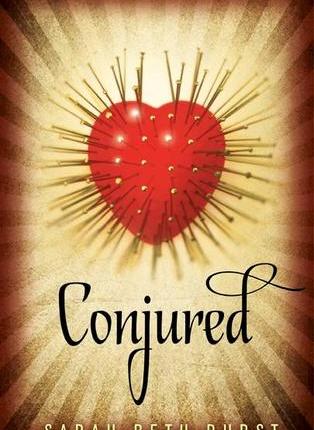
Conjured by Sarah Beth Durst

Conjured by Sarah Beth Durst

Eve can’t remember who she is or where she’s from, but there are government agents with her, protecting her. They say that her mind holds the key to solving the case(s) of a serial killer, but she can’t even remember her own parents. How is she going to help save others when she can’t even recall what happened last week? And, why is she able to make birds fly out of wallpaper? That’s not normal… is it?

Conjured is a fluffy, young adult fantasy that tip-toes around the horror genre but, mainly, remains safely in the real world of amnesia and teenage angst. This book suffers from a glacial pacing but the mystery part of the story really took me by surprise. As I mentioned, the horror elements in this story are minimal but there are some brief and not terribly graphic descriptions of blood, mental anguish, bondage, imprisonment, physical violence, and creepy circus folk.

My favorite parts of this book happened during Eve’s blackout moments or visions. They read like scary fairy tales: “It always begins with ‘once upon a time,’ my dear. That is how it is, even if ‘once upon a time’ is now.” Gnarled hands separate the strands of my hair and wind them around knuckles. “A witch…for of course there was a witch. There always is, isn’t there? She had stars in her eyes and dust in her hair. She heard the sounds of the forest when she moved and the ocean when she spoke.” pg 14 ebook. The visions set the tone of this story. They’re like nightmares for Eve- profoundly disturbing, but not real. Or are they?

I loved that Eve took a job as a library assistant. The craziest things happen at the library but it was also a place of safety for her when she couldn’t remember anything else: “Libraries… they’re the places with stories,” Eve said. Closing her eyes, she tried to summon up a memory of a library. Shelves of books. Sunlight falling across a table. She saw spiral stairs. It could have been a real place, or Malcolm could have shown her a picture at some point. It felt like a real place.”pg 17, ebook

The extraordinarily slow unfolding of Eve’s background was frustrating:“You can’t do any magic here. There is no magic in this world- that’s why this place is safe for you.” She held her face still. Another hint about her past. He had told her so much in those few sentences, more than he’d ever told her before. There is no magic in this world, she thought. I’m from another world? pg 21, ebook. I don’t know… you tell me!

The teenage love story in Conjured is cute and very John Green-esque:“Because when I’m with you, I feel whole,” he said. “Because with you, life doesn’t feel brutish and short. It feels beautiful… and short.” pg 176 ebook.

So, if you can tolerate an extremely slow reveal, pick up Conjured. Some read-alikes: The Night Circus by Erin Morgenstern (circus themes, slow story) or Archivist Wasp by Nicole Kornher-Stace (a girl is asked by a ghost to help him find someone he’s lost).

Thanks for reading!

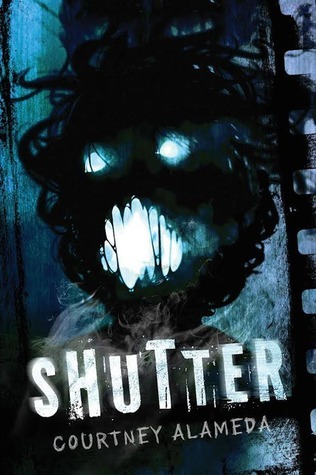
Shutter by Courtney Alameda

Shutter by Courtney Alameda

shutterMicheline Helsing is the last of the line of Van Helsings, of monster slaying fame. In this version of the tale, Micheline slays ghosts and otherworldly beings by capturing their visages on film, thereby taking away their power and banishing back to the realms where they belong.
One night, Micheline and her team has a mission go awry and now, because of a curse, they are going to die. Unless, they can find the ghost that caused the sickness, rid the world of it, and save themselves. The clock is ticking…

Shutter was a Brom Stoker award nominee for Best First Novel. That’s what drew me to this creepy tale.

Horror isn’t my usual genre and the scary parts of this tale really scared the heck out of me. If horror is your thing, this one might not be scary enough. Reading is such a personal experience, you know? It’s hard to predict.

Alameda was at her best during the truly terrifying moments, which, in my opinion, were the undead creatures and anything scenario involving a mirror. Everybody has mirrors in their homes. What if, hypothetically, these were portals into other worlds and *things* could come crawling out of them into this one- eeeeeek!

I didn’t enjoy the so-so character building, teen angst or abusive relationship with the father. That could be a potential trigger too.

Micheline is the type of teen heroine that I met in the Divergent trilogy and wasn’t impressed with then: not trusting anyone in authority with her problems even though they could potentially help her, throwing herself into life threatening situations without proper planning and, therefore, putting her friends in danger too, and pining for the lantern-jawed guy with the ridiculously pumped up fighting skills.

If it wasn’t for the insanely entertaining parts with the ghosts, mirrors, strong friendships with her team and tragic back story, this would be a two-star book instead of a four. But, I believe that its positive attributes outweighed the negatives. Again, reading is such a personal trip. You may disagree. And that’s ok.

For a debut book, Shutter is really very good. I read the last couple chapters of this in a rush because I was terrified for the well-being of the main characters.

If you love young adult horror tales, you should give this one a read. Some read-alikes: Jackaby or 13 Days of Midnight. Shutter is scarier than either of those, but they have similar themes.

Thanks for reading!

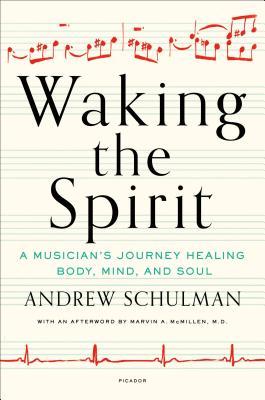
Waking the Spirit: A Musician’s Journey Healing Body, Mind, and Soul by Andrew Schulman

Waking the Spirit: A Musician’s Journey Healing Body, Mind, and Soul by Andrew Schulman
wakingspirit

Waking the Spirit is an educational and uplifting look at music therapy from a world class musician who, not only plays for a critical care unit at a hospital, but was also saved by music himself.

I’ve always known about the healing power of music for the spirit, but I didn’t realize that it had such marked effects on the body itself. When I’m having a bad day or just need to relax, I plop down in front of the piano and play the stress out.

What I did not know, and that Andrew discusses at length in this book, is that music has been used throughout history to treat sick people and the astonishingly positive effects that it has on the critically ill.

The idea behind music therapy in the ancient world is that everything is vibration.

If you play harmonious and balanced music, the human body will, in turn, put itself into harmony and alignment. Sickness was viewed as a simple imbalance: “Early records have been discovered from ancient Egyptian medicine, Babylonian medicine, Arurvedic (Indian subcontinent) medicine, and classical Chinese medicine that incorporated musical healing. The ancient Greeks valued the relationship between music and medicine in the god Apollo, whose gifts included both the musical and healing arts, and the first use of the term “musical medicine” began with Pythagoras, the fifth-century philosopher-mathematician. The Romans are said to have used musicians in their battlefield hospitals as a form of anesthesia.”

Before I read this book, I didn’t realize that music therapy was even a “thing” in hospitals.

It seems like, at least here in the U.S., and this is entirely my opinion, that medicine has moved ever so much farther away from holistic treatments. The preference is for high cost drugs and highly educated doctors to perform surgery… something concrete that people can hold in their hands and say, “Look! This is what I paid for. This thing right here.”

If something, like music therapy, works, but we can’t explain why it works, then people don’t value it as much. That’s where Waking the Spirit comes in.

Andrew provides tons of examples of beneficial music therapy treatments as well as studies to back up his real life experiences. I think this book could be helpful to doctors, nurses, or anyone who is looking to try something inexpensive to make the environment within their institution more appealing.

Take this experience: the patient was in pain and talking to herself (a side effect of the brain surgery she had just undergone). Then, Andrew shows up with his guitar: “At the sound of the first note she turned her head toward me, looking at my face and then at my right hand as it plucked the strings of the guitar. Gone was the scattered expression from her face as her eyes gained focus. She stopped talking, her mouth half-open in surprise, silent. Her face and shoulders relaxed, and she smiled. Not the plastered grin of before but a real smile of pleasure. She was here now, in this room, and not wherever she’d been for the past few hours. Something was connecting. We were just ten seconds into the music.” Powerful.

“Over the years, I’ve witnessed the most remarkable ways in which music can help the healing process, the ways it can calm a patient or lift their spirits, or reach them when they seem locked in a place that no one else can access. It can soothe a staff member’s exhaustion or anxiety and let them refocus on helping a patient, and it can provide a connection for a patient’s family, perhaps bring back old memories and open pleasant topics of conversation.”

Bringing beauty and dignity back to medicine with music.

In this passage, Schulman is talking to Dr. Richard Kogan, a professor of psychiatry, about how just the act of composing music has soothed individuals who are suffering from mental illness and then, their masterworks have gone on to help others: “While it’s important not to overromanticize mental illness- most depressed individuals are too paralyzed to write a symphony and most psychotic individuals are too disorganized to produce a work of art that is coherent- the suffering associated with mental illness can led to bursts of creative inspiration that are less likely to come from an individual that is emotionally content. For many of the greatest composers, music has been profoundly therapeutic.” In other words, artists who used their music to alleviate their own suffering composed some of the greatest music ever written, which in turn as the effect of ameliorating the suffering of others.” It’s a circle of healing.

You don’t have to be a musician to fully enjoy Waking the Spirit. I recommend it for anyone who’s interested in non-traditional treatments for pain and suffering. Thank you to NetGalley and Picador for a free digital ARC of this book.

Thanks for reading!

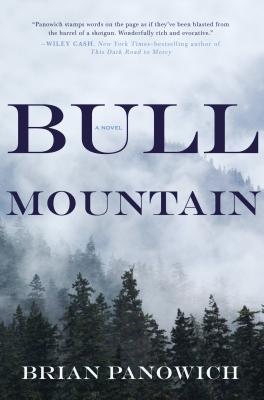
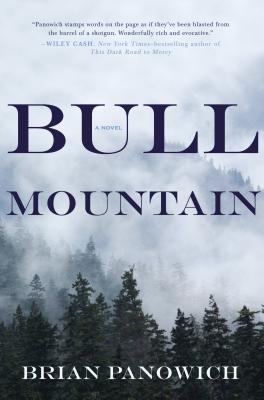
Bull Mountain by Brian Panowich

Bull Mountain by Brian Panowich
bull mountain

If you’ve ever thought that your family is too dysfunctional and you can’t, just can’t even, with them anymore, Bull Mountain is the book for you. You’ll read about the Burroughs family down in Georgia, and how through generations of crime, abuse, and out-right violence, they owned and ran everything that happened on their mountain, and you’ll think to yourself… maybe my family isn’t so bad after all.

For sensitive readers, there’s a lot of tough material in here. It runs the gambit from alcoholism to drug abuse, rape to mutilation, extreme poverty, prostitution, and physical violence of all kinds. Actually, I was surprised that I enjoyed it at all, but I really did. Panowich writes characters that I cared about and, when they were misbehaving in various ways, I kept yelling at the book in my head. “You’re better than that!” I kept telling them, but they didn’t listen to me…

The mystery, though not all that mysterious, was quite enjoyable as well. I think that the main point of Bull Mountain is the multi-generational struggle between nature vs nurture. Are people born a certain way, trained by their family to be that way, or is it a magical combination of both? What would it take to produce a good man from a mountain of bad ones? ReadBull Mountain to find out.

To the Burroughs, family is everything. Here, Rye is looking at Cooper’s (his brother) son: “As they ate, Rye studied Gareth’s face…. His eyes were set deep and narrow like his father’s. … They were Cooper’s eyes. It was Cooper’s face, without the calico beard, or the grit, or the anger. Rye remembered when his brother looked like that. It felt like a hundred years ago. pg 11, ebook. I was reminded of myself in that passage. When I look at my various sisters’ children, I see them in the child’s face. It’s just like that too, in that I’m transported to thirty years ago when we were all so young and carefree. None of us were/are what I would call angry though.

Another of the main story arcs is that Clayton (one of the Burroughs) is the town sheriff and the rest of his family are the people that he’s supposed to be protecting the rest of society from. They’ve had a big falling out and now, Clayton is no longer welcome on the mountain: “This place was his home, no matter how unkind it had been to him. Clayton knew he would always be welcome, but the badge had no business here at all. If a thing existed up here (on the mountain), it was because it belonged here. And if it didn’t belong, the people who lived here made damn sure it didn’t stay.” pg 109, ebook.

This part reminded me of my family too: “No hugs or small-talk sentiment, just a hand on a shoulder and a respectful nod made it obvious to anyone watching that these men were family. It wasn’t necessary to catch up. They were both thankful to be there now.” pg 127 ebook. That’s what it’s like to hang out with my father, a painfully shy introvert. But, you know he cares, because he’s there and he’ll sit with you if you’re family.

Finally, this moment between Clayton’s wife and Big Val captured the general feeling of reading Bull Mountain for me: “They shared a moment of crushing sadness that tightened her chest and suddenly made it hard to breathe. It was the kind of sadness brought on by turning corners that led you to places there was no finding your way home from. They had both looked deep within themselves and found an ugliness that couldn’t be stuffed back inside. She’d seen that look on the faces of people before, but now she understood it. Now she owned it. pg 225 ebook. And boom! Panowich breaks your heart. Consider yourself warned.

Thanks for reading!

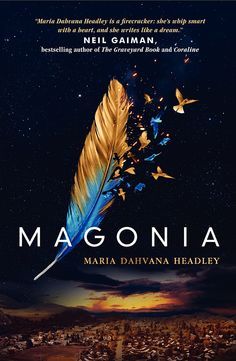
Magonia by Maria Dahvana Headley

Magonia by Maria Dahvana Headley

magoniaAza Ray Boyle can’t breathe. It seems like she has always been sick- inexplicably short of breath and weak.
This continuous illness has made her always feel different from the people around her. But, perhaps, there are stranger and more exotic reasons why she is different. Ones that Aza can’t even imagine…

Jason is Aza’s dearest friend. They are so close that they almost speak their own language.

He realizes there is more to Aza than meets the eye. How will Jason handle it when he discovers the shocking truth?

This young adult fantasy is weird, but I enjoyed it.

That’s probably because I read a lot of weird, non-fiction. The story of Magonia, a world in the sky above the every day world which we know, has shown up in some of those books.

One of those books, Passport to Magonia: On UFOs, Folklore, and Parallel Worlds, captured my imagination.

That book recounts an incident where a bunch of villagers were holding church service and they heard a crash outside. They went to investigate the noise and discovered what appeared to be a ship anchor attached to the roof of their church. It was connected to, this just blows my mind, a ship in the sky. This supposedly happened in 1211 AD.

The astonishing thing about Passport to Magonia is it has pages and pages of stories like that, eyewitness accounts of bizarre ships, people, and incidents concerning people from the sky. And they all actually happened, reportedly.

I remember thinking that an author needed to get her hands on these stories and turn it into something fantastic. Maria Dahvana Headley used a different source material than the book that I read, but does a good job bringing a mysterious blip in history to life.

She has the ability to interweave actual events with fantasy fiction story lines so that the two begin to blur in the reader’s mind.

I read Headley’s first book Queen of Kings years ago and I remember being struck by its originality.

Headley took Cleopatra’s life and turned it into a vampire story. It sounds sort of silly described that way, (oh, ANOTHER vampire story) but it is actually rather fun.

I had read Margaret George’s The Memoirs of Cleopatra shortly before Queen of Kings so I had a pretty good idea of the actual story of the Egyptian queen.

Back to this book, Magonia isn’t going to appeal to everyone.

I was, at first, rather turned off by the uber-intellectual back and forth conversations of the main characters- Jason and Aza.

I think, since the mega success of John Green’s The Fault in Our Stars, authors make their teenage protagonists so brainy and well-spoken, it is just unbelievable.

I mean, it’s been awhile, but I remember high school. My peers and I were lucky if we could string two cogent sentences together, let alone present verbal dissertations on the meaning of pi.

Anyway, once I was able to look past their flowery repartee, I got really into the story.

Headley paints a magical and dangerous world.

If you enjoyed Magonia, you may also enjoy The Mermaid’s Sister or Under the Empyrean Sky. Both are young adult novels and take place in fantasy worlds that are so close to the world we know, but different in surprising ways.

Check out my review of Aerie, the sequel to this book.

Thanks for reading!

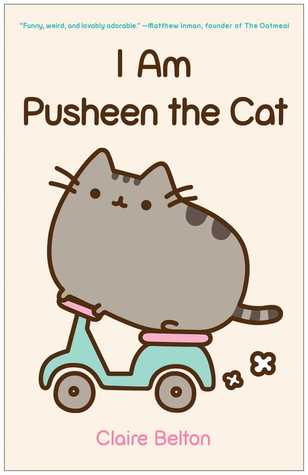
I am Pusheen the Cat by Claire Belton

I am Pusheen the Cat by Claire Belton
pusheen

As I’ve mentioned in a few other reviews, my nine year old hates to read. It breaks my heart. I’m constantly searching for titles to pique her interest and I struck gold with this little book, I am Pusheen the Cat.

Usually, when I bring a book home from work for her, she takes one look at the title and then puts it on her desk…where it sits, until I have to take it back to the library again. This one was a completely different experience. I handed it to her. She sat down. She opened the book and read it cover to cover right then. I was blown away. Seriously, you could have picked my jaw up off of the floor.

There’s no story to this book. It’s just a series of cutsie pictures of Pusheen and her sister, Stormy. There are, however, some tricky vocabulary words thrown in like “inconvenience” or “procrastinator”. I was in mommy/librarian heaven, helping her sound out the words and explaining what they meant. I can’t say enough how much it meant to me to find something she liked, no, loved.

For me, I am Pusheen the Cat is a three star book at most. It’s cute, sure, but that’s about it. For my child, however, this is the holy grail of graphic novels. If you have a reluctant reader, I can’t recommend it highly enough. In fact, I may pay this book the ultimate compliment (in my mind) and purchase a copy of it for my home. Coming from a public librarian, that’s high praise indeed.  Thanks for reading!

The Red Queen by Christina Henry

The Red Queen by Christina Henry

redqueenThe second book in The Chronicles of Alice is scheduled to be published on July 12th.

Though it lacked the grittiness and extreme horror of Alice, Red Queen is a fantastic second effort by Henry. We’re reintroduced to Alice and Hatcher as they escape the City and make their way into the wilderness, on a hunt for Hatcher’s long lost daughter, Jenny. Magic, danger, and monsters wait on the path ahead, but those things are nothing compared to what Alice and Hatcher bring with them in their own damaged and twisted minds.

Cheshire, one of my favorite characters, gives a quick summary of the first book in the beginning of this one, in case you didn’t get a chance to read it:“Hatcher and Alice escaped from the hospital, and traveled through the Old City in search of their pasts and in search of a monster called the Jabberwocky who made the streets run with blood and corpses.” The girl shuddered. “I know about him… What about Alice? Did she have a happy ending?” “I don’t know,” Cheshire said.”

Henry weaves enough of the classic tale into her story so that you know that it is a retelling, but still manages to introduce enough original elements in to make it feel entirely new. Like the toll that magic takes on the people who wield it, something that Carroll never addresses: “Maybe power corrupts them,” Alice said. It was a frightening thought, one that made her suddenly reluctant to try any magic at all. She’d spent years under the influence of drugs that made her think she was insane. She was only just learning who Alice was, what it was like to be her own self. She would rather use no magic at all than become some one unrecognizable.”

The world that Hatcher and Alice inhabit feels like the real world in that, there are no guarantees of happily ever after for the main characters. It’s reminiscent of George R.R. Martin in that, Henry makes you feel truly concerned that either Alice or Hatcher are going to be struck down at any moment. But, Henry actually manages to tell a story in 300 or so pages, something that Martin can’t do. Not that I’m bitter or anything… : “The world gobbles us and chews us and swallows us,” Hatcher said, in that uncanny way she had of reading her thoughts. “I think happy endings must be accidents.” “But we hope for them all the same,” Alice said.” I do too.

Alice really comes into her own in this story. She’s brave, but fragile- a damaged hero but resilient. If you’re looking for a strong female protagonist, you’ll find one in this book: “Alice thought, my magic doesn’t seem to be good for much at all. And there is no one who can help me learn, for all the Magicians I have met have been mad or cruel or both. I was mad once too, but it doesn’t seem to have taken properly. I didn’t come out of the hospital with any powerful powers.” Or did she?

This passage summed up the book for me: “This is really all very strange,” Alice murmured. “One of the strangest things I’ve seen, and I have seen lots that is strange. More than my fair share, as a matter of fact.”

Highly recommended for adult readers who enjoy dark fairy tales, magic, and transformation through suffering. I’ve really become a fan of Henry and I can’t wait to see where she takes this story next. If you enjoyed this tale, you may want to try The Library at Mount Char by Scott Hawkins or The Circle by Mats Strandberg.

Thank you to NetGalley and Ace Publishing for a free digital ARC of this book. And, thank you for reading!