**Warning: minor spoiler in the last paragraph of this review. Read with caution.**
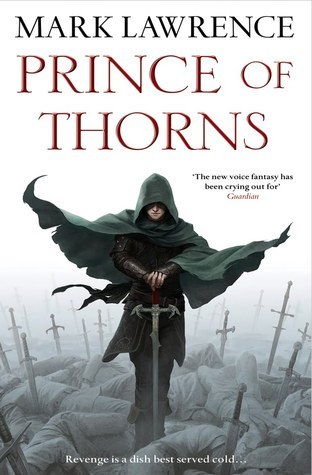
Prince of Thorns is about a boy who becomes a monster on his way to becoming a man. There’s some fantasy twists in it, but that’s the main story.
I wanted to love this book. But, sadly, the title character is simply unlikeable. And, the role of women in the book is either sex object or nothing.
“Two hundred dead farmers lying with their scythes and axes. You know, I warned them that we do this for a living. … I gave them that chance, I always do. But no. They wanted blood and slaughter. And they got it.” pg 1, ebook. That’s the very first page, folks.
And all of this cynicism and blood thirst is from a 14 year old. Sure…“There’ s a reason I’m going to win this war. Everyone alive has been fighting a battle that grew old before they were born. I cut my teeth on the wooden soldiers in my father’s war room. There’s a reason I’m going to win where they failed. It’s because I understand the game. pg 19, ebook.
Mark Lawrence tries to use a magical reason to explain this adult reasoning from a child, but it didn’t work for me.
“We wrap up our violent and mysterious world in a pretense of understanding. We paper over the voids in our comprehension with science or religion, and make believe that order has been imposed. And, for the most of it, the fiction works. We skim across surfaces, heedless of the depths below. … Until that moment when something from the cold unknown reaches up to take us.” pg 205, ebook.
If you want dark fantasy about a band of thieves, may I recommendThe Lies of Locke Lamora. If you’re looking for an epic fantasy about humankind being the pawns for something greater than ourselves, try Gardens of the Moon. As for Prince of Thorns, if you must read it, borrow it from the library. Because then, like me, you can give it back, only have lost the time it took to read it.
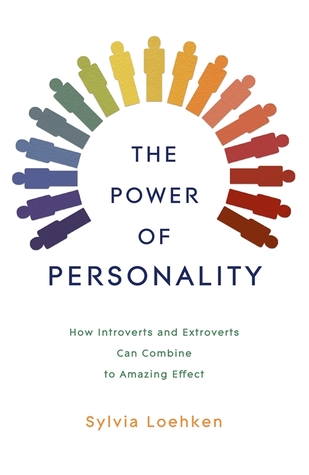
The Power of Personality is more than just another book that picks apart the obvious differences between introverts, centroverts, and extroverts. It delves very deeply into the strengths and possible hurdles that each face in business, social situations, and with each other.
Loehken presents management techniques for the different personality types and how one might leverage innate characteristics for the most positive outcome possible in a variety of ways. I found the book to be very helpful in explaining my own reactions to most perceived conflicts.
I hope to utilize what I’ve learned in the future to harness my strengths while minimizing the others. Some of my more damaging introverted tendencies are that I’m conflict/contact adverse and easily overstimulated in every day life.
I thought when Loehken discusses how the different personality types view each other that her descriptions were spot on. I think I do tend to categorize most extroverts as loud, unthinking buffoons. My mistake.
I suppose that extroverts view me as “boring, lame duck, sensitive flower, unsociable, professional worrier, reader, timid”pg 51. I never considered why.
Perhaps now with a more educated mindset, I can embrace personality differences and work more smoothly with extroverts. Rather than, in my previous experience, pushing them away so that I can have some peace and quiet.
She dissects how, particularly introverts, do themselves a disservice in their professional and personal lives because of how they perceive and react to conflict. It blew my mind.
It may be because this is a European book (the price on the back is listed in pounds) but I have never read anything like this in an American business book. Loehken talks about the unwritten rules of polite society and how, in sometimes subconscious ways, we shape our relationships and our status to the people around us.
One of her tips for dominating or owning space that I’m going to integrate into my life (right now!) is to sit fully on an office chair instead of perching on the edge. “If you take the whole seating area of a chair, this has a higher status effect than someone who only takes up half the seat or sits on the edge.”pg 175. Lesson learned.
The weak part of this book was any of the bits that dealt with centrovists. Basically, Loehken kept saying (paraphrasing in my own words) ‘If you’re a centrovist, you enjoy the benefits from both types of personalities and will therefore be more successful in whatever it is that we’re talking about in this section.’
It got kind of annoying after awhile because Loehken tells us that everyone exists on a scale of personality (we’re rarely entirely one type or another from situation to situation) so the centrovist advice could have been most applicable for every reader. Unfortunately, it felt more like a ‘Captain Obvious’ moment every time it came up rather than a revelation.
If you enjoyed The Power of Personality, I’d suggest reading I Can Read You Like a Book: How to Spot the Messages and Emotions People Are Really Sending with Their Body Language. It deals with body language rather than the driving personality behind the body, but it is still illuminating. It helps readers monitor the involuntary signals that we send out in our day to day interactions, how to leverage your movements and to send the message that you want to send, rather than broadcasting your internal mindset unintentionally.
I received a free copy of this book through Goodreads First Reads. FTC guidelines: check! Thanks for reading!
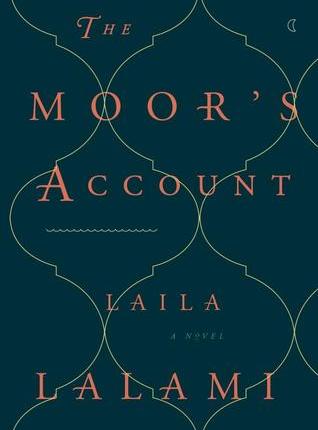
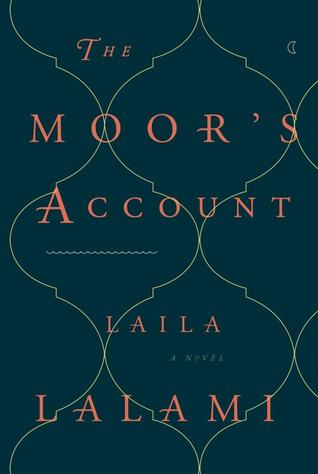
The Moor’s Account is a historical fiction novel about Pánfilo de Narváez’s expedition into the land that would eventually be called Florida.
This tale is told from the point of view of a slave named Mustafa al-Zamori, called Estebanico by the Spanish man who owned him.
“This book is the humble work of Mustafa ibn Muhammad ibn Abdussalam al-Zamori, being a true account of his life and travels from the city of Azemmur to the Land of the Indians, where he arrived as a slave and, in his attempt to return to freedom, was shipwrecked and lost for many years. pg 9, ebook.
Though the historical figure of Estebanico actually existed, Laila Lalami writes that she invented the majority of this story. The real Estebanico was only granted one line or so in the written history of the failed expedition.
“I was also curious about this land because I had heard, or overheard, from my master and his friends, so many stories about the Indians. The Indians, they said, had red skin and no eyelids; they were heathens who made human sacrifices and worshipped evil-looking gods; they drank mysterious concoctions that gave them visions; they walked about in their natural state, even the women- a claim I found so hard to believe that I had dismissed it out of hand.” pg 12, ebook.
Imagine the culture shock of the two different civilizations coming together- the European and the New World. The Moor’s Account explores that through Mustafa’s unique personal experience.
Mustafa’s early life is told in flashbacks throughout the beginning of the book. His mother likes to instruct him about the realities of life through stories. “Nothing new has ever happened to a son of Adam, she said. Everything has already been lived and everything has already been told. If only we listened to stories.” pg 58, ebook. If only we listened to stories… right, readers?
“I thought of what the elders teach us: love is like a camel’s hump, for it cannot be disguised.” pg 180, ebook. Though dismissive of his mother’s methods, much of the way Mustafa interprets reality is told through metaphors or stories.
“Maybe there is no true story, only imagined stories, vague reflections of what we saw and what we heard, what we felt and what we thought. Maybe if our experiences, in all of their glorious, magnificent colors, were somehow added up, they would lead us to the blinding light of truth.” pg 323, ebook.
It is easy to see why The Moor’s Account was a Pulitzer Prize finalist. It is unique, layered and beautiful. Recommended for readers who enjoy historical fiction and memoirs. Though fiction, it reads as if it really happened. And, who knows, maybe in some form or another, it actually did.
The story opens on a dark and stormy night. We’re heading into Arkham Asylum with Batman. After passing a few famous inmates, we’re outside inmate #0801, Name Unknown’s cell.
A shadowy figure is playing solitaire within the barred room. It’s The Joker.
By far, one of the creepiest villains of the Batman pantheon.
“So when you find yourself locked onto an unpleasant train of thought, heading for the places in your past where the screaming is unbearable, remember there’s always madness. Madness is the emergency exit…”
He is mad, yes, but brilliant in his insanity. And, in that, is he so different from the rest of the human race?
“Faced with the inescapable fact that human existence is mad, random and pointless, one in eight of them crack up and go stark slavering buggo! Who can blame them? In a world as psychotic as this… any other response would be crazy!”
Recommended for the more mature graphic novel readers because of some disturbing content and images, Batman: The Killing Joke is no joke and one heck of a ride.
Watchmen, also by Alan Moore, is one of my all time favorite graphic novels, so I was expecting to enjoy this one. If you haven’t had a chance to read it yet, it’s another must-read for the graphic novel fan.
Hellhole is a modern Faustian tale about Max Kilgore, his deathly ill mother and the devil.
Though written for a young adult audience, readers need to be aware that there are some bad words in the dialogue and innuendo in some situations. All kids are different, but I’d lean towards 15 and up forHellhole.
Our hero is just a regular guy: “Seventeen-year-old Max Kilgore suffered from the unfortunate curse of having a name that was far cooler than the person it was attached to.” pg 8, ebook.
Max attends high school, holds down a job and cares for his ailing mother in Eastville. “The town of Eastville was known for four things: its renowned hospital, its renowned high school football team, its renowned granite quarry, and its stupid, stupid name. No one could say with authority what Eastville was supposed to be east of…” pg 13, ebook.
One day, after a bad decision on Max’s part, Burgundy Cluttermuck (Burg) walks through his door. “The name is Burgundy Cluttermuck, devil-at-large. I do bachelorette parties and retirement galas, but no more children’s birthday.” He sucked in some air through his teeth. “Too much screaming.” pg 38.
How is Max going to get rid of him? And how long is this devil going to stick around? It’s dangerous to have a devil around the house: “He won’t go after you. He’ll go after the ones you love, and then you’ll have to live with the guilt. That’s your ‘punishment for dealing in devilry’…” pg 107, ebook.
Russell Targ is one of the founding members of the Stanford Research Institute’s studies of psychic phenomena. He worked with Hal Puthoff and Ingo Swann to develop the remote viewing protocols for the CIA.
Remote viewing, though lambasted in popular culture in such films as “Men who Stare at Goats,” is an actual practice. It was utilized by United States and Russian militaries with some success or complete failure- depending on who you ask.
I thought that a handbook on remote viewing from this seminal scientist would delve more into the nitty-gritty of the practice. But, it doesn’t.
Targ does give a broad outline of what remote reviewing is. He also give examples of his research, but it wasn’t all that I had hoped it would be.
Limitless Mind is, however, packed with information about psychic studies from the late 1800’s until the current time. Targ discusses the studies from multiple countries covering such diverse topics as spoon bending, distance healing and psychic diagnosis.
Welcome to a special triple review at The Help Desk! Today, we’re looking at The Lumberjanes– a delightful series of graphic novels that is appropriate for ages 10 and up.
The Lumberjanes are a type of girl scout, but so much cooler.
Their camp is surrounded by menacing forest from which comes an abundance of magical monsters. With their courage, smarts and friendships, the Lumberjanes overcome all obstacles.
It is similar, in theme, to Gravity Falls and may greatly appeal to reluctant readers.
Lumberjanes, Vol. 2: Friendship to the Max
Is there anything a Lumberjane can’t do? I don’t think so.
From monsters to mysteries to zombified boy scouts, the Lumberjanessaga continues in this fun graphic novel.
Friendship to the max!
If only I could convince my reluctant reader to give it a try… I think she’d love it. Highly recommended for everyone.
Lumberjanes, Vol. 3: A Terrible Plan
This entry in the Lumberjanes series opens up with the classic setup of ghost stories being told around a campfire. The girls’ different personalities are highlighted in the stories they choose to tell.
Then, the camp has a free day where everyone can pick their own activity. Hijinks ensue.
Mal and Molly go on a picnic date in the woods and, in typical Lumberjane fashion, something totally unexpected happens.
“Molly, we are doomed. SO DOOMED. AN UNSCALABLE MOUNTAIN OF DOOMED.”
“Mal, come on. We’re gonna figure this out. It’s going to be fine…”
Are they doomed? Will April, Jo and Ripley be able to earn at least one badge before the day is up?
Read this book to find out!
Recommended for everyone.
Lumberjanes, Vol. 4: Out of Time
Lumberjanes, Vol. 4 finally delivers a story line in which Jen gets a chance to shine. Yay, Jen!
We are also treated to a bit of background about Camp Lumberjane itself.
Also, the weather takes a turn as a winter blizzard appears out of nowhere… in the middle of summer.
Things are awfully weird around here. Good thing the Lumberjanes have each other.
Recommended for the adventurous reader and timid reader and everyone in-between.
Although not my favorite of the classic dystopians, Aldous Huxley’s Brave New World is certainly a ground-breaking work about societal control through genetic manipulation, subliminal conditioning and socially acceptable drug use.
You are not born into this world; you are decanted. The institution of the traditional family has fallen apart- is even considered obscene.
Children run about naked and wild, experimenting with sex from a shockingly young age. This is a world where everyone’s body belongs to everyone else. Promiscuity is encouraged as well as mass consumption and instant gratification.
Men and women take a drug called “soma” to mellow out any pesky emotions. It is also used in quasi-religious ceremonies and public gatherings to create a kind of ecstasy.
A strict caste system is in place from the moment a baby is decanted. Societal mores are whispered into children’s ears thousands of times per week while they sleep. So, when they grow up, they fit seamlessly into the role that the world has chosen for them from conception.
Not everyone is happy in this world. Can you imagine that? Perhaps they just need more soma…
Recommended for those who enjoy classic works that examine the way society’s systems constrain and suffocate those who, for whatever reason, don’t or can’t fit in.