Boy’s Life by Robert McCammon

Boy’s Life by Robert McCammon

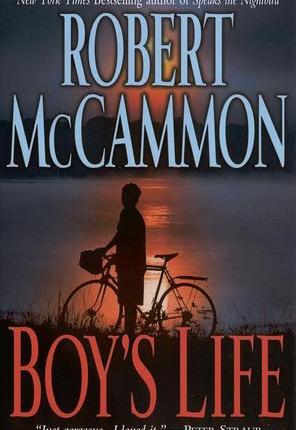
Boy’s Life is about Cory Mackenson, the southern town of Zephyr and the magic of every day life.

We had a monster in the river, and a secret in the lake. We had a ghost that haunted the road behind the wheel of a black dragster with flames on the hood. We had a Gabriel and a Lucifer, and a rebel that rose from the dead. We had an alien invader, a boy with a perfect arm, and we had a dinosaur loose on Merchants Street. It was a magic place.” pg 10, ebook.
Photo by Swapnil Sharma on Pexels.com

The story begins with a death and a mystery.

“On that morning before the sun, as I sat eating my breakfast with my dad and mom in our house on Hilltop Street, the year was 1964. There were great changes in the winds of earth, things of which I was unaware.” pg 15.

After witnessing something terrible sinking into the lake, Cory sets about discovering what or who put it there.

The trauma is almost too much for Cory’s father to bear.

“Whoever did it had to be a local. Had to be. … It might be somebody who sits on our pew at church. Somebody we buy groceries or clothes from. Somebody we’ve known all our lives… or thought we knew. That scares me like I’ve never been scared before.” pg 35, ebook.

Photo by Kirill Belotserkovsky on Pexels.com

But this book is about more than just the central mystery. It is also about the community of Zephyr and the relationships between the people who live there.

There is a racial divide in the town. When the river overflows its banks, the white and black communities come together to prevent disaster.

“There is something about nature out of control that touches a primal terror. We are used to believing that we’re the masters of our domain, and that God has given us this earth to rule over. … The truth is more fearsome: we are as frail as young trees in tornadoes, and our beloved homes are one flood away from driftwood.” pg 97, ebook.

Boy’s Life also examines coming-of-age issues like bullies, over-bearing parents, and accepting the realities of old age and death.

“But I’ll tell you a secret, Cory. Want to hear it?” I nodded. “No one,” Mrs. Neville whispered, “ever grows up. … They may look grown-up but it’s a disguise. It’s just the clay of time. Men and women are still children deep in their hearts.” pg 221, ebook.

Photo by Skitterphoto on Pexels.com

I loved this book. It is a far-reaching tale made for winter nights, to be read with a hot drink in your hand and a warm blanket on your lap.

It vaguely reminded me of The Help because of its southern location, the racial issues and some of the mystery elements. But really, Boy’s Life stands on its own.

Recommended for readers who enjoy historical fiction with a touch of magic and mystery.

Room by Emma Donoghue, a review

Room by Emma Donoghue, a review

Told from a 5-year-old’s point of view, Room is the story of Jack, his mother and the room that they never leave.

To Jack’s mother, it is a prison. To Jack, it’s just the world.

Photo by Porapak Apichodilok on Pexels.com

“…it was a garden shed to begin with. Just a basic twelve-by-twelve, vinyl-coated steel. But he added a sound-proofed skylight, and lots of insulating foam inside the walls, plus a layer of sheet lead, because lead kills all sound. Oh, and a security door with a code. He boasts about what a neat job he made of it.” pg 85.

Jack and his mother have no contact with the outside world, except for ‘Old Nick’ who only comes at night, brings food and the occasional ‘Sunday treat.’

They are his prisoners.

“…we mustn’t try and hurt him again. When he came back the next night, he said, number one, nothing would ever make him tell me the code. And number two, if I ever tried a stunt like that again, he’d go away and I’d get hungrier and hungrier till I died.” pg 97.

Photo by Lucas Pezeta on Pexels.com

Though this book covers some seriously dark subject matter, it is told through the point-of-view and voice of a child.

At first, I didn’t like it, but then I realized- hearing the story from Jack made it bearable. I think if we had heard it from his mother’s point of view, it would have been too bleak.

Jack confuses television and reality because he’s never been outside ‘room’: “Women aren’t real like Ma is, and girls and boys not either. Men aren’t real except Old Nick, I’m not actually sure if he’s real for real. Maybe half? He brings groceries and Sunday treat and disappears the trash, but he’s not human like us. He only happens in the night, like bats. Maybe Door makes him up with a beep beep and the air changes. I think Ma doesn’t like to talk about him in case he gets realer.” pg 18.

Photo by George Becker on Pexels.com

The beauty of this story is in the resiliency of Jack and the love he and his mother have for each other. They keep each other going when life becomes unbearable.

There are also some surprising twists to the story too.

I loved it.

I took the time to watch the movie after I read the book and it is a great adaptation. Not, of course, as stellar as the book, but well worth the time.

https://www.imdb.com/title/tt3170832/

Highly recommended, but keep your tissue box close.

Update to book/film review on Sept. 23, 2026. Post originally published Jan. 9, 2018.

It feels a little unrelated, but I recently watched “Good Luck, Have Fun, Don’t Die”. Beware, there is a minor spoiler ahead and it is an excellent film, which might garner its own separate review on this blog in the future.

In the meantime, warning issued.

There is a part near the end where the Man from the Future, played by the incomparable Sam Rockwell, talks about a bunker that he lived in with his mother. The viewer later gets to see that bunker, nestled in a glade between rows of pine trees.

I was immediately reminded of this book Room and the similar way the Man from the Future was shielded from the harsh reality of the world by his mother. Then, my mind made the leap to Life is Beautiful, the Oscar winning film that shows the same thing, but by a father who protects his son while surviving the horrors of a concentration camp.

When you love someone unconditionally, as a parent loves their child, this is what you do, even in the midst of hell and chaos. Somehow, someway, you make the world brighter for them.

I hope that wherever you are and whatever issues you may be struggling with in your own life, that this review helps make it a little brighter and happier.

Thanks for reading!

Heidi

Light Congress gate symbolism (Remember, you pick your own. Here are my three.): a prison, the world, unconditional love

What’s the Light Congress? I thought you’d never ask: https://www.patreon.com/collection/2256731


Leaving Tinkertown by Tanya Ward Goodman

Leaving Tinkertown by Tanya Ward Goodman

This is Tanya Ward Goodman‘s memoir about how she loses her father and grandmother- first through Alzheimer’s and then to death. Leaving Tinkertown is a powerful look at end-of-life issues and family love.

It is an incredibly raw and straight forward account of a period of unimaginable change in the author’s life.

Photo by Matthias Zomer on Pexels.com

Tanya handles the deterioration of her father very well. I suspect that this ability to quickly and seamlessly accustom herself to change probably evolved from her childhood experiences with her father at carnivals and on road trips. With the background changing continuously, she had to change too but hold on to some essential part of herself. This characteristic served her well during her adult years.

Tanya’s father was a prolific artist. Because of his extreme creativity, I think that she was exposed to his mercurial moods long before he began losing his battle with Alzheimer’s. Artistic types seem to walk a fine line between logical thinking and madness. Their families get to walk that journey with them. That doesn’t mean that his descent into darkness didn’t hurt Tanya, but that she was more able to cope with his moment to moment shifts in behavior because she had experienced them before.

Photo by Shelagh Murphy on Pexels.com

Through this adversity, she grows closer to her brother, step-mom, and mother as they work together to care for her dad.

Tanya doesn’t gloss over her family’s shortcomings but comes to accept everything that each person brings to the table: “… I am starting to understand that doing all you can do, even if it doesn’t seem like very much, is enough.” pg 193.

When a strong, vital person in your life is no longer able to care for themselves, it’s heartbreaking.

My own grandfather, a force of nature, lost some of his heart when the family had to take the keys to the car away because he didn’t have the strength to drive safely anymore. This book was hard for me to read because Tanya knows what it feels like to cause that type of pain too.

Photo by Pixabay on Pexels.com

It brought back so many small moments when I was in a care-taking position for him. You want to provide the best quality of life that you can, but when the person can no longer clean, feed, or clothe themselves, then the really difficult decision making begins. Tanya and her relatives seem to make the process relatively simple even though I know that it is anything but that.

We all know that we’re not going to live forever but when you’re dealing with loss of physical strength or mental capacity in your own life or the lives of those you love, you get very close to that idea. It’s like the difference between looking through a window and having your face smashed up against the glass. When it’s right there, you can’t look away.

I’d recommend this for anyone who is caring for an aging or ill family member and needs a reminder that it’s all going to turn out alright. As Tanya reminds us, we just need to do all that we can do even if it doesn’t seem like it is very much.

I received a free copy of this book through Goodreads First Reads program. Thanks for reading!

Pigs Can’t Swim: A Memoir by Helen Peppe

Pigs Can’t Swim: A Memoir by Helen Peppe

Pigs Can’t Swim is a collection of essays based on Helen Peppe‘s childhood memories. Frankly, it is amazing that she managed to live to adulthood.

The youngest of nine children, she was by turns ignored or over-directed. Her family lived on a farm in Maine on a dead end road in the middle of nowhere.

Photo by Pixabay on Pexels.com

Helen tells her tale, all of it, without flinching from what she perceives the truth to be: her family’s wild behavior, prejudices, poverty, dysfunction, and an episode with a child predator that was truly horrific.

I had to keep reminding myself that she made it out alive and, at least, managed to write a book because this memoir had some truly terrifying bits in it.

I think Pigs Can’t Swim is an amazing piece of non-fiction writing not only for its content but also for its execution.

Photo by Eva Elijas on Pexels.com

Helen’s parents weren’t perfect but she doesn’t seem to blame or justify their behavior. In Pigs Can’t Swim, she just tells what happened and leaves a majority of the interpretation in the hands of the reader.

I couldn’t put this book down.

Its flowing narration reminded me of a much grittier version of Life Among the Savages.

Its personal and tell-all style reminded me of She Got Up Off the Couch: And Other Heroic Acts from Mooreland, Indiana. Similar to She Got Up Off the Couch, this book talks about overcoming poverty and adversity to become something more.

If you enjoyed either of these books, you’ll probably love Pigs Can’t Swim.

I received a free copy of this book through Goodreads First Reads program. Thanks for reading!

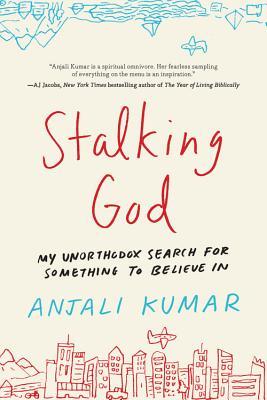
Stalking God: My Unorthodox Search for Something to Believe In by Anjali Kumar

Stalking God: My Unorthodox Search for Something to Believe In by Anjali Kumar

Anjali Kumar is a lawyer who is used to having all the answers. After she had a daughter, Anjali realized she knew very little about the big questions: why are we here? What is it all about? Is there a God?

“In 2010, when my daughter Zia was born, I decided that I needed to find God.” loc 24, ebook.

Anjali went on a quest to find out the answers, not only for the sake of her daughter, but also herself. She touches all the bases – from meditation to faith healing to Burning Man to yoni worship – Anjali leaves no stone unturned in her search to find what is real.

Photo by Artem Beliaikin on Pexels.com

“Along the way, I learned to chant, to meditate, and to marvel. I wrestled with my own identity, from my ethnic and cultural roots in India, to my femininity, to my role as a woman, daughter, mother, and wife. … I fancied myself an explorer, no different really than Magellan or Columbus. I was looking for a new world.” locs 148-163.

It’s a fascinating memoir.

Before each experience, Anjali puts in her research in an effort to find the science behind the beliefs. It’s not always as concrete as she would like it to be, but Anjali tries to engage her brain and her heart in her quest.

This is before she goes to her first “para-tan sounding”: “According to string theory, the entire universe is basically humming – all of it and all of us. Add that to the fact that the chanting of mantras has a long, compelling spiritual history, that cancer researchers are using sound- high-intensity focused ultrasound- to successfully destroy prostate cancer cells … and this whole Paramji thing starts to look like it might be grounded in a bit of hard science…” loc 500

Photo by Nataliya Vaitkevich on Pexels.com

Anjali tries to keep an open mind, even when things sound very strange: “One thing I had to be cognizant of… was how difficult it is as an outsider to come to terms with what are easy to perceive as the odd behaviors and strange beliefs of ‘other people.’ … as outsiders we have no idea what those behaviors and traditions stand for or mean.” loc 904.

She finds layers of meaning, even when particular experiences weren’t all that she hoped they would be. Anjali also experiences a few surprises along the way.

“I was looking for a theory of everything spiritual for Anjali and Zia. And yet, so far, just like those physicists had failed to find a theory of everything in the entire universe, I had failed to find a theory of everything for my own spirituality.” loc 1343.

Photo by Pixabay on Pexels.com

And she never gives up because: “A spiritual home is something that we all have to find for ourselves.” loc 2853.

Recommended for seekers everywhere. Anjali’s discoveries may not be earth-shattering, but they’re real and worth the read.

Thank you to NetGalley and Seal Press for a free advance reader copy of this book. Reminder: the short quotations in this review may change or be omitted in the final printed version.

Thanks for reading!

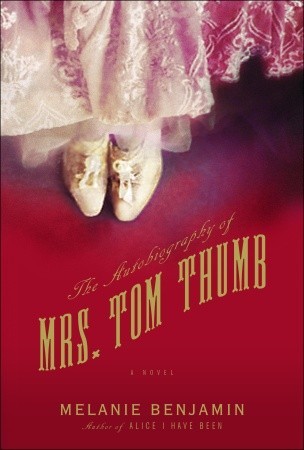
The Autobiography of Mrs. Tom Thumb by Melanie Benjamin

tomthumb

The Autobiography of Mrs. Tom Thumb is a historical fiction novel based on the real life of Lavinia Bump Warren, an extraordinarily small person.

Lavinia participated in P.T. Barnum’s museum, traveling acts and circus, becoming one of the most popular acts of her era. Her wedding to Charles Stratton, another little person, was such a huge story that it bumped the Civil War from the front pages for a time.

Melanie Benjamin speculates at the end of the book that Lavinia had a pituitary gland problem and today would receive appropriate treatment. But, in the 1800s, no such treatment existed.

As a journalist, I appreciated the actual stories and newspaper headlines from the time period. It shows just how far we’ve come and how the public appetite for sensational stories has never changed.

Benjamin writes a heroine that is so easy to love. Lavinia is different but determined, small and brave. She doesn’t let her size define her and always seeks to be a proper lady, even when those around her aren’t minding their manners.

This book was sad in that, because of her deformity, Lavinia had very few options. Early in her life, she felt as if she either had to display herself as a freak or depend upon her family in a backwater town where nothing ever happened.

In some ways, she never fit in to a world that was simply too big for her. I can’t imagine how difficult that must have been.

Photo by RODNAE Productions on Pexels.com

But in other ways, Lavinia traveled more than any woman of her era would be expected to. She experienced a world beyond the reach of all but the ultra-rich and privileged. There was a high price to be paid for it, but I don’t think Lavinia would have had it any other way.

Benjamin wrote in an unlikely twist in the story that I thought was unnecessary and it soured the ending of the book for me. I understand why she did it but it felt like a bridge too far, especially when the author admits at the end that there was nothing in the historical record to support her creative decision.

The Autobiography of Mrs. Tom Thumb becomes repetitive in Lavinia’s traveling years. I felt as if I was reading the same thing over and over again.

But I did learn a great deal about Lavinia Warren, Charles Stratton and P.T. Barnum. How extraordinary that these people even existed. It seems like a piece of American history that has been all but forgotten.

Recommended for readers who enjoy historical fiction novels about people overcoming adversity and about heroines who won’t give up, no matter the odds or size of the problem.

Thanks for reading!

Dear Girls Above Me: Inspired by a True Story by Charlie McDowell

Dear Girls Above Me: Inspired by a True Story by Charlie McDowell

Dear Girls Above Me is about Charlie McDowell’s time living beneath a loud group of gossiping young women (names have been changed to protect the innocent). He claims to have learned much about love, life and himself through his eavesdropping.

From the description, I thought this book was going to be cute. Instead, I found it very creepy.

“I most definitely did not expect to be the unwilling audience of a twenty-four-hour slumber party between the Winston Churchill and Benjamin Franklin of the 90210 generation.” pg 6, ebook.

Photo by Max Vakhtbovych on Pexels.com

But, shortly after professing his irritation for the girls, he spends an inordinate amount of time wandering around his apartment, looking for the location with the best “reception” of their voices.

“…I’m living underneath a couple of Kardashian wannabes who spend their time gossiping, starving themselves, and throwing noisy parties.” pg 21, ebook.

Instead of ignoring them or moving to a new apartment, Charlie creates a Twitter account where he mercilessly mocks the snippets of conversation he overhears. It seemed very passive-aggressive to me.

“As my Dear Girls Above Me Twitter following grew, so did my guilt and anxiety. Each day, more and more people were discovering my ‘letters’ to the girls, and I felt as if it was only a matter of time before they stumbled across it.” pg 113, ebook.

Photo by Tracy Le Blanc on Pexels.com

But not guilty enough to stop tweeting about it.

Charlie does try to build reader sympathy by sharing some fairly embarrassing stories about his own personal life, but it didn’t really work. I found myself feeling embarrassed for everyone in this book rather than amused.

The low point of this tale was this: Dear Girls Above Me, ‘The psychic said I have a serious stalker in my life!’ I much prefer ‘a friend who always listens,’ thank you very much. pg 194, ebook.

No, stalker is more appropriate. Sorry.

I don’t recommend this book.

Thanks for reading!

Gork, the Teenage Dragon by Gabe Hudson

Gork, the Teenage Dragon by Gabe Hudson
gork

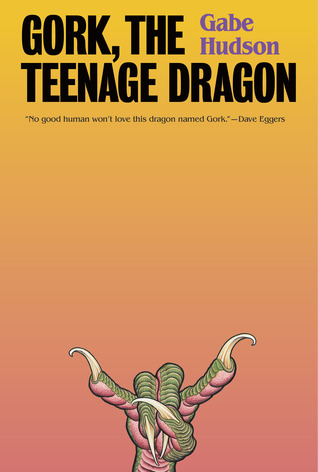
Gork needs to crown his queen today and leave to take over a distant planet or suffer terrible consequences. He has a few major problems: he’s in love with one of the most popular females at the military academy, his heart is far too big, his horns are far too small, his class rating is too low and his grandfather, Doctor Terrible, has gone missing.

Nothing a teenage dragon can’t handle, right?

Gork, the Teenage Dragon is one of the most unique books I’ve read in a long time. It is a story about dragons, yes, but not just that. Gabe Hudson has created an entire dragon culture.

WarWings graduates continue to conquer the universe one planet at a time. We are the proud preservers of the EggHarvest tradition. Victory will always be ours! pg 30.

In some ways, WarWings reminded me of the military academy from Ender’s Game. It is dog eat dog, or dragon eat dragon.

My favorite part of the dragon culture is its use of poetry: “I don’t know why it is, but singing a poem out loud will always make you appear more repulsive and psychotic to those who you intend to enslave.” pg 56.

I also enjoyed the nudging of journalists: “The vibe in the room was definitely fiendish, and you should know that dragon journalists on Blegwethia are notoriously ruthless. Because on my home planet Blegwethia if a journalist shows up to report a story and they don’t like the situation they’re seeing, they’re not afraid to wade right in and get their claws and beak bloody. That’s dragon journalism for you.” pg 88.

If anything, Gork, the Teenage Dragon suffered from too many lovingly crafted details about dragon culture to the detriment of the story. It dragged as a result. And some of the gags didn’t quite work.

On the other hand, I was laughing out loud quite a lot at Gork’s antics: “… I study my scaly green reflection and see five nasty-looking slashes in my forehead from where that demon Torp has swiped me with his claws. ‘Not bad, Professor,’ I say, looking at the slashes. ‘This could make some nice scars.’ Now in case you don’t know, teenage dragons love scars.”

I was also not fond of the ending.

Recommended for readers with patience and the willingness to overlook some repetitious dialogue.

Gork, the Teenage Dragon won’t appeal to everyone, but I could see some die-hard dragon fans absolutely devouring this book.

Heidi’s 2017 Year-end Review

It’s the last day of 2017! As usual, this year I’ve enjoyed an eclectic mix of fiction and non-fiction.

I had a lot less time to read this year because of my full-time job, but I surprised myself with how many I was able to get through.

I’d like to take a moment to say thank you to all of my friends here on WordPress and Goodreads. Reading and reviewing wouldn’t be nearly as fun without all of you.

And without further ado, here’s my end-of-the-year book recommendations:

Total books read: 165

Overall favorite: Annihilation by Jeff VanderMeer

Non-Fiction: Inspired!: True Stories Behind Famous Art, Literature, Music, and Film by Maria Bukhonina or When Bad Things Happen to Good People by Harold S. Kushner.

Favorite Book Club Pick: Dark Matter by Blake Crouch (Good work, Kathy!)

Best Fantasy: Life After Life by Kate Atkinson (I did not like the sequel, but this book was excellent.)

Funniest Self Help: How to Be Ultra Spiritual: 12 1/2 Steps to Spiritual Superiority by J.P. Sears or How to Be Happy, Dammit: A Cynic’s Guide to Spiritual Happiness by Karen Salmansohn.

Book I Thought I Wouldn’t Like but Did: Heartless by Marissa Meyer

Book I Thought I Would Like but Didn’t: The Shadow of the Wind by Carlos Ruiz Zafón

Most Overrated: Paper Princess by Erin Watt

Most Disturbing: Gather the Daughters by Jennie Melamed (fiction) or The Only Girl in the World: A Memoir by Maude Julien (non-fiction).

Most Inspirational: The Four Agreements: A Practical Guide to Personal Freedom by Miguel Ruiz or Year of Yes: How to Dance It Out, Stand In the Sun and Be Your Own Person by Shonda Rhimes (memoir).

Most Far-Out: Surviving Death: Evidence of the Afterlife by Leslie Kean or A Field Guide to Lucid Dreaming: Mastering the Art of Oneironautics by Dylan Tuccillo.

Nerdiest Read: Level Up Your Life: How to Unlock Adventure and Happiness by Becoming the Hero of Your Own Story by Steve Kamb.

Most Depressing but Worth It: Night by Elie Wiesel (non-fiction) or Year of Wonders by Geraldine Brooks (fiction).

Book about books: Bizarre Books by Russell Ash, Brian Lake.

Classic I Should Have Read Before but Hadn’t: Animal Farm by George Orwell and Fahrenheit 451 by Ray Bradbury (read a bunch of classics this year, these were my top two).

Best Graphic Novel: Lumberjanes, Vol. 1: Beware the Kitten Holy by Noelle Stevenson (This whole series is a lot of fun.)

Strong Female Role Model: #GIRLBOSS by Sophia Amoruso (non-fiction) or Mistress of the Art of Death by Ariana Franklin (fiction).

Best Book about Music: Vivaldi’s Virgins by Barbara Quick (fiction) or Instrumental: A Memoir of Madness, Medication and Music by James Rhodes (non-fiction, very dark).

Best Book about Trivia: Fox Tossing, Octopus Wrestling and Other Forgotten Sports by Edward Brooke-Hitching.

Best Memoir: What I Talk About When I Talk About Running by Haruki Murakami.

Best Book about a Foodie: Born Round: The Secret History of a Full-time Eater by Frank Bruni

Best Historical Fiction: The Confessions of Young Nero by Margaret George or Wolf Hall by Hilary Mantel.

Best political: Gnarr: How I Became the Mayor of a Large City in Iceland and Changed the World by Jón Gnarr

Work-related: Linchpin: Are You Indispensable? by Seth Godin.

Family-related: How Not to Hate Your Husband After Kids by Jancee Dunn.

Happy New Year, my friends. And, happy reading, to all of you.