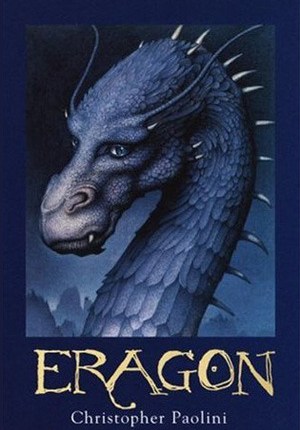
Eragon by Christopher Paolini

Eragon by Christopher Paolini

Eragon follows the exploits of a boy, a dragon, and their fight against an evil king, and his henchmen, who would plunge the world into darkness.

Prophecies of revenge, spoken in a wretched language only he knew, rolled from his tongue. He clenched his thin hands and glared at the sky. The cold stars stared back, unwinking, otherworldly watchers.” pg 14, ebook
Photo by carol wd on Pexels.com

Though it is written for children, Eragon is a charming tale that I thoroughly enjoyed as an adult reader. The pace was snappy, the characters were written quite well, and the story itself was a fun, adventure and fantasy.

“Eragon found the stone both beautiful and frightening. Where did it come from? Does it have a purpose? Then a more disturbing thought came to him: Was it sent here by accident, or am I meant to have it?” pg 16, ebook

Photo by Dids on Pexels.com

I did a little research about the author, Christopher Paolini, and was surprised to discover that this was one of the first books he published and he was in his teens when he wrote it. How impressive is that?

“Dragons will constantly amaze you. Thing… happen around them, mysterious things that are impossible anywhere else.”

There were a couple things I didn’t enjoy about Eragon, but they didn’t ruin my appreciation for the overall story. For example, I wanted Saphira the dragon to have a different personality. She has some character traits that I felt were incongruous with how an immensely powerful, magical being would act.

Photo by Andre Moura on Pexels.com

When I think carefully about it, what a silly quibble to have with a story based in fantasy. But readers will have their preferences, and I like to picture dragons as either wise and benevolent, Buddha-like beings or demonic treasure hoarders along the lines of Smaug.

Paolini’s version of them is different from both of these extremes. He makes dragons fallible, like humans. Which, at the end of the day, makes this a better story for children. A lesson like, even the most powerful among us can make mistakes or experience unpleasant emotions like jealousy, is a good lesson to learn.

“These books are my friends, my companions. They make me laugh and cry and find meaning in life.” pg 153, ebook

Photo by Pixabay on Pexels.com

Highly recommended for young adult fantasy readers or the young-at-heart.

The Science of Kissing: What Our Lips Are Telling Us by Sheril Kirshenbaum

The Science of Kissing: What Our Lips Are Telling Us by Sheril Kirshenbaum

What do we know about the “science” of kissing? Researcher and author Sheril Kirshenbaum shows we know surprisingly little in The Science of Kissing.

“Kissing is a type of universal language, best interpreted by those involved in the exchange.” pg 209

Photo by Flora Westbrook on Pexels.com

To start, I didn’t know that humankind wasn’t the only species to demonstrate “kissing” behavior.

“Moose and ground squirrels brush noses. Manatees nibble at their partners. Moles rub snouts and turtles tap heads. Porcupines nuzzle noses – one of the few regions of their bodies that lack quills.” pg 29

Photo by Snapwire on Pexels.com

I also didn’t know, seems obvious in hindsight, that kissing wasn’t always a common behavior. It has spread throughout cultures and countries because of the way we’re interconnected with technology.

But that wasn’t always the case. Historians and anthropologists have recorded different attitudes towards kissing among various cultures for hundreds of years.

“… he noted that some Finnish tribes were not very interested in kissing, and observed that while the sexes would bathe together completely nude, a kiss on the lips was considered indecent.” pg 57

Kirshenbaum briefly covers a few different scientific studies into sexual behavior or kissing.

“In Alfred Kinsey’s 1948 report ‘Sexuality in the Human Male,’ for instance, kissing style was found to correlate with a person’s level of education. Seventy percent of well-educated men admitted to French kissing, while only 40 percent of those who dropped out of high school did.”

Photo by Pixabay on Pexels.com

However, I felt that the majority of this book was written anecdotally because there are so few rigorous studies that have been conducted. In fact, one of the chapters of this book consists of suggestions of studies that could be done with some of the information that Kirshenbaum compiled.

… only one in seven women answered that she would consider sex with someone she had not first kissed. Conversely, the majority of men reported that they would not be deterred.” pg 92

Despite what I perceived as a lack of hard science in here, I found the book amusing. Recommended for readers who are looking to be entertained, rather than enlightened, about kissing.

The Burning Wheel by Luke Crane

The Burning Wheel by Luke Crane

I’ve been reading the rule books of different roleplaying games this year like Nobilis and now The Burning Wheel in order to alleviate boredom and socialize with friends while playing the various games online. While doing so, I have come to appreciate the artistry and finesse that goes into creating the games.

This effort is most easily seen in the rulebooks.

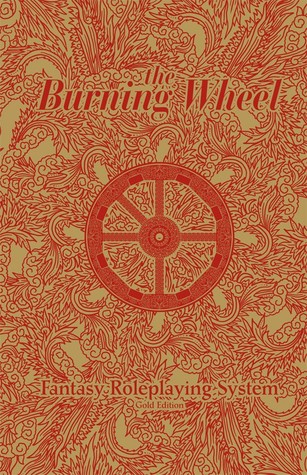
The Burning Wheel rulebook is gorgeous. The artwork and binding are lovely. This is a book that feels like it belongs in your hands when you open it.

I realize that the world is moving more digital all the time, books included, and that makes sense. It saves resources, space, and what could be more convenient than having your entire library with you when you travel?

But I think I would miss the experience of holding a physical book and the sensations that go along with that. I watched a YouTube video review of this game that suggested part of the familiarity of the feel of this book might be related to the fact that it was created in the shape and size of a family Bible.

Whatever the draw is, if you’re going to play this game, I highly recommend buying a physical copy of the book.

That being said, the game itself is incredibly complex. No matter what you want to do in Burning Wheel, it requires some sort of roll. The most annoying aspect of this complexity is in the “resource” portion of the game. I failed a roll a few weeks ago and now my financially-challenged elf bard has to find a job.

Photo by fotografierende on Pexels.com

Do I really want to play a game to roleplay something like that? I could just live life as it is right now to worry about resources.

The organization of the rulebook also leaves something to be desired. For example, bard songs and their details are located in a couple different places.

So, say you’re playing along, then you want to know what sort of dice you have to roll to sing a song to the trees. In order to find that information, you’ve got to look all over the place. It doesn’t work well at all.

Photo by Pixabay on Pexels.com

Even the character creation is an unwieldy process. It took two very experienced gamers and I, who admittedly has less experience but plenty of enthusiasm, nearly four hours to put together two characters. Four hours!

Despite its complex and difficult nature, I think experienced gamers who are willing to greatly simplify the rules might still enjoy playing this game. Newbies to RPGs may want to try something else.

The Complete Idiot’s Guide to T’ai Chi & QiGong by Bill Douglas

The Complete Idiot’s Guide to T’ai Chi & QiGong by Bill Douglas

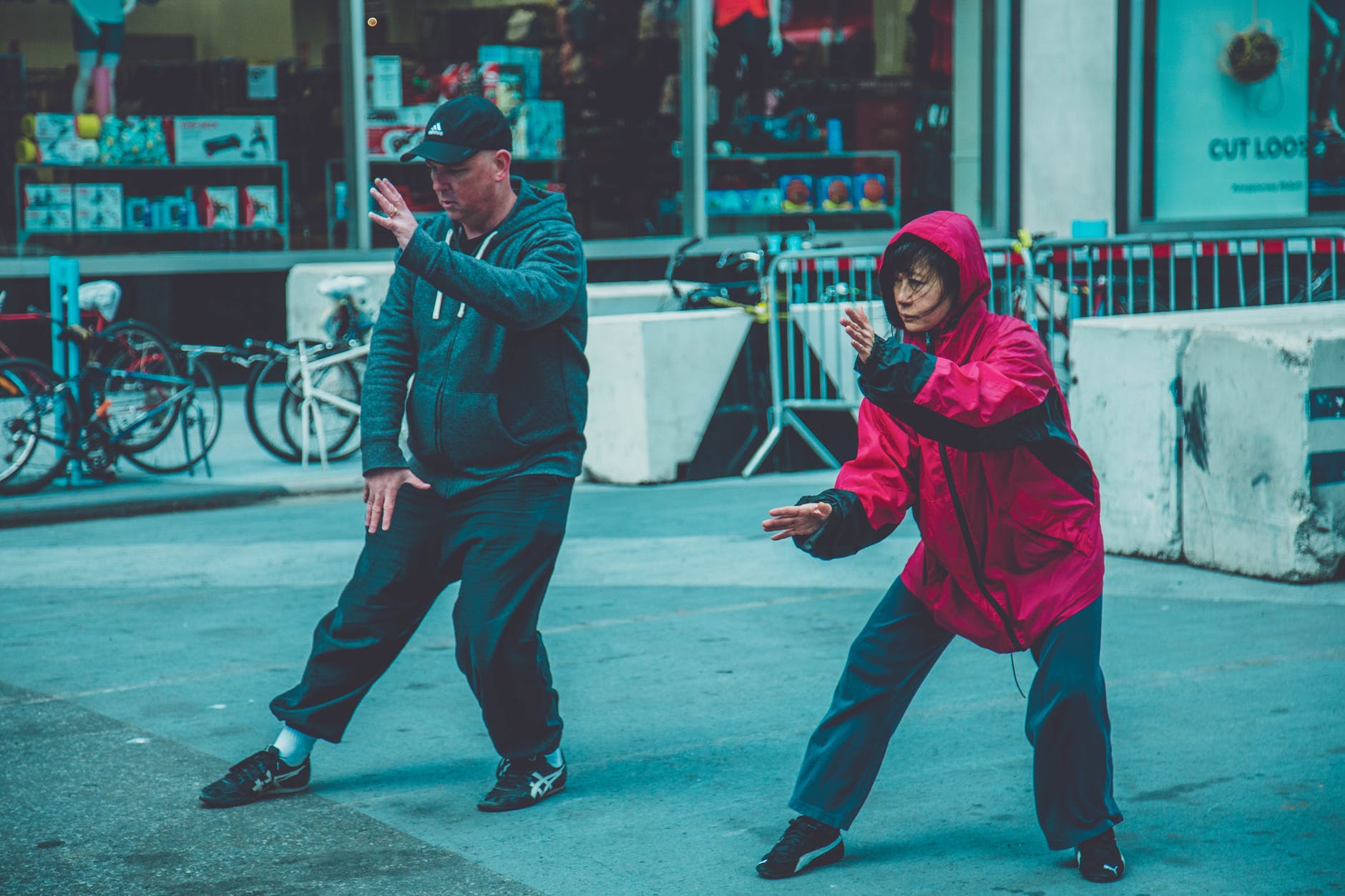
The Complete Idiot’s Guide to T’ai Chi & QiGong is a useful reference guide that I’ve been using in conjunction with online courses to dip my toes into the practice of both.

The first part of the book is the history of the martial and meditative arts as well as best practices. The second part is the movements.

Photo by Pixabay on Pexels.com

I liked that links to demonstrative videos are sprinkled throughout the text, somewhere over a hundred of them! It really helped the materials to come alive for me.

The way the author writes might be a little far out for readers who are looking for more scientific approaches to the practices. He touches on scientific studies that demonstrate health benefits, but doesn’t go too deeply into the science behind them. Readers who are looking for something like that may want to find a different book.

Photo by Craig Adderley on Pexels.com

I’ve begun to incorporate both t’ai chi and qigong into my daily routine. It is a nice, restive break from the stressful day-to-day grind. As I move my body through the practices, my mind follows.

It is difficult to describe, but easy to experience if you attempt some of the movements yourself.

One of the most helpful online resources I discovered for qigong is “Qi Gong for Better Health and Wellness” by Lee Holden on Wondrium.

Highly recommended for readers at all levels of fitness. Namaste!

The Hollow Places by T. Kingfisher

The Hollow Places by T. Kingfisher

Kara is going through a hard time and is grateful for a chance to help out at her Uncle Earl’s museum. She has always loved it there.

“Nobody ever believes me when I tell them my uncle Earl owns a museum. They start to come around when I explain that it’s a little tiny museum in a storefront in Hog Chapel, North Carolina, although there’s so much stuff jumbled together that it looks bigger than it is.”

Photo by Tobias Bju00f8rkli on Pexels.com

But when Kara and Simon, the barista next door, attempt to repair a hole in the wall of the museum, they discover a hallway that shouldn’t be there.

“Frankly, I wasn’t even sure what you were supposed to do when you had an impossible hallway in the walls. Did you call the police to report that the laws of time and space were getting broken?”

What lies beyond the hallway? Kara and Simon are going to find out, and their lives are never going to be the same.

Photo by Elina Krima on Pexels.com

First, I am not a big fan of the horror genre. But, The Hollow Places, is horror done the way I like it best.

There’s an unknown world with as-yet unknown dangers. The story is one of exploration and carefully-crafted reveals so you feel as if you’re on an adventure.

The characters are fantastic. Kara and Simon are people I would walk down a mysterious and magical hallway with, no question.

The author slowly builds the tension of the story so, for the most part, the main emotion the reader feels is a growing sense of dread. It’s an emotion a reader with an anxiety disorder (like me) is familiar with and there’s something very satisfying about having that feeling validated and then resolved.

I believe life rarely gives the same kind of closure.

Photo by Elina Krima on Pexels.com

The voice of the main character, Kara, is down-to-earth and, occasionally, quite funny. I liked how the author gave her all sorts of relatable, every-day type problems and then, once the story started rolling, she re-evaluated the importance of issues that would have caused her major headaches prior to her life-changing experience.

I could see myself doing the same sort of thing if I was in her shoes.

The Hollow Places contains some nightmare-inducing moments but nothing I considered gratuitously violent. There’s some mild sexual references in the banter between the two main characters. This book might work for older teens who are looking for a spooky October read.

Highly recommended for readers of horror or who like their fantasies to have some thrills and chills.

Thank you to NetGalley and the publisher for a free digital copy of this book.

The Buddhist on Death Row by David Sheff

The Buddhist on Death Row by David Sheff

David Sheff examines the life and spiritual transformation of Jarvis Jay Masters, a man who has spent years on death row and in solitary confinement for a crime he says he didn’t commit.

“Even if Masters was innocent, I didn’t know what to think about the claims that he was, as his supporters described him, an enlightened Buddhist practitioner who had changed and saved lives.”

Photo by Donald Tong on Pexels.com

It is a powerful non-fiction account not only because Masters is honest and open about how he came to be where he is today, but because the spiritual lessons he has discovered throughout his experience are applicable for all of us. You don’t have to be sitting in a literal prison to feel like you’re locked in a cell and can’t get out.

The mind and heart can create suffering wherever in the world you are.

“Set in a place of unremitting violence, insanity, confusion, and rage, Masters’s story traverses the haunted caverns and tributaries of loneliness, despair, trauma, and other suffering- terrain we all know too well- and arrives at healing, meaning, and wisdom.”

Photo by Caroline Martins on Pexels.com

I don’t think you need to be a practitioner of Buddhism to appreciate the wisdom in this book. Spiritual lessons like the knowledge that can be found in self awareness and how to obtain freedom from suffering can be helpful for all of us.

I enjoyed the book so much that I read it in only a few sittings.

The lama wrote that all people have been sentenced to death- in that way, Jarvis wasn’t unique. … “We all live in a prison, and we all hold the key,” Chagdud Tulku wrote.

Photo by Pixabay on Pexels.com

Highly recommended for spiritual seekers of all types.

Thank you to NetGalley and the publisher for a free digital copy of this book.

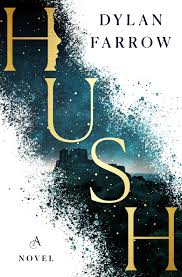
Hush (Hush, #1) by Dylan Farrow

Hush (Hush, #1) by Dylan Farrow

In the world of Hush, ink, the suspected origin of a deadly plague, has been declared the enemy of humankind and outlawed. The keepers of the law, High House and its magical soldiers called bards, roam the world, rooting out those who break the law and rewarding those who bend to their will.

“Our history shows that vigilance and caution are tantamount to survival. Burn the ink from the page. Turn away from forbidden words, toxic tales, and deadly symbols. Cleanse the country of this malignant blight. Join us.”

Photo by Dids on Pexels.com

Shae lost her brother to the mysterious plague early in her life and her family has been outcast from her small village since. When tragedy once again darkens her family’s doorstep, what will Shae do not only to seek justice for her brother but, potentially, the whole world?

The premise of Hush had some interesting ideas, but this debut, young adult novel suffers from wooden characters and predictable plot twists.

“The Bards arrive today.” The Bards. Suddenly I feel as though the house has been encased in ice. The town elders say there’s power in words- that certain phrases can change the world around you.”

Photo by Polina Zimmerman on Pexels.com

Weakness in the character development aside, Shae is a strong protagonist who struggles to create her own reality which differs quite markedly from the reality that her small town has imagined for her. Teens might connect with her more strongly than I did, which is to say, not at all.

I’m not sure what it was. Maybe I’m suffering from YA dystopian reading burnout?

Instead of appreciating Shae for her flaws which include falling in love too quickly, trusting everybody and pushing all her friends away the moment she could really use their help, I found myself annoyed with her.

“I spent countless nights lying awake, staring at the austere wooden beams of the ceiling, trying to figure out if I was mad or cursed- or both.”

Photo by Joshua on Pexels.com

Be smarter, I thought. The odds are stacked against you, and you need to pay attention, not fall for the first stranger you meet who has a dreamy pair of eyes.

But as I said, I’m definitely not the intended audience for the book.

Here’s the author, Dylan Farrow, talking about Hush:

Thank you to NetGalley and the publisher for an advance reader copy. And thank you for reading!

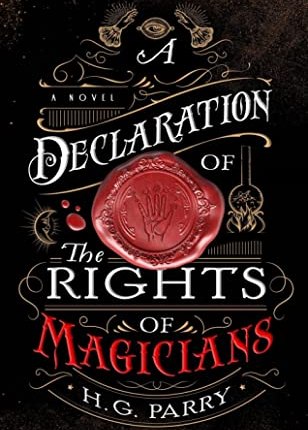
A Declaration of the Rights of Magicians by H.G. Parry

A Declaration of the Rights of Magicians by H.G. Parry

In a world where magic is real and controlled by government authorities, H.G. Parry re-imagines true historical events and people, inviting readers to add an additional layer of conspiracy to movements that changed the course of history like the French Revolution or the slave rebellion in the Caribbean.

Photo by Andreea Ch on Pexels.com

The premise didn’t work for me for a couple reasons.

I felt like this book minimized the atrocities that were committed during the era. The slave trade and the French Revolution’s cost in both human lives and suffering is immeasurable, and it felt somewhat flippant to take those events and say, “Well, magic,” as the main driving force behind the conflicts.

I felt the same could be said for the subtle twisting of the lives of historic figures.

“His quiet voice spoke of a country built on Enlightenment principles, whose people were virtuous, where magic was a free resource to be used for the betterment of all, where food was well distributed and plentiful, where courts were in the hands of the people and not the talons of the Aristocracy, where the poorest Commoner was free to vote and grow and be educated.” pg 155

Photo by Dominika Greguu0161ovu00e1 on Pexels.com

That is not to say that history or historic personages couldn’t or shouldn’t be in fantasy novels. It is a hallmark of the genre to take a reality, change the rules of that reality, and then tell the story with the new rules. Though if that was what the author was going for, perhaps she should have staged her story in another world or made the focus of the story characters she invented with the real people living their lives in the backgrounds.

Taking real events, real people and real world locations to drive the story didn’t coalesce into the fantasy novel I believe she was reaching for.

I think fantasy, alternative-historical fiction is something that can be done successfully, but I have yet to see its promise fulfilled. This may be an unpopular opinion, but I had the same issues with this story that I had with Abraham Lincoln: Vampire Hunter.

Photo by eberhard grossgasteiger on Pexels.com

Students of history may find themselves frustrated by A Declaration of the Rights of Magicians because of the way the true events are spun. I didn’t have any specialized knowledge of the era, but a friend who is somewhat of an expert told me the complexity of the time period is so dumbed down that he was distracted by it.

“It had seemed so simple after the fall of the Bastille. The National Assembly of Magicians had risen up, exactly as Robespierre had hoped. They had issued a proclamation declaring it the right of all citizens to be free to practice their own magic: a Declaration of the Rights of Magicians.” pg 179

Setting my concerns with fantasy clumsily applied to horrific real life events aside, my biggest issue with this book was the glacial pacing. Readers sit through meeting after meeting, and it’s incredibly dull. But with the time period we were in, it should have been gripping. I told myself that a big payoff for all of this story building was coming, as the book clocks in at over 500 pages, but I felt like it never materialized.

I don’t mind a long book. But please, tell the story.

Nobody Wants to Read Your Sh*t: Why That Is And What You Can Do About It by Steven Pressfield

Nobody Wants to Read Your Sh*t: Why That Is And What You Can Do About It by Steven Pressfield

Steven Pressfield shares the applicable lessons he’s learned from a lifetime of different writing jobs. The most important one is the title of this non-fiction, self help book.

Photo by Suzy Hazelwood on Pexels.com

“Sometimes young writers acquire the idea from their years in school that the world is waiting to read what they’ve written. They get this idea because their teachers had to read their essays or term papers or dissertations. In the real world, no one is waiting to read what you’ve written. pg 16, ebook

Along the way, Pressfield discovered the importance of writing for yourself rather than as a ghost writer, the necessity of structuring each piece whether it is a screen play or a novel, the enduring popularity of the hero’s journey and more.

Photo by Kun Fotografi on Pexels.com

He also addresses the inner demons that may prevent fledging writers from finishing what they begin, a topic that Pressfield also discusses at length in his other book, The War of Art: Break Through the Blocks & Win Your Inner Creative Battles

“I did not know that there existed inside my head an invisible, insidious, intractable, indefatigable force whose sole object was to keep me from doing my work, i.e., finishing the book I had been trying to write for seven years- and ultimately to destroy me, physically, psychologically, and spiritually. All I knew was that I couldn’t finish anything.” pg 49

Photo by bongkarn thanyakij on Pexels.com

I found all of his advice helpful, and the manner in which Pressfield delivers it as both approachable and entertaining.

“The writer must know what genre he is working in and the conventions of that genre, just as the bridge builder must understand the science of foundational integrity and the means of mitigating stress on strung steel.” pg 66, ebook

He closes the book with a humorous anecdote about writing for a pornographic film. Even in that tale, Pressfield managed to teach me something about story construction and storytelling. I only mention it in case any potential reader finds such things offensive. Here’s your warning.

Highly recommended for writers at any level. Pressfield knows his stuff.