Magonia by Maria Dahvana Headley

Magonia by Maria Dahvana Headley

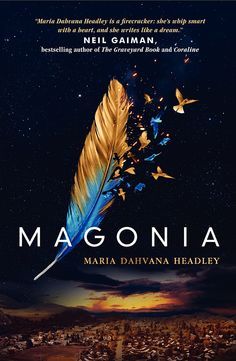
magoniaAza Ray Boyle can’t breathe. It seems like she has always been sick- inexplicably short of breath and weak.

This continuous illness has made her always feel different from the people around her. But, perhaps, there are stranger and more exotic reasons why she is different. Ones that Aza can’t even imagine…

Jason is Aza’s dearest friend. They are so close that they almost speak their own language.

He realizes there is more to Aza than meets the eye. How will Jason handle it when he discovers the shocking truth?

This young adult fantasy is weird, but I enjoyed it.

That’s probably because I read a lot of weird, non-fiction. The story of Magonia, a world in the sky above the every day world which we know, has shown up in some of those books.

One of those books, Passport to Magonia: On UFOs, Folklore, and Parallel Worlds, captured my imagination.

That book recounts an incident where a bunch of villagers were holding church service and they heard a crash outside. They went to investigate the noise and discovered what appeared to be a ship anchor attached to the roof of their church. It was connected to, this just blows my mind, a ship in the sky. This supposedly happened in 1211 AD.

The astonishing thing about Passport to Magonia is it has pages and pages of stories like that, eyewitness accounts of bizarre ships, people, and incidents concerning people from the sky. And they all actually happened, reportedly.

I remember thinking that an author needed to get her hands on these stories and turn it into something fantastic. Maria Dahvana Headley used a different source material than the book that I read, but does a good job bringing a mysterious blip in history to life.

She has the ability to interweave actual events with fantasy fiction story lines so that the two begin to blur in the reader’s mind.

I read Headley’s first book Queen of Kings years ago and I remember being struck by its originality.

Headley took Cleopatra’s life and turned it into a vampire story. It sounds sort of silly described that way, (oh, ANOTHER vampire story) but it is actually rather fun.

I had read Margaret George’s The Memoirs of Cleopatra shortly before Queen of Kings so I had a pretty good idea of the actual story of the Egyptian queen.

Back to this book, Magonia isn’t going to appeal to everyone.

I was, at first, rather turned off by the uber-intellectual back and forth conversations of the main characters- Jason and Aza.

I think, since the mega success of John Green’s The Fault in Our Stars, authors make their teenage protagonists so brainy and well-spoken, it is just unbelievable.

I mean, it’s been awhile, but I remember high school. My peers and I were lucky if we could string two cogent sentences together, let alone present verbal dissertations on the meaning of pi.

Anyway, once I was able to look past their flowery repartee, I got really into the story.

Headley paints a magical and dangerous world.

If you enjoyed Magonia, you may also enjoy The Mermaid’s Sister or Under the Empyrean Sky. Both are young adult novels and take place in fantasy worlds that are so close to the world we know, but different in surprising ways.

Check out my review of Aerie, the sequel to this book.

Thanks for reading!

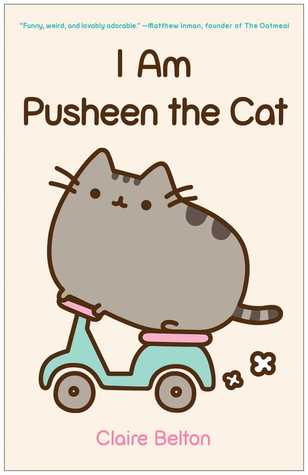
I am Pusheen the Cat by Claire Belton

I am Pusheen the Cat by Claire Belton
pusheen

As I’ve mentioned in a few other reviews, my nine year old hates to read. It breaks my heart. I’m constantly searching for titles to pique her interest and I struck gold with this little book, I am Pusheen the Cat.

Usually, when I bring a book home from work for her, she takes one look at the title and then puts it on her desk…where it sits, until I have to take it back to the library again. This one was a completely different experience. I handed it to her. She sat down. She opened the book and read it cover to cover right then. I was blown away. Seriously, you could have picked my jaw up off of the floor.

There’s no story to this book. It’s just a series of cutsie pictures of Pusheen and her sister, Stormy. There are, however, some tricky vocabulary words thrown in like “inconvenience” or “procrastinator”. I was in mommy/librarian heaven, helping her sound out the words and explaining what they meant. I can’t say enough how much it meant to me to find something she liked, no, loved.

For me, I am Pusheen the Cat is a three star book at most. It’s cute, sure, but that’s about it. For my child, however, this is the holy grail of graphic novels. If you have a reluctant reader, I can’t recommend it highly enough. In fact, I may pay this book the ultimate compliment (in my mind) and purchase a copy of it for my home. Coming from a public librarian, that’s high praise indeed.  Thanks for reading!

The Red Queen by Christina Henry

The Red Queen by Christina Henry

redqueenThe second book in The Chronicles of Alice is scheduled to be published on July 12th.
Though it lacked the grittiness and extreme horror of Alice, Red Queen is a fantastic second effort by Henry. We’re reintroduced to Alice and Hatcher as they escape the City and make their way into the wilderness, on a hunt for Hatcher’s long lost daughter, Jenny. Magic, danger, and monsters wait on the path ahead, but those things are nothing compared to what Alice and Hatcher bring with them in their own damaged and twisted minds.

Cheshire, one of my favorite characters, gives a quick summary of the first book in the beginning of this one, in case you didn’t get a chance to read it:“Hatcher and Alice escaped from the hospital, and traveled through the Old City in search of their pasts and in search of a monster called the Jabberwocky who made the streets run with blood and corpses.” The girl shuddered. “I know about him… What about Alice? Did she have a happy ending?” “I don’t know,” Cheshire said.”

Henry weaves enough of the classic tale into her story so that you know that it is a retelling, but still manages to introduce enough original elements in to make it feel entirely new. Like the toll that magic takes on the people who wield it, something that Carroll never addresses: “Maybe power corrupts them,” Alice said. It was a frightening thought, one that made her suddenly reluctant to try any magic at all. She’d spent years under the influence of drugs that made her think she was insane. She was only just learning who Alice was, what it was like to be her own self. She would rather use no magic at all than become some one unrecognizable.”

The world that Hatcher and Alice inhabit feels like the real world in that, there are no guarantees of happily ever after for the main characters. It’s reminiscent of George R.R. Martin in that, Henry makes you feel truly concerned that either Alice or Hatcher are going to be struck down at any moment. But, Henry actually manages to tell a story in 300 or so pages, something that Martin can’t do. Not that I’m bitter or anything… : “The world gobbles us and chews us and swallows us,” Hatcher said, in that uncanny way she had of reading her thoughts. “I think happy endings must be accidents.” “But we hope for them all the same,” Alice said.” I do too.

Alice really comes into her own in this story. She’s brave, but fragile- a damaged hero but resilient. If you’re looking for a strong female protagonist, you’ll find one in this book: “Alice thought, my magic doesn’t seem to be good for much at all. And there is no one who can help me learn, for all the Magicians I have met have been mad or cruel or both. I was mad once too, but it doesn’t seem to have taken properly. I didn’t come out of the hospital with any powerful powers.” Or did she?

This passage summed up the book for me: “This is really all very strange,” Alice murmured. “One of the strangest things I’ve seen, and I have seen lots that is strange. More than my fair share, as a matter of fact.”

Highly recommended for adult readers who enjoy dark fairy tales, magic, and transformation through suffering. I’ve really become a fan of Henry and I can’t wait to see where she takes this story next. If you enjoyed this tale, you may want to try The Library at Mount Char by Scott Hawkins or The Circle by Mats Strandberg.

Thank you to NetGalley and Ace Publishing for a free digital ARC of this book. And, thank you for reading!

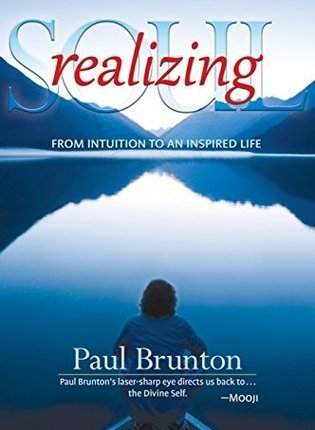
Realizing Soul — From Intuition to an Inspired Life by Paul Brunton

Realizing Soul — From Intuition to an Inspired Life by Paul Brunton

Paul Brunton was an English philosopher who dedicated his life to the spiritual journey.

Photo by Jonas Ferlin on Pexels.com

I had never read the teachings of Brunton before Realizing Soul and I found him to be very similar to Eckhart Tolle or, interestingly enough, Abraham Hicks.

He was like Eckhart Tolle in that he stressed the importance of the Now moment.

Brunton was like Abraham Hicks in that his description of the “Oversoul” could walk hand in hand with Hick’s “Vortex of Creation”. In fact, in my mind when I was reading this, I just substituted Oversoul for Vortex because I was more familiar with Hick’s thoughts on the matter than Brunton’s.

There is quite a lot of information in Realizing Soul, though it isn’t very long. In fact, I wish that some of the passages had been longer. This book was mainly a compilation of ideas from many of Brunton’s different writings.

I suppose that it gives the reader a great overview of the various works but I felt that it lacked some depth because of the shortened sections which were each generally only a couple of sentences long.

Photo by ArtHouse Studio on Pexels.com

Some parts I want to remember:
“…That which he has been seeking so ardently has been within himself all the time. For there at the core of his being, hidden away underneath all the weakness, passion, pettiness, fear, and ignorance, dwells light, love, peace, and truth. The windows of his heart open on eternity, only he has kept them closed! He is as near the sacred spirit of God as he ever shall be, but he must open his eyes to see it. Man’s divine estate is there deep within himself. But he must claim it.”pg 18

“The personal ego of man forms itself out of the impersonal life of the universe like a wave forming itself out of the ocean. It constricts, confines, restricts, and limits that infinite life to a small finite area. The wave does just the same to the water of the ocean. The ego shuts out so much of the power and intelligence contained in the universal being that it seems to belong to an entirely different and utterly inferior order of existence. The wave, too, since it forms itself only on the surface of the water gives no indication in its tiny stature of the tremendous depth and breadth and volume of water beneath it…” pg 27

“What can I do to break this barren, monotonous, dreary, and sterile spiritual desert of my existence? The answer is if you cannot meditate successfully go to nature, where she is quiet or beautiful; go to art where it is majestic, exalting; go to hear some great soul speak, whether in private talk or public address; go to literature, find a great inspired book written by someone who has had the glimpses (of the divine within life).” pg 78

Photo by Dina Nasyrova on Pexels.com

“Man as scientist has put under observation countless objects on earth, in sea and sky. He has thoroughly examined them. But man as man has put himself under a shallower observation. He has limited his scrutiny first to the body, second to what thinking can find. Yet a deeper level exists, where a deeper hidden self can be found.” pg 96

For the most part, I found Realizing Soul to be very beautiful and rich in meaning. There were some bits on karma and ego illusion that didn’t really resonate with me, but that doesn’t mean that it won’t speak to others.  If you want more of Brunton’s writings, they can be found online for free at this website: http://www.paulbruntondailynote.se/

If you enjoyed this book, you may want to listen to some of Eckhart Tolle’s lectures like Even the Sun will Die, Gateways to Now, or pick up the book, Stillness Speaks. Readers may also enjoy The Art of Living and Dying: Celebrating Life and Celebrating Death by Osho.

Thanks to the Goodreads First Reads program for a free copy of this book.  And, thank you for reading!

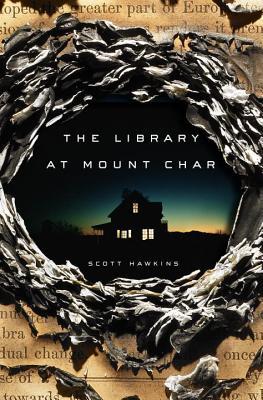
The Library at Mount Char by Scott Hawkins

The Library at Mount Char by Scott Hawkins

Review on Reread, August 2025: It has been ten years since I first read The Library at Mount Char (my original review may be read below this one). I think the book has held up incredibly well in the decade since its publication. Well done, Mr. Hawkins.

Rather than rehashing the plot, I’d like to take a moment to address a theme that I didn’t touch on my last review. If the spirit (or soul, if you will) of a person is truly immortal and said person, through magic or a technology so advanced that it appears as magic, does not die but instead lives on and on for 50 to 60 thousand years, what effect, if any, would this unnatural longevity of the body have on the spirit? What if the spirit retains all memories of this elongated life? How would that change their behavior in their every day interactions with other, non-immortal, beings?

My partner and I have discussed the potential devastating consequences of such a thing when considering the longevity of elves in Tolkien’s classic work The Lord of the Rings or the twisted upper class in the series Altered Carbon. The way I see it, the elves would probably start to lose the plot around year 150 or so and then it would be all downhill from there. Why? Imagine, if you will, the hurts, slights and every day micro-traumas that can cause such damage in a normal lifespan being extended over thousands or tens of thousands of years. How could someone possibly deal with such a thing and not lose their minds? My contention is that they can’t.

Yes, we are talking about magical beings with, I’m assuming, some sort of safety valve to the normal wear of time on the spirit. But what if there was no safety valve? What if, as time marched on and on for these beings, they became more and more removed from their elvishness (or in The Library of Mount Char and Altered Carbon, their humanity) and instead became aloof, immortal beings who would stop at nothing and have all of the resources in the universe to achieve their aims.

One might observe them abusing the beings around them because they no longer have the ability or desire to empathize with other flawed beings who are still existing in time. Or maybe they forget their reasons for wanting to change their world around them in the first place and become overly fixated on their own viewpoint to the detriment of all others.

Or maybe, just maybe, they can’t let go of what happened in the past and they make their current reality into a reoccurring nightmare of past traumas, perpetuating the cycle subconsciously into not only their future but everyone else’s too.

My point is, I believe physical death happens for a reason, perhaps a reason that we do not yet understand, but maybe it has something to do with the rehabilitation of the spirit that occupies the body more than the limitations of physical reality. As humanity develops more and more sophisticated methods for extending our lives (one thinks on a certain conversation two world leaders had recently about organ transplants), I think we should consider the potential spiritual cost of these strategies not only for those who are unable to afford such things but also for those who partake in them. What sorts of emotional baggage or past traumas are being dragged kicking and screaming into the future?

The Library at Mount Char could be read as a warning for the fantasy of the immortality of the body. At what point in a life that spans eternity does a person change from a person into something else? Does immortal life make one a god or simply a mortal who has outlived their own time?

I don’t know the answers to these questions. I invite you to give this book a read and let me know what you think. It really is worth the read and I highly recommend it.

Thanks for reading.

Original Review, May 2015: The Library at Mount Char is an urban fantasy/horror novel about Carolyn and her adopted “family” who are studying the seemingly endless knowledge of an immortal being that they call “Father”. The lessons that they learn are terrifying but powerful. After years of fear and torture at the hands of the Father and some of her siblings, Carolyn wants to break free from her living nightmare. She knows that she can’t trust anyone, but she also doesn’t know all of her Father’s secrets. How exactly does one escape from a god?

I think that this book is fantastic. The characters are more than human and divinely flawed, all of them. The plot proceeds at a breakneck pace, going from thrilling to apocalyptic so quickly that I couldn’t put this book down. Yes, I lost some sleep reading The Library at Mount Char. If you pick this up, I bet that you will too.

Sensitive readers, beware.  There is sexual violence/rape, physical abuse, mental abuse, and animal abuse in this book.  If any of those topics cause troubles for you, you may want to choose a different read.

The distinctive mix of godlike powers and very human, emotional, knee jerk reactions contained in this story reminded me of some of the darker Greek and Roman mythological story elements like the serial rapists (Zeus and about every other major god figure) and the unjust punishments of the innocents (Medusa, Actaeon, Laocoon, etc etc). Those mythologies were written to explain the unexplainable workings of nature, weather, time, and humanity itself. I think, if one makes The Library at Mount Char into a metaphor for reality, that in a modern way, it fills the same role as those more ancient stories. It gives a rhyme and reason to the mystery that is life. Pretty deep for a debut fantasy novel, yes?

Some of the twists I saw coming, but others, some of the big ones, I didn’t. It kind of reminded me of an M. Night Shyamalan film, except instead of one gasp worthy moment, there were maybe six of them. After each one, I’d sort of put the book down for a second and start to rethink the story from the new vantage point that the author had just provided. It’s really an amazing work for a first novel. Maybe Hawkins will give the world a series?? Please. I’d read it.

Thank you to the Goodreads First Reads program for an advance reader copy of this book.  And, thank you for reading!

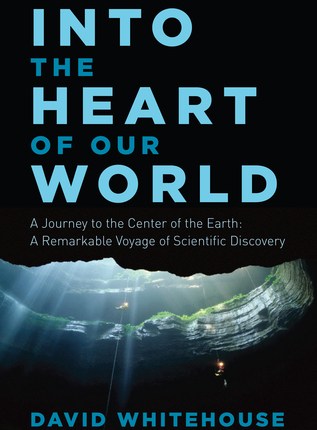
Into the Heart of Our World — A Journey to the Center of the Earth: A Remarkable Voyage of Scientific Discovery by David Whitehouse

Into the Heart of Our World — A Journey to the Center of the Earth: A Remarkable Voyage of Scientific Discovery by David Whitehouse

Into the Heart of Our World-A Journey to the Center of the Earth: A Remarkable Voyage of Scientific Discovery is a mind boggling, hypothetical journey into the world beneath our feet. Whitehouse, an astronomer, has bottled the wonder that he feels for the stars and channeled it into exploring the depths below. Though the science in this book went above my head at times, I enjoyed learning about Earth and its secrets. Into the Heart of Our World would make a great documentary.

Here are the parts that I loved the most:
Whitehouse was discussing the chemical composition and age of some of the oldest rocks on earth: “If the life of the Earth was represented by a day then mankind appeared just twenty seconds before midnight. These rocks have been waiting since about 1 a.m.” pg 52, advance reading copy

On a discussion of plumes beneath the Earth’s surface: “The big question is: can we see mass extinction events on the way up? Some scientists believe we can by looking for the plumes. Such a thing is seen in the south-west Pacific near the Fiji Tonga subduction zone. It’s 700 km deep, has a structure consistent with a massive temperature anomaly and may be rising. It could render the Earth uninhabitable for humans and it will reach the surface in an estimated 200 million years.(!!!!!?!????!!)” pg 146, advance reading copy, emphasis mine

About the core of the Earth: “”The core…is larger than the planet Mars and far more alien. It has one-sixth of the volume of the Earth yet one-third of its mass, and it is liquid, dense yet not thick. If you donned super-protective gloves you could run your hands through it like water. It is this liquid- molten iron, nickel, and a few other elements- that profoundly affects the nature of our planet and protects us from the harshness of the cosmos. In the mantle we suspect that there may be aspects of the subduction cycle that are important for life on the surface. But in the liquid core we have no such doubts. We are certain that life on our planet could not have survived without it, for out of its liquid motions emerges our great protector- the Earth’s magnetic field.” pg2 158-159, advance reading copy.  Who knew?

In a discussion of the magnetic field, some medieval beliefs about magnets:“In the thirteenth century Bartholomew the Englishman (c. 1203-72), author of the book On the Properties of Things, said that ‘This kind of stone restores husbands to wives and increases elegance and charm in speech. Moreover, along with honey, it cures dropsy, spleen, fox mange, and burns… when placed on the head of a chaste woman causes its poison to surround her but if she is an adulteress she will instantly remove herself from bed for fear of an apparition.” pg 167, advance reading copy. Behold the power of magnets.

One last bit of Into the Heart of Our World that was special to me on a personal level: “The oldest working seismograph, over a hundred years old but still fully operational, can be found at the university of Gottingen. It is the work of Emil Wiechert (1861-1928) who was the world’s second professor of geophysics.”pg 80-81, advance reading copy. My husband, a Geiger, is related to the man who created the Geiger counter. I’ve always felt that my family was a bit lacking when it came to scientific contributions. But now, I find out, there’s a geophysicist in the family! In your face, Geigers! :p

If you enjoyed Into the Heart of Our World, you may want to read What If by Randall Munroe or Rust: The Longest War by Jonathon Waldman.  A big thank you to Goodreads First Reads program for a free advance reading copy of this book.  And, thank you for reading!

Confessions of an Unlikely Runner by Dana Ayers

Confessions of an Unlikely Runner by Dana Ayers

Confessions of an Unlikely Runner filled me with hope. Hope that one day, I too with my sporadic training style and bookworm tendencies, could stumble my way through a race longer than a 10k at, if not respectable pace, then at least a step above sedate. Ayers is funny, candid, and self effacing in Confessions, her sports memoir.

She gives tips and tricks from her many years of race running as well as humorous stories to comfort and amuse struggling athletes. I liked her writing style immediately. It’s down to earth and genuine. This book is appropriate everyone but I think that the beginner to intermediate runners will enjoy her humor the most.

Ayers’ thoughts about running: “Running as helped me deal with coworkers and break-ups, has taught me what I’m capable of physically and emotionally, has introduced me to some fascinating people, and has taught me how to accept support. Of course, it’s also gotten me electrocuted…” pg 3

How she stumbled into marathon running: “I honestly don’t remember how I decided on a marathon as my weight-loss enabler. I searched through old emails and found one I’d written on November 15, 2009, to my friend Kami. The subject line just said, “Marathon,” and the email started with, “I may want to do one. Haha.” pg 17

On running at the back of the pack: “But being slow has its perks. Races are like mullets: business in the front, party in the back.” pg 28 Cracked me up.

On cross-training, here Ayers describes her first CrossFit class: “At some point during my last rep, my contact lens slipped off my eye. Even my eyeballs are working in this class. I had to walk back out past the MMA testosterone ring to get to the ladies’ room to fix it, and that’s when I realized I could no longer straighten my arms. I was walking like a T-Rex and couldn’t help it. I won’t be joining a CrossFit gym anytime soon.” pg 91

I’m seriously considering purchasing one of my sisters this book- it’s hilarious and uplifting. If you enjoyed Confessions of an Unlikely Runner, you may also like Down Size: 12 Truths for Turning Pants-Splitting Frustration into Pants-Fitting Success by Ted Spiker or Running Like a Girl by Alexandra Heminsly.  Thanks for reading!

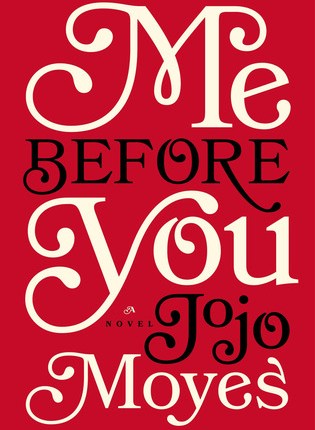
Me Before You by Jojo Moyes

Me Before You by Jojo Moyes

Dear readers, warning!!  I don’t usually put spoilers in my reviews, but I had to in this one to discuss it properly.  Please do not read this if you haven’t read the book yet.

Time to talk about Me Before You. This is a difficult one. Louisa (Lou) Clark recently lost her job. She needs another one, quick, before her family loses the house. Will Traynor used to be an active, world traveling, 1%er, but, after a terrible accident, he’s stuck in wheelchair and suffers each day as a quadriplegic. Both Lou and Will are damaged in their own way, but they make life better for each other.

Me Before You addresses the difficult issue of assisted suicide, so if you have trouble reading about that topic, steer clear. There’s also some flashbacks to a rape, so another warning, for folks who are triggered by such things.

I didn’t struggle with either of those topics, but it bothered me that the author painted such a bleak world for Lou. Her family doesn’t treat her well, her boyfriend, Patrick, doesn’t treat her well, and, in consequence, she doesn’t treat herself very well. I realize that the point of the story is how Will changes Lou’s view about the world and herself but it is awfully depressing.

And then, of course, I hated the ending. After everything they go through, Lou’s love isn’t enough? Yeah, I didn’t like that. You’d think Will would see how he made such a difference in one person’s life and realize that he could help many, many more people, if he could just see his world as larger than his body, but no. This book didn’t make me cry, I just felt awful. Seriously, awful. Stomach hurting, headache inducing, post-book depression, awful. So, you may not want to read Me Before You if you’re feeling down before you begin. It’s not a happy book.

Moyes does a great job with the characterizations. Here is Lou explaining how badly she misses her job: “Unemployment had been a concept, something droningly referred to on the news in relation to shipyards or car factories. I had never considered that you might miss a job like you missed a limb- a constant, reflexive thing. I hadn’t thought that as well as the obvious fears about money, and your future, losing your job would make you feel inadequate, and a bit useless. That it would be harder to get up in the morning than when you were rudely shocked into consciousness by the alarm.” pg 30 ebook Dealing with some unemployed depression at my house right now. That passage rang some bells for me.

Will’s mother, Camilla, is also a major figure in the story. Lou describes her here: “I wanted to say: Well, here I am, being cheery every ruddy day. Being robust, just as you wanted. So what’s your problem? But Camilla Traynor was not the kind of woman you could have said that to. And besides, I got the feeling nobody in that house ever said anything direct to anyone else.” pg 71 ebook

Lou’s perception of time when caring for an ailing Will: “There are normal hours, and then there are invalid hours, when time stalls and slips, when life-real life-seems to exist at one remove. I watched some television, ate, and cleared up the kitchen, drifting around the annex in silence.” pg 90 ebook When my child gets sick, I’ve experienced that strange “between time” too.

Camilla’s frustration as a town magistrate: “It’s quite hard to stay calm and understanding when you see the same faces, the same mistakes made again and again. I could sometimes hear the impatience in my tone. It could be oddly dispiriting, the blank refusal of humankind to even attempt to function responsibly.” pg 112 ebook I feel that sometimes at my job. Why can’t folks learn how to use a copier! Sigh.

I laughed when Lou went to the library for the first time in years and was surprised by what she found. I think it makes a statement for the evolution of library systems: “It wasn’t what I remembered. Half the books seemed to have been replaced by CDs and DVDs, great bookshelves full of audiobooks, and even stands of greeting cards. And it was not silent. The sound of singing and clapping filtered through from the children’s book corner, where some kind of mother and baby group was in full swing. People read magazines and chatted quietly. The section where old men used to fall asleep over the free newspapers had disappeared, replaced by a large oval table with computers dotted around the perimeter. pg 141 ebook. My section! “A librarian stopped by my table, and handed me a card and a laminated sheet with instructions on it. She didn’t stand over my shoulder, just murmured that she would be at the desk if I needed any further help..” pg 141 ebook. If Lou had grown up in my town, that would be me!

The key to Lou’s character, in my opinion: “It felt like I was living a life I hadn’t had the chance to anticipate.” pg 234 ebook  I think a lot of people are like that, sort of stumbling through life without goals or dreams of any kind. For her, love was the key to turning that around.  If only more people could be that fortunate, without the abrupt ending.

If you enjoyed Me Before You, you may want to pick up The Fault in Our Stars by John Green or If I Stay by Gayle Foreman. All of which have film adaptations: so, read the book first, then keep those kleenexes close for the movie.

Thanks for reading!

The Introvert’s Way by Sophia Dembling

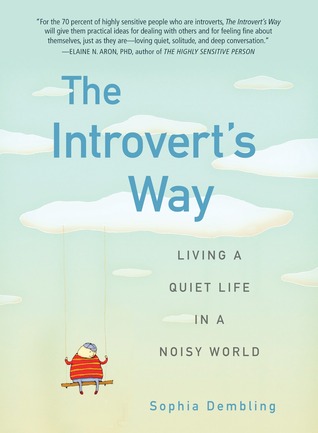
introvertThe Introvert’s Way: Living a Quiet Life in a Noisy World is a collection of Dembling’s blog posts about introversion. She talks about how introverts are different from extroverts, how we rub each other the wrong way, and how, with some understanding on both sides, we can all get along and thrive.  It’s engaging, but she writes as the royal “we” which I found distracting. No one has the authority to speak for introverts as a group. Right, introverts? *crickets*

I loved how she cleared up some rather major misunderstandings that I’ve been running into my entire adult life, like this one: “When we want to, not-shy introverts can nut up to the task of being charming and witty. We can meet new people. We can start conversations and keep them rolling, and even draw shy people out, since we’re good at not getting up in anyone’s face and we’re patient listeners… Introverts who are not shy are used to being told that they could not possibly be introverts. This can be irritating, but think of it as a teachable moment.” pg 16-17

Dembling gives some concrete ways in which introverts can improve their social skills: “If you’re misinterpreted more often than not, you might need to give some thought to what your quiet is telling people. When you are sitting quietly, try to parse what kind of quiet you’re feeling. “Leave me alone” quiet is different from “thinking hard” quiet, which is different from “enjoying watching the scene” quiet, which is different from “I’m totally overwhelmed, get me out of here” quiet. Once you have a sense of what you want to project, consider your body language. pg 37 My husband has expressed to me, many times, that he can’t read my “quiet”. This can be problematic because when I’m upset, I withdraw completely and, if he’s not paying attention, he misses the whole thing. Maybe I should make some signs…

“…with our deep listening habits and our hyperawareness and sensitivity, introverts are particularly susceptible to being sucked into the vortex of other people’s demands and expectations, which can cause us to keep going long after we are completely drained of energy.” pg 55 This is a legit problem. I’m from a large family of extroverts and I’ve learned that I have to draw very clear boundaries to preserve my space. There’s an assumption that if I’m home that I’m not doing anything “important” and I should be willing to go out and do whatever it is that they’re doing. Annoying. I know that they do it out of love and the desire to make me feel included, but sometimes, most times really, I just want to be left alone.

This, just this: “Nine out of ten introverts agree: the telephone is the tool of the devil.” pg 64 End of story. I can never think of anything to say while I’m on the phone, but after I hang up, I think of ten million things I could have said. It’s a vicious cycle of terror and then regret. I’m over it.

Dembling’s “Affirmations for Introverts” are excellent. Here’s my favorite: “I know what I need better than anyone else.” pg 179

It was encouraging to read about how some of my major personality quirks, which I have always viewed as flaws, are not really stumbling blocks at all. It’s just how I interact with the world. I’m very fortunate in that my friends and family have accepted me for who I am, for the most part, and not pushed me to be someone that I’m not. I just wish that I had been more aware of what makes me happy and not been so hard on myself for so many years because I wasn’t an extrovert. I wish I was good at parties, made small talk with ease, or lit up a room with my mere presence, but I don’t. And, at long last I realize: that’s ok.

If you’re looking for more books on this topic, try The Power of Personality: How Introverts and Extroverts Can Combine to Amazing Effect by Sylvia Loehken or The Life-Changing Magic of Not Giving a F*ck: How to Stop Spending Time You Don’t Have with People You Don’t Like Doing Things You Don’t Want to Do by Sarah Knight (not necessarily a book on personalities, but I found it useful as a technique to manage my energy).

Thanks for reading!