Night by Elie Wiesel

Night by Elie Wiesel

Night is Elie Wiesel’s memoir about his experiences during the Holocaust. It is shocking and sad, but worth reading because of the power of Wiesel’s witnessing one of humanity’s darkest chapters and his confession on how it changed him.

Photo by Pixabay on Pexels.com

In the new introduction to the ebook version I read, Wiesel talked about the difficulty he had putting words to his experience. “Convinced that this period in history would be judged one day, I knew that I must bear witness. I also knew that, while I had many things to say, I did not have the words to say them.” pg. 7, introduction

The original version of Night was written in Yiddish. I wish I knew enough Yiddish to read it. There’s something powerful about reading books in their original form.

Wiesel closes his introduction with his reasons for writing this book:“For the survivor who chooses to testify, it is clear: his duty is to bear witness for the dead and for the living. … To forget would be not only dangerous but offensive; to forget the dead would be akin to killing them a second time.” pg 12, introduction.

Even though a member of his community warned Wiesel’s village about the horrors that awaited them, they didn’t believe him.

Photo by Engin Akyurt on Pexels.com

After they were placed in a ghetto, the Jewish population of Sighet thought that the worst was behind them. “Most people thought that we would remain in the ghetto until the end of the war, until the arrival of the Red Army. Afterward everything would be as before. The ghetto was ruled by neither German nor Jew; it was ruled by delusion.” pg 26, ebook.

If I had been in their place, I don’t think that I would have acted any differently. How could one possibly imagine the horrors that they were going to face?

Wiesel is starved, overworked and beaten in the concentration camps. He loses more than his family and faith: “One day when I was able to get up, I decided to look at myself in the mirror on the opposite wall. I had not seen myself since the ghetto. From the depths of the mirror, a corpse was contemplating me. The look in his eyes as he gazed at me has never left me.”pgs 110-111 ebook.

Another Holocaust survivor’s memoir that I highly recommend is Man’s Search for Meaning by Viktor Frankl. Never forget.

Thank you for reading.

A God in Ruins (Todd #2) by Kate Atkinson

A God in Ruins (Todd #2) by Kate Atkinson

godinruinsEven though Kate Atkinson took readers back into the beautiful world that she created for the Todd family, this story wasn’t nearly as enjoyable as Life After Life.
This time, the story focused on Teddy. It is told through the mixed up timeline that I’ve come to expect from Atkinson. We get to see Teddy’s relationships, family and inner thoughts.

It didn’t have the magic of Ursula’s story, in my opinion. In Life After Life, I was enthralled. For the majority of A God in Ruins, I was not.

I was surprised that I liked very few of the characters. Viola, in particular, was awful. I realize that that is partially the point, but still- it’s hard to appreciate the story when you don’t like most of the major characters.

The writing was still lovely, but I didn’t connect to this book the way that I did with the other one. I’m rather disappointed actually.

Thanks for reading.

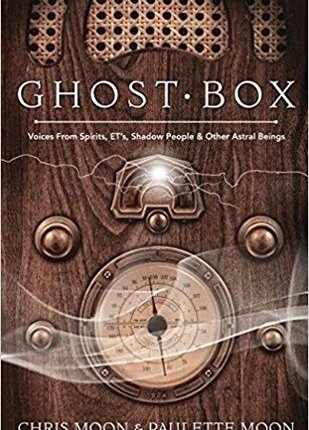
Ghost Box: Voices from Spirits, Ets, Shadow People & Other Astral Beings by Chris Moon, Paulette Moon

Ghost Box: Voices from Spirits, Ets, Shadow People & Other Astral Beings by Chris Moon, Paulette Moon
ghost box

Ghost Box is Chris Moon’s collection of paranormal investigations that he has conducted using electronic voice phenomena (EVP) and his own intuitive skills.

There is little to no science presented in this book so if you’re interested in the tech-side of paranormal investigation, you’ll have to keep looking.

Readers who want concrete information about the afterlife may grow a tad frustrated with this book. The majority of Moon’s investigations are conducted through feelings and feedback from the people he’s interacting with.

That’s not to say that he doesn’t have some solid hits. Occasionally, the information that he receives through his “ghost box” is absolutely spot on. It gave me the chills.

I watched a documentary once about Mario Bacci, an Italian man who has been receiving other worldly voices through an old radio for years. He has a group of devoted followers that gathers around him to hear his sessions with his own “ghost box”. They claim to hear their deceased family members through Bacci’s radio.

That documentary convinced me that this phenomena is real because of how the people reacted when they heard the noises coming through the radio.

Moon had his doubts at first too. When he first receives the box, he doesn’t think it will work. But, through using it and the evidence it provides, he becomes convinced that it is the real deal too.

Photo by Igor Mashkov on Pexels.com

“The machine facilitates real-time two-way communication with the spirit world and, as soon as my dad and I experienced it in action, we knew it would revolutionize the paranormal investigation field.” loc 95, ebook.

He receives this machine from Frank Sumption- an electrical tech who claims to have completed Thomas Edison’s ‘Telephone to the Dead.’

I didn’t even know that was a thing. “Apparently, Edison’s mother was a Spiritualist and he was very close to her. After her death, Edison started to re-examine his views on the afterlife. He realized that since energy could neither be created nor destroyed and that it could only change form, we humans (being energy) had to go somewhere.” loc 224. Fascinating.

The rest of the book, including aliens speaking through the ghost box and sightings of shadow people, I didn’t connect with as much. But, if you’re interested in that type of information, Moon’s book might be something that you’d really enjoy.

Thank you to NetGalley and Llewellyn Publications for a free digital copy of this book. Reminder: the brief quotations that I pulled for this review may change in the final printed version.

Thanks for reading!

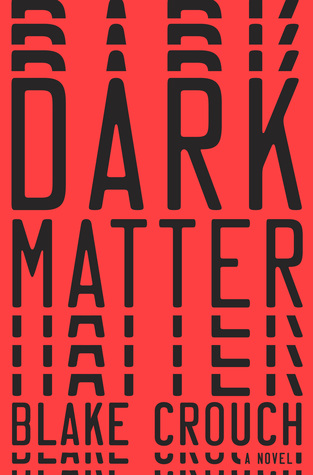
Dark Matter by Blake Crouch

Dark Matter by Blake Crouch

darkmatterDark Matter is a fantastic, sci-fi read about regret, love and quantum mechanics.
My book club picked this wild ride of a book and everybody took something different out of it.

We all enjoyed it, which is weird for us. Usually, we have opinions across the spectrum. This one, though, was universally loved. That’s saying something.

“In the shadow of this moment, my life is achingly beautiful. “I have an amazing family. A fulfilling job. We’re comfortable. Nobody’s sick.” pg 28. And then, something truly surprising happens. No spoilers!

I think that, as time passes, we grow comfortable in our lives, our marriages and relationships. Part of this book is about appreciating what you may take for granted. “He says, “It’s like we get so set in our ways, so entrenched in those grooves, we stop seeing our loved ones for who they are. But tonight, right now, I see you again, like the first time we met, when the sound of your voice and your smell was this new country.” pg 67.

The leader of my book club picked quotations that had to do about self-knowing and quantum mechanics. It was no surprise that mine were all about love. I’m one of the hopeless romantics of the group.

And one of the most open-minded: “We all live day to day completely oblivious to the fact that we’re a part of a much larger and stranger reality that we can possibly imagine.” pg 96. I truly believe that.

A local physics professor joined our circle and gave a short lecture on basic quantum mechanics and wave theory. But, you don’t have to be an expert on the subject to enjoy this story. It’s approachable science, like The Martian.

Recommended for book clubs, especially, but also anyone who wants an unbelievable story will probably love this too.

I heard that this is going to be made into a film- read the book anyway. It’s always better.

Thanks for reading!

Life After Life by Kate Atkinson

Life After Life by Kate Atkinson

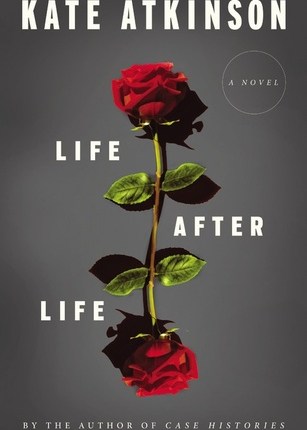
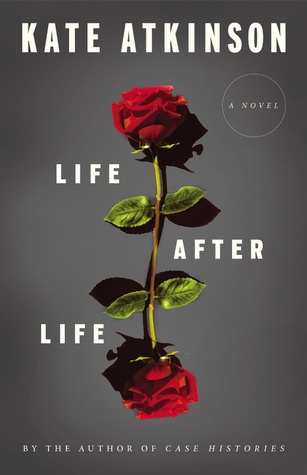
lifeafterlifeA lovely and unusual book about reincarnation, free will and destiny.

Ursula Todd was born on a snowy day in February with the umbilical cord wrapped around her neck. That was the first time she died…

I loved how Kate Atkinson built this story through seemingly insignificant details. As the reincarnations progress, layers are added upon layers, so that by the end of this tale, it is a rich tapestry of events, emotions and possibilities.

I was surprised by the open-endedness of this story. I feel like Atkinson wrote a tale that reads like real life- it has the meanings that we assign it. Nothing more, nothing less.

I listened to the audiobook of Life After Life and it was very good. A few times, I wished that I had the physical book in front of me so that I could double check a date or detail. Other than that, the narration was excellent.

This story has me wondering about life, reincarnation and all of it. If, as so many world religions say, there are parts of us that are immortal, wouldn’t we all go a bit bonkers after millennia of existence? Would we get bored of it? Would we ever choose to not come back? What’s the bigger picture?

Anyway, this book will make you wonder, question and dream about existence. Which, in my mind, is one of the highest functions of a book.

Recommended for fans of historical fiction, spirituality and life itself. I think Atkinson has written a masterpiece.

Thanks for reading!

The Annotated Sandman, Vol. 1 by Neil Gaiman

The Annotated Sandman, Vol. 1  by Neil Gaiman

sandmanIn Sandman, a powerful group of mortals is trying to trap Death itself. Instead, they catch another important figure, the Lord of Dream. This volume details the Lord of Dream’s struggle to reassert his power after being locked away for so many years.

He’s lost his symbols of authority, which are literally pieces of his power. So, he needs to get those back.

Also, the denizens of the realm of Dream have gone off the rails since their lord has been missing. Some of these are nightmare creatures- fatal to humankind. This isn’t going to be simple.

Sandman, Vol. 1 was very dark. Neil Gaiman is known for his dark fantasy, but there are usually moments of light. In Neverwhere or The Ocean at the End of the Lane, there is darkness, but nothing like this.

Within these pages, there’s serial killers, child abusers, psychotic mental ward escapees, kidnapping rapists- one after another in a seemingly endless parade. It’s a lot to take.

I found I wasn’t a fan of the Lord of Dream himself. His immortal nature has made him unable to understand emotions or even desire to. I suspect that subsequent volumes deal with this exact issue. But, he’s rather unlikeable in Vol. 1.

I really disliked the way he treated women- in multiple relationships. The worst being Nada. Again, I’m guessing that this is a story of redemption. But in that one moment, no spoilers but readers know what I’m talking about… his behavior was unforgivable.

Honestly, I liked Watchmen more. So far. The characters in that tale weren’t necessarily likeable either. I suppose we’ll have to see how the story develops in the next volume.

Recommended for graphic novel readers who like their stories gothic, mythical and with a sprawling storyline.

Thanks for reading!

Gather the Daughters by Jennie Melamed

Gather the Daughters by Jennie Melamed

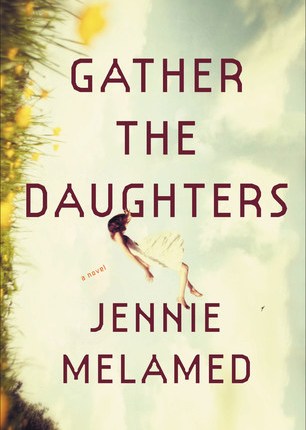
Gather the Daughters is about a small community that lives with no electricity or modern conveniences on an island. They have a church made of stone that sinks into the ground and a holy book written by “the ancestors.” These ancestors are saint-like founders who, according to tradition, fled the wider world to preserve the human race during an apocalypse.

Traditions are dark and strange on the island, but not questioned because they were written by the ancestors.

Photo by Ingo Joseph on Pexels.com

The tale is told from the viewpoint of four girls: Vanessa, Caitlin, Janey and Amanda.

From the fires of wickedness we grew forth, like a green branch from a rotten tree,” he reads. “From the wastelands of want came the hardworking men of industry and promise. From the war-stricken terror came our forefathers to keep us safe from harm.” Like everyone else, Vanessa mouths the words along with him. loc 122, ebook.

Because of the small number of people on the island, everyone has an assigned job- that they keep for life. Reproduction, meetings and courtships are also controlled by tradition.

Sometimes the way things are done seem irrational or cruel, but the community does not change. Take the perpetually sinking church: “Every ten years or so, when the roof is almost level with the ground, all the men on the island gather to build stone walls on top of it, and the roof becomes the new floor. Vanessa asked Mother why they couldn’t just use wood, but Mother said it was tradition, and it would be disrespectful to the ancestors to change it.” loc 229, ebook.

Photo by Zac Frith on Pexels.com

Similar to The Handmaiden’s Tale, Gather the Daughters is ultimately about what happens when society dictates and controls relationships, sexuality and education through religious doctrine. It is also examines the male/female balance of power.

Gather the Daughters is a gripping read. But not mysterious. It was fairly clear in my mind from the start where this story was headed, but I cared about the main characters. They have heart and I couldn’t help but want them to live in a better world than the one they were born into.

I could see this being a great choice for book clubs. There’s plenty to talk about, especially with character motivations and the structure of society.

Photo by David Bartus on Pexels.com

Reader warnings: survivors of childhood sexual abuse could be triggered by this read. There are also some domestic violence scenes.

Thank you to NetGalley and Little, Brown and Company for a free advance reader’s copy of this book. Reminder: the short quotations that I pulled for this review may vary in the final printed version.

Thanks for reading!

The Mapmaker’s Daughter by Katherine Nouri Hughes

The Mapmaker’s Daughter by Katherine Nouri Hughes
mapmaker's daughter

A fascinating peek into the 16th century world of the Ottoman Empire. The story is told through the memories of a woman who is dying and recalling the circumstances that brought her to where she is now. Her extraordinary life included being kidnapped by pirates, educated with a prince and joining the royal family of Suleiman “the Magnificent.”

All of this as a female in the 1500s! Katherine Nouri Hughes, the author, admits that there are so few records of her life that Cecilia Baffo Veniero, called Nurbanu, was a blank slate.

But, Nurbanu actually existed. Hughes gives her a life of mystery, dizzying highs, lows, and riches beyond imagining. I loved it.

And, I learned so much from this story. Admittedly, my historical fiction preferences seem to run towards the Roman Empire or Tudor England. Perhaps it was time I branched out.

For example, did you know that there was a law for when the heir to the Sultan took the throne, that all of his brothers were killed? This was to protect the dynasty from civil war. “And to whomsoever of my sons the Sultanate shall pass, it is fitting that for the order of the world he shall kill his brothers. That law has held us together; secured our Empire; made us who we are…” loc 127, ebook.

Beyond the obvious reasons, this was particularly awful because the Sultan tended to have scores of kids. There were the usual threats of illness and the plague to consider.

Suleiman himself was a legend in his own time. “A man like no other. His titles alone told the story. … Sultan of the Two Continents, Servitor of the Two Sanctuaries, Warden of the Horizons. Suleiman the Magnificent- man and legend combined. … Imperial, mirthless, deadly pale.” loc 463, ebook.

He ruled an empire and his children. According to Hughes, he was heavily influenced by his favorite wife, Hurrem, who is a colorful character in this story.

Nurbanu is fortunate because, when she is captured, she was already well-educated. “I’d been assigned to the Head Scribe herself without question because I was educated. That was what Barbarossa had said at the presentation. ‘She can read.'” loc 482. That saves her from more gruesome fates within the harem.

But it doesn’t make her life easy. After all, she’s still a slave in the palace of Suleiman.

“I know how awful the end of fantasy is- for it steals into parts of the heart and mind where nothing should be able to go. It is driven by the heat of what we long for, and it melts all that is in its path until it comes out into the open and is exposed for what it is: something that was never true.” locs 3250-3268.

Recommended for readers who like historical fiction with a large cast of character, an exotic locale and a heroine with a quick mind.

Thank you to NetGalley and Open Road Integrated Media for a free advance reader copy of this book. Reminder- the short quotations that I used in this review may differ in the final printed version.

Thanks for reading!

Dreams 1-2-3: Remember, Interpret, and Live Your Dreams by J.M. DeBord

dreams

J.M. DeBord starts his book about dreams with the idea that dream interpretation used to be the job of a wise man or woman in the community. Dreams were an integral part of living a fully conscious and realized life.

Now, dream interpretation experts charge for their services and not everyone has access to their skills.

This clever little book opens the doors of dream interpretation so that average people can again know the meaning of their dreams. It doesn’t stop there- J.M. DeBord also provides suggestions for integrating the dreams into your daily life.

Finally, in Dreams 1-2-3, DeBord empowers readers by reminding us that no matter how expert the dream interpreter, the final meaning for any dream really rests in the hands of the dreamer herself. Only she can feel the “ringing of truth” in the interpretation.

This is by far the best book that I have ever read on dream symbolism. DeBord doesn’t provide lists of animals/colors/scenarios and their most common meanings. He ties whatever shows up in the dream to the rest of its contents and the dreamer’s own internal and external world.

Photo by Ylanite Koppens on Pexels.com

In this way, each dream can be understood and applied in as unique a way as the dream itself.

My one critique of Dreams 1-2-3 is that DeBord made the process seem so simple. I’d read the dream example and think, I have absolutely no clue what that one means, and then DeBord would go on to provide a crystal clear interpretation.

See how simple it is?… he seems to say. Perhaps not.

DeBord may have a gift for it, honed by practice, and he doesn’t realize that what he is doing is rather amazing. I suppose he gives me a goal to strive towards.

I have had a few dreams since completing this book and, with DeBord’s method, have been able to wring some meaning from what I otherwise would have assumed to be nonsense. Dreams 1-2-3 has already changed my life. Read it if you want to change yours too.

Thanks for reading!