Bringing the Tarot to Life: Embody the Cards Through Creative Exploration by Scott Martin

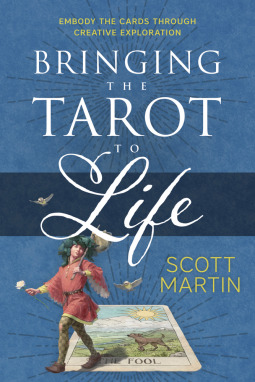
Bringing the Tarot to Life: Embody the Cards Through Creative Exploration  by Scott Martin
bringingthetarot

Bringing the Tarot to Life is a unique tarot manual that invites the reader to use her own imagination in assimilating and interpreting the cards. I’ve never read anything quite like it.

Scott Martin was an actor and theater teacher for many years. “It struck me that just as an actor delves into his character, so a student of the tarot can explore the archetypes that are represented in the seventy-eight cards in the tarot. He can develop his intuitive abilities by participating in the written and performance exercises an actor uses to hone his talent and to create his role in a play.” loc 112-128, ebook.

He based the first two sections of the book on that idea and created a series of theater-inspired games and exploratory exercises to be played in groups or alone.

The last portion of the book consists of Martin’s interpretations of the cards. I found that section to be the least interesting, but there could be descriptions in those pages that others may not have heard. So, don’t let me deter you.

There was also some trivia included for tarot enthusiasts. Something that I didn’t know was that before Paul Foster Case helped to form The Golden Dawn, he was in theater.

Paul Foster Case became interested in tarot in 1900 when someone asked him where he thought playing cards came from. … Prior to that, he was actively involved in the theater. He was the musical director on a showboat and later worked in musical theater and vaudeville.” loc 128, ebook. But old man river, he just keeps rolling along…

Photo by Mikhail Nilov on Pexels.com

I agreed with Martin’s thoughts on improving your intuition: “How does one develop his intuition? One obvious answer is to expose the mind to more creative and imaginative ways to thinking and looking at the world. Creativity and intuition are inextricably linked.” loc 164. Indeed.

My favorite of the exercises presented in this book is “I Am What I Do” loc 231, ebook. It encourages readers to assign jobs to the different cards.

“Many people in life, as well as characters in plays, define themselves to a great extent in terms of what they do. … the possibilities are virtually limitless: The Ten of Pentacles- a family counselor. The Five of Swords- a crooked hedge fund manager. The Knight of Cups- a poet.” loc 231.

I thought that was hilarious. And, I was looking at the cards in ways that I never had before. Talk about ‘Bringing the Tarot to Life’!

Recommended for beginners or advanced practitioners of tarot cards. Every reader will most likely find an exercise or two to their liking because of the huge variety Martin offers.

Thank you to NetGalley and Llewellyn publishing for a free digital advance reader’s copy of this book. Reminder: the brief quotations that I cited in this review may change slightly in the final published version.

And, thanks for reading!

The Love Poems of Rumi by Jalaluddin Rumi, Edited by Deepak Chopra

The Love Poems of Rumi by Jalaluddin Rumi, Edited by Deepak Chopra

I think Rumi’s poetry is unsurpassed in its mysticism and beauty.

“In your light I learn how to love.
In your beauty, how to make poems.”

“You dance inside my chest,
where no one sees you,”

“but sometimes I do, and that
sight becomes this art.”
pg 62

Photo by Rahul on Pexels.com

When my husband and I were first dating, we lived in different parts of the country. This was one of the books he sent when he found out that I loved poetry. He bought himself a copy too and we read it together- separately. Then we talked about it on the phone later. This was in the days before Skype or Facetime. It seems so quaint now.

“I desire you
more than food
or drink”

“My body
my senses
my mind
hunger for your taste”

“I can sense your presence
in my heart
although you belong
to all the world”

“I wait
with silent passion
for one gesture
one glance
from you”
pg 34

Photo by Wendy van Zyl on Pexels.com

I’ll be married for 11 years this May.

If you ever meet someone romantically interesting who tells you they like poetry, buy them a book of Rumi. You won’t regret it- at least, my husband says he doesn’t. 🙂

Thanks for reading!

Stillness Speaks by Eckhart Tolle

Stillness Speaks by Eckhart Tolle
stillness speaks

Shorter and simpler than his other books, Stillness Speaks is the essence of Eckhart Tolle. If you’re interested in his teaching, but don’t feel up to some of his more far-out ideas, this would be a good place to start.

Waking up to who you really are: “When you recognize that there is a voice in your head that pretends to be you and never stops speaking, you are awakening out of your unconscious identification with the stream of thinking. When you notice that voice, you realize that who you are is not the voice- the thinker- but the one who is aware of it. Knowing yourself as the awareness behind the voice is freedom.” pg 29.

If you feel like things are out of your control, Eckhart Tolle hands the reins of power back to you: “Your thoughts make you unhappy. Your interpretations, the stories you tell yourself make you unhappy. “The thoughts I am thinking right now are making me unhappy.” This realization breaks your unconscious identification with those thoughts.” pg 120.

This book is filled with mind-blowing moments. Take this one (I underlined it in my copy): “Death is not the opposite of life. Life has no opposite. The opposite of death is birth. Life is eternal.” pg 103. Eckhart Tolle mic drop.

I’ve always loved his thoughts about the relationship between nature and man: “Nature can bring you to stillness. That is its gift to you. When you perceive and join with nature in the field of stillness, that field becomes permeated with your awareness. That is your gift to nature. Through you nature becomes aware of itself. Nature has been waiting for you, as it were, for millions of years.” pgs 85-86. So, go hug a tree today. 🙂

This book is an experience which is hard to describe. Read it and let me know what you think.

If you enjoy Stillness Speaks, you may want to give The Power of Now: A Guide to Spiritual Enlightenment or A New Earth: Awakening to Your Life’s Purpose a go. They are more difficult to get through than this offering, but I found them to be worth it.

Thanks for reading!

The Keys to the Temple: Unlocking Dion Fortune’s Mystical Qabalah Through Her Occult Novels by Penny Billington, Ian Rees

The Keys to the Temple: Unlocking Dion Fortune’s Mystical Qabalah Through Her Occult Novels by Penny Billington, Ian Rees
keystothetemple

I’d recommend The Keys to the Temple for mid-level to advanced students of the Qabalah. As simple as the authors have made it, they still assume that you know the worlds, paths and general theory. If you haven’t studied The Mystical Qabalah, this won’t make any sense at all.

If you have the background and the interest, The Keys to the Temple may be of great interest to you. This book contains one of the clearest explanations of the path of the spiritual journey that I have ever read.

Let’s start from the top. What is the Qabalah? “The Qabalah is a spiritual system that has been practiced secretly in Europe since at least the 12th century though it draws on deep roots within Judeo Christian tradition. loc 3117.

The Mystical Qabalah and Israel Regardie’s classic A Garden of Pomegranates: Skrying on the Tree of Life were my stepping stones into another way of viewing reality.

I have read criticisms of the books, that they’re too cerebral or dry theory. “However when most people encounter the book they are confronted by a dense-seeming text with long lists of apparently unrelated facts: the idea that this is linked with the vivid imagery and dynamism of the novels can be difficult to understand.” loc 172. I agree that it is “dense” but since it was my introduction to the stuff, I didn’t know any better.

Photo by Matheus Bertelli on Pexels.com

Dion Fortune went a step further and wrote fictional novels to put Qabalistic theory into the real world. The Keys to the Temple takes these books apart by plot, character, theory and then gives practical exercises for personal meditation on the works.

That last part, the practical exercises, is the most important in my mind. It’s like learning to ride a bike. You can read books about it and watch other people riding bikes or talk about riding bikes. But, it’s not until you ride yourself that you get the experience and thrill of it.

With this book, the authors have handed you a bike and shown you the door of the garage. It’s just up to you to ride out there. “Anyone can read this book, but only those who do the work will gain anything from it. The secret of magic is that it is experiential.” loc 2374.

Photo by Pixabay on Pexels.com

Fortune was also deep into Jungian psychology. “She came to significant conclusions when contrasting psychological and magical approaches in prompting change. Fortune was a forward thinker, and the first to acknowledge that ideas and theories could develop for the better. Her stories seem almost to anticipate the direction psychology would travel, into area that might now be described as spiritual psychology.” loc 3117. And this was in the early part of the 19th century. She truly was a woman ahead of her time.

I’m excited about this book and its potential. The Western Mystery tradition never gets its own shelf in the book stores. The new textbooks, what few there are, are mixed in with the New Age/New Thought works. But, that’s not quite right. It’s truly a category all of its own.

I think the time has come for these practices to be re-introduced to the world. The Keys to the Temple is a step in the right direction.

Thank you to NetGalley and Llewellyn Publications for a free digital copy of this book.

Thanks for reading!

The Alchemy of Freedom: The Philosophers’ Stone and the Secrets of Existence by A.H. Almaas

The Alchemy of Freedom: The Philosophers’ Stone and the Secrets of Existence by A.H. Almaas

I picked up The Alchemy of Freedom because I was looking for an accessible book about alchemy. Unfortunately, it wasn’t actually about alchemy nor was it accessible in my opinion.

Photo by Evgeny Tchebotarev on Pexels.com

But, everybody is ready at different times for different manners of spiritual teachings. Don’t let my incomprehension deter you if you find the description intriguing.

I’m neither a genius nor a guru, just someone who studies religions and spirituality in a comparative, curious, meandering way. This could be the book that opens a door for you.

It simply wasn’t that for me.

There are some gems hidden in these pages but I found it mainly to be a labyrinth of words. I’ve had a similar feeling when listening or reading the works of Eckhart Tolle.

I feel like what Almaas is saying is worthwhile, so I made my way through it. But I just didn’t get the majority of it. Puzzling my way through this book was like grasping a cloud.

Photo by Rok Romih on Pexels.com

I had finished this book last week in preparation for writing a review the day it came out, but when I sat down to write yesterday, the words wouldn’t come. Rarely does reading a book leave me speechless.

I’ll pull some highlights to give you a feel for it. Reminder: this was a digital advance reader’s copy so the final published version could be slightly different.

I was able to comprehend Almaas’ thoughts about our “true nature” and most of the passages I highlighted talk about it: “Whether we recognize it as presence or awareness or emptiness, true nature is crucial to the process of awakening, realization, enlightenment, and liberation. It is the source of all spiritual experiences, insights, and transformations.” loc 116-133.

The bits of alchemy that Almaas did discuss were illuminating: “When we are experiencing ourselves as true nature, we realize that a human being is really the alchemical laboratory. The human being, the human consciousness, the human mind, the human heart are the instruments through which the magician works.” loc 186.

Photo by Vinu00edcius Vieira ft on Pexels.com

Most books that discuss alchemy are symbols heaped upon symbols. Perhaps it’s just the nature of the topic, but it’s frustrating.

About the philosophers’ stone: “The alchemists spent millennia trying to find it. They considered it the final result of the magnum opus, the great work of spiritual and material transmutation. Some alchemists thought they could make it, others believed it had to be discovered. … I am not teaching anything about alchemy here; I am borrowing the idea because it fits with what I am trying to say about true nature. … We can only experience true nature in the manifold ways it presents itself, and yet it is always one thing.” loc 666

I felt like this next quotation encompassed my experience of this book: “Sometimes we can rapidly absorb a teaching, and other times we can’t get very far with it for a long time. But we don’t need to get into a mental struggle with the ideas and the notions. Although understanding is an important part of awakening, it need not happen immediately.” loc 922.

So, that’s a relief. Perhaps my awakening is still on its way. Until then, I’ll just chill where I am.

Photo by Jill Wellington on Pexels.com

Thank you to NetGalley and Shambhala Publications for a free advance reader’s copy of this book.

And thank you for reading!

The Zen of You and Me: A Guide to Getting Along with Just about Anyone by Diane Musho Hamilton

The Zen of You and Me: A Guide to Getting Along with Just about Anyone by Diane Musho Hamilton
zen of you and me

The Zen of You and Me takes on conflict mediation through zen philosophy. I learned a lot about managing conflict but more about myself and why, perhaps, I tend to avoid it. Hamilton is never preachy, but gently guides the reader through the dark woods of differences into the clear fields of appreciation and inclusion.

“It is a very freeing experience to suddenly realize that a difference between us is not only OK- it is stimulating and worthwhile. This realization heights our confidence to bring them out directly and openly.” loc 180.

Hamilton talks about leading classes through difficult discussions about race and privilege. The group only manages to make their way through it when one of the members expresses his desire to be heard and the others in the group allow themselves to listen.

But it isn’t easy to listen. You might be angry or otherwise triggered by what you’re listening to. Hamilton addresses that: “Threat provokes such intense sensations in our body and mind that sitting still seems wildly counter intuitive and impossible. But the first step is to learn to sit still and simply pay attention.” loc 310. Mindfulness provides the way out.

Photo by Elina Fairytale on Pexels.com

I also learned that I’m not as good a listener as I could potentially be. Hamilton provides some excellent advice for improving your skills: “Listening has a lot in common with meditation. Both involve a clear intention of bringing attention to this moment, receiving input, and letting go of the preoccupations of the self. … My first impulse was to tell her it was OK; everything would be all right. Then it occurred to me that she didn’t want to hear that. … I distinctly remember the warm sensation of letting go move through me.” loc 377.

I’ve started practicing not listening to answer but listening to listen. I surprised myself with how often my mind was racing away somewhere else as soon as another person opened her mouth. But, now that I know I do that, I can focus on changing that behavior. Thanks Diane Musho Hamilton!

I expect that now I’ll experience my loved ones in wholly new ways. “Anytime we express our real thoughts and feelings, it creates more truth and reveals a bigger perspective. And anytime someone else shares their truth with us, we should be grateful that we are given the opportunity to see and feel more than we did before. It is a privilege to feel.” loc 511. It is a privilege, isn’t it.

Hamilton talks about one of her students who set an intention to not lose her temper but was then hijacked by her emotions: “Her conditioned patterns are her suffering, like mine are mine, and yours are yours. I invited her to include them, to love them, because this practice is love.” loc 1331. So, it’s not about banging yourself into shape or forcing yourself to become something you’re not. It is more like becoming who you naturally are- which is freedom, joy, love and boundlessness.

Recommended for those who struggle with conflict within themselves or between themselves and others. The Zen of You and Me is helpful, succinct, beautiful and very zen.

Thank you to NetGalley and Shambhala Publishing for a free digital copy of this book. And thank you for reading!

It Works: The Famous Little Red Book That Makes Your Dreams Come True! by RHJ

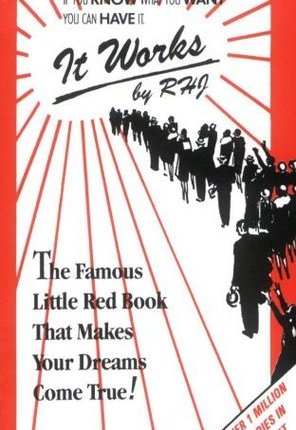
It Works: The Famous Little Red Book That Makes Your Dreams Come True! by RHJ

It Works by RHJ is a short book, pamphlet really, on the Law of Attraction. I was fortunate enough to pick up the deluxe version that not only had the text of the original work, but also a PDF of the way it appeared in its first printing.

A short chapter was also included that discussed the nearly-anonymous author.

Photo by Nilina on Pexels.com

I’ve read a lot of New Age/New Thought material, but I focused on this one because a certain loved one of mine is struggling. I won’t mention him by name because he says that I talk about him too much in my reviews, but suffice to say, I see him every day. Over a year and a half ago, he was laid off from a job that he enjoyed, had worked at for more than a decade, and he hasn’t found anything else yet to occupy his time. Part of the trouble, I think, is that he doesn’t know what he wants in a new occupation. It Works addresses that directly.

The mechanics of it are simple. Make a list of what you want, think about it every day, don’t tell anybody that you’re doing it. The assumption is that there is a force beyond our comprehension that responds to our thoughts and directs our lives based on what we choose to turn our thoughts towards.

Photo by Suzy Hazelwood on Pexels.com

The Abraham Hicks materials cover this in depth, but It Works was published in 1926, long before Abraham and The Secret burst into popular consciousness. This was, in fact, one of the first published books of its kind and even influenced the writings of that titan of new age thought, Napolean Hill.

To get what you want is no more mysterious or uncertain than the radio waves all around you. Tune in correctly and you get a perfect result…” pg 14.

“(Write down exactly what you want and the date you want it.) This may seem very foolish at first, but you can never realize your desires if you do not know positively and in detail what you want and when you want it. If you cannot decide this, you are not in earnest. You must be definite, and when you are, results will be surprising and almost unbelievable.” pg 20.

Photo by Kaboompics .com on Pexels.com

So, let’s cut to the chase. Does it really work?

The jury is still out. I made my list. 🙂 I guess we’ll see.

Recommended for fans of Abraham Hicks, Napoleon Hill and Pam Grout.

Thanks for reading!

The Age of Cosmic Consciousness: Discover Your True Identity & Accelerate Your Evolution by Transform Publishing

The Age of Cosmic Consciousness: Discover Your True Identity & Accelerate Your Evolution by Transform Publishing
ageofcosmic

Time for the hippie librarian to get a little New Age-y!

The Age of Cosmic Consciousness is a bunch of different metaphysical concepts strung together sort of like Ram Dass’ Be Here Now but written on regular paper instead of- I don’t know what that stuff is- let’s say brown paper bags.

The first thing to know about this book is that it is written in a flow of consciousness style. I found it very difficult to get into, but then hypnotic once I got reading, and thus it became difficult to put dow

. I found it similar to Kelly Howell’s Secret of the Universal Mind Meditation in that one idea leads to the next idea in a very natural and linear fashion.

A lot of the concepts in here have been covered by The Secret and various other authors. There’s a good bit about the Law of Attraction, but there’s so much more than that.

What I loved about this book can be summed up in this quote: “Do not overly focus on the inaccessible gurus and unapproachable enlightened people. Recognize and accept that a higher consciousness can be attained by anyone who proactively pursues its realization.” pg 136 I truly believe that enlightenment is for everyone and possible for everyone. This book really puts that idea forward.

That being said, I don’t know that I was prepared for the “other beings of light consciousness” mentioned in this book or the section that purports to have information directly from them but not “channeled”. Or the other section about aliens tampering with human DNA in the dawn of time. My inner self doesn’t necessarily “resonate” with those ideas yet, but some readers out there may feel it and understand it.

Photo by Julia Volk on Pexels.com

In conclusion, The Age of Cosmic Consciousness is worth the read for anyone interested in improving themselves and the world through inner transformation. Remember to keep an open heart and mind because some of the ideas presented are fairly “evolved”. Some similar books are: Be Here Now and Gateway to the Heavens: How Simple Shapes Mould Reality and the Fabric of Your Being.

I received a free copy of this book through the Goodreads First Reads program. Thanks for reading!

Zen Dogs by Alexandra Cearns

Zen Dogs by Alexandra Cearns
zendogscover

This unique book is a series of pictures of dogs in a ‘zen’ state. Even though I’m more of a cat than a dog person (gasp, I know!), I found it completely charming.

See more of the photos here: http://www.boredpanda.com/relaxed-pet…

zendogs1

Fun, aren’t they?

zendogs2

As I enjoyed the pictures, I found myself becoming more relaxed. Cearns reminds us in the introduction: “Like the dogs in these photos and the canine companion on your couch, we all need to stop, take a break, relax, and unwind- to breathe it all in and be fully present in each and every experience.” Preach.

The best part of the collection is comparing the ‘zen’ photos to the regular photos of each pooch. I couldn’t believe the difference that eyes opened vs eyes closed made. Check this book out and see for yourself! Recommended for everyone with two legs or four.

Thanks for reading!