Waking the Spirit: A Musician’s Journey Healing Body, Mind, and Soul by Andrew Schulman

Waking the Spirit: A Musician’s Journey Healing Body, Mind, and Soul by Andrew Schulman
wakingspirit

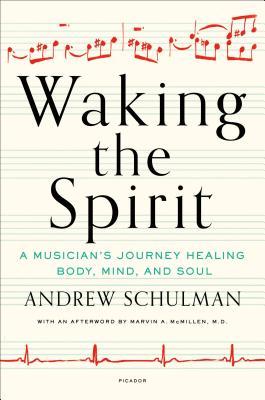
Waking the Spirit is an educational and uplifting look at music therapy from a world class musician who, not only plays for a critical care unit at a hospital, but was also saved by music himself.

I’ve always known about the healing power of music for the spirit, but I didn’t realize that it had such marked effects on the body itself. When I’m having a bad day or just need to relax, I plop down in front of the piano and play the stress out.

What I did not know, and that Andrew discusses at length in this book, is that music has been used throughout history to treat sick people and the astonishingly positive effects that it has on the critically ill.

The idea behind music therapy in the ancient world is that everything is vibration.

If you play harmonious and balanced music, the human body will, in turn, put itself into harmony and alignment. Sickness was viewed as a simple imbalance: “Early records have been discovered from ancient Egyptian medicine, Babylonian medicine, Arurvedic (Indian subcontinent) medicine, and classical Chinese medicine that incorporated musical healing. The ancient Greeks valued the relationship between music and medicine in the god Apollo, whose gifts included both the musical and healing arts, and the first use of the term “musical medicine” began with Pythagoras, the fifth-century philosopher-mathematician. The Romans are said to have used musicians in their battlefield hospitals as a form of anesthesia.”

Before I read this book, I didn’t realize that music therapy was even a “thing” in hospitals.

It seems like, at least here in the U.S., and this is entirely my opinion, that medicine has moved ever so much farther away from holistic treatments. The preference is for high cost drugs and highly educated doctors to perform surgery… something concrete that people can hold in their hands and say, “Look! This is what I paid for. This thing right here.”

If something, like music therapy, works, but we can’t explain why it works, then people don’t value it as much. That’s where Waking the Spirit comes in.

Andrew provides tons of examples of beneficial music therapy treatments as well as studies to back up his real life experiences. I think this book could be helpful to doctors, nurses, or anyone who is looking to try something inexpensive to make the environment within their institution more appealing.

Take this experience: the patient was in pain and talking to herself (a side effect of the brain surgery she had just undergone). Then, Andrew shows up with his guitar: “At the sound of the first note she turned her head toward me, looking at my face and then at my right hand as it plucked the strings of the guitar. Gone was the scattered expression from her face as her eyes gained focus. She stopped talking, her mouth half-open in surprise, silent. Her face and shoulders relaxed, and she smiled. Not the plastered grin of before but a real smile of pleasure. She was here now, in this room, and not wherever she’d been for the past few hours. Something was connecting. We were just ten seconds into the music.” Powerful.

“Over the years, I’ve witnessed the most remarkable ways in which music can help the healing process, the ways it can calm a patient or lift their spirits, or reach them when they seem locked in a place that no one else can access. It can soothe a staff member’s exhaustion or anxiety and let them refocus on helping a patient, and it can provide a connection for a patient’s family, perhaps bring back old memories and open pleasant topics of conversation.”

Bringing beauty and dignity back to medicine with music.

In this passage, Schulman is talking to Dr. Richard Kogan, a professor of psychiatry, about how just the act of composing music has soothed individuals who are suffering from mental illness and then, their masterworks have gone on to help others: “While it’s important not to overromanticize mental illness- most depressed individuals are too paralyzed to write a symphony and most psychotic individuals are too disorganized to produce a work of art that is coherent- the suffering associated with mental illness can led to bursts of creative inspiration that are less likely to come from an individual that is emotionally content. For many of the greatest composers, music has been profoundly therapeutic.” In other words, artists who used their music to alleviate their own suffering composed some of the greatest music ever written, which in turn as the effect of ameliorating the suffering of others.” It’s a circle of healing.

You don’t have to be a musician to fully enjoy Waking the Spirit. I recommend it for anyone who’s interested in non-traditional treatments for pain and suffering. Thank you to NetGalley and Picador for a free digital ARC of this book.

Thanks for reading!

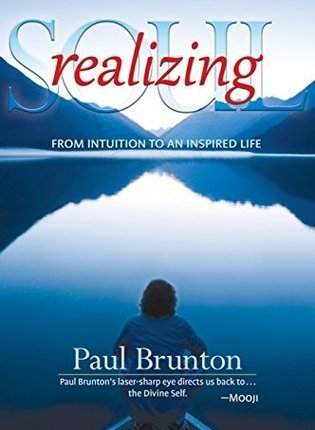
Realizing Soul — From Intuition to an Inspired Life by Paul Brunton

Realizing Soul — From Intuition to an Inspired Life by Paul Brunton

Paul Brunton was an English philosopher who dedicated his life to the spiritual journey.

Photo by Jonas Ferlin on Pexels.com

I had never read the teachings of Brunton before Realizing Soul and I found him to be very similar to Eckhart Tolle or, interestingly enough, Abraham Hicks.

He was like Eckhart Tolle in that he stressed the importance of the Now moment.

Brunton was like Abraham Hicks in that his description of the “Oversoul” could walk hand in hand with Hick’s “Vortex of Creation”. In fact, in my mind when I was reading this, I just substituted Oversoul for Vortex because I was more familiar with Hick’s thoughts on the matter than Brunton’s.

There is quite a lot of information in Realizing Soul, though it isn’t very long. In fact, I wish that some of the passages had been longer. This book was mainly a compilation of ideas from many of Brunton’s different writings.

I suppose that it gives the reader a great overview of the various works but I felt that it lacked some depth because of the shortened sections which were each generally only a couple of sentences long.

Photo by ArtHouse Studio on Pexels.com

Some parts I want to remember:
“…That which he has been seeking so ardently has been within himself all the time. For there at the core of his being, hidden away underneath all the weakness, passion, pettiness, fear, and ignorance, dwells light, love, peace, and truth. The windows of his heart open on eternity, only he has kept them closed! He is as near the sacred spirit of God as he ever shall be, but he must open his eyes to see it. Man’s divine estate is there deep within himself. But he must claim it.”pg 18

“The personal ego of man forms itself out of the impersonal life of the universe like a wave forming itself out of the ocean. It constricts, confines, restricts, and limits that infinite life to a small finite area. The wave does just the same to the water of the ocean. The ego shuts out so much of the power and intelligence contained in the universal being that it seems to belong to an entirely different and utterly inferior order of existence. The wave, too, since it forms itself only on the surface of the water gives no indication in its tiny stature of the tremendous depth and breadth and volume of water beneath it…” pg 27

“What can I do to break this barren, monotonous, dreary, and sterile spiritual desert of my existence? The answer is if you cannot meditate successfully go to nature, where she is quiet or beautiful; go to art where it is majestic, exalting; go to hear some great soul speak, whether in private talk or public address; go to literature, find a great inspired book written by someone who has had the glimpses (of the divine within life).” pg 78

Photo by Dina Nasyrova on Pexels.com

“Man as scientist has put under observation countless objects on earth, in sea and sky. He has thoroughly examined them. But man as man has put himself under a shallower observation. He has limited his scrutiny first to the body, second to what thinking can find. Yet a deeper level exists, where a deeper hidden self can be found.” pg 96

For the most part, I found Realizing Soul to be very beautiful and rich in meaning. There were some bits on karma and ego illusion that didn’t really resonate with me, but that doesn’t mean that it won’t speak to others.  If you want more of Brunton’s writings, they can be found online for free at this website: http://www.paulbruntondailynote.se/

If you enjoyed this book, you may want to listen to some of Eckhart Tolle’s lectures like Even the Sun will Die, Gateways to Now, or pick up the book, Stillness Speaks. Readers may also enjoy The Art of Living and Dying: Celebrating Life and Celebrating Death by Osho.

Thanks to the Goodreads First Reads program for a free copy of this book.  And, thank you for reading!

The Light: A Modern-Day Journey for Peace by Judith Lambert

The Light: A Modern-Day Journey for Peace by Judith Lambert

In The Light, Judy, the author, chronicles her dreams and her search through various countries and cultures for their ultimate meaning. She calls this book, a memoir, with some pieces changed to protect the privacy of the people involved.

I found it to be an engaging look into the life of a spiritual seeker and a fascinating comparative study of all religions, their symbols, and common meanings.

Judy talks to a librarian named Bill about symbols: “I’ve been having some dreams with symbols that seem to be very powerful and consistent, and I’m wondering whether these symbols have a history or a larger meaning…” “Oh, yes, absolutely,” he broke in. “All symbols have a history and a commonality. There’s no question about that… Images are the means people must employ to understand ideas and feelings. Without them, we cannot reason… but, you see, we often don’t know where these symbols and images come from, do we? We forget their origin and the long history of their use, until we end by thinking that the symbol is the thing itself!”

I’ve heard it said that all symbols are mere pointers. It is like a man trying to draw our attention to the moon by pointing at it, but we mistake the moon for the finger doing the pointing.

Photo by Aron Visuals on Pexels.com

A beautiful description of the chaos at the river, Ganges: “Over the course of the day, blessed pilgrims gathered at Mother Ganga to wash away their sins. Motionless holy men sat absorbed in rumination, their faces turned toward the sun in celebration of the endless cycle of mornings like this. The striking of wet clothing against the steps was accompanied by the distant ringing of temple bells, whose pitch and resonance varied with the preciousness of the material from which they were made- bronze, brass, or iron. And over it all hung a fetid haze smelling of smoke and of- well, I didn’t want to think what else.”

I enjoyedThe Light because Lambert made me feel as if I was there beside her in her spiritual wanderings. I enjoyed the travel parts of this book very much.

The City of Light: “…The Gita,” now he looked out at the Ganges, “speaks of a radiant river of light. Westerners.. well, they often see a surface, and then they have no idea how to look beyond that surface.” He gestured as if to indicate the whole city. “This is the City of Light. Is this not what you were looking for? I do not mean any disrespect, madam,” he hurried on before I could react, “but if one cannot see the Light here, then one has not looked long enough.”

A description of inner illumination: “Nothing changed. Or everything did, for though monk, mandala, walls, cushions, and robes all seemed to remain the same, I felt at last- and only for an instant- the sense of peace that had eluded me since my dreams began.”

Photo by Pixabay on Pexels.com

The author changes immensely over the course of her journey: “I feel a reassuring contentment from all I’ve discovered and all that I’ve been privileged to learn. I am a Jew, a Christian, a Hindu, a Muslim, a Buddhist, everything else, and nothing, all at once. I am…whole… And I believe that all religions possess and have knowledge of the Light. By claiming the Light myself, I can also retain my own personal stories, my own place, and time, and history…” An empowering message and a timely one.

If you enjoyed The Light, you may want to pick up The Realization of Being by Eckhart Tolle (a lecture, any of his talks are along this subject line) or The Invisible Hand: Business, Success & Spirituality by David Green (a memoir about another spiritual seeker and how he found the “Light”).

Thank you to NetGalley and Ann Duran Productions for the opportunity to read and review a digital ARC of this book!  And, thank you for reading.

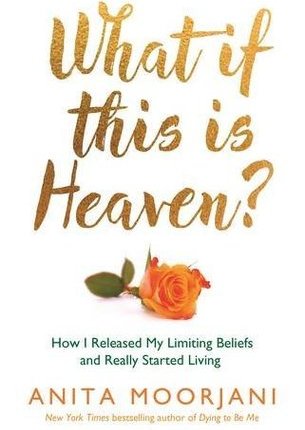
What if This is Heaven?: How I Released My Limiting Beliefs and Really Started Living by Anita Moorjani

What if This is Heaven?: How I Released My Limiting Beliefs and Really Started Living by Anita Moorjani

I was so excited to read What If This Is Heaven?: How I Released My Limiting Beliefs and Really Started Living. Moorjani’s first book, Dying to Be Me, was one of the first accounts of near death experience that I read. In it, she details how she was on her death bed, experienced the world beyond, and then came back to fulfill her life’s purpose.

When she came back, the tumors in her body disappeared and she’s been fine ever since.

It’s an astonishing and uplifting reminder of who we are as eternal beings and why we’re all here. What If This is Heaven is a continuation of this message in that, now, Moorjani is a teacher and lecturer on the topics of spirituality, healing, and self actualization. It’s wonderful.

And, it’s different enough from the first book that readers don’t feel like they’re re-reading the same messages. Moorjani has evolved and I’m very interested to see where life takes her from here.

Here are some passages that I loved:
“A major reason why I chose to return to this life during my NDE (near death experience) was because I understood that heaven is a state and not a place, and I wanted to experience, firsthand, the heaven that this life could actually be.”

“Remember, your only work is to love yourself, value yourself, and embody this truth of self-worth and self-love so that you can be love in action. That is true service, to yourself and those who surround you.”

“On the physical plane, we see love as an emotion, something we have for some people and not others. But the truth is that unconditional love is a state of being, and it’s our birthright. Once we begin to tap into that, we realize is has the power to transform all of our relationships simultaneously- including our relationship with ourselves- for the better.”

“… illness is our body’s way of communicating with us and showing us a better path. Yes, we may die from cancer- or from countless other things- and each of us will die from something at some point. But death is not the enemy. What often is the enemy is the way we view illness…”

Some fascinating teachings about the positive aspects of the ego are included in here: “The ego gives us our sense of identity, our individuality. It’s what allows us to know who we are as individuals and to express our uniqueness. If our ego weren’t necessary, we wouldn’t have been born with it.”

There’s so much more to enjoy in What if This is Heaven beyond these small bits. I highly recommend this read for spiritual seekers and those who are interested in self actualization.  If you enjoyed this book, you may want to read Moorjani’s other book, Dying to Be Me or Co-creating at Its Best: A Conversation Between Master Teachers by Wayne Dyer and Abraham Hicks.

A big thank you to NetGalley and Hay House for the opportunity to review this book!  They sent me a free digital ARC for review purposes. And thank you for reading!

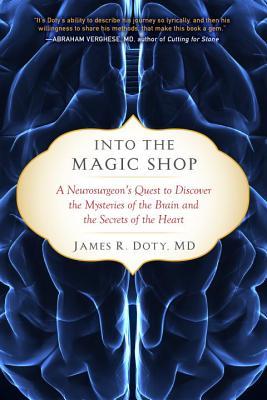
Into the Magic Shop: A Neurosurgeon’s Quest to Discover the Mysteries of the Brain and the Secrets of the Heart by James R. Doty

Into the Magic Shop: A Neurosurgeon’s Quest to Discover the Mysteries of the Brain and the Secrets of the Heart by James R. Doty

This book is James Doty’s memoir. He had a tragic childhood with parents who, for various reasons, were not present for him. Then, after an encounter with a total stranger, James was taught meditation, creative visualization, and positive thought practices that changed his life.

As he comes of age, he dismisses the compassion related portions of his childhood training and focuses instead upon the money and prestige that it brings as he pursues a career as a neurosurgeon. It’s a fascinating and educational account.

Photo by Vidal Balielo Jr. on Pexels.com

I was particularly taken with the near-death experience portion of the book. James approached that experience as an atheist so I felt that made his opinion on it rather different than other accounts I’ve read.

Some of the bits that I want to remember (advance reader’s copy cited so the final published book may contain slightly different wording):
“Some of the wisest patients and people I have ever met have been children. The heart of a child is wide-open. Children will tell you what scares them, what makes them happy, what they like about you and what they don’t. There is no hidden agenda and you never have to guess how they really feel.” pg 3

Photo by Juan Pablo Serrano Arenas on Pexels.com

“Everyone has a story, and I have learned that, at the core of it, most of our stories are more similar than not.” pg 60  But not everyone tells their story.  Thank you, Dr. Doty, for telling yours.

“When our brain changes, we change. That is a truth proven by science. But an even greater truth is that when our heart changes, everything changes. And that change is not only in how we see the world but how the world sees us. And how the world responds to us.” pg 151  I think that this is one of the great mysteries of life.

About his near death experience: “At the time I felt the warmth of a light and a sense of oneness with the universe. I was enveloped in love, and while it didn’t transform my religious beliefs, it informed my absolute belief that who we are today doesn’t have to be who we are tomorrow and that we are connected to everything and everyone.” pg 203

Photo by Pixabay on Pexels.com

“There’s a reason stock traders are using meditation techniques; these techniques help them become not only more focused but, sadly in some cases, more callous. This is what Ruth warned me about before she taught me to visualize. Yes, we can create anything we want, but it is only the intelligence of the heart that can tell us what’s worth creating.” pg 231 A powerful lesson, but one, I think, that can only be learned through personal experience.

If you enjoyed this book, try Proof of Heaven: A Neurosurgeon’s Journey into the Afterlife by Eben Alexander or The Power of the Heart: Finding Your True Purpose in Life by Baptist de Pape.

Thank you to the Goodreads First Reads program for an advance reader copy of this book.  And, thank you for reading!

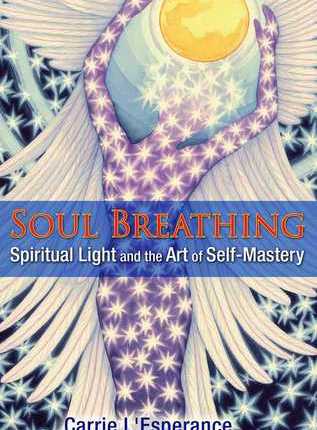
Soul Breathing: Spiritual Light and the Art of Self-Mastery by Carrie L’Esperance

Soul Breathing: Spiritual Light and the Art of Self-Mastery by Carrie L’Esperance

An incredibly ambitious book, Soul Breathing: Spiritual Light and the Art of Self-Mastery covers most major spiritual topics- from chakras to meditations and the evolution of the soul to aliens.

With this very diverse amount of material, readers are certain to find at least one chapter or section that resonates with them.

Photo by Egor Kamelev on Pexels.com

Unfortunately, he or she will probably also discover something that doesn’t, which is just fine, because as Carrie points out in this book, everyone experiences the “Universal Mind” in a different way.

What is enlightenment? In the author’s own words: “Enlightenment is a way of freeing oneself from ignorance in order to act, operate, and contribute as a Light in the world. It is through the balanced integration of body, mind, and spirit that a deeper and more profound Intelligence is expressed.”

The vocabulary in Soul Breathing is definitely New Age, but the reader doesn’t have to have any background in that to understand what Carrie is talking about. She starts out with a bit of her personal history and then jumps into general teachings about the soul and transcendence, which I found to be very reminiscent of Eckhart Tolle’s A New Earth.

After that, Soul Breathing goes in a bunch of different directions, which I didn’t enjoy nearly as much as the opening few chapters.

Photo by Jill Wellington on Pexels.com

What is Soul Breathing anyway? “Soul Breathing is the ability to create a balanced life on Earth through a conscious connection to Spirit. It is a state of grace achieved through action and experience.”

Carrie L’Esperance is at her strongest when she’s relating personal stories or giving concrete instructions- like specific affirmations or methods of meditating to support positive spiritual change.

I felt that Soul Breathing stumbled in the parts where Carrie talks about what is wrong with the world or how things have gone so badly. (The rampant energy pollution and government-alien conspiracy sections come to mind.)

All personal stories of spiritual or the otherworldly have value as Carrie reminds us: “There have always been the unbelievers and the hyperrational scientific intellectuals who attempt to devalue what for some people are the most powerful, transformative, and sacred experiences of their lives. In truth, there is really no one who can denigrate the authentic spiritual experiences of the individual.” I would add, except his or herself.

I thought that this book with its myriad of suggestions and prohibitions would be impossible for anyone to ever implement in their lives in a manageable way.

Photo by Chermiti Mohamed on Pexels.com

Carrie says: “We don’t have to dissect every aspect of how and why we exist in order to appreciate the miracle of life. We can experience all that is needed in the natural stages and steps that we take along the way. Ultimately we are to choose what capacities we will develop within the laws of existence.”

Despite that passage, Carrie seems to be a very demanding teacher.

It is clear that Carrie is passionate about spiritual, physical, earthly, and even galactic health and well-being.

Don’t read this book if you are unwilling to have an open mind about all manner of spiritual topics. Do read this book if you’re looking for more information about sensing, managing, and healing with subtle energy in the body, mind, and soul.

Photo by Magicbowls on Pexels.com

Her beliefs about aliens and a grand government conspiracy to control and manipulate the population were a bridge too far for me, but I’m certain that there are some readers out there who will resonate with her teachings.

Perhaps fans of Whitley Strieber or John Keel will enjoy Soul Breathing.

A big thank you to Netgalley and Bear & Company for a free digital Advance Reader copy of this book for review purposes!  And, thank you for reading.

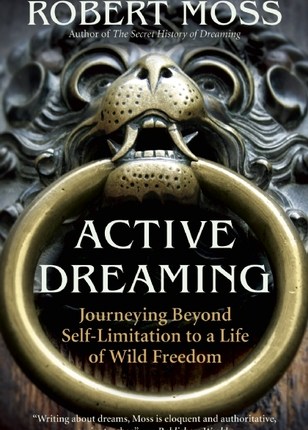
Active Dreaming: Journeying Beyond Self-Limitation to a Life of Wild Freedom by Robert Moss

Active Dreaming: Journeying Beyond Self-Limitation to a Life of Wild Freedom by Robert Moss

Active Dreaming is more than just another book about lucid dreaming or dream interpretation. Moss takes the Aboriginal practices of his native Australia and develops a living practice wherein one treats the world, whether waking or sleeping, like an lucid dream.

Moss invites the readers to fully live their lives and to “wake up” through drumming circles, sharing and interpretation of dreams, choosing your names and how you define yourself, practicing mindful creativity, noticing synchronicities, journaling, storytelling, creative visualization (and more).

Photo by Sabel Blanco on Pexels.com

Some of the concepts in this book were a bit far out there- things like shared dreams or visions in which, theoretically, you invite another person into your dreamspace to help you address whatever is going on for you or instructions on how to start Dream Groups.

Active Dreaming is a call to action, but in so many directions that it is difficult to really know where to start. I think I’m going to cherry pick a few of Moss’s techniques and see how I do.

Robert Moss’s definition of Active Dreaming: “This approach includes paying attention to night dreams, but it is not only, or even essentially, about what happens at night. It is a method for conscious living. When you become an active dreamer, you’ll notice that the world speaks to you in a different way.” pg xii introduction

Photo by GEORGE DESIPRIS on Pexels.com

Here are some of the benefits of practicing Active Dreaming: “The journey opens gateways for soul recovery and the release of life blockages. It introduces and strengthens connections with the animal guardians and brings their vitality, tracking skills, and healing energies richly alive in the body. It encourages spontaneous art and creativity and offers rich personal mythology, which is healing in itself. Properly conducted, the journey raises a tremendous amount of life force and channels the movement of that energy into harmonious, unrestricted flow.” pg 98

And finally, a passage that really resonated with me: “You must know your story and tell your story and have your story received. … Learn to do that, and you can survive the worst nightmares of history and bring heart and healing to others…” pg 134

Tell your story. I can do that.

Photo by cottonbro on Pexels.com

This review has really only touched the tip of the iceberg that is Active Dreaming. Read this book if you want to adjust the lens with which you perceive reality or if you just want to read a book that is completely different from anything else that you’ve ever read.

Robert Moss is not for everyone, but, if you can set aside any preconceived notions about what this book should be, I think that you’ll find at least some chapters that will speak to you.

If you’re looking for more spiritual books like this, look no further than another of Moss’s titles: The Boy Who Died and Came Back: Adventures of a Dream Archaeologist in the Multiverse

Thanks for reading!

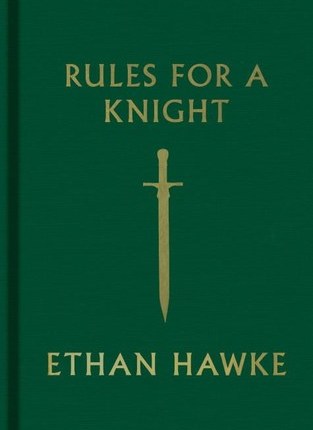
Rules for a Knight by Ethan Hawke

Rules for a Knight by Ethan Hawke

Rules for a Knight was very sweet. It is a fictional story about a knight who dedicates a journal to his children and, in it, uses stories to explain how he expects them to behave and grow after he is gone.

Photo by Pixabay on Pexels.com

Surprisingly, it is by Ethan Hawke, the actor!  I didn’t know that he could write… and, in this book, he shows that he really can.

I had been exposed to many of the parables presented in Rules for a Knight before through either Buddhist or Christian teachings, but they are repackaged quite well in this small, green tome.

The book itself is a joy for readers who really appreciate books as an art form both in what it contains and also in its packaging.  Rules for a Knight is covered in soft green cloth with the title embossed in gold and a ribbon bookmark bound into the lining- almost as if the book itself is inviting the reader to take her time, stop reading, put in the bookmark, and ponder the wisdom that comes from its pages.

Photo by Thought Catalog on Pexels.com

This is a book to be savored and read slowly with hot tea or coffee, whichever you prefer. 🙂

I think that there will always be a place on my bookshelf for stories that teach about inner truths and the journey from apprenticeship to mastery. I also liked that the knight addressed himself to both his sons and his daughters. Probably not historically accurate, but I approve anyway.

Some of my favorite bits:
“…the first thing you must understand is that you need not have gone anywhere. You are always in the right place at exactly the right time and you always have been.” pg 11

“There are only two possible outcomes whenever you compare yourself to another, vanity or bitterness, and both are without value.” pg 39

“Pay attention: what you need to know is usually in front of you. There are no secrets, just things people choose not to notice.” pg 63

Photo by Susanne Jutzeler on Pexels.com

“Later he told me when he was younger he learned the secret to performing under pressure: don’t do it for yourself. Do it for someone else.” pg 67

If you enjoyed Rules for a Knight, you may want to read Zen Seeds: Reflections of a Female Priest by Shundo Aoyama or After the Ecstasy, the Laundry: How the Heart Grows Wise on the Spiritual Path by Jack Kornfield.

Thanks for reading!

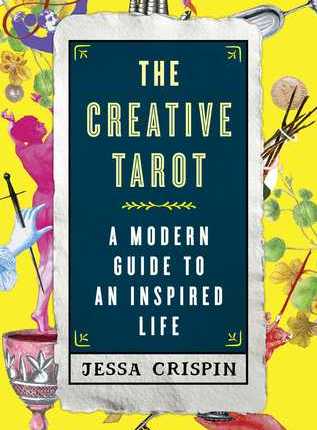
The Creative Tarot: A Modern Guide to an Inspired Life by Jessa Crispin

The Creative Tarot: A Modern Guide to an Inspired Life by Jessa Crispin

The Creative Tarot: A Modern Guide to an Inspired Life is an excellent tarot card reading manual for beginners to the more experienced card reader.

I loved that Crispin gives novel, art, and film suggestions for each card so that the reader can immerse herself in the “feel” or “mood” of them. That was a lovely touch and different from any other book on tarot cards that I’ve read.

Photo by Anna Tarazevich on Pexels.com

Mainly, the books that I’ve picked up have been about tarot card theory and how the cards tie in to the Tree of Life. It’s a complex system and can only be talked about in metaphors.

Imagine my relief to read a book about just the cards themselves and not an arcane “theory of everything.”

A.E. Waite was the co-creator of the Rider-Waite Tarot. He had some interesting thoughts about the tarot card reading qabalists, many of whom wrote books like the ones I’ve mentioned above.

A.E. Waite’s beliefs, which Crispin includes in the chapter entitled, A History of the Tarot, were: “Waite believed that the magical systems (tarot) of the Golden Dawn and other systems were not about imposing your will on a situation… or about telling the future… He believed they were for elevating the soul and for bringing what is unconscious conscious.” pg 7.

Photo by Jonathan Petersson on Pexels.com

I believe that too. But, if you can’t explain the system in a way that makes sense, then what’s the point of writing a beginner’s manual. There can be no “elevation of the soul” if the beginners can’t understand the first thing about reading tarot cards.

Thankfully, Crispin’s interpretations are simple and clear. This is a book that will see some use, not become another expensive paperweight.

I liked Crispin’s description of Temperance: “Temperance is an easily misunderstood card, as it has become associated mostly with abstention. Not drinking, not participating, denying yourself something. But that breaks away from the origins of the card, which traditionally portrays a hermaphrodite blending two cups of water- one hot and one cold- to create something in the middle between these two extremes.” pgs 76-77

Photo by Aleksandar Pasaric on Pexels.com

Temperance is about finding the middle way, not skirting along the edges from one extreme to another. Kind of ruins the idea of a “temperance movement,” doesn’t it.

I also liked this blurb about the Tower: “Remember that scene in Louisa May Alcott’s Little Women, where Amy throws Jo’s stories into the fire? That’s the feeling of the Tower: the realization that all is lost, and you will have to start over from the beginning.” pg 83

Yes, I’m a bookworm. Yes, Little Women is one of my favorite books. I think Crispin nailed the card’s description with that scene.

Photo by Pixabay on Pexels.com

I thought this description of The Moon was brilliant: “The Moon rules our dreams, and that’s a good way to think about this card. They don’t make sense on a logical level, but on a personal level, on an emotional level, they do. The location in a dream will shift without warning; dead people will walk beside the living; your mother will show up, say something nonsensical while wearing a jellyfish on her head, and then stab you in the heart. And you wake up and think, “Oh, of course, this is about that incident that happened when I was five.”

My dreams are just like that. In fact, I had that exact dream last night. 🙂

The tone in The Creative Tarot is very friendly and conversational, as if you asked your best friend to teach you a little bit about her favorite hobby- tarot cards. Highly recommended for artists, dreamers, and aspiring tarot card readers.

Its only weakness, in my opinion, is that I wanted more… more stories, more examples. I understand that we’re dealing with 50 plus cards and they can’t all receive extremely detailed treatment, otherwise we’d get the George R.R. Martin version of Tarot card books, but a girl can dream.

Jessa Crispin has modernized a system that seems to want to stay inaccessible to the beginner. I wish more of the books about the tarot were like this one.

Thanks for reading!