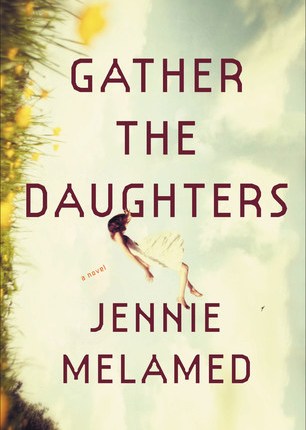
Gather the Daughters by Jennie Melamed

Gather the Daughters by Jennie Melamed

Gather the Daughters is about a small community that lives with no electricity or modern conveniences on an island. They have a church made of stone that sinks into the ground and a holy book written by “the ancestors.” These ancestors are saint-like founders who, according to tradition, fled the wider world to preserve the human race during an apocalypse.

Traditions are dark and strange on the island, but not questioned because they were written by the ancestors.
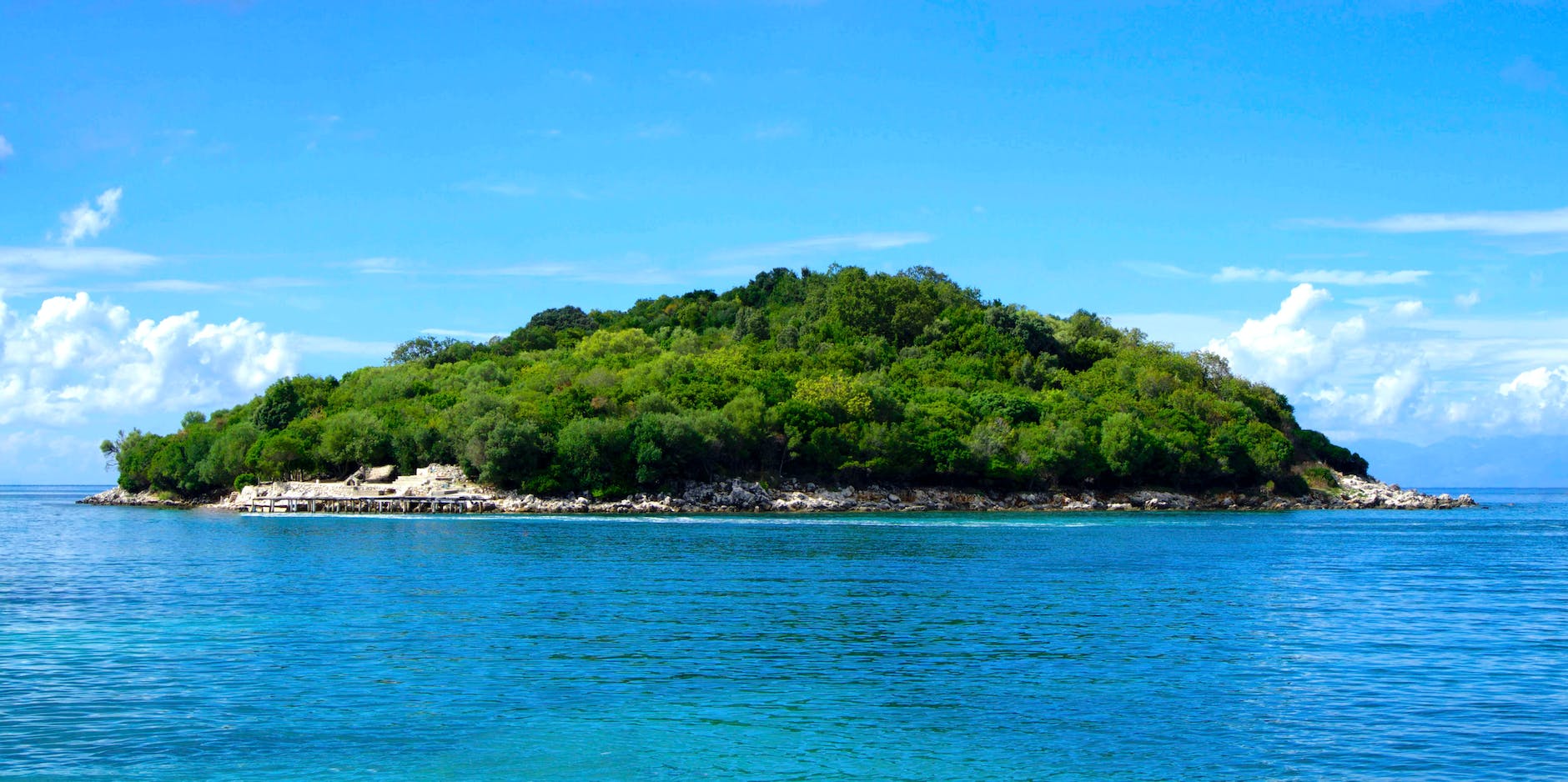
Photo by Ingo Joseph on Pexels.com

The tale is told from the viewpoint of four girls: Vanessa, Caitlin, Janey and Amanda.

From the fires of wickedness we grew forth, like a green branch from a rotten tree,” he reads. “From the wastelands of want came the hardworking men of industry and promise. From the war-stricken terror came our forefathers to keep us safe from harm.” Like everyone else, Vanessa mouths the words along with him. loc 122, ebook.

Because of the small number of people on the island, everyone has an assigned job- that they keep for life. Reproduction, meetings and courtships are also controlled by tradition.

Sometimes the way things are done seem irrational or cruel, but the community does not change. Take the perpetually sinking church: “Every ten years or so, when the roof is almost level with the ground, all the men on the island gather to build stone walls on top of it, and the roof becomes the new floor. Vanessa asked Mother why they couldn’t just use wood, but Mother said it was tradition, and it would be disrespectful to the ancestors to change it.” loc 229, ebook.

Photo by Zac Frith on Pexels.com

Similar to The Handmaiden’s Tale, Gather the Daughters is ultimately about what happens when society dictates and controls relationships, sexuality and education through religious doctrine. It is also examines the male/female balance of power.

Gather the Daughters is a gripping read. But not mysterious. It was fairly clear in my mind from the start where this story was headed, but I cared about the main characters. They have heart and I couldn’t help but want them to live in a better world than the one they were born into.

I could see this being a great choice for book clubs. There’s plenty to talk about, especially with character motivations and the structure of society.

Photo by David Bartus on Pexels.com

Reader warnings: survivors of childhood sexual abuse could be triggered by this read. There are also some domestic violence scenes.

Thank you to NetGalley and Little, Brown and Company for a free advance reader’s copy of this book. Reminder: the short quotations that I pulled for this review may vary in the final printed version.

Thanks for reading!

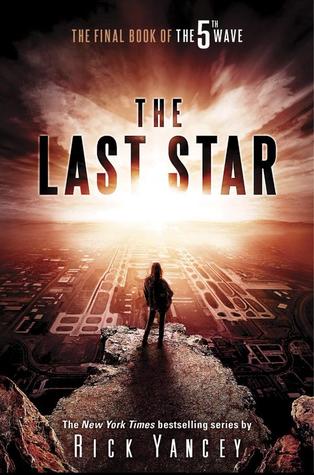
The Last Star (The 5th Wave #3) by Rick Yancey

The Last Star (The 5th Wave #3) by Rick Yancey
thelaststar

The Last Star is the final entry in The 5th Wave, a trilogy about aliens, teenagers and the end of the world.

It is also a morality play about what matters. Why do cars, jobs and stuff matter so much when, in the end, it is all about our relationships and love.

I’m sorry to say that I found the ending to be unsatisfying. Yancey wove such a puzzling yarn that I felt like he didn’t completely untangle all the knots. To be fair, there was a lot going on. But, I read the last pages and I felt a big, internal: “huh?”

This book also reminded me of The Road. “From piles of blackened bones to corpses wrapped head to toe in tattered sheets and old blankets, just lying there in the open like they’d dropped from the sky, alone or in groups of ten or more. So many bodies that they faded into the background, just another part of the mess, another piece of the urban vomit.”pg 70.

The Last Star also raised big questions about civilization and its durability. How thin is the veneer on civilization? What would it take for humanity to turn on itself? Most dystopian writers say, not much.

I don’t know. I’m of two minds on the issue. One part of me says, civilization is a flimsy set of agreements that could easily crumble with enough fear, famine and plague.

The other part of me, the eternal optimist side, says that there is something within each of us that even the worst calamity couldn’t touch.

Kill the body, yes. Kill hope, yes. But kill the soul and its purpose? No. I feel like that part would find a way. And part of that soul’s purpose, I think, is connection to others. That means, civilization. So, there’s something more permanent to it, something fated.

Anyway, The 5th Wave as a three-part story is intense, gritty and could lead to some excellent discussions because it leaves a lot of open-ended questions and ambiguous answers. Rather like life.

Thanks for reading!

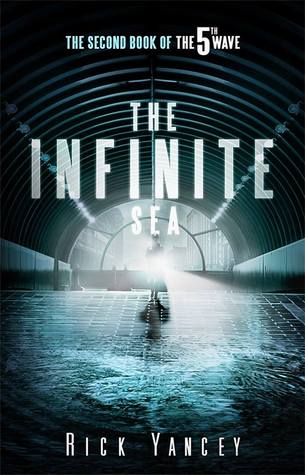
The Infinite Sea (The 5th Wave, #2) by Rick Yancey

The Infinite Sea (The 5th Wave, #2) by Rick Yancey
theinfinitesea

Gritter and more disturbing than The 5th Wave, Cassie, Ben, Ringer, et al are still trying to survive the end of the world. The mystery of the aliens increases. The manner in which the war against humanity is waged sinks to new lows. Yancey takes the story on some unexpected turns and I liked them.

The pace of this story is relentless and the lines are blurred between the “good guys” and the “bad guys.” It gives you a tension headache if you don’t take a break from it every couple of chapters. At least, it did for me. “Anyway, no debt is ever fully repaid, not really, not the ones that really matter. You saved me, he said, and back then I didn’t understand what I had saved him from. … Now I was thinking he didn’t mean I saved him from anything, but for something.” pg 128.

But for what! Yancey answers most of the questions he introduced the reader to in The 5th Wave. He also weaves in some complications. I won’t say anything about those… but they’re very serious and deadly. “No one can be trusted,” I said. “Not even a child.” The cold bored down to my bones and curled inside the marrow.” pg 148.

“I understand the game within the game now: There is nothing private, nothing sacred. There is no part of me hidden from him. My stomach churns with revulsion. He’s violated more than my memories. He’s molesting my soul.” pg 188. The aliens still seem to have the upper hand with the technology that can peer into people’s minds. With all of the creepy things in these books, that bit bothered me the most.

Will our intrepid teenage-survivalists solve the mystery of what the invaders want or what they are before everyone is dead? I don’t know… but I’m going to read the last book and find out. Recommended for young adults or the young-at-heart who enjoy dystopian/mystery thrill-rides.

Thanks for reading!

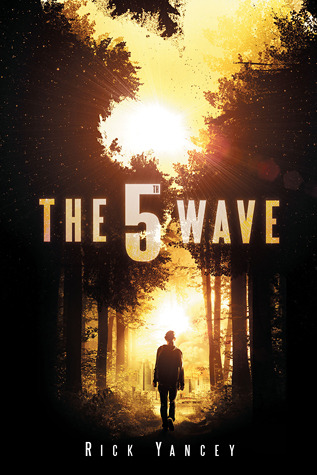
The 5th Wave (The 5th Wave, #1) by Rick Yancey

The 5th Wave (The 5th Wave, #1) by Rick Yancey
the5thwave

Major spoilers ahead. Please do not read if you haven’t read this book.

The 5th Wave is about the end of the world and aliens, yes, but it also explores why life is worth living.

Cassie didn’t know how good she had it until the alien spaceship appeared in the sky and life was never the same. First, there was chaos, but now it is clear that the aliens want to exterminate everyone. And, if they just want the planet for themselves, why are they waging war in such a sadistic manner? It is a mystery and Cassie is going to figure it out.

I was really into the narrative when Rick Yancey chose to change characters and continue the story from a different point of view. I felt that it was unnecessary and broke the flow.

Also, and this is another pet peeve of mine, must every young adult dystopian contain romance as a major part of the plot? The Hunger Games, Divergent, I could go on… and this. You’d think the teens would be far too busy staying alive to fall in love, but that’s clearly not the case from the literature.

I really liked the manner in which Yancey introduces his aliens. First, you get to see their results on humanity. Then, he drops breadcrumbs about how they got here. It’s creepy. “There will be no awakening. The sleeping woman will feel nothing the next morning, only a vague sense of unease and the unshakable feeling that someone is watching her. … And what the shadow has come for- the baby within the sleeping woman- will feel nothing. The intrusion breaks no skin, violates not a single cell of her or the baby’s body.” pg 17, ebook. So scary.

I read a few reviews in which this book was accused of being a copycat of The Host and I feel that it deserves a comment. They are similar in that they both contain aliens, both are dystopians and both have the alien consciousness inside human consciousness. But, those are very broad strokes. The details of the books are different enough and I feel that Yancey has his own plans for his story.

In The Host, the aliens feel more misunderstood and benevolent than the scary creatures in The 5th Wave. This book has a lot more action, The Host is more nuanced. To be fair, superficially, they seem too similar for that to be a coincidence. But in reality, they are as different as Star Wars and Dune. Wait a minute, bad comparison? 🙂

Here’s one of my favorite passages: “Forget about flying saucers and little green men and giant mechanical spiders spitting out death rays. Forget about epic battles with tanks and fighter jets and the final victory of us scrappy, unbroken, intrepid humans over the bug-eyed swarm. That’s about as far from the truth as their dying planet was from our living one. The truth is, once they found us, we were toast.” pg 19, ebook.

Also this one, for obvious reasons: “.. I have a thing about books. So did my father. … While the rest of us scrounged for potable water and food and stocked up on the weaponry for the last stand we were sure was coming, Daddy was out with my little brother’s Radio Flyer carting home books.” pg 33, ebook. Seriously. If the apocalypse ever comes, I’m going to camp out in the library, Station Eleven style. Who’s with me?

Recommended for people who like dystopians and intense survival scenes and aren’t annoyed by angst-y teen romance. The 5th Wave is one scary alien story. They’re here and they’re out to get you and everyone you know! And, so far, they’re doing a VERY good job.

Thanks for reading!

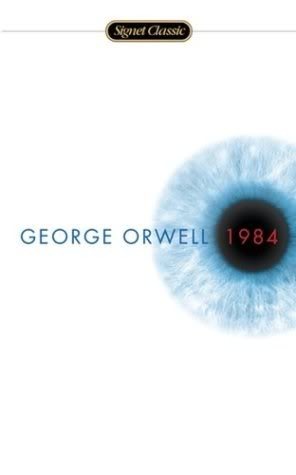
1984 by George Orwell

1984 by George Orwell
1984

Spoiler warning at the end of this review. Please do not read the last paragraphs if you haven’t had the chance to read this classic dystopian.

In 1984 or thereabouts, Winston Smith is a hard-working member of the Party. There is only one Party and it rules with an iron fist. It is divided into divisions that specialize in different areas on the surface, but actually occupy themselves with maintaining power.

The country, an amalgamation of the countries we know now, is always at war with one or another of the two other world powers.

Winston works in a literary branch of the government. He is responsible for making changes to printed literature to make the past in-line with current party sentiment. “As soon as all the corrections which happened to be necessary in any particular number of the Times had been assembled and collated, that number would be reprinted, the original copy destroyed, and the corrected copy placed on the files in its stead.” pg 39.

In the course of his job, he notices things changing. For instance, he knows that at one time, they were at war with someone different than the enemy they fight now. “Nothing exists except an endless present in which the Party is always right. I know, of course, that the past is falsified, but it would never be possible for me to prove it, even when I did the falsification myself. After the thing is done, no evidence ever remains.” pg 155.

But this is not knowledge that he can share. The Party exerts control over everyone at all times through screens built into the wall of every home. You can see the state-sponsored programs like a regular television but they can look out through the screen and see you too.“The two aims of the Party are to conquer the whole surface of the earth and to extinguish once and for all the possibility of independent thought. There are therefore two great problems which the Party is concerned to solve. One is how to discover, against his will, what another human being is thinking, and the other is how to kill several hundred million people in a few seconds without giving warning beforehand.” pg 193.

The Thought Police drag away any trouble makers or those whose thoughts aren’t acceptable to the Party. That could be anyone. Winston knows that one day it will be him. But not just yet.

“There was of course no way of knowing whether you were being watched at any given moment. How often, or on what system, the Thought Police plugged in on any individual wire was guesswork. It was even conceivable that they watched everybody all the time. … You had to live- did live, from habit that became instinct- in the assumption that every sound you made was overheard, and, except in darkness, every movement scrutinized.” pg 3.

The absolute powerlessness of Winston’s situation is terrifying. And then, he falls in love with a girl named Julia who works in his building. “He wondered vaguely how many others like her there might be in the younger generation- people who had grown up in the world of the Revolution, knowing nothing else, accepting the Party as something unalterable, like the sky, not rebelling against its authority but simply evading it, as a rabbit dodges a dog.” pg 131.

This was the first time I ever read 1984. I was still convinced, until a few pages before the end, that it was going to have a happy ending. The rat-mask part had me doubting but then, I still considered the possibility that Winston was faking his conversation. But, after he spoke to Julia one last time, I finally abandoned that theory too.

He lived through his ordeal, but at what cost? He lost everything- even his ability to think. I found it to be incredibly bleak, but worth the time, if only for the warnings that it contains.

Thanks for reading!

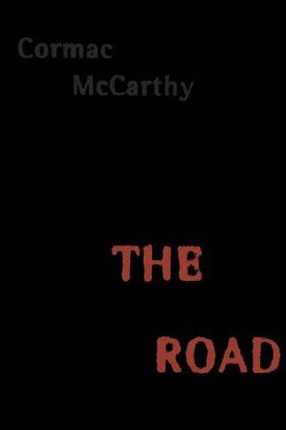
The Road by Cormac McCarthy

The Road by Cormac McCarthy

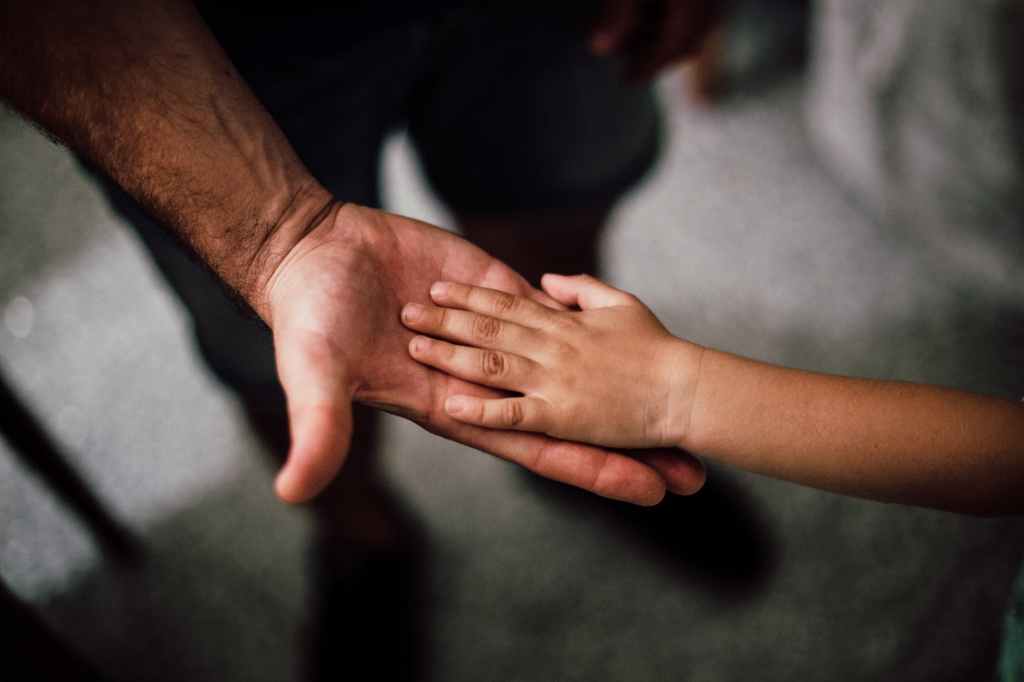
Dark but powerful, The Road is about a father and son who are travelling through a destroyed world.

Photo by Kaique Rocha on Pexels.com

They’re trying to get to the coast and south to warmer climates, but many obstacles lie in their way. In addition to starvation because of the nuclear fallout, the duo face external threats like cannibalistic tribes of savage men and women.

But it’s not just a battle to save their bodies, the father must teach the son the proper way to live (like not eating other people) to save his spirit from the crushing darkness that has overtaken everything. It is a struggle to retain the internal spark that divides humanity from the animals.

This is a book about survival in a dystopian reality, but it is also about the sustaining and literally life preserving power of love.

Photo by Juan Pablo Serrano Arenas on Pexels.com

My one complaint about this book is that the author didn’t clearly label who was speaking during the dialogue. He just went down a line to illustrate change of speaker. I had a really tough time keeping track of who was saying what.

Take this passage, for example: “Can I ask you something? he said. Yes. Of course. Are we going to die? Sometime. Not now. And we’re still going south. Yes. So we’ll be warm. Yes. Okay. Okay what? Nothing. Just okay. Go to sleep. Okay.” pg 9 The whole book is like that, anytime anyone is talking.

Otherwise though, this is an amazing, heart-pounding, thrill ride of a book.

I loved the father’s advice to the son throughout the journey: “A corpse in the doorway dried to leather. Grimacing at the day. He pulled the boy closer. Just remember that the things you put into your head are there forever, he said. You might want to think about that. You forget some things, don’t you? Yes. You forget what you want to remember and you remember what you want to forget.” pg 10

The father/son relationship described in here was fascinating to me. Generally, at least in my experience, the relationship between a mother and a child is the closer one in the family because of certain biological imperatives. McCarthy flips that whole paradigm on its head with this story. In here, it is the father who stands between the child and death. It is the father who finds meaning in a world gone mad through helping the child find food, stay clean, and stay protected from the elements.

“The boy sat tottering. The man watched him that he not topple into the flames. He kicked holes in the sand for the boy’s hips and shoulders where he would sleep and he sat holding him while he tousled his hair before the fire to dry it. All of this like some ancient anointing. So be it. Evoke the forms. Where you’ve nothing else construct ceremonies out of the air and breathe upon them.” pg 63.

Photo by Miri on Pexels.com

I think one of the main lessons in here is that life holds the meaning that you assign to it. And, even if civilization falls apart, you can create your own mini-civilization through your actions and intentions.

“He’d had this feeling before, beyond the numbness and the dull despair. The world shrinking down about a raw core of parsible entities. The names of things slowly following those things into oblivion. Colors. The names of birds. Things to eat. Finally the names of things one believed to be true. More fragile than he would have thought. How much of it was gone already? The sacred idiom shorn of its referents and so of its reality. Drawing down like something trying to preserve heat. In time to wink out forever.” pg 75 Beautiful.

If civilization ever ends, look for me at the library. Probably will be reading this book. 🙂

I picked this classic up because of David Schaafsman’s excellent review which you can read here: https://www.goodreads.com/review/show…

Some read alikes: Station Eleven by Emily St. John Mandel, Railsea byChina Miéville, or The Last One by Alexandra Oliva.  Thanks for reading!