Archetypes on the Tree of Life: The Tarot as Pathwork by Madonna Compton

Archetypes on the Tree of Life: The Tarot as Pathwork by Madonna Compton

Archetypes on the Tree of Life is a dense spiritual text exploring the Tree of Life through the use of Tarot cards.

It’s kind of funny- I think my favorite part of this book wasn’t actually the book at all but instead the brief introduction which was written by Hans Nintzel. Nintzel was a student of the western mysteries who describes himself as “living down the street from Israel Regardie.” As I used the writings of Israel Regardie to do my own explorations into the Tree of Life, I found my mind blown right there. How cool would that have been, to have lived on the occult teacher’s own street? Too cool.

Here’s what Nintzel had to say that was so compelling:
As Qabalah evolved, it was discovered that, using this glyph or map called the Tree of Life, one could move around the geography of the consciousness, so to speak, contacting or balancing various personal energies by contemplating various aspects of the God energy using myths, legends, visions, and dreams, represented by the archetypes of the Tarot.”pg 4

I have yet to see a more concise description of what pathworking is than that. Now why Nintzel didn’t write his own book, I simply don’t know. Being the librarian that I am, I did a bit of digging into his background and it seems that he was a prolific lecturer and a translator of alchemical texts, but didn’t write his own. Disappointing. Here’s a link that I found of works that he helped to bring to the US which were listed in his obituary: https://www.alchemywebsite.com/rams.html

As for Compton’s 300 or so page contribution, I found myself to be disappointed. Archetypes on the Tree of Life is in the main, rather obscure Qabalistic/Kaballistic theory. It reads almost exactly like Regardie’s Garden of Pomegranates or Fortune’s The Mystical Qabalah. That’s not to say that it doesn’t have some gems of interest, but mostly it’s slow going and not as accessible as the publisher (Llewellyn) promised it to be in the page where it described the goals of its Spiritual Perspectives Series.

Compton’s most interesting point has nothing to do with traditional pathworking but is instead a hypothesis that she and her meditation partner have constructed about potential alternate paths across Daath. They’ve chosen a five pointed star to create the paths, but I would perhaps lean more towards a six pointed star, which still sort of works. The six pointed star is a combination of an upwards and downwards facing triangle, an ancient alchemical symbol for self actualization. Though, admittedly, the five pointed star has definite Tiphareth associations… and so the debate continues I suppose. 🙂 Anyway, if you’re interested in Compton’s theory, turn to page 304 to save yourself some time digging through the other stuff.

If you enjoyed this book, may I recommend reading either of the two books I mentioned earlier: The Garden of Pomegranates by Israel Regardie or The Mystical Qabalah by Dion Fortune. If you want more examples of modern pathworking, see my book: https://thelightcongress.com

Thanks for reading!

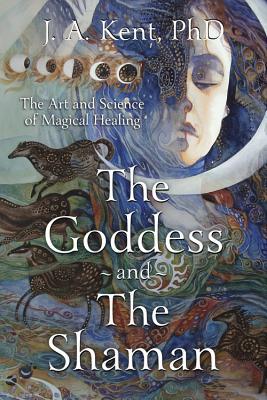
The Goddess and the Shaman: The Art & Science of Magical Healing by J.A. Kent

The Goddess and the Shaman: The Art & Science of Magical Healing by J.A. Kent

“I discovered the presence of a mystical and magical tradition that was largely concealed within our culture that had its roots in ancient pre-Christian Paganism, alchemy, Hermetic philosophy, the holy Qabalah, and elements of Greek, Egyptian, and Gnostic mysticism. It is generally referred to as the Western magical tradition. I tend to see it as the lost shaman tradition of the West.” -From the Preface

J.A. Kent, PhD, examines various occult and healing practices from a variety of traditions by interviewing practitioners as well as providing case studies of her own patients in order to present, what I can only call, her doctoral thesis of her personal magical paradigm. Her paradigm is the title of her book, The Goddess and the Shaman.

“There are strong social and medical pressures in Western-style thinking that regard those who have psychic experiences to be either fraudulent or psychotic.” pg 16

Let me briefly explain this paradigm, though I highly recommend reading the book to get it in Kent’s own words.

“The Goddess” is another name for what Kent calls the “Elphame,” essentially the other non-physical worlds that exist either alongside or on top of (depending upon who you speak to) our normal every day world. “The shaman” are the lightworkers and healers who explore these realms for various reasons including healing others of sicknesses both of the body and spirit.

I think it took a great deal of bravery to write a book like this, especially with the prevailing worldviews at work today. Well done, J.A. Kent!

The world is an enchanted, mysterious, and magical place that will reveal its many secret powers and energies to those who have the persistence and determination to unlock them.” pg 64

The trouble with spiritual healing or any type of work in the Elphame, Goddess, or whatever you want to call it, is that the practitioner exits the consensual reality of the every day world and enters non-consensual reality- the abode of the dreamers, lovers, poets, musicians, mad, etc. I have come to believe that the Western world, Western medicine especially, is not kind to those who venture outside the bounds of the normal.

Kent discusses this in depth in multiple places of this book. Suffers who could find no mundane explanation for their troubles turn to her in order to find some relief. And, encouragingly, many found healing.

“Ultimately they rejected the reductionist psychiatric explanation and embarked on their own magical journey of healing.” pg 159

Recommended for therapists and spiritual healers who are looking for more ideas about how to assist those who come to them seeking help. I enjoyed this book very much.

Thanks for reading!

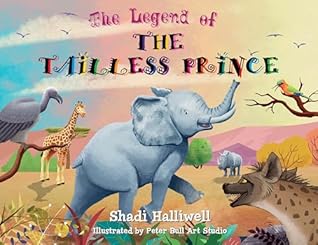
The Legend of the Tailless Prince by Shadi Halliwell

The Legend of the Tailless Prince by Shadi Halliwell

In The Legend of the Tailless Prince, a young elephant goes on a solitary adventure and loses his tail. After this calamity, he learns what really matters is what you do, not how you look.

I thought the artwork of this book was quite beautiful with brightly colored drawings illustrating the tailless prince and his exploits.

The actual story part was not so strong- I wanted to know more about this young elephant. How else does he help his herd, other than being strong and brave? What actions did his feelings lead to besides fighting the other bulls for dominance?

Also, I wanted to know more about the tailless prince’s mother. In nature, it is the female elephants of the herd that lead as they have a matriarchal society. A lot more could have been done with that character.

Recommended for children who like stories about animals as well as positive tales about how to be a shining light in the world.

I read this book on the recommendation by Chelsea Handler from her latest non-fiction tome entitled, I’ll Have What She’s Having. You can read my full review of her book here: https://thehelpdeskbookblog.com/2025/09/22/ill-have-what-shes-having-by-chelsea-handler/

Thanks for reading!

I’ll Have What She’s Having by Chelsea Handler

I’ll Have What She’s Having by Chelsea Handler

In I’ll Have What She’s Having, Chelsea Handler shares amusing (often hilarious) stories and anecdotes about her family, relationships, pets and other memories from her life. The focus of the essays is all about uplifting and encouraging others through sharing the gifts and love that Chelsea has experienced throughout her life.

“This woman I’ll become, she will never be silent.” pg 4

Through the use of meditation, exercise, professional therapy, and various psychedelics, Ms. Handler has reached a relatively stable and positive stage of her life. As someone who has enjoyed her books and stand-up comedy for years, it is such a pleasure to read that she is both happy and thriving.

“None of the things other people have called me has ever really mattered. What other people say about you only matters if you believe what they are saying is true.” pg 18

She not only stands up for herself in these pages- defending her choices and lifestyle from both naysayers and judgey people of all types, but she also stands up for others. Ms. Handler has a talent for seeing how someone else is hurting and bringing them the comfort that they need most at that time.

It is a rare gift.

“Sitting around and thinking of all the people who don’t love you or don’t want to hang out with you diminishes your own light. … There are many moments in life when your own light is all you need.” pg 104

As someone who is childless by choice, Ms. Handler does not use this as an excuse to be standoffish when the young people in her life need assistance. In this book, she discusses at length how she is a matriarch/patriarch to both her family and her friends’ children. She sets an example for how to be and interact in the world- as a strong woman and parental figure.

I believe it is this type of behavior that builds strong communities, which uplifts everyone. Well done, Chelsea!

Highly recommended for readers who enjoy Ms. Handler’s comedy but also anyone who is looking for a pick-me-up in book form. I took great courage from I’ll Have What She’s Having and I hope others do too.

Thanks for reading!

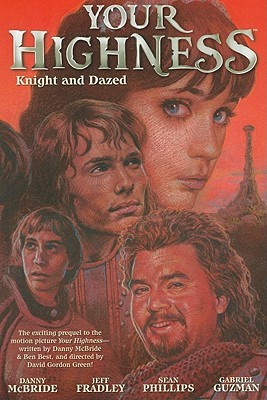
Your Highness by Sean Phillips

Your Highness by Sean Phillips

Your Highness, a two comic collection, is the prequel to a film called, you guessed it, “Your Highness”.

In these pages, Fabious, the elder prince, goes on a quest to slay a monster who was unleashed by an evil sorcerer. The younger brother, Thadeous, is sent by his father, the king, to secure a treaty with a nearby dwarven kingdom.

Both princes encounter adventures that they were not prepared for.

I wish, in preparation for reading this slim tome, that I had had the chance to rewatch the movie. But I didn’t. So, until then, I’ll just have to rely on my memory of the film from twelve plus years ago.

In the comic, as in the movie, both princes are caricatures of the angel/devil archetype of consciousness.

Fabious, the elder brother, stands in for our “angelic nature”. He is driven to bring justice and safety to those around him while carefully protecting his honor throughout the quest. The flipside to this personality is he suppresses his baser urges, leading to some amusing innuendo with his fellow knights.

(Sexual innuendo and clever word play isn’t something I necessarily find funny, but for those who do, Fabious provides this in spades.)

The other brother, Thadeous, represents humanity’s shadow mode of consciousness. He delights in excess whether that is food, marijuana, or sex. And though he is tasked by his father with as important a mission as his brother, readers know immediately that he will probably fail- not because he’s is incapable of doing what is required, but because he will most likely chose to indulge in his baser instincts to the detriment of his goal.

Overall, I liked the artwork in Your Highness. I thought the panels flowed nicely and the dialogue was well done too.

As for the story itself, I felt it was a tad predictable, but still enjoyable.

I wish, in the Thadeous storyline, the dwarves’ weed had had some magical properties that elevated it beyond bringing an excellent high. Maybe using it could cause one to see where minerals were hidden beneath the earth?

Anyway, recommended for fans of the movie and readers who enjoy fantasy comics in general.

The Key: A True Encounter by Whitley Strieber

The Key: A True Encounter by Whitley Strieber

Originally Reviewed on April 12, 2015

I enjoyed this book not necessarily for its message but because it’s a stunning example of a clear communication from a mysterious source of non-human/non-physical intelligence. It’s not a huge surprise to me that Strieber was able to make such a connection as he details his daily transcendental meditation practice and has previous experiences with the worlds and beings beyond the everyday waking world. (For an example, see his story in this book about meeting the small, withered old man or one of his numerous other non-fiction works.)

If you pick up this book, you’re either going to believe what Strieber has to say or dismiss the information- there’s not a lot of wiggle room. Let’s continue this review with the assumption that you, like me, believe Strieber saw and heard something or someone, received a message, and wrote it down. If you don’t believe that basic assumption, then this review is going to be a waste of your time. I’d suggest moving on to the next one. Peace.

Now, I believe that there are all manner of spirits that inhabit the unseen world. Like the “Master of the Key” described in Strieber’s midnight conversation, I believe there are forces that allow things to thrive and forces that deny this. I think the way to decide which force is what is to examine how the communication makes us feel and the actions that we feel compelled to take after the encounter.

What was the ultimate impact of the “Master’s” words for you, the reader? I felt fear- deep, bone-chilling fear.

First of all, I felt fear for the being’s assertion that the Earth is going to be destroyed in a climate related disaster that no one can stop now because we ruined the atmosphere. That not only affects me, but my children’s children’s children. There are always steps we can take to make the world, and the future, a better and brighter place. I will not give up this agency to anyone, despite what hidden knowledge they may profess to have.

Second, I felt fear for his idea that none of the major world religions (Christianity, Buddhism, Islam) reveal the full truth of conscious evolution, which, in one fell swoop, denied the inner truths for a majority of the people on this planet today. And, the quietly implied addendum to this revelation, that none of the major religions know the truth, BUT I DO- this mysterious guy who shows up in the middle of the night, dumps all of this in Strieber’s lap, then makes him drink a concoction to have him forget everything that he didn’t write down. This doesn’t feel like a benevolent act to me. It feels like a play to make Strieber feel afraid, directionless, and unwilling to seek out help from anyone from a major religion, which is a lot of people and shuts a lot of potential open doors.

Third, I felt fear for this mysterious being’s assertion that the world will be lost because of a child who was never born because of the Holocaust. What sort of creature/being/visitor would know the full extent of the evil caused by one of the worst atrocities in human history, save that knowledge until fifty years after the fact, and tell it to someone who, by his own admission, doesn’t have the power to do anything about it? Fiendishly clever, no?

And, again, this third bit of information seeks to remove Strieber’s, and any reader’s, feelings of hope for the future. I reject the idea that nothing can be done about future events. Everyone exists in the Now moment, which is quite a powerful place to be. It is here that we can change the world, not by ruminating on past horrors and the terrible fallout from them. I will not abandon hope. A dream of mine is that others will not give up also.

I find it interesting that the “Master of the Key” in the book planted enough prophetic tidbits in his fear-filled message to impress Strieber with a feeling of truth from the communication like with the gas-holding memory idea for machines. But, for me, the nature of the messenger himself is clear, given the underlying effect that almost everything the visitor had to say was to sow fear, create a feeling of impotence or divisiveness, and to manufacture a driving need to consciously evolve now, now, NOW in this brand new way or everybody’s going to die and be chained to a dying planet forever until the end of time.

Let’s go back to our existential questions again for a moment: what sort of being wants people to feel afraid, separate from the source of your being, feeling like you have forgotten important knowledge that is required to save your soul that only the mysterious being knows? What sort of being would counsel a soul to not go into the light because that isn’t God, it’s oblivion?

When Strieber asks this being his name, the reply was something like “You could call me, Michael. Or, you could call me, Legion. I would be honored to be called human.” This was a red flag for me. “Who’s in there with you, Legion?” would have been my next question to the being.

I think what Strieber experienced was real. I think that it was a cleverly packaged hodgepodge of truths, possible futures, and small twists of religious dogma designed to make Strieber doubt everything, even his own inner guidance. Strieber himself said that, after everything that had happened, what he most wanted was to talk to this being again. If I was in his shoes, I’d feel the exact same way. There are quite a few things that could use clarification. The first of which, in my mind, is why does this being instill such a feeling of fear in those he communicates with? Is that really necessary to get his message across or is it some kind of unfortunate side effect of the type of energy the being is emitting?

Despite my thoughts on the true nature of the “Master of the Key,” if you liked The Key and were able to distill some truths that rang true for you from all of the fear-mongering, you might like troubling predictions of Heaven is Real But So is Hell by Vassula Ryden. I got the same kind of vibe from her book. I feel like there may be truths there to be found but the large part of the message felt devoted to making the recipients of that message just quake in fear. Proceed cautiously.

Thanks for reading!