Pathways to Bliss: Mythology and Personal Transformation by Joseph Campbell

Pathways to Bliss: Mythology and Personal Transformation by Joseph Campbell

“Each entered the Forest Adventurous at that point which he himself had chosen, where it was darkest and there was no way or path.” You enter the forest at the darkest point, where there is no path. Where there’s a way or path, it is someone else’s path; each human being is a unique phenomenon. The idea is to find your own pathway to bliss.” pg xxvi

Pathways to Bliss is a collection of Joseph Campbell’s writings and lectures, expanding upon the theory he put together in The Hero With a Thousand Faces. Namely, that myths serve a psychological function to help individuals safely traverse the various stages of his or her life.

Photo by Elina Sazonova on Pexels.com

That statement is over simplifying Campbell’s complex and richly-developed discussions of mythology, but it’s the basic building blocks of the thing.

“If it is a living mythology, one that is actually organically relevant to the life of the people of the time, repeating the myths and enacting the rituals center you. Ritual is simply myth enacted; by participating in a rite, you are participating directly in the myth.” pg xix

Campbell talks about not only the importance of the myths throughout generations of humankind, but the idea that it is a living, breathing system. He believes there is trouble on the horizon if society’s myths don’t change and evolve to keep up with the challenges of the current day.

He also stresses the need for the individual to find their own meanings in the stories and symbols of the mythology. The pathway to that which you are here to live is something that only you can find for yourself.

Though, he does point out, you could experience your unique pathway through ritual and communion with a community of like-minded believers. Campbell applies his mythological lens to the world religions, to life stages, to everything in-between to see what universal truths he can pull out of the stories and the common experience of humanity.

“And my little sermon to the churches of the world is this: you have got the symbols right there on the altar, and you have the lessons as well. Unfortunately, when you have a dogma telling you what kind of effect the symbol is supposed to have upon you, you’re in trouble. It doesn’t affect me that way, so am I a sinner?” pg 43

Photo by Pixabay on Pexels.com

I found this book easier to understand than The Hero With a Thousand Faces, which I read a few months ago. Despite this, I suggest you read Hero first, because it’ll give you a better contextual base to understand what the heck Campbell is going on about.

I had some issues with his concluding chapter of this book, Dialogues. In an open discussion with some female attendees of one of his seminars, Campbell and the women try to define how the woman’s heroic journey is different than a man’s.

I didn’t agree with some of their conclusions. Maybe you had to be there to truly grasp the essence of what he was saying.

“The suffering overtakes women – it is part of the nature of womanhood. Whereas the man has to undertake suffering – it’s a big difference.” pg 153

Photo by João Jesus on Pexels.com

Women’s life is suffering? hmmmm…

Recommended for readers interested in more of the musings of Joseph Campbell or for people interested in mythology and its practical applications. Beware that some of the material may be somewhat dated.

The Lies of Locke Lamora (Gentleman Bastard, #1) by Scott Lynch

The Lies of Locke Lamora (Gentleman Bastard, #1) by Scott Lynch

In The Lies of Locke Lamora, readers are introduced to Locke, an orphan in a fantastical city with magical glass relics the size of entire city blocks. The glass is all that was left behind by the people who founded the city. Its inhabitants now do not understand how it was constructed, but that doesn’t keep them from utilizing the spires of magic glass or appreciating its otherworldly beauty.

Within this strange city that is similar to our world’s Venice, yet so different, Locke Lamora is taken in by various characters in the realm’s criminal underworld. The boy shows promise for a life of theft and confidence games… if he can reign in his propensity for accidentally getting people killed.

Photo by Pixabay on Pexels.com

“At the height of a long wet summer of the seventy-seventh year of Sendovani, the Thiefmaker of Camorr paid a sudden and unannounced visit to the Eyeless Priest at the Temple of Perelandro, desperately hoping to sell him the Lamora boy.”

There are layers to this tale. There’s intrigue and backstabbing among the criminal underworld or those who call themselves, “the right people”. There’s a gang of criminal masterminds, the Gentleman Bastards, who prey on the city’s upper class citizens, but who pass themselves off as simple sneak thieves to the rest of the gangs.

And while Locke’s gang, the Gentleman Bastards, are running one of the biggest cons of their life, the chapters of that storyline are interspersed with the personal histories of the gang’s members. Part of that history includes the Gentleman Bastards’ training as priests of the various orders in the city, of which there are many.

So, to recap: there’s complex religion, city hierarchy, criminal hierarchy, levels of con games, and then the real story begins when Locke’s plan, as usual, begins to go sideways.

“I ache in places I didn’t previously realize I owned,” said Locke, gingerly applying adhesive paste to his chin with his fingers. “But it can’t be helped.”

Photo by Francesco Ungaro on Pexels.com

I first read The Lies of Locke Lamora eight years ago in March 2012. I recently re-read it in May 2020. To my surprise, I enjoyed it somewhat less the second time around.

I still like the characters, the story and the setting, all of which were beautifully written. My complaint was the pacing. Just as the author gets rolling on the main story line, he draws us back into the past. I didn’t seem to mind it the first time I read the book, but I definitely noticed it in the second reading.

But don’t let a small thing like pacing dissuade you from reading The Lies of Locke Lamora. It is an awfully entertaining fantasy read. And if I remember correctly, the next two books in the series are fun as well.

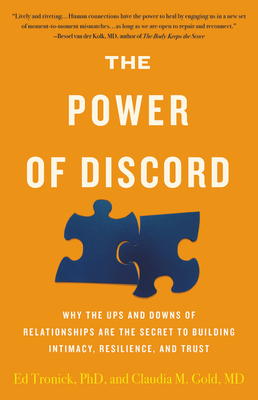
The Power of Discord: Why the Ups and Downs of Relationships Are the Secret to Building Intimacy, Resilience, and Trust by Ed Tronick, Claudia M. Gold

The Power of Discord: Why the Ups and Downs of Relationships Are the Secret to Building Intimacy, Resilience, and Trust by Ed Tronick, Claudia M. Gold

The Power of Discord is a study of human connection and disconnection. The authors, Ed Tronick and Claudia Gold, demonstrate through scientific and therapeutic studies that by working through conflict and the messiness of every day life, our relationships can be stronger than ever before.

Our earliest relationships have a profound affect on the way we interact with others as adults. It is almost scary how fast infants develop the responses that they carry with them into adulthood. In Tronick’s groundbreaking study called the “still-face” experiment, his findings helped researchers discover how infants communicate with their mothers.

Photo by Anna Shvets on Pexels.com

In the experiment, a mother and child are interacting, playing as usual. Then, the mother turns away a moment and when she turns back, her face is still and empty of emotion.

The curious thing about the infants’ reaction to their caregiver presenting them with a face devoid of emotion is that researchers could already see how the relationship between the two was developing. Infants in a healthy relationship kept trying to get a reaction out of the other person until their caregiver “went back to normal.” Infants in a “dysfunctional” relationship, or who were for whatever reason were less connected with their parent, shut down and practiced coping or self soothing mechanisms rather than trying to draw the caregiver out.

Prior to this experiment, it was assumed that infants had little to no communication ability whatsoever.

“When confronted with a stressful situation, (infants) could apply a style of interaction drawn from the everyday exchanges with their caregivers. While they did not yet have the capacity for language or conscious thought, they were able to draw on their countless moment-to-moment interactions to cope with the stress of caregivers’ unfamiliar behavior.”

Photo by Pixabay on Pexels.com

I worried, as I read the study, that the children would somehow be scarred by it. Some of the reactions the researchers described were very intense and painful for everyone involved. But the authors assured readers the level of stress in the experiment wasn’t something beyond what the children would encounter in their daily lives. Still, it seemed rather unfair to them. It wasn’t like researchers could explain what was going on.

Beyond the initial interactions that form the manner in which people craft their relationship styles, Tronick and Gold delve into further issues that may affect how you connect with others like: the pernicious effects of perfectionism and addiction to technology, feeling safe around others, taking responsibility for your connection style, and, the part I liked the most, the surprising way discord makes relationships stronger.

“… it is not simply what happened when we were young that screws us up now. Along the way to growing up and into our adult lives, we continue to create new ways of being screwed up. Only when we have accumulated a whole new set of interactions, when we work through the inevitable moments of disconnection to again find connection, will we grow and change.”

Photo by Josh Willink on Pexels.com

Though we learn how to form connections before we even have language, researchers have found that connection styles can be relearned, relationships can be repaired and are repaired, every day, little by little. In countless “mismatch and repair” moments, we teach ourselves that there is nothing broken that can’t be restored. It builds confidence in the relationship and trust in ourselves and each other – the building blocks of intimacy.

Highly recommended for readers looking to engage in some introspection about their own attachment style or for those who are curious about how relationships are formed and maintained.

Thank you to NetGalley and the publisher for a free advance reader copy of this book.