Shinrin-Yoku: The Art and Science of Forest Bathing by Qing Li

Shinrin-Yoku: The Art and Science of Forest Bathing by Qing Li

“Shinrin-yoku means bathing in the forest atmosphere, or taking in the forest through our senses. This is not exercise, or hiking, or jogging. It is simply being in nature, connecting with it through our sense of sight, hearing, taste, smell and touch.” pg 12

Nature lovers or those aspiring to be nature lovers will find much to enjoy in Shinrin-Yoku: The Art and Science of Forest Bathing.

Photo by Jose Vega on Pexels.com

Qing Li reminds readers that the human race is a part of this world even if we have walled ourselves up in cities and covered the ground in concrete. Through various scientific studies, he proves again and again that by taking a time out and forest bathing people can sleep more deeply, experience less stress and think more clearly.

“We may not travel very far on our forest walk but, in connecting us with nature, shinrin-yoku takes us all the way home to our true selves.” pg 15

Not convinced? He provides evidence that patients at hospitals heal faster if the view outside their window includes a tree rather than a wall. People who exercise outside report the exertion they need to complete the workout is less and they enjoy the time more than those who churn out the miles on a treadmill.

“The average sleep time of participants after a two-hour forest walk increased by 15 percent, or fifty-four minutes. Participants were significantly less anxious after a two-hour walk in the forest.”

Photo by WARREN BLAKE on Pexels.com

Forest bathers have reported higher levels of creativity, writers find relief from the dreaded block, and the sense of connection caused by the practice has been known to increase feelings of gratitude.

“The researchers concluded that there ‘is a real, measurable cognitive advantage to be realized if we spend time truly immersed in a natural setting’, and found that spending time in nature can boost problem-solving ability and creativity by 50 per cent. Is it any wonder that Buddha found enlightenment sitting under a tree?” pg 106

Is there anything that forest bathing doesn’t help? How about your health or physical age?

“A group of Canadian, American and Australian researchers studying tree density and health in Toronto found that… having eleven more trees on a block lowered cardio-metabolic illnesses, like high blood pressure, diabetes and obesity, comparable to the effects on well-being conferred by being given a $20,000 a year pay rise or being 1.4 years younger.” pg 116

Photo by Johannes Plenio on Pexels.com

In addition to the information about forest bathing, this book contains beautiful photos of forests every couple of pages. Qing Li gives readers the instructions so, if they desired, they could hold their own traditional tea ceremony in the woods. He includes anecdotal information about aromatherapy, tips on how to bring the forest into your home, advice on how to incorporate beneficial natural sounds into your daily life and more.

I enjoyed this book very much. Highly recommended.

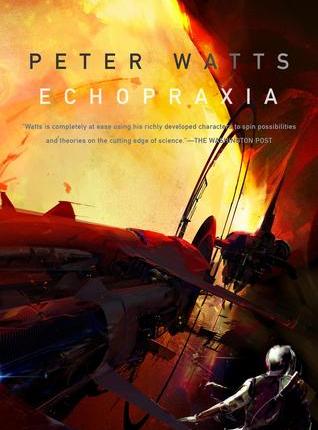
Echopraxia (Firefall, #2) by Peter Watts

Echopraxia (Firefall, #2) by Peter Watts

Peter Watts returns readers to the dystopian world of Firefall with Echopraxia, the second novel in the series.

Meet Daniel Bruks, an outcast biologist with a secret. He’s struggling to continue with his scientific studies in a world that has ceased to make sense after the alien contact in Firefall.

Photo by Pixabay on Pexels.com

“The Theseus mission would be well past Pluto by now. If it had found anything, Bruks hadn’t heard about it. For his part, he was sick of waiting. He was sick of life on hold, waiting for monsters or saviors to make an appearance. … He wished the world would just hurry up and end.” pg 15

His life quickly changes when he finds himself herded into an esoteric and technologically advanced cult’s desert compound while they’re under attack from weaponized zombies. (It makes more sense when you read it, I promise.) What follows is an exploration into the realms of religion, technology and faith.

“One day you’re minding your own business on your camping trip…” “Field research.” “… the next you’re in the crossfire of a Tran war, the day after that you wake up on a spaceship with a bull’s-eye painted on its hull.” “I do wonder what I’m doing here. Every thirty seconds or so.” pg 81

The same microscopic lens Watts used to take apart consciousness in the last book, he applies to a totally different topic, religion, in this one and it doesn’t quite work.

He doesn’t take any time to introduce readers to some of the more far-out concepts from the last book. If I had dived into Echopraxia without reading Firefall, I would have been totally lost. And as it was, I certainly was confused by the end.

Photo by Pixabay on Pexels.com

Where the last book was a space and science adventure, this one is a journey, both metaphorical and physical. The threats along the way are somewhat as scary, but the characters aren’t as well-fleshed out.

Maybe I was spoiled in the last book because I really enjoyed Siri, the narrator’s, character. Daniel Bruks is more difficult to love.

But it’s not just the characters. The science of the last book was more connected to the story line. In this book, it almost felt like a tacked-on after thought.

And as hard as I tried to put the pieces together, the ending never quite made sense. I put some serious thought into it too. It’s one thing to leave an ending somewhat ambiguous so the readers can hash it out, it’s another to give almost no clues at all.

That’s not to say Watts isn’t brilliant, because he is. However, if you have the choice between reading Firefall or Echopraxia, I would suggest the former rather than the latter.

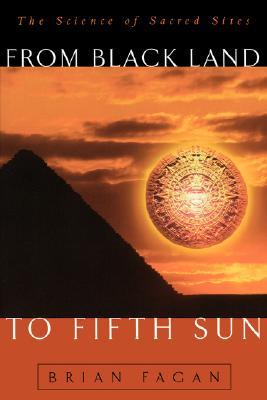
From Black Land To Fifth Sun: The Science Of Sacred Sites by Brian M. Fagan

From Black Land To Fifth Sun: The Science Of Sacred Sites by Brian M. Fagan

From Black Land to Fifth Sun is the textbook for an online course I’m taking from Oxford University about ritual and religion in prehistory.

The opening chapter to the book seems promising, offering readers a glimpse into the hidden worlds of what could be called the “archaeology of the mind.”

“The emerging ‘archaeology of mind’ is a marriage of cultural systems theory, settlement archaeology, environmental reconstruction, contextual archaeology, and the decipherment of written records.” pg 11

Photo by Samuel Wölfl on Pexels.com

Unfortunately, the text then becomes bogged down by the author’s lengthy descriptions of archaeological sites he visited during the course of his life and his interactions with some of the giants of the field, who, as he so helpfully notes, are dead now. One of my classmates described it as “perhaps the most boring travelogue ever.”

“I have not seen the Chauvet paintings: few outsiders have yet had the chance. Nor should they, for our primary concern must be to protect them from harm.” pg 50

Some of the most interesting parts of this were the author’s descriptions of rituals from modern peoples, such as the San. But there are perils galore to using any of this modern information to decipher rituals in prehistory. The culture and society is not the same. The hierarchies are not the same. The tools and materials available are not the same. The meanings assigned to the ritual movements may have changed if we even knew what those movements were, which in most cases we don’t. There may have been a charismatic figure at the center of the cult or religion, and who knows what they may have been like. I could go on and on.

“As they activated their potency, the medicine men trembled, then sweated, then bled from the nose, as the potency took hold of them – an eerie sight to behold. Many white hunters have seen dying eland, trembling with wide-open mouths, sweating profusely, with melted fat gushing like blood from their nostrils. Perhaps the San likened this phenomenon to ‘death’ in a medicine man’s trance.” pg 61

Photo by Athena on Pexels.com

The fact that I find this book so dull truly is a shame. This topic could come alive with a little updating. Perhaps if the text had a digital component, where you could digitally “walk” through the sites the author is describing as he describes it, it might hold the attention.

Also, From Black Land to Fifth Sun was published in 1998, twenty-two years ago for those keeping score. It purports to be on the cutting edge of archaeological research but I find that extremely dubious when I consider how far technology has developed since then. One need only look at the state of our handheld devices to know it couldn’t possibly be true.

In addition to the meandering yet somehow dry descriptions and outdated technology, somehow the author has managed to suck the life out of a topic I find extremely compelling. What did ritual and religion look like during prehistory? I don’t know, but I can imagine so many different scenarios. So many!

I feel like this field could use people who use their intuition and imaginations in addition to scientific techniques to bring the past to life- almost like a shamanistic version of Indiana Jones.

Photo by Navneet Shanu on Pexels.com

Instead, we have either scientists putting locks and fences around sites to maintain each dust molecule in context and then droning on for hours about when the human brain may have become capable of religious thought or arguing about whether religion developed as a societal control for hunter-gatherers or agricultural people. On the other hand, there’s the spaced-out new agers who want to camp among the ruins of Stonehenge or wherever and commune with whatever spirits they claim are living in the rock, divorced from any kind of scientific evidence whatsoever.

Can’t we have some sort of happy medium?

Only recommended for the readers who are taking the same course I am. Otherwise, seekers are advised to steer clear.

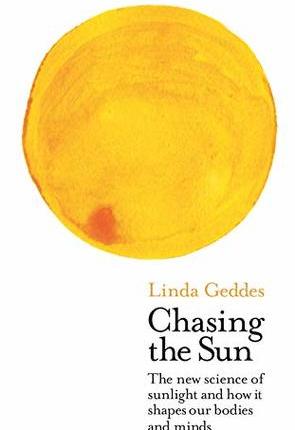
Chasing the Sun: The New Science of Sunlight and How it Shapes Our Bodies and Minds by Linda Geddes

Chasing the Sun: The New Science of Sunlight and How it Shapes Our Bodies and Minds by Linda Geddes

Chasing the Sun reminds readers of the importance of the sunlight in shaping some of the body’s processes, regulating mood, and the surprisingly deleterious effects that not enough sun, or not adhering to the body’s natural rhythms, can have.

I picked up this book because I’ve been having trouble sleeping and thought maybe this would have some helpful tips. It did, but I felt like most of this information I had heard before in some form or another. I suppose it is nice to have a reminder to get ample sunlight during my daily routine. I have experienced bouts of seasonal affective disorder in the past and know first hand how it can affect your mood.

Photo by Jill Wellington on Pexels.com

It is rather depressing how far removed modern society has made itself from nature. Linda Geddes points out this gap and how the ancients, and some members of our era, made better use of this natural resource.

I enjoyed the history lessons about the Romans and their solariums. They used “heliotherapy” to treat a variety of illnesses. I also enjoyed the studies about the potential effectiveness of “chronotherapy” for patients suffering from certain mental disorders as well as learning about efforts to increase their sunlight by towns that receive little light during the day. For example, there’s a town in Norway that put mirrors on top of the nearby mountains in order to direct more sunlight their way.

Photo by ArtHouse Studio on Pexels.com

As we know more about the importance of sunlight, I’m certain we’ll see more efforts to incorporate this information into our daily routines. And it affects things we may not even consider from school start times to a good night’s sleep.

Recommended for readers who want to learn more about how the sun affects our lives and some of the newer scientific research about the same.

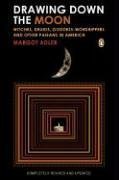
Drawing Down the Moon: Witches, Druids, Goddess-Worshippers, and Other Pagans in America by Margot Adler

Drawing Down the Moon: Witches, Druids, Goddess-Worshippers, and Other Pagans in America by Margot Adler

Margot Adler talks to adherents in different traditions all across the United States, and a few in Europe, in order to banish some of the mystery and misconceptions surrounding neo-pagan groups.

“Since Pagans are a very diverse group, it is wrong to say all Pagans believe this or that, but here are some beliefs that many people in this book share: The world is holy. Nature is holy. The body is holy. Sexuality is holy. The imagination is holy. Divinity is immanent in nature; it is within you as well as without. Most spiritual paths ultimately lead people to the understanding of their own connection to the divine.” pg 11, ebook.

Photo by Gianluca Grisenti on Pexels.com

I didn’t know much of anything about pagan religions before I read this book, mainly because I am from a particularly conservative part of the country and there are very few groups of this type around. It’s hard to get to know people if there aren’t any to talk to.

In some circles, just the word “pagan” inspires fear because it’s not clear what this means or people might be threatened by how someone’s beliefs might be different from their own.

“Neo-Pagans look at religion differently; they often point out that the root of the word means “to relink” and “to connect,” and therefore refers to any philosophy that makes deep connections between human beings and the universe.” pg 24

Adler examines an extraordinary number of pagan groups, an almost bewildering amount. I liked that this book introduced me to so many different paths and ideologies, but at the same time, it began to get somewhat repetitive as she broke down all of the different groups.

Photo by Gheorghita Claudiu on Pexels.com

But as the friend who had recommended this book reminded me, Drawing Down the Moon was created in the years before the existence of the internet. It was intended not just to explain what these groups were, but also operated as a catalog of sorts, for readers who were looking for the right path for themselves.

Recommended for spiritual seekers who are looking for a tradition that fits or for anyone who is curious about the stunning variety of spiritual beliefs there are out there. I learned so much.

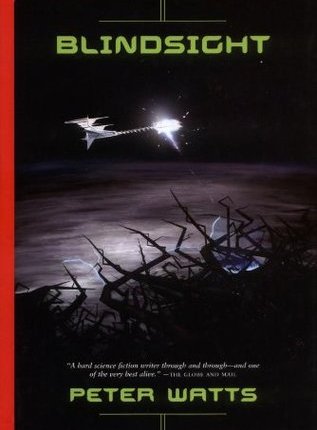
Blindsight (Firefall, #1) by Peter Watts

Blindsight (Firefall, #1) by Peter Watts

Blindsight is an incredibly imaginative science fiction novel that takes on the foibles of human consciousness and examines, in a serious way, what an alien-form of consciousness might look like.

Siri is a unique protagonist. Because of severe seizures when he was young, doctors performed dramatic brain surgery in order to save his life, essentially cutting his brain in half.

Photo by meo on Pexels.com

“The brain’s a very flexible piece of meat; it took some doing, but it adapted. I adapted.” pg 9, ebook.

This early surgery changed the way Siri’s brain worked and how it processed reality, making him the perfect translator for other humans whose brains and bodies have been so changed that baseline humans can no longer communicate with them.

And Siri’s special talents are desperately needed after aliens unleash surveillance technology in the atmosphere. Humanity called the strange lights in the sky, “fireflies.”

“How else would you explain 65,536 probes evenly dispersed along a lat-long grid that barely left any square meter of planetary surface unexposed? Obviously the Flies had taken our picture.” pg 24, ebook.

Photo by Felipe Helfstein on Pexels.com

Siri becomes part of an elite mission sent by Earth to discover where the “fireflies” originated from and who or what created them.

Blindsight isn’t a simple read. It proposes complex ideas that demand some attention to unravel and it makes the reader consider how real is her own perception of this thing we call “reality.”

It asks how technology may change not only how humankind takes in information, but how that information is interpreted and how that would separate people from each other. The characters Peter Watts has created for the alien-seeking mission are some of the most unique I’ve read because he takes those ideas to extreme conclusions.

“When the fate of the world hangs in the balance, you want to keep an eye on anyone whose career-defining moment involves consorting with the enemy.” pg 135, ebook.

But it feels very real. That is Watts’ strength – making the fantastical seem perfectly logical like vampires, real vampires.

Highly recommended for readers who enjoy “hard” science fiction.

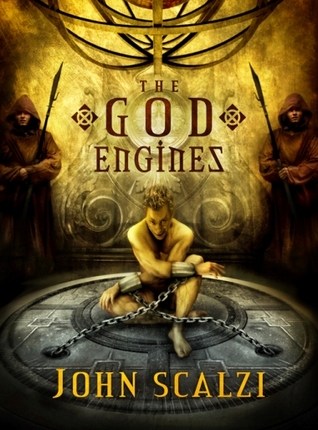
The God Engines by John Scalzi

The God Engines by John Scalzi

In the world of The God Engines, beings called gods power the ships that take humanity between the stars. How the world became this way is not for Captain Tephe to question, instead it is a matter of faith. As part of Tephe’s service and devotion to his own deity, he has to keep the being that powers his engine in check and subservient to his will.

That is not a simple task.

Photo by Pixabay on Pexels.com

“I do not know why this is. Why single made iron can kill a god. I know only that it can. I know the gods fear death more than do men. I can kill you with this, god.” pg 8, ebook

When Tephe is called to perform a secret mission of great importance for his deity, it throws his entire world view in jeopardy. He discovers his god, and all the others, may not be what they appeared to be.

“Words. They have power. To name a god is to give it power. To deny it such is to take it.” pg 16, ebook

I feel like this story was too short to fulfill its full potential. The general idea was very promising – what would a world where embodied gods were used as power sources look like? How would the society be structured? And how would a worshiper’s faith change or be challenged through day-to-day interactions with the gods?

Photo by Ben Yi on Pexels.com

The plot felt rushed as the characters raced from one place to another. I also wanted a bit more background about the universe of The God Engines, but the lack of it added somewhat to the mystery of the story.

“You are charged with silence,” proclaimed the third Bishop. “What is spoken to you here is not to be spoken again, on remit of your soul.” pg 31, ebook

I think the strength of this story is in how it addresses faith. Faith in the goodness of the unseen shapes lives and guides actions. It explains why some gods power ships and others rule empires. Because of faith, humanity has waged wars and conquered planets.

Perhaps someone should have made certain this faith wasn’t misplaced…

Recommended for readers who enjoy short science fiction novels with a liberal dash of horror.