The Hero With a Thousand Faces by Joseph Campbell

The Hero With a Thousand Faces by Joseph Campbell

“Throughout the inhabited world, in all times and under every circumstance, myths of man have flourished; and they have been the living inspiration of whatever else may have appeared out of the activities of the human body and mind.” pg 1

Joseph Campbell presents his, now classic, thesis of comparative mythology and psychology. By examining different myths from all around the world, he outlines the hero’s journey. The journey has many different steps and elements to it, but beneath it all, Campbell believes, through all the many stories, the journey is one.

Photo by Maria Pop on Pexels.com

“Furthermore, we have not even to risk the adventure alone; for the heroes of all time have gone before us; the labyrinth is thoroughly known; we have only to follow the thread of the hero-path.” pg 18

I think in different circumstances I may have enjoyed this book very much. The topic, comparative mythology, is one I find particularly fascinating. I also like to see how humankind incorporates the mythical not just in our stories, but in the way we set up our societies.

“… every failure to cope with a life situation must be laid, in the end, to a restriction of consciousness. Wars and temper tantrums are the makeshifts of ignorance; regrets are illuminations come too late.” pg 101
Photo by Pixabay on Pexels.com

But honestly, I had trouble focusing because of certain current events. Campbell presents the different myths in pieces organized by his heroic stages rather than in one flowing story. Between the trouble focusing and the bouncing around from myth to myth, this was a difficult read for me. Perhaps I’ll try this book again in the future, when my life doesn’t feel so off-kilter.

I think it has plenty of treasures to be discovered for spiritual seekers of every kind. It also demonstrates that though we look different and live very different lifestyles, at our soul level, there are many similarities to humanity. We find these similarities mirrored through our stories, our life stages, how we live and how we dream.

“Those who know, not only that the Everlasting lives in them but that what they, and all things, really are is the Everlasting, dwell in the groves of the wish-fulfilling trees, drink the brew of immortality, and listen everywhere to the unheard music of eternal concord. These are the immortals.” pg 142

Photo by Gabriel Peter on Pexels.com

I sincerely hope you all live and dream sweetly, immortals, wherever on the hero’s journey you may be: sheltering-in-place or braving the world, and that I will live and dream sweetly, too.

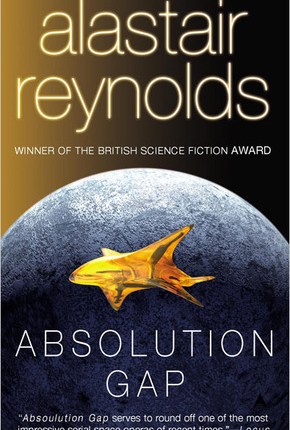
Absolution Gap (Revelation Space, #3) by Alastair Reynolds

Absolution Gap (Revelation Space, #3) by Alastair Reynolds

Alastair Reynolds ends his space opera trilogy with Absolution Gap. Many of the characters from the last book are desperately fighting the Inhibitors, but humankind seems to be losing the war. In a final hail Mary, the Conjoiners and a new member of their race seek a distant star system where a planet seems to disappear and the phenomena is worshiped by a group of fanatics led by a prophet with religious fervor literally in his bloodstream.

For a fraction of a second something inexplicable had occurred. A sensor anomaly. A simultaneous hiccup in every sensor that happened to be observing Haldora as the ship made its approach. A hiccup that made it appear as if the gas giant had simply vanished. Leaving, in its place, something equally inexplicable.” pg 54

Photo by Edvin Richardson on Pexels.com

Reynolds weaves two main story lines together to create an adequate, but perhaps not entirely satisfying, ending. The science in his books is impeccable. But, like in my previous reviews, I wanted a bit more from the characters.

“Are you all right, sir?” he had asked. Clavain had looked at him sharply. “I’m an old man,” he had replied. “You mustn’t expect the world of me.” pg 77

Readers have come to care about Clavain, Anoinette Bax, Scorpio, and the myriad others characters in this world. The endings given to them are, in my opinion, abrupt and almost given as an aside.

But some of Reynolds writing is simply beautiful and it makes up for a variety of quibbles I had with the story telling.

“It was quiet now, but coming nearer, and he knew that when it reached its awesome crescendo it would fill his soul with joy and terror. And though the bridge looked much the way it had before, he could see the beginnings of stained-glass glories in the black sky beyond it, squares and rectangles and lozenges of pastel light starting to shine through the darkness, like windows into something vaster and more glorious.” pg 100

Photo by Pixabay on Pexels.com

The broader themes are worth considering as well. What would happen to the human mind if the body becomes essentially immortal? Why does it seem like we’re so alone in the universe when there are so many inhabitable planets? What would advanced technological warfare look like? How would technology and its awesome capabilities change society, our modes of transport, and us?

“Brane theory suggested that the universe the senses spoke of was but one sliver of something vaster, one laminate layer in a stacked ply of adjacent realities. There was, Quaiche thought, something alluringly theological in that model, the idea of heavens above and hells below, with the mundane substrate of perceived reality squeezed between them. As above, so below.” pg 286

Photo by Miriam Espacio on Pexels.com

Recommended for science fiction readers who want to ponder those types of questions.

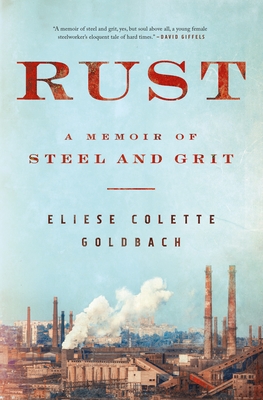
Rust: A Memoir of Steel and Grit by Eliese Colette Goldbach

Rust: A Memoir of Steel and Grit by Eliese Colette Goldbach

Eliese Goldbach pulls back the curtain to reveal the unseen struggles and contributions to society by steelworkers in Cleveland, Ohio, her hometown. Along the way, she delves into complex issues of mental health, politics, socioeconomic status, gender equality, and religion in her own life. It is, ultimately, a memoir about hope, but there was great suffering on Goldbach’s path to this realization.

When Goldbach was young, she viewed the stink of the steel mills as a type of pollution she needed to keep out of her body. But, when her plans to become a nun don’t materialize and she faces hurdles to completing the paperwork for her masters degree, Goldbach applies at the steel mill for the paycheck, accepting it as a step backwards in order to move forward into self sufficiency.

Photo by PhotoMIX Company on Pexels.com

“In a Rust Belt town, that flame isn’t just a harbinger of weird smells and pollution. It isn’t an anachronism, and it doesn’t prove a lack of innovation. … The flame is very much a part of our history and our identity. It’s a steady reminder that some things can stand the test of time, even in a world where nothing is built to last.”

A large part of Goldbach’s failure to thrive is caused by her mental health struggles. It affects her ability to hold down a full time job, maintain her relationships, and makes her dread the future. Yes, she might be doing well now, she tells herself, but in another couple of weeks that might not be true any longer.

“Doctors would tell me that mixed-state bipolar disorder is one of the most dangerous forms of the disease. Depression brings suicidal thoughts, and mania adds impulsivity. When people with mixed-state bipolar disorder have the will for death, they are more likely to have the energy to follow through.”

Photo by Artem on Pexels.com

Raised in a conservative and religious household, Goldbach is trained from an early age to see feminism as a dirty word. Through her own life experience, she discovers that some of her assumptions about feminism are untrue and begins to speak up for those who are unable or unwilling to speak for themselves.

“While there were other women who worked in the mill, we were definitely a minority. … There was a good deal of mansplaining, and there were offhanded comments that came straight out of the 1950s.”

Goldbach’s memoir shines in its examination and dissection of her personal beliefs and how those change through experience. It feeds into my own belief that only the person living a life has the true insight into its meaning and direction.

“I’m just disappointed in myself, I guess. I feel like I should have done more by now, and I’m worried that I’ll get stuck in the mill.”

Photo by Kateryna Babaieva on Pexels.com

Some readers may find Goldbach’s politics off-putting. But I think the difficult conversations she describes at the dinner table with her parents are going on at other dinner tables all across the country. An open dialogue and willingness to look at our differences can be painful, but that doesn’t mean we should never have those conversations.

Recommended for readers who enjoy memoirs and as a possible book club pick. Trigger warnings for mental health issues, especially those with bipolar disorder, and rape.

Thank you to NetGalley and the publisher for a free digital copy of this book. The brief quotations cited in this review may change or be omitted in the final print version.