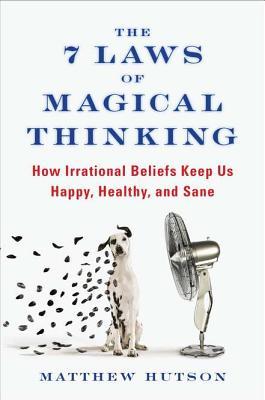
The 7 Laws of Magical Thinking: How Irrational Beliefs Keep Us Happy, Healthy, and Sane by Matthew Hutson

The 7 Laws of Magical Thinking: How Irrational Beliefs Keep Us Happy, Healthy, and Sane by Matthew Hutson

Matthew Hutson examines some of humankind’s irrational beliefs and shows, through stories and examples, how the beliefs are types of coping mechanisms and can be consciously utilized for a better life.

“These habits of the mind guide us through the world every day. In very basic ways they provide a sense of control, of purpose, of connection, and of meaning, and without them we couldn’t function.” pg 9

Photo by Pixabay on Pexels.com

The beliefs Hutson discusses are “objects carry essences”, “symbols have power”, “actions have distant consequences”, “the mind knows no bounds”, “the soul lives on”, “the world is alive” and “everything happens for a reason”.

I couldn’t possibly touch on every idea that engaged me in this book, but I do want to mention my favorite chapter. I was particularly drawn to “the mind knows no bounds”.

“If anything is magic, consciousness is.” pg 108

Everything Hutson discusses in this book originates in the mind: how we perceive events, people, death, the whole enchilada. I think it is in the interpretation of life and the meanings we assign to things that seem to be the key to magical thinking.

“Believing that our thoughts have the power to drive our own behavior as well as the behavior of the outside world – that they’re not just feeble shadows cast against the inside of our heads – provides a sense of agency and makes us go out there and become active participants in life.” pg 123

Photo by Roy Reyna on Pexels.com

That’s the sort of magical thinking I support – the interconnecting, empowering and mystical kind, that inserts meaning into the most trivial moments and illuminates your life, revealing a pattern of something greater. Then, spring boarding that knowledge into action, having another realization, and so on.

“While mystical states may not unite you with a universal intelligence, they can still tap you into your own potential for transformation. Which makes them mind-expanding after all.” pg 123

Though his writing can become dense at times, Hutson lightens things up with stories from his own life or his research. It feels like a non-fiction psychology book with a heaping dose of philosophy, religion, and memoir.

Photo by Renato Danyi on Pexels.com

“The idea is to face morality as frankly as you can without freaking out. To accept a manageable share of anxiety and to channel it toward building a heaven here on Earth.” pg 162

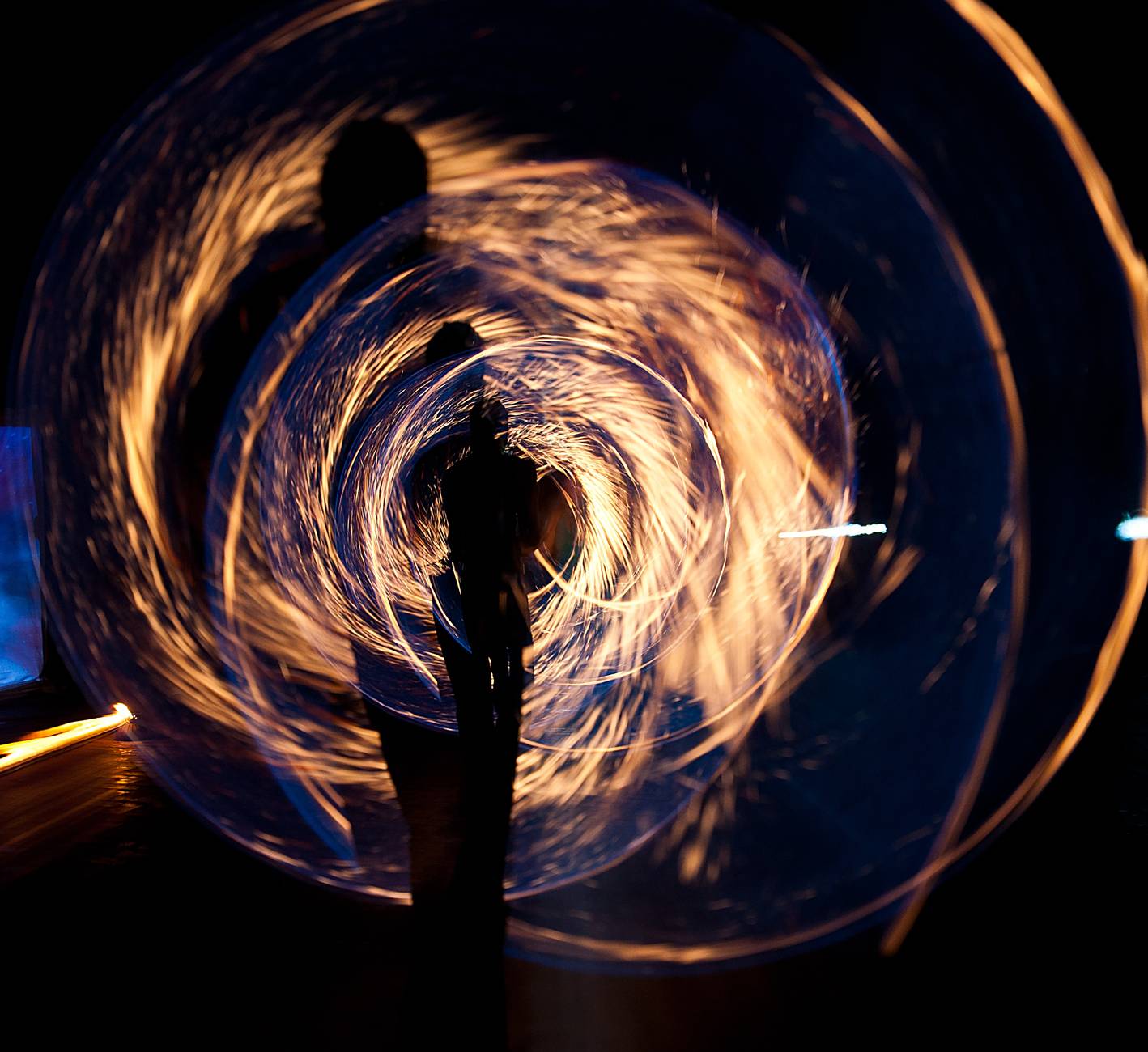
Here’s author Matthew Hutson dancing with fire!

Good luck with that, fellow readers. I’ll be cheering for you, which, if you read this book and understand the power of magical thinking, may have more impact than you ever imagined.

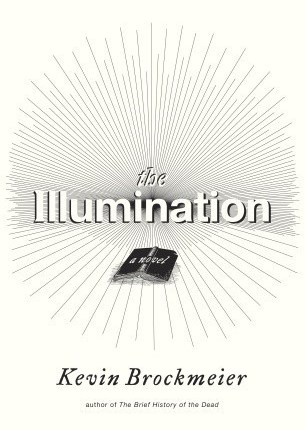
The Illumination by Kevin Brockmeier

The Illumination by Kevin Brockmeier

Humanity suddenly changes as emotional and physical pain begins to shine out of our bodies like light. How would a shift like that change culture? And what does it all mean?

Kevin Brockmeier examines these questions through six different lives that are tied together through a diary filled with love notes from a husband to his wife.

Rarely has a book stuck in my mind like The Illumination. Since putting it down, I’ve found myself thinking about it and asking myself what the author was saying.

Photo by Pixabay on Pexels.com

“Through the haze of drugs, it seemed to her that the light was not falling over her wound or even infusing it from the inside but radiating through it from another world. She thought that she could live there and be happy.” pg 8, ebook

Throughout the centuries, mystics and others considered “holy” or infused with spirit have been depicted with light shining from their bodies and hands. The ineffable connection to God or gods is shown in the artistic shorthand of light, an illumination in the dark.

In the day-to-day business of living, many of us are too busy with our individual lives to stop a second and ask ourselves, what is the purpose of this experience? It feels so random for the most part. Terrible things happen to good people, good things happen to terrible people. It feels arbitrary and, worst of all, meaningless.

So many are in pain and we can’t possibly heal them all. We don’t acknowledge that. But what if it became so obvious that we couldn’t ignore it.

Photo by Luis Dalvan on Pexels.com

“The world had changed in the wake of the Illumination. No one could disguise his pain anymore.” pg 29, ebook

The Illumination illustrates another of humanity’s foibles – the tendency to demote the miraculous to the mundane once it becomes a common place experience. Babies are born every day. People die every day. Life in its beginnings, endings, and everything in the middle, is extraordinary but I don’t think we appreciate the enormousness of it unless something unexpected or earth-shattering happens in our own lives.

“He watched with interest as his body was chafed and torn, thinking, Look what’s here inside me. Who ever would have guessed? pg 164, ebook

Maybe, if we truly tried to let it all in, we would all stand around paralyzed by awe.

“It turned out that the world at the end of time was just like the world at the beginning: a single set of footsteps printing the grass, everything lit with its own newness, a brighter and much, much emptier place.” pg 48, ebook

Photo by Stanislav Kondratiev on Pexels.com

In this world, the past is reexamined in the wake of the new light-filled reality. Historic photos are doctored to make the pain visible through light. Hospitals develop new protocols to address the change in reality. Communication and politeness take on new meaning as private pain becomes public knowledge.

“For a few months, church attendance spiked. Some of the seats at Fellowship Bible were taken by visitors, some by the Christmas-and-Easter set. It didn’t matter – each new face showed the guilt, fright, or confusion of someone confronted by a game whose rules had suddenly changed.” pg 104, ebook

The dystopian worlds of literature present authors’ various views on what the world would look like at the end of all things. Brockmeier’s world is so very much like ours except for one glaring difference. Perhaps that’s the point. The end of the world is much like today – light or no light, we’re all wandering around seeking meaning and bumping into each other and causing pain, intentional and unintentional.

Photo by Rodolfo Clix on Pexels.com

The spiritual and religious beg for illumination, a shining light through the confusion, a removal of a metaphysical blindfold. But what would we do if those prayers were answered in a concrete way? Probably nothing once the initial shock wore off.

Recommended for readers who seek the answers to unanswerable questions. Some trigger warnings for cutting, self mutilation, and violence.

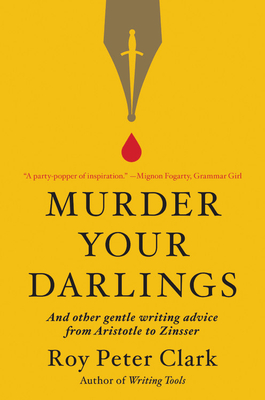
Murder Your Darlings: And Other Gentle Writing Advice from Aristotle to Zinsser by Roy Peter Clark

Murder Your Darlings: And Other Gentle Writing Advice from Aristotle to Zinsser by Roy Peter Clark

Murder Your Darlings is not just another book about writing. It shares the wisdom and creative insights of fifty or so authors, some famous, some not, and some who wrote their own books about the craft.

In his own unique manner, Roy Peter Clark distills the main lessons from each writer and presents them in curated chapters. The chapters are organized into six parts: language and craft, voice and style, confidence and identity, storytelling and character, rhetoric and audience, mission and purpose.

Photo by Andrea Piacquadio on Pexels.com

Aspiring or struggling writers can go directly to the issue she may be facing at the moment or read the whole thing to find tips and techniques that fit her emerging efforts best.

Though this may be most useful to writers who have a particular problem in mind, I believe any writer who wants to elevate their work could find something illuminating in these pages.

At the very least, Clark saves writers days of research time into locating appropriate writing resources. If you like the brief outline he gives of a writing guide, you could go invest the time to read the whole thing.

Photo by Ricardo Esquivel on Pexels.com

Highly recommended for everyone who strings words together or dreams about doing so.

Thank you to NetGalley and the publisher for a free digital copy of this book.

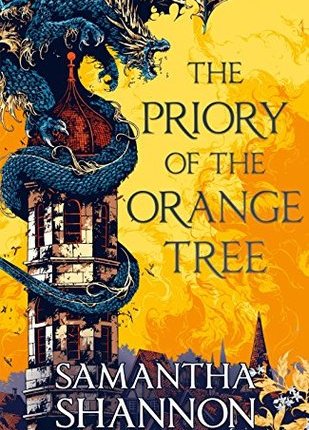
The Priory of the Orange Tree by Samantha Shannon

The Priory of the Orange Tree by Samantha Shannon

A cast of interesting and well-imagined characters stumble through poorly-written plot twists on their way to saving the world from “The Nameless One”.

“The House of Berethnet may protect us from the Nameless One, or it may not. There is no proof either way. … That is the problem with stories, child. The truth in them cannot be weighed.” pg 109

Photo by Suraphat Nuea-on on Pexels.com

I started out enjoying The Priory of the Orange Tree. The way the story builds is engaging and moves along at a fast clip.

My main quibble with this fantasy book is Samantha Shannon takes more than 800 pages to create her world with its countries, religions, magic systems, but then resolved major plot points in two to three sentences or less in some cases.

We learn about items that have been missing for a millennia and I thought, oh this is going to be interesting to figure out. But then, two pages later, through a series of ludicrous coincidences, two of the main characters have one of the items in their hands.

In one of the major confrontations of the book, Shannon doesn’t even write dialogue and played it out through the eyes of a character who had no idea what was going on. I wouldn’t have been so put off by it if she hadn’t spent literally hundreds of pages getting us to that point. That particular villain may not have been the focus of the tale, but I think she at least deserved a final monologue.

Photo by Snapwire on Pexels.com

When traveling from place to place, there aren’t tantalizing descriptions of the trip. Basically, the character gets in the conveyance and, boom, they’re at the destination. Shannon used more descriptive words when she talked about the food characters were eating than she did when her characters were moving from here-to-there.

The exception to this rule were her descriptions of “the Abyss”. The way she depicted the stars shining down from above and out of the depths was beautiful.

Complaints aside, there were plenty of things I liked about the book. I enjoyed the way Shannon took real life alchemical principles and wove them into something otherworldly for her story.

“What is below must be balanced by what is above, and in this is the precision of the universe. Fire ascends from the earth, light descends from the sky. Too much of one doth inflame the other, and in this is the extinction of the universe.” pg 150

Photo by Pixabay on Pexels.com

I also liked the secret order whose name graces the front cover of the book. The different cultures Shannon created were a treat a learn about. I thought her characters were, for the most part, quite relatable.

“So you see, Ead,” the queen said, “I do not sleep because I’m not only afraid of the monsters at my door, but also of the monsters my own mind can conjure. The ones that live within.” pg 203

The characters were diverse and, as I mentioned, well-written. A couple times in the story, particularly in the portions about the Abyss, I felt Shannon’s writing was elevated to something like prose.

“Love and fear do strange things to our souls. The dreams they bring, those dreams that leave us drenched in salt water and grasping for breath as if we might die – those, we call unquiet dreams. And only the scent of a rose can avert them.” pg 416

Photo by Irina Iriser on Pexels.com

I think this story could have been extraordinary if Shannon hadn’t been trying to fit so much into one volume. A trilogy with lingering descriptions of landscapes and nail-biting conclusions to the various story arcs would have been much more enjoyable.

Thanks for reading!

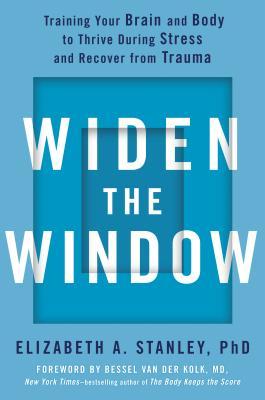
Widen the Window: Training Your Brain and Body to Thrive During Stress and Recover from Trauma by Elizabeth A. Stanley

Widen the Window: Training Your Brain and Body to Thrive During Stress and Recover from Trauma by Elizabeth A. Stanley

Managing stress and recovering from past traumas are some of the many challenges facing humanity in the modern era. Widen the Window addresses both those problems.

Elizabeth Stanley explains how individuals handle stress and trauma varies widely from person to person. It is first affected by your biology, then your unique childhood experiences making everyone’s responses different. What is incredibly stressful to one person may to a cakewalk to the next, and vise versa.

Photo by Pixabay on Pexels.com

She describes the ability to manage responses to stress as a window. Through a variety of mindfulness techniques, healthy eating, maintaining a large social network, and getting plenty of rest, Stanley guides the reader through ways to “widen the window” or increase your ability to manage stress.

I am always on the lookout for ideas on how to appropriately manage stress. If I manage my stress responses when they’re small, it prevents something more serious from building up and coming out in other, perhaps more dysfunctional, ways.

Photo by Pixabay on Pexels.com

I could see this book being useful to every reader who picks it up. Everybody has something they’re dealing with – from current work to family to friends issues or traumatic past experiences that push themselves into the present. We’re all in this together, even if your mind is telling you otherwise.

Tonight We Bombed the U.S. Capitol: The Explosive Story of M19, America’s First Female Terrorist Group by William Rosenau

Tonight We Bombed the U.S. Capitol: The Explosive Story of M19, America’s First Female Terrorist Group by William Rosenau

It is simple to pretend that people who perform shocking acts of violence are different than everyone else. It’s got to be something in their childhoods, we think, or maybe it’s a mental illness.

The most disturbing part of this book, and it admittedly has many, was that these women seemed so normal, just like you or me.

Photo by Andrea Piacquadio on Pexels.com

William Rosenau has combed through court files, newspaper articles and more to write Tonight We Bombed the U.S. Capitol, a non-fiction account of a radical leftist terrorist group. They planted multiple homemade bombs, robbed and killed people, all in the name of freeing the world from imperialism.

The majority of the group were highly educated, white women.

“They’d spent their entire adult lives embroiled in political struggles: protesting against the Vietnam War, fighting for black, Puerto Rican, and Native American liberation, and fighting against what they called U.S. ‘imperialism’ – that is, U.S. military aggression, political domination, and economic exploitation, particularly in the Third World.”

Photo by cottonbro on Pexels.com

Rosenau paints a careful picture to reveal how, step-by-step, the people involved in the group felt more and more marginalized and victimized to the point where they felt any and all actions were justified.

“Their vision of what this heaven on earth would look like was hazy, but one thing was certain: creating it would require nothing less than violent revolution. This vagueness about ultimate objectives is typical among terrorists.”

Photo by Pixabay on Pexels.com

There is so much information about a number of different people in this book that it can be overwhelming. But I think, ultimately, it is better to know what has gone on in the past because it affects the future in such a profound way.

“I discovered that during the 1970s and 1980s, the United States had waged an earlier ‘war on terror’ against violent domestic extremists, and it was during that period that the government created many of the counter-terrorism tools and approaches that continue to be used today.”

Photo by Rahul on Pexels.com

The privilege of living in a free society is that all manner of ideas can be discussed and embraced or dismissed depending upon their merits. I want equality, freedom from tyranny and opportunities for all people – no matter what you’re from, what you look like, or what your background is.

However, I won’t use violence to try and bring those ideals about. That seems to be the line in the sand for many. The people in this book didn’t have that line but they seemed to espouse higher ideals.

And what a tragedy that is. If only their brilliant minds had been directed towards methods of bringing about change that worked within society rather than against a nameless enemy, our country might have been better for all of them.

Thank you to NetGalley and the publisher for a free advance reader copy of this book. The brief quotations cited in this review may change or be omitted entirely from the final print version.

For Small Creatures Such as We: Rituals for Finding Meaning in Our Unlikely World by Sasha Sagan

For Small Creatures Such as We: Rituals for Finding Meaning in Our Unlikely World by Sasha Sagan

My parents taught me that the universe is enormous and we humans are tiny beings who get to live on an out-of-the-way planet for the blink of an eye. And they taught me that, as they once wrote, “for small creatures such as we, the vastness is bearable only through love.” pg 12, ebook.

Sasha Sagan, the daughter of celebrated scientist Carl Sagan, was raised to believe only what could be proven. Her father told her: “It’s dangerous to believe things just because you want them to be true.” pg 11, ebook.

Photo by Yuting Gao on Pexels.com

But they also instilled a sense of wonder in Sasha about existence and humanity’s place in it. For Small Creatures Such as We is an examination of religious and secular celebrations and rituals from around the world. I learned a great deal about the similarities of humanity’s need to celebrate and recognize the seasons, rites of passage, and other universal milestones in life.

I wouldn’t describe myself as religious, rather I’m very spiritual. In my opinion, Sagan’s book could appeal to even those who may describe themselves as religious. She has a welcoming voice for every kind of reader.

Photo by Dominika Greguu0161ovu00e1 on Pexels.com

“If you are devoutly religious, firstly, I’m delighted you’re reading this. Thank you. … This book is not intended to dissuade you, only to increase what there is to be joyful about.” pg 14

I think she succeeds in drawing a clear picture of what rituals mean to humanity. And that brought me so much hope for the future.

Some live lives of little meaning and less depth because there is no framework in place to support the creation of personal rituals outside of certain groups who may not share your vision of reality.

Photo by Karolina Grabowska on Pexels.com

This book could be helpful for spiritual people who want to use rituals to instill a sense of wonder into their daily existence.

It is also fascinating to learn about so many different cultures from around the world. Highly recommended.