In a Cottage In a Wood by Cass Green

In a Cottage In a Wood by Cass Green

Neve’s life is a mess. She recently broke up with her boyfriend, has no place to go and an unfortunate drinking habit. Perpetually hung over and disappointed in her job, friends, and family, Neve experiences a shocking event on a London bridge that changes her life forever.

Now the proud owner of a cottage in the woods, Neve can hardly believe her good fortune. But when unexplained events begin to haunt her waking hours, she begins to question whether it was luck that led her to the bridge or something else entirely.

Photo by Tatiana Syrikova on Pexels.com

“This really is happening quite legally, Neve,” she says in a gentle voice. “You own Petty Whin Cottage and everything in it. It’s all yours now.” pg 48, ebook

Cass Green has crafted a suspenseful mystery with an unreliable narrator that holds your attention but doesn’t necessarily deliver on the thrills. But it is enjoyable enough for what it is.

I read In a Cottage In a Wood in just a few sittings with a mug of hot chocolate in my hand while a winter storm raged outside. I think the book is a good choice to pass a few hours and I could also see it being an interesting pick for book clubs.
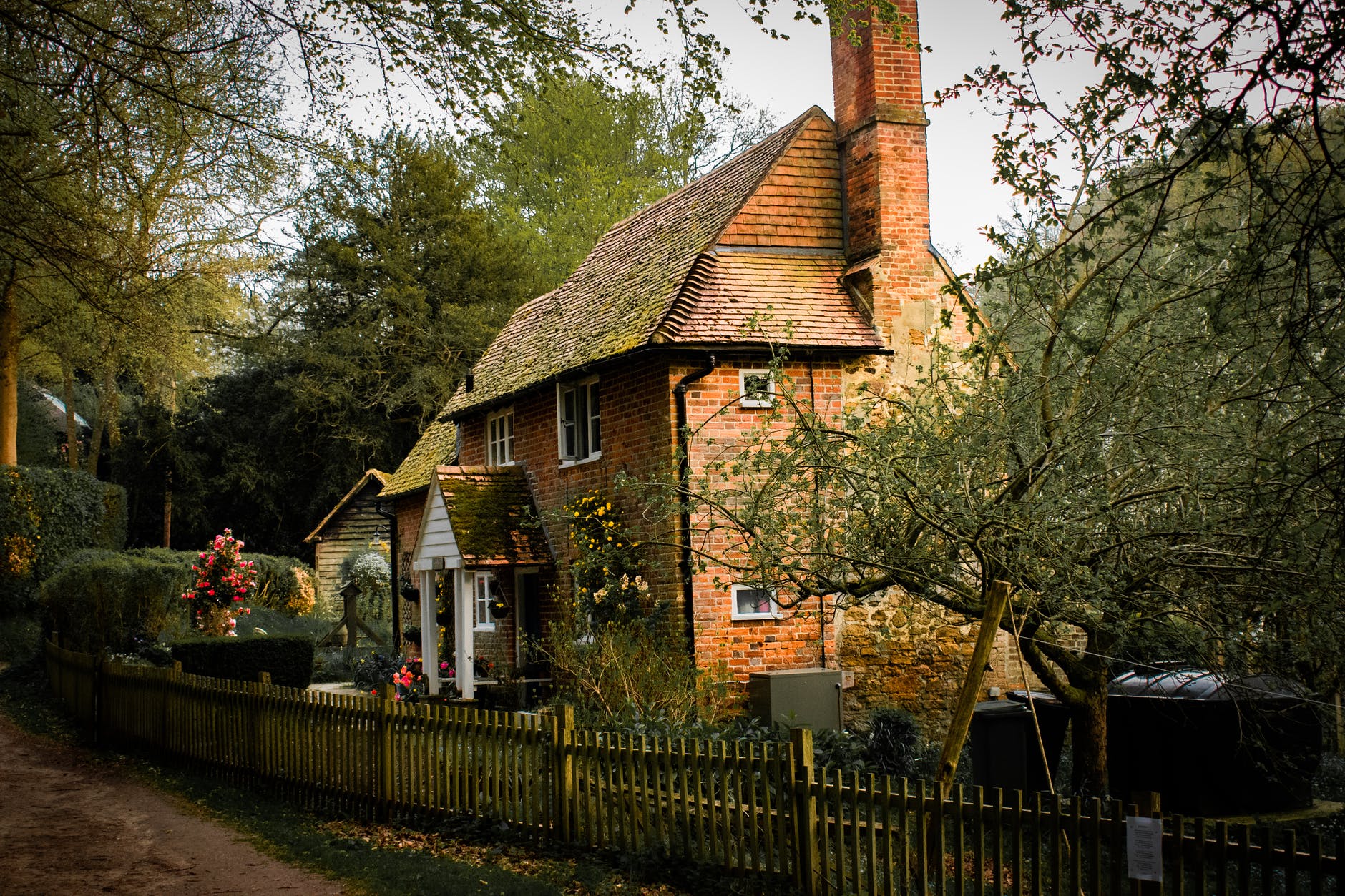
Photo by Simon Sikorski on Pexels.com

Green is at her best when building a growing sense of isolation and Neve’s teeth-on-edge feelings at the cottage, all while utilizing every day events that could be completely innocuous. What’s so scary about power outages, a dead bird and a dog getting outside the fence? It’s in the timing and the incremental increase in emotional tension, which Green has down perfectly.

Neve is a relatable character even while making poor choices. I found myself cheering her on, hoping she finds whatever it is she’s looking for to bring some peace to her soul. But the unreliable narrator bit has been used a great deal lately, hasn’t it?
Photo by Tobi on Pexels.com

Recommended for readers who like to use suspenseful thrillers as a brief escape from reality.

Thanks for reading!

Promethea, Vol. 2 by Alan Moore

Promethea, Vol. 2 by Alan Moore

Promethea, Volume 2 was an incredibly disappointing follow-up to a promising comic series.

The reader continues to follow the efforts of Sophie, a student who has learned to channel the spirit of a being of enlightenment named Promethea, while battling demons and other nebulous, bad guys.

Photo by Francesco Ungaro on Pexels.com

We have yet to learn more about the villains of the story, except in brief asides, or Sophie’s allies, some sort of technological heroes.

This entry is bogged down with a lengthy metaphysical poem about the progression of tarot cards and an unexpected tantric sex primer.

Photo by Alina Vilchenko on Pexels.com

My quibbles with the tarot card piece is it is far too simplistic but also too long. Each card can be interpreted a number of different ways, and not just applied to principles of civilization. It is also a metaphor for the soul’s journey, which Alan Moore touches on, but, I feel, never truly explains.

Also, by presenting the whole thing through rhyme, I couldn’t help but draw comparisons to Dr. Seuss. I get what Moore was going for, but it didn’t work for me.

Meanwhile, I couldn’t help but wonder if the lead character in this story was a guy if we would have been subjected to the tantric stuff at all.

Photo by Roy Reyna on Pexels.com

I believe the earthly can be spiritual and the spiritual can be earthly. I think “kundalini rising” is just the lightning flash of inspiration in reverse. But a male hero being pressured into trading his body for secret knowledge? I don’t see it happening.

I liked the first entry of Promethea. I thought it was ground-breaking in the way it depicted a strong female character on a spiritual journey.

This second book simply isn’t of the same quality. Perhaps the series will redeem itself in the next entry. One can only hope.

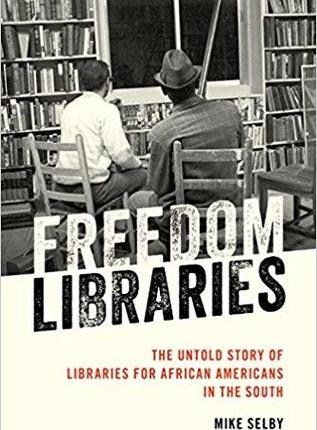
Freedom Libraries: The Untold Story of Libraries for African Americans in the South by Mike Selby

Freedom Libraries: The Untold Story of Libraries for African Americans in the South by Mike Selby

In Freedom Libraries, Mike Selby remembers and honors the volunteers and patrons of the numerous libraries set up to serve black populations mainly in the southern states during the civil rights era and later.

During that period of history, the institutionalized racism of many southern towns extended to library services. Books and learning programs were specifically curated at whites-only libraries in order to propagate the disgusting ideology of white supremacy in addition to keeping the black population illiterate and subjugated.

Photo by marco allasio on Pexels.com

“Pattie Mae McDonald operated a “Freedom Library” out of two rooms of her modest home. This was enough to earn her and her family terror and attempted murder.”

The volunteers and anyone who was brave enough to visit the freedom libraries, set up in private homes and wherever a semi-safe space could be found, were subject to shootings, harassment and arrest by local authorities, and even fire bombings. Some gave not only of their time but also their lives to keep the freedom libraries going. It is a frightening and dark moment in library history that, I feel, has been largely forgotten, until now.

“The right to vote would be everything for African Americans. The right to read would be something else entirely. Voting would make them citizens; libraries would make them free.”

Photo by Oladimeji Ajegbile on Pexels.com

In addition to remembering the bravery and sacrifice of those involved with the freedom libraries, this book illustrates some of the particular problems of librarianship that came along with the creation of the libraries.

Sadly, the American Library Association did little, if anything, to assist in the creation of freedom libraries, even though their written policies were against segregation. Very few of the volunteers who ran the organizations knew anything about cataloging and maintaining library collections. There was no money for curating books or creating community programs. Yet, somehow, the freedom libraries persevered in both expanding their collections and offering a wide variety of enriching and educational programming in the midst of life-threatening situations.

This perseverance may have had something to do with the uniquely fluid characteristics of libraries themselves.

As Selby points out, after the firebombing of the McComb Freedom House: “With the building still smoldering, the after-school youth just waited on the ground outside. The children somehow knew what many adults in the twenty first century have difficulty grasping: the fact that a library is a service, not a collection. A library exists for the librarians and patrons, not the other way around.”

Photo by Pixabay on Pexels.com

Highly recommended for readers who like to remember forgotten moments in history and for anyone who knows, or would like to learn more about, the power and life-changing reality of public libraries.

Thank you to NetGalley and the publisher for a free digital copy of this book. And thank you for reading.

Rest: Why You Get More Done When You Work Less by Alex Soojung-Kim Pang

Rest: Why You Get More Done When You Work Less by Alex Soojung-Kim Pang

“We shouldn’t regard rest as a mere physical necessity to be satisfied grudgingly; we should see it as an opportunity. When we stop and rest properly, we’re not paying a tax on creativity. We’re investing in it.” pg 11

Photo by Tatiana Syrikova on Pexels.com

I think we’re living in a culture that generally glorifies busyness and a frantic pace of achievement. That’s not news.

Alex Soojung-Kim Pang takes a deep dive into the science of rest and shares the insight that taking breaks isn’t something we should squeeze into our schedule. Rest, he argues, is as important as the work itself.

Four of his major points are: “work and rest are partners”, “rest is active”, “rest is a skill”, and “deliberate rest stimulates and sustains creativity”.

I was particularly interested in the creativity-related point of Pang’s hypothesis.

“You need time for rest because that’s when the unconscious mind can get to work. You can’t command inspiration to appear, but you can nudge it, most notably by working steadily and regularly. The romantic image of the artist who does nothing until he’s inspired and then produces in a furious burst of work is misleading.” pg 91

Photo by Dazzle Jam on Pexels.com

Pang looked into the lives and routines of creative thinkers throughout history and came to the perhaps surprising conclusion that four concentrated hours of work per day is sufficient.

“The pattern of working four hard hours with occasional breaks isn’t just confined to scientists, writers, or other people who are already successful, well-established, and have the freedom to set their own schedules. You can also see it among students who go on to become leaders in their fields.” pg 67

The rest of the day that geniuses such as Charles Darwin or Ernest Hemingway lived were filled with activities like long walks, day dreaming, active rest, sport and other seemingly unrelated moments that fueled the subconscious mind.

“The right kinds of rest would restore their energy while allowing their muse, that mysterious part of their minds that helps drive the creative process, to keep going.”

Photo by Pixabay on Pexels.com

What these activities may be vary from person to person, but Pang’s research proves time and again that the rest portion of the day is critical.

One of my favorite parts of this book dealt with Malcolm Gladwell’s popular 10,000 hours for mastery idea that he discusses in his book, Outliers. Yes, Pang argues, 10,000 hours are necessary for exceptional performance. But we’re ignoring the rest of the equation.

“It comes after 10,000 hours of deliberate practice, 12,500 hours of deliberate rest, and 30,000 hours of sleep.” pg 74

Photo by Andrea Piacquadio on Pexels.com

From morning routines and sabbaticals to naps and carving out time for more sleep, Pang exhorts the reader to make rest a priority. It’s not lazy, it is one of the building blocks of a creative and productive life.

Sign me up. 🙂