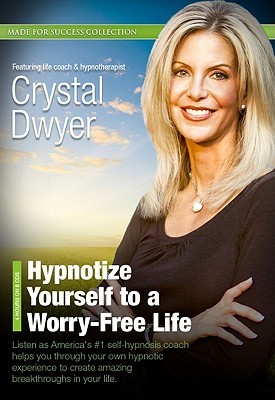
Hypnotize Yourself to a Worry-Free Life by Crystal Dwyer

Hypnotize Yourself to a Worry-Free Life by Crystal Dwyer

Crystal Dwyer, a new age instructor, has developed a set of guided meditations to enable listeners to improve their lives in a variety of ways. These tracks address issues from insomnia to anxiety. She has a pleasant voice and the meditations are enjoyable.

If you’re not into new age themes, you may want to try another hypnosis program. At the beginning of the audiobook, Dwyer is straight forward with her beliefs about God being within each of us and our individual power as creators. I could see that being problematic with those who don’t connect with those teachings.

Photo by Pavel Danilyuk on Pexels.com

I feel that the title of this work is a bit misleading. There are going to be ups and downs in any life. To suggest that you can eliminate anything seems suspect and sort of pie-in-the-sky. It reminds me of books that tout “read this and lose ten pounds in three weeks” and things of that nature. These meditations are valuable enough without the publisher (or author) making promises that perhaps they can’t keep.

That being said, I don’t think many people know what hypnosis is. In my experience, hypnosis, similar to a trance-state, just feels like deep relaxation. Everyone is different, but when I’m under, my body feels heavy but light, which seems impossible. My limbs sort of disappear and I feel as if I’m floating.

Once I’m there, in that relaxed state, then I let the meditation I’m listening to just wash over me. It feels really good actually. Generally, at the end, the hypnotist will say something like, “You’re coming back and you’ll feel entirely refreshed.” And, wouldn’t you know it, I do.

I think popular culture hasn’t done hypnosis any favors with people’s expectations about how it works. (The film “Office Space” comes to mind.) You don’t turn into some suggest-able zombie person when you’re under. Like most things, hypnosis and relaxation are a choice. Worry is a choice. It’s all about controlling that inner narrative and changing your inner thought processes to ones that are pleasing to you.

Photo by Maria Orlova on Pexels.com

A child once asked me to teach her about hypnosis so she could “control her brother”, which cracked me up. But then I explained to her that hypnosis isn’t a tool for controlling other people. The name of the game is improving and controlling yourself.

It’s like Marcus Aurelius said: “You have power over your mind – not outside events. Realize this, and you will find strength.”

Recommended for seekers looking for another tool to help them on their path to self knowledge.

Thanks for reading!

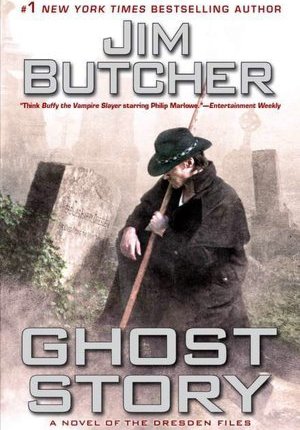
Ghost Story (The Dresden Files, #13) by Jim Butcher

Ghost Story (The Dresden Files, #13) by Jim Butcher

Harry Dresden, wizard for hire, is dead. And he still has to save the world by discovering his killer. How is that fair?

Maybe I was dead, but I was sure as hell not ready to go. I had to make sure the people who’d helped me take on the Red King were taken care of. pgs 32-33

Photo by Chris J Mitchell on Pexels.com

He quickly discovers that magic and dead people don’t mix. Now, instead of taking on god-like enemies with the backing of the Winter Queen, he can’t even pass through thresholds without permission.

It’s frustrating for both Harry and the reader. I didn’t realize how much I enjoyed reading about Harry blowing stuff up until he couldn’t do it anymore.

One of the things a lot of people don’t understand about magic is that the rules of how it works aren’t hard-and-fast; they’re fluid, changing with time, with the seasons, with location, and with the intent of a practitioner. pg 179. And if you’re alive or dead.

We spend a lot of time in Harry’s mind and memory in Ghost Story and less time in action. Frankly, it’s not as much fun as the other books in the series.

“You have entered a new world. Your old life is no more. You cannot be a part of it any longer. The wide universe stretches before you.” pg 185

Photo by Maria Orlova on Pexels.com

I also didn’t realize how much I enjoyed the give-and-take of the characters in this series until the main character couldn’t interact with most of them anymore.

Ghosts who weren’t supermighty manifested all the time. It wasn’t a question of raw power, and it never had been — it was a matter of desire. You just had to be crazy enough to make it happen.” pg 550

That being said, the ending of this book was strangely satisfying. And I cried at the part with Mouse. Overall, I’m glad I read it, but I’m not of the opinion that it was the best in the series.

Photo by Pedro Figueras on Pexels.com

I would have already started on the next book but there’s a wait list for the digital copy. Library user problems, sigh.

Thanks for reading!

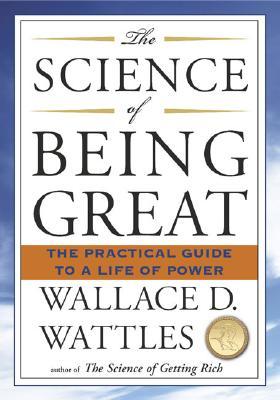
The Science of Being Great: The Practical Guide to a Life of Power by Wallace D. Wattles

The Science of Being Great: The Practical Guide to a Life of Power by Wallace D. Wattles

In the latest installment of “Heidi re-listens to all the old audiobooks on her hard drive”, I gave The Science of Being Great another chance to share its wisdom with me.

Couched in religious language, Wallace Wattles shares his new age viewpoint long before modern audiences became enamored of it with the mammoth success of The Secret. In fact, that’s how the publisher marketed this older manuscript, as source material for The Secret.

Photo by Maria Orlova on Pexels.com

I suppose it could be considered “source material” in that Wattles teaches enlightenment is to be found within. But he has very little in it about the guiding power of emotions, which was a cornerstone of The Secret. Wattles book is more along the lines of: You are a god walking among gods and should act accordingly. And don’t stick your nose into other people’s business.

Some of his advice is more tricky, such as: see the world in a perfect state of becoming. Nothing has gone wrong or could go wrong. Everyone and everything is perfect for where they are and everything has the chance to get better.

That’s hard stuff to swallow if you take a second to think about it. “The world is in a perfect state of becoming.” Maybe I’ve become too accustomed to looking for problems rather than relying on faith that everything is working out how its supposed to.

Photo by Pixabay on Pexels.com

Other parts of this book sounded similar to more modern new age authors with these ideas: Books and people will be drawn to you when you need them. Go where your inner feelings tell you to go. As you think, so you will become. Thoughts are things, etc.

By comparing and contrasting this book with other authors, I’m not intending to denigrate those teachings. I wouldn’t want to dismiss the power of the mind and emotions. Using just those things, people can certainly change their lives.

It’s just that the way they are packaged in The Science of Being Great may make it difficult for some readers to absorb it. Take the word “God” for example or “the Father”. Wattles throws those two around in every other sentence or so. That could be problematic for people who have struggled with religion or have involving it. Or those who don’t believe religion and science can mix.

Photo by Flickr on Pexels.com

And the whole book takes itself so seriously. Even the title “The Science of Being Great”, reminds me of an encyclopedia entry or something. I’ve had the most success in my own personal life when I’ve lightened up and stopped making such a big deal out of things.

In conclusion, is there helpful information in this book? Yes. Would I recommend taking the time to go through it to find those gems? It depends on how you learn best, I guess. Personally, I’d recommend Esther Hicks if you want the same sort of new age teachings with less religious trappings and a bigger dose of fun.

Thanks for reading!

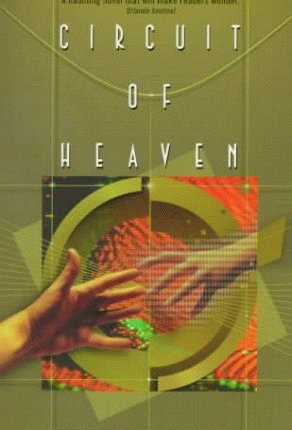
Circuit of Heaven by Dennis Danvers

Circuit of Heaven by Dennis Danvers

“Is not God in the height of heaven? And behold the height of the stars, how high they are. And thou sayest, How doth God know? Can he judge through the dark cloud? Thick clouds are a covering to him, that he seeth not; and he walketh in the circuit of heaven.”pg 14

Photo by Burst on Pexels.com

Humanity has created a computer program that can contain a person’s soul within its code. The programmers have made a new world — one without disease, violence or hunger, where those who leave their bodies behind and enter it, can live forever.

Prior to this breakthrough, programmers learned how to implant portions of people’s personalities into biological bodies, to work as laborers and earn money for the ultimate project of building the new paradise. They called these creations, “constructs”.

Not everyone, including some leftover constructs, have chosen to take advantage of this “heaven” and entered the program. Religious fundamentalists and those who have other objections to entering have remained behind. However, society has broken down without the leaders, who entered the program along with billions of other souls. Food is hard to come by and wild packs of dogs roam the streets.

Nemo, for reasons he can’t totally explain even to himself, has chosen not to enter the program (commonly called ‘the Bin’) to be with his parents. But on a recent visit, he meets a beautiful woman and his life will never be the same.

Photo by Pixabay on Pexels.com

Justine is a recent arrival to the Bin. But her memories are confused and she can’t remember where she has been for the past few weeks. Is it a programming error or indicative of a bigger problem with the Bin itself?

There were scare stories about people going into the Bin and breaking up like a virtual in a thunderstorm, that there were flaws in the crystalline structure of the Bin, and you could find yourself in nightmarish worlds that made no sense, completely alone.” pgs 12-13

I enjoyed the science fiction portions of this story and contemplating the power that humanity could one day potentially wield over life and death. With computers advancing the way they are, it’s not too hard to imagine that someone someday will figure out how to code a personality or soul. And that raises a whole host of other questions, doesn’t it.

What about the psychological effects of everything you could ever want being available at the touch of a button? What does it mean when a mother can program herself to look younger than her children? And what about children in a world without death? Should babies be uploaded immediately into the Bin or programmed from pure code without ever having existed in the real world?

Photo by Lisa Fotios on Pexels.com

The dilemmas go on and on. Beyond considering the hypothetical moral questions, I had a few problems with this book.

The characterizations were weak. A few of the major plot twists were clear well before they happened. But there was one, a big one, that I didn’t expect and it was pretty messed up. Then, the characters just seemed to get over it and move on. They had a few conversations and that was that. To be honest, it took me awhile longer. (No spoilers, but if you read this one, I’m certain you’ll know exactly what I’m talking about.)

Then the ending, when it came, was too rushed, which was rather a shame. So, that’s why I gave this a middling review. The premise was fantastic. Then it devolved into a so-so science fiction.

Thanks for reading!